
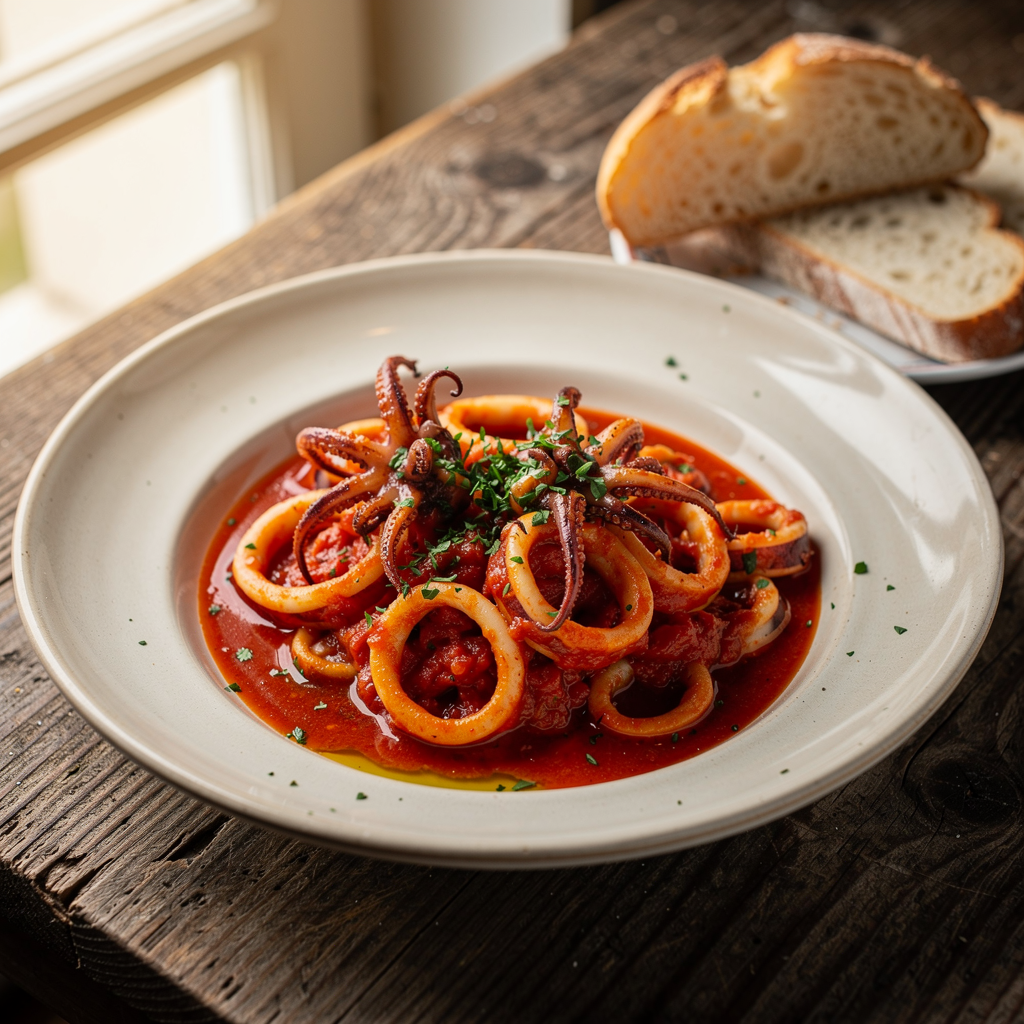
Jump to Recipe
I love the way a pot of red sugo warms the whole house, its steam carrying garlic and olive oil to every corner. When I cook squid, I think about family nights and the old rule: one minute or one hour for tenderness.
My approach balances a quick finish for weeknights with a slow braise for holidays like the Feast of the Seven Fishes. Good tomatoes—San Marzano or fresh plum—meet gentle garlic, a splash of wine or broth, and a brisk finish with parsley and lemon.
Serve this with pasta or crusty bread so nothing of the glossy, starch-kissed sauce is wasted. I’ll walk you through timing cues, test tips, and smart swaps so the seafood stays silky, not rubbery, every time.
Key Takeaways
- Use high-quality tomatoes and olive oil for a clean, layered flavor.
- Follow the one-minute-or-one-hour rule to keep squid tender.
- Finish pasta in the pan with starchy water for a glossy coat.
- Slow braise or quick finish both work—choose by time and mood.
- Make-ahead and freeze options keep the sauce handy for busy nights.
Why this rustic Italian calamari in tomato sauce belongs in your weeknight rotation
This humble seafood stew moves from holiday table to weekday plate with surprising ease and grace. It carries the memory of Christmas Eve “Seven Fishes” while staying quick enough for a school-night dinner. I use that heritage as a guide, not a rule.
Authentic roots: from Christmas Eve to red-sauce classics
Many Italian-American families serve this at the Feast of the Seven Fishes. Fra diavolo and other red-sauce seafood traditions grew in New York kitchens where bold flavors met fast city life. Anchovy melted into the oil, hand-crushed whole tomatoes, and a touch of Calabrian red pepper shaped those mid-century streetside sauces.
What makes this dish shine: clean seafood, good tomatoes, and controlled heat
- I start with sparkling squid and just enough olive oil to carry flavor.
- Keep garlic pale so it perfumes but never burns.
- One splash of wine or an equal amount of broth lifts the sauce; a pinch of red pepper flakes or paste lets me set the heat precisely.
- Finish with a toss of pasta and a ladle of starchy water, or serve with bread to soak the glossy sauce.
Ingredients that build deep, silky flavor
A well-chosen set of ingredients turns simple seafood into a deep, silky stew that sings on the plate. I keep the list short and purposeful so each item earns its place.
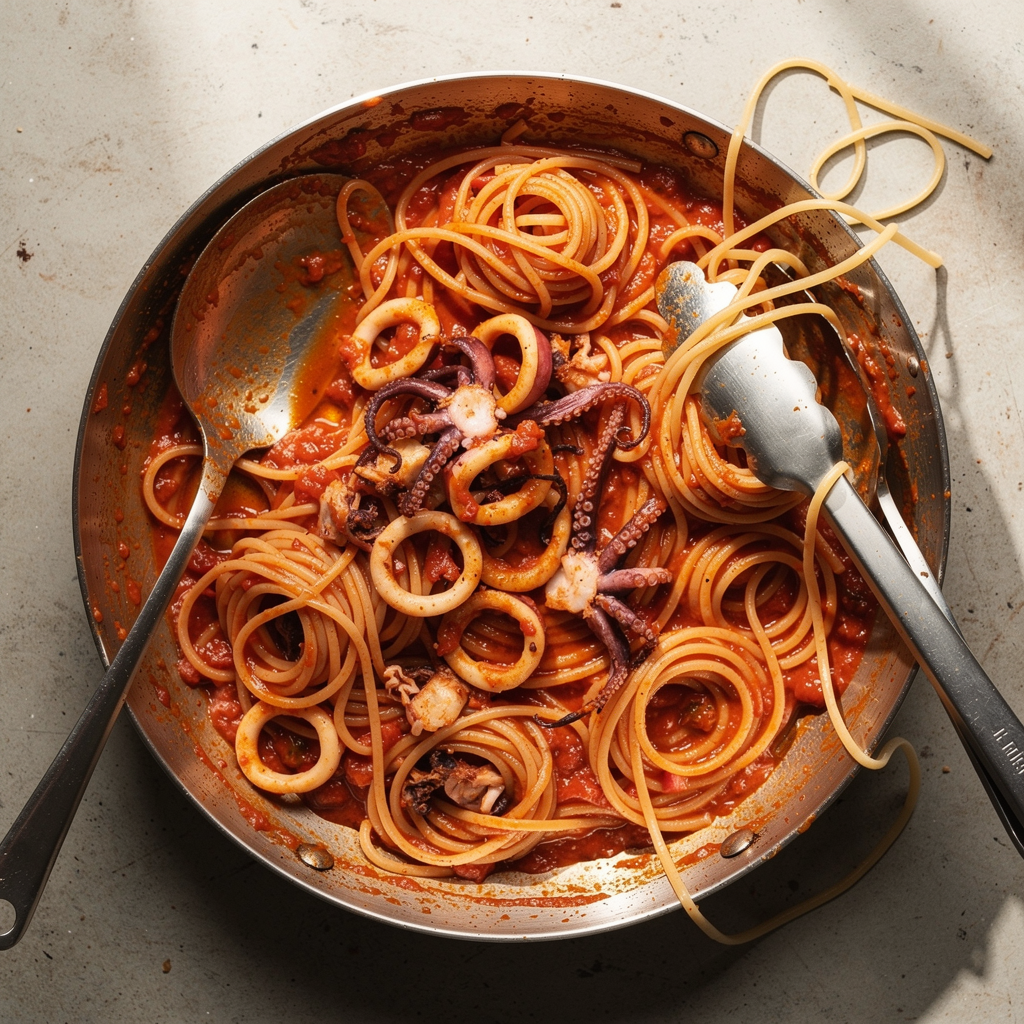
Core lineup
I look for cleaned calamari with both calamari rings and tentacles—tentacles add texture and extra savor. Use olive oil as the fat to bloom aromatics, and keep garlic pale so it sweetens, not scorches.
Smart swaps
Whole canned San Marzano tomatoes give a clean, balanced acidity; ripe fresh plum tomatoes are a great summer swap. A spoon of tomato paste adds body; sauté it briefly with the garlic to deepen its sweetness. A splash of dry wine builds roundness; use broth for a non-alcohol option.
Heat your way
For spice, choose crushed red pepper for direct heat or Calabrian chile paste for smoky, tangy depth. Finish with chopped parsley and a touch of lemon. Keep salt handy and a little water to loosen the sauce as it simmers.
- Anchovy melts into the oil for extra umami.
- Taste often and adjust seasoning; tomatoes vary widely.
| Ingredient | Why I use it | Swap or note |
|---|---|---|
| San Marzano / Plum tomatoes | Clean acidity, balanced sweetness | Fresh plum in season |
| Tomato paste | Adds body and color when caramelized | One tablespoon per 28 oz tomatoes |
| Calamari rings & tentacles | Rings for tenderness, tentacles for texture | Buy cleaned; cook per timing rules |
| Olive oil & garlic | Flavor carrier; garlic perfumes the oil | Keep garlic pale, low heat |
Tools that make the sauce effortless
A heavy pan and a steady flame are the quiet heroes of any great seafood simmer. I choose gear that keeps heat even and lets me focus on timing and taste.
- I reach for a heavy sauté pan or Dutch oven to prevent scorching and to help the sauce reduce smoothly.
- A separate large pot with 5–6 quarts of water is essential for pasta; use 1.5–2 tablespoons salt so the pasta has flavor and room to move.
- Tongs are my go-to for adding calamari at the right moment and for lifting pasta straight into the sauce with some starchy water.
- A wooden or silicone spoon is gentle on cookware and perfect for stirring oil-rich anchovy and tomato paste.
- Measuring spoons keep spice and salt consistent, while a medium bowl holds prepped rings and tentacles for quick access.
- A ladle helps me add reserved pasta water to bind sauce and pasta into a glossy finish.
- Good ventilation and a snug lid matter when I braise longer; both control steam and keep aromas pleasant.
I keep simple extras on hand: a garlic press, a bottle of anchovy oil, and a serving bowl for the finished dish. Small tools, used well, make the whole cooking flow calm and reliable. For a related pasta note, see my squid tagliolini guide: squid tagliolini guide.
Step-by-step: from sauté to simmer to tender calamari
Start simple: gentle oil, soft aromatics, and a clear plan for timing. These instructions keep the process calm and reliable so each step builds flavor without fuss.
Sweat aromatics on low heat—keep garlic pale
I warm a splash of olive oil and gently sweat chopped onion and garlic over low heat. Watch for aroma and a pale color—avoid browning. Two to three cloves are plenty for a family portion.
Stir in tomato paste, deglaze with wine, and add tomatoes
I add a spoon of tomato paste and let it sizzle briefly to deepen sweetness. Then I deglaze with a splash of wine to lift the fond. Stir in crushed tomatoes and a little water, bring to a soft simmer, and season with salt and pepper.
Add calamari at the right time: quick finish or long braise
- Quick finish: add the rings and tentacles during the last 3–6 minutes of simmering. Cook just until opaque and supple, then remove from heat.
- Long braise: add the squid earlier and simmer gently 40–50 minutes until knife-tender, stirring occasionally so the pan doesn’t catch.
Finish and balance: parsley, lemon zest or juice, salt and pepper
Keep an eye on thickness and add water a splash at a time to reach a silky consistency that coats pasta. Taste and adjust salt, pepper, and acidity. A little lemon zest or juice brightens everything, and chopped parsley adds fresh lift.
If serving with pasta, finish the pasta right in the pan and splash in starchy water to emulsify the sauce so it clings beautifully. For a related note on squid pasta techniques, see my squid tagliolini guide.
| Method | When to add seafood | Key cue |
|---|---|---|
| Quick | Last 3–6 minutes | Opaque, tender bite |
| Long | Add early | 40–50 minutes; knife-tender |
| Finish | After cooking | Parsley, lemon, starchy pasta water |
The tenderness key: cook calamari one minute or one hour
You’ll find two reliable paths to a perfect bite: very fast or very slow. I focus on clear cues so your seafood stays supple, never rubbery.
Quick approach: 3–6 minutes at the end—never overcook
For a speedy finish, add the rings and tentacles during the last 3–6 minutes. Carryover heat keeps things soft after you pull the pan off the flame.
I often pan-sear the squid for a minute on high to set texture, then nestle pieces into the stew to finish gently. Cut rings evenly so everything cooks at the same rate.
Slow approach: gentle 40–50 minute simmer until luscious
For a spoon-tender result, simmer on low for 40–50 minutes. Time and gentle heat coax collagen to yield and the flesh becomes plush.
This method is perfect when I want to serve with pasta and a deeply flavored base.
Pro cues: knife-tender texture, sauce thickness, and when to add water
- Test with a knife—when it slips in easily, the squid is done.
- Watch the stew as it reduces; add a splash of water if it tightens too much.
- Use a pinch of pepper flakes to set heat without masking sweetness.
| Method | Key cue | Typical time |
|---|---|---|
| Quick | Opaque, supple bite | 3–6 minutes |
| Slow | Knife slips in easily | 40–50 minutes |
| Finish | Adjust sauce viscosity | Add water as needed |
Calamari in tomato sauce Italian recipe variations
A few smart swaps let you move from gentle comfort to fiery heat without changing the whole method. I offer tested riffs that keep the core technique while shifting flavor and tempo.
Spicy fra diavolo
I melt anchovy into olive oil, stir in Calabrian chile paste, then finish with crushed red pepper flakes and a touch of black pepper. This layered heat gives the sauce depth and a warm, lasting bite.
Greek-inspired stew notes
Use passata and sweet paprika for a sunnier base. Finish with chopped parsley and a squeeze of lemon. You can pan-sear the squid briefly before adding it to the pan to deepen flavor and aid tenderness during a long simmer.
Easy seafood swaps
- Shrimp and scallops: add at the end; they take only a few minutes to cook.
- Clams and mussels: steam in the sauce until shells open, then adjust salt.
- White fish: fold in large chunks and simmer just until they flake.
| Variation | Key Additions | Timing cue |
|---|---|---|
| Fra diavolo | Anchovy, Calabrian paste, red pepper flakes | Add paste early; finish with flakes |
| Greek-style | Passata, sweet paprika, lemon, parsley | Pan-sear first; simmer gently 40–50 minutes for depth |
| Mixed seafood | Shrimp, scallops, clams, or fish | Stagger by minutes so each protein is perfect |
Serving ideas: pasta, rice, or crusty bread to soak up the sauce
Simple finishing moves help the flavors sing and make serving effortless and joyful. I keep plating practical: a warm bowl for family, or individual plates if guests are coming. Little touches lift the meal—fresh parsley, a drizzle of good olive oil, and a final grind of pepper.
Perfect pasta pairing
I cook pasta two minutes shy of al dente, then finish it in the pan with the sauce and a ladle of starchy water to emulsify. Use a large pot (5–6 quarts per pound) and salt the water well so the pasta carries flavor.
Light sides and pours
Sautéed spinach or broccoli rabe with garlic makes a bright, bitter counterpoint. Crusty bread is mandatory for wiping the plate clean, or spoon the stew over steamed rice or soft polenta for a different comfort.
- Bucatini, linguine, or spaghetti catch pieces best and pair beautifully with the red base.
- For family-style, toss everything into a warm serving bowl, top with parsley and olive oil.
- I pour a dry red wine that I cooked with, if I used one—same bottle echoes the dish.
| Pairing | Why | Tip |
|---|---|---|
| Pasta | Holds sauce and squid well | Finish in pan with reserved water |
| Bread | Soaks up every last lick of flavor | Serve thick slices, toasted |
| Greens & Wine | Balances richness and lifts taste | Sauté greens with garlic; serve a dry red |
Make-ahead, storage, and reheating without losing tenderness
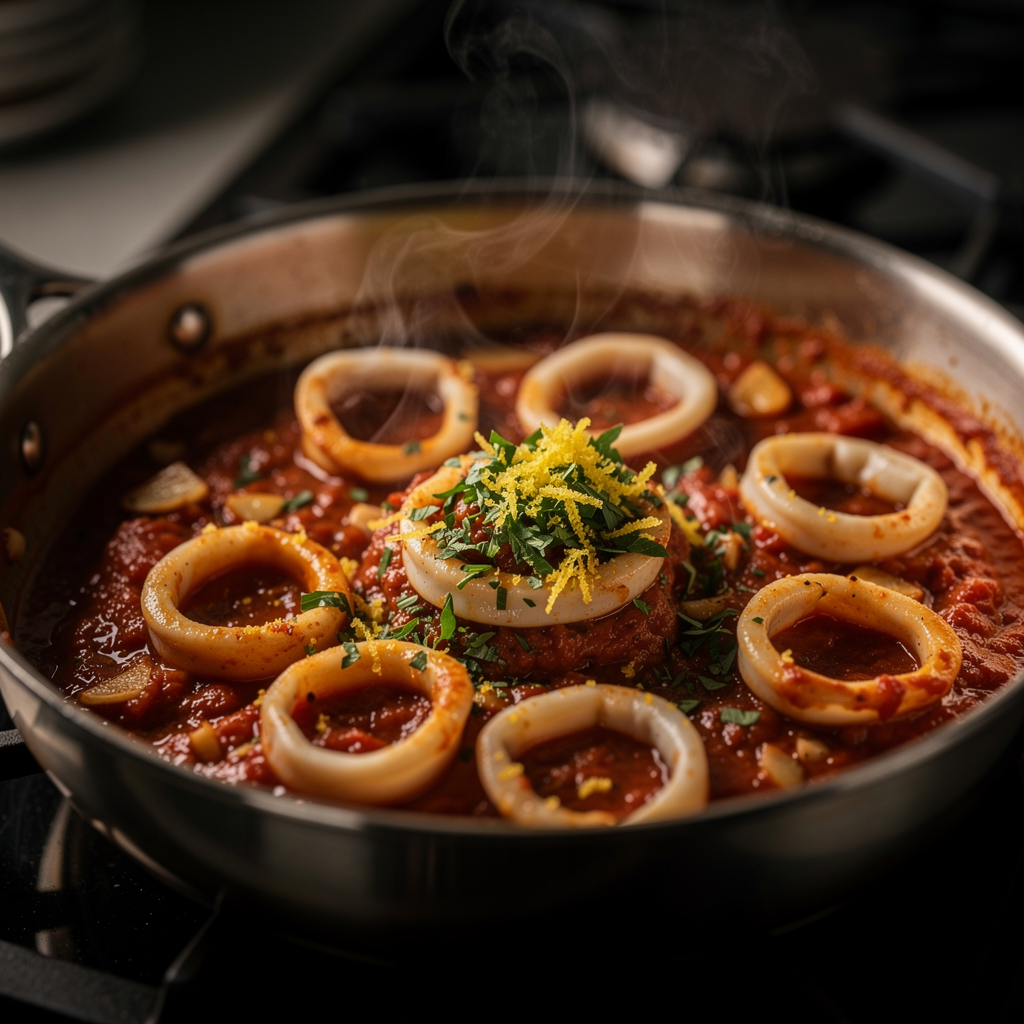
When I plan ahead, that glossy red pot becomes a weeknight hero that tastes even better the next day. A little care with cooling and reheating keeps the seafood tender and the flavors bright. Follow simple cues and you’ll have a ready-to-serve dish anytime.
Fridge tips for quick use
I store the finished sauce in the refrigerator for 2–3 days. Cool it quickly, cover, and label with the date and time stored.
If the stew is a bit thick when chilled, warm it gently and add a splash of water to loosen the texture. Reheat covered over low heat so the protein relaxes, not tightens, and plan a few minutes for the pot to come back to serving temperature.
Freezer and gentle reheat
For longer storage, I freeze the stew up to 3 months. I pack it flat in freezer bags, label the date, and thaw overnight in the fridge.
To reheat from thawed, warm covered over medium-low heat, stirring every few minutes until silky. If wine was used, a tiny fresh splash or a squeeze of lemon brightens the aroma.
- Always cook fresh pasta when serving; storing pasta with sauce makes it bloat.
- Taste after reheating and adjust salt, red pepper, or pepper flakes.
- A skim of fat may rise when chilled; stir it back or remove for a leaner plate.
| Storage | Typical time | Quick tip |
|---|---|---|
| Refrigerator | 2–3 days | Cool fast, cover, reheat on low |
| Freezer | Up to 3 months | Pack flat, thaw overnight |
| Reheat | Minutes to warm through | Covered, medium-low, add water if tight |
Bring it to the table with confidence
A last taste, a final tweak, and you’ll see why this recipe rewards patience and plain technique. I check tenderness one last time—rings and tentacles should yield to the knife and feel supple.
I make sure the sauce will cling to pasta without being pasty; if it’s too tight I loosen it with a spoon of water or a lick of reserved pasta water. Right before serving I correct salt and pepper, shower parsley, and add a whisper of olive oil for shine.
Plate quickly so the pasta and stew arrive steaming. This tried recipe turns simple squid into a balanced, soulful dish—trust the instructions and bring it to the table with pride. Buon appetito!
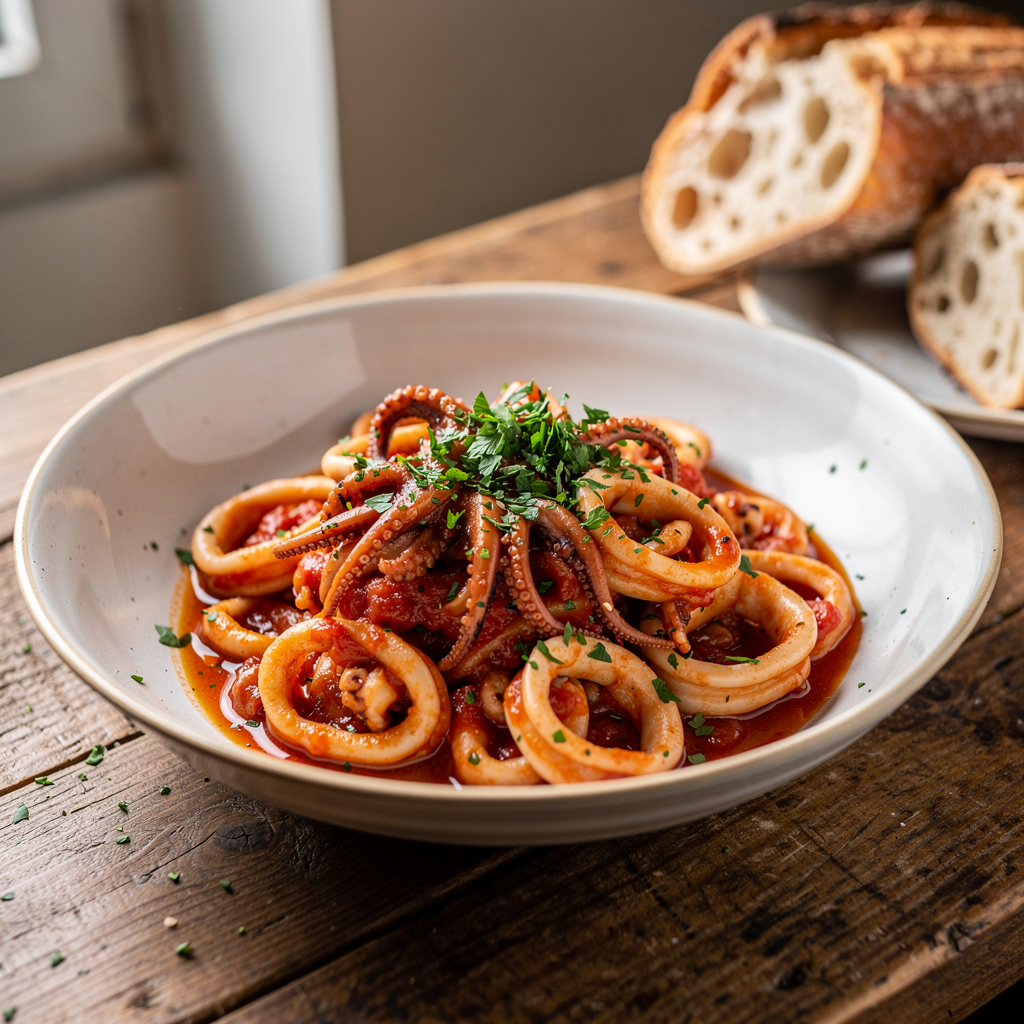
Italian Calamari in Tomato Sauce
Ingredients
Method
- 7a. Simmer sauce 15 to 20 minutes.
- 8a. Add calamari in the last 3 to 6 minutes. Cook until opaque and tender.
- 7b. Add calamari early.
- 8b. Simmer gently 40 to 50 minutes, stirring now and then, until knife-tender.
- Adjust thickness with water or pasta water.
- Taste and correct salt and heat.
- Turn off heat. Add parsley and lemon zest or juice.
- Serve with pasta finished in the sauce or with thick slices of bread.
Notes
- Follow the one-minute or one-hour rule. Avoid the middle range.
- Keep heat gentle to protect the squid texture.
- Always taste tomatoes. Adjust salt and acid at the end.
- Store sauce alone for best leftovers. Add seafood only when reheating.