
Jump to Recipe
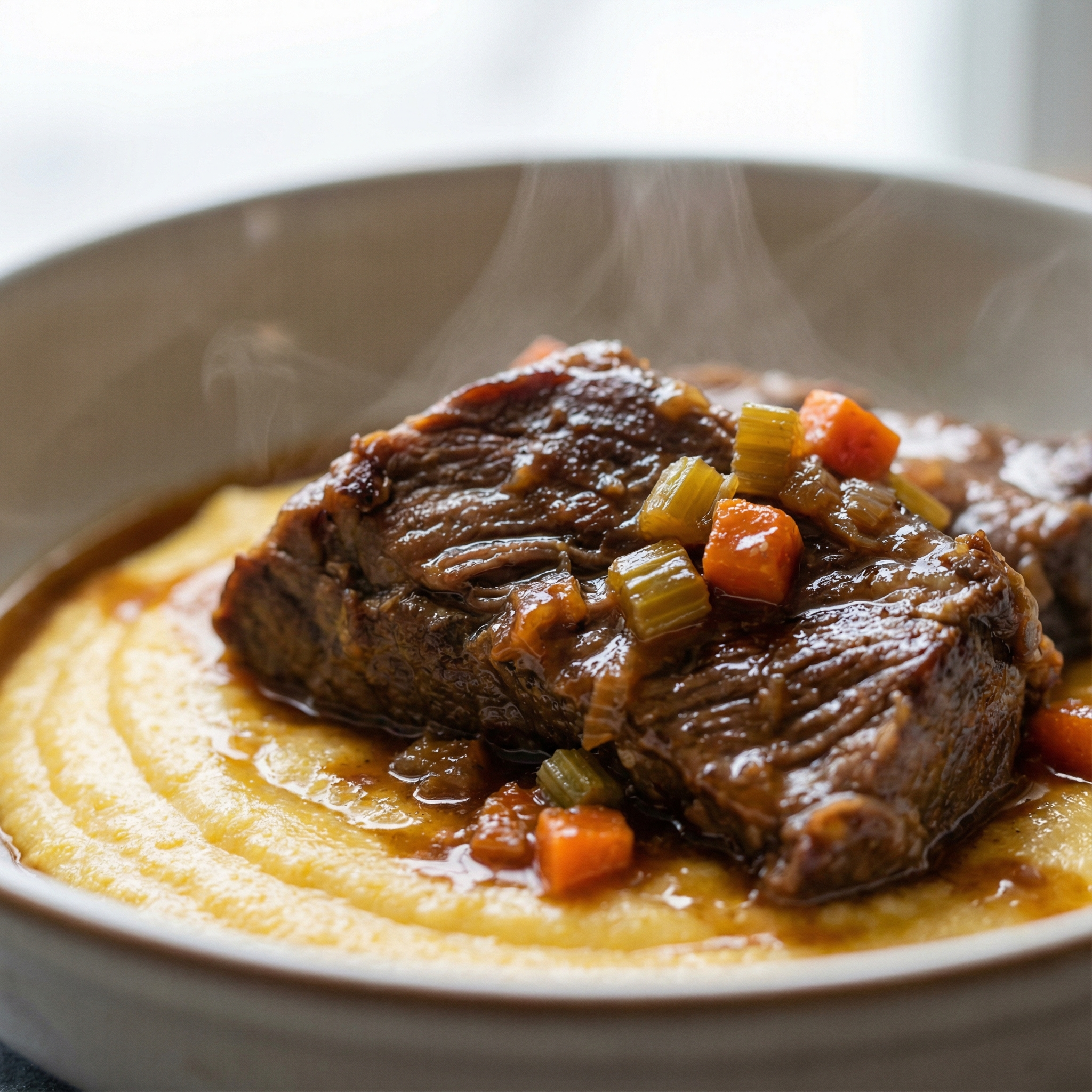
I light a pan and let onion, carrot, and celery soften in olive oil until the kitchen smells like home; the first sip of simmering wine always feels like a small promise. I brown chunks of chuck roast, add a slow braise, then let time pull the flavors together into a sauce that comforts as much as it feeds.
There’s a certain calm to this kind of cooking. Start with a good soffritto, choose a roast that stays juicy, and keep the heat gentle so the meat turns fork-tender over a long simmer. A splash of red wine and a spoon of tomato paste deepen the sauce; reduce it until it clings to the meat. For the cornmeal, I whisk stock into water, finish with butter and cheese, and serve the saucy meat spooned on top so each bite is silky and rich.
Key Takeaways
- Begin with a soffritto in olive oil to build base flavor.
- Use a chuck roast for juiciness during a long, gentle braise.
- Add red wine early to layer complexity, then reduce for depth.
- Simmer low and slow until the meat is fork-tender—plan your time.
- Whisk stock into the cornmeal and finish with butter and Parmesan for creamy texture.
- Finish the sauce by reduction or a starch slurry to control thickness.
Why this Italian beef stew over polenta hits the comfort food sweet spot
A gentle pan and patient heat let the soffritto speak first, shaping everything that follows. I sweat onion, celery, and carrots in olive oil until they soften and turn sweet. That mellow start makes the whole dish feel like a warm memory.
After the vegetables, I briefly brown the beef against the softened base so the meat soaks up the mellow flavor. A quick sfumare with red wine lifts the fond and adds a layered note to the sauce.
Choosing broth gives body; water works if you season and let the pot simmer low. For polenta service, I add more liquid up front so the finished stew yields a spoonable sauce that baths the cornmeal.
- Keep the heat low — the pot should barely burble for 2 to 3 hours to get fork-tender meat.
- Finish by skimming excess fat so the sauce stays glossy, not greasy.
- For a peppery, Tuscan twist, accent black pepper and a splash more dry wine near the end.
Ingredients and technique notes from an Italian kitchen
I start by choosing a well-marbled chuck and cutting it into even cubes so every piece cooks to the same tender finish. Chuck roast holds fat and collagen that melt over a 2–3 hour braise, keeping the meat succulent; avoid mystery packs of pre-cut pieces that can dry out.
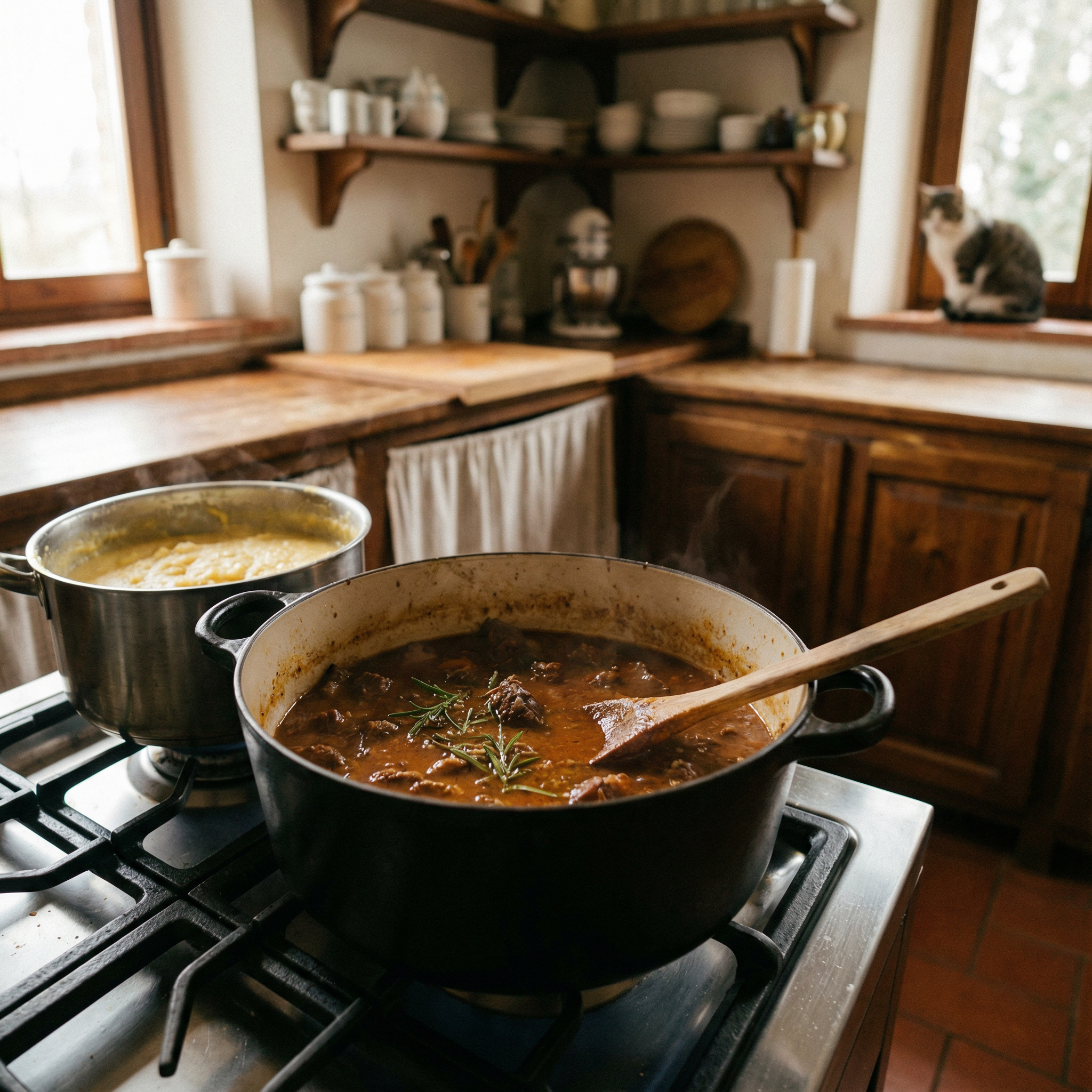
Make a true soffritto by finely dicing onion, carrot, and celery and sweating them low in olive oil. If I want extra roundness I add a little butter, a pinch of salt and a spoon of water to keep the vegetables soft without browning.
The braising liquid and seasoning
I always sfumare with a dry red wine to lift the fond, then add broth or plain water as needed. For polenta service I add enough liquid to nearly cover the meat so the finished sauce is generous; reduction or a quick starch slurry thins it to the right gloss.
Tomato, herbs, and pepper notes
Tomato paste cooks 3–5 minutes to lose its raw edge; for a rosso version I add a modest amount of tomato sauce. I favor rosemary, bay, and marjoram—add them whole and remove before serving. For a pepper-forward finish, use coarse black pepper early so it permeates the braise without turning sharp.
- Think in cups: liquid should almost cover the beef at the start.
- Season in layers—light salt in the soffritto, then on the meat.
- Trim excess fat or skim near the end for a glossy, balanced sauce.
Beef stew with polenta italian recipe: step-by-step for tender meat and rich sauce
I begin on low heat, softening a true soffritto in olive oil (or a butter–oil mix) until onion, carrot, and celery are sweet and translucent.
Brown lightly after the soffritto, then sfumare with red wine
Heat a wide pan so the aromatics coat the surface. I add beef cubes and turn them to brown lightly, then season with salt pepper in a light hand.
A quick sfumare with dry red wine lifts the fond; let it nearly evaporate so the pot keeps a winey scent but no sharp bite.
Low-and-slow simmer: 2 to 3 hours until fork-tender, then adjust thickness
Move the browned meat to a heavy pot if your pan is small. Add broth to almost cover and tuck in a sprig of rosemary and a bay leaf.
Cover and keep the heat very gentle—just an occasional burble. Simmer 2 to 3 hours until a fork slides in easily.
Pro tips: salting, skimming fat, and starch-thickening for a glossy finish
- Cook tomato paste with the aromatics 3–5 minutes for deeper color and flavor.
- Skim surface fat before final seasoning to keep the sauce glossy and bright.
- If the sauce is thin, reduce uncovered for a few minutes or whisk in a small cornstarch slurry and simmer briefly.
- For a peppery, Tuscan touch, finish in a 325°F oven for even, gentle cooking time.
For more detailed timing and tricks, see this handy guide: classic simmering method.
Make creamy polenta like a pro
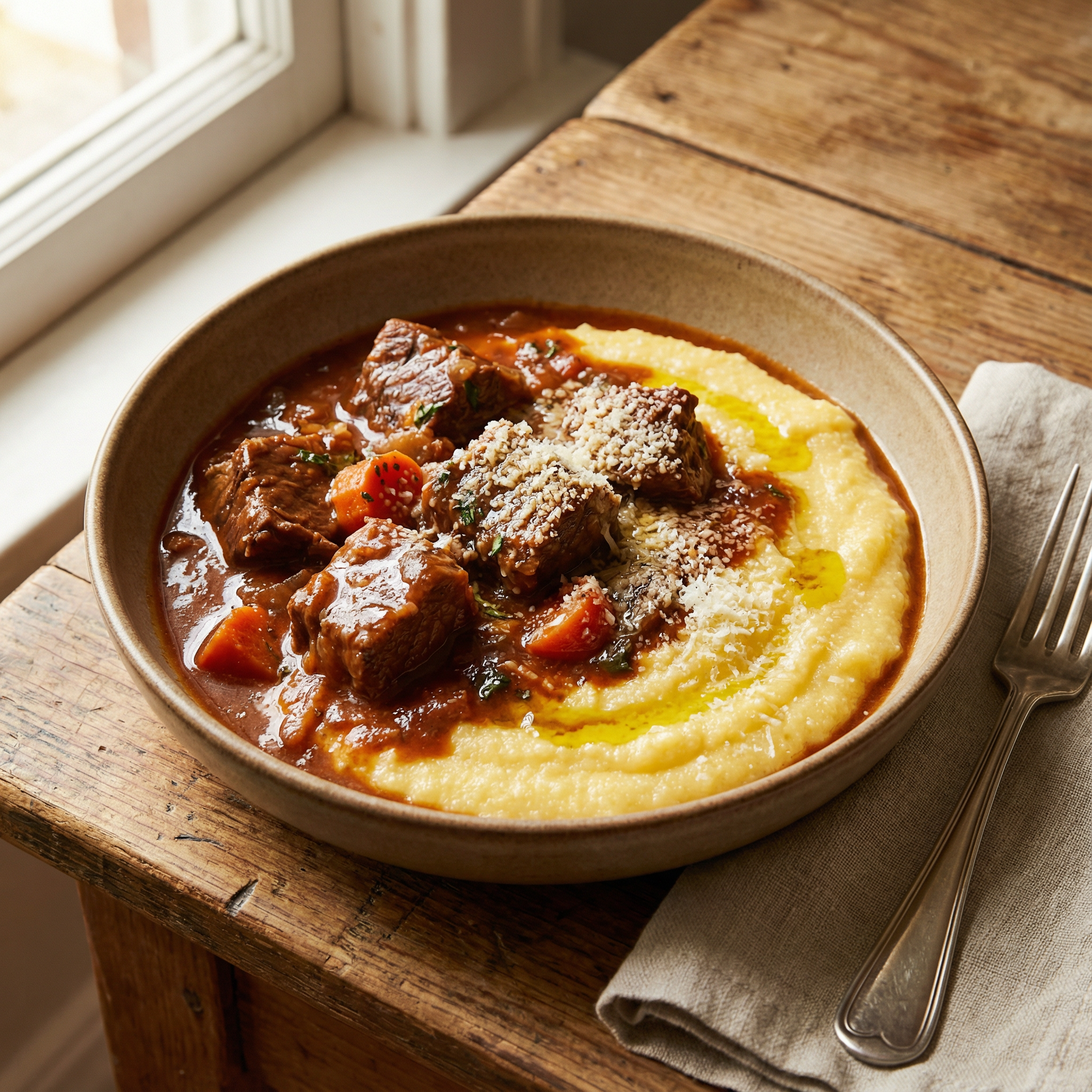
Bring a kettle of stock and water to a rolling boil, then slowly whisk in the cornmeal so it never lumps. This quick shock sets the texture and gives you control from the start.
Liquid choices and ratios
I combine water and stock for balance—water keeps the flavor clean, stock adds savor. Aim for roughly 4 cups liquid to 1 cup cornmeal for a tender, spoonable finish. Adjust to taste if you prefer a firmer or softer finish.
Stirring, heat control, and beating lumps
Whisk as you pour the cup of cornmeal, then lower the heat. Stir regularly for the next 15–25 minutes until the pot thickens and the surface mounds softly. If lumps appear, whisk vigorously while the mix is still loose; heat plus agitation smooths them out.
Butter and cheese choices
Off the heat, stir in butter and grated Parmesan for silky depth. For extra comfort, blend in a little sharp cheddar—Parmesan-only keeps it bright, a creamier mix leans richer.
Reheating and finishing tips
If the polenta tightens, loosen it with warm water or stock over low heat and whisk until velvety. Finish with a touch of butter and a final taste for salt so the cheese doesn’t overpower the dish.
| Texture | Liquid (cups) | Notes |
|---|---|---|
| Loose (serving) | 4 cups | Best for saucy mains |
| Soft (holding) | 3.5 cups | Holds shape slightly |
| Firm (sliceable) | 3 cups | Cool, then set in pan |
- Keep a clean pot side; scrape to avoid scorching.
- Serve slightly looser so the sauce can mingle and cradle the meat.
Serve it right, store it well, and try these Italian-inspired twists
I bring the pot to the table and spoon the tender meat and glossy sauce over warm polenta so the steam and scent invite everyone to the bowl.
I top each serving with a drizzle of good olive oil and a sprinkle of chopped rosemary or parsley. For a change, try this italian beef stew over mashed potatoes or wide buttered noodles—both soak up the sauce beautifully.
Leftovers are simple: chill in a pot-safe container, skim any fat, then reheat gently with a splash of water or wine. Polenta firms in the fridge; loosen it on the stove with stock and a tablespoon of butter until creamy again.
For more timing and technique, see my spezzatino di manzo guide. Season to taste, hold it warm for up to 15 minutes, and enjoy ogni volta.
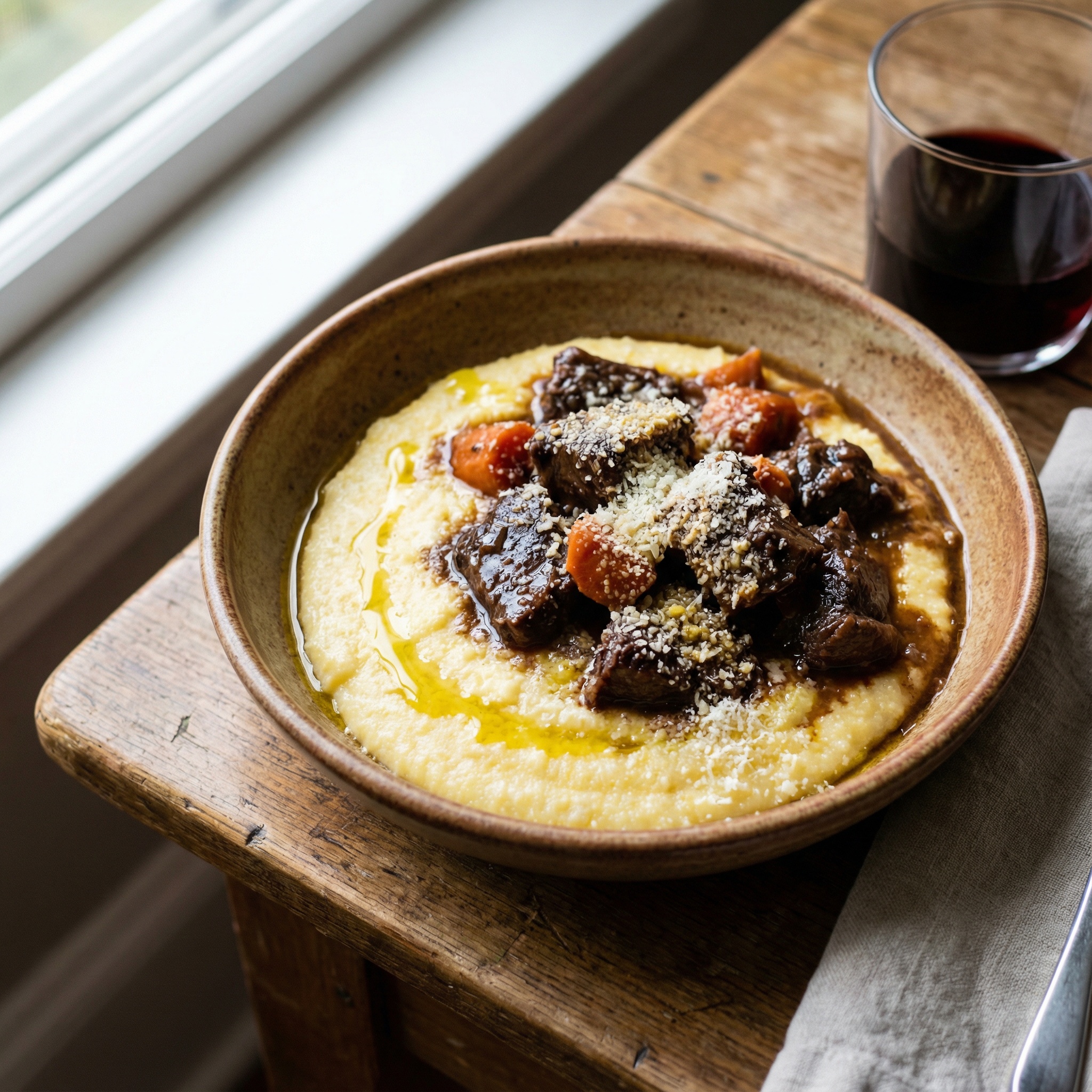
Italian Beef Stew with Creamy Polenta (Spezzatino over Polenta)
Ingredients
Method
- Heat olive oil in a wide pot on low heat. Add onion, carrot, and celery. Cook slowly for 10–15 minutes until soft and sweet, not browned. Add garlic and cook 30 seconds.
- Add beef pieces to the pot. Season lightly with salt and pepper. Turn the meat so it browns gently on all sides.
- Stir in tomato paste and cook 3–5 minutes until darker and fragrant. Pour in red wine and scrape the bottom. Let it reduce until the sharp smell fades.
- Add stock so the liquid almost covers the meat. Add bay leaf and rosemary. Cover and simmer very gently for 2–3 hours, stirring occasionally, until the beef is fork-tender.
- Remove herbs. Skim off excess fat. If the sauce is thin, simmer uncovered for a few minutes to thicken. Taste and adjust salt and pepper.
- Bring water or stock to a boil. Slowly whisk in cornmeal. Lower heat and cook 15–25 minutes, stirring often, until smooth and creamy.
- Remove from heat. Stir in butter, Parmesan, and salt. Adjust thickness with warm water if needed.
- Spoon creamy polenta into bowls. Top with beef and plenty of sauce. Finish with olive oil and extra cheese.
Notes
- Keep the heat low. The pot should barely bubble.
- Chuck roast works best—don’t swap it for lean beef.
- Polenta should be soft, not stiff. Loosen it before serving.
- The stew tastes even better the next day.
- Skimming fat at the end keeps the sauce rich but clean.