

Jump to Recipe
I learned early that simple food can be full of memory: a hot pan, the hiss of a steak meeting metal, and a bright, briny finish that wakes the palate. I love how this Italian approach balances a crisp crust and a glossy pan finish, the kind you reach for on a relaxed summer evening.
Quick timing keeps the flesh juicy, and a few chef tricks — dry the steaks well, rest the fish, and add cold butter off heat — make the sauce shine. Serve it with broccolini or a peppery salad and you have a confident dinner that feels both casual and special.
Key Takeaways
- Short sear time yields juicy seafood and a good crust.
- Drying fish and simple seasoning improve texture and flavor.
- Whisking cold butter off heat creates a smooth, glossy sauce.
- Use chicken or seafood stock interchangeably for the pan finish.
- Pairings like broccolini or toasted orzo make a complete serving.
Simple summer elegance with big, bright flavor
Summer cooking shines when bold, bright flavors come together fast. I aim for plates that feel effortless but taste like you spent the afternoon crafting them.
This fish behaves like a steak: a hot grate, 3–4 minutes per side for 1 to 1¼-inch steaks, and a quick sear that chars the edge while keeping the center slightly pink. Aim for an internal temperature of 145°F for safety and peak juiciness.
The finishing sauce is intentionally spare. A squeeze of lemon, a spoonful of nonpareil caper sauce, and a pat of cold butter off the heat lift the natural sweetness without masking it. The result is bright, briny, and silky.
- Firm flesh holds confident grill marks and a satisfying texture.
- Timing is everything: a very hot surface and exact minutes per side yield crisp edges and a juicy center.
- Simple ingredients let Mediterranean notes sing—no clutter, just balance.
| Steak thickness | Minutes per side | Doneness cue |
|---|---|---|
| 1–1¼ inch | 3–4 | Charred edge, slightly pink center |
| 1½ inch | 4–5 | Firm but moist, 145°F |
| Confidence tip | Use a hot grate | Quick sear, rest briefly |
This is the kind of plate that turns a Tuesday into a trattoria moment—sunny, bright, and ready in less time than it takes to set the table. I’ll walk you through exact heat and time so your results are reliable every time.
What you’ll need for grilled swordfish with lemon capers
Good results start at the market: choose the right cut and a handful of pantry staples. I keep notes in my head about texture, scent, and size so every step after that is easy and reliable.
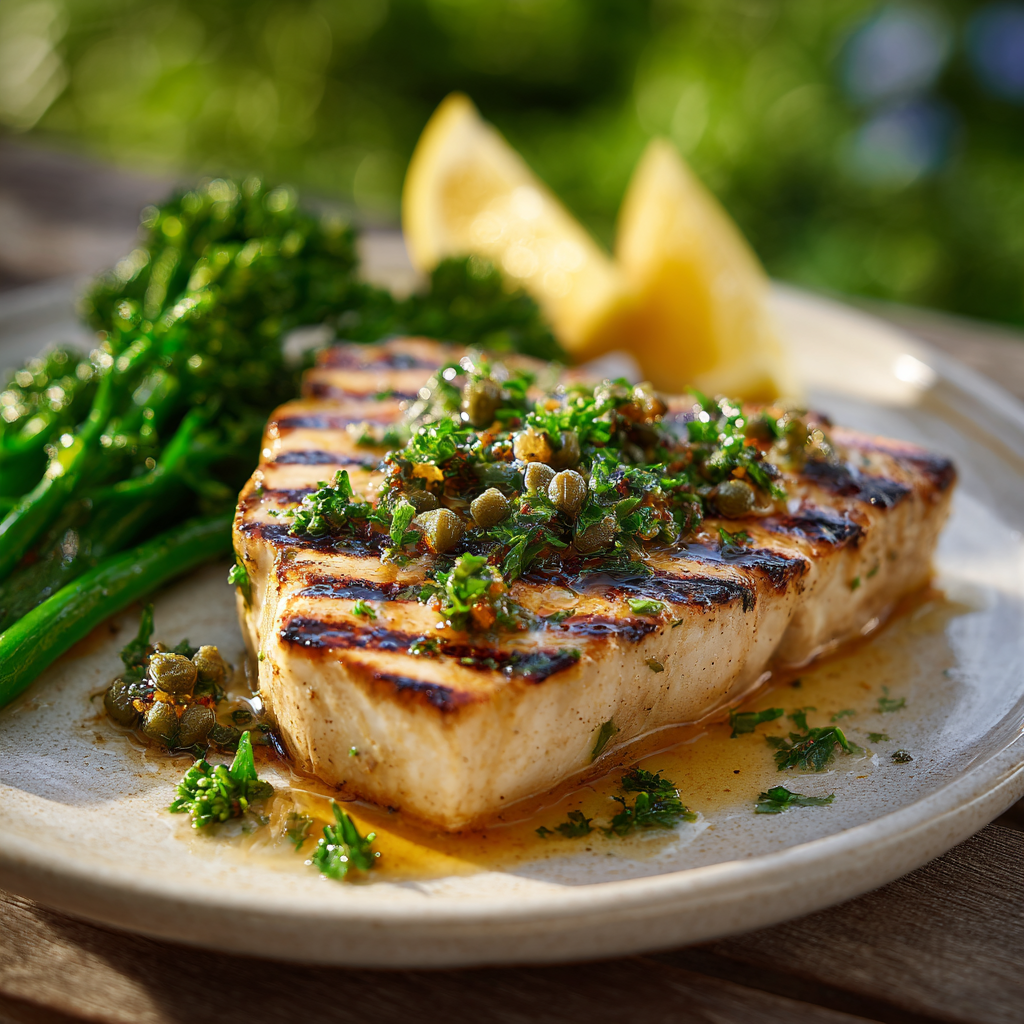
Choosing steaks and optimal thickness
Look for steaks at least 1 inch thick, ideally about 1¼ inches. That thickness takes a hot sear without drying out the center, and it holds up like a good steak on the grill.
Lemons, nonpareil capers, and seasoning
I prefer thin-skinned lemon for bright juice and a touch of zest. Nonpareil capers bring a subtle brine; rinse them if your jar is salty. Season simply with salt and a few turns of freshly ground black or ground black pepper to keep the fish front and center.
Olive oil, unsalted butter, parsley, and tools
Brush the steaks with olive oil to encourage a confident sear and easy release. Use unsalted butter added cold off heat so the sauce emulsifies glossy and smooth.
- Parsley, chopped, for finish.
- Long tongs, instant-read thermometer, small pan, paper towels.
- Portion: one steak per person or halve thicker cuts.
| Thickness | Minutes per side | Doneness cue |
|---|---|---|
| 1–1¼ inch | 3–4 | Charred edge, slightly pink inside |
| 1½ inch | 4–5 | Firm, 145°F |
| Thawing tip | Overnight in fridge | Pat dry before cooking |
grilled swordfish with lemon capers recipe: step-by-step
A confident sear and a few clear cues are all you need to turn steaks into a show-stopping dinner. I’ll walk you through prep, heat, and timing so each piece comes off juicy and well marked.
Prep the steaks
Pat the swordfish very dry on both sides. Dry flesh browns better and gives fewer flare-ups.
Season lightly with salt and freshly ground black pepper. I like a simple sprinkle so the fish sings.
Preheat and oil the grates
Preheat your grill to high heat and brush the grates with oil. A hot, clean surface prevents sticking and creates clear marks.
Cook time cues
- Lay the steaks across the grates and resist moving them until a crust forms.
- For 1 to 1¼-inch steaks, plan about 3–4 minutes per side over high heat. Look for deep grill lines and slight translucency in the center as your cue.
- Use an instant-read thermometer and aim for an internal temperature of 145°F; pull slightly early to allow carryover to finish the task.
Resting and slicing
Transfer the fish to a warm pan or platter and rest briefly so juices redistribute. Rest keeps the texture meaty and succulent.
Slice thick across the grain if sharing, or serve whole and move quickly into saucing while the fish is hot. If the grill runs too hot, shift steaks to a cooler zone to finish gently and protect tenderness.
| Thickness | Minutes per side | Doneness cue |
|---|---|---|
| 1–1¼ inch | 3–4 minutes | Charred edge, slightly pink center |
| 1½ inch | 4–5 minutes | Firm, 145°F |
| Confidence tip | Adjust heat | Finish in cooler zone if needed |
Lemon caper sauce, two ways
A quick, silky sauce turns a good piece of fish into a dinner you brag about. Below I show a classic pan finish and a nutty brown-butter variation. Both are fast and forgiving.
Classic pan finish
Sauté a small shallot briefly in the pan you used for searing. Add 1/3 cup chicken broth or seafood stock and reduce for 2–3 minutes.
Stir in fresh lemon juice and drained capers, remove from heat, then whisk in cold unsalted butter a few pieces at a time until glossy. This lemon caper sauce clings to the steak and brightens the plate.
Brown-butter twist
Melt butter over medium-low and cook until it smells toasty and turns light brown, about 3 minutes. Add lemon segments and capers just to warm through.
The nutty notes pair beautifully with parsley and a light drizzle of olive if you like deeper fruitiness.
- Classic approach: deglaze, reduce, add lemon and capers, then whisk in cold butter off heat.
- Brown-butter: brown gently, fold in lemon and capers, taste and adjust.
- Use 1–2 tablespoons chopped parsley to finish; chicken broth is an easy stock swap.
| Method | Time | Key cue |
|---|---|---|
| Classic pan sauce | 5 minutes | Glossy, smooth |
| Brown-butter twist | 4–5 minutes | Toasty aroma, warm citrus |
| Smart swap | Varies | Use stock on hand, reduce to concentrate |
Pro tips for perfect results every time
Small decisions—how to thaw, oil, and time—make the difference between dry fish and a tender result. I share the why behind each tip so you can repeat success every time. These are practical, testable habits from my kitchen to yours.
Fresh versus frozen, and safe thawing
Fresh swordfish should smell clean and feel firm. If you use frozen, thaw overnight in the refrigerator.
Pat the steaks very dry before cooking. Dry flesh sears instead of steaming, which gives you a better crust and fewer flare-ups.
Minutes per side, thickness, and temperature
Plan about 3–4 minutes per side for 1–1¼ inch steaks. Thicker cuts need slightly more time; thinner ones overcook quickly.
Aim for a final temperature of 145°F. Pull a touch early and rely on carryover to finish so the texture stays supple and not chalky.
Oil, sticking, reheating, and finishing touches
Preheat to steady high heat and brush the grates lightly with a neutral oil or a thin coat of olive oil. That reduces sticking and gives strong marks.
Brush the fish sparingly; too much oil causes flare-ups. If a corner sticks, wait—the crust will release when set. For leftovers, reheat gently in a pan or low oven to avoid overcooking. Cooked fish keeps up to two days in the fridge; sauced portions don’t freeze well.
- Keep an instant-read thermometer handy to check doneness fast.
- Season salt sparingly at the end when sauces concentrate; taste first.
| Situation | Action | Why it matters |
|---|---|---|
| Frozen steaks | Thaw overnight, pat dry | Prevents steaming; improves sear |
| 1–1¼ inch thickness | 3–4 minutes per side | Charred edge, juicy center |
| Final check | 145°F internal temp | Food safety and ideal texture |
| Leftovers | Reheat low and slow | Keeps moisture without overcooking |
Sides, plating, and nutrition-minded serving ideas
A few smart side choices bring balance, color, and texture to the table. I aim for plates that catch sauce, add crispness, and contribute fiber so dinner feels both indulgent and clean.
What to serve
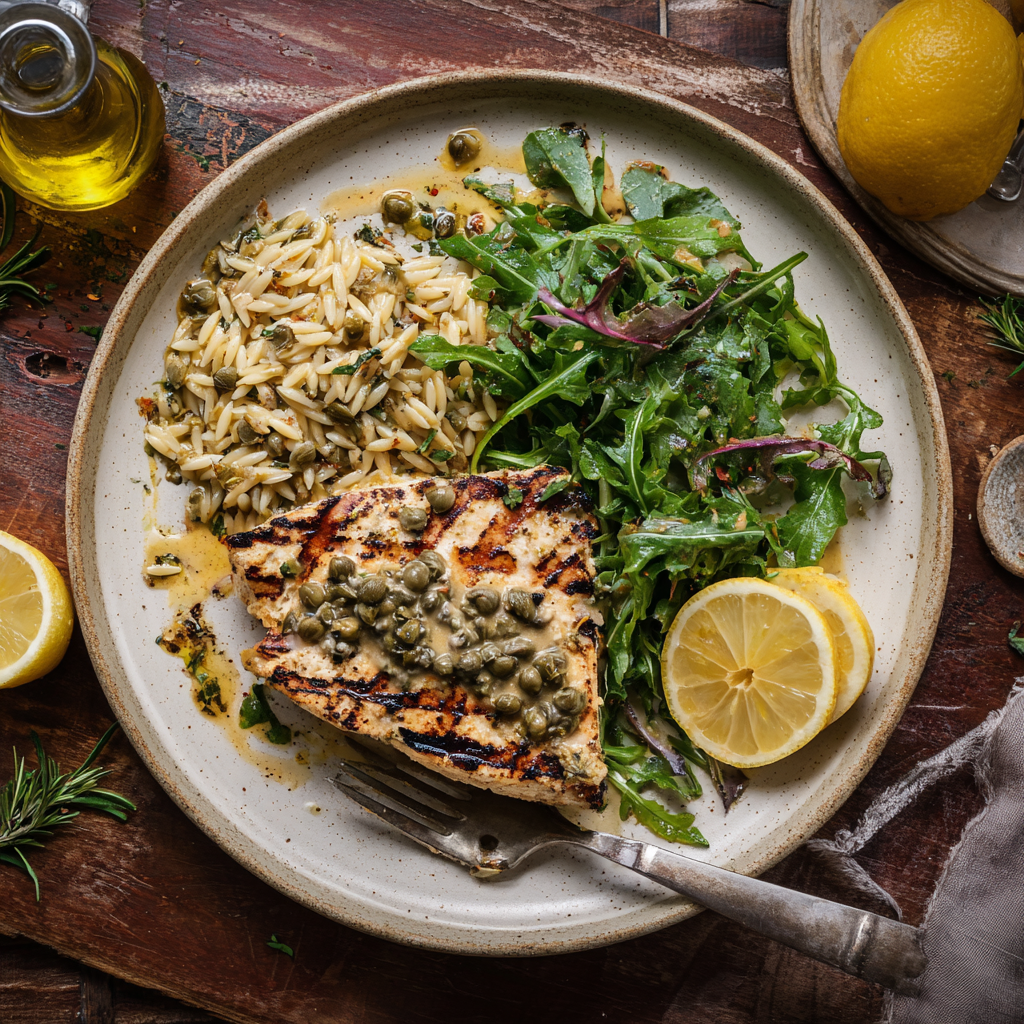
Roasted broccolini tossed with toasted breadcrumbs adds crunch and green color. An arugula salad—lightly dressed with balsamic and a whisper of Parmesan—cuts the richness and adds peppery brightness.
Portions and plating
Portion one steak per serving for a hearty plate, or slice the swordfish across the grain and fan it over toasted orzo, simple rice, or creamy polenta. That lets the lemon caper sauce pool and glaze each bite.
- Serve the steak over orzo, rice, or polenta to catch every drop of sauce.
- Bright sides like broccolini or arugula add fiber and a fresh contrast to richer elements.
- Finish with a scatter of chopped parsley and a few whole parsley leaves for color and lift.
- A light crack of pepper and a whisper of lemon caper on the greens ties the whole serving together.
| Side | Why it works | Serve amount |
|---|---|---|
| Toasted orzo | Catches sauce, nutty texture | ½–¾ cup cooked |
| Roasted broccolini | Crisp, adds fiber | 3–4 stems per person |
| Arugula salad | Peppery lift, brightens plate | 1–2 cups per serving |
Bring it to the table and enjoy every briny-lemony bite
Bring the pan to the table and let the final spoonful of butter do its work. Grill the steaks about 3–4 minutes per side for 1–1¼-inch cuts, aim for a 145°F internal temperature, then rest briefly so juices settle.
Spoon the warm lemon caper sauce over the fish while it’s hot. Brush each steak lightly with olive oil before cooking and season again after slicing with salt and freshly ground black for a bright finish.
Keep the heat high for quick sear marks, check the minutes per side, and whisk extra butter off heat if you want a silkier sauce. Serve immediately on a warm pan or platter and enjoy the texture and flavor.
If you like to print and save tips, also try a contrasting pasta side like pasta with anchovy butter for a classic pairing. Buon appetito—now go feed the people you love.
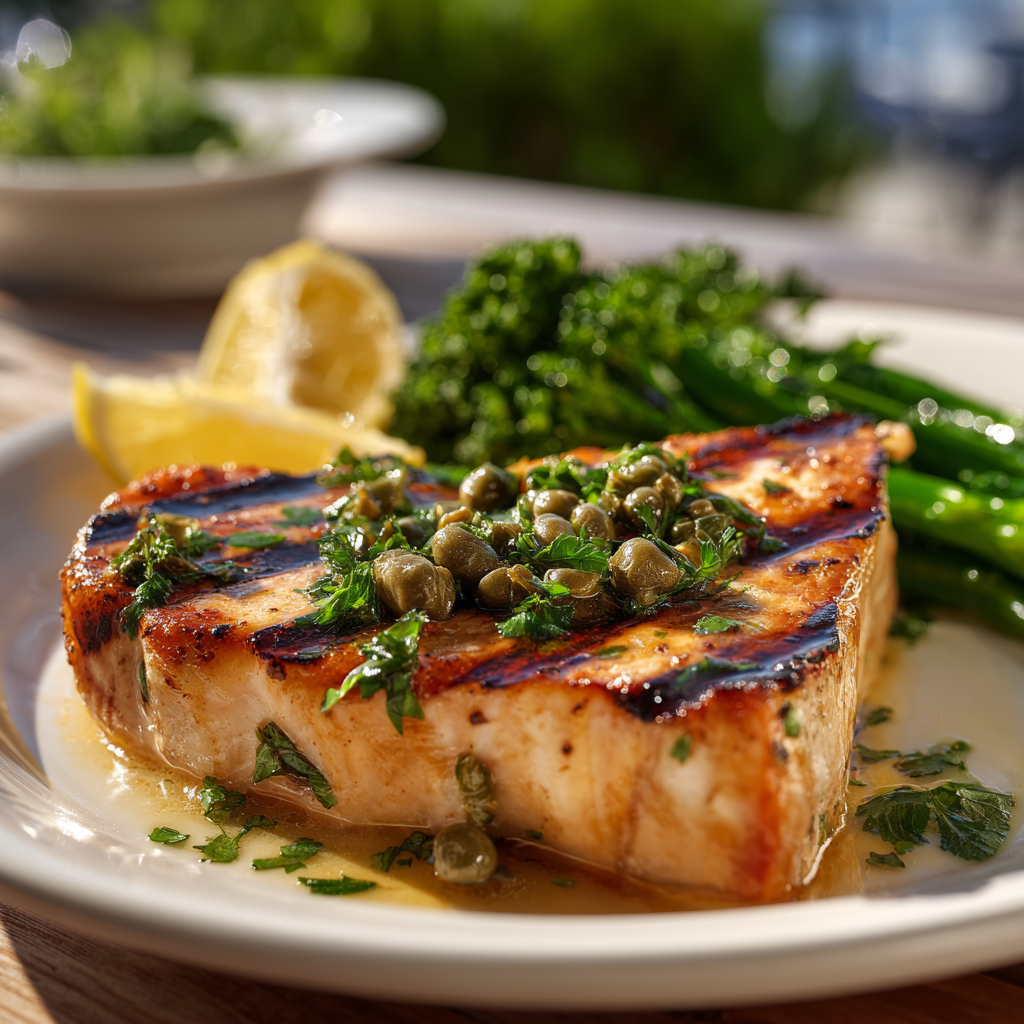
Grilled Swordfish with Lemon Caper Butter Sauce
Ingredients
Method
- Pat swordfish dry on all sides with paper towels. Brush lightly with olive oil. Season both sides with salt and black pepper.
- Preheat grill to high heat, about 400 to 450°F. Clean and oil the grates well.
- Place steaks on the hot grates. Do not move them early.
- Grill 3 to 4 minutes per side for 1 to 1¼ inch steaks.
- Look for dark grill marks and a slightly pink center.
- Check internal temperature. Target 145°F.
- Remove from grill and rest 3 minutes on a warm plate.
- Place a small pan over medium heat.
- Add a little olive oil and the minced shallot. Cook 30 to 60 seconds until soft.
- Add stock and simmer 2 to 3 minutes to reduce slightly.
- Remove pan from heat. Add lemon juice and capers.
- Whisk in cold butter a few pieces at a time until glossy.
- Stir in chopped parsley. Taste and adjust salt.
- Spoon warm sauce over the rested swordfish.
- Finish with extra parsley and black pepper. Serve at once.
Notes
Thaw frozen steaks overnight in the fridge and dry well.
Do not overcook. Swordfish dries fast.
Add butter off heat so the sauce stays smooth.
Serve with broccolini, arugula salad, or toasted orzo.