
Jump to Recipe
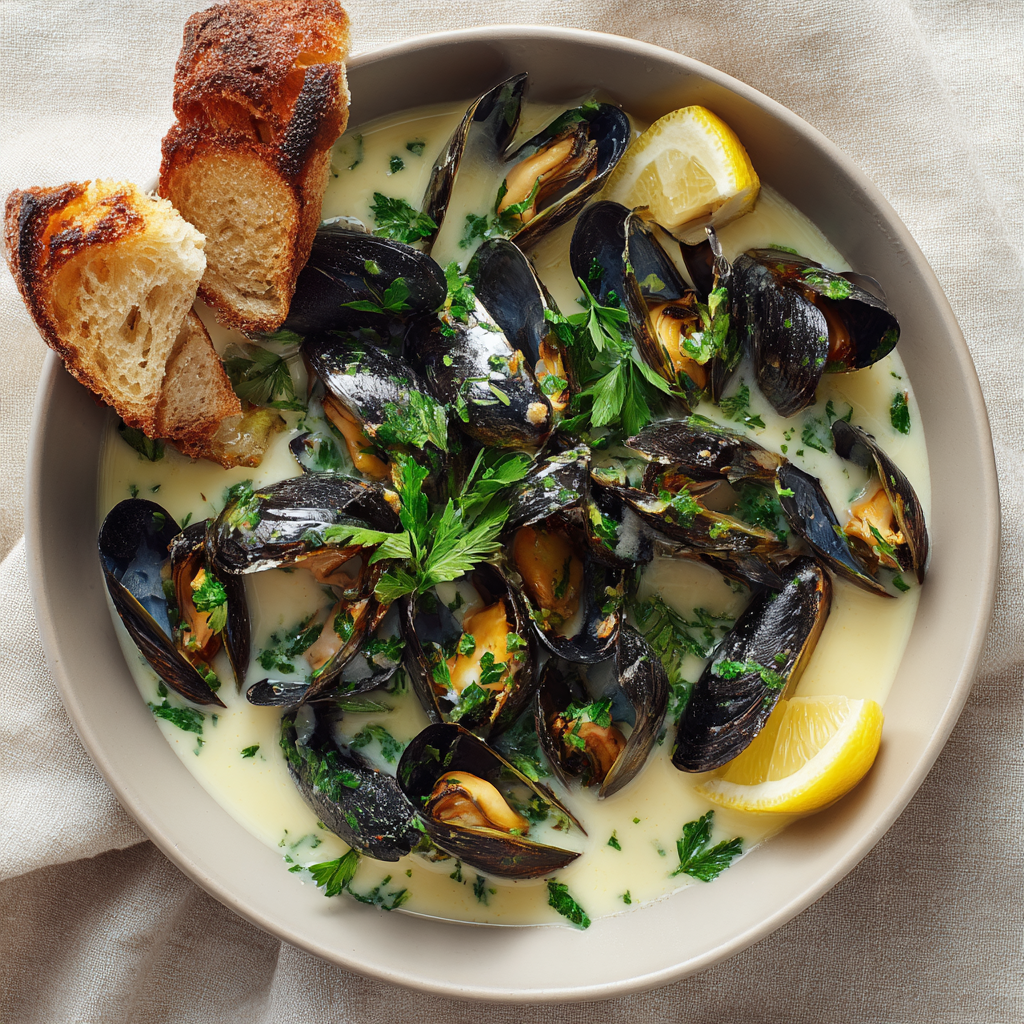
I pull a heavy pot to the stove and hear the scatter of shells as I sort the day’s catch. Steam opens the lid and a briny, lemon-bright aroma rises, filling the kitchen with that easy, shared feeling of a table ready for company.
I favor PEI shellfish and a dry bottle; a quick sauté of shallots, a touch of butter and olive oil, and a splash of wine make a broth that’s bright and silky. Finish with a little cream and fresh parsley so every bite glows, and always discard any cracked shells or those that won’t open.
It’s fast enough for a weeknight dinner yet generous enough for friends. Serve in shallow bowls with lemon wedges and plenty of crusty bread to mop the pan—simple, honest, and rooted in the rhythm of home cooking.
Key Takeaways
- Choose fresh shellfish and toss any cracked or foul-smelling pieces before cooking.
- Use dry white wine and good olive oil for a bright, balanced broth.
- Cook quickly: shellfish open fast—remove any that stay closed after cooking.
- Finish with cream and parsley for a silky, herb-fresh lift.
- Serve with lemon wedges and crusty bread to soak up every last drop.
Why this restaurant-quality dish is so easy at home
A few minutes at medium heat and a large pan are all it takes to make a restaurant-worthy dinner at home. I soften shallots in butter and olive oil, add garlic and aromatics, then pour a splash of dry wine and cover to steam until the shells open.
The technique is forgiving: a gentle sauté, covered steam, and the shellfish release a briny liquor that becomes your broth. Most batches cook in just minutes, so I warm bowls and slice bread before I start.
- Moderate heat prevents scorching—use a large pot so steam circulates.
- A modest amount of butter and a drizzle of oil keeps the base silky and bright.
- Season lightly; the natural liquor carries salt, so finish with a pinch if needed.
- Discard any that remain closed after cooking and serve immediately with toasted bread for dipping.
This dish scales easily: keep the same steps, use enough space, and you’ll have steamed mussels that taste like you dined at a trattoria—no fuss, only attention and care.
Ingredient notes that make the sauce shine
I trust good ingredients to carry the dish. I pick live mussels that smell like the sea and are tightly closed; PEI varieties are a favorite for their sweet, tender flesh.
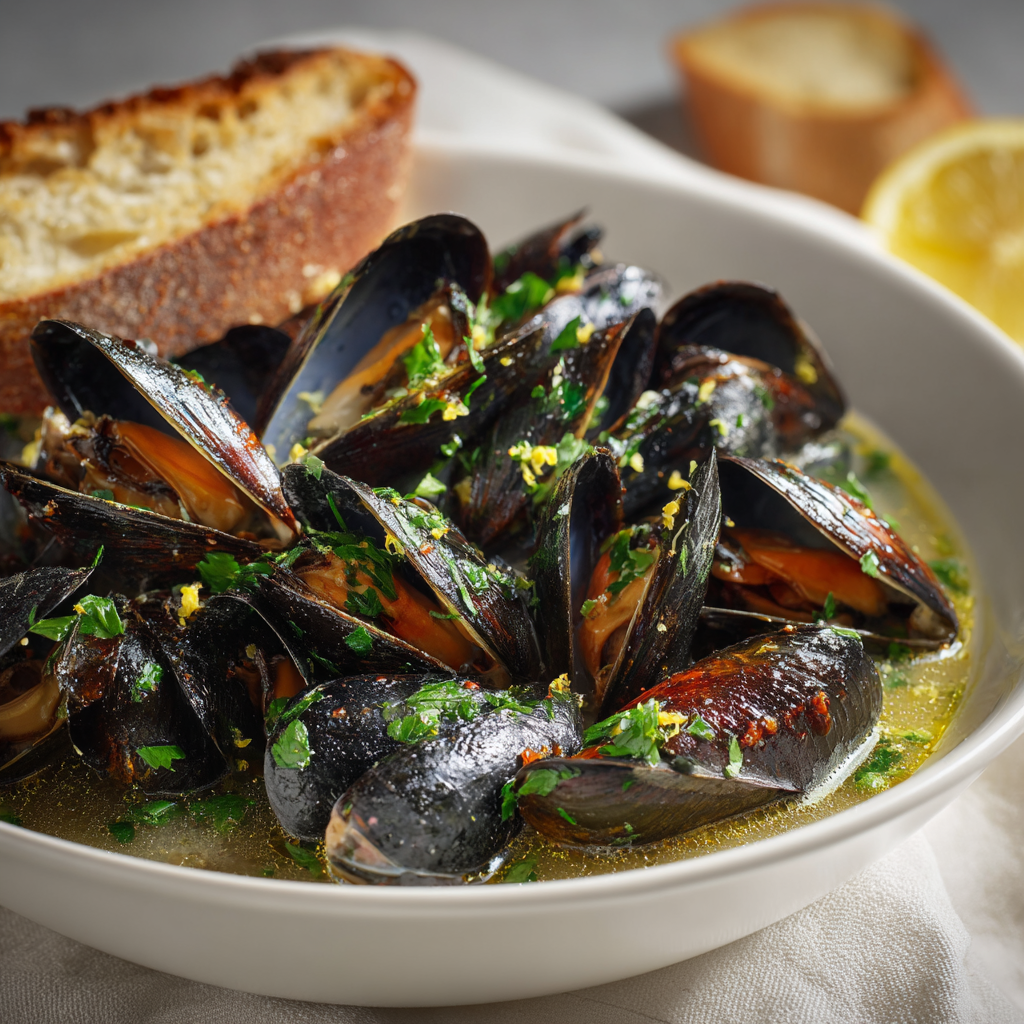
Fresh mussels, shallots, and garlic: how they build savory depth
Shallots bring a mild sweetness, and sliced garlic cloves add warmth without harshness. I use finely chopped shallots and fresh cloves so the aroma blooms quickly and cleanly.
Butter and olive oil balance; when to add red pepper flakes and parsley
Unsalted butter lets me control seasoning while extra-virgin olive oil keeps the pan bright. I briefly bloom red pepper flakes in the fat, then add a pinch later for balance. Fresh parsley goes in at the end for color and lift.
- I use a tablespoon or two of fat—add more olive oil if needed rather than overloading butter.
- Season lightly at first; the shellfish release saline liquor, so taste before finishing with salt.
Dry white wine, optional cream, and lemon for brightness
I favor a dry white like Sauvignon Blanc or Pinot Grigio for structure. A splash of cream makes a silky white wine sauce without heaviness. A little lemon zest and a squeeze of juice at the end sharpen the flavors without masking the seafood.
For more on pairing with pasta, see this family-style guide: Ligurian spaghetti and clams.
Choosing mussels and the right dry white wine
Choosing the right shellfish and bottle sets the tone for the whole meal. I trust clear cues at the market: scent, shell condition, and vendor timing matter more than price.
What to look for when buying fresh mussels
Buy fresh mussels that smell like clean sea air and have tightly closed shells. Avoid any with cracks or a sour odor; they are not safe to cook.
I ask the fishmonger when the batch arrived and pass on any that stay open after a gentle tap. Remove them from sealed bags so they can breathe, and transport them cool and unsealed.
Best dry bottles for the pan
For the pan I reach for a dry white wine that I also enjoy drinking. Sauvignon Blanc offers citrus and herbal lift, Pinot Grigio stays lean and lively, and a crisp Chardonnay brings gentle roundness without oak dominance.
Pick a bottle you like at the table—what tastes good in the glass will shine in the pan.
- I choose PEI mussels for weeknights: they are sweet, meaty, and consistent.
- Ask when they arrived and discard cracked shells or those that refuse to close.
- Transport cool and loose, then store at home in a bowl with a damp towel—don’t seal them.
| Wine | Flavor Profile | Best for |
|---|---|---|
| Sauvignon Blanc | Citrus, herbaceous, high acidity | Bright, citrus-forward pan; cuts richness |
| Pinot Grigio | Lean, crisp, mineral notes | Light, clean broth; keeps flavors delicate |
| Crisp Chardonnay | Rounder fruit, restrained oak if unoaked | Adds body without weighing down the white wine sauce |
How to clean, debeard, and store mussels safely
I start at the sink with cold water and a small bowl. Good prep keeps the broth bright and free of grit. These are simple, safety-first instructions you can follow in just a few steps.
Cold soak, scrub, and remove the beard
Place mussels into a large bowl of cold water for a few minutes to loosen sand. One quick pass with a stiff brush across each shell removes barnacles and debris.
Pull the beards off with a firm tug toward the hinge; the threads come free in one motion and the flesh stays pristine.
Check shells and why safety matters
Discard cracked shells at once. Tap any that are open—if they stay open, toss them. A closed response and fresh scent mean the mussel is safe to cook. Seafood safety matters; don’t take chances.
Short-term fridge storage
Remove from bags or netting so they can breathe. Transfer fresh mussels to a bowl, cover with a damp towel, and refrigerate. Cook within a day; two days is the absolute limit. Drain any pooled liquid so they don’t sit submerged.
- Final sniff and look before cooking: clean scent, intact shells, lively response.
- Give yourself a few extra minutes the first time—this prep becomes second nature.
| Storage | Max time | Tip |
|---|---|---|
| Refrigerated, damp towel | 1–2 day | Drain excess water daily |
| Do not seal | N/A | Must breathe to stay alive |
| Discard if open or cracked | Immediate | Safety first for great flavor |
Step-by-step: mussels in white wine garlic sauce recipe
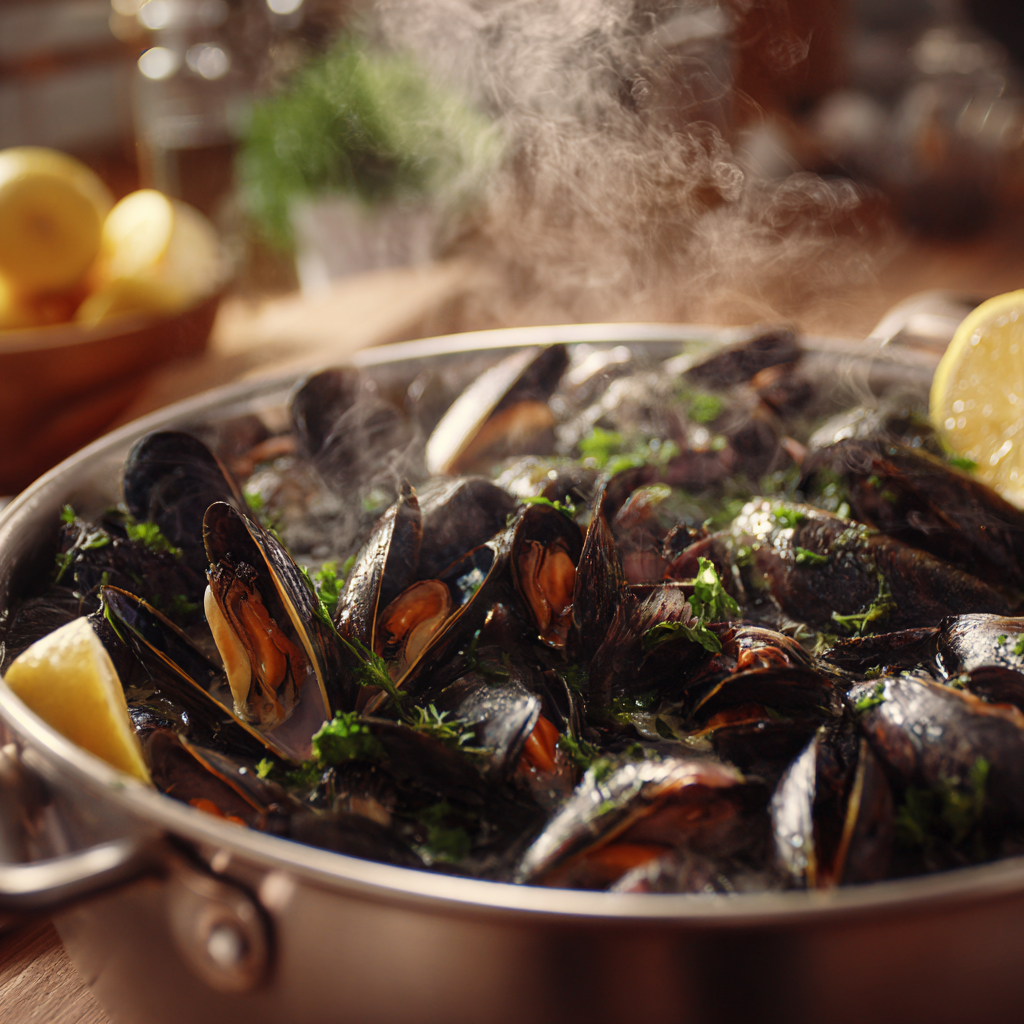
I set a wide, heavy pot over steady heat and melt a tablespoon of butter with a splash of olive oil. This keeps the aromatics soft and prevents burning.
Heat butter and olive oil; soften shallots and cook the garlic
Add finely chopped shallots and sweat them for 8 to 10 minutes until they turn translucent at the edges. Stir in two crushed cloves for about a minute so they bloom without browning.
Layer lemon, pepper flakes, then add mussels and dry white wine
Fold in a pinch of red pepper flakes, lemon zest, and a squeeze of juice. Add the shellfish, pour one cup of dry wine and a splash of stock if using, then stir once to combine.
Cover to steam until shells open; finish with cream, salt, pepper, and parsley
- Bring to medium-high heat, cover, and cook about 3 minutes until most shells open.
- Lower heat, stir in two tablespoons of cream, season with salt and freshly ground pepper, and scatter chopped parsley.
- Taste the wine sauce; add another squeeze of lemon or a knob of butter if desired, then serve in warm bowls with bread.
| Step | Time | Tip |
|---|---|---|
| Sauté shallots | 8–10 minutes | Low and patient for sweet color |
| Steam shells | About 3 minutes | Stop when most shells open |
| Finish | 1–2 minutes | Lower heat before adding cream |
Pro tips for perfect steamed mussels every time
I treat this dish like a short performance: set your stage, follow the cues, and serve immediately. Use a roomy pot so steam moves freely and liquid won’t boil over when the shells release their juices. A pan with space keeps flavors bright and avoids crowding.
Use a large pot, manage heat, and never serve unopened shells
Soften aromatics over gentle heat, then raise to medium-high only to steam. I set a timer for a few minutes and start checking early; perfect texture comes from precise time, not guesswork. If any mussels open refuse to open after cooking, discard them—safety first.
How to avoid grit and get a clean, briny broth
Give each shell a firm scrub under cold water with a dedicated brush to remove sand. A short soak loosens grit, and good rinsing means the sauce stays pristine. Taste the pan and adjust pepper and acidity before ladling into bowls so every sip feels balanced.
- Roomy pot prevents boil-over and helps even steaming.
- Gentle start, quick steam—manage heat for best texture.
- Scrub shells with a brush and rinse well under water to avoid grit.
| Stage | Heat | Time / Tip |
|---|---|---|
| Sweat aromatics | Low | 8–10 minutes for gentle flavor |
| Steam shells | Medium-high | 2–4 minutes; check early so they don’t overcook |
| Finish & taste | Low | Adjust pepper flakes, salt, and lemon before serving |
Serving ideas, pairings, and timing
I like to set the bowls wide and shallow so the juices spread, begging for a piece of warm bread. This lets every guest scoop up the broth and enjoy the aroma of lemon and parsley while the plate is still steaming.
Keep lemon wedges beside each bowl for a last bright squeeze. I place a large loaf at the center so people can tear, dip, and pass. Warm crusty bread or a simple baguette makes the moment communal and tactile.
Pairings and portion notes
Match the pot with a dry white wine that mirrors the pan: Sauvignon Blanc, Pinot Grigio, or a crisp Chardonnay are my go-tos. Pour small glasses first; the bottle should be easy to sip and refill.
- A shallow bowl gives every diner plenty of wine sauce and room to work.
- Warm crusty bread or a baguette is essential—tear, dip, repeat.
- Sprinkle chopped parsley over the top for color and fresh herb lift.
- As a starter, serve about a cup per person; enlarge portions and add a salad for a full dinner.
- Call guests to the table just before you lift the lid so the meal arrives steaming and perfect.
| Element | Why it matters | Tip |
|---|---|---|
| Shallow bowls | Show the broth and make dipping easy | Warm them briefly before serving |
| Crusty bread | Soaks up every drop of the wine sauce | Serve torn pieces for sharing |
| Dry white wine | Brightens and echoes the pan flavors | Keep a chilled bottle on the table |
Bring it to the table with confidence
When the pan sings and the broth shimmers, that’s your cue to call the guests. I prep like a pro: fresh mussels cleaned and de-bearded, shallots ready, butter and olive oil warmed, and aromatics at hand.
Cook the same day or within two days. Keep them loose under a damp towel, discard cracked shells, and toss any that fail to open when steamed.
I finish the white wine sauce with cream, a pinch of salt, a grind of pepper, and a squeeze of juice. Taste, adjust with a tablespoon more butter if needed, scatter parsley, and serve immediately with warm bread and a light shower of red pepper flakes for those who want a spark.
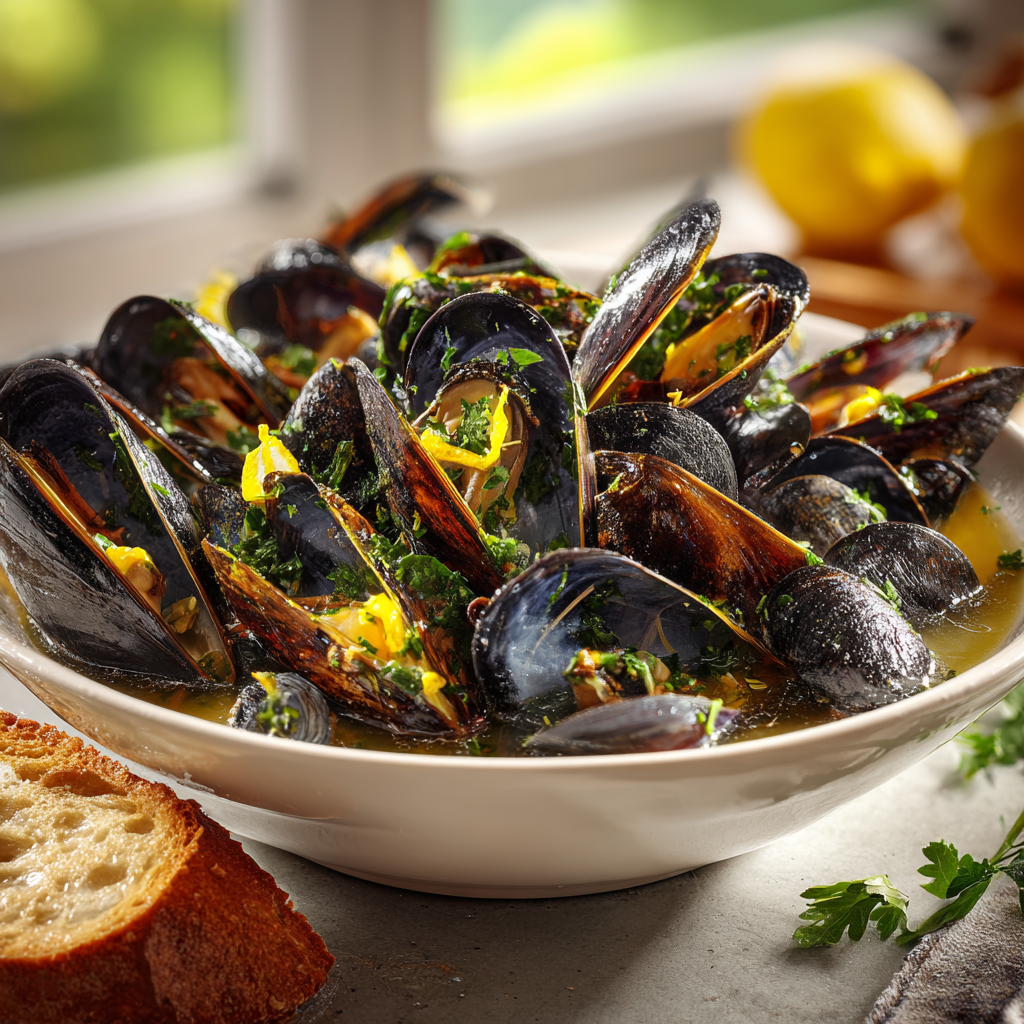
Steamed Mussels in White Wine Garlic Sauce
Ingredients
Method
Notes
- Use a large pot so steam moves freely.
- Season lightly at first. Mussels release salty liquid.
- Serve right after cooking for best texture.
- Leftovers keep up to 24 hours in the fridge. Reheat gently.