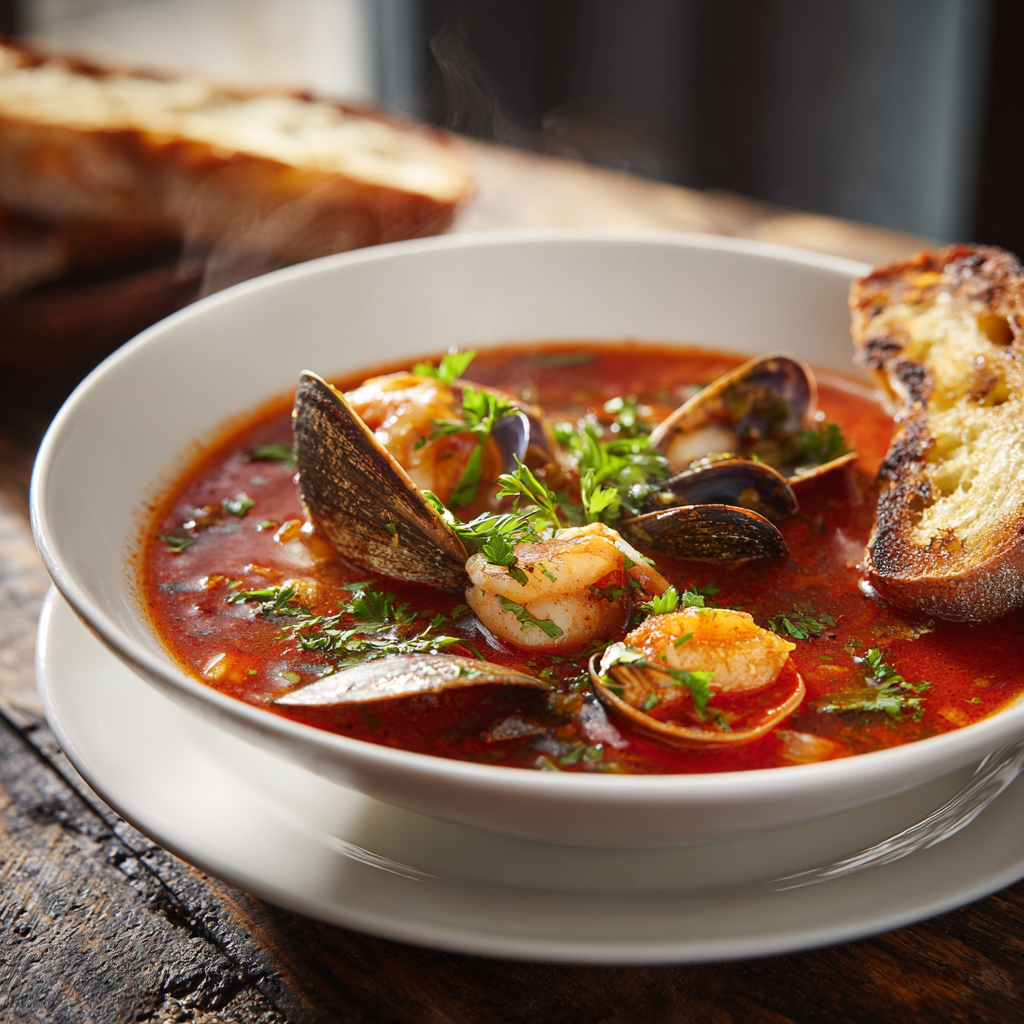
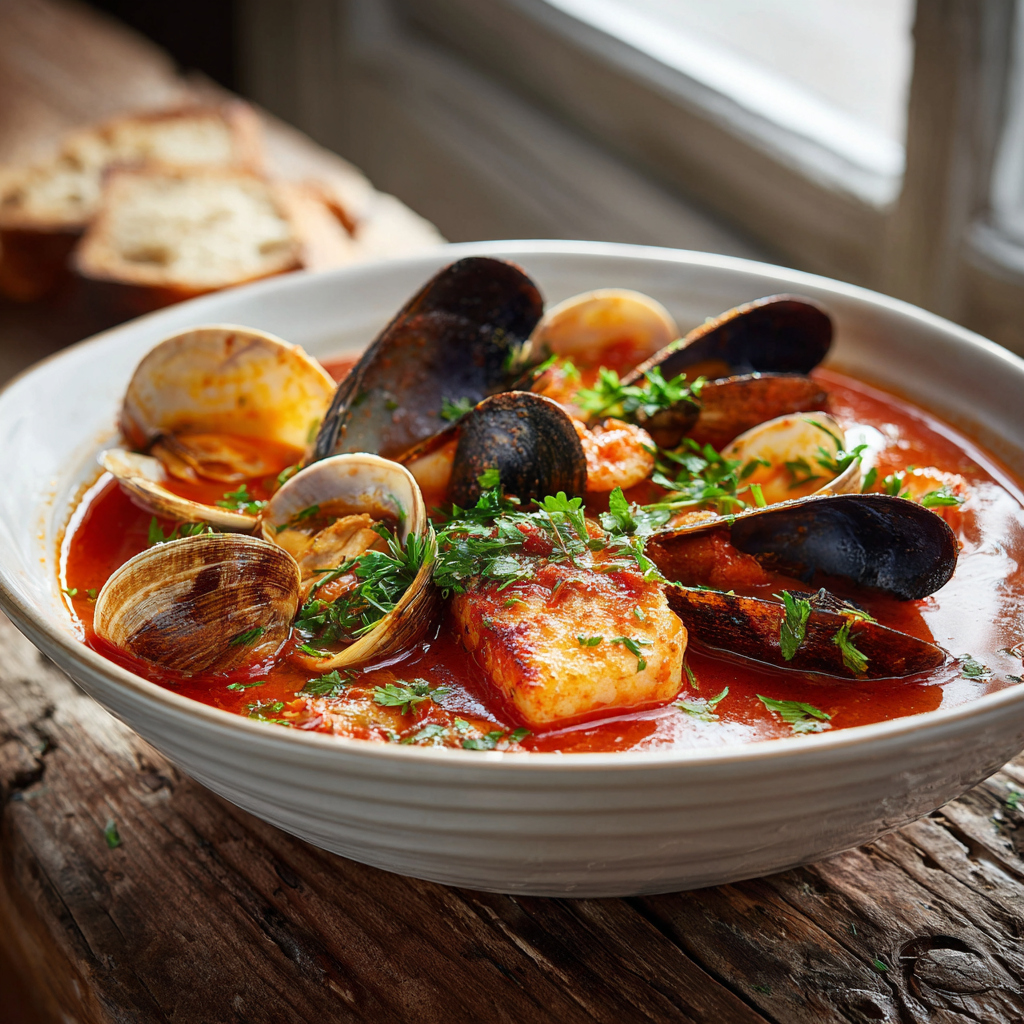
Jump to Recipe
I grew up watching fishermen mend nets while the sun smudged the horizon, and that memory flavors every pot I make. I cook slowly, coaxing a bright tomato and wine base until it sings, then add the catch in stages so each piece keeps its shape and sea-salinity.
This cioppino-style fish stew comes from San Francisco’s docks, born of fresh catch and simple hands. I favor San Marzano for balance, a dry bottle I’d happily drink, and a gentle simmer that deepens without turning bitter.
I’ll share practical tips—how to prep clams and mussels, portion firm fish, and make the base ahead so dinner comes together fast. The aim is clear: clean, briny flavor that lets the ocean speak, not a heavy pot that hides it.
Key Takeaways
- Build the tomato-wine base early for richer, balanced flavor.
- Add shellfish and fish in stages to avoid overcooking.
- Use firm white fish and fresh shellfish for best texture.
- Choose a dry drinking wine to keep the broth bright.
- Serve with crusty bread to soak up the broth and salt.
Why this tomato‑kissed seafood stew is simple, briny, and weeknight‑friendly
A good cioppino feels like a lit lantern on a foggy quay—bright, salty, and instantly homey. I keep the approach practical so you get big flavor without fuss.
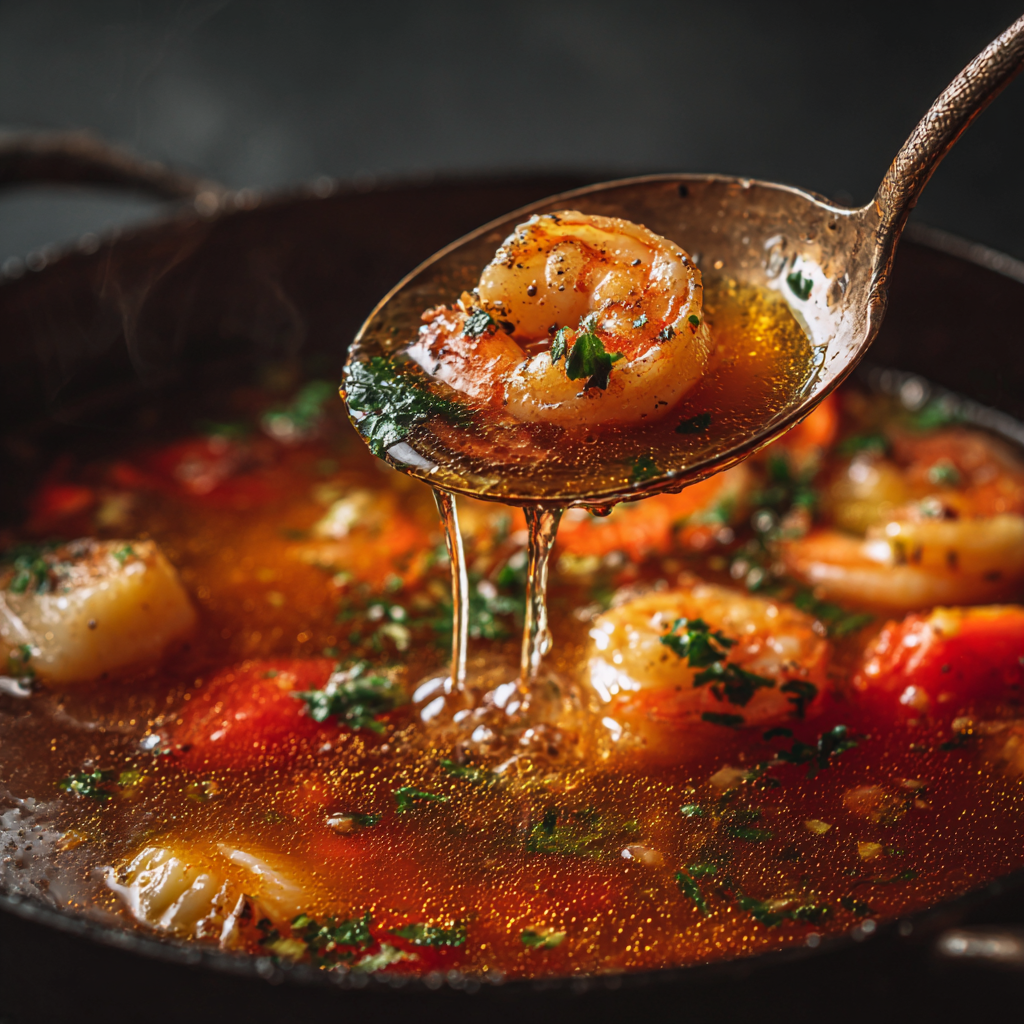
The base sweats gently in olive oil, softening onion, garlic, and fennel while a hint of red pepper wakes the broth. Deglaze with a splash of wine, simmer to concentrate, and you have a stock that tastes deep in just minutes.
What makes it Italian‑American at heart
Born in San Francisco, cioppino grew from fishermen using the day’s catch. That humble origin means the method is flexible: shellfish and firm fillets shine when added last, so texture stays sweet and tender.
How to get restaurant depth in under an hour
- Build flavor low and steady on medium heat, then finish fast so the seafood never overcooks.
- Taste and season as you reduce; a pinch of black pepper and the shellfish’s natural salinity do heavy lifting.
- Make the tomato‑wine base ahead and add seafood in stages for a true weeknight shortcut.
Italian seafood stew with tomatoes recipe: the game plan at a glance
The trick is simple: a patient base, a gentle simmer, and seafood added in order keeps textures right. I work steadily at the pot so the broth develops depth before anything delicate goes in.
Flavor base first, seafood last—so nothing overcooks
Start by sweating onion, fennel, garlic, and a pinch of red pepper in olive oil over medium heat. Slow sweating draws out sweetness you can’t get any other way.
Deglaze with a splash of white wine, then add crushed or San Marzano tomatoes and seafood stock. Simmer the base until the broth tastes balanced and round, about 15–30 minutes depending on time.
- Keep the base at a steady bubble, not a rolling boil, to avoid bitterness.
- Stage the seafood: add clams first, then mussels and fish fillets so they poach gently in the simmering broth.
- Finish with shrimp and scallops; they need only a few minutes to turn opaque and tender.
- Discard any shellfish that don’t open; taste and adjust seasoning as you go.
- Serve as soon as the last shell opens, letting the pot rest a minute before ladling into bowls.
Ingredients that build clean, bright flavor
The base sets the mood: bright, clean flavors come from careful ingredient choices. I pick items that layer easily and let the ocean notes shine.
Aromatics and heat
A generous glug of olive oil helps onion and fennel turn sweet. Garlic blooms in the fat and perfumes the pot. A pinch of red pepper flakes gives controlled warmth without hiding delicate elements.
The tomato-wine base
Use high-quality crushed or San Marzano tomatoes for ripe sweetness. Deglaze with dry white wine—Sauvignon Blanc or Pinot Gris—and add a cup of seafood stock to deepen the broth.
Your seafood mix
Mix firm cod, sweet shrimp, tender scallops, and briny mussels and clams. Optional crab adds richness. I add items in stages so each stays tender and true to its texture.
| Protein | Texture | Cook time |
|---|---|---|
| Cod | Flaky, firm | 6–8 minutes |
| Shrimp | Sweet, snappy | 2–3 minutes |
| Mussels & Clams | Briny, chewy | 5–7 minutes (until open) |
| Scallops | Silky, tender | 2–4 minutes |
Finishing touches
Finish with chopped parsley, a light splash of Pernod if you like an anise thread, and a gentle hand on salt and pepper. Great ingredients mean less fuss and more flavor.
Choosing and prepping seafood like a pro
When I shop for the catch, I judge it by scent and touch—clean ocean air, not a sharp fishy sting. Fresh seafood should smell briny and feel firm. Live bivalves arrive with tightly closed shells or they close when tapped.
Freshness cues and why seafood should never smell “fishy”
Trust your senses: a clear sea scent means the product is fresh. Avoid anything that smells sour or overly strong. Firm flesh and spring-back texture are good signs, especially for cod and other white fish.
De‑bearding mussels, soaking, and brining scallops
Scrub clams and mussels under cold water and pull off any beard from mussels. Soak them briefly to encourage grit to drop from the shells.
Give scallops a quick brine—about 10 minutes—to season and firm them for a silky finish.
Sizing fish pieces and peeling shrimp for easy eating
Cut cod into medium pieces so they cook evenly and survive ladling. Peel and devein shrimp before cooking; leave tails only if you want the presentation.
- Keep shellfish chilled and cook the same day you buy them.
- Discard cracked shells and any clams or mussels that don’t open after cooking.
- Pat everything dry so excess water won’t dilute the pot’s juice.
Gear and pantry setup for smooth cooking
Good mise en place keeps the cooking calm; you’ll thank yourself when the pot sings. Choose a wide, heavy pot or a large Dutch oven so heat spreads evenly and the base simmers without hotspots.
Measure stock, wine, and crushed tomatoes into a cup or pitcher before you start. Have oil, salt, and pepper within reach and pre-chop aromatics. Simple setup saves time and stops overcooking.
- Aim for medium heat to sweat aromatics; if they brown, the base can turn bitter.
- Use a deep ladle for transferring broth and a wide spoon for lifting delicate fish and shellfish.
- Keep a timer and label bowls of prepped seafood so you can stage clams, mussels, fish, and shrimp by time.
- Warm serving bowls with a splash of broth so the stew stays hot from stove to table.
- If you make the base ahead, cool it quickly, store airtight up to two days, and reheat gently before adding seafood to keep brightness.
- Keep a clean tasting spoon and a small cup of water to rinse between tastes for precise seasoning.
| Item | Why it helps | When to use |
|---|---|---|
| Wide heavy pot / Dutch oven | Even heat, steady simmer | From sweating aromatics through finishing |
| Measuring cup or pitcher | Adds stock, wine, and tomatoes smoothly | Before you start cooking |
| Deep ladle & wide spoon | Transfer broth and lift delicate pieces safely | While staging and serving |
| Timer & labeled bowls | Keeps cook times organized, prevents overcooking | During seafood staging and final cook time |
This simple setup turns a busy evening into a calm, enjoyable cook. Little prep saves big time, and it keeps the flavors bright so these recipes feel effortless every time.
Step-by-step: from tomato-wine base to perfectly tender shellfish
Begin on steady heat so the aromatics have time to soften and sweeten. Warm a tablespoon of olive oil in the pot and sweat chopped onion and fennel until translucent and lightly fragrant.
Add minced garlic and a pinch of red pepper flakes, stirring only until fragrant. Deglaze with white wine, scraping the fond; the wine lifts deep flavor into the pan.
Stir in crushed tomatoes and a cup of stock to form a bright broth. Bring to a gentle simmer and cook about 30 minutes so acidity mellows and the base tastes rounded.
Start staging the seafood: add clams first, cover, and give them a few minutes. Then layer mussels and gently nestle fish pieces into the broth so they poach without breaking.
Finish by placing shrimp and scallops on top, cover again, and cook until shellfish open and fish turns opaque—just a few minutes. Do not stir hard; ladle broth over the top to keep pieces intact.
Taste and season lightly after each stage; shellfish will add natural salt. When the last mussel opens, remove from heat, scatter chopped parsley, and rest the pot one minute before serving.
- Ladle into warm bowls so everyone gets broth and an even mix of clams, mussels, fish, shrimp, and scallops.
| Stage | What to add | Cook time (minutes) |
|---|---|---|
| Base | Onion, fennel, garlic, wine, tomatoes, stock | 30 |
| First shellfish | Clams | 3–5 |
| Layered proteins | Mussels, fish | 4–7 |
| Finish | Shrimp, scallops, parsley | 2–4 |
Expert tips to boost flavor without overpowering the seafood
Small moves at the stove change the broth more than big gestures ever will. I’ll walk you through the tasting choices I use so the sea and the base both sing.
Use quality tomatoes to avoid bitterness
Choose San Marzano or a trusted crushed brand to prevent metallic edges in the tomato base. Let the sauce simmer gently; time and good white wine round acidity better than a spoonful of sugar.
Control heat with red pepper flakes and black pepper
Start light. A pinch of red pepper flakes and a twist of black pepper lift the broth without hiding sweet, briny notes. Add more only after tasting.
When and why to add an anise liqueur
Off the heat, I add a small splash of Pernod for a faint anise thread. Let the pot rest so the aroma marries gently, never overwhelms.
Salt smart: stock vs. water and tasting as you go
- Season in layers; stock and shellfish add salt as they cook.
- If the broth is dull, a pinch of salt or a few drops more wine usually wakes it up.
- Skim foam for a cleaner finish, and save parsley for the end to keep brightness.
Make-ahead, storage, and food safety
Make the base early and the final cook becomes fast, fresh, and calm. I often cook the tomato-wine base and cool it rapidly, so dinner feels effortless the next day.
Chill the base airtight for up to two days in the fridge. Reheat gently over low heat until the broth is steaming, not boiling, then add fish and shellfish so they finish in minutes.
Quick safety rules before you cook
- Keep raw items cold and cook them the same day whenever possible.
- Use separate bowls and utensils for raw and cooked food to avoid cross-contamination.
- Label containers with date and time so you track how long the base has sat.
Add clams and mussels last so they open in a few minutes. Never force a shell open after cooking; discard any that stay shut to be safe.
If you must store leftovers that already contain seafood, cool quickly and refrigerate. Reheat very gently to avoid turning tender pieces rubbery. For best texture, save extra base rather than cooked fish for another day.
| Item | Storage | Reheat tip |
|---|---|---|
| Tomato-wine base | Refrigerate airtight up to 2 days | Warm slowly, add a splash of stock if too reduced |
| Cooked bowl with fish | Chill within 2 hours; use within 24 hours | Gently rewarm over low heat, 3–5 minutes |
| Mussels & clams (cooked) | Store only briefly; best same day | Reheat briefly; discard any unopened shells |
When in doubt, trust your senses and choose safety. A rested pot, clear labeling, and quick cooling keep flavors bright and guests safe.
For an alternate shellfish dish to save time on busy nights, see my sister post on a family fregola and clams.
How to serve: bread, sides, and wine pairings that love this stew
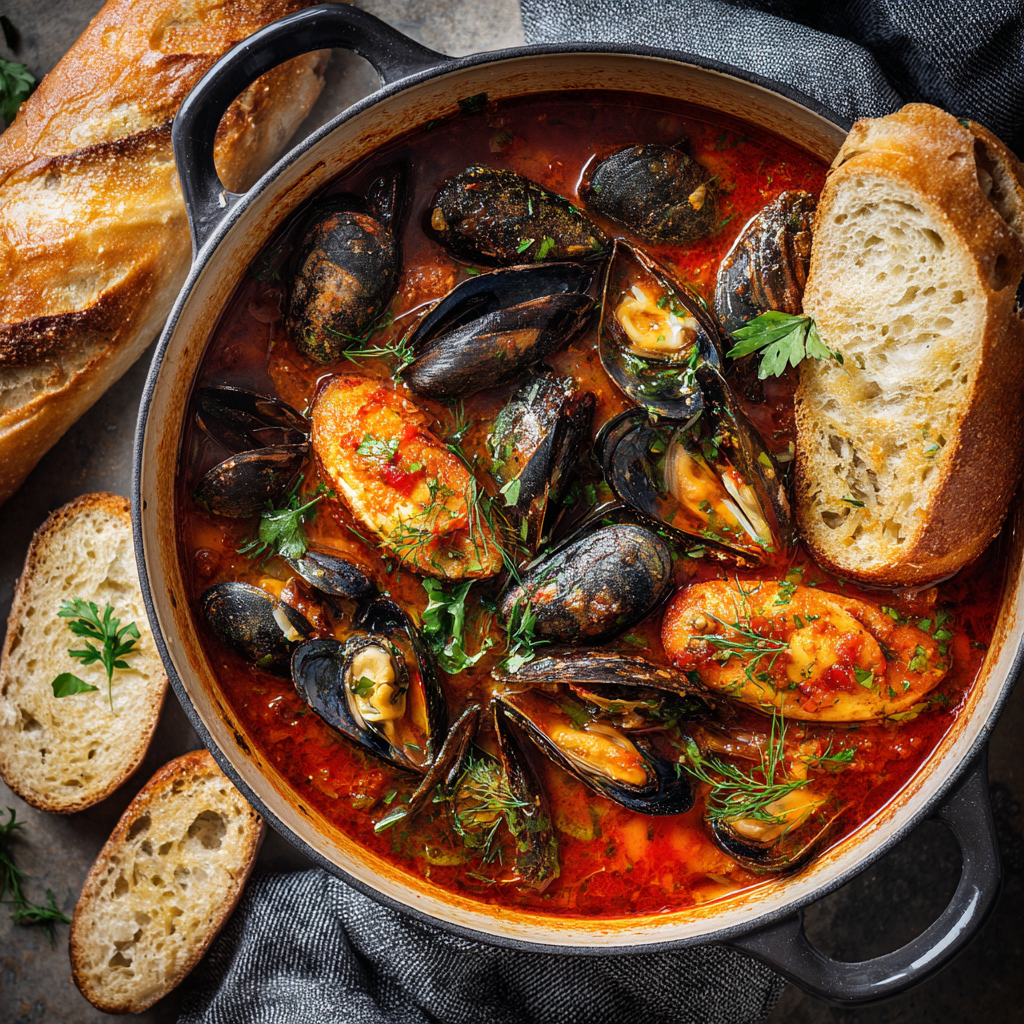
Set the table so every spoonful finds a partner: crusty bread, a crisp salad, and a lively glass make the meal sing. I like simple, honest choices that echo the pot without stealing the show.
Crusty bread or crostini for dunking
Serve generous slices of crusty bread and a few crisp crostini so every drop of broth has company. Warm the bread just before serving so it soaks and holds its shape.
Bright sides: shaved fennel salad, gremolata, lemon wedges
A shaved fennel salad mirrors the stew’s aromatics and refreshes the palate. A spoonful of gremolata—lemon zest, garlic, and parsley—adds electric contrast.
Offer lemon wedges so guests can add a bright squeeze of juice right at the table.
What to pour: Sauvignon Blanc, Pinot Gris, or a dry rosé
Choose a white wine you used in the pot to tie the flavors together, or pick a dry rosé for gentle fruit. Sauvignon Blanc or Pinot Gris will echo citrus notes and keep the bowl lively.
- Top crostini with olive tapenade or roasted garlic for extra sparkle.
- Keep sides simple—arugula with lemon and olive oil is perfect.
- Set the table family-style and let everyone build their perfect bite.
| Pairing | Why it works | Serve |
|---|---|---|
| Bread | Soaks up broth, adds texture | Warm, sliced loaf or crostini |
| Salad / Gremolata | Brightens and cuts richness | Shaved fennel, gremolata on side |
| Wine | Echoes citrus and lifts flavor | Sauvignon Blanc / Pinot Gris / dry rosé |
Nutritional notes and easy swaps
Simple swaps let you tune nutrition without losing that briny, bright character. This tomato-based bowl stays naturally lower in fat than creamier soups, since richness comes from olive oil and the sea’s proteins.
Lean fish like cod and tender shrimp provide high-quality protein with minimal saturated fat. Tomatoes add vitamin-rich goodness and a savory backbone that pairs well with shellfish.
- Lower fat: use 1–2 tbsp extra-virgin olive oil instead of butter to keep mouthfeel without excess saturated fat.
- Protein swaps: cod, halibut, or extra shrimp work; pick the freshest fish for best texture.
- Sodium control: choose low-sodium stock and add salt slowly, tasting as you go.
- Gluten-free serving: trade bread for roasted potatoes or creamy polenta.
- Mild spice: cut chile and boost herbs and pepper to keep heat gentle.
| Swap | Why it helps | When to use |
|---|---|---|
| Low-sodium stock | Reduces overall salt without losing depth | For health-forward bowls |
| Firm white fish | Holds shape, adds lean protein | When cod isn’t available |
| Olive oil drizzle | Adds richness without dairy | Finish each bowl |
Above all, choose the freshest seafood you can find—great nutrition starts with great ingredients. These tips work across similar recipes and help keep the bowl both bright and balanced.
A warm bowl, a little parsley, and dinner’s on—let’s make it tonight
Take a breath, warm a splash of olive oil, and let the pot do the work tonight. Sweat onion, fennel, and garlic gently, deglaze with wine, add crushed tomatoes and stock, and let the base soften for a calm simmer.
Stage your clams and mussels first, nestle cod or firm fish next, and finish with shrimp—each addition needs only a few minutes. Keep heat moderate so the broth stays clear and shells open without overcooking the flesh.
Season lightly, taste as you go, and scatter chopped parsley at the end. This cioppino-style seafood stew takes about an hour from start to finish. Grab a loaf, pour a cup of wine, and let’s eat.