
Jump to Recipe
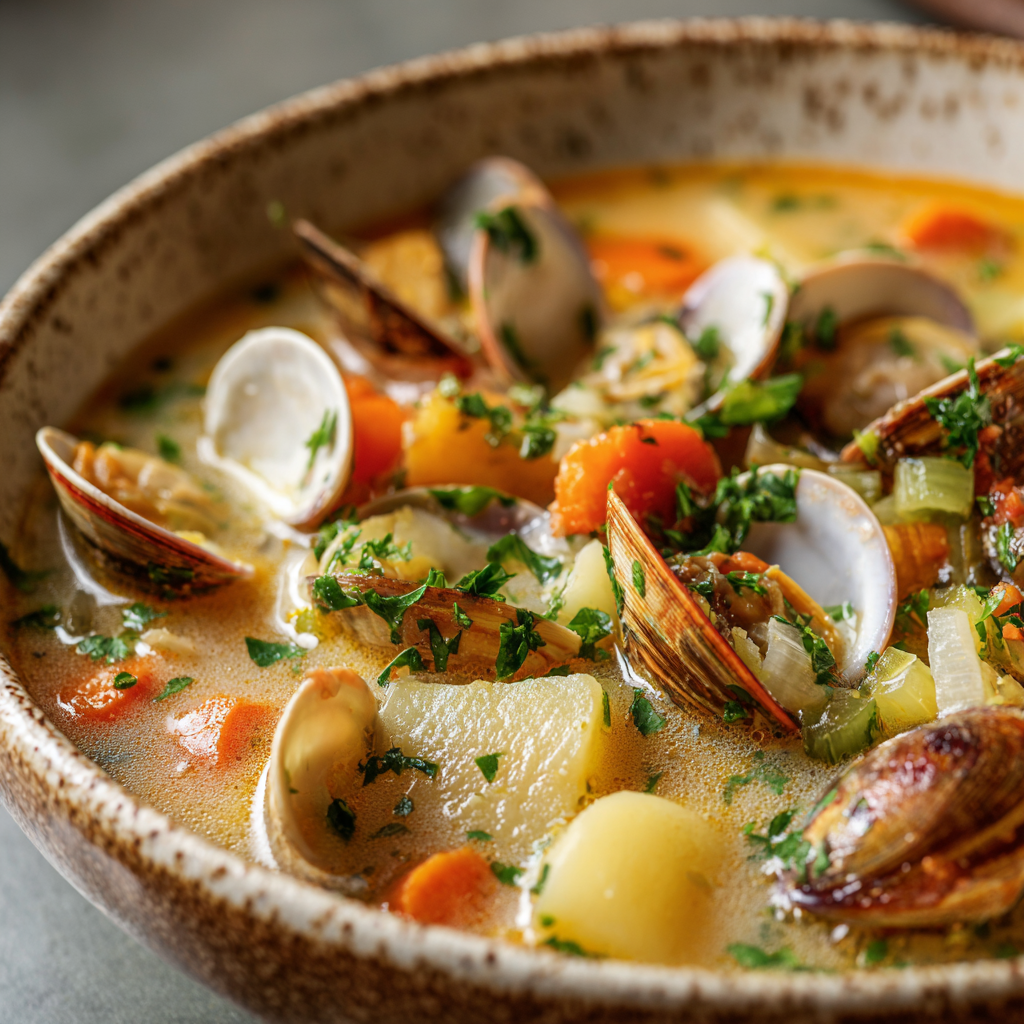
What if a tomato-forward, broth-first chowder could taste like the sea without a long, fussy process?
This one-pot approach delivers bright tomato depth, briny shellfish flavor, tender potatoes, and a light, brothy finish rather than the heavy cream of a New England style. Prep is straightforward: about 35 minutes, then roughly an hour of simmering for a total near 1 hour 35 minutes. The pot yields dinner for roughly six people.
You’ll build flavor in clear steps — bacon or olive oil, tomato paste, deglaze, then a patient simmer. The small but crucial technique is reserving the clam liquid; it keeps the bowl tasting like the sea and not just like tomato soup with clams. Later I note simple swaps (bacon vs butter, white wine option, russet or Yukon Gold) and when to add the shellfish so it stays plump and tender.
Key Takeaways
- One-pot, broth-forward method that highlights tomato and shellfish flavor.
- Prep ~35 minutes; cook ~1 hour; serves about six.
- Reserve the clam liquid — it’s the key to true briny depth.
- Build flavor in layers: base fat, tomato paste, deglaze, simmer.
- Flexible on fats and potatoes; add clams late to keep them tender.
What makes this Italian clam chowder recipe taste “Italian” (not New England)
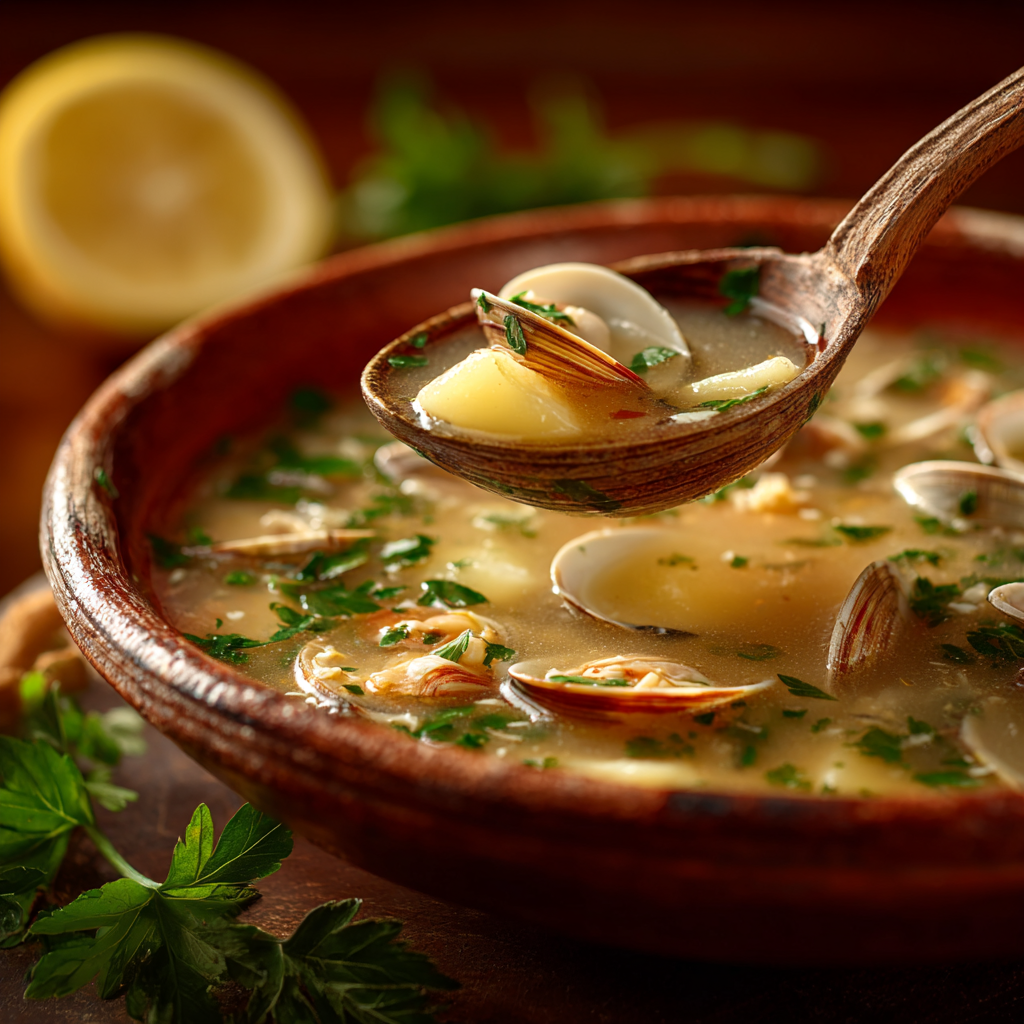
This version leans on bright tomato depth and a clear broth so the shellfish flavor stays front and center.
Tomatoes and a spoonful of tomato paste add savory color, not sweetness. When tomato paste hits hot fat it darkens and concentrates; that browned layer is pure flavor. We deglaze with reserved shellfish liquid, bottled juice, and broth to lift those browned bits back into the pot.
Fat, aromatics, and herbs
Choose olive oil or bacon drippings to render the base. Olive oil gives a Mediterranean backbone; bacon adds smoky ballast. Start with garlic — one or two cloves — for a gentle aroma that supports the shellfish rather than burying it.
- Tarragon: clean, slightly anise notes.
- Parsley: bright, fresh finish.
- Rosemary: robust — use sparingly if you include it.
No heavy cream; seasoning and heat
Skip heavy cream so the broth stays bright and the tomato and shellfish layers remain distinct. Begin with a small pinch of salt and a grind of black pepper, then adjust after adding reserved juice. A touch of cayenne or gentle heat should warm the background, not dominate.
Why reserve the clam liquid
Reserved juice tastes like the sea in a way extra salt cannot. Use it to deglaze and to round the broth; it gives real ocean depth and balances the tomatoes without overwhelming them.
Ingredients and smart prep for the best clam chowder
A smart ingredient list and a calm prep plan keep this pot tasting bright and coastal.
Clams and the reserved liquid
Use two 10‑oz cans of whole baby clams plus two 6.5‑oz cans of chopped clams for both tender bites and a little chew. Drain the cans but refrigerate the reserved liquid. That juice is your secret stock for deglazing and adding real ocean depth.
Bacon, onion, and garlic—building the base
Render four strips of thick‑cut bacon until mostly crisp, then soften one diced onion and two minced garlic cloves in the drippings. If you skip bacon, use 3–4 tablespoons butter for richness.
Vegetables, liquids, and sizes that matter
Use about 3 cups diced Yukon Gold potatoes so they stay creamy without falling apart. Add 1/2‑inch dice for carrots and celery so everything cooks evenly. Measure 1 cup bottled clam juice plus 2 cups chicken broth; you can swap a splash of white wine or a cup of water to keep it light.
Seasoning and finishing touches
Season with kosher salt sparingly, a grind of black pepper, and a pinch of cayenne. Stir in 1/2 cup diced Italian tomatoes, fresh parsley and tarragon at the end, and serve lemon wedges so each bowl can be brightened to taste.
| Ingredient | Amount | Why it matters | Swap |
|---|---|---|---|
| Whole baby clams + chopped clams | 2 cans (10 oz) + 2 cans (6.5 oz) | Tender and meaty texture; reliable pantry option | Six 6.5‑oz chopped cans |
| Potatoes | 3 cups diced Yukon Gold | Hold shape, creamy mouthfeel | Russet (longer cook) |
| Liquids | 1 cup clam juice + 2 cups broth | Balanced brine and body | Water + white wine option |
- Shopping & prep checklist: open cans, reserve juice, chop vegetables to 1/2‑inch, measure liquids by cup, and have herbs ready.
- Simple tips: avoid over‑salting until after the potatoes cook; add clams near the end to prevent rubbery texture.
Cook it in one pot, step by step, without overcooking the clams
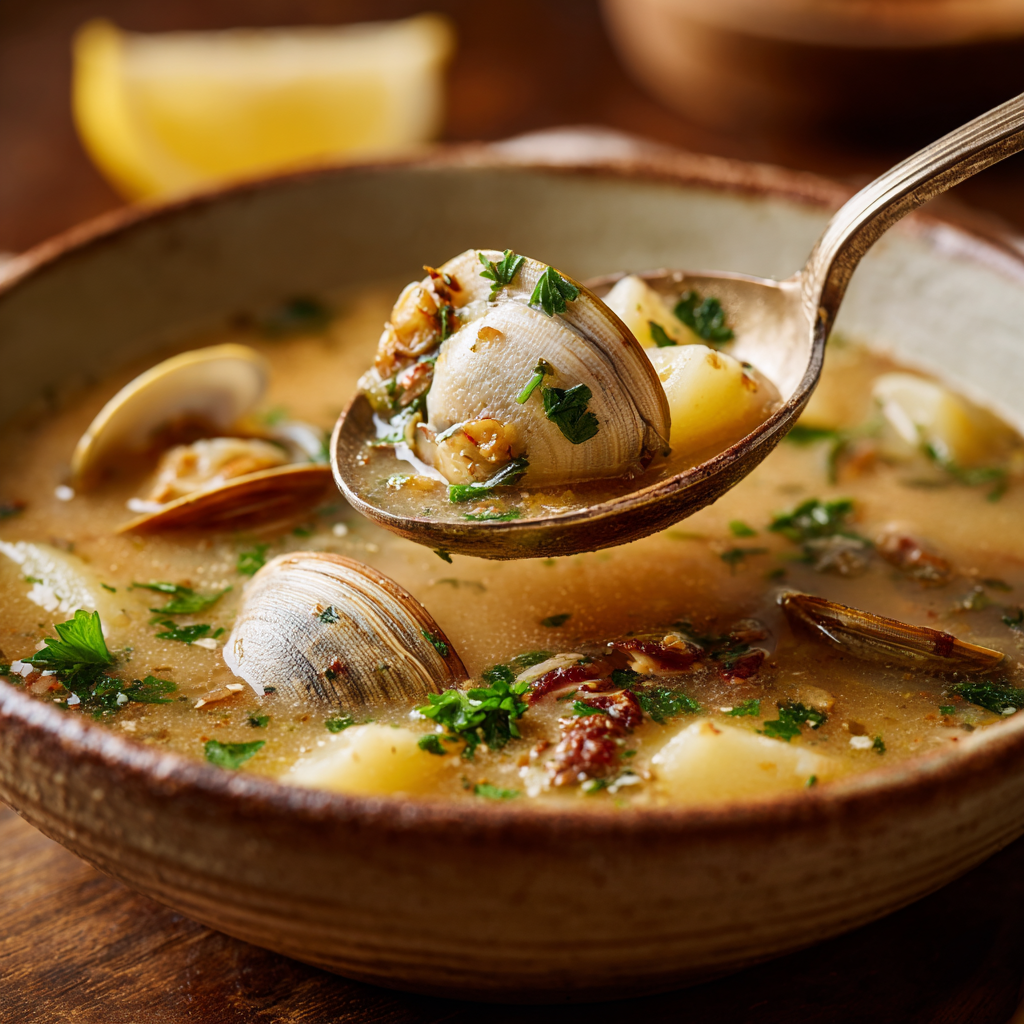
Set a heavy pot over medium heat and we’ll build this soup in clear stages. The right pot holds steady heat so you can brown, deglaze, and simmer without scorching. Follow the timing below and trust your senses: smell, color, and gentle sizzle.
1. Render fat and soften aromatics
Heat the pot and cook bacon 7–10 minutes until well‑browned and nearly crisp. The fat should look glossy and smell nutty.
Drop in the diced onion and minced garlic with a pinch of salt. Cook 5–7 minutes until the onion is translucent and soft.
2. Build color, then thicken
Stir in tomato paste and press it against the hot base for about 2 minutes. Let it darken — a little sticking is good; that browning is flavor.
Sprinkle flour, stir, and cook 2–3 minutes so it loses its raw taste and gives a light velvety body to the broth.
3. Deglaze and simmer the vegetables
Pour in the reserved clam liquid first, then 1 cup bottled clam juice and 2 cups chicken broth. Scrape the bottom to lift every browned bit.
Add carrots, celery, diced tomatoes, a grind of pepper and a small pinch of cayenne if you like heat. Bring to a boil, then reduce to a steady simmer for 15–20 minutes so the vegetables soften and the broth rounds out.
4. Potatoes, clams, and finish timing
Add the diced potatoes and cook about 20 minutes until tender but not falling apart. Watch them closely near the end.
Fold in the clams only when the potatoes are nearly done — you just need to warm them through. Prolonged high heat makes clams rubbery; avoid that common mistake.
5. Timing and simple substitutions
Plan your time: about 35 minutes prep and roughly 1 hour cooking to serve six. For swaps, russet potatoes work (watch for breakage), fresh peeled tomatoes can replace canned, and using all chopped clams simplifies shopping.
| Step | Timing (minutes) | Why it matters |
|---|---|---|
| Render bacon | 7–10 | Clean fat and deep flavor |
| Simmer vegetables | 15–20 | Soften and sweeten broth |
| Potatoes | ≈20 | Tender but intact texture |
Serve, store, and make it your own next time
Serve this broth-forward chowder in warm bowls and let each person finish to taste. Ladle gently, sprinkle chopped parsley, and offer lemon wedges so a squeeze can lift the brine without extra salt.
If the soup tightens as it sits, loosen it with a splash of water or broth rather than more oil. Pair the bowl with crusty bread, a simple green salad, or roasted vegetables that won’t compete with the sea notes.
Cool quickly and refrigerate in a sealed container; eat within a few days for best texture. Reheat over medium-low just until steaming to avoid rubbery clams. For small changes, add a splash of white wine early, stir in spinach at the end, or use rosemary sparingly. Skim excess bacon fat or finish with a drizzle of good olive oil.
Keep the simmer gentle, add clams late, and treat finishing herbs as a last-minute seasoning. For a related seafood pasta note, see Liguria-style spaghetti.
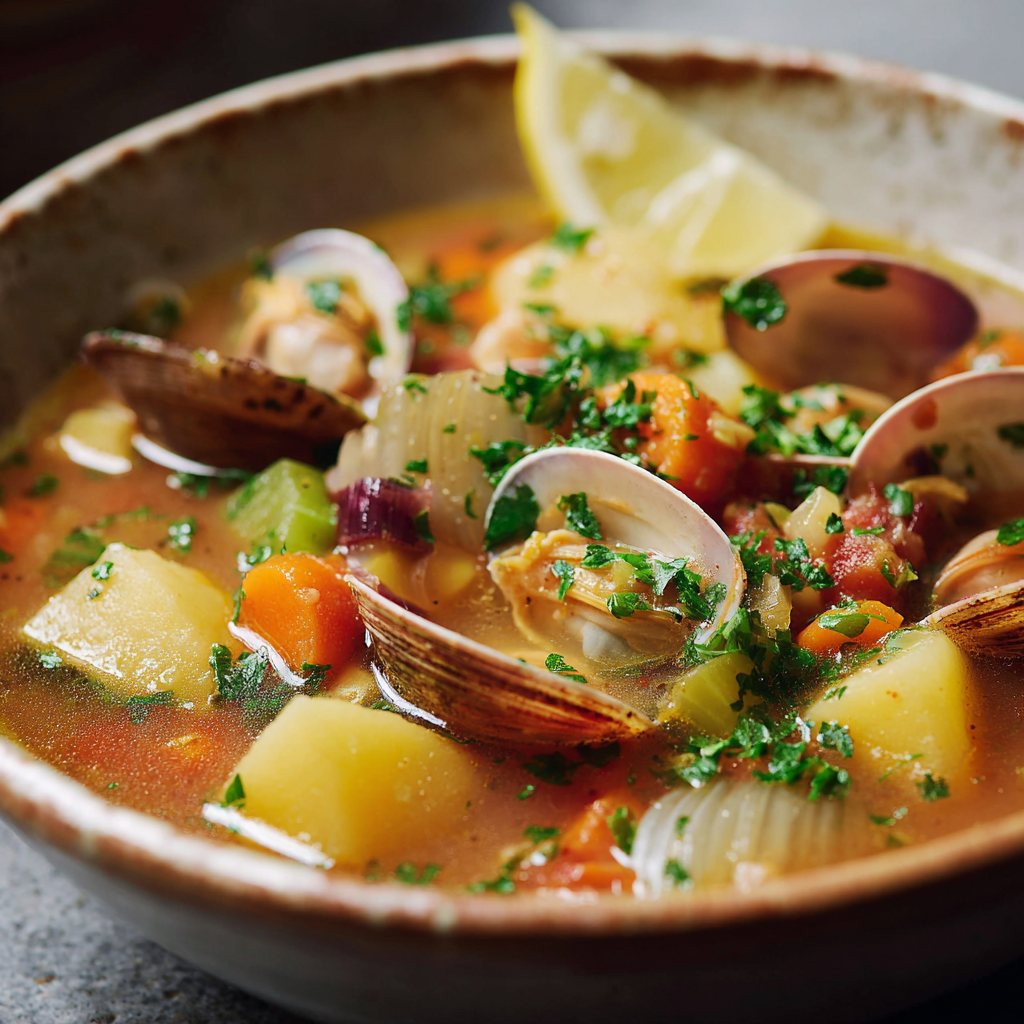
Italian Clam Chowder
Ingredients
Method
- Heat a pot over medium heat. Cook the bacon for 7–10 minutes until crispy and browned. If using butter, melt it in the pot.
- Add diced onion and minced garlic. Cook for 5–7 minutes until the onion becomes translucent and soft.
- Stir in the tomato paste and cook for 2 minutes until it darkens, releasing rich flavors.
- Sprinkle in the flour and stir, cooking for 2–3 minutes to create a smooth, velvety base.
- Pour in the reserved clam liquid, followed by the bottled clam juice and chicken broth. Scrape up any browned bits from the bottom of the pot.
- Add diced carrots, celery, a pinch of cayenne pepper, and black pepper. Bring to a boil, then reduce heat and simmer for 15–20 minutes until vegetables soften.
- Add diced Yukon Gold potatoes and cook for 20 minutes until tender but still intact.
- Gently fold in the clams and cook for 3–5 minutes until warmed through (don’t overcook to prevent rubbery clams).
- Stir in diced tomatoes, tarragon, and parsley just before serving.
- Serve with lemon wedges to brighten the flavors.
Notes
- Use Yukon Gold potatoes for the best texture, but russet potatoes can also work with extra care to avoid breakage.
- Make sure to reserve the clam liquid as it adds vital ocean-like depth to the chowder.
- The clams should be added near the end to avoid overcooking.
- For added richness, you can stir in a small splash of cream or white wine, but it's not necessary for a delicious result.
- Store leftovers in the refrigerator for up to 3 days. Reheat gently to avoid overcooking the clams.