Jump to Recipe
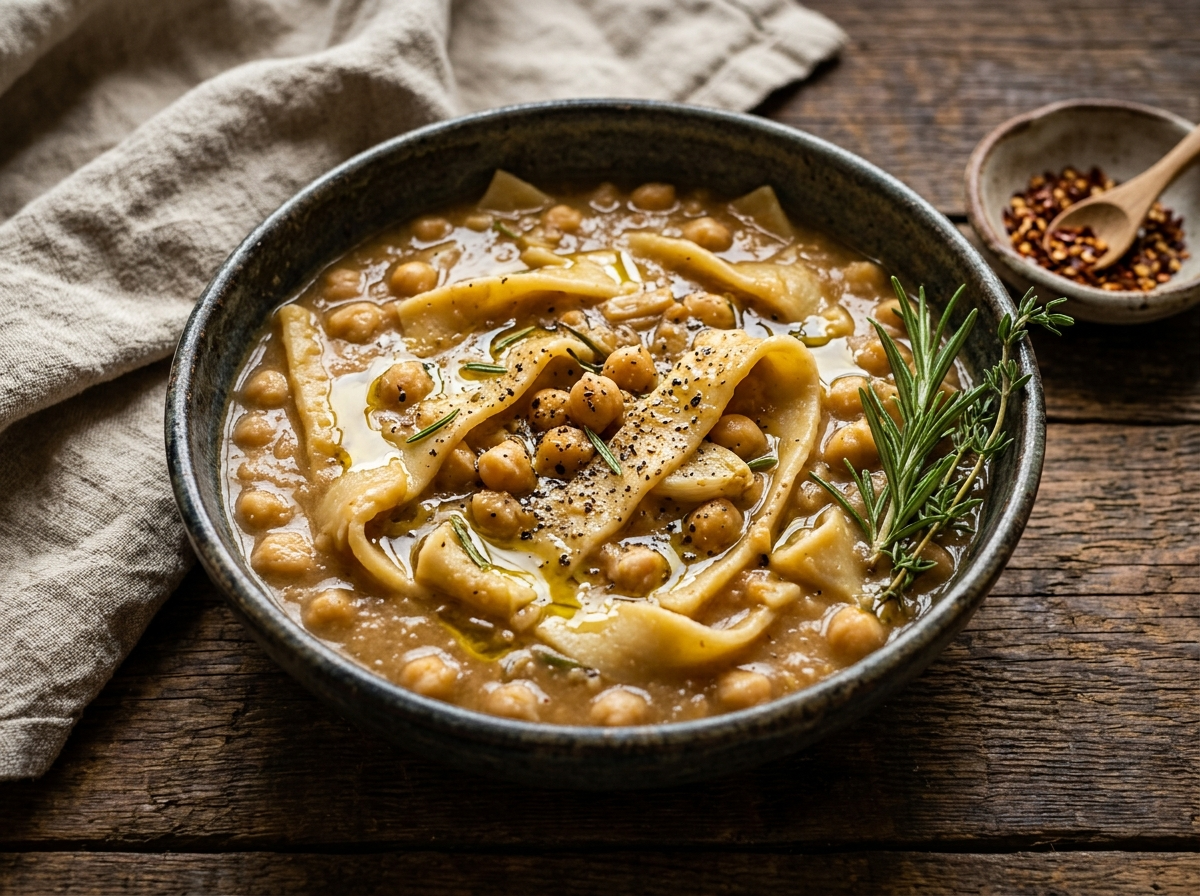
Lagane e ceci is one of the oldest pasta dishes in southern Italy. The lagane are wide, flat ribbons made from just flour and water, cut thick and cooked directly in a brothy chickpea base so the starch thickens everything as it simmers.
This version comes from Basilicata, where the dish is seasoned with rosemary, garlic, and dried chili. It’s not dressed with a sauce – the pasta and chickpeas cook together until the broth turns dense and silky.
No egg, no butter, no cream. The result is a bowlful that’s filling without being heavy, and it costs almost nothing to make.
Why You’ll Love This Recipe
- One-pot technique keeps cleanup minimal and flavor concentrated
- Fresh pasta made with flour and water only, no eggs needed
- Chickpea broth thickens naturally as the pasta cooks
- Stores and reheats well for weeknight lunches
Ingredient Notes
- tipo 00 flour: Tipo 00 gives the lagane a smooth, slightly chewy texture. Semolina flour (fine ground) works too and gives a bit more bite, which is also traditional in parts of Basilicata.
- dried chickpeas: Dried chickpeas soaked overnight produce the best texture and release enough starch to thicken the broth. Canned chickpeas (drained and rinsed) cut prep time to zero but the broth will be thinner.
- rosemary: Fresh rosemary is sharper and more resinous than dried. Use one sprig and remove it before serving so it doesn’t turn bitter.
- dried chili: One small dried peperoncino is traditional in Basilicata. Use red chili flakes if that’s what you have, starting with a pinch and adjusting.
- extra virgin olive oil: A generous pour at the end is not optional here – it ties the broth together. Use the best oil you have for finishing, and a cheaper one for soffritto.
- garlic: Three cloves is the baseline. You can crush them whole and remove after cooking for a milder flavor, or slice thin and leave in.
Basilicata Lagane e Ceci (Fresh Pasta with Chickpeas)
Ingredients
Method
- Pour the flour onto a clean work surface or into a large bowl, add the salt, and make a well in the center.
- Add the warm water gradually, working the flour in from the edges until a rough dough forms.
- Knead for 8 to 10 minutes until the dough is smooth and firm, not sticky. Wrap in plastic and rest at room temperature for 30 minutes.
- Dust the work surface with flour. Roll the dough out to about 3 mm thickness.
- Cut into ribbons roughly 2 cm wide and 15 to 20 cm long. Dust with flour and set aside in loose nests.
- Put the soaked, drained chickpeas in a medium pot and cover with 1.2 liters of cold water.
- Bring to a boil, skim any foam, then reduce to a steady simmer. Cook for 60 to 75 minutes until the chickpeas are fully tender but still hold their shape.
- Season with 1 tsp salt only once the chickpeas are tender. Set aside with their cooking water.
- In a wide, deep pan, warm 2 tbsp of olive oil over medium heat. Add the garlic, rosemary sprig, and peperoncino. Cook for 2 minutes until the garlic is pale golden and fragrant.
- Add the cooked chickpeas and all their cooking liquid to the pan. Bring to a gentle simmer.
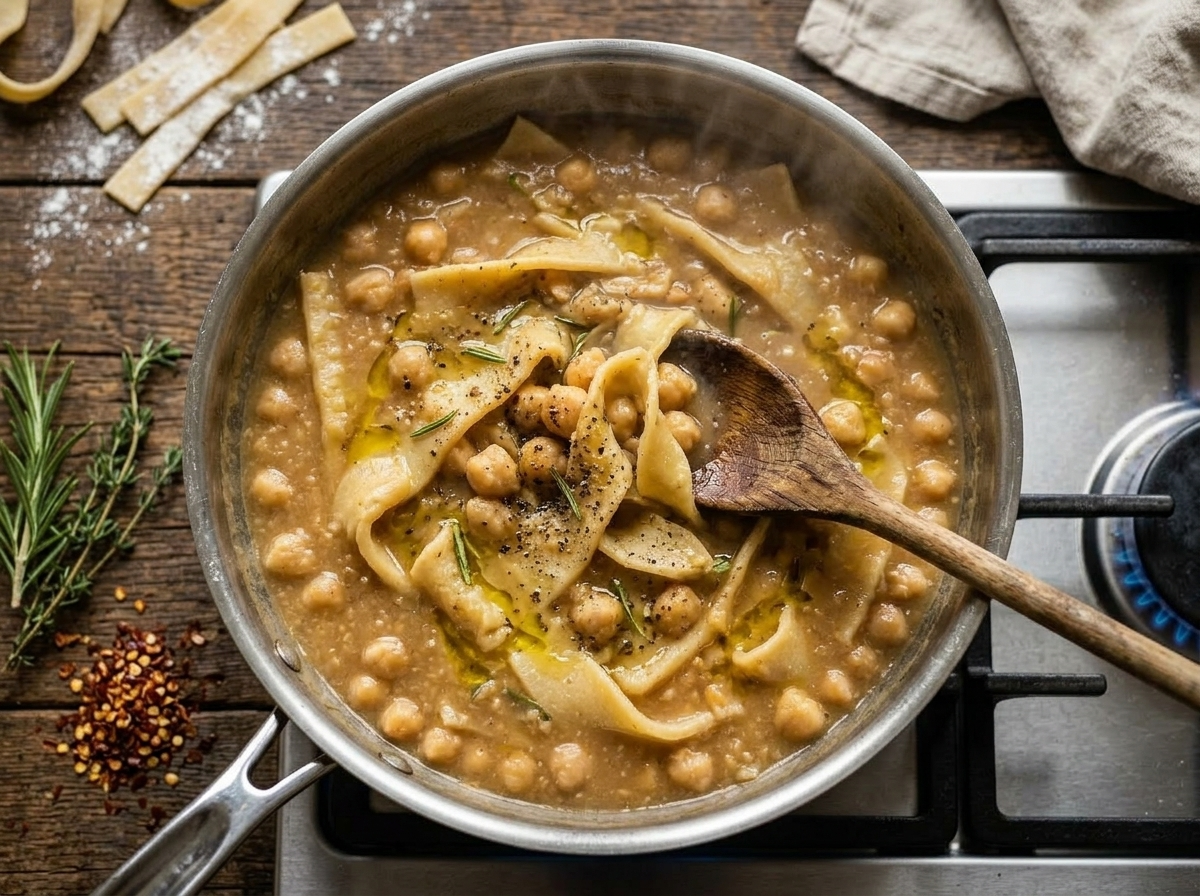
- Crush about a quarter of the chickpeas against the side of the pan with the back of a spoon to thicken the broth.
- Add the lagane ribbons directly into the chickpea broth. Stir gently so they separate.
- Simmer over low heat for 10 to 14 minutes, stirring occasionally, until the pasta is tender and the broth has thickened. Remove the rosemary sprig.
- Remove from heat and rest for 5 minutes. Taste and adjust salt.
- Ladle into deep bowls, drizzle with the remaining 2 tbsp of olive oil, and finish with black pepper.
Notes
Tips for Success
- Roll the lagane to about 3 mm thick so they hold up during the long simmer without going mushy.
- Add the pasta to the chickpea pot, not to a separate pot of salted water – the starch release is what thickens the broth.
- Crush a quarter of the cooked chickpeas against the side of the pot with a spoon before adding pasta to build body.
- Keep the heat low once the pasta goes in; a hard boil will break the chickpeas apart and make the texture gluey.
- Rest the dish off the heat for 5 minutes before serving so the broth tightens to the right density.
Variations
- Use half tipo 00 and half fine semolina for a more rustic, slightly grainy lagane texture.
- Add a small piece of dried porcini to the chickpea broth for a deeper, earthier flavor without meat.
- Stir in a tablespoon of tomato paste with the garlic for a red-tinged, slightly tangier version.
Storage and Reheating
Store leftovers in an airtight container in the fridge for up to 3 days. The pasta will absorb most of the broth overnight, so it thickens into almost a stew by the next day.
Reheat gently on the stovetop over low heat, adding a splash of water or light stock to loosen it. Stir often and don’t rush it – high heat makes the pasta gummy.
This dish doesn’t freeze well. The pasta texture breaks down after thawing and the chickpeas turn mealy.
Serving Suggestions
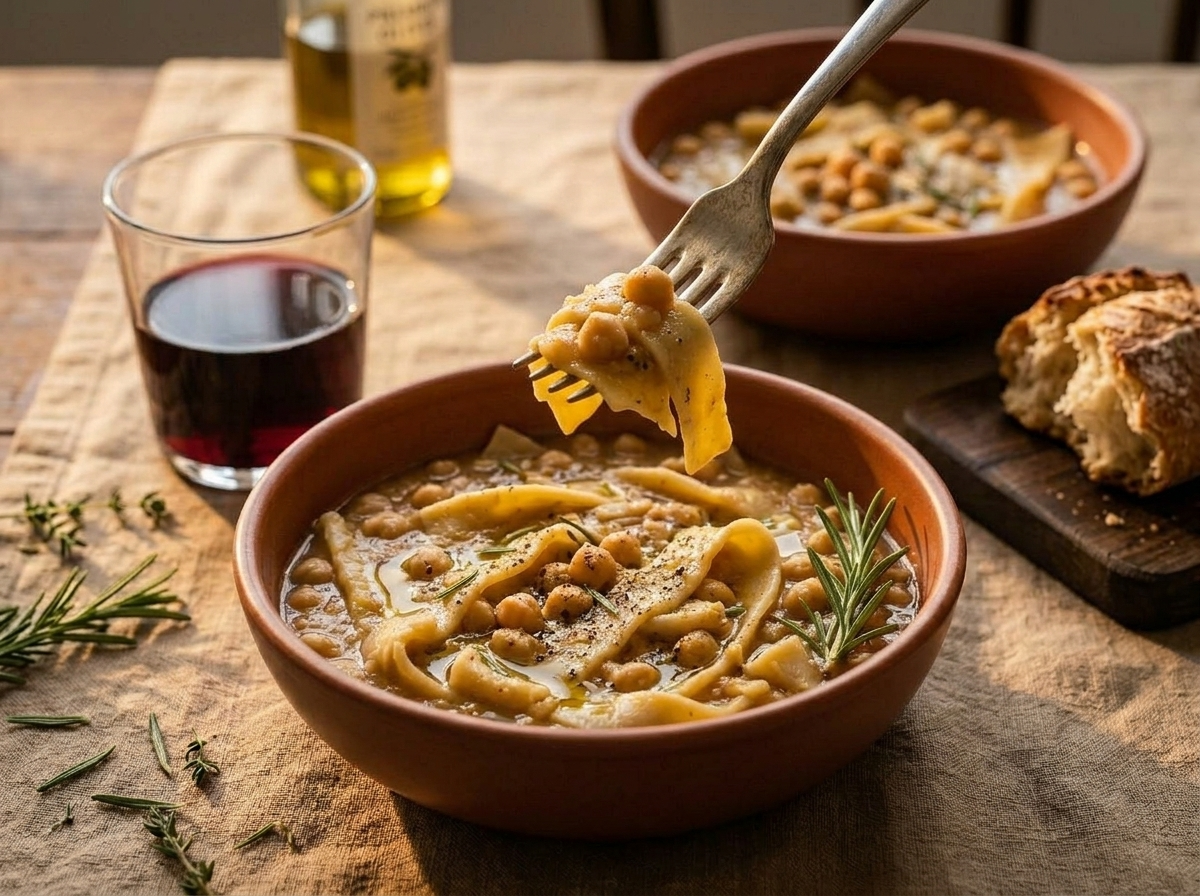
Serve in deep bowls with a clean pour of extra virgin olive oil over the top and a pinch of dried chili. Crusty bread on the side is the Basilicata way – you’ll want it to scrape the bowl.
A glass of Aglianico del Vulture, the main red wine of Basilicata, pairs well with the earthy chickpeas and rosemary. A light, dry white like a Fiano also works if you prefer.
This is a complete meal on its own. If you want to build a fuller table, a plate of roasted peppers or a simple salad of bitter greens dressed with lemon and olive oil fits naturally alongside, as does the bright contrast of Campania-style marinated zucchini.
FAQ
Why are my lagane sticking together before they go into the pot?
Dust the cut pasta ribbons with flour as soon as you cut them and keep them in loose nests on the board. Don’t stack them – lagane made without egg are stickier than egg pasta and will clump fast.
Can I use canned chickpeas instead of dried in lagane e ceci?
Yes, canned chickpeas work and cut about 90 minutes off the cooking time. Drain and rinse them, then add with 800 ml of water or light stock and proceed from the soffritto step. The broth won’t be as naturally thick, so crush more chickpeas to compensate.
How do I know when the lagane are cooked through in the chickpea broth?
Taste a ribbon at the thickest point – it should be tender with no raw flour taste but still have a little resistance at the center, like al dente. That takes about 10 to 14 minutes depending on how thick you rolled them.
What is the difference between lagane e ceci from Basilicata and the Campania version?
The Basilicata version typically uses only flour and water for the pasta and seasons with rosemary and peperoncino. The Campania version sometimes adds egg to the dough and may use different aromatics like celery and bay leaf.
Is lagane e ceci suitable for a vegan diet?
Yes, the traditional Basilicata recipe is naturally vegan – the pasta is flour and water, and the base is chickpeas, olive oil, garlic, and herbs, much like the logic behind a classic Italian chickpea flatbread. There are no dairy or egg components in the dish.
Can I make the lagane dough the night before?
You can rest the dough in the fridge, wrapped tightly, for up to 24 hours. Bring it back to room temperature for 20 minutes before rolling or it will be too stiff and tear at the edges.