Jump to Recipe
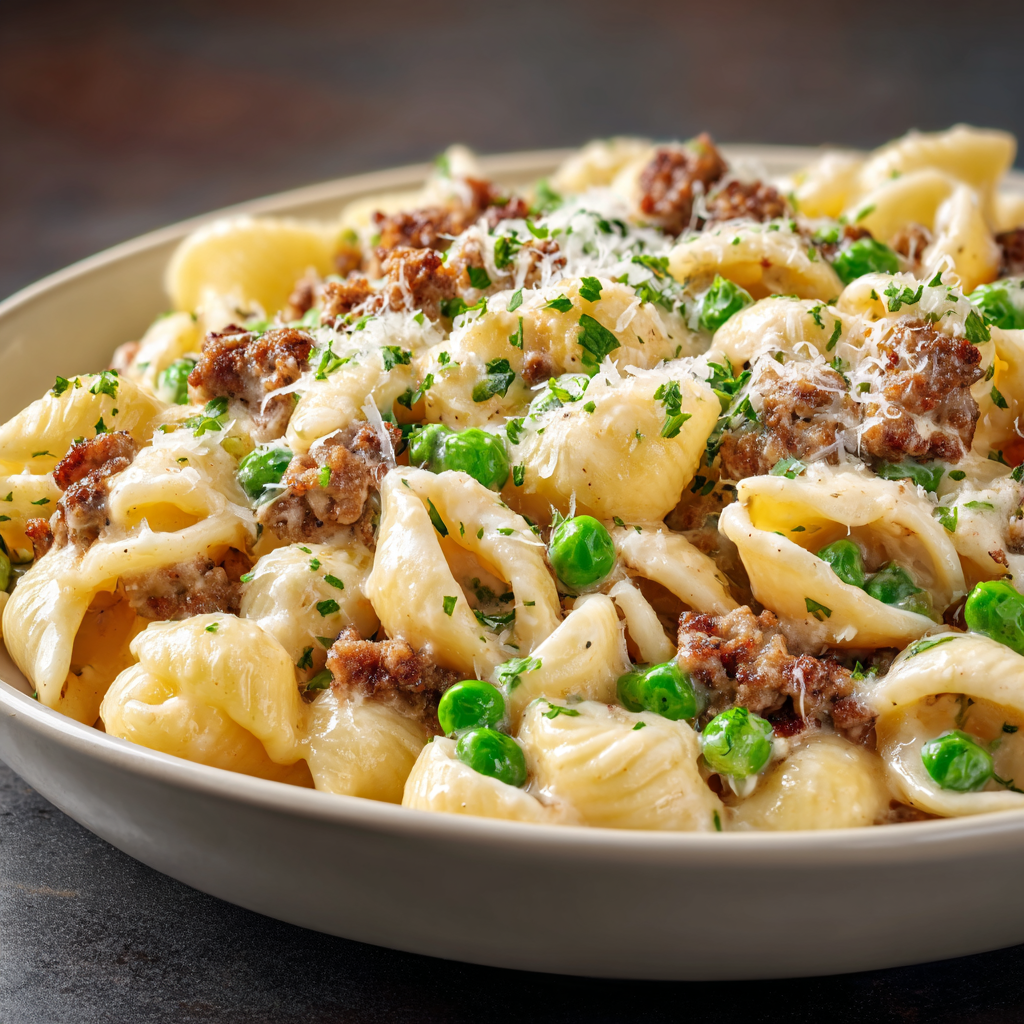
I pull a pan from the stove and let the garlic sing in olive oil while shells bubble in salted water. The kitchen fills with sweet meat browning and the bright pop of frozen green—simple signals that dinner will be comforting tonight.
I favor a quick approach on weeknights: 25 minutes from start to fork, creamy sauce mounted with butter and a handful of grated parmesan to finish. When I have more time, slow-cooked onions deepen the flavor and make the meal feel like Sunday—every spoonful richer, every bite more honest.
Key Takeaways
- Quick version: about 25 minutes total, serves eight comfortably.
- Use measured ratios for consistent texture and a silky sauce.
- Reserve starchy pasta water to help the sauce cling to shells.
- Slowly caramelize onions when you want a deeper, more complex flavor.
- Finish with grated parmesan and a touch of butter for gloss and balance.
Why this creamy sausage-and-pea pasta deserves a spot in your weeknight rotation
When time is tight, a few smart moves turn simple ingredients into a memorable dinner. I can pull this pasta together in under 30 minutes, so it’s my go-to after a long day.
Sweet peas brighten the savory sausage, creating a sauce that feels rich but never heavy. Kids love the mild flavors; adults appreciate the balance and the little kick you can add with red pepper flakes.
- I rely on salty water and hot pasta tossed straight into the pan to make the sauce cling—little habits, big payoff.
- It scales easily for meal prep or a larger table, and leftovers reheat without losing silkiness.
- Slow-cooked onions add depth when I have the minutes, but the quick path still tastes complete.
This is pantry-friendly cooking: olive oil, cheese, butter, and frozen peas turn basic stores into trattoria-level comfort. The method is forgiving, so newer cooks learn technique while experienced hands get the finesse they want.
Conchiglie with sausage and peas recipe: ingredients, timing, and tools for success
I map out the cook time and line up ingredients so the sauce finishes as the pasta hits the pot. This keeps the dinner smooth and stress-free. I share exact measures and the tools I use so you can get the same results every time.
What you’ll need
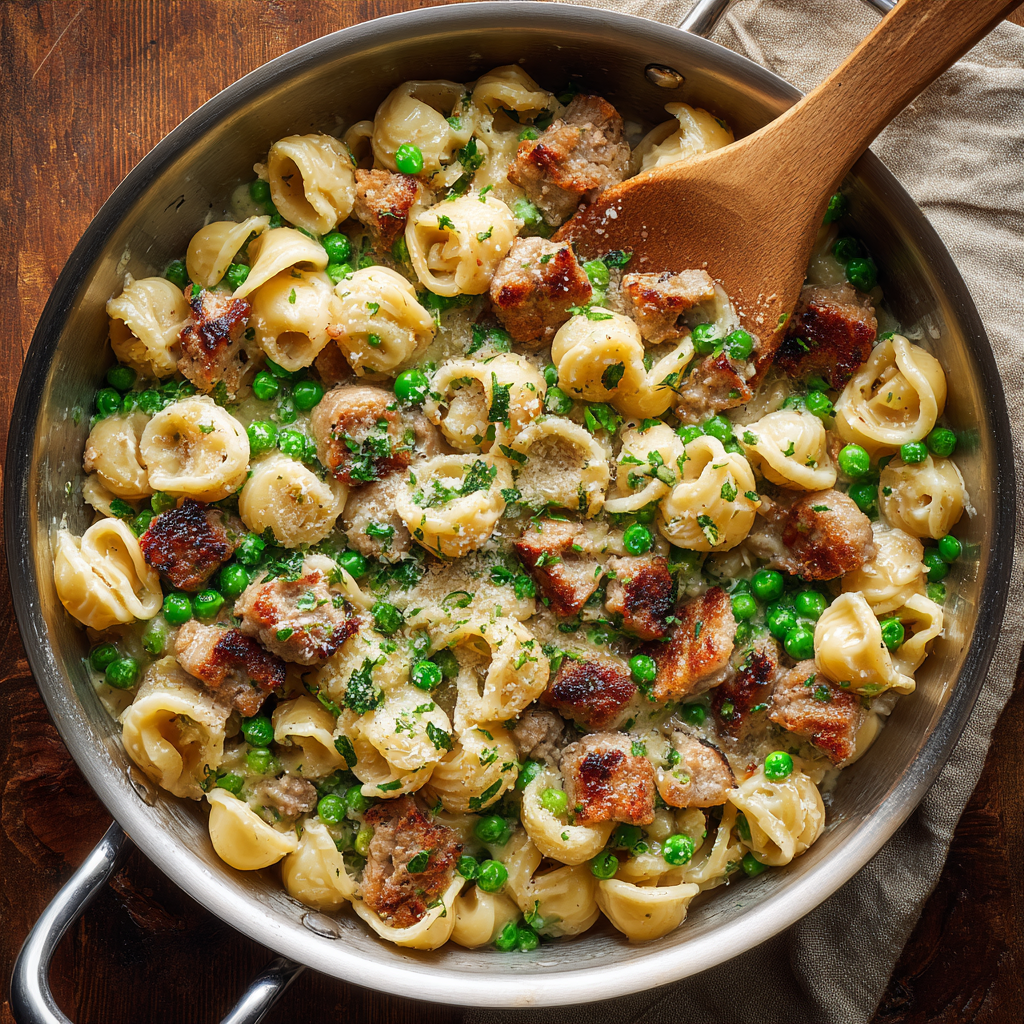
- Core ingredients: 1 pound pasta, 1 pound italian sausage (sweet italian sausage works well; remove casings), 12 oz frozen peas, 1 1/2 cups heavy cream, 2 tbsp grated parmesan.
- Pantry & produce: 2 tbsp olive oil, 4 tbsp butter, 1 onion, 1 clove garlic, 1 tsp tomato paste, a pinch of red pepper flakes.
- Helpful tools: large pot for boiling, wide skillet, wooden spoon, measuring cup to save starchy pasta water.
Timing, yield, and smart seasoning
| Version | Prep + Cook | Yield |
|---|---|---|
| Quick | 15 min prep + 10 min cook (25 minutes) | Serves 8 |
| Slow | 1 hr prep for onions + 20 min finish (≈1 hr 20 min) | Serves 8 |
Salt the water so it tastes like the sea, bring large pot to a boil, and save about a cup before draining. That starchy liquid is gold for the sauce. Finish with black pepper and a tight handful of grated parmesan for balance.
Step-by-step: how to build a silky sauce and perfectly cook the pasta
Start by filling a large pot with plenty of salt and setting it to boil; that first step sets the tone for everything that follows. The water should taste pleasantly salty. Cook pasta 8–10 minutes to reach al dente and reserve about a cup of that starchy liquid.
Brown and bloom
Heat a wide pan over medium heat with a thin film of olive oil. Crumble in the italian sausage and brown until edges caramelize, about 6–8 minutes. Stir in 2 tbsp tomato paste and bloom until it darkens and smells sweet-savory. Add a pinch of red pepper flakes and crack of pepper.
Onions, garlic, deglaze
Push the meat to the side, add onions to soften or caramelize if you prefer. Sweat garlic briefly—do not burn it. Deglaze with 1/2 cup reserved pasta water, scraping up all fond; the starch helps the sauce hold.
Finish the sauce and toss
Reduce heat, pour in 1.5 cups heavy cream and 4 tbsp butter, stirring gently until glossy. Add frozen peas and warm through so they stay bright. Drain the cooked pasta and add it straight to the pan. Toss with grated Parmesan, taste, and adjust salt and pepper. Loosen with another splash of reserved water if needed.
| Step | Timing | Checkpoint |
|---|---|---|
| Boil pasta | 8–10 min | Al dente, water tastes salty |
| Brown meat & bloom | 6–8 min | Caramelized edges, darkened tomato paste |
| Deglaze & cream | 3–5 min | Glossy sauce, steam but not boil |
| Finish | 1–2 min | Bright peas, sauce clings to pasta |
Pro tips from my kitchen for restaurant-level flavor and texture
I keep a small mug of starchy pasta water by the stove; it’s my insurance for a glossy finish. A few careful moves—timing, gentle heat, and the order you add ingredients—turn home cooking into something a bit more special.
Reserve pasta water to emulsify the sauce
Save at least a cup before you drain. A splash at a time, added while you toss over medium heat, builds a true emulsion. That step makes the sauce cling to each shell instead of pooling on the plate.
Control the heat to protect dairy and color
Bring cream and heavy cream to the pan slowly over medium heat. If the mixture threatens to bubble hard, lift the pan off the burner for 30 seconds. This keeps the dairy smooth and preserves the bright green of the peas.
Choose spice and finish with confidence
Season in layers: salt the boiling water like the sea, taste as you go, then finish with cracked pepper and a tight handful of parmesan cheese or grated cheese off the direct flame to avoid clumps.
- If the sauce tightens, revive it with a spoon or two of reserved water and a quick toss.
- Pick sweet Italian to stay mellow, or add a pinch of flakes or red pepper for warmth without overpowering the vegetables.
- Always add cooked pasta hot to the pan; the residual heat helps the emulsion set and the pan does the rest.
Variations, swaps, and make-ahead options
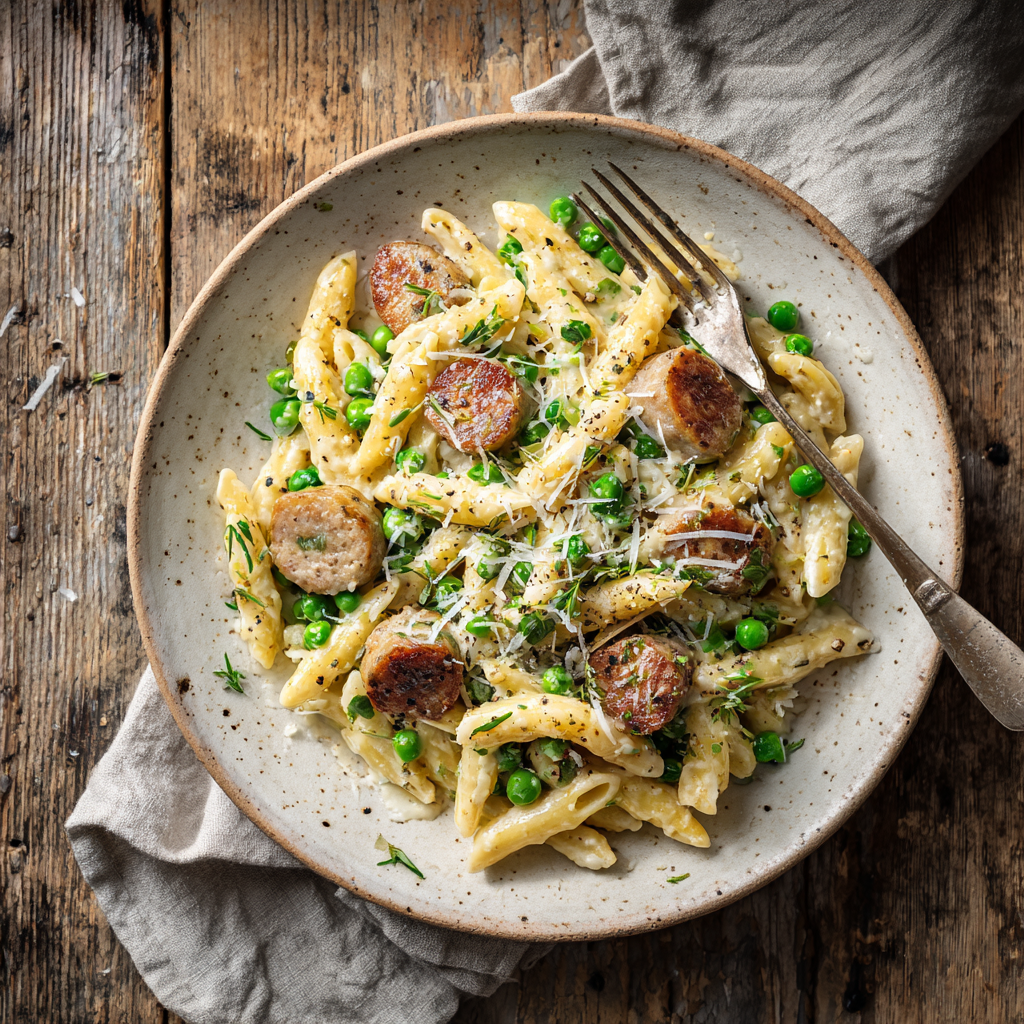
I love how small swaps change the whole dish. Try different pasta shapes, adjust the dairy, or prep ahead and dinner still tastes fresh.
Pasta shapes that shine
Choose shells, rigatoni, farfalle, or jumbo shells left “unstuffed.” These hold sauce and let crumbled meat and frozen peas nestle into the curves.
Lighter or richer
Use half-and-half and a smaller pat of butter to keep things lighter. For decadence, pick heavy cream and finish with a knob of butter off the heat for sheen.
Add-ins and swaps
Caramelize onions for depth, bloom tomato paste for a pink-tinted cream, or swap in chicken sausage for a leaner punch. Remove casings so the protein crumbles evenly.
Storage and reheating
Cook pasta just shy of al dente for meal prep. Toss with extra sauce and cool quickly. Reheat gently in a pan with a splash of water or reserved cup of pasta water to restore silkiness.
| Swap | Effect | Tip |
|---|---|---|
| Shape (rigatoni/farfalle) | Better sauce hold | Add pasta hot to the pan |
| Dairy (half‑and‑half vs heavy cream) | Lighter vs richer texture | Use butter sparingly for lightness |
| Protein (chicken vs sweet italian) | Leaner vs classic flavor | Remove casings; crumble in pan |
| Tomatoes (tomato paste) | Pink, rounded richness | Bloom until brick-red before liquids |
Serve it right and enjoy now
A final gentle heat brings the pasta and sauce together, making the dish glossy and cohesive.
I toss the pasta and sauce over low heat for 2–3 minutes so the shells drink up flavor without drying out. If the mix feels tight, loosen with a splash from your cup of reserved pasta water, then swirl in a knob of butter or a drizzle of olive oil for shine.
Plate in warm bowls, finish with a snowfall of parmesan or parmesan cheese and a twist of black pepper. One pound feeds eight comfortably; add salad and bread to stretch the meal. Pass red pepper flakes for anyone who wants a kick. Serve immediately—silky, clingy, fragrant—and reheat leftovers gently in a pan with a tablespoon of water until glossy.
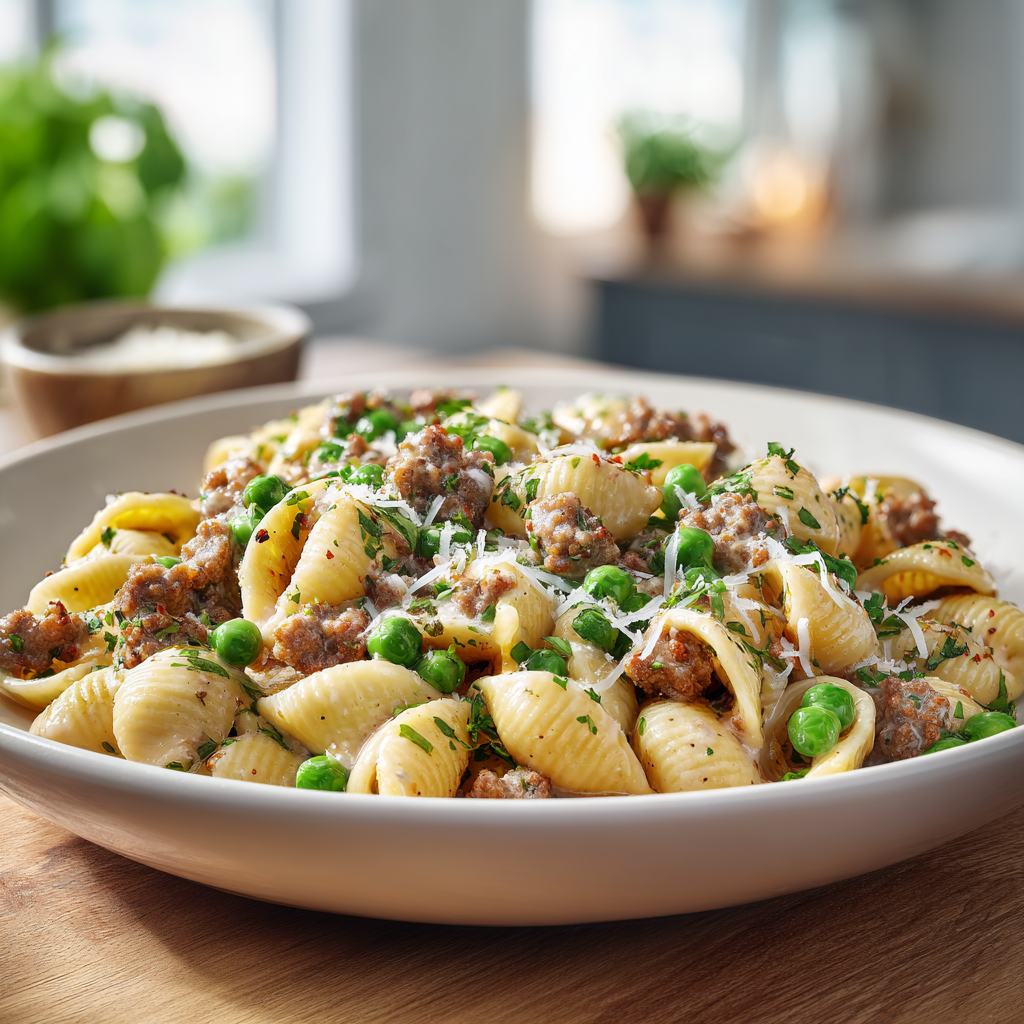
Creamy Sausage and Pea Shells
Ingredients
Method
- Fill a large pot with water. Add salt until it tastes salty. Bring to a boil. Cook pasta until al dente, about 8–10 minutes. Scoop out 1 cup pasta water. Drain pasta.
- Heat a wide skillet over medium heat. Add olive oil. Add sausage and break it up. Cook 6–8 minutes until browned with caramelized edges.
- Stir tomato paste into the sausage. Cook 1–2 minutes until darker and fragrant. Add red pepper flakes and black pepper.
- Push sausage aside. Add onion. Cook until soft, or longer for deeper flavor. Add garlic. Stir for 20–30 seconds.
- Pour in 1/2 cup reserved pasta water. Scrape the pan well. Let it simmer 1 minute.
- Lower heat. Add heavy cream and butter. Stir gently until smooth and glossy.
- Stir in frozen peas. Add hot pasta straight to the pan. Toss well. Add Parmesan. Adjust salt and pepper. Loosen with more pasta water if needed.
- Toss over low heat 1–2 minutes until sauce coats every shell. Serve hot with extra Parmesan.
Notes
- Salt the pasta water well. This seasons the dish from the inside.
- Keep pasta water nearby. Add it slowly to control texture.
- Add peas at the end to keep color and sweetness.
- Reheat gently with a splash of water to keep the sauce smooth.