Jump to Recipe
Panissa fritta is a Ligurian street snack made by cooking chickpea flour and water into a thick, polenta-like paste, letting it set, then cutting it into sticks and pan-frying them until the outside crackles and the inside stays soft and custardy. Four ingredients, no eggs, no wheat.
Fry shops in Genoa sell panissa by the cone, and locals often tuck it into a split focaccia roll with salt and lemon. At home the work is a short stovetop cook, a one-hour rest, and a quick fry.
The one thing that goes wrong is cutting too early. If the slab is still warm in the center, the sticks tear and cling to the skillet, so give it the full hour.
Fry in three batches and serve within 20 minutes, while the edges still crunch.
Why You’ll Love This Recipe
- Vegan and gluten-free with only four pantry ingredients
- Crisp shell around a soft, custardy center
- Make the slab ahead, then fry in under 30 minutes
- Works as a snack, an aperitivo plate, or a side
Ingredient Notes
- Chickpea flour: Look for farina di ceci in Italian shops or besan in Indian grocers. Both work at the same 1:3 ratio by weight. Sift it if it’s clumpy.
- Water: Use 750 ml cold water for 250 g flour. The 1:3 ratio gives a slab firm enough to cut but still creamy inside.
- Extra virgin olive oil: Two tablespoons in the batter add flavor and make the slab easier to release. A mild oil keeps the chickpea taste in front.
- Sunflower oil: It’s neutral and handles a 175 C / 350 F fry without smoking. Refined olive oil or peanut oil also work. Practical pantry note: save the extra virgin for the batter.
- Flaky sea salt: Sprinkle it the moment the sticks leave the oil. Fine table salt works too, but it doesn’t give the same small crunch.
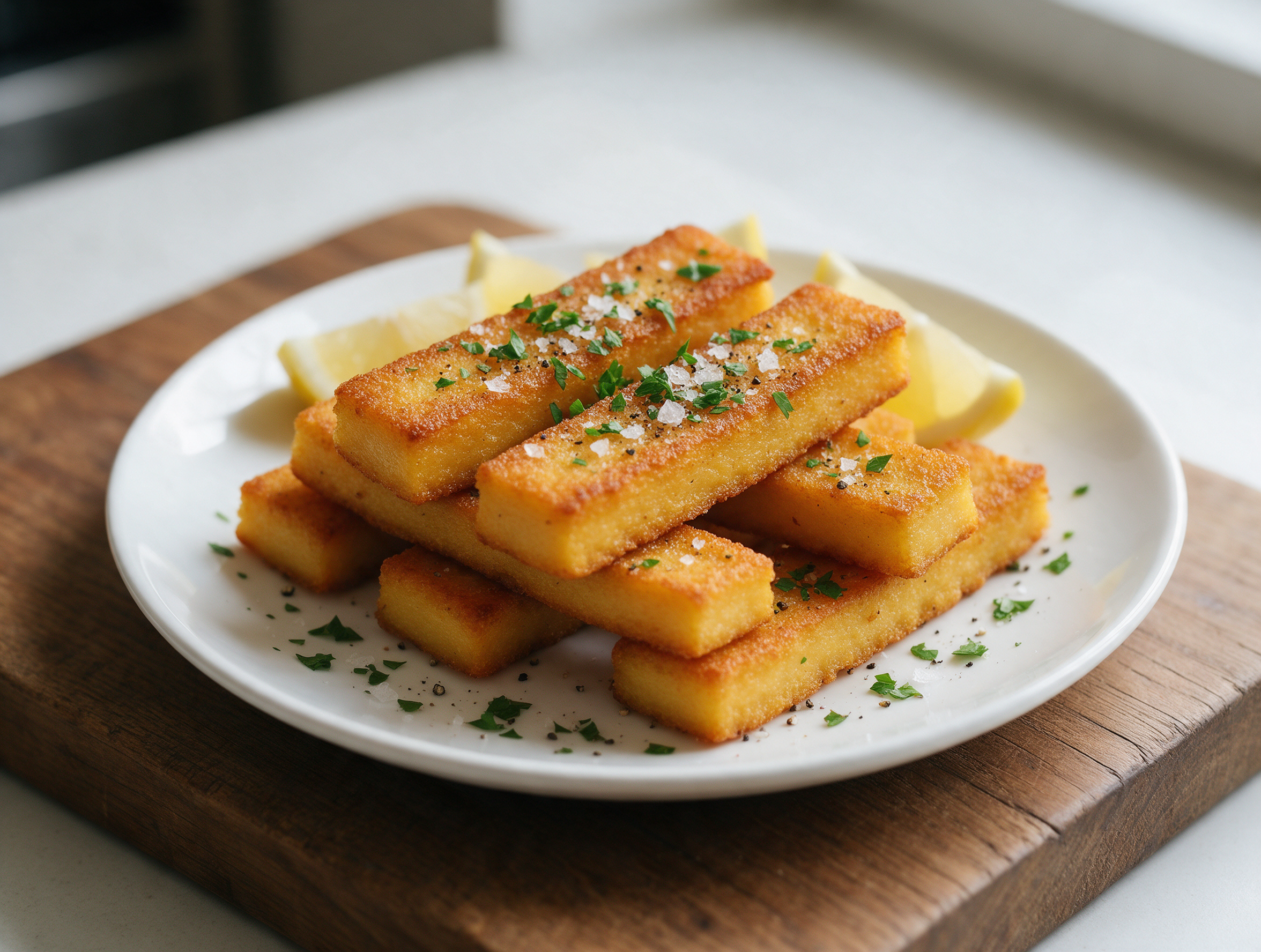
Pan-Fried Panissa: Ligurian Chickpea Polenta Sticks
Ingredients
Method
- Line a 23 x 33 cm / 9 x 13-inch baking dish with parchment, leaving a little overhang on the long sides. In a 3-quart / 2.8 L heavy-bottomed saucepan, whisk the chickpea flour, fine sea salt, and black pepper into the 750 ml cold water until no lumps remain, then whisk in the olive oil.
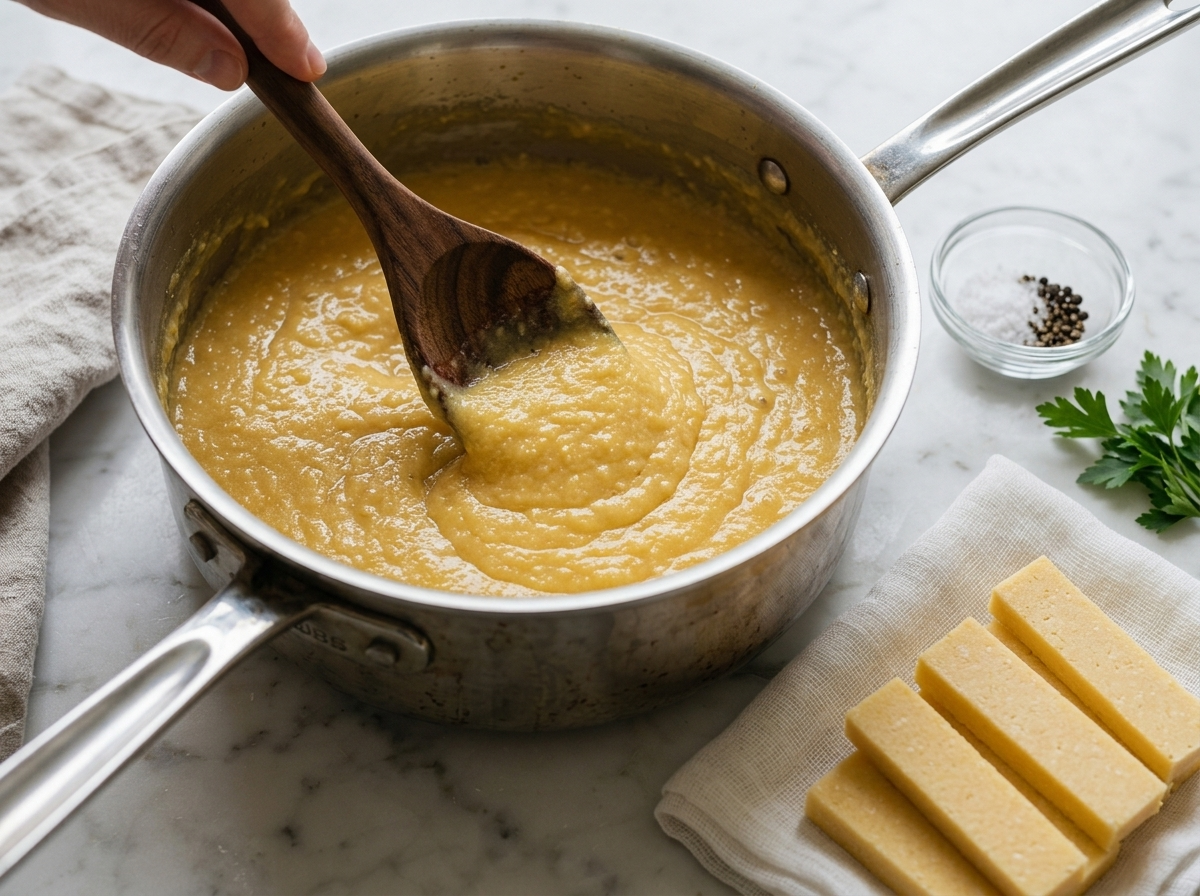
- Set the pan over medium-low heat and whisk constantly for 6 to 8 minutes, reaching into the corners, until the batter thickens to the texture of pudding and begins to bubble slowly.
- Switch to a flat-edged wooden spoon and cook for 10 to 12 minutes more, stirring along the base, until the mass pulls away from the sides of the pan and no longer tastes raw. Lower the heat if it spits.
- Scrape the hot batter into the lined dish right away and level it with a wet spatula to about 1.2 cm / 1/2 inch thick. Leave it uncovered at room temperature for 60 minutes, until it's firm and cool all the way through.
- Heat the oven to 110 C / 230 F and set a wire rack over a sheet pan. Lift the slab out by the parchment and cut it into sticks about 2 cm wide and 8 cm long, trimming the ragged edges, to get about 40 sticks. Pat them dry with paper towels.
- Pour the sunflower oil into a 28 cm / 11-inch heavy skillet and heat over medium-high until it reaches 175 C / 350 F.
- Fry the sticks in 3 batches of 13 to 14, leaving a finger's width between them. Cook 3 to 4 minutes per side, turning once with tongs, until deep golden brown with a crisp shell.
- Move each batch to the rack and sprinkle with flaky sea salt right away. Keep the rack in the oven and let the oil return to 175 C / 350 F between batches.
- Serve within 20 minutes of frying, with lemon wedges, a grind of black pepper, and chopped parsley if you like.
Notes
- Keep the ratio at 250 g chickpea flour to 750 ml water, which is 1:3 by weight.
- Let the slab set a full 60 minutes before cutting.
- Fry 13 to 14 sticks per batch so the oil stays near 175 C / 350 F.
- Hold finished batches on a rack in a 110 C / 230 F oven and serve within 20 minutes.
Tips for Success
- Whisk the flour and salt into cold water before you turn on the heat, so the batter starts smooth.
- Stir with a flat-edged wooden spoon for the last 10 to 12 minutes, scraping the base, until the mass pulls away from the sides.
- Spread the hot batter into the lined dish right away and level it with a wet spatula, since it stiffens quickly as it cools.
- Pat the cut sticks dry and fry 13 to 14 at a time, leaving a finger’s width between them so the oil stays hot.
- Salt the sticks the moment they leave the oil, because flaky salt only clings to a hot, slightly oily surface.
Variations
- Stir 2 tablespoons of chopped flat-leaf parsley into the hot batter for a Sicilian panelle-style flavor.
- Bake instead of frying: brush the sticks with olive oil and roast at 220 C / 425 F for about 30 minutes, flipping once.
- Toss the fried sticks with finely chopped rosemary and plenty of cracked black pepper straight out of the oil.
Storage and Reheating
Panissa fritta is best eaten within 20 minutes of frying, because the shell softens as steam moves from the center to the surface. For that reason I don’t reheat fried sticks, and I fry only what will be eaten.
The set slab is the make-ahead part. Wrap the uncut slab tightly and refrigerate it for 3 to 4 days, then cut and fry straight from the fridge. A cold slab cuts into cleaner sticks.
I haven’t had good results freezing it. The slab turns grainy after thawing.
Serving Suggestions
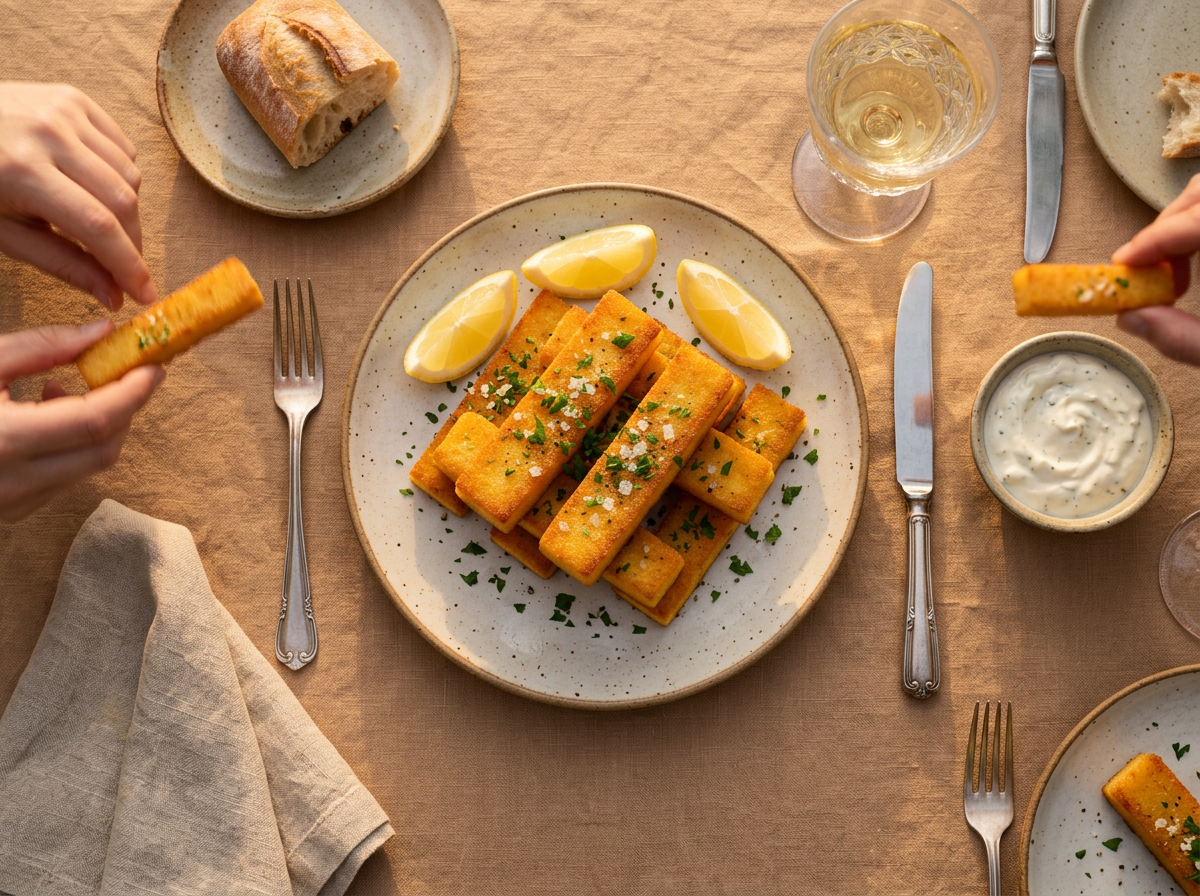
In Genoa, panissa is eaten hot from a paper cone or tucked into a split focaccia roll. Finish the sticks with flaky salt, black pepper, and a squeeze of lemon.
For an aperitivo plate, set out a garlicky yogurt dip or aioli, marinated artichokes, and a glass of chilled Vermentino, the white wine of the Ligurian coast.
As a light main, pile the sticks over arugula dressed with lemon and olive oil, with sliced tomatoes alongside.
FAQ
Why is my panissa falling apart or sticking to the pan?
The slab was most likely cut before it set fully, or the batter came off the heat too soon. Cook the batter until it pulls away from the pan sides, then let it cool a full 60 minutes until firm in the center. Pat the sticks dry and wait for the oil to reach 175 C / 350 F.
Can I use besan instead of Italian farina di ceci for panissa?
Yes, besan works at the same 1:3 ratio of flour to water by weight. Besan is often made from split chickpeas and farina di ceci from whole ones, but both set to a firm slab. Sift besan first if it’s clumpy, and expect 16 to 20 minutes of stirring.
Can I make the panissa slab ahead and fry it the next day?
Yes. Wrap the cooled, uncut slab and refrigerate it for 3 to 4 days, then cut and fry straight from the fridge. A cold slab cuts into cleaner sticks. Pat them dry with paper towels before they hit the oil so they don’t spit.
What goes well with panissa fritta besides lemon and salt?
In Genoa, panissa often goes into a split focaccia roll. At home, a garlicky yogurt dip or aioli, an arugula and tomato salad, and a glass of chilled Vermentino all work. Keep the seasoning simple: flaky salt, black pepper, and a squeeze of lemon.
Is panissa fritta gluten free and vegan?
Yes, as written. It’s chickpea flour, water, salt, and olive and sunflower oil, with no eggs or dairy. If you’re cooking for someone with celiac disease, check the flour label for a gluten-free claim, since chickpea flour is often milled in shared facilities. Fry in fresh oil and a clean skillet.
What is the difference between panissa, panelle, and farinata?
All three use chickpea flour and water. Panissa is cooked on the stove, set, cut into sticks, and fried. Panelle are the Sicilian version, usually thinner and flavored with parsley. Farinata is a thin batter baked in a very hot oven with no stovetop cook, so it comes out as a flatbread.