
Jump to Recipe
Petto d’anatra al balsamico is duck breast pan-seared skin-side down in a cold skillet, then finished with a shallot and balsamic reduction made in the same pan. The skin turns thin and crisp, the meat stays rosy, and the sauce comes together while the duck rests.
The cold start is the technique. A cold pan lets the fat melt out slowly. In a hot pan the skin browns before the fat underneath has rendered, and you get dark, chewy skin over a layer of white fat.
Total time is 37 minutes with one skillet and an instant-read thermometer. I buy a mid-priced balsamic from Modena, because a thin supermarket vinegar reduces into something sharp and flat.
It’s a secondo you’ll see on trattoria menus across northern Italy. Serve it over soft polenta or mashed potatoes so the sauce has somewhere to go.
Why You’ll Love This Recipe
- Crisp skin from the duck’s own fat, no added oil
- Restaurant-style secondo in 37 minutes with one skillet
- The sauce is built in the same pan while the duck rests
- Leftover rendered fat is ready for roasting potatoes
Ingredient Notes
- duck breasts: Pekin breasts run about 350 g each and suit this recipe. Moulard breasts are larger, so rely on the thermometer for the flesh-side time rather than the clock.
- balsamic vinegar of Modena: Choose a mid-priced bottle that pours slightly syrupy. Very thin vinegar turns sharp when reduced, and a true aged tradizionale is too good to cook with.
- low-sodium chicken stock: Reducing concentrates salt, so low-sodium stock keeps the sauce balanced. Veal or duck stock works if you have it.
- shallot: Its mild sweetness suits the vinegar. A quarter of a small red onion, finely minced, is a fair substitute.
- honey: Two teaspoons round off the vinegar’s edge. Maple syrup works in the same amount.
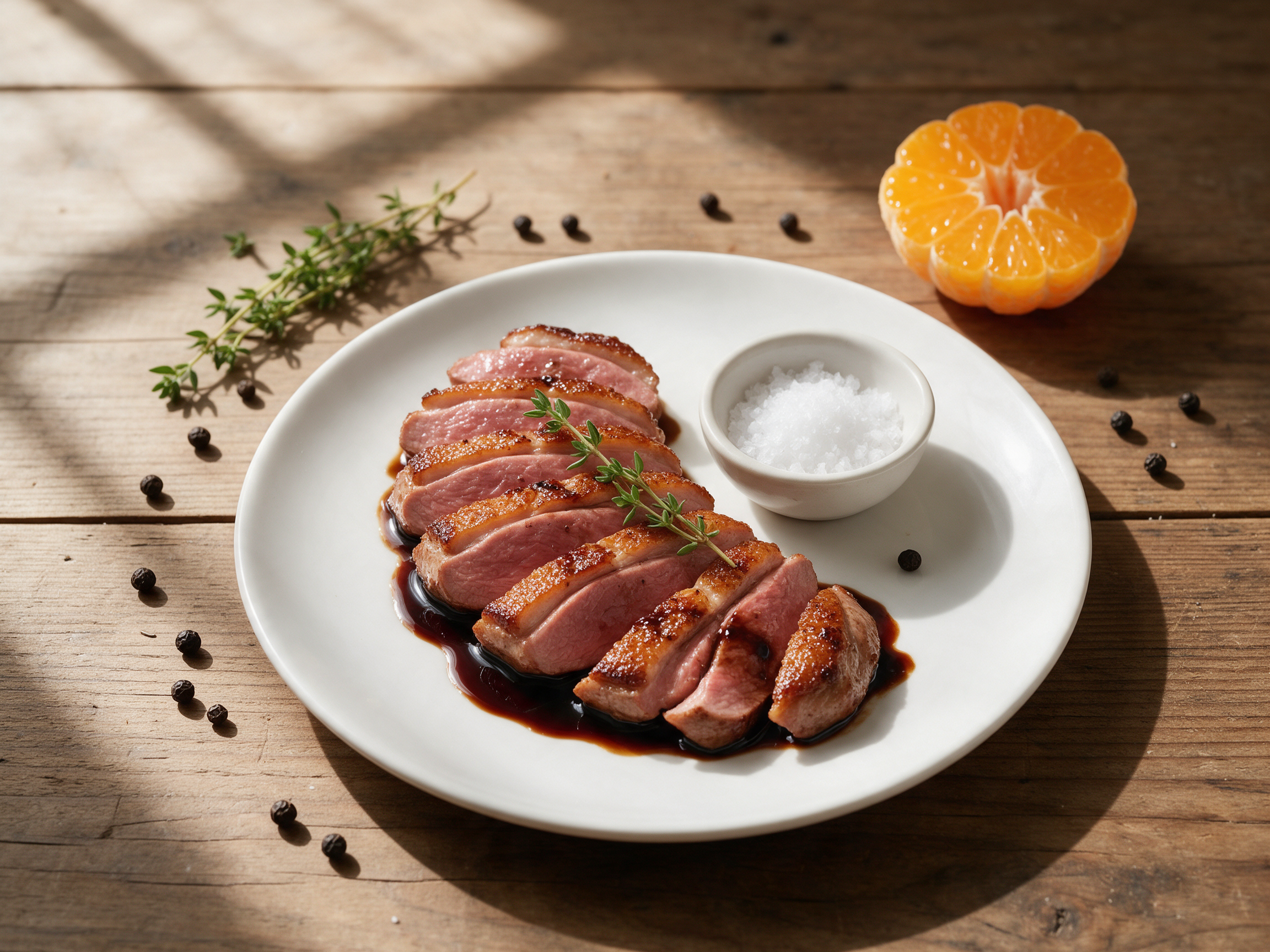
Petto d’Anatra al Balsamico: Pan-Seared Duck Breast
Ingredients
Method
- Pat the duck breasts dry with paper towels. Score the skin in a crosshatch pattern 5 mm apart, cutting through the fat but not into the meat. Season both sides with the salt and pepper, and mince the shallot.
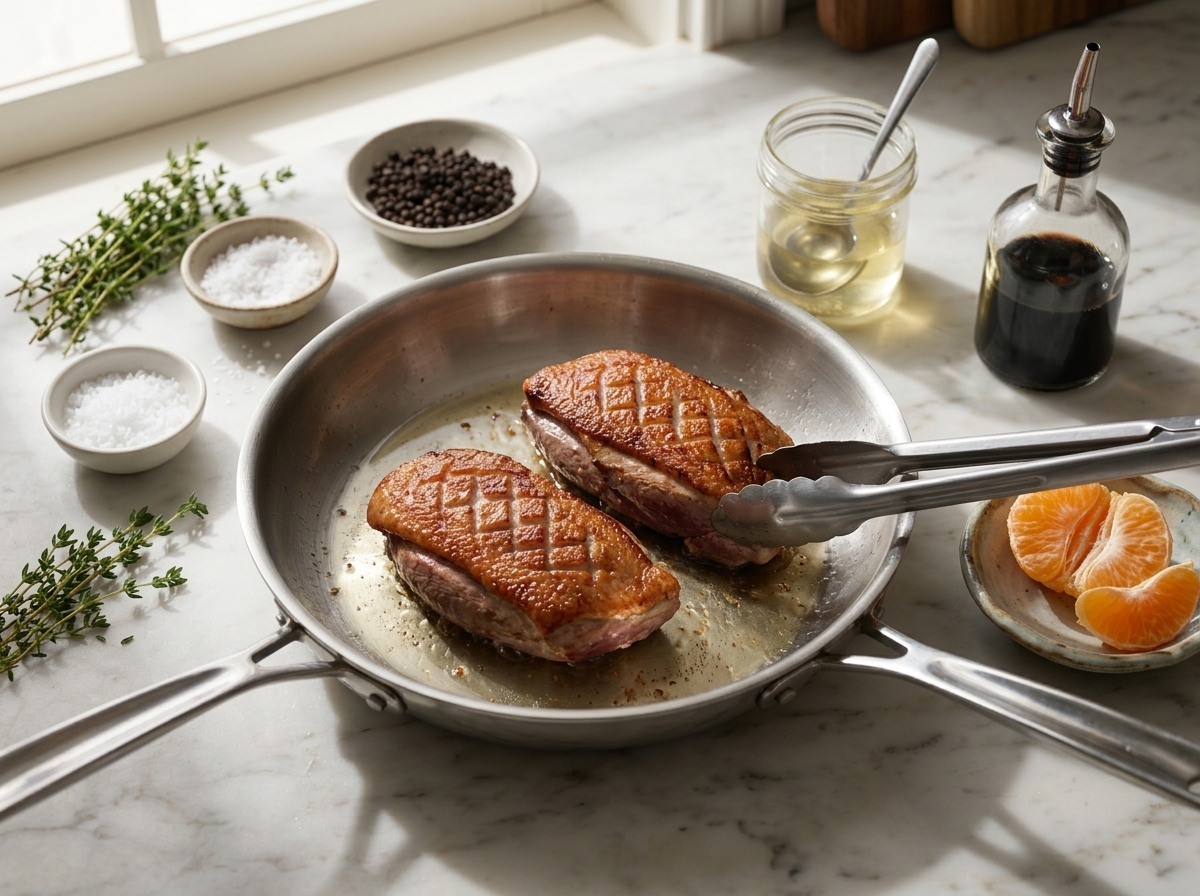
- Set the breasts skin-side down in a cold 30 cm / 12-inch skillet and turn the heat to medium-low. Cook for 12 to 14 minutes, carefully pouring the fat into a heatproof jar every 4 to 5 minutes, until the skin is deep golden and crisp.
- Flip the breasts and cook the flesh side for 3 to 4 minutes, until an instant-read thermometer in the thickest part reads 135 F / 57 C. Move the duck to a cutting board, skin-side up, and rest it for 10 minutes.
- While the duck rests, pour off all but 1 tbsp of fat from the skillet and set it over medium heat. Cook the shallot for 2 minutes until soft and translucent, then add the thyme.
- Add the balsamic vinegar, stock, and honey. Simmer for 5 to 6 minutes, scraping up the browned bits, until the sauce has reduced by about half and coats the back of a spoon. Take the pan off the heat, discard the thyme, swirl in the cold butter until glossy, and add a pinch of salt if needed.
- Slice the duck across the grain into 5 mm slices and fan them on warm plates. Spoon the sauce over the meat, pour any board juices on top, and serve at once.
Notes
- Start the duck in a cold skillet, never a preheated one.
- Keep the heat at medium-low for the whole skin-side cook so the skin sizzles gently.
- Use a thermometer, since breast thickness changes the flesh-side time.
- Build the sauce while the duck rests for 10 minutes, then slice.
- Refrigerate strained duck fat in a jar for up to 1 month.
Tips for Success
- Pat the skin completely dry with paper towels before scoring, because surface moisture steams the skin instead of letting it crisp.
- Score the skin in a crosshatch about 5 mm apart, and stop before the knife reaches the meat.
- Pour the rendered fat into a heatproof jar every 4 to 5 minutes so the skin fries gently instead of simmering in fat.
- Slide an instant-read thermometer into the thickest part of the breast from the side, and pull the duck at 135 F / 57 C.
- Slice across the grain at a slight angle after the 10-minute rest, then spoon any board juices over the slices.
Variations
- Swap the honey for 1 tbsp cherry preserves and add 50 g pitted cherries to the sauce for a fruit-forward version.
- Add 2 tbsp Marsala with the shallot and let it cook down for 1 minute before the vinegar goes in.
- Replace the thyme with a rosemary sprig and stir in 3 lightly crushed juniper berries while the sauce reduces.
Storage and Reheating
Petto d’anatra al balsamico is best eaten right after slicing, because the crisp skin softens within minutes and reheated meat loses its rosy center. I don’t reheat it.
Leftover slices keep 3 days in an airtight container in the fridge. Eat them cold, sliced thin over bitter greens or tucked into a sandwich with a spoonful of the sauce.
For make-ahead, mince the shallot and score the duck up to 12 hours before cooking, and keep the breasts uncovered on a plate in the fridge. The cold air dries the skin, which helps it crisp. Strain the rendered fat and refrigerate it in a jar for up to 1 month.
Serving Suggestions
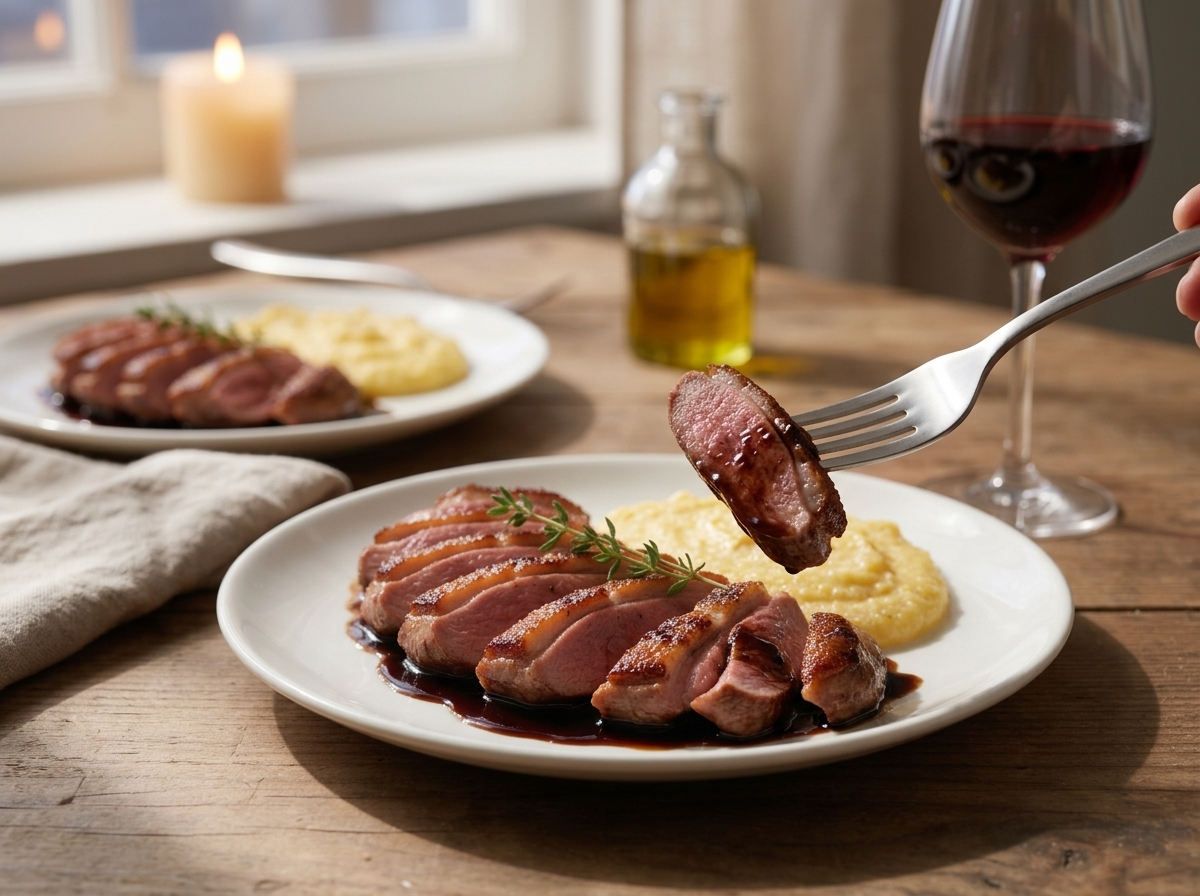
Petto d’anatra al balsamico needs something soft and starchy beside it to catch the sauce. My first choice is creamy polenta, such as a rustic polenta cropa with melted Casera. Mashed potatoes work, and so do potatoes roasted in 2 tbsp of the rendered duck fat at 220 C / 425 F for about 35 minutes.
Add something bitter or green to cut the richness: sauteed cime di rapa, wilted spinach with garlic, or a radicchio salad dressed with olive oil and lemon. For wine, a medium-bodied red with good acidity, such as Barbera or Sangiovese, holds up to the vinegar.
Slice the duck just before it goes on the plate. Spoon the sauce over the meat and keep it off the skin where you can, so the crisp stays crisp.
FAQ
Why is the skin on my pan-seared duck breast rubbery?
Rubbery duck skin usually means the pan was too hot or the skin was wet, so the fat never rendered. Start the breast skin-side down in a cold 30 cm / 12-inch skillet over medium-low and give it 12 to 14 minutes, pouring off fat as it collects. The skin is ready when it’s deep golden and thin, with no soft white layer under it.
How do I know when petto d’anatra is done, and is pink duck safe?
Pull the breast off the heat when an instant-read thermometer in the thickest part reads 135 F / 57 C, then rest it 10 minutes. The slices will be rosy pink and juicy. Medium-rare is standard for duck, but USDA guidance for poultry is 165 F / 74 C, so cook to that if you’re serving anyone pregnant or immunocompromised.
Can I use balsamic glaze instead of balsamic vinegar for duck breast?
Yes. Use 2 tbsp balsamic glaze plus 1 tbsp red wine vinegar in place of the 80 ml of vinegar, skip the honey, and reduce the stock as written. Red wine vinegar on its own is too sharp, though with an extra 1 tsp of honey it’s workable.
Can I cook petto d’anatra ahead and reheat it for guests?
No, it’s best cooked fresh. Reheating softens the crisp skin and pushes the meat past rosy. Leftovers keep 3 days in the fridge and are good cold, sliced thin over bitter greens. For a dinner party, do the scoring and shallot ahead, then sear after guests arrive. Start to plate is 27 minutes.
What wine and sides go with duck breast in balsamic sauce?
Soft polenta, potatoes roasted in the rendered duck fat, or wilted cime di rapa or spinach all balance the sharp sauce. For wine, pick a medium-bodied red with decent acidity, such as Barbera or Sangiovese. A glass of Lambrusco is the Modena-region pour if you want something lighter and slightly fizzy.
Is petto d’anatra al balsamico gluten free, and can I make it dairy free?
It’s gluten free as written as long as your chicken stock and balsamic vinegar are labeled gluten free. For dairy free, skip the finishing butter and whisk in 1 tsp of the reserved duck fat instead. The sauce will be slightly thinner but still glossy.