
Jump to Recipe
Polenta Cropa della Val d’Arigna is a buckwheat-heavy polenta from the mountains above Sondrio, cooked slow on the stovetop until it’s dense enough to hold a spoon upright. The name comes from the local dialect word cropa, which just means buckwheat flour.
This isn’t the pale yellow polenta from a quick-cook packet. Buckwheat makes it darker, grainier, and more assertive in flavor, closer to bread than to cornmeal mush.
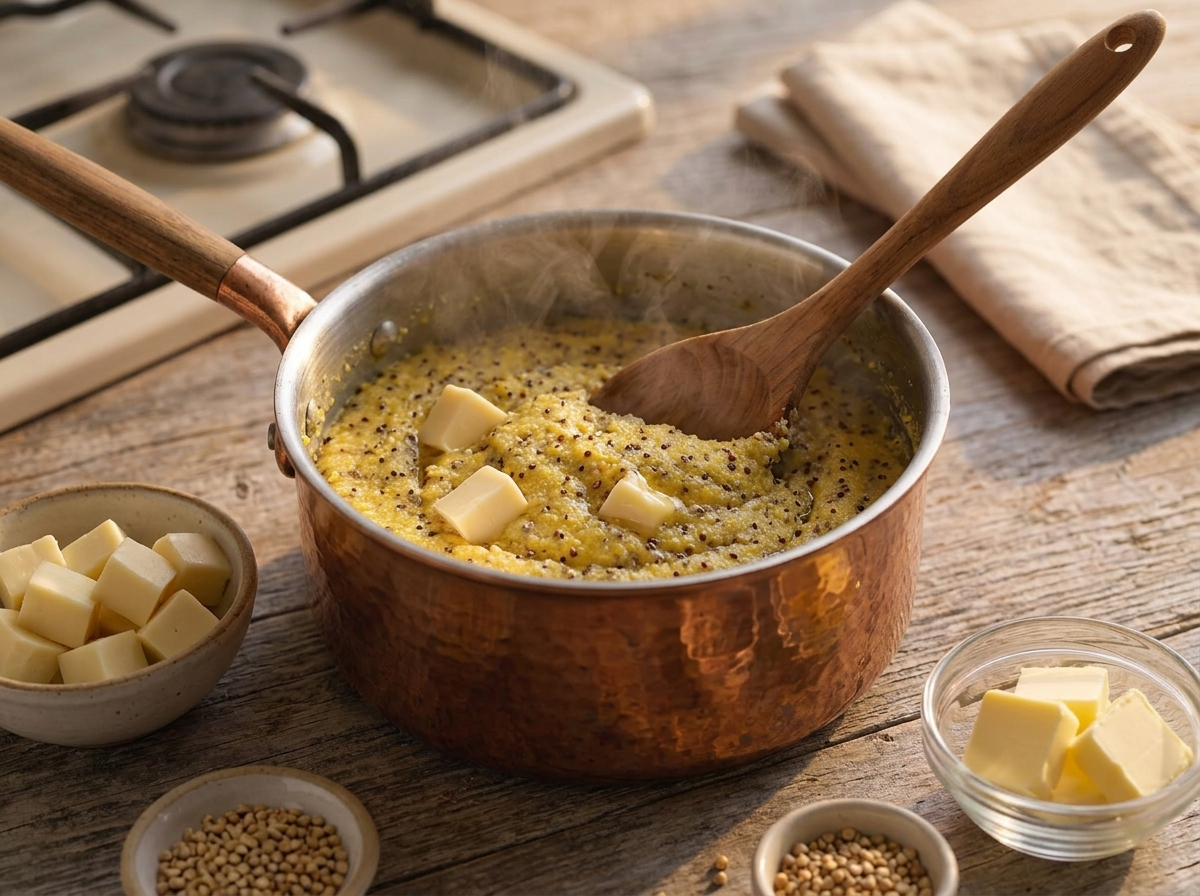
I cook mine in a heavy 24 cm pot for about 50 minutes, stirring on and off until it pulls cleanly from the sides. Butter and Casera go in at the end, off the heat, so the cheese melts into ribbons instead of breaking into grease.
It’s a dish built for cold weather and a hungry table. Serve it straight from the pot with a ladle, or spread it on a board and slice it once it sets.
Why You’ll Love This Recipe
- Darker, nuttier flavor than standard cornmeal polenta
- One pot, minimal cleanup, feeds a hungry table
- Buckwheat base works well for gluten-free households
- Reheats and pan-fries well the next day
Ingredient Notes
- buckwheat flour: Look for stone-ground grano saraceno flour, it cooks up darker and coarser than the fine buckwheat used in crepes.
- cornmeal: A fine to medium grind works best here. Coarse polenta cornmeal takes longer and fights the buckwheat’s texture.
- water: Start with cold water so you can control the boil and avoid scorching once the flour mixture goes in.
- salt: Add it to the water before the flour, not after. The cheese brings more salt later.
- butter: Use unsalted so you control the final seasoning, since Casera already carries salt.
- Casera cheese: A semi-soft alpine cheese from the Valtellina. Fontina or Bitto both work as stand-ins.
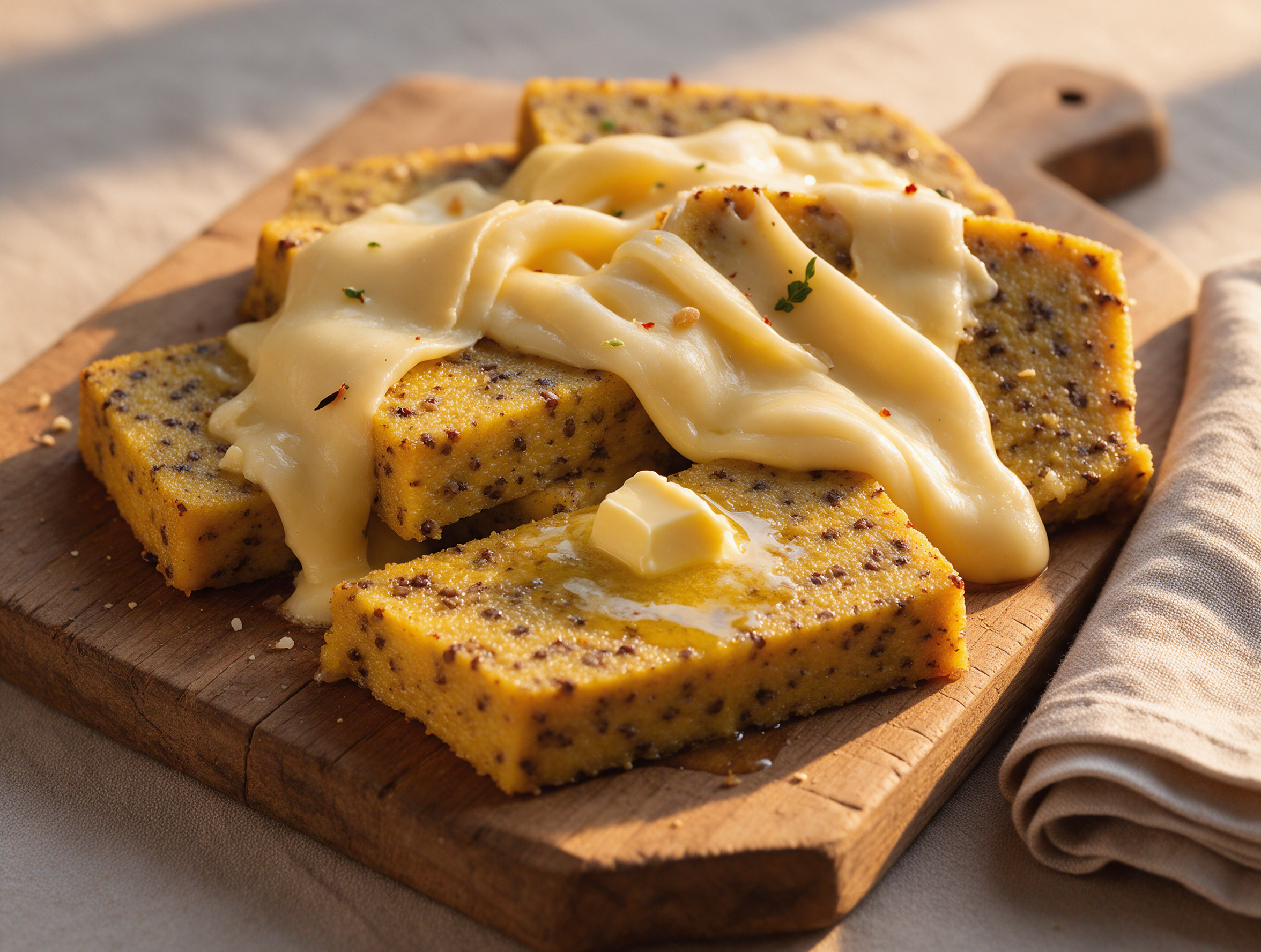
Polenta Cropa della Val d’Arigna with Melted Casera
Ingredients
Method
- Bring 1.6 liters / 1600 ml of water to a rolling boil in a 24 cm / 9.5-inch heavy-bottomed pot. Add the salt.
- Whisk the buckwheat flour and cornmeal together in a bowl so they're evenly combined before they hit the water.
- Reduce the heat slightly so the water is at a strong simmer, not a violent boil. Rain the flour mixture in slowly with one hand while whisking constantly with the other, to keep lumps from forming.
- Once all the flour is in, switch to a wooden spoon or tarello and lower the heat to a gentle simmer.
- Cook for 45 to 50 minutes, stirring every few minutes and scraping the bottom, until the polenta thickens into a dense mass that pulls cleanly away from the sides of the pot.
- In the last 5 minutes, pull the pot off direct heat. Add the butter in pieces, stirring until melted.
- Add the Casera in small handfuls, folding between additions, until the cheese melts into the polenta and the mixture looks glossy rather than oily.
- Taste and adjust with black pepper if you like. The salted cooking water and cheese usually cover the seasoning on their own.
- Pour the polenta onto a wooden board or into a warm bowl. Let it sit for 5 minutes to firm up slightly before slicing or serving with a ladle.
Notes
- Cropa is the dialect word for buckwheat flour in Val d'Arigna, not a separate grain
- A heavy-bottomed pot prevents scorching during the long 45 to 50 minute simmer
- Add cheese off direct heat so it melts smoothly instead of turning oily
- Salted cooking water plus Casera means you rarely need extra salt at the end
Tips for Success
- Whisk the two flours together before adding to boiling water to keep lumps from forming
- Stir constantly for the first 10 minutes, then settle into a slower steady rhythm for the rest
- Use a heavy-bottomed pot so the bottom doesn’t scorch during the 45 to 50 minute simmer
- Add the cheese off direct heat so it melts smoothly instead of separating into oily pools
- Taste the polenta before adding cheese since Casera brings its own salt to the dish
Variations
- Swap Casera for Bitto or Fontina if that’s what your cheese counter carries, both melt the same way
- Stir in sauteed porcini or chestnut mushrooms at the end for an autumn version rooted in the same valley
- Skip the cheese entirely and finish with just butter for a plainer version closer to older mountain recipes
Storage and Reheating
Refrigerate leftover polenta cropa in an airtight container for 3 to 4 days. It firms up considerably once cold, which is normal for a buckwheat-heavy polenta.
To reheat, put slices or scoops in a 20 cm / 8-inch saucepan with a splash of milk or water over low heat, stirring until it loosens back to a soft, spoonable texture. You can also cut cold polenta into slabs and pan-fry them in butter in a 10-inch skillet for 3 to 4 minutes per side until crisp outside and warm through.
For longer storage, freeze cooled slices in a single layer for up to 2 months. Thaw overnight in the fridge, then reheat with the pan-fry method for the best texture.
Serving Suggestions
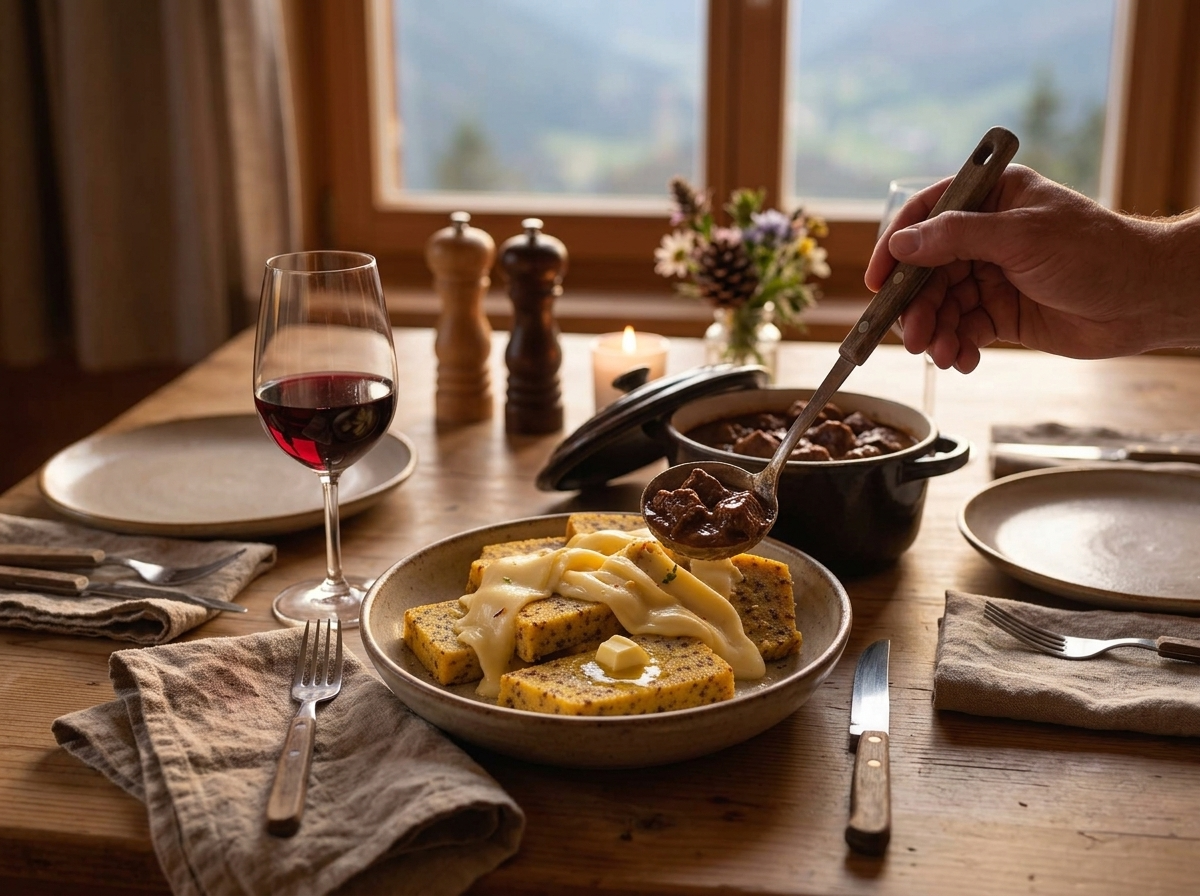
Polenta cropa carries big, buttery cheese flavor on its own, so I keep the sides simple. A braised beef or venison stew with a dark reduction sauce is the classic match in the valleys around Sondrio.
Mushroom ragu works too, especially with porcini or the chestnut mushrooms in fall. Grilled sausage or a few slices of speck round it out without much extra work.
Leftover slices, pan-fried until crisp, make a good base for a fried egg and a handful of arugula the next morning.
FAQ
How do I know when polenta cropa is done cooking?
Polenta cropa is done when it pulls cleanly away from the sides of the pot and holds its shape on a spoon instead of running off. This usually takes 45 to 50 minutes of slow simmering. If it still looks loose and porridge-like, keep stirring over low heat for another 5 to 10 minutes.
Can I use Fontina instead of Casera in polenta cropa?
Yes, Fontina works well as a substitute for Casera in polenta cropa. Both are semi-soft alpine cheeses that melt into smooth ribbons rather than separating. Bitto is another traditional option from the same region if you can find it at a specialty cheese counter.
Can I make polenta cropa ahead and reheat it the next day?
Yes, polenta cropa keeps well in the fridge for 3 to 4 days and reheats easily. Warm it in a saucepan over low heat with a splash of milk or water, stirring until it loosens up again. You can also slice cold polenta and pan-fry it in butter for a crisp crust.
What goes well with polenta cropa della Val d’Arigna?
Braised meats and mushroom ragu are the classic pairings for polenta cropa. In the valleys around Sondrio it’s often served alongside beef or venison stew, or with sausage and a few slices of speck. The dense, cheesy base holds up well against rich, saucy dishes.
Is polenta cropa gluten free?
Polenta cropa is naturally gluten free when made with pure buckwheat flour and cornmeal, since neither grain contains gluten. Check the packaging on both flours if you need a certified gluten-free result, since cross-contamination can happen during milling. The traditional dish has no wheat in it at all.
What’s the difference between polenta cropa and polenta taragna?
Polenta cropa uses a higher ratio of buckwheat flour to cornmeal than polenta taragna, giving it a darker color and denser, more rustic texture. Cropa is the Val d’Arigna dialect word for buckwheat. Taragna, more common across Valtellina generally, usually balances the two flours more evenly.