
Jump to Recipe
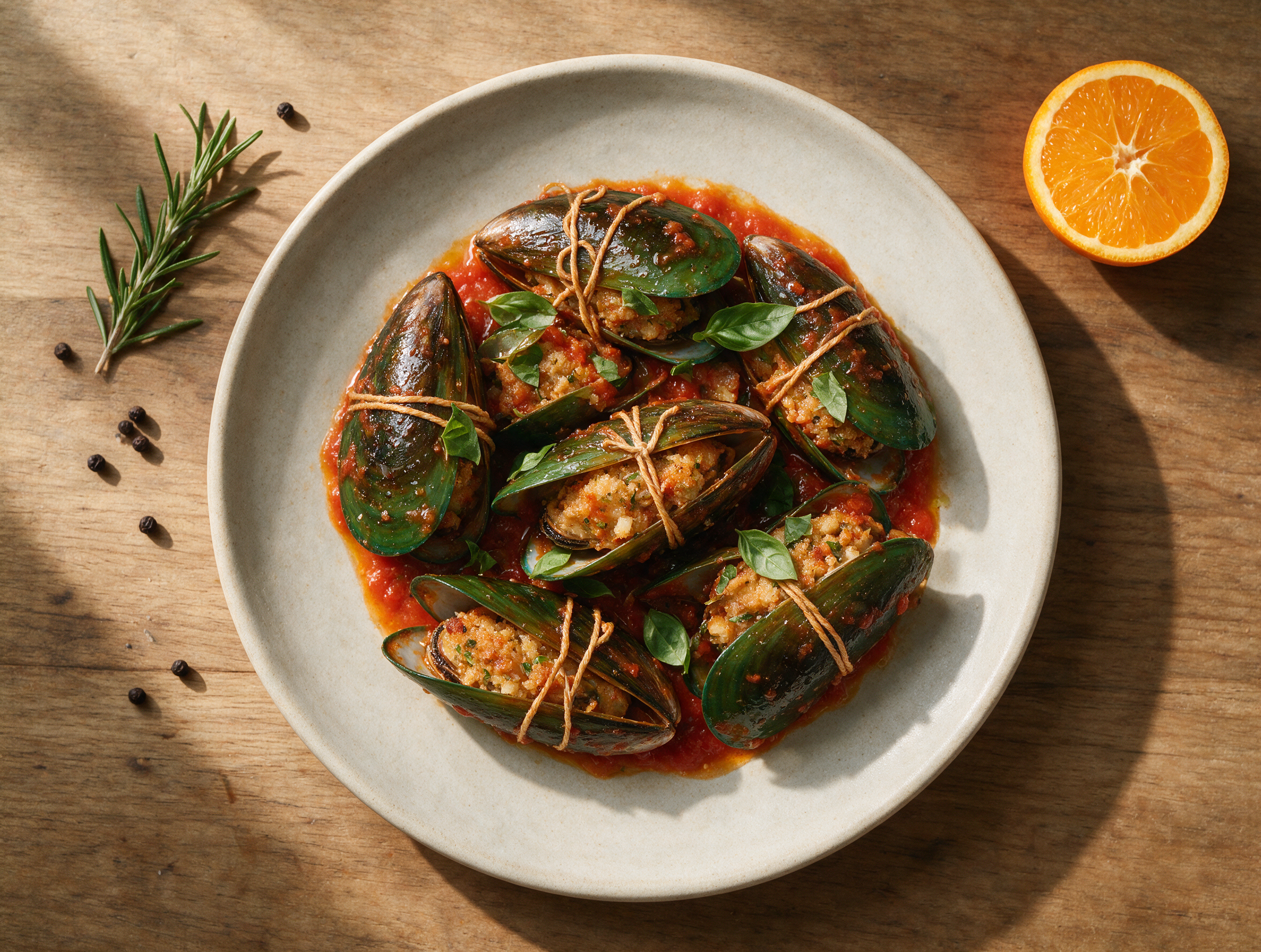
Cozze ripiene is a Neapolitan dish of large mussels split at the hinge, packed with a bread and pecorino filling, then tied shut and simmered in tomato sauce until the shells give up their brine and the stuffing turns firm.
The filling is simple, stale bread soaked and squeezed, plus egg, grated pecorino, garlic, and parsley. Once the mussels close around it and go into the pot, the sauce picks up all that briny mussel liquor as it simmers.
The one thing that trips people up is tying the shells too loosely. If the string slips, the mussel pops open in the sauce and the filling floats away, so I wrap the string twice before I knot it.
Serve the mussels straight from the pan with bread for the sauce. It’s a dish built for a slow Sunday, not a rushed Tuesday, since stuffing sixteen to twenty mussels by hand takes real time.
Why You’ll Love This Recipe
- Turns cheap mussels into a dish that feels like a special occasion
- The tomato sauce doubles as a sauce for pasta the next day
- Filling uses stale bread, no waste and no extra shopping
- Make it a day ahead and just simmer before serving
Ingredient Notes
- mussels: Buy large, tightly closed mussels so there’s room to stuff them. Tap any open ones on the counter, discard if they don’t close.
- stale bread: Day-old crusty bread works best. Fresh sandwich bread turns gummy once soaked, so let bread dry out overnight if you only have fresh.
- pecorino romano: Parmesan is a fine substitute if you want a milder, less salty filling.
- egg: Binds the filling so it holds its shape inside the shell. Don’t skip it or the stuffing will crumble apart.
- crushed tomatoes: San Marzano or a smooth passata both work. Avoid chunky diced tomatoes, they won’t coat the mussels evenly.
- kitchen string: Toothpicks work in a pinch but string holds the shells tighter and is less likely to slip during simmering.
Cozze Ripiene: Neapolitan Stuffed Mussels in Sauce
Ingredients
Method
- Scrub the mussels under cold water and pull off the beards. Discard any with cracked shells or that don't close when tapped firmly on the counter.
- Using a small paring knife, pry each mussel open at the hinge without fully separating the two shells, so they stay attached like a book. Set the opened mussels on a tray while you make the filling.
- Tear the stale bread into a bowl and pour the milk over it. Let it soak for 5 minutes, then squeeze it firmly dry with your hands and crumble it back into the bowl.
- Add the eggs, grated pecorino, chopped parsley, minced garlic, salt, and black pepper to the bread. Mix with a fork until you get a thick, cohesive paste that holds together when pressed.
- Spoon about a tablespoon of filling into each opened mussel, pressing it gently between the two shell halves so the mussel closes around the stuffing.
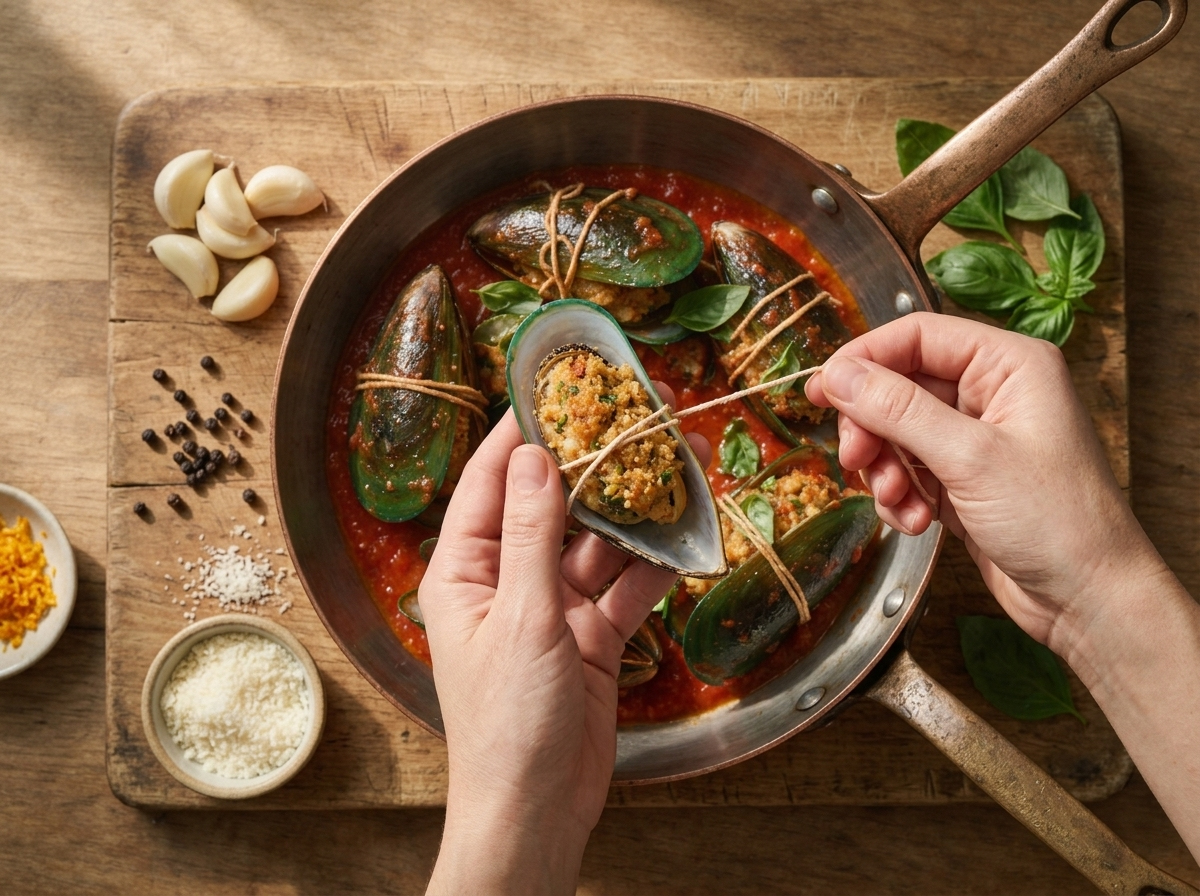
- Wrap kitchen string around each stuffed mussel twice and knot it snugly, or secure with a toothpick through both shells, so the filling stays enclosed during cooking.
- Warm the olive oil in a 30 cm / 12-inch skillet over medium heat. Add the sliced garlic and chili flakes and cook for 1 minute until fragrant, not browned.
- Pour in the crushed tomatoes and season with salt. Bring to a gentle simmer and cook uncovered for 8 minutes to concentrate the sauce slightly.
- Nestle the stuffed mussels into the sauce in a single layer. Cover the skillet and simmer on low for 15 to 18 minutes, until the filling is firm and opaque and reaches 165 F / 74 C in the center.
- Remove the string or toothpicks from each mussel with tongs. Scatter torn basil over the top and serve directly from the skillet with crusty bread.
Notes
- Buy mussels the same day you plan to cook them for the freshest brine flavor.
- Discard any mussel that stays open when tapped or feels unusually heavy with sand.
- Filling should feel like a thick, wet meatball mix, not soupy.
- Tie the mussels right before simmering, they can pop open while you work if left loose too long.
Tips for Success
- Debeard mussels right before stuffing so they don’t dry out while you prep the filling.
- Squeeze soaked bread firmly dry, a wet filling won’t hold together and spills out during simmering.
- Tie mussels snugly with kitchen string, loose ties let shells pop open and lose the stuffing.
- Simmer covered and low, a hard boil cracks shells and toughens the mussel meat inside.
- Save a ladle of sauce for seafood calamarata the next day, the mussel liquor gives it real depth.
Variations
- Swap pecorino for parmesan if you want a milder, less salty filling, especially if your bread is already salted.
- Stir a spoonful of tomato paste into the sauce for deeper color and a more concentrated tomato flavor.
- Add a handful of chopped shrimp to the filling for a richer, more substantial stuffing with extra seafood flavor.
Storage and Reheating
Cozze ripiene keep well in the fridge for 2 to 3 days once fully cooled, stored in their sauce in an airtight container.
Reheat gently in a covered 30 cm / 12-inch skillet over low heat for 8 to 10 minutes, spooning sauce over the mussels until warmed through. Skip the microwave, it toughens the mussel meat and can make the filling rubbery.
Freezing isn’t ideal here, the bread filling turns mushy and the mussels lose texture once thawed.
Serving Suggestions
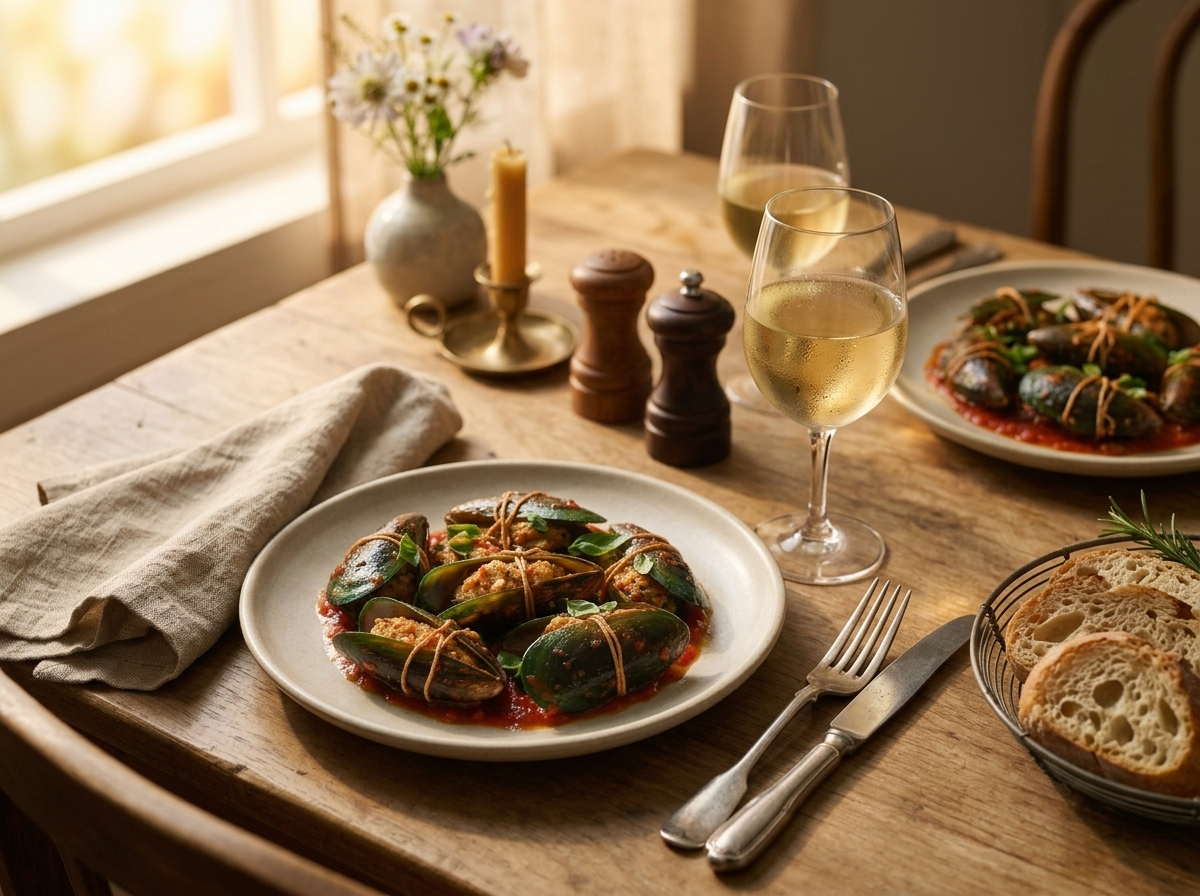
Serve cozze ripiene straight from the skillet with a stack of crusty bread for mopping up the tomato sauce.
A simple green salad with lemon dressing balances the richness of the filling and cheese.
For a full Neapolitan-style dinner, start with bruschetta and pour a chilled glass of Falanghina or another dry white wine.
FAQ
How do I know when cozze ripiene are fully cooked?
The filling should look firm and opaque all the way through, not wet or shiny, and reach 165 F / 74 C in the center. The shells will also feel loose against the string once the mussel meat has fully cooked inside.
Can I use panko instead of stale bread for the mussel filling?
Yes, but soak it only briefly since panko absorbs liquid fast and can turn pasty if left too long. The texture ends up slightly drier than with torn stale bread, so add an extra splash of milk to compensate.
Can I stuff the mussels ahead of time and cook them the next day?
Yes, stuff and tie the mussels, then refrigerate them covered for up to 24 hours before simmering in sauce. Keep them cold until they go straight into the pot so the filling stays food-safe.
What pairs well with Neapolitan stuffed mussels for a full dinner?
Crusty bread for the sauce is the classic pairing, along with a dry white wine like Falanghina or Fiano. A lemony green salad on the side cuts through the richness of the pecorino filling.
Is cozze ripiene gluten free?
No, the traditional filling uses stale bread, which contains gluten. Swap in a certified gluten-free bread or breadcrumb and check that your grated cheese is gluten free to make the dish safe for that diet.
What’s the difference between cozze ripiene and cozze alla marinara?
Cozze ripiene are stuffed with a bread and cheese filling before simmering in sauce, while cozze alla marinara are plain mussels cooked open in a light garlic and tomato broth. Ripiene takes more prep but delivers a heartier, main-course result.