
Jump to Recipe
Minestra de Dumèga Valtellinese is a thick cornmeal soup from the Valtellina valley in northern Lombardy, cooked with beans, potato and savoy cabbage. “Dumèga” is the local word for maize, and the cornmeal does the thickening instead of cream or pasta.
The texture sits between a soup and a loose polenta. It’s a thick, spoonable bowl with soft vegetables, and the corn flavor gets sweeter the longer it cooks.
I use canned borlotti beans, so there’s no overnight soaking. The soup still needs about 80 minutes, with a stir every few minutes once the cornmeal goes in.
The finish matters here. Browned sage butter and cubes of Casera cheese go on at the end and melt into each bowl. Home versions vary from village to village, so the vegetables are flexible but the cornmeal is not.
Why You’ll Love This Recipe
- Pantry beans, potatoes and cornmeal keep the cost low
- Cornmeal thickens the soup with no cream or pasta
- Leftovers firm up and reheat well with a splash of water
- Sage butter and Casera finish each bowl in two minutes
Ingredient Notes
- coarse yellow cornmeal: Look for a bag labeled polenta or bramata. Instant polenta works if you whisk it in for the last 5 minutes, but the soup tastes less deep.
- Casera cheese: Casera is a semi-hard cow’s milk cheese from Valtellina that melts without stringing. Fontina or a young Asiago are fair substitutes.
- borlotti beans: Canned beans save the soaking. Cannellini beans work the same way, and 200 g dried beans cooked ahead will replace the two cans.
- savoy cabbage: Savoy turns tender and slightly sweet in 25 minutes. Green cabbage needs about 10 more minutes, and Swiss chard works if you add it in the last 15.
- yellow potatoes: Use a waxy or all-purpose potato such as Yukon Gold. Cut them in 1 cm cubes so they soften at the same pace as the cabbage.
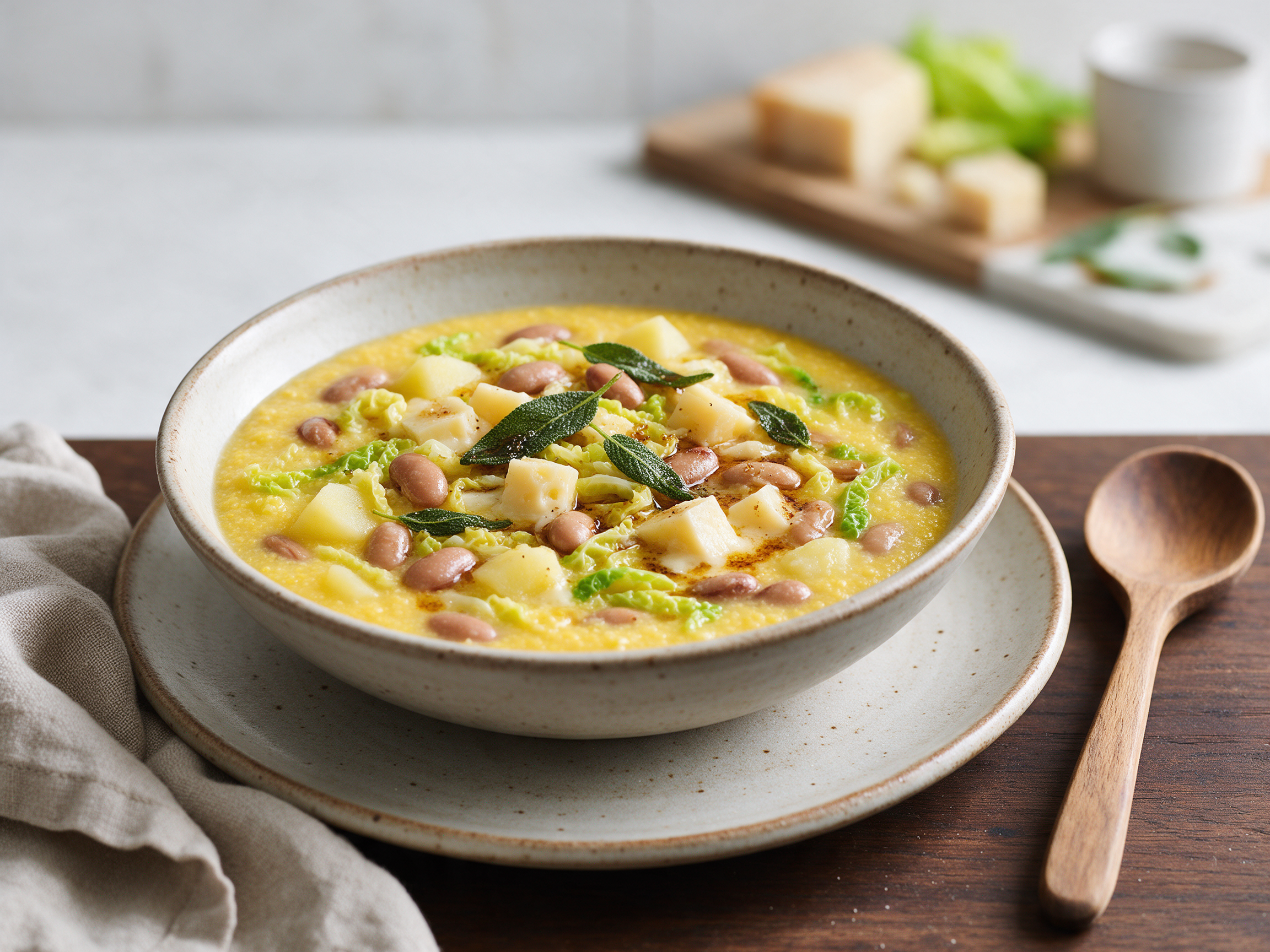
Valtellina Minestra de Dumèga with Beans and Cabbage
Ingredients
Method
- Melt 30 g butter with the olive oil in a 5-quart / 4.7 L heavy pot (24 cm / 9.5-inch) over medium heat. Add the onion, carrot, celery, 2 sage leaves and 1/2 tsp salt. Cook for 8 minutes, stirring, until soft and pale gold but not browned.
- Add the potatoes and cabbage and stir for 5 minutes until the cabbage has wilted by about half. Add the beans and 1.6 L water, bring to a boil, then lower to a gentle simmer. Partly cover and cook for 20 minutes until the potatoes are tender when pierced.
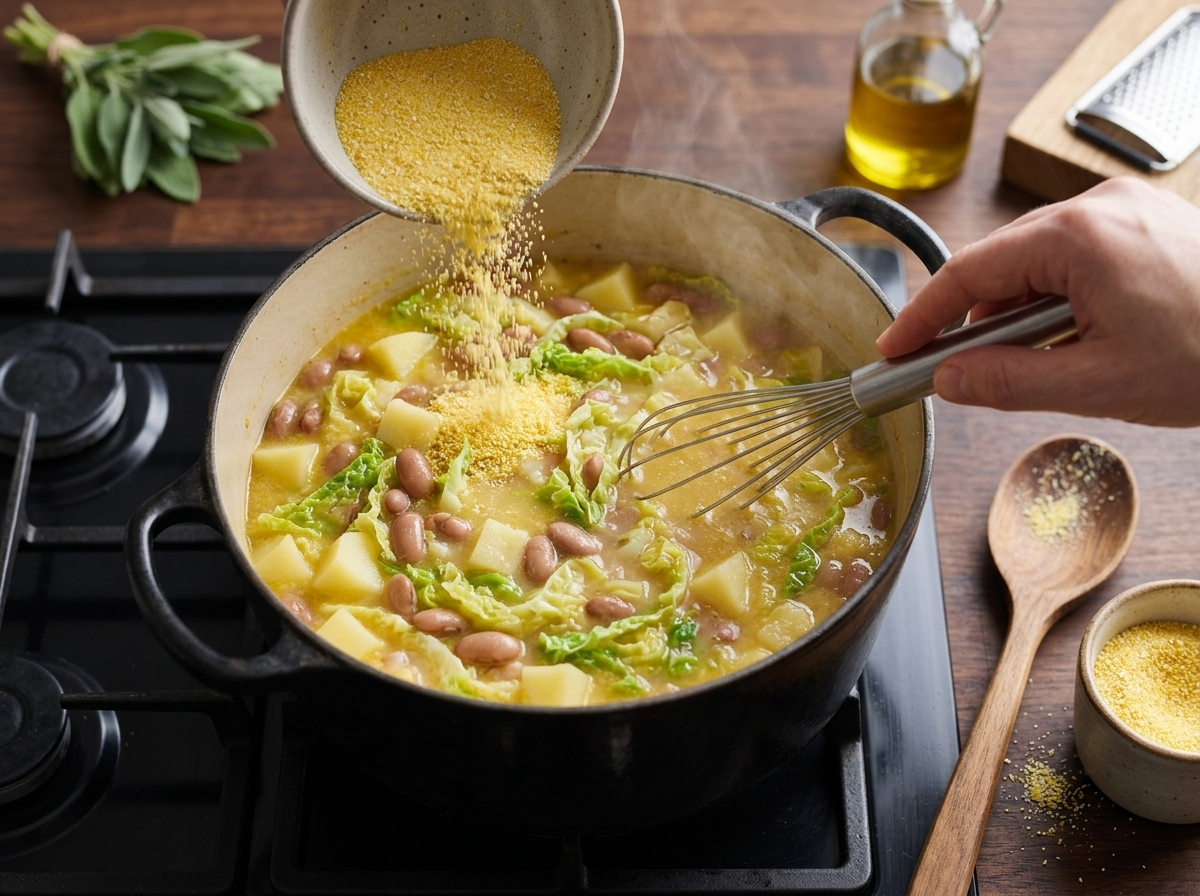
- Turn the heat to low so the surface barely bubbles. Whisk in the cornmeal in a thin stream, a handful at a time. Dumping it in at once makes lumps that won't break up later.
- Switch to a flat wooden spoon and cook for 25 minutes, stirring and scraping the bottom every 3 to 4 minutes, until the soup is thick and the cornmeal tastes sweet with no grit. Loosen with 100 ml hot water at a time if it gets stiff. Stir in 1 tsp salt and the pepper, then taste.
- Melt 20 g butter in a 20 cm / 8-inch skillet over medium heat. Add 6 sage leaves and cook for about 2 minutes until the leaves crisp and the butter smells nutty.
- Ladle the soup into wide bowls, scatter the Casera over the top and spoon on the sage butter. Serve hot.
Notes
- Cook the soffritto until soft and pale gold, not browned, so the soup stays clean-tasting.
- Cut potatoes and cabbage to similar sizes so they finish softening together.
- The soup thickens as it rests, so keep hot water ready to loosen it.
- Brown the sage butter last, right before serving, so the leaves stay crisp.
Tips for Success
- Whisk the cornmeal into the pot in a thin stream while the surface barely bubbles, so the grains separate instead of clumping.
- Scrape the bottom of the pot with a flat wooden spoon every 3 to 4 minutes once the cornmeal goes in, because it settles and sticks.
- Keep a kettle of hot water nearby and loosen the soup 100 ml at a time if it tightens before you serve.
- Taste a spoonful with Casera on it before adding more salt, since canned beans and cheese both bring their own sodium.
- Pull the sage butter off the heat as soon as the leaves crisp and the butter smells nutty, about 2 minutes.
Variations
- Cook 100 g diced pancetta with the soffritto for a smoky, salty base, and reduce the added salt by half.
- Replace 400 ml of the water with whole milk for a softer, milder bowl that tastes closer to a cornmeal porridge.
- Swap the savoy cabbage for cavolo nero or Swiss chard, adding it with the beans so it only needs 15 minutes of cooking.
Storage and Reheating
Minestra de dumèga keeps in the fridge for 4 days in an airtight container, and it sets firm as it cools, much like polenta. Cool it within 2 hours of cooking before it goes in the fridge.
Reheat it in a pot over low heat with 100 to 150 ml of water per portion, stirring for 5 to 8 minutes until steaming and loose again. In the microwave, cover a bowl and heat at 70% power for 2 minutes, stir, then continue in 1-minute bursts.
Freeze portions without the cheese and sage butter for up to 3 months. Thaw overnight in the fridge, reheat as above, then add fresh Casera and a new batch of sage butter.
Serving Suggestions
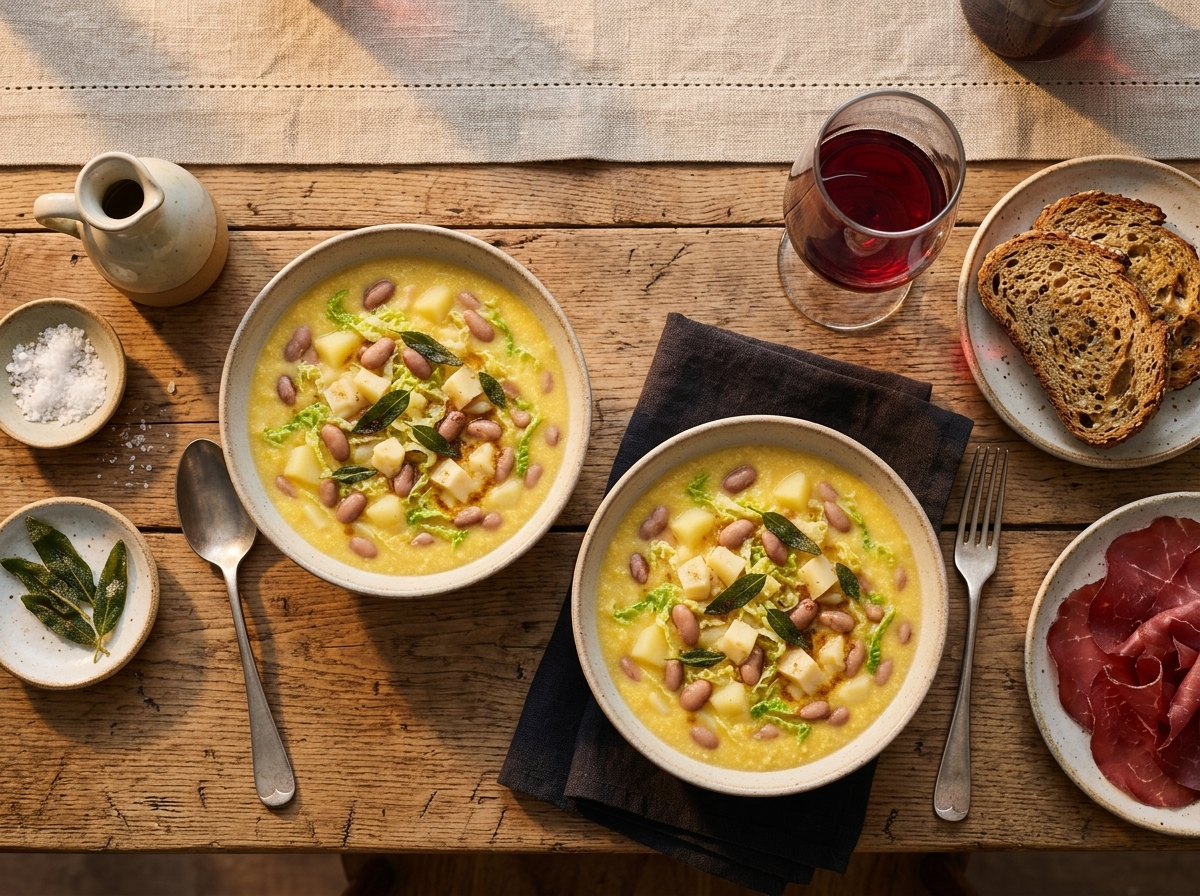
Minestra de dumèga is served hot in wide bowls, finished at the table with Casera cheese and a spoonful of sage butter. Add a few grinds of black pepper and nothing else.
Toasted rye bread suits it, as does a plate of thinly sliced bresaola, the air-dried beef that Valtellina is known for. The soup is mild and soft, so something chewy or salty alongside gives contrast.
A bitter radicchio salad dressed with red wine vinegar cuts through the butter. If you’re pouring wine, a young Rosso di Valtellina from Nebbiolo grapes fits the table.
FAQ
Why is my minestra de dumèga lumpy or stuck to the bottom of the pot?
Lumps come from adding cornmeal too fast or into a rolling boil. Lower the heat until the surface barely bubbles, then pour the cornmeal in a thin stream while whisking. Sticking happens when the bottom goes unscraped, so run a wooden spoon along it every 3 to 4 minutes for the full 25 minutes.
Can I use instant polenta instead of regular cornmeal in minestra de dumèga?
Yes, with the same 120 g, but the soup will taste lighter. Instant polenta is pre-cooked, so whisk it in during the last 5 minutes instead of simmering it for 25. Regular coarse cornmeal gives a sweeter corn flavor and a slightly grainier body.
Can you freeze minestra de dumèga with the potatoes and beans in it?
Yes, for up to 3 months, as long as you freeze it before adding the Casera and sage butter. Cool it fully, portion it into containers and leave 2 cm of headroom. Thaw overnight in the fridge and reheat with 100 ml of water per portion, because the cornmeal sets firm.
What bread or cured meat goes with minestra de dumèga?
Toasted rye bread and thin slices of bresaola suit it best, since both come from the same Valtellina table. The soup is soft and mild, so something chewy or salty gives contrast. A radicchio salad with a splash of red wine vinegar cuts through the butter.
Is minestra de dumèga gluten free?
The base is, because cornmeal, beans, potato and cabbage contain no gluten. If you’re cooking for someone with celiac disease, buy cornmeal with a gluten-free label, since mills often process wheat too. It contains dairy from the butter and Casera, so it isn’t dairy-free.
How is minestra de dumèga different from polenta?
Polenta is cornmeal cooked at roughly 1 part to 4 or 5 parts water until it holds a shape. Minestra de dumèga uses about 1 part cornmeal to 13 parts liquid, along with beans, potato and cabbage, so it stays spoonable like a soup and eats like a vegetable stew.