
Jump to Recipe
Calamarata ai frutti di mare is a Southern Italian pasta dish that pairs large ring-shaped calamarata with mussels, clams, shrimp and calamari in a garlic and white wine broth loosened with cherry tomatoes. The pasta’s wide rings catch the broth and bits of seafood in every bite, which is the whole point of the shape.
I make this when I want a seafood dinner that doesn’t need a special occasion. Twenty minutes of prep, one wide pan for the broth, one pot for the pasta.
The one thing to watch is the calamari. It goes rubbery fast if you leave it in the pan too long, so it goes in last and comes out again almost as soon as it turns opaque.
Buy your shellfish the day you cook this. Fresh clams and mussels should smell like the sea, not fishy, and any that stay shut after cooking get tossed.
Why You’ll Love This Recipe
- One pan sauce, one pot pasta, dinner in 45 minutes
- Big calamarata rings trap broth and seafood in every bite
- Mussels, clams, shrimp and calamari layered for texture contrast
- Restaurant-style seafood pasta that costs less than takeout
Ingredient Notes
- Calamarata: A short, wide ring-shaped pasta meant to echo calamari slices. Sub paccheri or rigatoni if you can’t find it.
- Mussels: Scrub and debeard just before cooking. Toss any with cracked shells or ones that won’t close when tapped.
- Clams: Purge in cold salted water for 20 to 30 minutes to release sand. If clams aren’t sold near you, double the mussels instead.
- Shrimp: Use raw, peeled and deveined shrimp with tails off so they’re easier to eat mixed through the pasta.
- Calamari: Buy cleaned tubes and slice into rings yourself, or use bagged frozen rings thawed and patted dry.
- Dry white wine: Pinot grigio or vermentino both work. For an alcohol-free version, sub 150 ml fish stock with a squeeze of lemon.
- Cherry tomatoes: Fresh halved tomatoes give a brighter sauce, but a cup of canned crushed San Marzano works in a pinch.
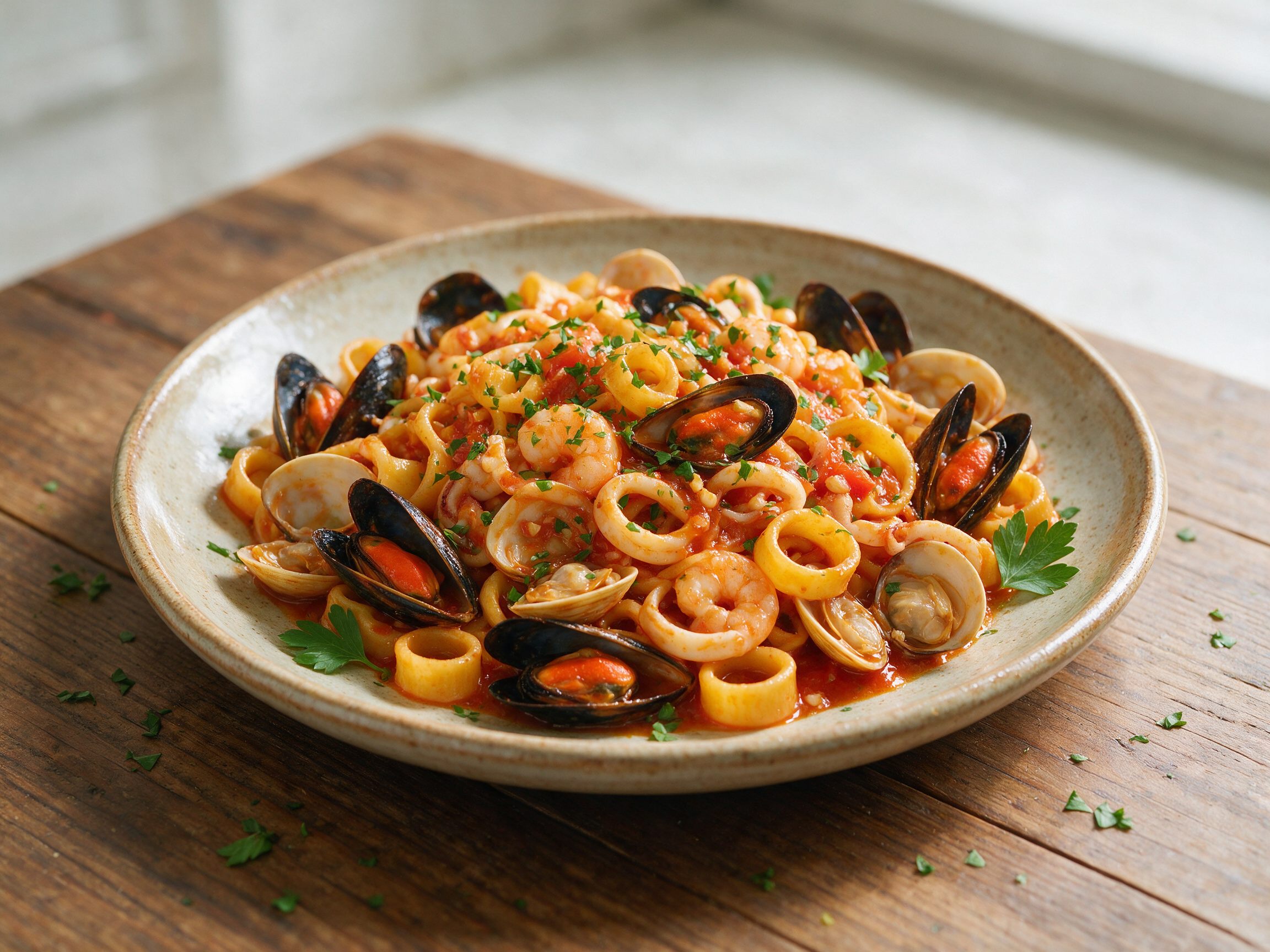
Seafood Calamarata with Mussels, Clams and Shrimp
Ingredients
Method
- Purge the clams in a bowl of cold salted water for 20 to 30 minutes to release sand, then drain. Scrub and debeard the mussels under cold running water.
- Bring a large pot (7.5 L / 8-quart) of well-salted water to a boil for the pasta.
- Heat 3 tbsp of the olive oil in a 30 cm / 12-inch high-sided sauté pan with a lid over medium heat. Add the garlic and chili flakes and cook for 1 minute until fragrant, not browned.
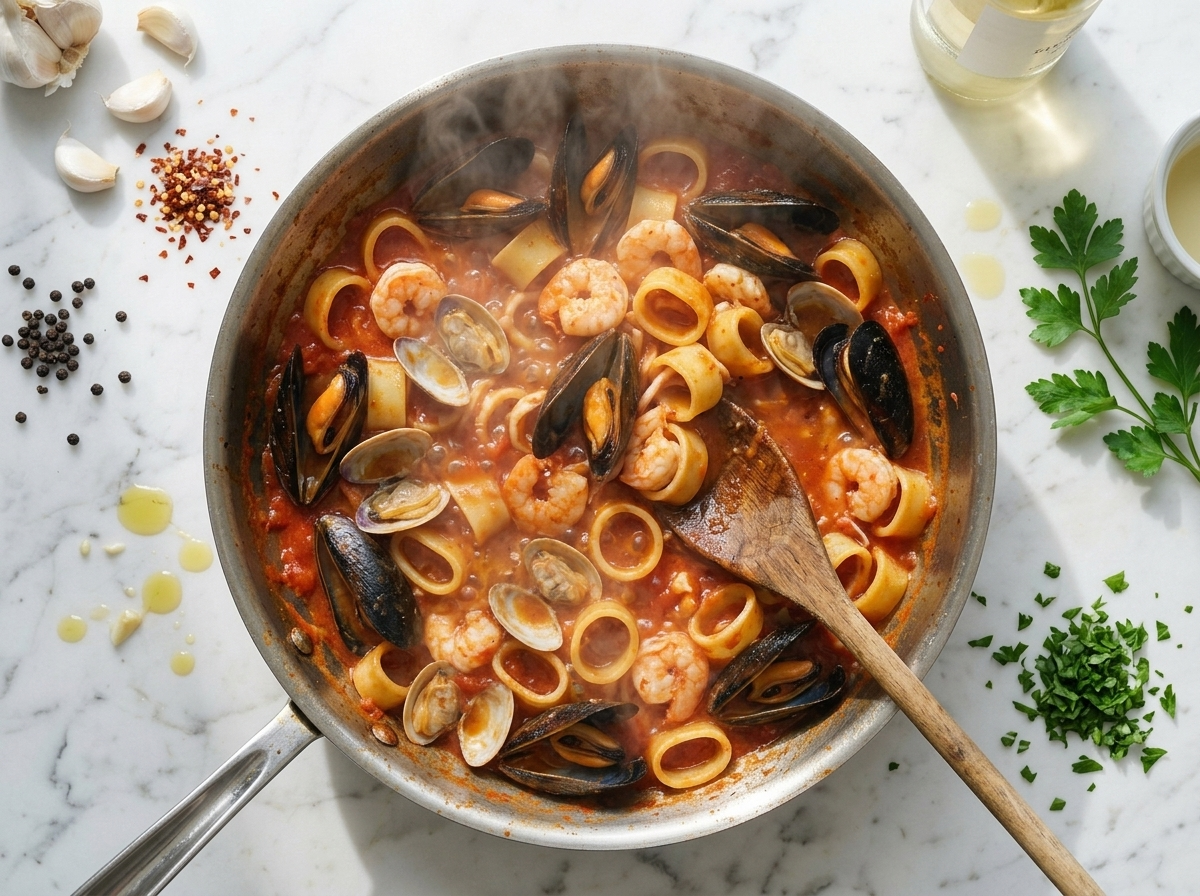
- Add the mussels and clams, pour in the white wine, cover and steam for 4 to 5 minutes, shaking the pan once, until the shells open. Discard any that stay shut.
- Lift the shellfish out with tongs into a bowl and cover to keep warm. Leave the broth in the pan.
- Add the cherry tomatoes to the broth and simmer for 5 to 6 minutes, until they soften and the sauce reduces slightly.
- Meanwhile, cook the calamarata in the boiling water for 2 minutes less than the package time, until al dente. Reserve 1 cup / 240 ml of the pasta water, then drain.
- Add the shrimp and calamari rings to the tomato broth and cook for 2 to 3 minutes, just until the shrimp turn pink and opaque and the calamari turns opaque and tender. Pull the pan off the heat right away, a minute longer and the calamari turns rubbery.
- Return the mussels and clams to the pan with the drained pasta. Toss over medium heat for 1 to 2 minutes, adding splashes of the reserved pasta water until the sauce clings to the pasta.
- Remove from the heat and stir in the remaining 2 tbsp olive oil and the parsley. Season with salt and pepper.
- Divide among shallow bowls, arranging some shells on top, and serve right away.
Notes
- Purge clams 20 to 30 minutes before cooking to remove grit.
- Discard any shellfish that stays closed after steaming.
- Cut pasta cook time short by 2 minutes since it finishes in the broth.
- Add calamari last and pull it the moment it turns opaque.
Tips for Success
- Reserve at least 1 cup of starchy pasta water before draining, you’ll need it to loosen the sauce.
- Cook calamari for no more than 2 to 3 minutes total or it turns rubbery and chewy.
- Discard any mussel or clam that stays shut after steaming, it means the shellfish was dead before cooking.
- Undercook the pasta by 2 minutes from the package time since it keeps cooking in the broth.
- Buy shellfish the same day you plan to cook it and keep it refrigerated until the last minute.
Variations
- Swap clams for extra mussels if clams aren’t sold locally, use double the mussel quantity for the same brine.
- Add a pinch of saffron to the broth for a golden color and a floral note against the tomato.
- Make it spicier with a full teaspoon of chili flake and a splash of strained clam liquor stirred back in.
Storage and Reheating
Calamarata ai frutti di mare is best eaten the day you make it, since the shellfish and calamari toughen with each reheat. If you have leftovers, store them in an airtight container in the fridge for up to 2 days, not longer, since seafood turns off fast.
To reheat, warm gently in a 25 cm / 10-inch skillet over low heat with a splash of water or fish stock, stirring for 2 to 3 minutes just until warmed through. Skip the microwave, it makes the calamari rubbery and the mussels tough.
Freezing isn’t worth it here. The shellfish texture turns mealy once thawed, and the pasta breaks down in the broth.
Serving Suggestions
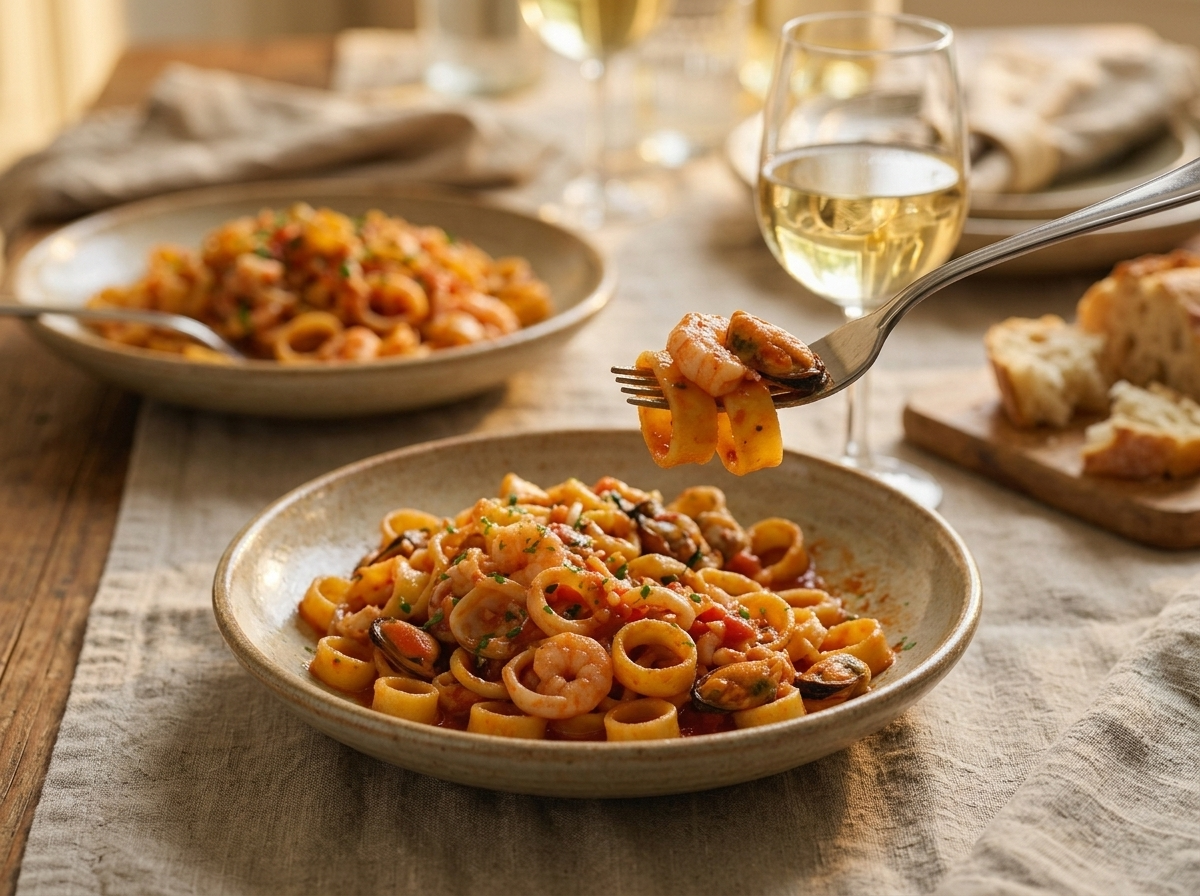
Serve calamarata ai frutti di mare in shallow bowls with a few shells left on for the table to see what’s in the pot. A final drizzle of olive oil and extra parsley finishes the plate.
Crusty bread belongs on the side to mop up the broth, and a chilled glass of the same white wine you cooked with is worth the extra pour.
Keep the rest of the meal light, a simple green salad with lemon or blanched broccolini with garlic, since the pasta already carries plenty of flavor.
FAQ
Why did my calamari turn rubbery in calamarata ai frutti di mare?
Rubbery calamari means it cooked too long. Calamari only needs 2 to 3 minutes in the hot tomato broth before it turns opaque and tender, and every extra minute past that tightens the proteins and makes it chewy. Pull the pan off the heat the moment the rings turn opaque, not later.
Can I use frozen seafood mix instead of fresh clams and mussels?
Yes, frozen works, though the broth won’t be as briny as fresh shells give it. Thaw the mix in the fridge overnight and pat it dry before adding, and skip the steaming step since frozen mussels and clams usually come pre-cooked and shucked. Add them with the shrimp and calamari instead.
Can I make calamarata ai frutti di mare ahead of time?
You can make the tomato and wine broth up to a day ahead and refrigerate it, but cook the shellfish, shrimp and calamari fresh right before serving. Seafood toughens fast once reheated, so the broth is the only part worth prepping in advance. Warm the broth gently before adding the pasta and seafood.
What wine goes with calamarata ai frutti di mare?
A dry white like pinot grigio or vermentino works best, the same bottle you cook the broth with. Both have enough acidity to cut through the shellfish brine without fighting the tomato. Avoid oaky, heavy whites since they clash with the clean, briny broth.
Is calamarata ai frutti di mare gluten-free?
Not as written, since calamarata is a durum wheat pasta shape. Swap in a gluten-free calamarata or rigatoni alternative and check that your wine and stock are gluten-free too. The rest of the dish, garlic, tomatoes and shellfish, stays naturally gluten-free without any other changes.
What’s the difference between calamarata and paccheri?
Calamarata is a short, wide ring cut to look like calamari slices, while paccheri is a smooth wide tube without the ring shape. Both hold chunky sauces well, so paccheri is the closest swap if you can’t find calamarata for this seafood pasta. Cooking times are nearly identical.