
Jump to Recipe
Tortelli cremaschi are twist-wrapped egg pasta from Crema, in Lombardy, filled with crushed amaretti, rum-soaked raisins, and Grana Padano. The filling reads sweet first and salty second, and browned sage butter ties the two together.
This version uses 200 g of flour and 2 eggs and makes about 32 to 36 tortelli. That’s four generous primi, or six small starters.
The work is front-loaded. The filling takes 10 minutes and tastes better after a day in the fridge, so shape the tortelli whenever you have an hour free. Boiling takes only 4 to 5 minutes.
Use crisp amaretti, not soft ones. Crisp amaretti crush into dry crumbs that soak up the rum and raisin juice, so the filling stays firm enough to shape.
Why You’ll Love This Recipe
- Sweet raisins and salty Grana Padano share one filling
- Filling keeps 2 days, so the work splits easily
- Shaped tortelli freeze raw and boil straight from frozen
- Built on flour, eggs, butter, amaretti, and cheese
Ingredient Notes
- amaretti: Buy the crisp, dry Italian kind, such as amaretti di Saronno. Soft amaretti hold more moisture, so cut the milk and add extra breadcrumbs.
- Grana Padano: Parmigiano Reggiano works as a straight swap. Grate it fine so it blends into the crumbs and doesn’t leave strings in the filling.
- dark rum: Marsala or brandy both work. For an alcohol-free filling, warm 45 ml apple juice with 1 tsp lemon juice and soak the raisins in that.
- 00 flour: All-purpose flour also works, but the dough will be a little springier and needs the full 30-minute rest before rolling.
- unsalted butter: Use unsalted because Grana Padano and the salted pasta water already season the dish.
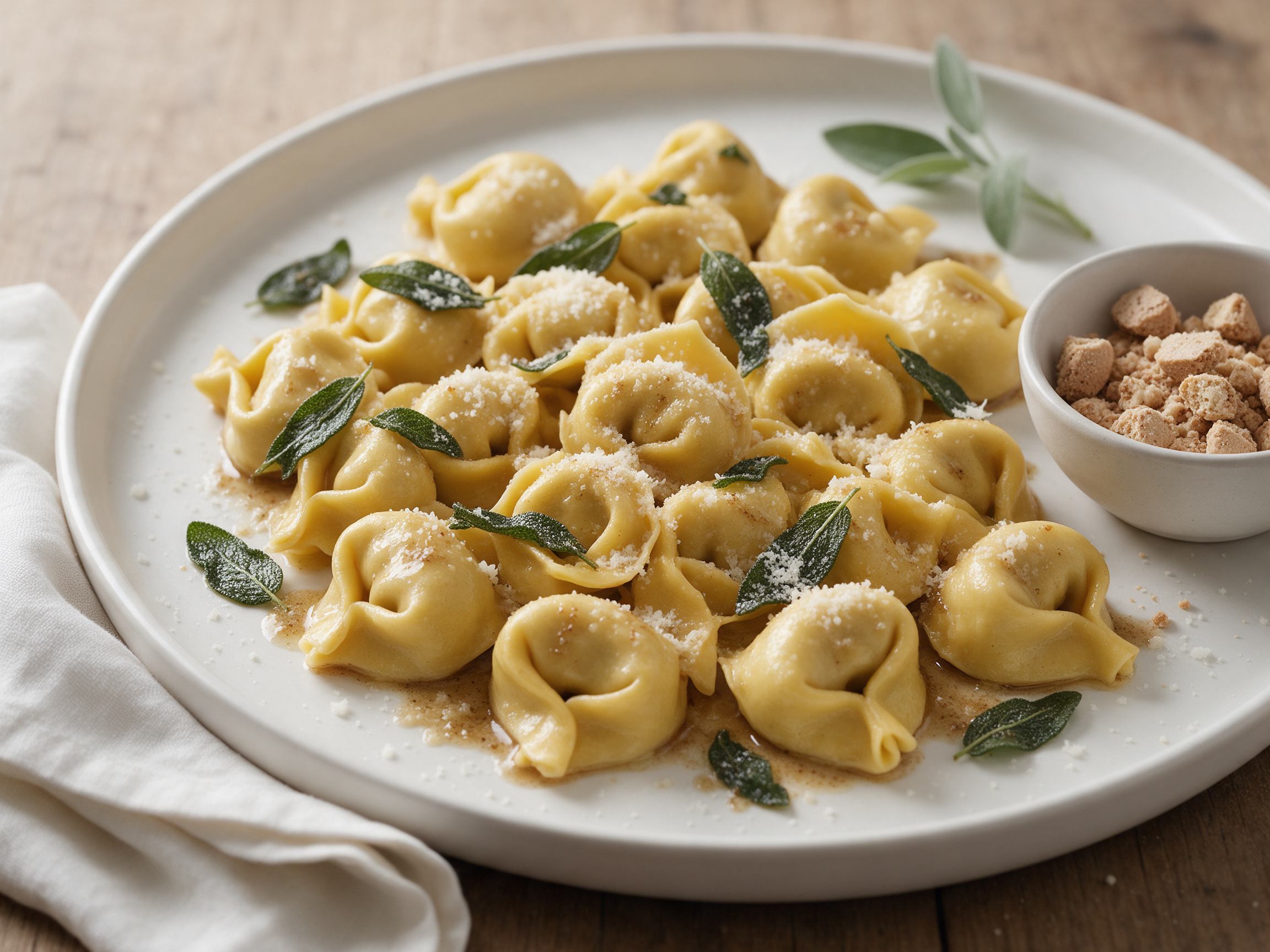
Tortelli Cremaschi with Amaretti and Raisin Filling
Ingredients
Method
- Warm the rum in a small bowl in the microwave for 20 seconds. Add the raisins and stir. Leave them to soak while you make the dough, about 45 minutes in all, until plump.
- Mound the flour and salt on a clean counter and make a well. Crack in the eggs, beat them with a fork, then pull in the flour until a shaggy dough forms. Knead for 8 minutes until smooth and springy, adding 1 to 2 tsp water only if it stays crumbly. Wrap tightly and rest for 30 minutes at room temperature.
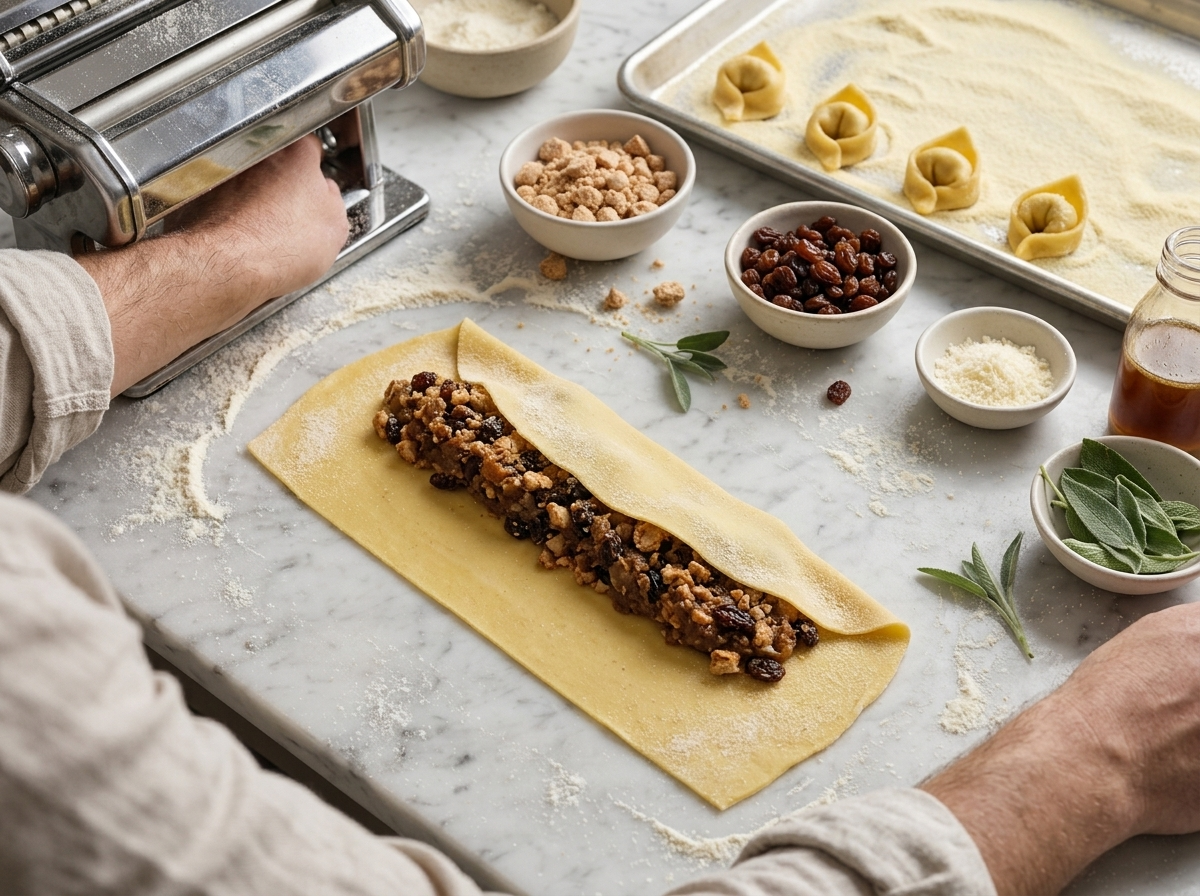
- While the dough rests, crush the amaretti to fine crumbs, leaving a few pea-size bits. Mix in the Grana Padano, breadcrumbs, lemon zest, nutmeg, and cinnamon. Roughly chop the soaked raisins and add them with their rum, the egg yolk, and the melted butter. Work it with your hands until a pinch holds its shape when squeezed, adding milk 1 tbsp at a time if it crumbles. It should taste sweet first, then salty.
- Cut the rested dough into 4 pieces and keep 3 wrapped. Flatten one piece and pass it through the pasta machine at the widest setting, folding and rolling twice. Then thin it to the second-thinnest setting, about 1 mm. Trim the sheet to 9 cm / 3.5 inches wide and cut it every 6 cm / 2.4 inches into rectangles. Cover them with a towel.
- Dust a sheet pan with the semolina. Roll about 9 g of filling (a heaped teaspoon) into a log 5 cm / 2 inches long. Lay it across the center of a rectangle, parallel to the 9 cm side. Brush the far edge with water, roll the dough around the filling, and press the seam shut with a damp fingertip. A seam with flour on it won't stick and will open in the water. Twist each end in opposite directions like a candy wrapper and set the tortello on the semolina-dusted pan, not touching. Repeat with the remaining pieces to make about 32 to 36 tortelli.
- Bring 4.5 L / 4.75 quarts of water and the coarse salt to a boil in the 5.7 L pot. While it heats, melt the butter in the 26 cm skillet over medium heat and add the sage. Cook for 3 to 4 minutes until the foam settles, the butter smells like toasted hazelnuts, and the flecks turn pale amber. Take the skillet off the heat.
- Lower half of the tortelli into the water with a spider. Cook at a steady, gentle boil for 4 to 5 minutes, until the twisted ends feel tender when pressed with a fork. Lift them onto a warmed platter, spoon over a little butter, and cover with foil while the second batch cooks the same way.
- Warm the butter for 30 seconds if it has set. Spoon it with the sage over all the tortelli, grate the 40 g Grana Padano on top, and serve at once.
Notes
- Use crisp amaretti, not soft, so the crumbs absorb the rum and raisin juice.
- Cover cut rectangles and shaped tortelli with a towel so the thin pasta stays pliable.
- Boil in two batches and keep the water at a steady, gentle boil.
- Make the filling up to 2 days ahead and keep it covered in the fridge.
Tips for Success
- Crush the amaretti in a zip bag with a rolling pin, leaving a few pea-size bits so the filling has some texture.
- Cover unused dough, cut rectangles, and shaped tortelli with a towel, because thin pasta dries and turns brittle within minutes.
- Press each seam with a damp fingertip, never a floured one, so the pasta sticks to itself and stays closed in the water.
- Boil in two batches of 16 to 18 so the water holds a steady, gentle boil and the tortelli don’t stick together.
- Pull the butter off the heat when it smells like toasted hazelnuts and the flecks turn pale amber, since it keeps darkening in the hot pan.
Variations
- Replace 30 g of the amaretti with crushed ginger-spice biscuits for a deeper, warmer note in the filling.
- Swap the rum for Marsala or brandy, or use warm apple juice with a little lemon juice for an alcohol-free version.
- Skip the sage and serve with only butter and extra Grana Padano if you want the filling to take the lead.
Storage and Reheating
Tortelli cremaschi filling keeps in a covered container in the fridge for up to 2 days, and the flavors settle in that time. Shaped, uncooked tortelli hold on a semolina-dusted tray, loosely covered, in the fridge for up to 24 hours.
For longer storage, freeze the uncooked tortelli in a single layer on a sheet pan for 1 hour, then move them to a freezer bag for up to 2 months. Boil them straight from frozen for 6 to 7 minutes.
Cooked tortelli keep in an airtight container in the fridge for 2 days. Reheat them in a 26 cm / 10-inch skillet with 1 tbsp butter and 2 tbsp water, covered, over medium-low heat for 4 to 5 minutes, turning once.
Serving Suggestions
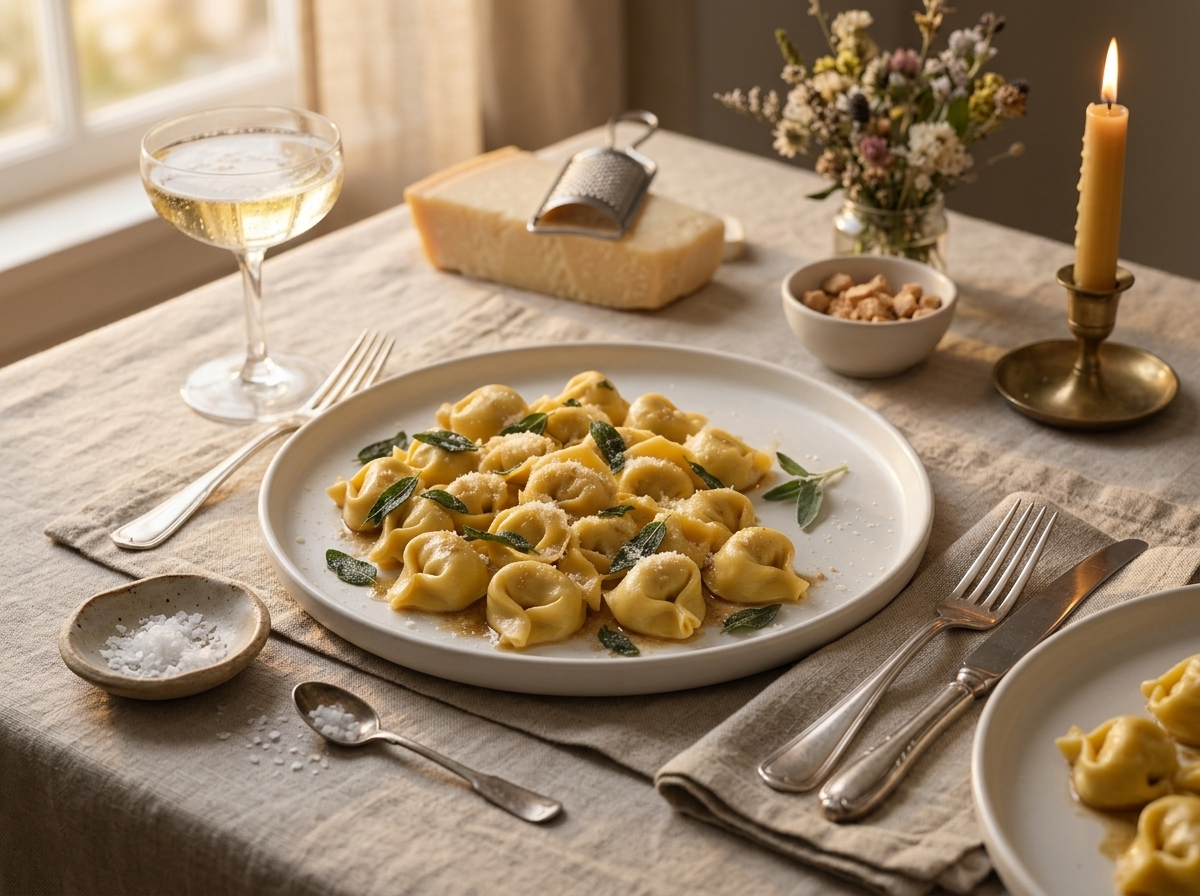
Serve tortelli cremaschi as a primo, 8 to 9 per person, on warm plates with the sage butter spooned over and grated Grana Padano on top. Serve them right away, because the thin pasta firms up as it cools.
Follow with something plain and savory, such as roast pork loin or a veal cutlet with lemon. A bitter salad of radicchio dressed with olive oil and a splash of vinegar cleans up the butter.
A dry sparkling wine like Franciacorta brut works well here. Its acidity cuts through the butter and balances the raisins.
FAQ
Why do my tortelli cremaschi burst in the boiling water?
Most bursts come from an unsealed seam or a wet filling. Brush the edge with water, then press the seam flat with no flour on it before twisting. Keep the water at a steady, gentle boil and lower the tortelli in with a spider. If the filling feels sticky, stir in 1 tbsp more breadcrumbs.
Can I use soft amaretti instead of crisp ones in the filling?
Yes, but skip the milk and add 1 to 2 tbsp more breadcrumbs. Soft amaretti (amaretti morbidi) hold far more moisture and taste more strongly of marzipan than crisp ones. Crush them with your fingers, then squeeze a pinch: the filling should hold its shape without sticking to your palm.
Can I freeze tortelli cremaschi before boiling them?
Yes. Freeze the shaped tortelli in a single layer on a floured tray for 1 hour, then bag them and keep them up to 2 months. Boil them straight from frozen for 6 to 7 minutes. Don’t thaw them first, because the thin pasta turns sticky and the twisted ends tear.
What do you serve after tortelli cremaschi as a main course?
Follow them with something plain and savory, such as roast pork loin or a veal cutlet with a bitter-leaf salad. The filling is sweet and rich, so the next course shouldn’t be sweet. A dry sparkling wine like Franciacorta brut cuts through the butter well and keeps the meal feeling light.
Are tortelli cremaschi vegetarian?
They contain no meat or fish, so they’re vegetarian in the usual sense. Grana Padano is made with animal rennet, so strict vegetarians should use a hard cheese labeled vegetarian. The dish also contains eggs, dairy, gluten, and almond-based amaretti, so it isn’t suitable for anyone with a nut allergy.
What is the difference between tortelli cremaschi and casoncelli?
Tortelli cremaschi come from Crema and are filled with amaretti, raisins, and cheese, with no meat, then twisted shut like a candy wrapper. Casoncelli from Bergamo and Brescia are meat-based, using sausage or salami, breadcrumbs, and cheese. Some versions add raisins or amaretti, but the meat sets them apart.