Jump to Recipe
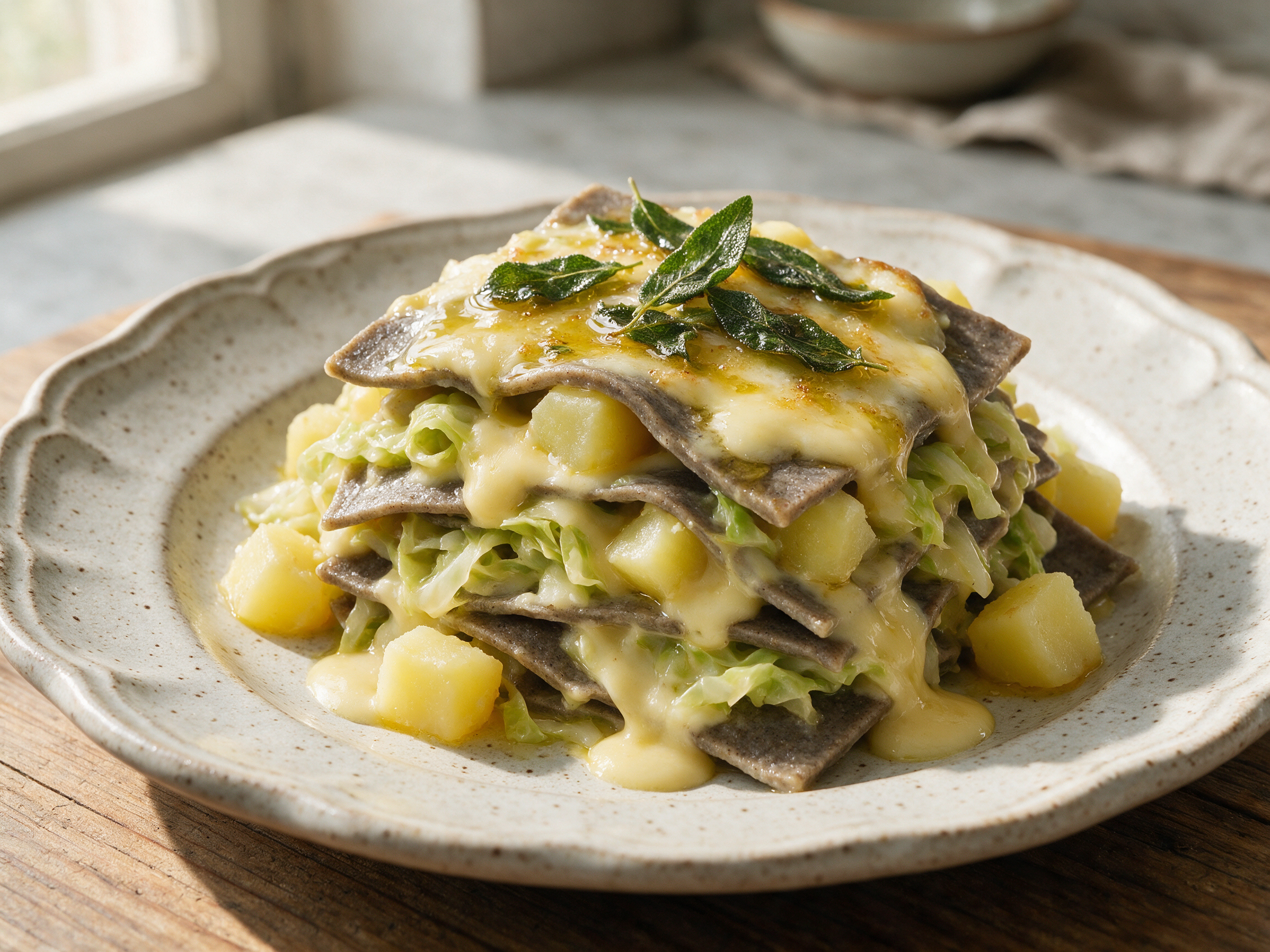
Valtellina pasta with cabbage is pizzoccheri, the one-pot dish from the Alpine valley near the Swiss border where short buckwheat noodles cook right alongside cabbage and potatoes, then get layered with melted mountain cheese and crispy sage butter.
The valley grows buckwheat, not wheat, because the climate favors it, and that’s why the pasta has a nutty, slightly grainy bite you won’t find in a plain flour noodle. Everything simmers in the same pot, which cuts down on dishes and lets the starch from the potatoes thicken the cooking water a little.
I use Valtellina Casera when I can find it, a semi-firm cow’s milk cheese that melts into long strands without turning oily. Fontina or a young Taleggio work fine if your store doesn’t carry Casera.
The one place this goes wrong is the butter. Let it sit too long past golden and it turns bitter and dark, so pull it off the heat the moment it smells nutty.
Why You’ll Love This Recipe
- Cooks pasta, cabbage, and potatoes in a single pot
- Uses budget cheese swaps like Fontina if Casera isn’t local
- Feeds a family with pantry staples and one skillet of butter
- Reheats well for a next-day lunch straight from the fridge
Ingredient Notes
- buckwheat pasta (pizzoccheri): Look for dried pizzoccheri in the pasta aisle or online. Short pasta like fusilli or tagliatelle works if you can’t find it, though you’ll lose the nutty buckwheat flavor.
- Savoy cabbage: Its crinkled leaves hold up to boiling better than smooth green cabbage. Kale is a firmer substitute if cabbage isn’t in season.
- potatoes: Starchy potatoes like Yukon Gold break down slightly and thicken the pot. Waxy potatoes hold their shape more if you prefer distinct cubes.
- Valtellina Casera cheese: A semi-firm cow’s milk cheese from the same valley as the pasta. Young Fontina or Taleggio melt similarly if Casera isn’t sold near you.
- Grana Padano: Adds a sharper, salty finish under the milder Casera. Parmigiano Reggiano works the same way.
- unsalted butter: Browning it in the skillet builds a nutty flavor that plain melted butter doesn’t give you.
- fresh sage: Dried sage burns fast in hot butter and turns bitter, so fresh leaves work better here.
Valtellina Buckwheat Pasta with Cabbage and Potatoes
Ingredients
Method
- Bring a 6-quart / 5.5 L pot of water to a boil and season generously with coarse salt.
- Add the potato cubes and cook for 5 minutes.
- Add the sliced cabbage and cook 5 minutes more, until both are starting to soften.
- Add the buckwheat pasta to the same pot. Cook according to package time, usually 10 to 12 minutes, until the pasta is tender and the vegetables are fully soft. If using fresh pizzoccheri, check earlier since they cook faster and turn mushy if left too long.
- While the pasta cooks, melt the butter in a 10-inch / 26 cm skillet over medium heat with the smashed garlic and sage leaves.
- Cook 3 to 4 minutes, swirling the pan often, until the butter turns golden brown and smells nutty. Remove from heat right away.
- Warm the 9x13-inch / 23x33 cm baking dish by rinsing it with hot water and drying it, so the cheese doesn't seize when it hits a cold dish.
- Reserve 1 cup / 240 ml of the pasta cooking water, then drain the pasta and vegetables in a colander.
- Spread half the pasta mixture in the warmed dish. Scatter half the cubed Casera and half the Grana Padano over top. Repeat with the remaining pasta, cheese, and Grana.
- Pour the hot sage butter evenly over the layers, garlic and sage leaves included if you like more punch, or removed for a milder flavor. Cover with a lid or foil for 2 to 3 minutes to let the cheese melt.
- Toss everything gently with two forks until the cheese pulls into long strands and coats the pasta. Loosen with a splash of the reserved pasta water if it looks dry.
- Season with black pepper and serve immediately, straight from the dish, family style.
Notes
- Cook potatoes, then cabbage, then pasta in the same pot to save time and dishes
- Watch the browning butter closely, it turns bitter within a minute past golden
- Warm the serving dish first so the cheese melts on contact
- Toss the layers within a few minutes of pouring the butter for the best melt
Tips for Success
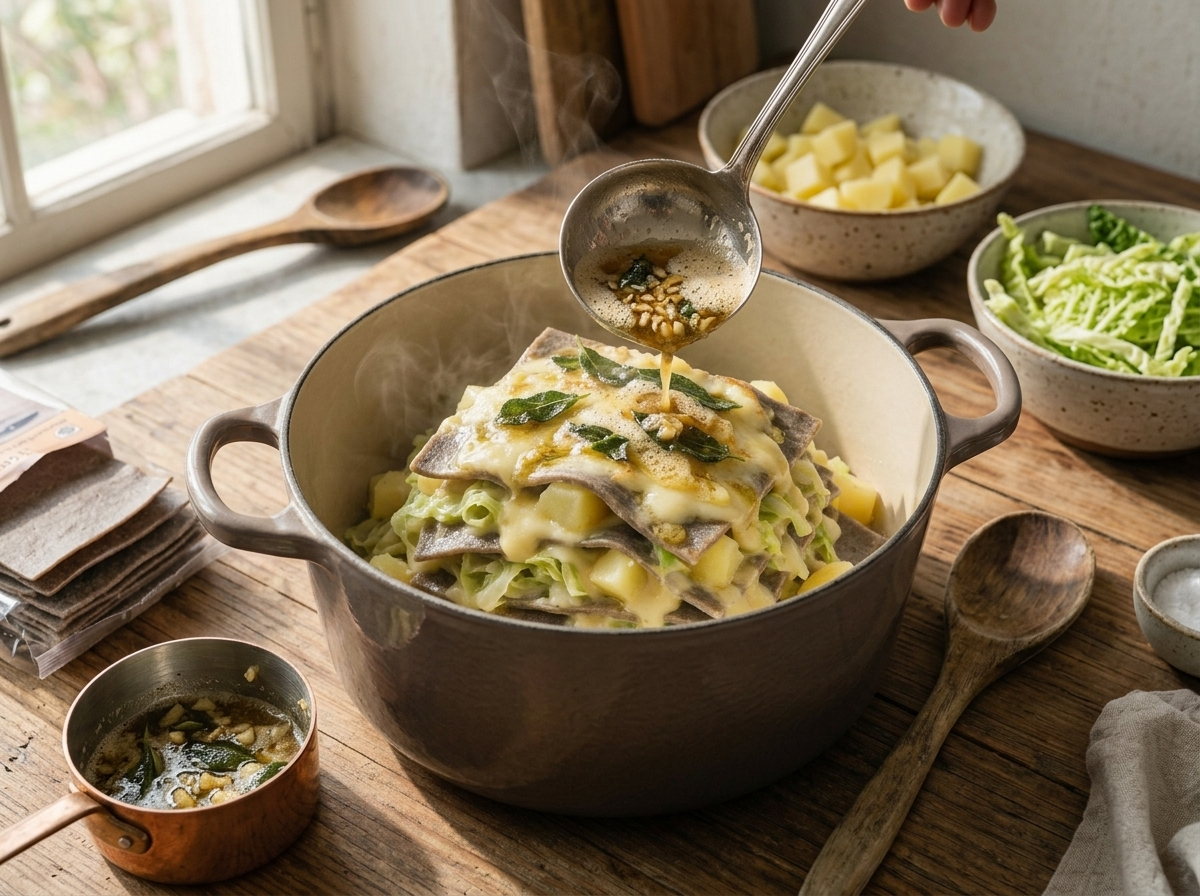
- Cook the potatoes first since they take the longest, then add savoy cabbage and pasta in stages to the same pot.
- Watch the butter closely once it starts foaming, it browns fast and turns bitter within a minute of going too far.
- Warm the serving dish with hot water before layering so the cheese starts melting on contact.
- Cut the Casera into small cubes rather than slices so it melts evenly through the pasta.
- Save a cup of the starchy pasta water before draining in case the layers need loosening at the end.
Variations
- Swap Casera for young Fontina or Taleggio if Valtellina cheese isn’t available at your market.
- Use curly kale instead of Savoy cabbage for a firmer bite and deeper green color.
- Brown crumbled Italian sausage in the sage butter for a heartier version of the same dish.
Storage and Reheating
Valtellina pasta with cabbage keeps well for 3 to 4 days in an airtight container in the fridge. The cheese firms up as it cools, which is normal.
Reheat portions in a 10-inch / 26 cm skillet over medium-low heat with a splash of water or milk, stirring until the cheese loosens and the pasta warms through, about 4 to 5 minutes. A microwave works too, covered, in 60-second bursts, stirred between each.
Freezing isn’t recommended here since the potatoes turn grainy and the melted cheese separates once thawed. Make the dish fresh instead and reheat leftovers within the 3 to 4 day window.
Serving Suggestions
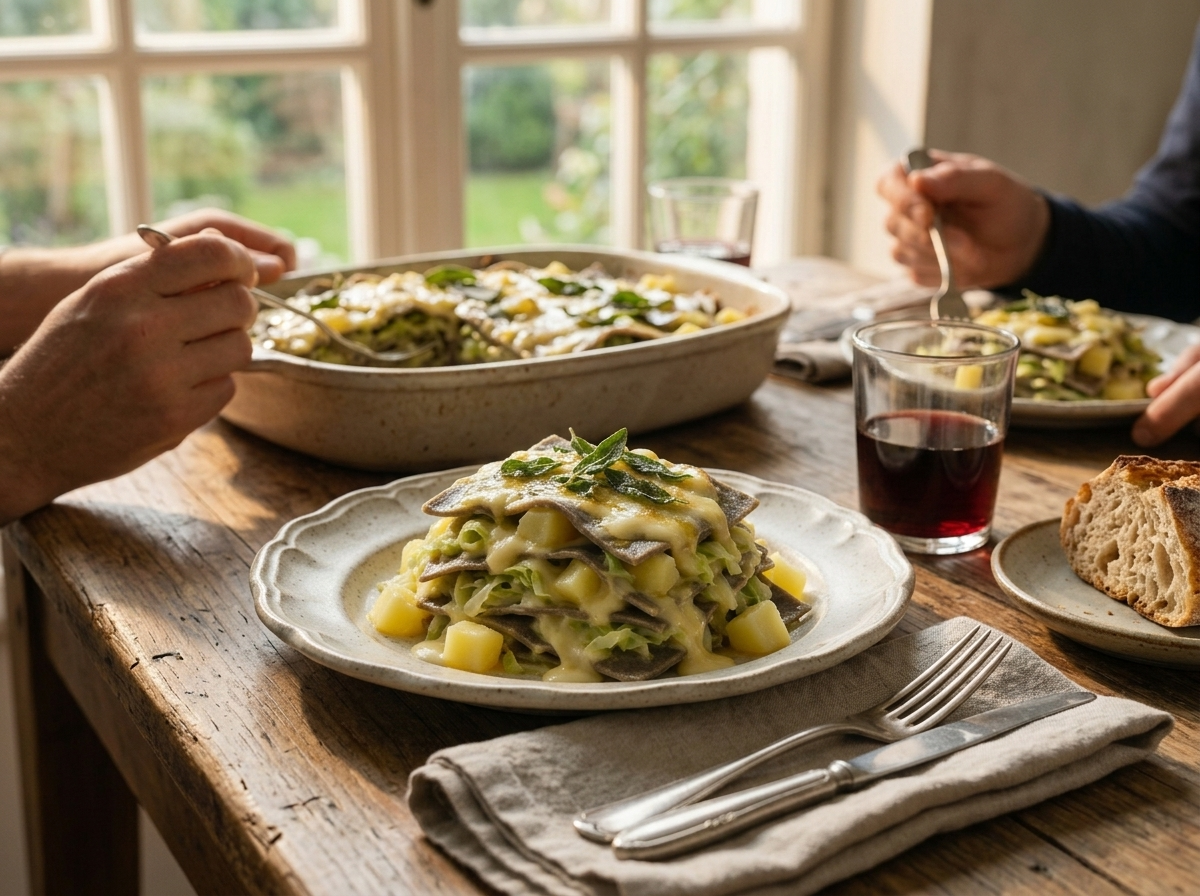
Valtellina pasta with cabbage is a full meal on its own, but a simple green salad with a sharp vinaigrette cuts through the butter and cheese well.
Crusty bread on the side is traditional for scraping up the melted cheese left in the dish. A glass of Nebbiolo or another light red from the same Lombardy region matches the earthy buckwheat flavor.
Leftovers make a solid lunch reheated with nothing more added, since the cheese and butter carry enough richness on their own.
FAQ
What is Valtellina pasta with cabbage, and is it the same as pizzoccheri?
Yes, this dish is pizzoccheri, the traditional pasta from Valtellina in the Lombardy Alps. Short buckwheat noodles cook with cabbage and potatoes in one pot, then get layered with melted Casera cheese and browned sage butter. The name pizzoccheri refers to the buckwheat pasta shape used here.
Can I use regular pasta instead of buckwheat pizzoccheri?
You can, though you’ll lose the nutty, slightly grainy texture that makes this dish distinct. Short pasta shapes like fusilli, farfalle, or wide egg noodles work fine cooked the same way alongside the cabbage and potatoes. Dried pizzoccheri is sold online if your grocery store doesn’t stock it.
Why did my pizzoccheri turn out greasy instead of creamy?
Greasy pizzoccheri usually means the butter got too hot before you poured it over the pasta, or the cheese sat too long without tossing. Pour the sage butter on right after browning and toss the layers within 2 to 3 minutes so the cheese melts into strands instead of separating into fat.
Can I make this Valtellina cabbage pasta ahead and reheat it?
Yes, it keeps 3 to 4 days in the fridge and reheats well in a skillet with a splash of water or milk over medium-low heat. Freezing isn’t a good option here since the potatoes go grainy and the melted cheese separates once thawed.
What wine goes well with pizzoccheri della Valtellina?
A light, earthy red from the same region works best, since Valtellina grows Nebbiolo grapes locally under names like Sassella or Inferno. Any simple Italian red with soft tannins will do if those aren’t available near you. The acidity cuts through the butter and melted cheese.
Is Valtellina pasta with cabbage gluten-free?
No, traditional pizzoccheri pasta blends buckwheat flour with a portion of wheat flour, so it contains gluten. Look for a certified gluten-free buckwheat pasta brand if you need this dish gluten-free, and check that your cheese and butter come from a gluten-free facility too.