
Jump to Recipe
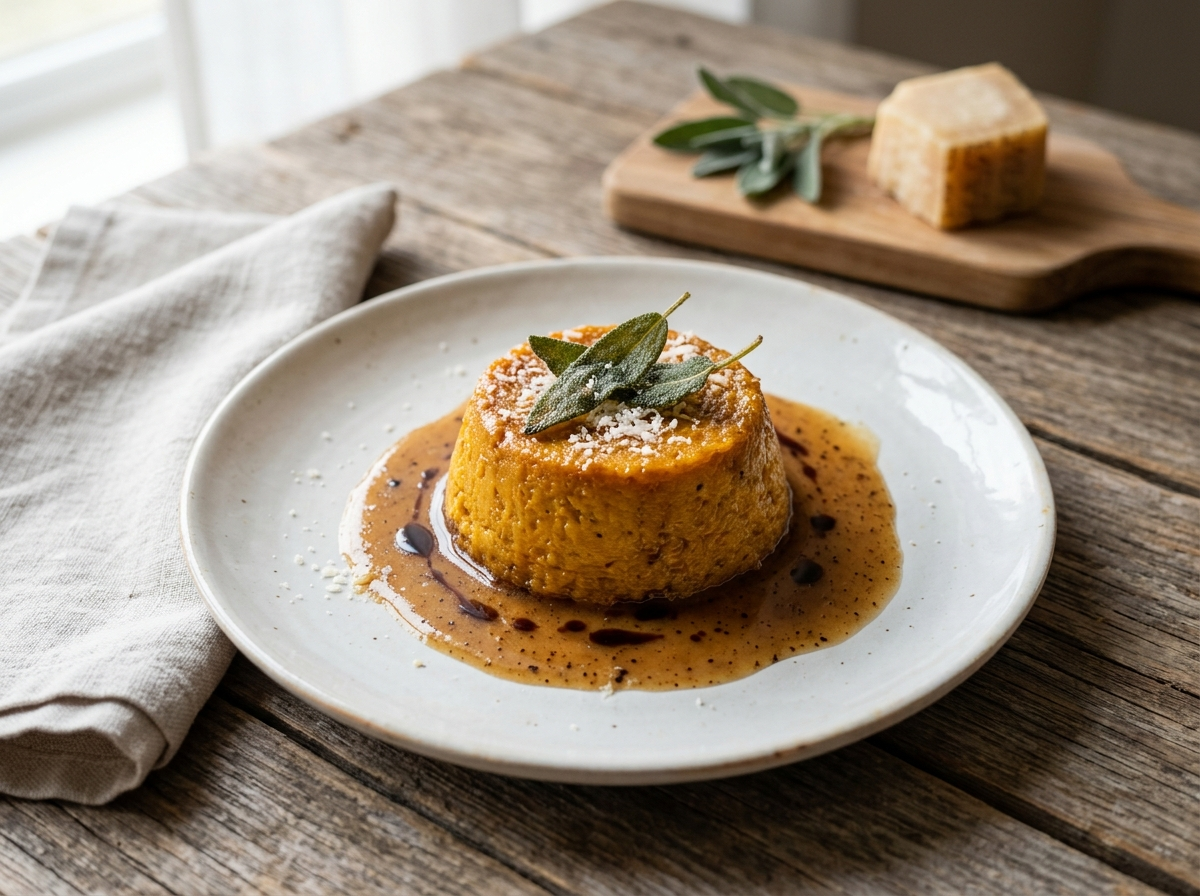
A sformato sits somewhere between a French timbale and a savory soufflé, except it doesn’t collapse when you open the oven door. The structure comes from eggs and ricotta mixed into a dense pumpkin puree, baked in a water bath until just set.
The result is firm enough to unmold onto a plate but soft enough to cut with a spoon. It’s a classic northern Italian contorno or antipasto, especially common in Emilia-Romagna — the same region behind dishes like Erbazzone Reggiano’s savory greens pie — and Lombardy during fall and winter.
You can make this the day before and reheat it gently, which makes it practical for dinner parties. The flavor is actually better the next day once the nutmeg and Parmesan have had time to settle into the squash.
Why You’ll Love This Recipe
- Unmolds cleanly and holds its shape on the plate
- Make a day ahead, reheat gently before serving
- Only 6 core ingredients, all easy to find
- Works as a starter, side, or light vegetarian main
Ingredient Notes
- Butternut squash or Hokkaido pumpkin: Butternut gives a drier, denser puree which helps the sformato set. Avoid watery varieties like zucca marina chioggia unless you drain the puree well. Canned pumpkin puree works in a pinch but reduce it on the stovetop for 5 minutes first.
- Ricotta: Use whole-milk ricotta and drain it in a fine-mesh sieve for 30 minutes before mixing. Wet ricotta makes the flan too soft and it won’t unmold cleanly.
- Eggs: Three whole eggs give structure without making the texture rubbery. Don’t increase the quantity or the sformato will set too firm.
- Parmigiano Reggiano: Finely grated Parmigiano Reggiano seasons the mixture and helps the flan hold together. Grana Padano is a fine substitute and costs less.
- Nutmeg: Use freshly grated nutmeg, not pre-ground. A quarter teaspoon is enough. It should be a background note, not a dominant flavor.
- Butter and breadcrumbs for the molds: Coating the ramekins with butter and fine breadcrumbs is what lets the sformato release cleanly. Don’t skip the breadcrumbs or the flan will stick.
Sformato di Zucca (Italian Baked Pumpkin Flan)
Ingredients
Method
- Heat the oven to 200 C / 390 F. Place the squash chunks on a sheet pan lined with baking paper, drizzle with a little olive oil, and roast cut-side down for 35 to 40 minutes until the flesh is deep golden and very soft.
- Remove from the oven and let cool for 10 minutes. Scoop the flesh into a fine-mesh sieve and press it through with a spoon, or blend until completely smooth in a food processor. You need 450 g of dry, smooth puree.
- Butter four 180 ml ramekins generously with softened butter, making sure you cover the base and sides completely. Add about 3/4 tbsp of fine breadcrumbs to each ramekin and shake to coat evenly. Tap out any excess. Set aside.
- In a large mixing bowl, combine the squash puree, drained ricotta, eggs, Parmigiano Reggiano, nutmeg, salt, and white pepper. Whisk until the mixture is smooth and fully combined. Taste and adjust salt.
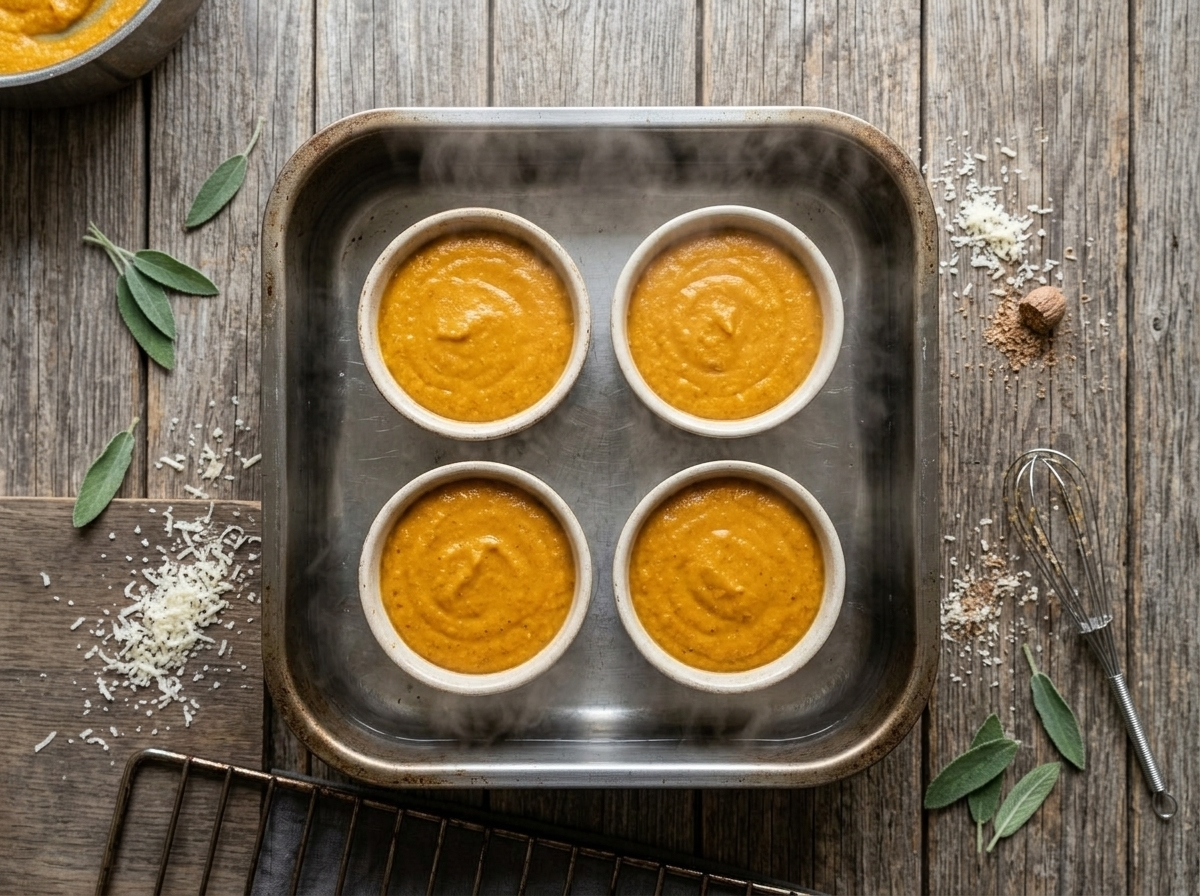
- Divide the mixture evenly among the prepared ramekins, filling each about three-quarters full. Tap each ramekin gently on the counter to settle the mixture and remove air pockets.
- Place the filled ramekins in a deep roasting pan. Pour hot water from a kettle into the roasting pan until it reaches halfway up the sides of the ramekins.
- Carefully transfer the pan to the oven and bake at 170 C / 340 F for 25 to 30 minutes, until the sformati are set at the edges but still have a very slight wobble at the center when you nudge the pan.
- Remove the ramekins from the water bath and let them rest on the counter for 5 minutes before unmolding.
- Run a thin knife around the inside edge of each ramekin. Place a warmed plate upside down over the ramekin, then flip both together in one confident motion. Tap the base of the ramekin and lift it away cleanly.
- For the optional brown butter sauce, melt butter in a small pan over medium heat until it turns golden and smells nutty, about 3 minutes. Add sage leaves and fry for 30 seconds until crisp. Spoon over the unmolded sformati and serve immediately.
Notes
Tips for Success
- Drain ricotta in a fine-mesh sieve for at least 30 minutes to remove excess water before mixing.
- Roast the squash cut-side down at 200 C until the flesh is dry and caramelized, not just soft.
- Press the squash puree through a sieve or blend until completely smooth to avoid a lumpy flan.
- Fill the water bath with hot water from the kettle to halfway up the ramekins before placing in the oven.
- Run a thin knife around the edge of each ramekin and let it rest 2 minutes before unmolding onto a warm plate.
Variations
- Add 50 g crumbled Gorgonzola dolce to the mixture for a sharper, more assertive flavor.
- Stir in 1 tbsp finely chopped fresh sage and a pinch of smoked paprika for an earthy variation.
- Use the same base in a single 22 cm cake tin for a large sformato, adding 10-15 minutes to the bake time.
Storage and Reheating
Store leftover sformato covered in the ramekins or wrapped tightly in plastic wrap in the fridge for up to 3 days. The texture firms slightly when cold, which actually makes it easier to handle.
To reheat, place the ramekins in a roasting pan with 1 cm of hot water and warm in a 160 C / 320 F oven for 12 to 15 minutes. You can also reheat individual portions in the microwave on low power for 90 seconds, though the oven method keeps the texture more even.
Freezing is possible but not ideal. Ricotta-based mixtures can become grainy after thawing. If you do freeze, thaw overnight in the fridge and reheat in a water bath.
Serving Suggestions
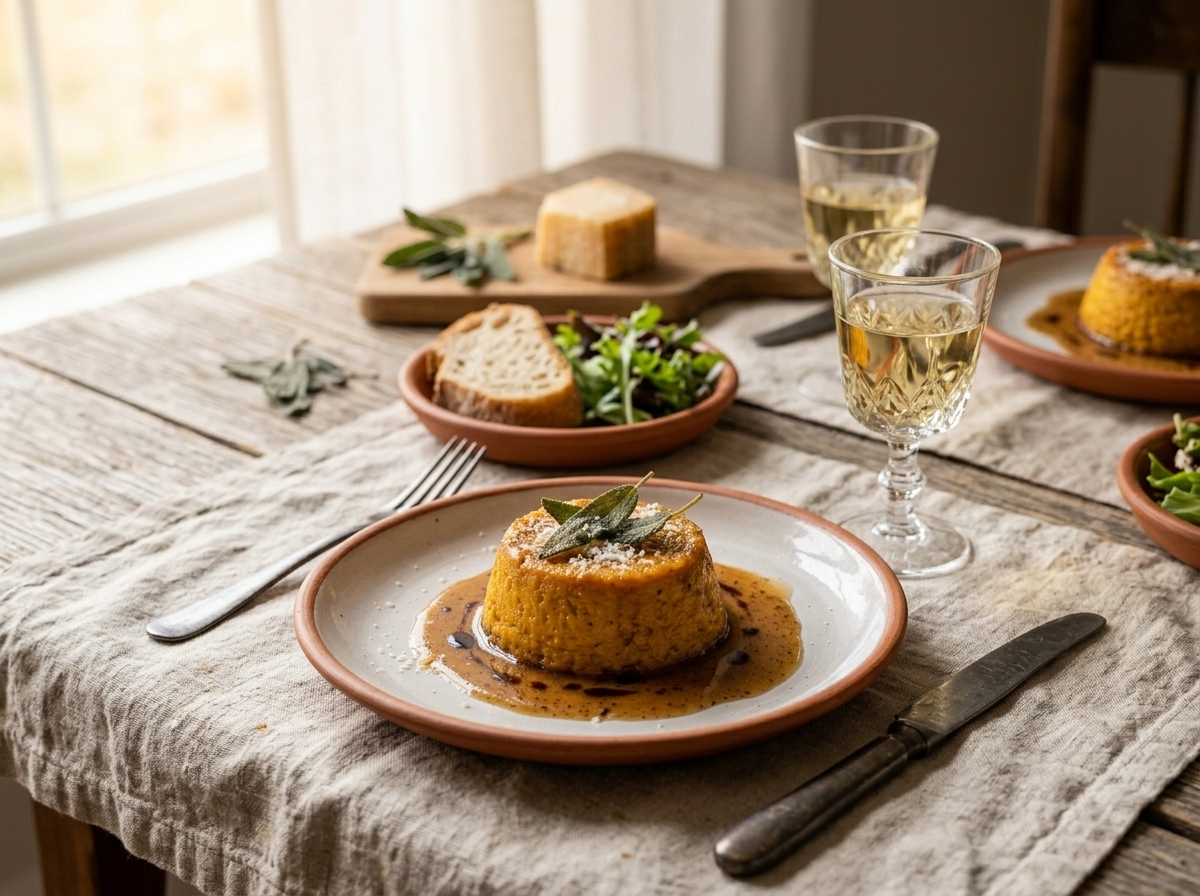
Serve the sformato unmolded on a warm plate with a thin pool of brown butter and crispy fried sage leaves. A drizzle of aged balsamic from Modena over the top adds a sharp contrast to the sweet squash.
For a dinner party starter, plate individual sformati alongside a few leaves of peppery radicchio dressed with olive oil and red wine vinegar, or open the meal with a classic three-ingredient Negroni before bringing the flan to the table. The bitterness cuts through the richness of the egg and ricotta base.
As a light main course, pair it with a green salad and some crusty bread. A glass of dry Friulano or Pinot Grigio from northeastern Italy works well alongside.
FAQ
Why is my sformato di zucca not holding its shape when I unmold it?
The most common reason is wet ricotta or under-roasted squash that added too much moisture to the mixture. Drain your ricotta well and make sure the squash flesh is dry before pureeing. Baking in a water bath also matters – without it the eggs can set unevenly and the flan cracks.
Can I use canned pumpkin instead of fresh squash in this recipe?
Yes, but cook it in a dry pan over medium heat for 5 minutes first to drive off the extra water. Canned pumpkin is wetter than roasted fresh squash, and a loose puree will prevent the sformato from setting properly.
How far ahead can I make sformato di zucca for a dinner party?
You can bake the sformati up to 24 hours ahead and keep them in the ramekins in the fridge. Reheat in a water bath at 160 C for 12 to 15 minutes before serving. Don’t unmold until after reheating or the flan can break.
What sauce goes best with sformato di zucca?
Brown butter with fried sage is the most traditional pairing in northern Italy and takes about 3 minutes to make, and a light Fontina and cream sauce borrowed from Piedmontese cooking also works beautifully if you want something richer. A light Parmesan cream sauce also works if you want something richer. Avoid heavy tomato-based sauces, which overwhelm the delicate squash flavor.
Is sformato di zucca gluten-free?
The flan itself contains no flour, but the standard recipe uses breadcrumbs to line the ramekins. Swap those for finely ground gluten-free crackers or skip them and use only butter, though the release won’t be quite as clean.
What is the difference between sformato and Italian flan?
A sformato is a savory molded dish based on a vegetable puree bound with eggs and cheese, while Italian flan (budino) is sweet and custard-based. The word sformato literally means ‘unmolded,’ referring to the technique of turning it out onto a plate to serve.