
Jump to Recipe
Minestra di riso e zucca is a northern Italian rice and pumpkin soup: a soffritto, sweet squash and Arborio rice cooked in broth until the grains thicken it from the inside. This version takes 55 minutes, most of it hands-off, and serves four.
I mash about half the pumpkin against the side of the pot before the rice goes in. The squash gives the broth its pale orange color and body, and the rice starch does the rest. There’s no cream here.
The one thing to watch is timing. Rice keeps swelling after the heat is off, so a minestra left standing can turn into porridge within 15 minutes. Rest it for 5 minutes, serve within 10, and keep a ladle of hot broth nearby.
It’s also a good make-ahead pot. Leftovers keep 3 days in the fridge and loosen with a splash of broth.
Why You’ll Love This Recipe
- Pantry vegetables and rice, no cream or special equipment
- Mashed squash and rice starch give body without dairy cream
- Leftovers hold 3 days and reheat with a splash of broth
- Budget-friendly at roughly 2 dollars a serving
Ingredient Notes
- Pumpkin or butternut squash: Use a dense, dry-fleshed squash such as butternut, kabocha or sugar pumpkin. Skip carving pumpkins, which are watery and stringy and give a thin, bland soup.
- Arborio rice: Carnaroli and Vialone Nano work the same way. Don’t rinse the rice, because the surface starch is what thickens the broth.
- Vegetable broth: Low-sodium broth lets you control the salt once the Parmigiano goes in. Chicken broth works too, but then the soup isn’t vegetarian.
- Parmigiano Reggiano and rind: Simmering a 5 cm / 2-inch rind in the broth adds savory depth. Grate the cheese finely so it melts into the soup instead of clumping.
- Sage: Four leaves are enough to give a faint herbal edge. Fresh is better here, so if you only have dried, use 1/4 tsp.
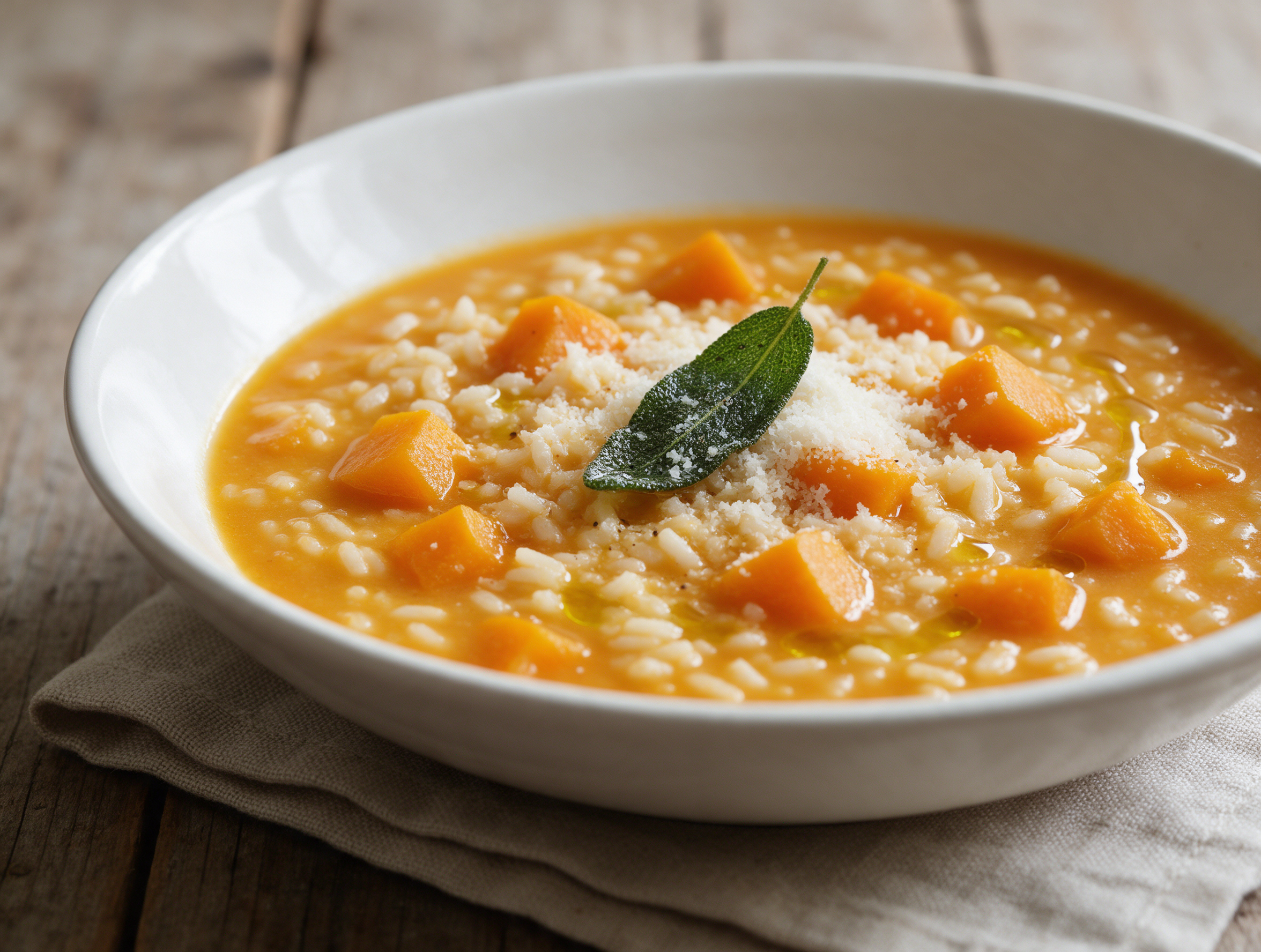
Minestra di Riso e Zucca: Silky Italian Pumpkin Rice Soup
Ingredients
Method
- Pour the broth into a 3-quart / 2.8 L saucepan (20 cm / 8-inch) and add the Parmigiano rind if using. Bring it to a bare simmer over medium-high heat, then keep it hot on low while you start the soup.
- Heat the olive oil in a 4-quart / 3.8 L heavy-bottomed pot (24 cm / 9.5-inch) over medium heat. Add the onion, celery, carrot, sage and a pinch of the salt. Cook for 6 minutes, stirring often, until the vegetables are soft and translucent but not browned.
- Add the pumpkin cubes and stir for 2 minutes to coat them in the soffritto. Pour in the hot broth and rind, bring back to a simmer, and cook partly covered for 10 minutes, until a cube crushes easily against the pot.
- Mash about half the pumpkin against the side of the pot with a potato masher or the back of a wooden spoon, leaving the rest in chunks. The broth should turn pale orange and slightly thick.
- Stir in the rice and simmer gently, uncovered, for 15 to 17 minutes. Stir every few minutes and scrape the bottom so nothing sticks. The rice is ready when it's tender with a slight bite at the center and the soup looks loose, like thin porridge.
- Take the pot off the heat and remove the rind and sage leaves. Stir in the butter, grated Parmigiano and nutmeg, then season with the remaining salt and black pepper. Cover and rest for 5 minutes.
- Ladle into warm bowls and add a splash of hot broth if the soup has tightened. Top with olive oil, pepper and extra Parmigiano, and serve within 10 minutes.
Notes
- Use hot broth throughout so the simmer never stops when you add liquid or rice.
- Mash only half the pumpkin so some soft cubes stay intact in the bowl.
- Cover the pot and rest it 5 minutes before serving, because the soup thickens during that time.
- Freeze leftover Parmigiano rinds and drop one into the broth whenever you make soup.
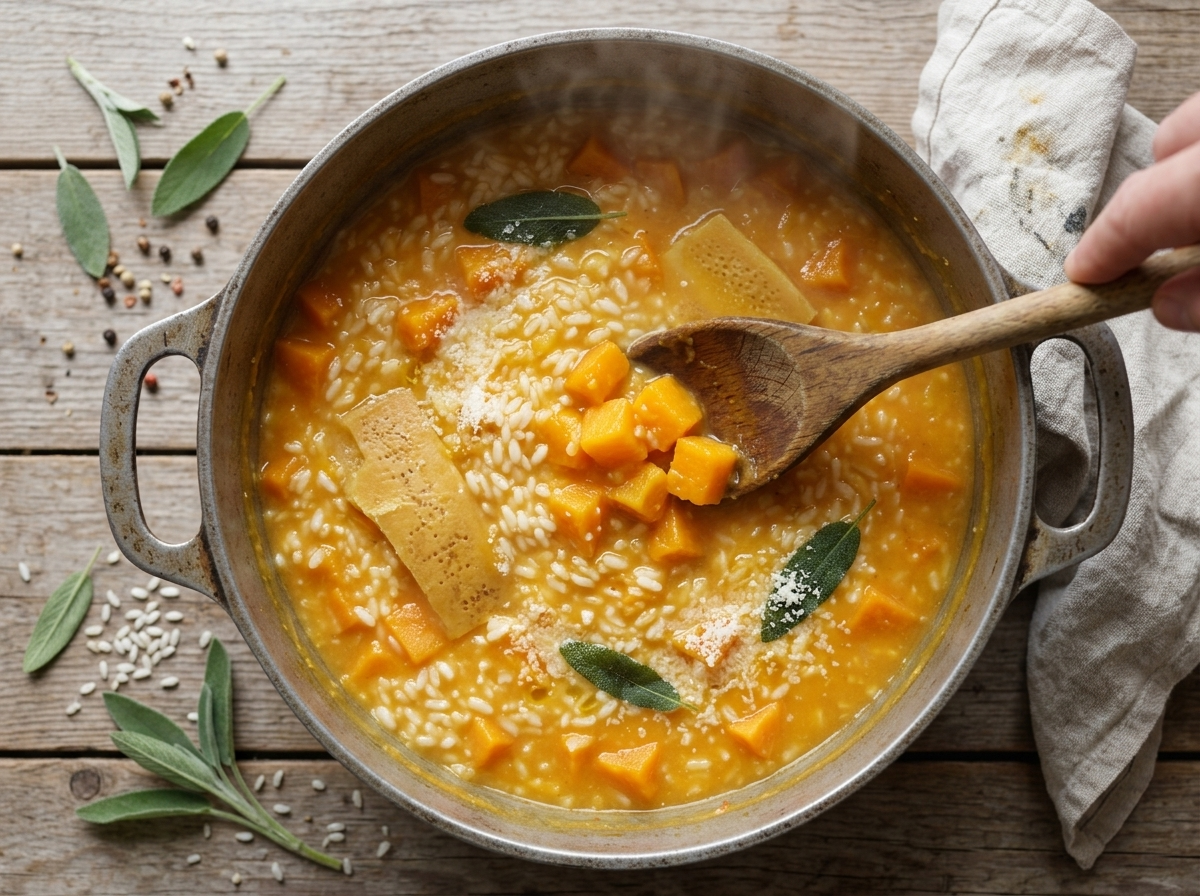
Tips for Success
- Cut the pumpkin into 1.5 cm / 1/2-inch cubes so it softens in 10 minutes and mashes cleanly against the pot.
- Keep the broth at a bare simmer in the second pan and add it hot, since cold liquid stalls the simmer and stretches the rice cooking time.
- Stir the rice every few minutes and scrape the bottom of the pot, because the thickening soup catches easily once the starch releases.
- Pull the pot off the heat while the rice still has a slight bite, because it finishes softening during the 5-minute rest.
- Taste for salt only after the Parmigiano has melted in, since the cheese and the broth both add sodium.
Variations
- Render 100 g / 3.5 oz diced pancetta in the pot before the vegetables for a smoky version, which makes the soup non-vegetarian.
- Replace the rice with 150 g / 5 oz ditalini added at the same stage and cook to the package time for pasta e zucca.
- For a vegan bowl, skip the butter and Parmigiano, then finish with 1 tbsp extra olive oil and 1 tbsp nutritional yeast.
Storage and Reheating
Minestra di riso e zucca keeps for 3 days in the fridge in an airtight container. Refrigerate it within 1 hour of cooking. It will set into a thick, spoonable mass because the rice keeps absorbing liquid.
To reheat on the stove, put a portion in a saucepan with 60 to 120 ml / 1/4 to 1/2 cup of hot broth or water. Warm it over medium-low for 5 to 6 minutes, stirring, until steaming hot throughout at 165 F / 74 C. In the microwave, cover a portion with the same splash of liquid and heat at 70% power for 2 minutes, stirring halfway.
The soup freezes for up to 2 months in airtight containers, though the rice softens and the texture gets closer to a thick porridge. Thaw overnight in the fridge and reheat with 120 ml / 1/2 cup of broth per portion.
Serving Suggestions
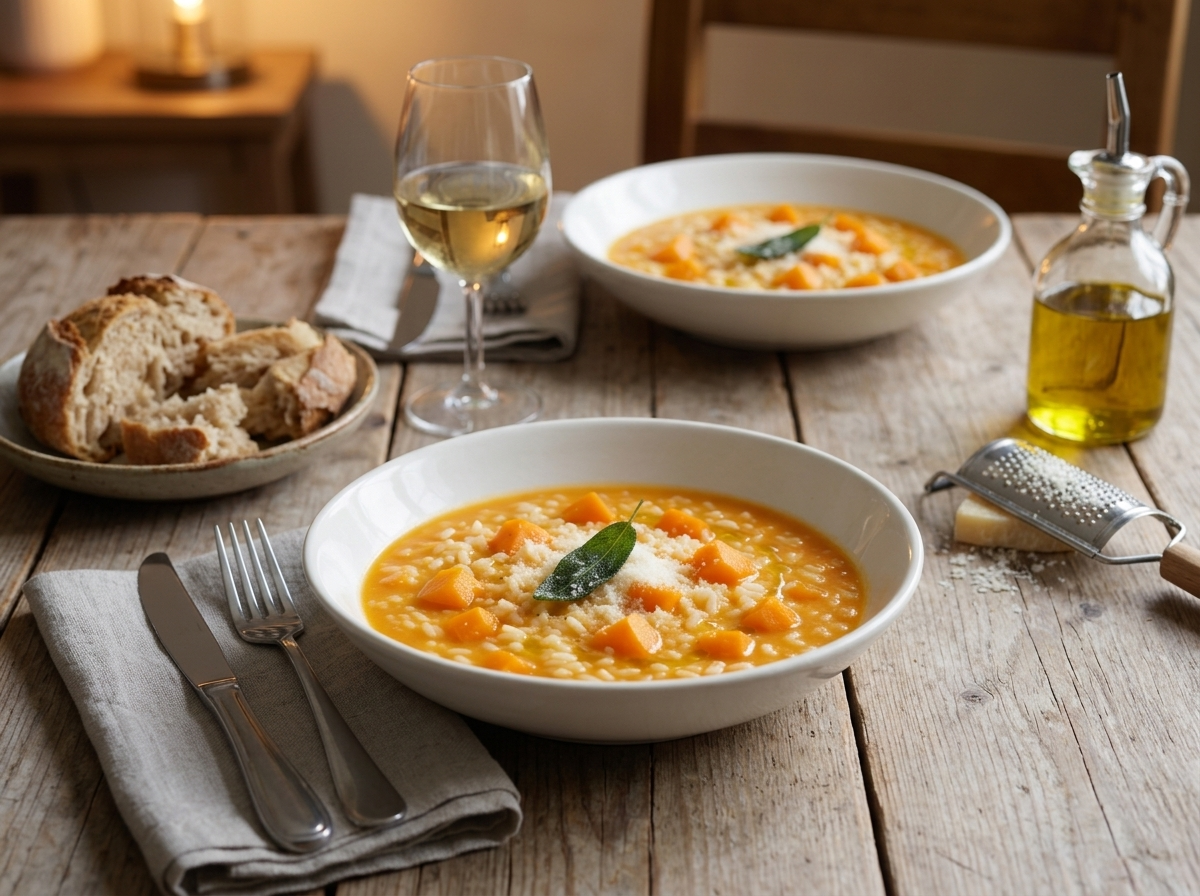
Minestra di riso e zucca is best served in warm, wide bowls with a thread of olive oil, black pepper and a spoonful of grated Parmigiano on top. A few sage leaves fried in olive oil for 30 seconds add a crisp contrast to the soft rice.
Crusty country bread is the obvious partner. A salad of dressed radicchio or escarole with lemon cuts the sweetness of the squash.
In an Italian meal this is a primo, so a small portion works before roast chicken or a simple frittata. As a supper on its own, ladle a full 450 ml bowl and add the salad on the side.
FAQ
Why is my minestra di riso e zucca thick like porridge?
The rice keeps absorbing broth after the heat is off, so a minestra that looked right in the pot can turn stodgy within 15 minutes. Stir in 120 to 250 ml / 1/2 to 1 cup of hot broth or water until it loosens, and adjust the salt. Serve within 10 minutes of the rest.
How do I know when the rice in minestra di riso e zucca is done?
Bite a grain after 15 minutes. It’s done when the center is tender with only a faint chalky point, usually 15 to 17 minutes for Arborio. The rice will soften a little more during the 5-minute rest, so pull the pot off the heat while it still has slight bite.
Can I use long-grain or basmati rice instead of Arborio in pumpkin rice soup?
You can, but the soup will be thinner. Arborio and Carnaroli release starch that gives the minestra its silky body, while long-grain rice stays separate. If you use it, start tasting at 12 minutes. Vialone Nano is the closest swap. Don’t rinse the rice either, since the surface starch helps thicken the broth.
Can I freeze minestra di riso e zucca?
Yes, for up to 2 months in airtight containers. The rice softens in the freezer, so the texture ends up closer to a thick pumpkin porridge than a brothy soup. Thaw overnight in the fridge and reheat with 120 ml / 1/2 cup of broth per portion, stirring until steaming.
What goes well with minestra di riso e zucca?
Crusty bread and a bitter green salad work best. Dressed radicchio or escarole with lemon cuts the sweetness of the pumpkin, and a toasted slice of country bread rubbed with oil mops up the bowl. For a heartier supper, scatter crisp pancetta cubes on top.
What’s the difference between minestra di riso e zucca and risotto alla zucca?
Minestra di riso e zucca is a brothy, spoonable soup cooked with lots of liquid and little stirring, while risotto alla zucca is a dense, creamy rice dish built by adding broth gradually and stirring constantly. Both come from northern Italy’s rice country. The minestra is easier on a weeknight because the pot mostly looks after itself.