Jump to Recipe
Spongata is an Emilian spiced fruit tart: a thin wine-and-butter pastry wrapped around a dense filling of honey, walnuts, almonds, pine nuts, raisins, figs and candied citron. It comes from Reggio Emilia and Busseto, and it’s traditionally baked for Christmas.
The filling is the point. You warm the honey with white wine and spices just until it loosens, stir in the fruit and nuts, then let it cool before it goes near the dough. Hot filling melts the butter in the pastry and leaves a pale, soft bottom crust.
Plan on about 2 hours 50 minutes start to finish, most of it chilling and cooling. The oven time is 40 minutes at 180 C / 350 F.
Cut it into thin wedges. It’s dense, and a small slice goes a long way. It also keeps for 5 to 7 days, so you can bake it early in December.
Why You’ll Love This Recipe
- Keeps 5 to 7 days, so you can bake ahead
- Wine in the dough keeps the crust crisp, not tough
- Built from pantry staples: honey, nuts, dried fruit, and spices
- Slices cleanly into 12 thin wedges for a crowd
Ingredient Notes
- honey: Use a mild one like acacia or wildflower. Chestnut or buckwheat honey turns the filling bitter and overpowers the spices.
- candied citron: Look for whole candied citron or orange peel sold by weight and dice it yourself. Tubs of pre-diced peel are drier and less fragrant.
- dried figs: Cut off the hard stems and chop to about the size of a raisin. Dried apricots work in the same weight.
- dry white wine: Any dry white you’d drink works, such as Trebbiano or Pinot Grigio. Marsala makes a darker, sweeter filling.
- pine nuts: They’re the priciest item here. Replace them with extra chopped almonds if you’d rather keep the cost down.
- breadcrumbs: Use fine, dry, unseasoned crumbs. They soak up the honey and wine so the filling sets firm enough to slice.
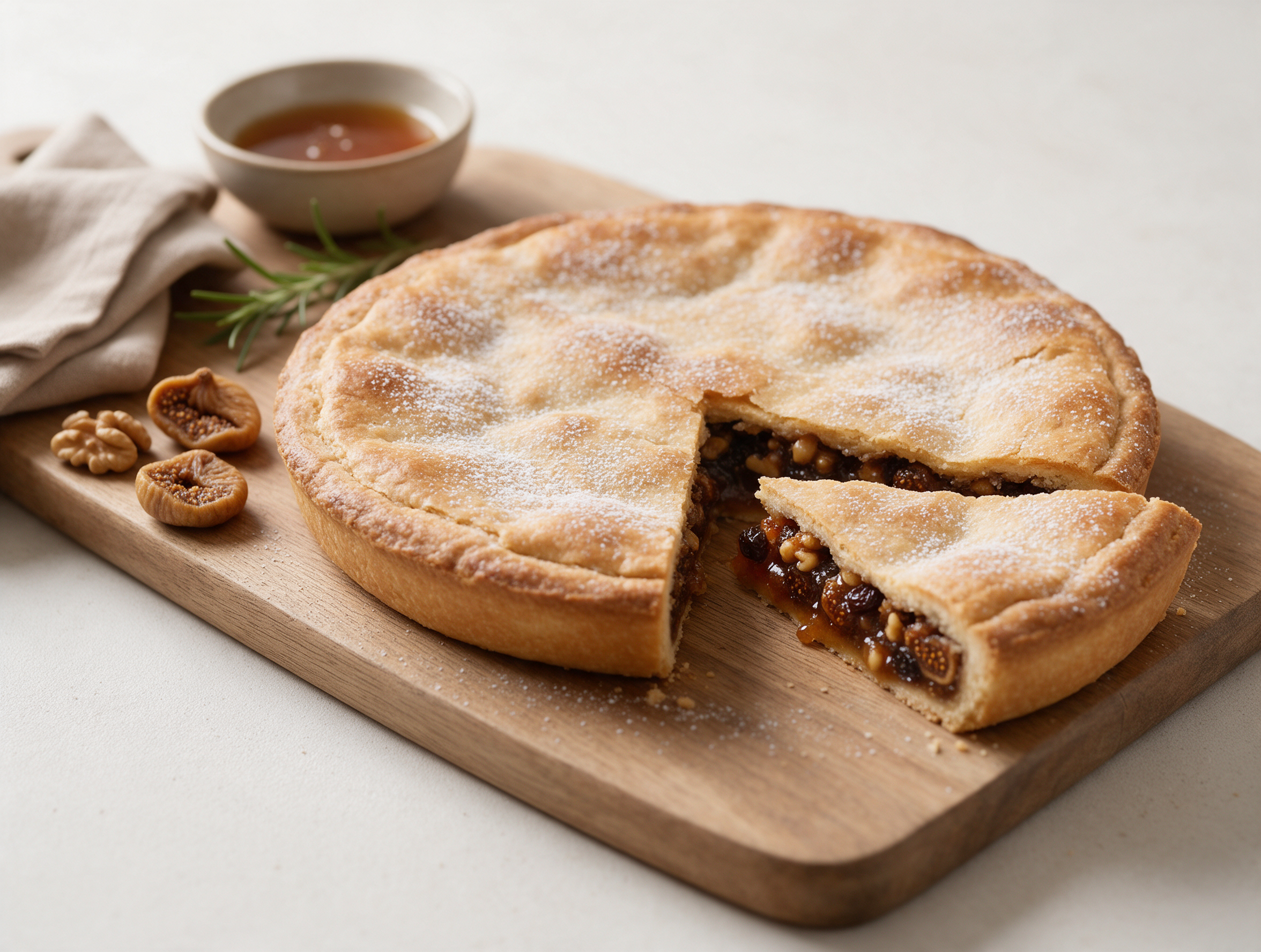
Spongata Emilian Tart with Spiced Fruit and Honey Filling
Ingredients
Method
- Whisk the flour, sugar, salt and lemon zest in a 25 cm / 10-inch mixing bowl. Rub in the cold butter with your fingertips until the mixture looks like coarse sand. Beat the egg with the cold wine, stir it in, and press the dough together. If it stays crumbly, add 1 teaspoon more wine. Divide it into about 320 g and 210 g portions, flatten into disks, wrap, and chill for 45 minutes.
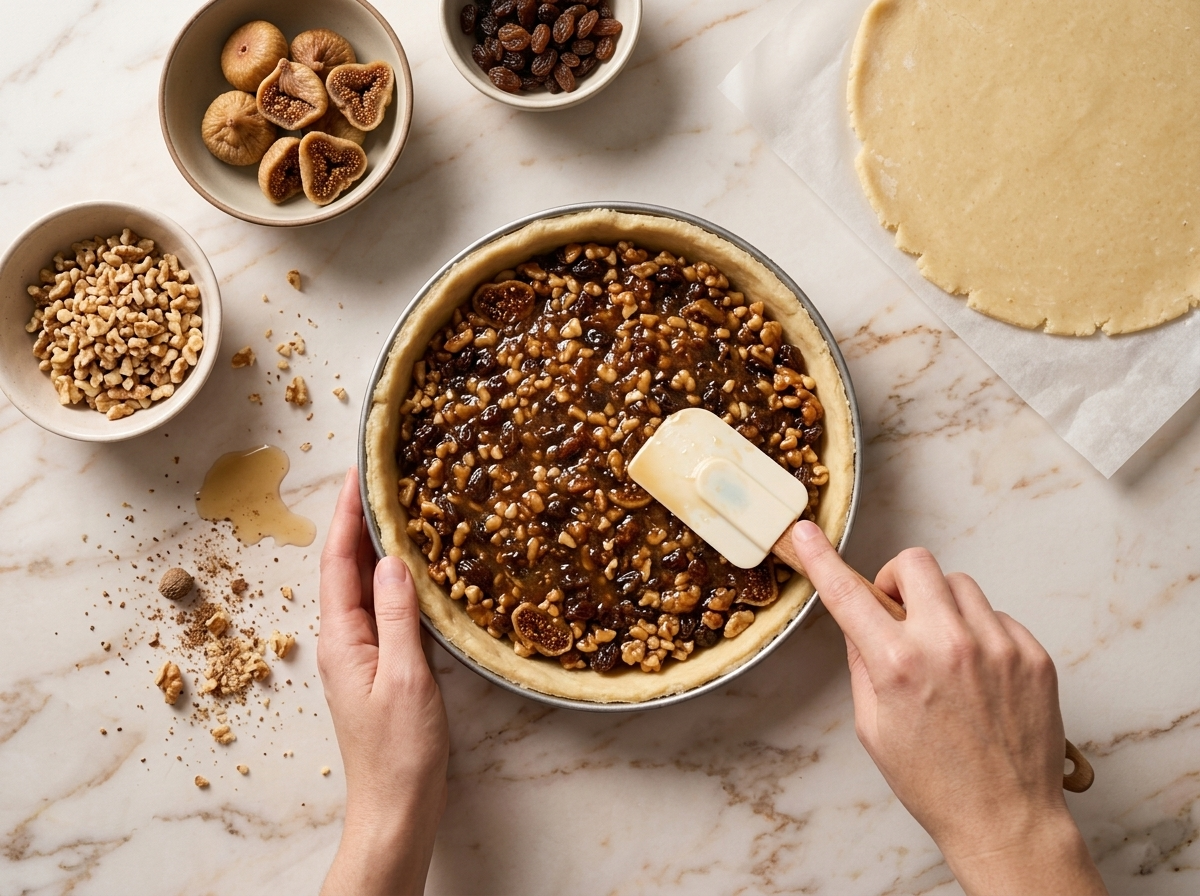
- While the dough chills, warm the honey, wine, cinnamon, nutmeg, cloves, coriander and orange zest in an 18 cm / 2-quart saucepan over low heat for 3 to 4 minutes, stirring, until loose and fragrant. Don't let it boil. Add the raisins, figs and candied citron and cook for 2 minutes, until the fruit softens. Off the heat, stir in the walnuts, almonds, pine nuts and breadcrumbs. Let the filling cool for 30 minutes, until it feels barely warm and holds together like a stiff paste.
- Set a rack in the lower third of the oven, put a 33 x 46 cm / 13 x 18 inch sheet pan on it, and heat the oven to 180 C / 350 F. Roll the larger dough disk between two sheets of parchment to 4 mm thick, about a 30 cm round. Lift it into a 24 cm / 9.5-inch tart pan with a removable base, press it into the corners, and trim flush with the rim.
- Spoon in the cooled filling and press it level with a damp spatula. Roll the smaller disk to 4 mm, about a 25 cm round, and lay it over the top. Press the edges together and trim the overhang. Beat the egg yolk with the milk, brush it over the top, and cut 6 to 8 small vents.
- Bake on the hot sheet pan for 40 minutes, until the top is deep golden and honey bubbles slowly at the vents. If the edges darken before the 30-minute mark, tent them with foil.
- Cool the tart in the pan on a rack for 1 hour so the filling sets. Unmold, dust with powdered sugar, and cut into 12 thin wedges with a serrated knife.
Notes
- Chill the dough for the full 45 minutes so the butter firms and the pastry rolls without tearing.
- Press the filling level with a damp spatula so the top crust sits flat.
- Cut 6 to 8 small vents in the top crust so steam can escape.
- Cool the tart in the pan for a full hour before unmolding.
Tips for Success
- Cool the filling to lukewarm before spooning it in, since warm filling melts the butter in the pastry and leaves the bottom crust soft.
- Chop the nuts to about pea size so the filling slices cleanly instead of crumbling around whole walnut pieces.
- Weigh the honey instead of measuring by cup, since 200 g is the difference between a sliceable filling and a runny one.
- Preheat the sheet pan and bake the tart pan on it so the bottom crust browns and sets before the filling heats through.
- Cut the tart with a serrated knife after the full hour of cooling, using a gentle sawing motion so the top crust doesn’t shatter.
Variations
- Swap the white wine for Marsala or vin santo in the filling for a darker, more caramel-like flavor.
- Replace the figs with dried pears or prunes, chopped to the same size, for a deeper fruit note.
- Use lightly toasted hazelnuts in place of the walnuts if you want a rounder, sweeter nut flavor.
Storage and Reheating
Spongata keeps for 5 to 7 days in an airtight tin at cool room temperature, with a sheet of parchment between the tart and the lid. The flavor improves after the first 24 hours as the spices settle into the fruit. In a warm kitchen, keep it in the fridge for the same 5 to 7 days and let it sit out for 30 minutes before slicing.
For longer storage, wrap the whole tart or individual wedges tightly and freeze for up to 2 months. Thaw a whole tart at room temperature for about 3 hours, and wedges for about 45 minutes.
Spongata is served at room temperature and doesn’t need reheating. Warming it softens the pastry and turns the honey filling runny.
Serving Suggestions
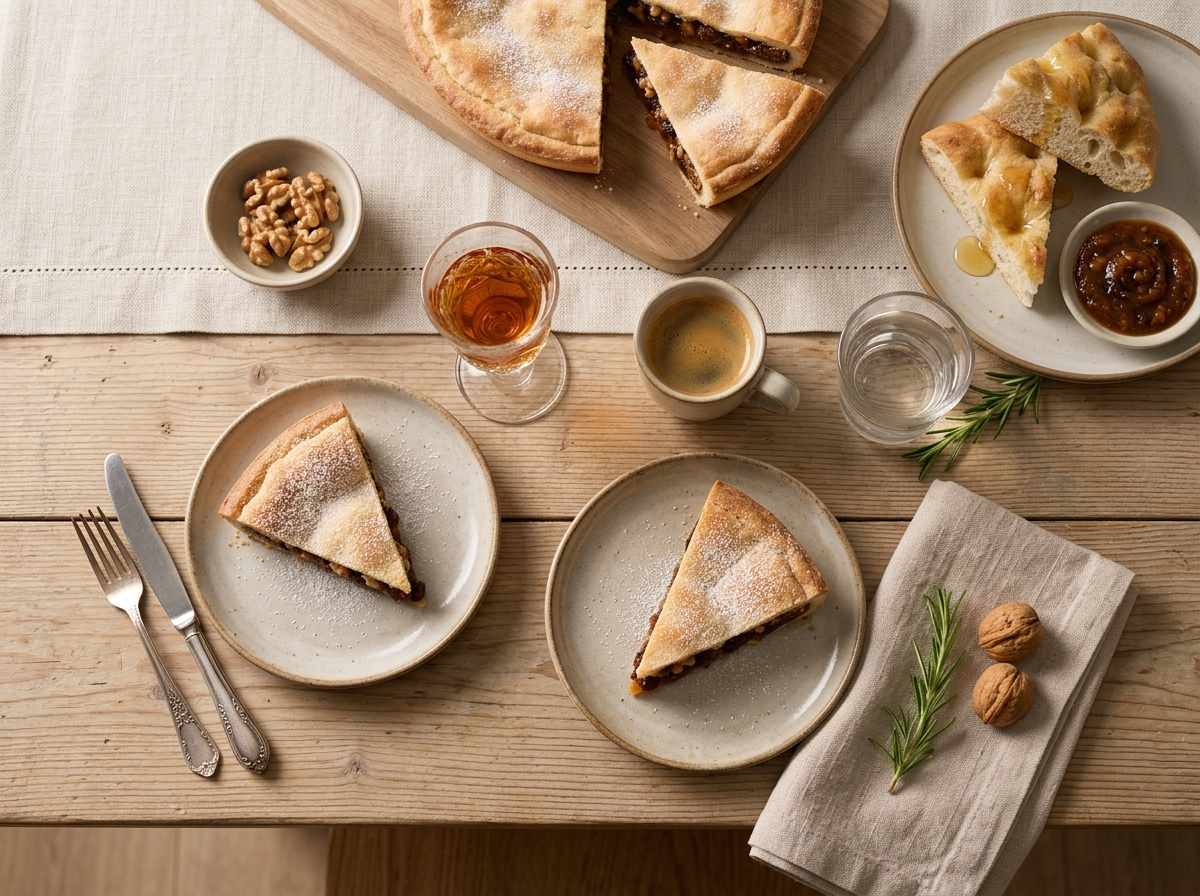
Cut spongata into thin wedges and serve at room temperature with espresso or a small glass of vin santo. The filling is sweet and dense, so a narrow slice is enough.
On a cheese board, put a wedge next to aged Parmigiano Reggiano or a firm pecorino. The salty cheese and the spiced honey filling balance each other well.
For a holiday dessert table, set it beside lighter sweets like biscotti, hard almond Christmas rings, or fresh clementines. A whole tart wrapped in parchment also makes an easy gift.
FAQ
How do I know when spongata is baked through?
Spongata is done after about 40 minutes at 180 C / 350 F, when the top crust is deep golden and the honey filling bubbles slowly at the vents. The edges should look dry and slightly darker than the center. If the pastry still looks pale, the bottom crust is underbaked too, so give it 5 more minutes.
Can I use amaretti crumbs instead of breadcrumbs in spongata?
Yes, swap them 1 for 1 by weight, so 60 g of amaretti crumbs replaces 60 g of dry breadcrumbs. Some versions of spongata are made this way and gain a faint bitter almond note. If your amaretti are sweet, cut the honey to 180 g so the filling doesn’t turn cloying.
How long does spongata last, and does it taste better after a day?
Spongata keeps 5 to 7 days in an airtight tin at cool room temperature. It tastes better on day two, because the spices and honey settle into the fruit and the filling firms up for cleaner slices. Freeze it for up to 2 months if you’re baking well ahead of Christmas.
Which wine goes well with spongata?
A small glass of vin santo or another sweet passito suits spongata, since it matches the honey and dried fruit. Espresso works if you’d rather have something dry. Skip dry reds, which turn thin and bitter next to this much honey. For a cheese course, serve thin wedges beside aged Parmigiano Reggiano.
How do I make spongata without butter?
Replace the 100 g of butter with 90 g of cold lard, which many older Emilian pastry recipes use, or with 100 g of dairy-free baking sticks. Beat the egg yolk with 1 tablespoon of water instead of milk for the wash. The pastry tastes a little less rich but bakes the same way.
What is the difference between spongata and panforte?
Spongata is a double-crust pastry tart from Reggio Emilia and Busseto, filled with honey, nuts, dried fruit and spices. Panforte comes from Siena and has no pastry. It’s a dense, chewy round of nuts and candied fruit set in cooked honey and sugar syrup, with a thin wafer base. Spongata is softer and crumblier.