Jump to Recipe
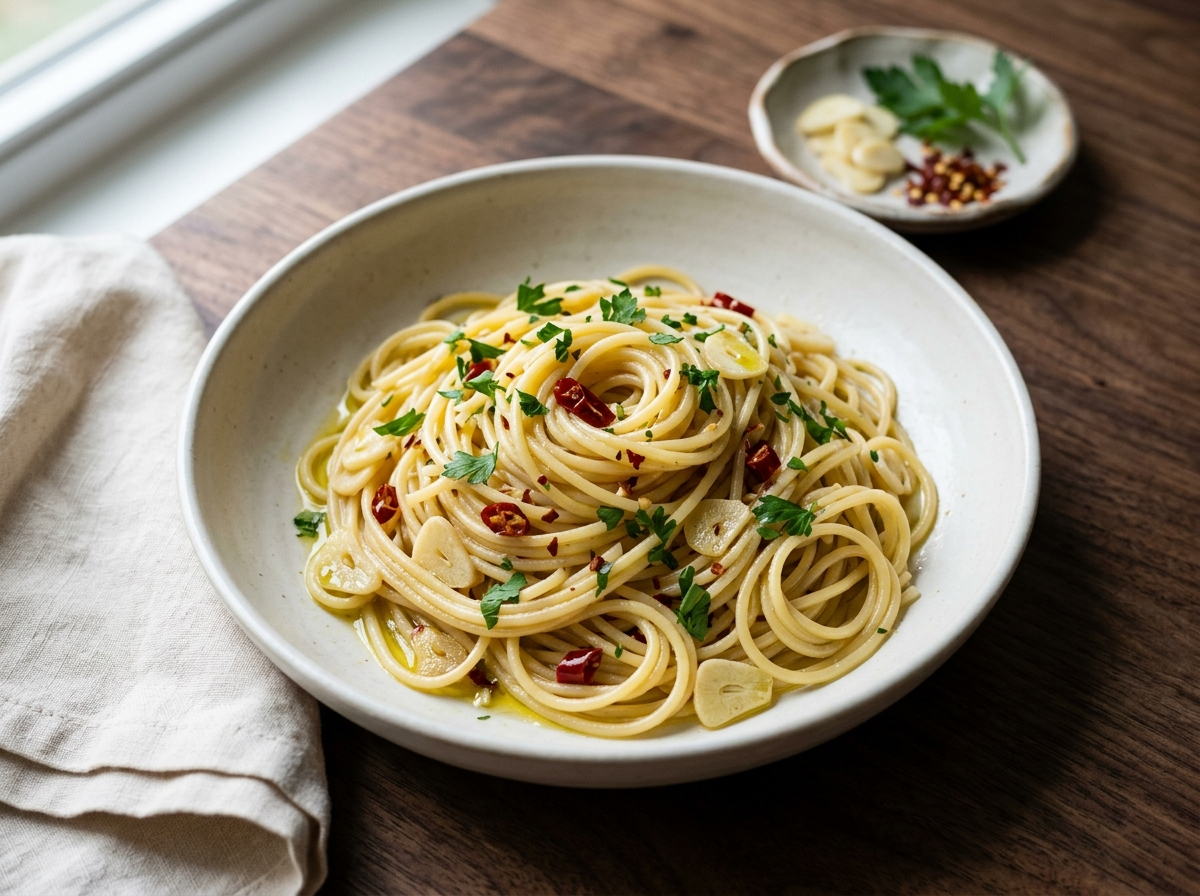
Olio e peperoncino is Roman street food that never needed a restaurant. Garlic, dried chili, olive oil, pasta water, and spaghetti. That’s the whole list.
The technique is the recipe. Pale golden garlic (not brown), a controlled infusion of chili heat, and enough starchy water to coax the oil into something glossy and loose rather than greasy.
This is the pasta I cook at midnight when the fridge is empty. It takes as long as the spaghetti needs to boil, which is usually around 9 minutes.
One thing to know before you start: the garlic burns fast. Keep the heat on medium-low the whole time. That single detail separates a clean-tasting, fragrant sauce from a bitter one.
Why You’ll Love This Recipe
- Ready in 20 minutes using only pantry staples
- No butter or cream, just silky emulsified olive oil
- Adjustable heat level from mild to fiery
- Cheap per serving and genuinely satisfying
Ingredient Notes
- Spaghetti: Use a good bronze-die spaghetti if you can find one. The rougher surface holds the oil sauce better than smooth extruded pasta.
- Extra virgin olive oil: This is the sauce, not a background note. Use the best oil you have. A grassy, peppery Sicilian or Puglian oil works well here.
- Garlic: Slice it thin and even so every piece colors at the same rate. Pre-minced jarred garlic will burn unevenly and tastes flat.
- Dried peperoncino: Calabrian dried chili flakes are traditional and fruity. Standard red pepper flakes from any supermarket work fine as a substitute.
- Flat-leaf parsley: Optional but it adds a clean, grassy contrast to the oil. Curly parsley is a reasonable swap, though the flavor is milder.
- Pasta water: Salt your boiling water generously, about 10 g per liter. This starchy, salty water is what emulsifies the sauce and seasons it at the same time.
Spaghetti Aglio Olio e Peperoncino
Ingredients
Method
- Bring a large pot of water to a rolling boil. Add 10 g of salt per liter of water.
- Drop in the spaghetti and cook until al dente according to package instructions, usually 8 to 10 minutes.
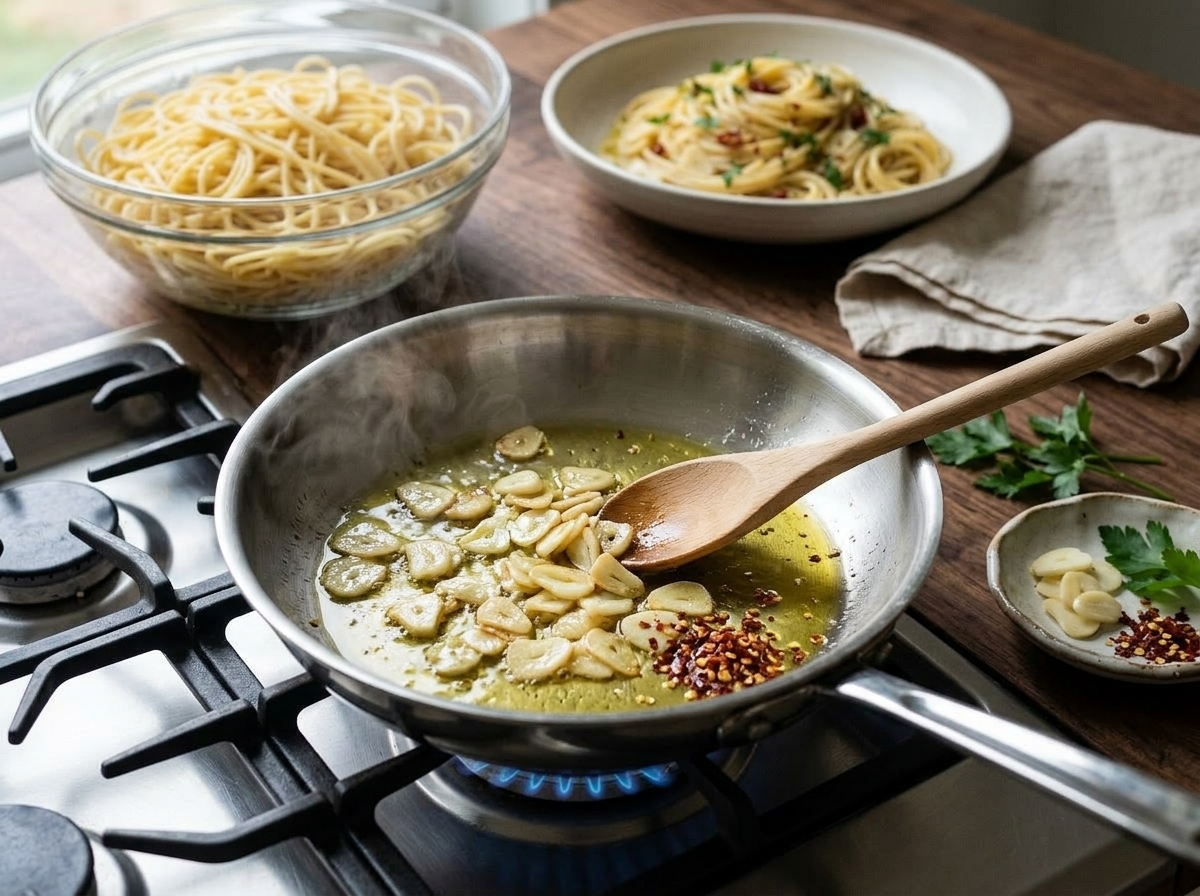
- While the pasta cooks, pour the olive oil into a cold skillet, add the sliced garlic, and set over medium-low heat.
- Cook the garlic, stirring occasionally, for about 2 to 3 minutes until slices turn pale gold and fragrant. Do not let them brown.
- Add the chili flakes, stir once, and immediately remove the pan from the heat.
- Scoop out 120 ml of pasta water and set it aside before draining the spaghetti.
- Drain the spaghetti well and set aside briefly.
- With the skillet off the heat, pour in 80 ml of the reserved pasta water. Swirl the pan vigorously until the water and oil look creamy and slightly emulsified.
- Add the drained spaghetti to the skillet and return to low heat.
- Toss constantly with tongs for 60 seconds, adding extra pasta water one tablespoon at a time if the sauce looks dry, until every strand is coated in a glossy, pale sauce.
- Remove from heat, fold in the parsley if using, taste for salt, and serve immediately in warmed bowls with a drizzle of raw olive oil over the top.
Notes
Tips for Success
- Keep the heat on medium-low when the garlic goes in, and pull the pan off the heat the moment slices turn pale gold.
- Reserve at least 120 ml of pasta water before draining, you’ll need it to build the emulsified sauce.
- Add pasta water to the oil off the heat first, swirl vigorously, then toss the spaghetti in to finish the emulsification.
- Finish tossing the pasta in the pan over low heat for 60 seconds so every strand picks up the sauce rather than pooling at the bottom.
- Taste for salt after tossing, not before, since the pasta water carries most of the seasoning into the sauce.
Variations
- Add 6 anchovy fillets with the garlic for a deeper, savory umami base.
- Stir in 40 g of toasted breadcrumbs (pangrattato) before serving instead of cheese for a Sicilian finish.
- Use bucatini instead of spaghetti for a thicker, chewier result that holds more sauce inside the hollow strands.
Storage and Reheating
Store leftovers in an airtight container in the fridge for up to 2 days. The pasta will absorb the oil as it sits and the texture changes noticeably.
To reheat, put the pasta in a skillet over low heat with a splash of water, around 2 to 3 tablespoons. Toss constantly for 2 minutes until the sauce comes back together. Avoid the microwave if you can, it dries the strands and makes the garlic flavor sharp.
This pasta doesn’t freeze well. The emulsified sauce breaks on thawing and the noodles become soft.
Serving Suggestions
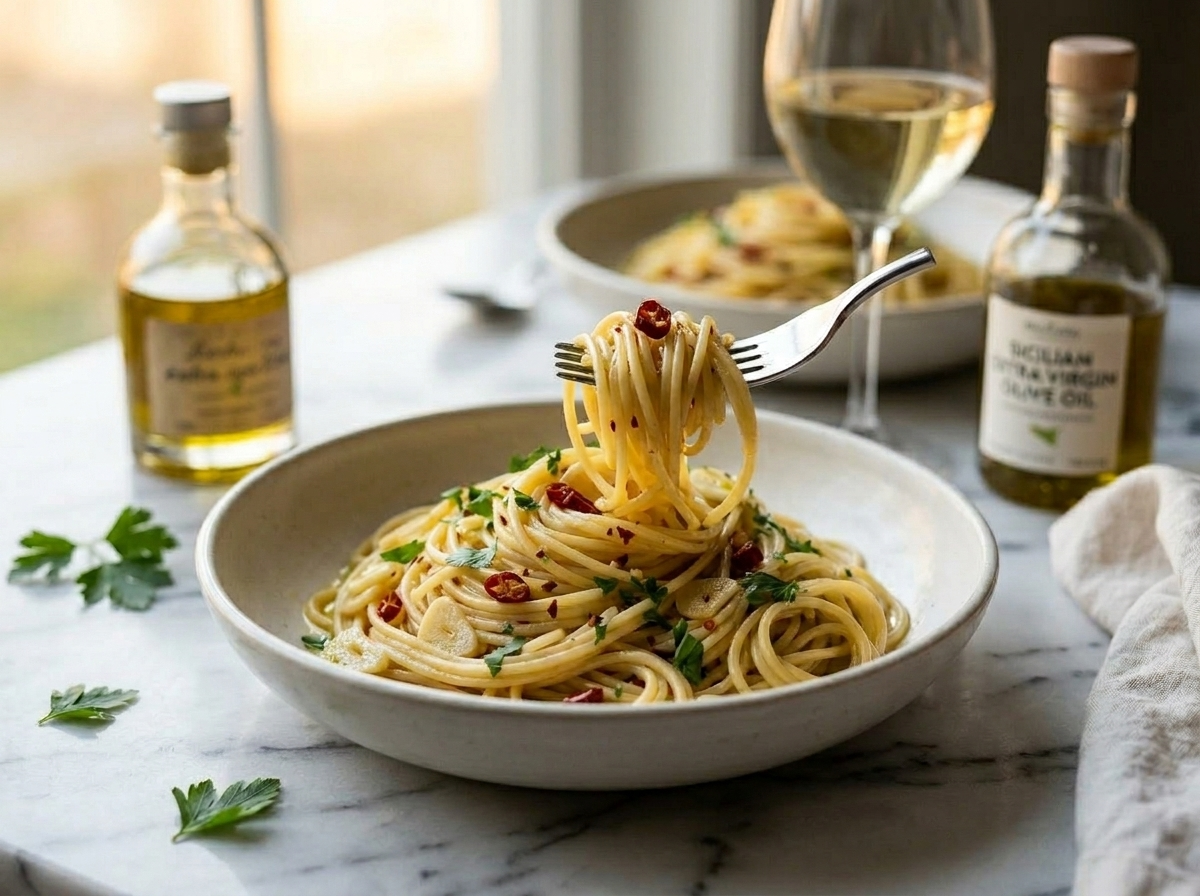
Serve straight from the pan into warmed bowls. A handful of torn flat-leaf parsley and an extra drizzle of raw olive oil over the top is all it needs.
A simple arugula salad dressed with lemon juice and olive oil works well alongside, though a Roman-style sautéed chicory offers the same bitter contrast with more depth. A cold glass of Vermentino or a light Pinot Grigio holds up to the chili heat without fighting it, and the Italian wine pairing guide for pasta covers both in more detail.
If you want to turn this into a fuller meal, a plate of thinly sliced mortadella or bresaola on the side keeps things in the same Italian pantry register.
FAQ
Why does my aglio olio e peperoncino taste bitter?
Bitter flavor almost always means the garlic went past pale gold into brown or burned. Keep your pan on medium-low and watch the garlic closely, it only takes about 2 minutes to color. If it burns, start the oil again with fresh garlic rather than pushing through.
Can I use chili oil instead of dried peperoncino in this recipe?
You can, but the flavor profile shifts. Chili oil gives background warmth rather than the clean, direct heat of dried flakes bloomed in fresh olive oil. If you use it, skip the oil-infusion step and add the chili oil at the end instead.
How do I know when the pasta water and olive oil have properly emulsified?
The mixture should look creamy white and slightly thick rather than oily and transparent. If it still looks like separate oil floating on water, add another small splash of pasta water and shake the pan hard over low heat for another 30 seconds.
Can I make aglio olio e peperoncino ahead of time for a dinner party?
This pasta doesn’t hold well. The oil absorbs into the noodles within 20 minutes and the emulsification breaks. The best approach for a dinner party is to infuse the garlic and chili in the oil up to an hour ahead, then boil and toss the pasta just before serving.
Is spaghetti aglio olio e peperoncino vegan?
Yes, the classic version is naturally vegan and dairy-free with no animal products in the base recipe. Just make sure to skip any optional Pecorino or Parmigiano if you’re keeping it strictly plant-based.
What is the difference between aglio e olio and aglio olio e peperoncino?
They’re essentially the same dish. The longer name simply makes the chili explicit, ‘peperoncino’ meaning dried red chili pepper. In practice, almost every Roman version includes chili, so the two names are used interchangeably.