
Jump to Recipe
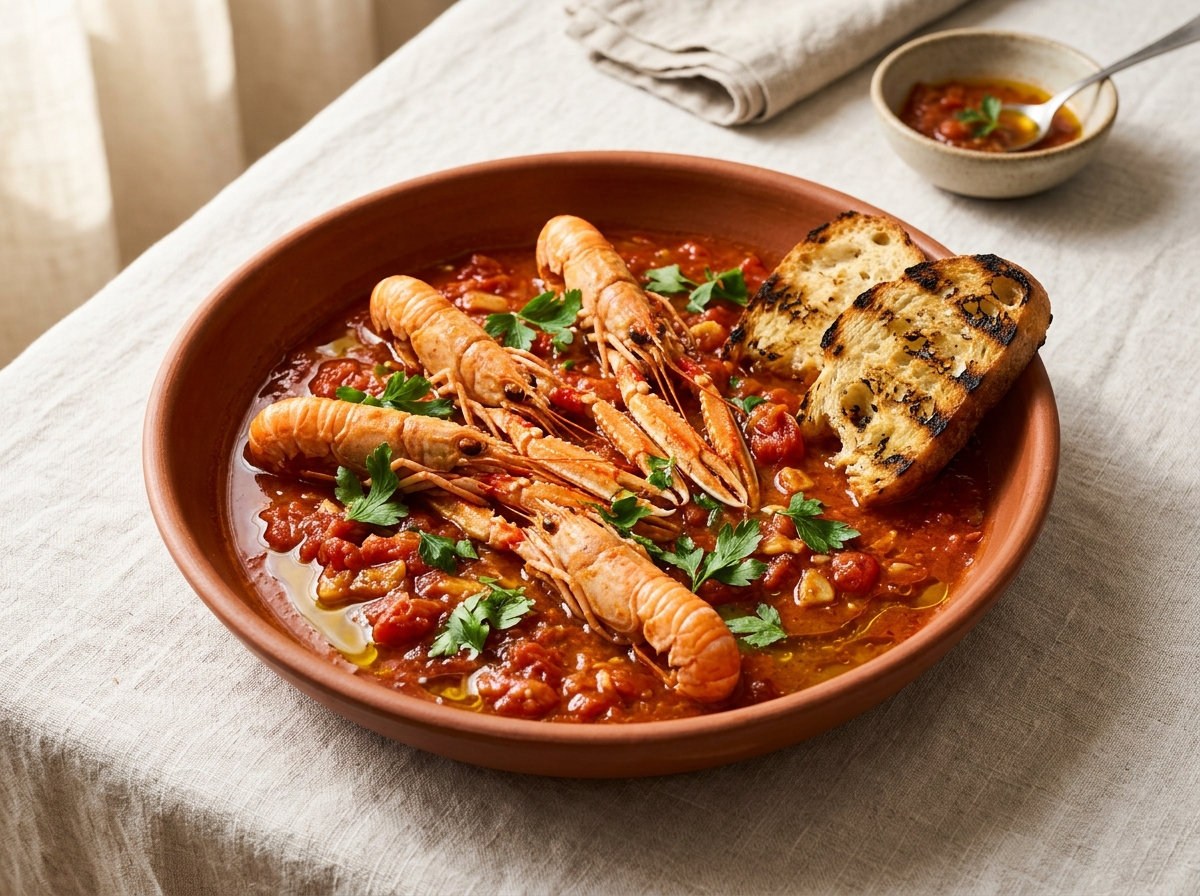
Scampi alla busara comes from the northern Adriatic coast, particularly the fishing ports around Trieste and Venice. It’s a dish built on the idea that fresh langoustines need very little beyond heat, tomato, and white wine.
The name ‘busara’ refers to an old sailor’s pot, and the cooking logic reflects that origin: everything goes into one pan, the shells flavor the sauce as the scampi cook, and you’re done in under 40 minutes.
Most recipes you’ll find use either fresh or frozen langoustines. Fresh are better, but well-handled frozen ones work. What matters more is that you cook the scampi whole and in shell, because that’s where the flavor lives.
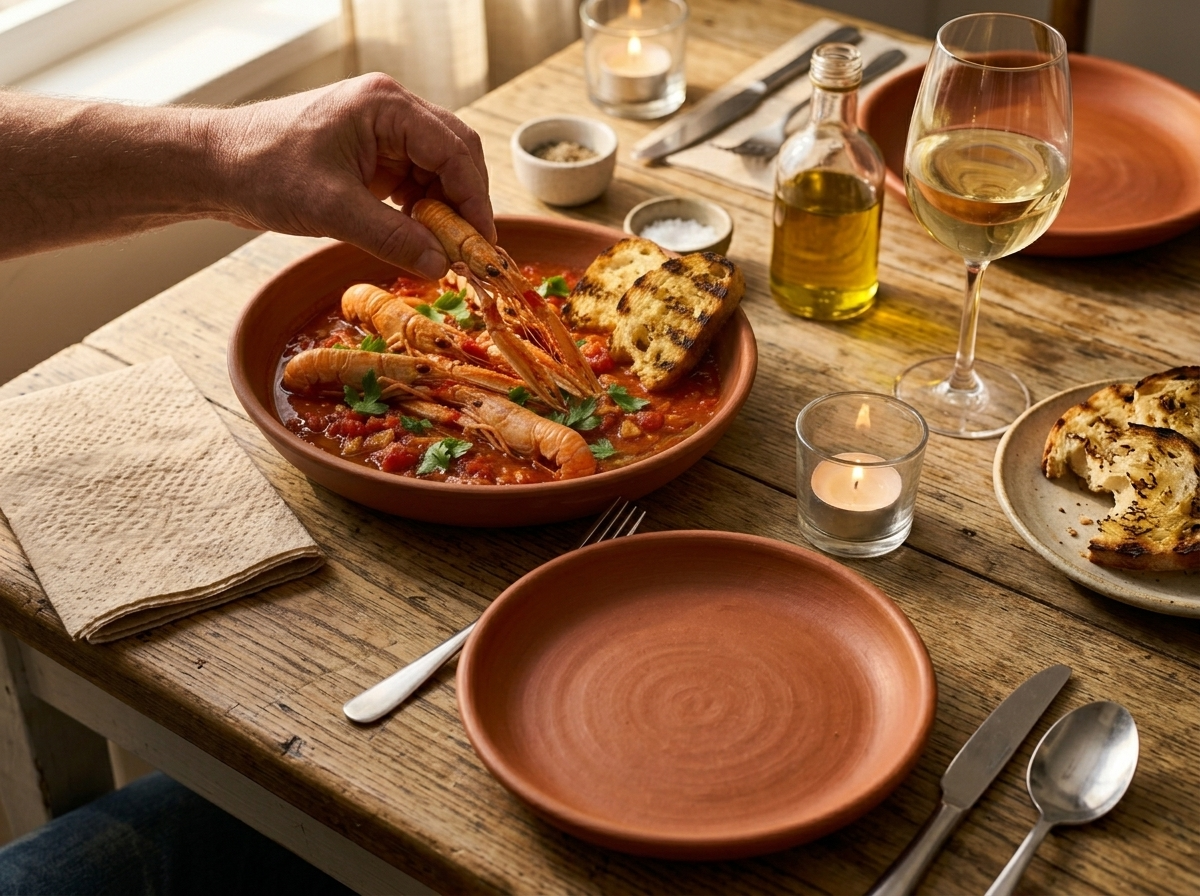
This is a hands-on dish. You eat it with your fingers, pulling the shell apart at the table, mopping the sauce with bread. That part is not optional.
Why You’ll Love This Recipe
- One pan, under 40 minutes, almost no cleanup
- Shell-on cooking means the sauce tastes genuinely of the sea
- Six ingredients carry the whole dish – nothing fussy
- Sauce is thick enough to mop with bread, not watery
Ingredient Notes
- Langoustines (scampi): Use whole, shell-on langoustines – fresh or frozen and fully thawed. Do not substitute peeled prawns; the shells are what give the sauce its depth.
- San Marzano tomatoes (canned): Crush them by hand before adding. A good-quality passata works if you prefer a smoother sauce, but you lose a little texture.
- Dry white wine: Use something you’d drink – a Pinot Grigio or Soave works well here. Avoid anything oaky or heavily aromatic.
- Extra virgin olive oil: Use a decent one; it forms the base of the soffritto and you’ll taste it. Light olive oil is too neutral for this dish.
- Peperoncino (dried chili flakes): One small dried chili or a pinch of flakes. The heat should be a background note, not the main event. Omit if cooking for children.
- Garlic: Sliced thin, not minced. It softens into the oil without turning sharp. Fresh only – jarred pre-minced garlic changes the flavor noticeably.
- Flat-leaf parsley: Added at the end only. Curly parsley is too mild here – stick with flat-leaf for a clean, slightly peppery finish.
- Breadcrumbs (optional): Some Triestine versions stir in a tablespoon of fine dry breadcrumbs toward the end to thicken the sauce slightly. Try it if your sauce looks thin.
Scampi alla Busara (Adriatic Langoustines in Tomato and White Wine Sauce)
Ingredients
Method
- Rinse the langoustines under cold water and pat them completely dry with paper towels. If needed, use kitchen scissors to trim the sharp rostrum (the pointed spike above the head) so they sit flat in the pan.
- Optional but useful: press the underside of each tail with the back of a spoon handle to crack the shell slightly. This lets the sauce absorb into the meat as it cooks.
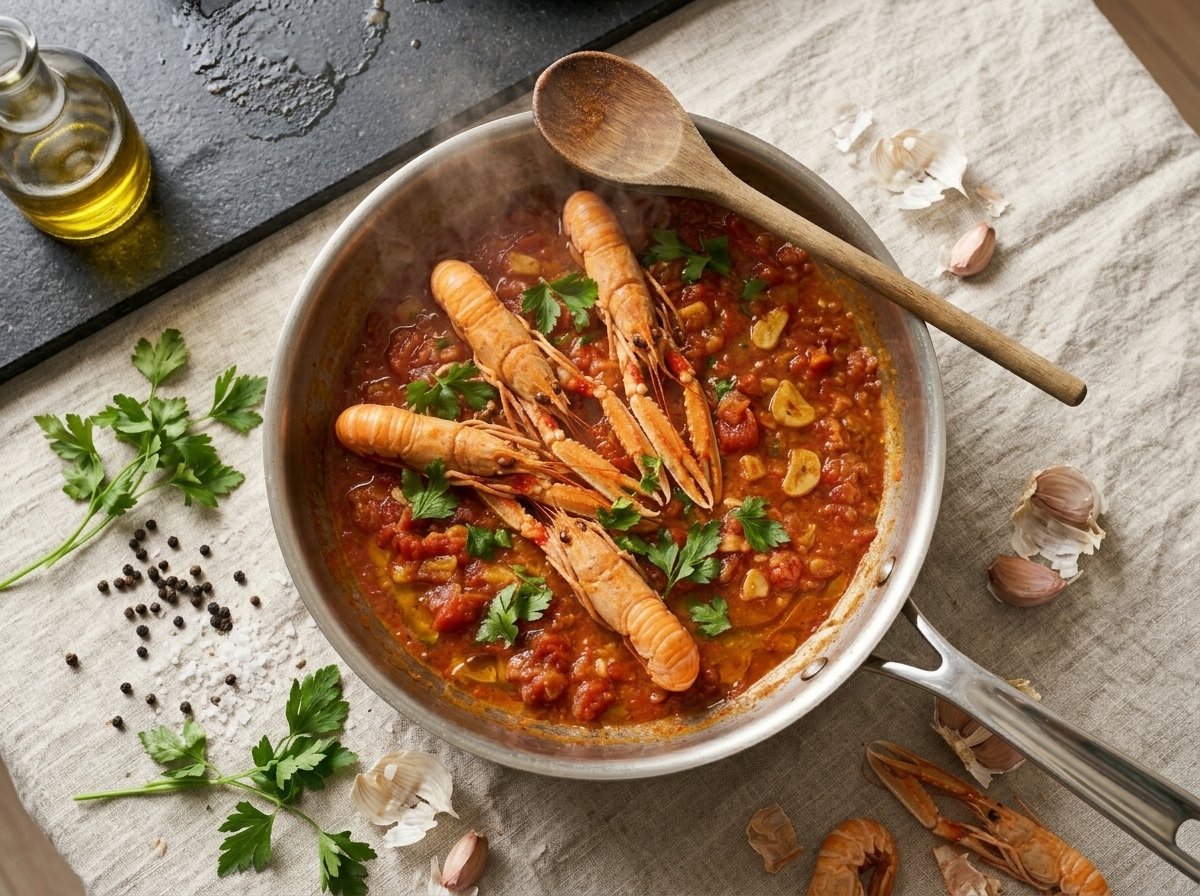
- Heat the olive oil in a wide saute pan over medium heat. Add the sliced garlic and peperoncino and cook for about 2 minutes, stirring, until the garlic is pale gold and fragrant. Do not let it brown.
- Raise the heat to high. Add the langoustines in a single layer, shell-side down. Press them gently into the pan and sear for 2 minutes without moving them, until the shells start to turn coral-pink.
- Remove the pan from the heat briefly. Pour in the white wine - it will sizzle hard. Return to high heat and let the wine reduce for about 3 minutes until you can no longer smell the raw alcohol.
- Add the hand-crushed San Marzano tomatoes and stir gently to distribute. Season lightly with salt - you can adjust at the end.
- Reduce heat to medium and cook uncovered for 6 to 8 minutes, turning the langoustines once halfway through, until the shells are fully coral-orange and the meat is opaque white. The sauce should reduce and thicken noticeably during this time.
- If the sauce still looks thin, stir in the dry breadcrumbs and cook for 1 more minute until the sauce tightens and coats a spoon.
- Pull the pan off the heat. Taste the sauce and adjust salt.
- Scatter the chopped flat-leaf parsley over the top. Do not stir it in - just scatter and serve immediately on a warmed shallow platter with thick grilled bread alongside for mopping the sauce.
Notes
Tips for Success
- Pat the langoustines completely dry before they hit the pan so they color rather than steam.
- Sear the scampi shell-side down first for 2 minutes to draw flavor into the oil before adding wine.
- Add the wine off-heat to control the flare-up, then return to high heat and let it reduce by half.
- Keep the lid off for the final 5 minutes so the sauce tightens and clings to the shells.
- Taste the sauce for salt only after it has reduced, as the seafood releases its own salinity as it cooks.
Variations
- Triestine version: stir 1 tbsp fine dry breadcrumbs into the sauce in the last 2 minutes to thicken it.
- Spicier Dalmatian style: double the peperoncino and add a splash of brandy with the white wine.
- Quick passata version: swap canned whole tomatoes for 200 ml good-quality passata for a smoother, faster sauce.
Storage and Reheating
Scampi alla busara is best eaten immediately. The texture of langoustine meat drops noticeably after sitting, and the shells make storage awkward.
If you need to store leftovers, pull the meat from the shells, place it in an airtight container with the sauce, and refrigerate for up to 1 day. Reheat gently in a small pan over low heat with a splash of water – do not boil or the meat will tighten up.
Freezing is not recommended. The langoustine meat turns spongy once frozen and thawed a second time.
Serving Suggestions
The classic accompaniment is grilled or toasted white bread – a thick-cut ciabatta or Venetian biga bread rubbed with a little raw garlic. Place it directly in the sauce bowl so it soaks up the tomato and wine.
If you want to serve it over pasta, use spaghetti or tagliolini, keeping the same instinct you’d bring to any Italian wine and pasta pairing when choosing what to open alongside. Toss the cooked pasta into the sauce pan off-heat, add a ladleful of pasta water, and serve the langoustines on top. This makes a more filling plate and is a common restaurant version along the Adriatic coast.
A cold, dry Friulian white like Friulano or a glass of Soave is the natural pairing, and the broader logic of matching wines to Italian seafood applies here exactly as it does along the rest of the coast. Keep the table setting simple – paper napkins, a bowl for shells, and nothing else.
FAQ
Why is my busara sauce watery instead of thick and glossy?
The sauce needs to reduce uncovered on medium-high heat for at least 5 minutes after the langoustines go in. If it still looks thin, stir in 1 tbsp of fine dry breadcrumbs – this is a traditional Triestine fix, not a cheat.
Can I use frozen langoustines for scampi alla busara?
Yes, as long as they are thawed slowly in the fridge overnight and patted very dry before cooking. The key is avoiding excess water in the pan, which prevents the initial sear and dilutes the sauce.
How do I know when the langoustines in busara are cooked through?
The shells turn bright coral-orange and the exposed tail meat shifts from translucent grey to opaque white. Total cooking time in the sauce is about 6 to 8 minutes – pull them a moment before you think they’re done, as residual heat carries on.
What is the difference between scampi alla busara and scampi al pomodoro?
Busara specifically refers to the Venetian and Triestine method using white wine, garlic, peperoncino, and tomato all together, often with a breadcrumb finish. Scampi al pomodoro is a looser term for any langoustine-tomato preparation and varies widely by region.
Is scampi alla busara gluten-free?
The core recipe – langoustines, tomatoes, wine, garlic, olive oil – is naturally gluten-free. The optional breadcrumb thickener is not, so simply skip it or use certified gluten-free breadcrumbs if needed.
What pairs well alongside scampi alla busara beyond bread?
Grilled polenta slices work particularly well along the Venetian coastline – they soak the sauce the same way bread does without overpowering the seafood. A simple green salad dressed only with lemon and oil rounds out the plate without competing.