Ingredients
Method
Prep the langoustines
- Rinse the langoustines under cold water and pat them completely dry with paper towels. If needed, use kitchen scissors to trim the sharp rostrum (the pointed spike above the head) so they sit flat in the pan.
- Optional but useful: press the underside of each tail with the back of a spoon handle to crack the shell slightly. This lets the sauce absorb into the meat as it cooks.
Build the soffritto
- Heat the olive oil in a wide saute pan over medium heat. Add the sliced garlic and peperoncino and cook for about 2 minutes, stirring, until the garlic is pale gold and fragrant. Do not let it brown.
Sear and deglaze
- Raise the heat to high. Add the langoustines in a single layer, shell-side down. Press them gently into the pan and sear for 2 minutes without moving them, until the shells start to turn coral-pink.
- Remove the pan from the heat briefly. Pour in the white wine - it will sizzle hard. Return to high heat and let the wine reduce for about 3 minutes until you can no longer smell the raw alcohol.
Add tomatoes and simmer
- Add the hand-crushed San Marzano tomatoes and stir gently to distribute. Season lightly with salt - you can adjust at the end.
- Reduce heat to medium and cook uncovered for 6 to 8 minutes, turning the langoustines once halfway through, until the shells are fully coral-orange and the meat is opaque white. The sauce should reduce and thicken noticeably during this time.
- If the sauce still looks thin, stir in the dry breadcrumbs and cook for 1 more minute until the sauce tightens and coats a spoon.
Finish and serve
- Pull the pan off the heat. Taste the sauce and adjust salt.
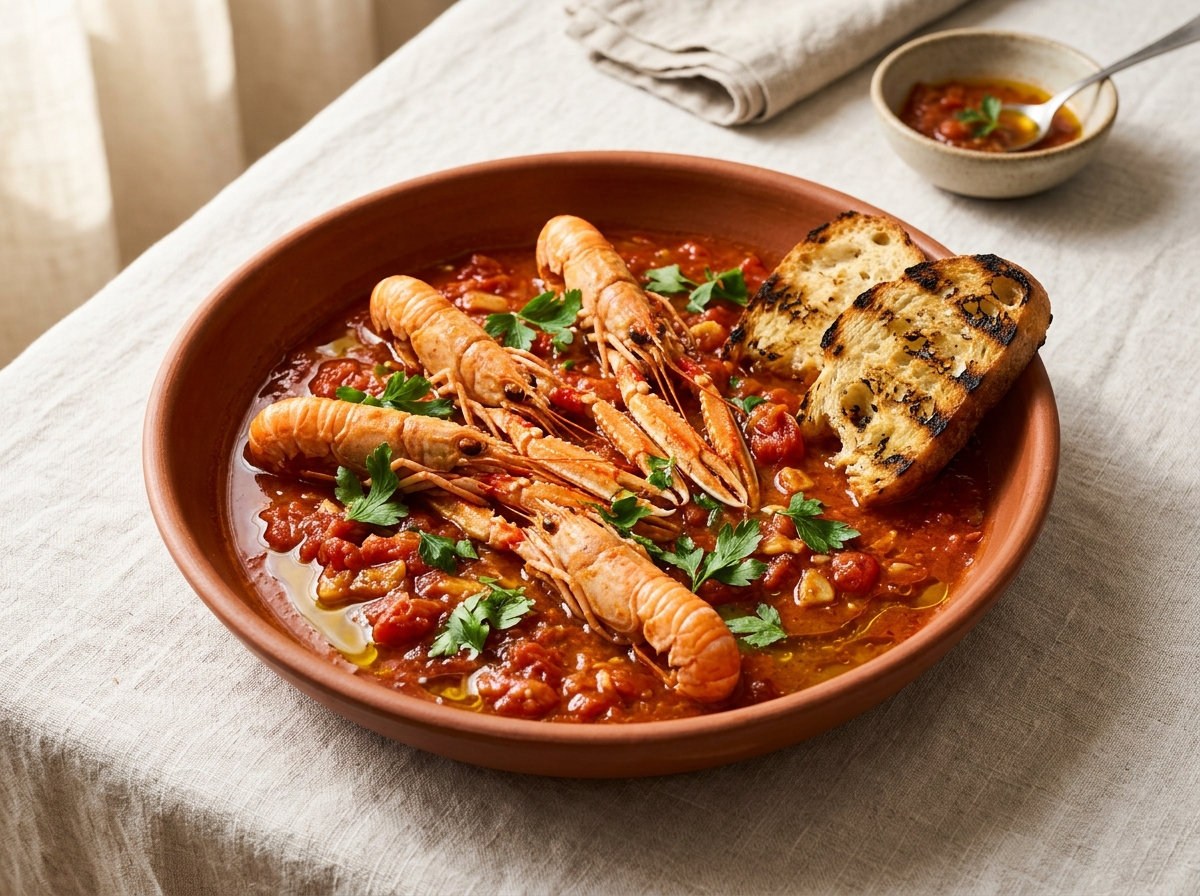
- Scatter the chopped flat-leaf parsley over the top. Do not stir it in - just scatter and serve immediately on a warmed shallow platter with thick grilled bread alongside for mopping the sauce.
Notes
Buy langoustines as fresh as possible - the sauce cannot hide tired seafood. If using frozen, thaw overnight in the fridge and dry thoroughly before cooking.