
Jump to Recipe
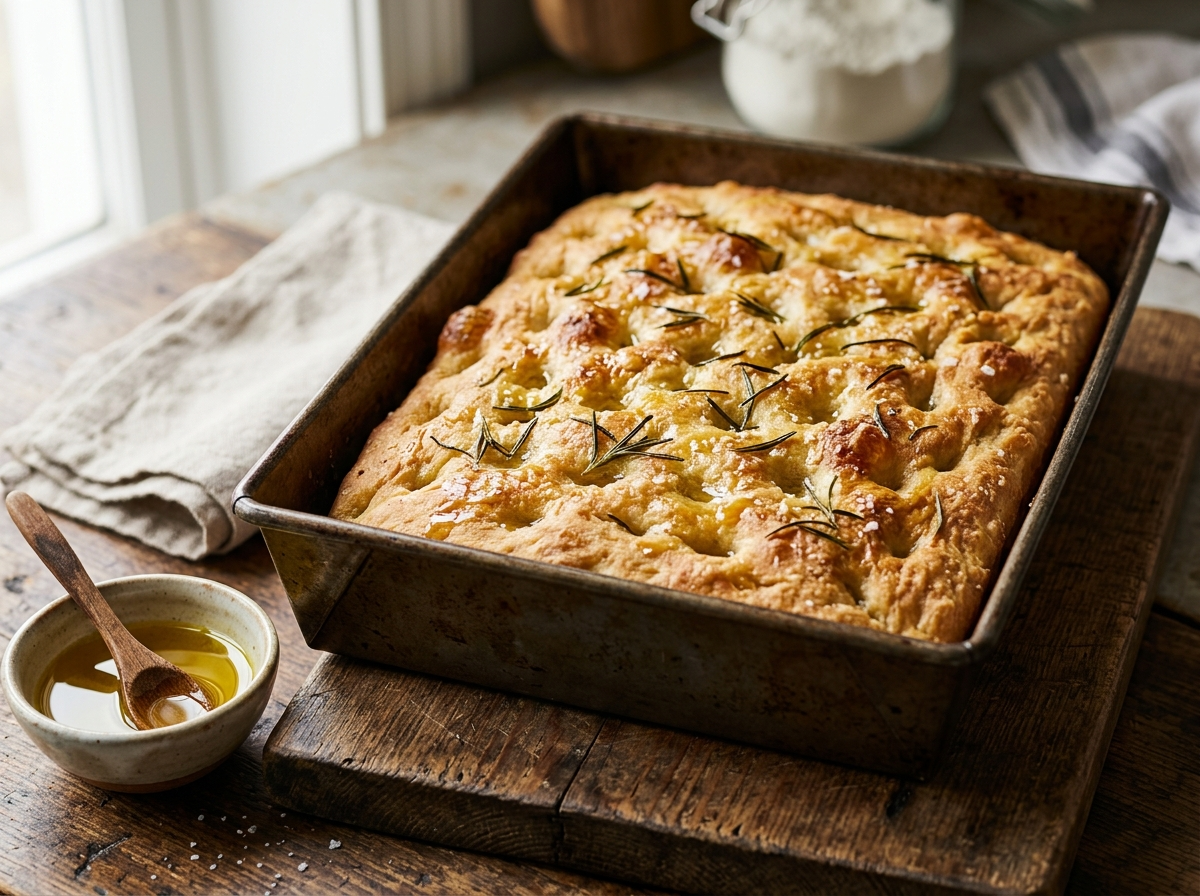
Most gluten free focaccia comes out either too dense or too cakey. This one doesn’t. The batter is wet on purpose, baked in a well-oiled pan so the bottom crisps while the inside stays open and chewy.
The flour blend matters more here than in most gluten free baking. I use a rice flour and tapioca base with a touch of psyllium husk to hold the structure that gluten normally provides. You get dimples that actually hold olive oil rather than puffing shut.
It comes together in one bowl with no stand mixer and no shaping skill required. Proof time is short, oven time is fast, and it’s worth every minute.
Why You’ll Love This Recipe
- Crisp golden base with a genuinely chewy, open crumb
- One bowl, no shaping or kneading required
- Works with store-bought gluten free flour blends
- Ready in 40 minutes including a short proof
Ingredient Notes
- Gluten free flour blend: Use a blend that already contains xanthan gum, such as Bob’s Red Mill 1-to-1 or King Arthur Measure for Measure. If yours doesn’t contain xanthan gum, add 1 tsp separately.
- Psyllium husk powder: This is the structural backbone of the dough – it traps gas bubbles and gives the crumb its chew. Don’t substitute with whole psyllium husks, which absorb differently.
- Instant yeast: Instant yeast goes straight into the dry ingredients with no proofing step. Active dry yeast works too – dissolve it in the warm water first and let it sit 5 minutes before mixing.
- Warm water: Aim for 38-40 C (100-104 F), roughly the temperature of a warm bath. Too hot kills the yeast, too cold slows the rise significantly.
- Extra virgin olive oil: Use a good-quality oil here – it coats the pan and soaks into the surface dimples, so you’ll taste it. A light-tasting olive oil can substitute if you prefer a milder flavor.
- Flaky sea salt: Flaky salt like Maldon finishes the top with crunch and pockets of salinity. Fine salt dissolves into the surface and won’t give the same texture contrast.
Gluten Free Focaccia Bread Recipe
Ingredients
Method
- Heat the oven to 220 C / 430 F. Pour 2 tbsp of olive oil into a 23 x 33 cm (9 x 13 inch) rimmed baking pan and tilt to coat the base and sides evenly.
- Whisk the gluten free flour, psyllium husk powder, instant yeast, and fine salt together in a large bowl until combined.
- Add the warm water and 2 tbsp of olive oil to the dry ingredients. Mix with a spatula for 1-2 minutes until a smooth, thick batter forms. It will be wetter than a standard bread dough.
- Scrape the batter into the prepared pan and spread it to an even layer roughly 2 cm thick using a wet spatula.
- Set the pan in a warm spot and rest the batter uncovered for 20 minutes. The surface will look slightly puffed.
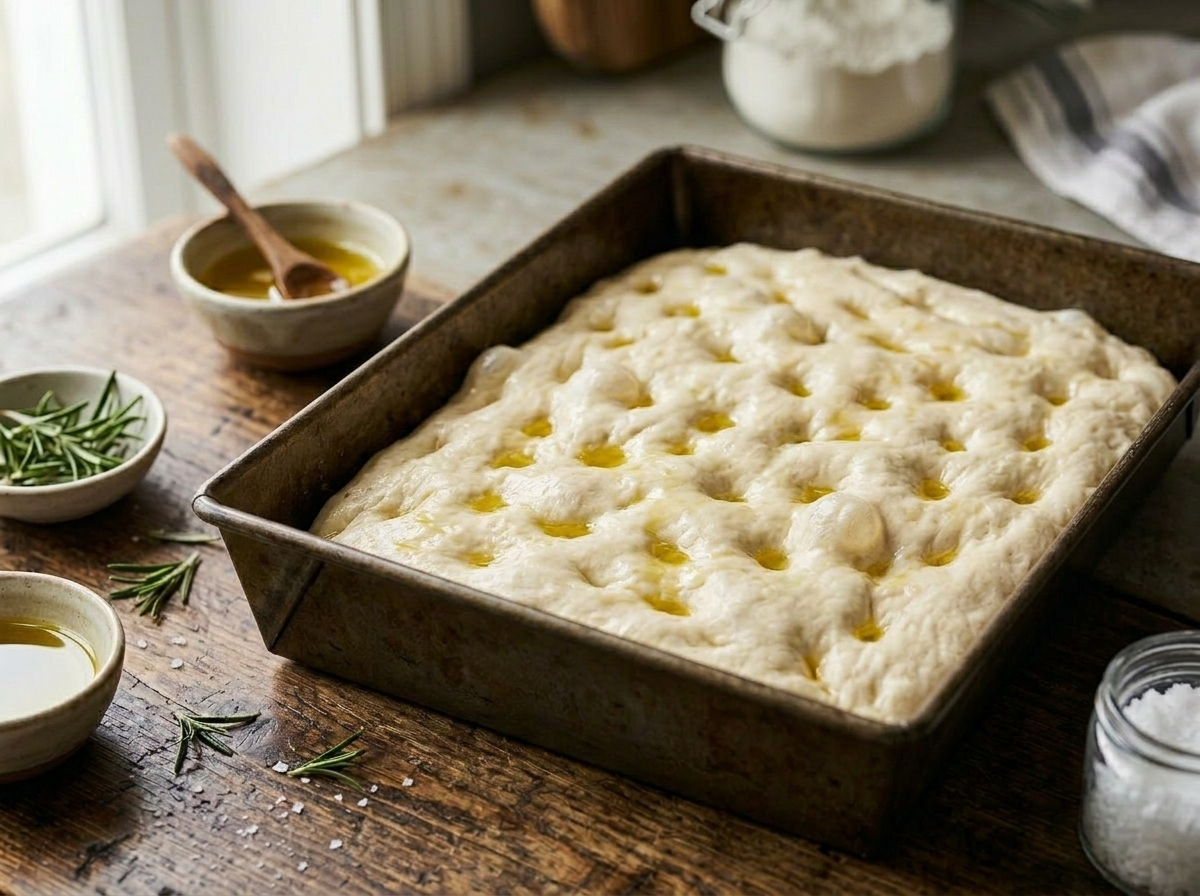
- Wet your fingertips and press deep dimples across the surface of the batter at roughly 4 cm intervals.
- Drizzle the remaining 2 tbsp of olive oil over the surface, letting it pool in the dimples. Scatter the rosemary leaves and flaky salt evenly across the top.
- Bake on the lower third oven rack for 22-25 minutes, until the top is golden and the base is crisp and deep golden brown when you lift a corner with a spatula.
- Remove from the oven and rest in the pan for 5 minutes before slicing and serving warm.
Notes
Tips for Success
- Oil the pan generously – at least 3 tbsp – so the base crisps and releases cleanly.
- Wet your fingers before pressing the dimples to prevent the batter sticking to your hands.
- Let the shaped batter rest a full 20 minutes before baking so the crumb opens up properly.
- Bake on the lower third of the oven rack where the heat crisps the base without over-browning the top.
- Drizzle a second round of olive oil into the dimples just before baking, not just at the start.
Variations
- Top with thinly sliced red onion, fresh rosemary, and black olives before baking.
- Press halved cherry tomatoes and fresh thyme into the dimples for a Provencal-style version.
- Add 1 tsp garlic powder to the batter and top with shredded mozzarella in the last 5 minutes.
Storage and Reheating
Store leftover focaccia in an airtight container at room temperature for up to 2 days. The crust softens overnight, which is normal for gluten free breads.
To reheat, place slices directly on the rack of a 180 C / 355 F oven for 5-7 minutes. This restores the crisp base much better than a microwave, which makes the crumb gummy.
For longer storage, slice and freeze in a single layer, then transfer to a freezer bag for up to 1 month. Reheat from frozen at 190 C / 375 F for 10-12 minutes.
Serving Suggestions
This focaccia works as a side alongside a simple roasted tomato soup or a bowl of ribollita. The olive oil base means it holds up to dunking without falling apart the way softer gluten free breads do.
For a light lunch, split a piece horizontally and fill it with prosciutto, fresh mozzarella, and basil. The slightly chewy crumb handles the moisture from the cheese without getting soggy.
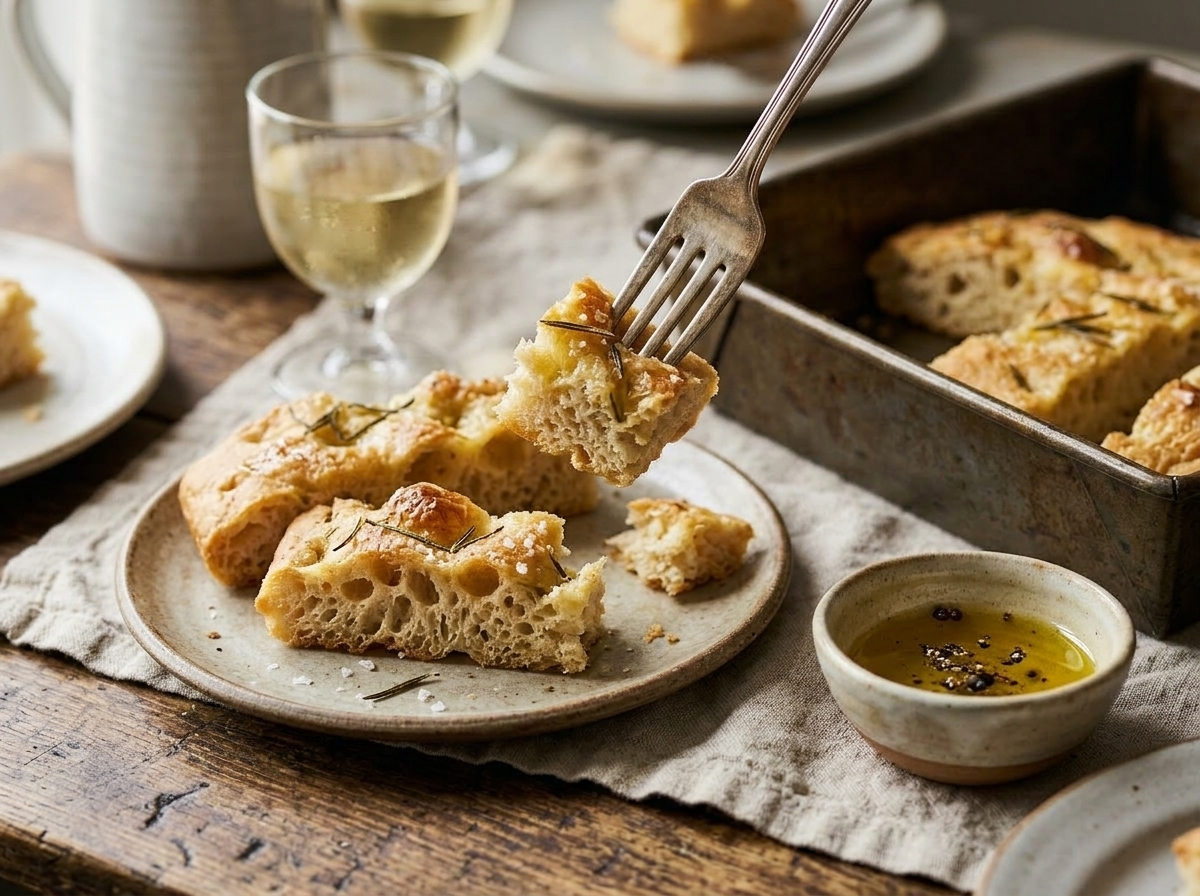
It also makes a strong antipasto board component – cut into fingers and serve next to olives, cured meats, and a dish of good olive oil for dipping, much like the pairings covered in this guide to Italian wine and antipasto.
FAQ
Why is my gluten free focaccia gummy in the middle?
Gumminess usually means the focaccia was underbaked or the batter was too thick. Make sure your pan is well-oiled and the batter is spread to a roughly 2 cm thickness before baking. An oven thermometer helps – many ovens run 10-15 degrees cooler than the dial shows.
Can I use almond flour instead of a rice flour blend in this focaccia?
Almond flour alone won’t give you the same chewy, open crumb – it produces a much denser, cake-like result. If you want a grain-free version, use a blend of almond flour and tapioca starch at a 2:1 ratio, and expect a slightly different texture.
Can I make the gluten free focaccia batter the night before?
Yes – mix the batter, cover the pan tightly with plastic wrap, and refrigerate overnight. Pull it out 30 minutes before baking to take the chill off, press in the dimples, add the olive oil and toppings, then bake as directed.
What pairs well with rosemary gluten free focaccia at a dinner table?
Rosemary focaccia works well alongside braised lamb, roast chicken in Italian style, or any dish with a savory pan sauce. It also pairs naturally with aged pecorino and a small dish of balsamic for a pre-dinner snack.
Is this gluten free focaccia also dairy free?
Yes, the base recipe contains no dairy at all – just flour, yeast, olive oil, water, and salt. Check your flour blend label to confirm it’s processed in a dairy-free facility if cross-contamination is a concern.
How is gluten free focaccia different from regular Italian focaccia in texture?
Regular focaccia has a stretchy, open crumb from gluten development. The gluten free version relies on psyllium husk and starch to mimic that chew, so the interior is slightly more compact but still tender. The olive oil crust on the base is nearly identical.