
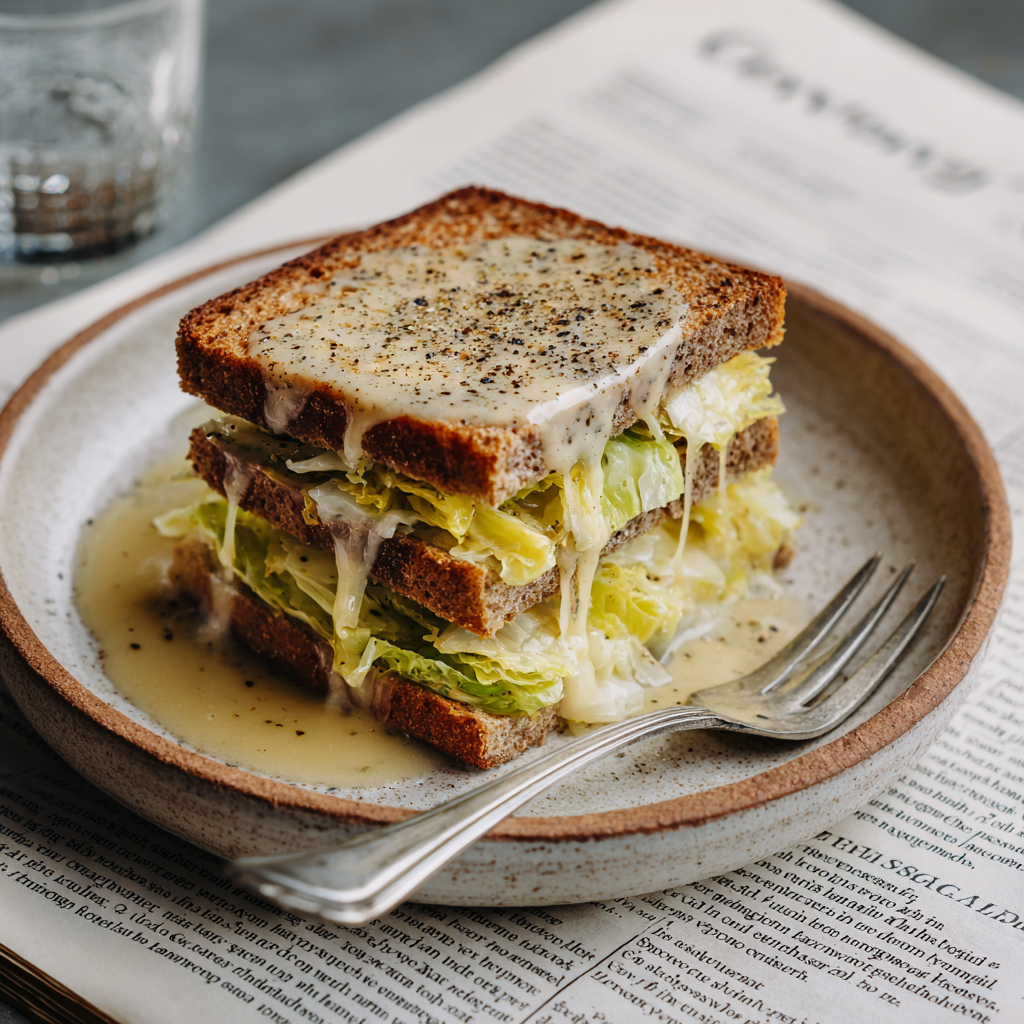
Jump to Recipe
I keep a pan of bubbling, golden-top comfort ready for cold nights, the kitchen filling with the warm, nutty scent of melting cheese and butter. When I pull it from the oven, the air tastes like winter in the Alps — simple staples made soulful with careful layering and time at the heat.
In my Alpine kitchen I start with stale dark bread, tender Savoy cabbage blanched for sweetness, and good broth to moisten the layers. I fold in small, precise steps: sauté the leaves for a caramel edge, stack bread and thin slices of local cheese, then add just enough broth so the crumb stays moist but not soggy.
This is a recipe grounded in one mountain region’s pantry and in the small gestures that make home cooking feel like tradition. I’ll share clear cues for timing, tips on choosing authentic cheese, and easy swaps if you can’t find every ingredient locally.
Key Takeaways
- Use stale dark bread for the best texture and absorbency.
- Blanch then sauté Savoy cabbage to bring out sweetness.
- Layer bread, cabbage, and cheese twice for even custardy results.
- Moisten with hot broth; avoid over-saturating the crumb.
- Bake until the top is golden and the center remains creamy.
What makes this Alpine “soup” so comforting and authentic
This is a farmer’s dish born in Valpelline, Valle d’Aosta. Seupa à la Vapelenentse—often called zuppa valdostana—started as a practical way to use stale rye and simple garden greens.
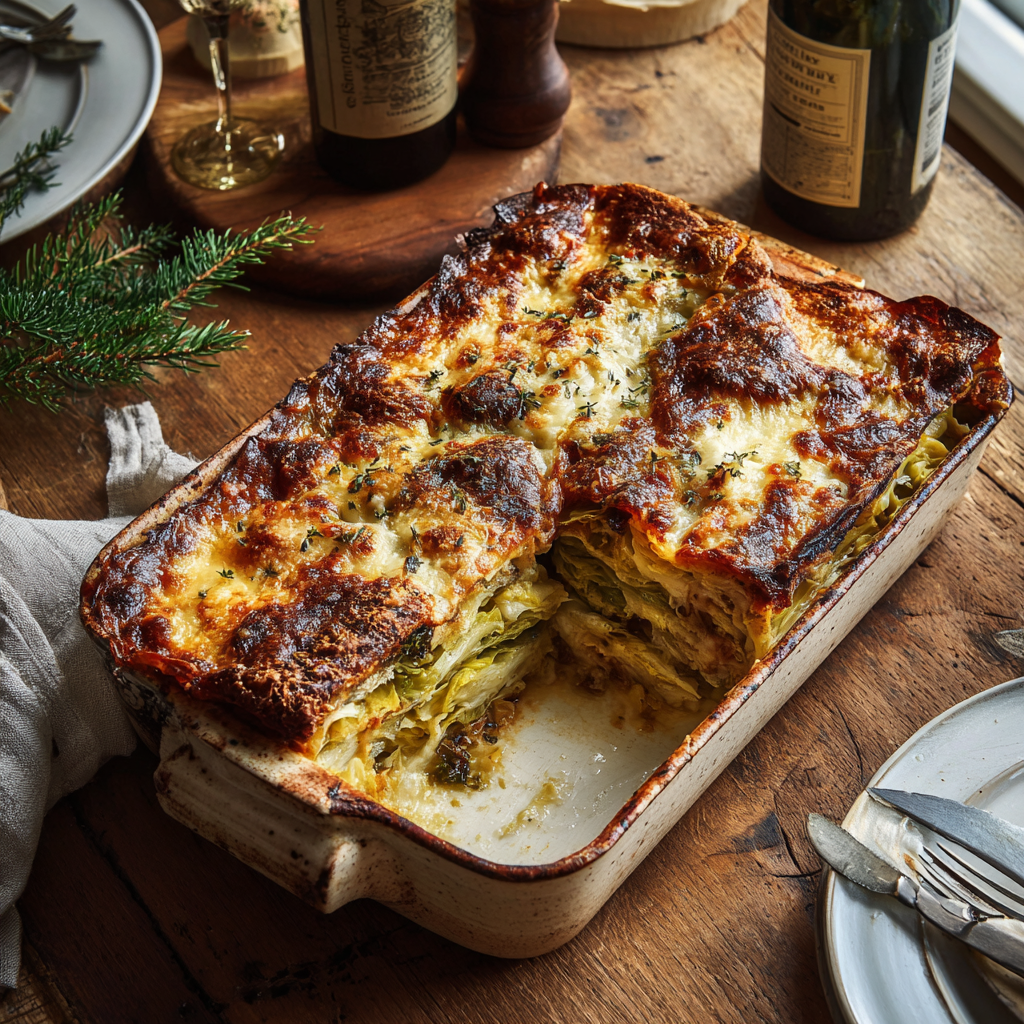
I grew up watching family cooks stretch a pot of broth into a main course. They used whatever meat was available to make a rich stock, then layered bread, blanched cabbage, and slices of local cheese before baking until the top browned.
The trick is texture: bread soaks up the seasoned liquid below, tender leaves sit in the middle, and a bubbly, browned crown seals it. That contrast is what makes the dish feel like a casserole, not a thin bowl.
- Authenticity hinges on Fontina DOP — the mountain cheese gives that warm, nutty aroma after baking.
- Rye or mixed rye/wheat bread holds up best and adds a toasty edge.
- Variations are honest and small: onions, nutmeg or cinnamon, and cured pork like lardo or pancetta deepen the flavor.
When I serve this, I aim to share the region’s resourcefulness. These recipes celebrate thrift, seasonality, and a confident bake that turns little into enough for many.
Zuppa valdostana cabbage fontina soup: the step-by-step recipe
I’ll walk you through exact steps, times, and sensory cues so your bake comes out reliably rich, saucy, and browned on top. Read each short stage and have hot stock ready at the stove.
Ingredients you’ll need
- Half a head Savoy cabbage (trimmed and blanched)
- ~8 slices stale dark bread (rye holds best)
- 400 g Fontina DOP (thin slices)
- 50–60 g butter
- About 1 liter hot stock (beef for depth; poultry works too)
Equipment checklist
- 9×13-inch baking pan or 4 earthenware dishes
- Large pot to blanch, sauté pan, slotted spoon
- Sharp knife and a small ladle for hot stock
Prep the Savoy like a pro
Remove tough outer leaves and cores. Blanche in salted boiling water just until bright and pliable, then drain well.
Sauté briefly in butter over medium heat for 2–3 minutes to firm the leaves and boost sweetness. You want tender, not mushy pieces.
Build, bake, and finish
- Butter the pan. Layer bread on the bottom, then ladle hot stock to moisten the bread but not drown it.
- Add a layer of cabbage and then generous slices of fontina cheese. Repeat so you have two layers and cheese on top.
- After the second bread, moisten again so the liquid nearly covers the crumb while the top cheese remains exposed.
- Bake at 180°C (≈355°F) for about 15 minutes. If edges look dry, add a splash of hot stock and continue a few minutes.
- For a bronzed top, broil 2–5 minutes at the end—watch closely so the cheese blisters to a golden mahogany without burning.
| Option | Temp | Time |
|---|---|---|
| Classic | 355°F / 180°C | ~15 minutes + 0–3 min rest |
| Onion-forward | 400°F | ~20 minutes + 2–5 min broil |
| Check | N/A | Press bread: custardy; tilt pan: a little liquid should move |
Chef’s timing notes: count minutes on the oven clock, aim for a molten interior and a lightly blistered top. I like a pinch of ground nutmeg with the cabbage and black pepper at the end. Let the dish rest a minute before slicing so the layers hold their shape, then serve immediately and enjoy the warm, alpine comfort.
Choosing real Fontina, the right bread, and smart swaps
When I shop for this mountain bake, I look first for authentic labels and a sturdy loaf that will hold up under heat. Small choices at the market shape texture and flavor more than any fancy technique.
How to spot Fontina Valle d’Aosta PDO in U.S. shops
Look for the yellow-red PDO seal and the Fontina logo on the rind or packaging. That mark means raw-milk, cave-aged cheese from the Alpine region — the nutty, earthy profile the recipes expect.
Bread, stock, and sensible swaps
Rye or a rye/wheat loaf is ideal; stale bread slices (about 1/2″) keep structure. A country baguette works if sliced thick and slightly dried.
Choose beef stock for deep, savory backbone, or warm chicken or capon broth for a lighter finish. Always heat the stock before ladling into the pan so the bake heats evenly.
- Substitutes: Asiago, Montasio, or Gruyère melt well if you lack PDO cheese.
- Flavor accents: sautéed onions, a pinch of nutmeg or cinnamon, or a little pancetta add regional depth.
- Make-ahead & storage: assemble up to 6 hours chilled; refrigerate leftovers 2 days, reheat covered at 325°F, then uncover to re-crisp the top.
| Item | Best Choice | Why |
|---|---|---|
| Cheese | Fontina PDO (look for seal) | Raw-milk, cave-aged, nutty melt |
| Bread | Rye or rye/wheat | Sturdy crumb resists sogginess |
| Stock/Broth | Beef or warm chicken/capon | Beef gives depth; poultry keeps it lighter |
| Quick swap | Gruyère, Asiago, Montasio | Good melt and alpine flavor |
Serve it hot and savor the Alps at your table
Slide the baking dish from the oven, let it rest 2–3 minutes, then lift generous slices so the layers hold and steam trails up from the plate.
Bring the pan to the table for that rustic Alpine moment. Spoon a little warm stock around the edges if you want extra silk, or drizzle melted butter and a pinch of ground black pepper for aroma and shine.
Support each portion with a wide, flat spoon or small offset spatula so the layer bread and cabbage sit tidy and the fontina stays molten. If you like contrast, broil the top for 2–5 minutes—watch closely for tiny golden blisters.
Pair this zuppa valdostana with a crisp Alpine white or a light red and a simple bitter greens salad. Leftovers reheat covered in the oven for 10–15 minutes, then uncovered 2–3 minutes to re-crisp the top.
For winter gatherings I assemble two pans: bake one, keep the other chilled. Enjoy this humble recipe straight from the pan—shared, warm, and firmly rooted in home cooking.
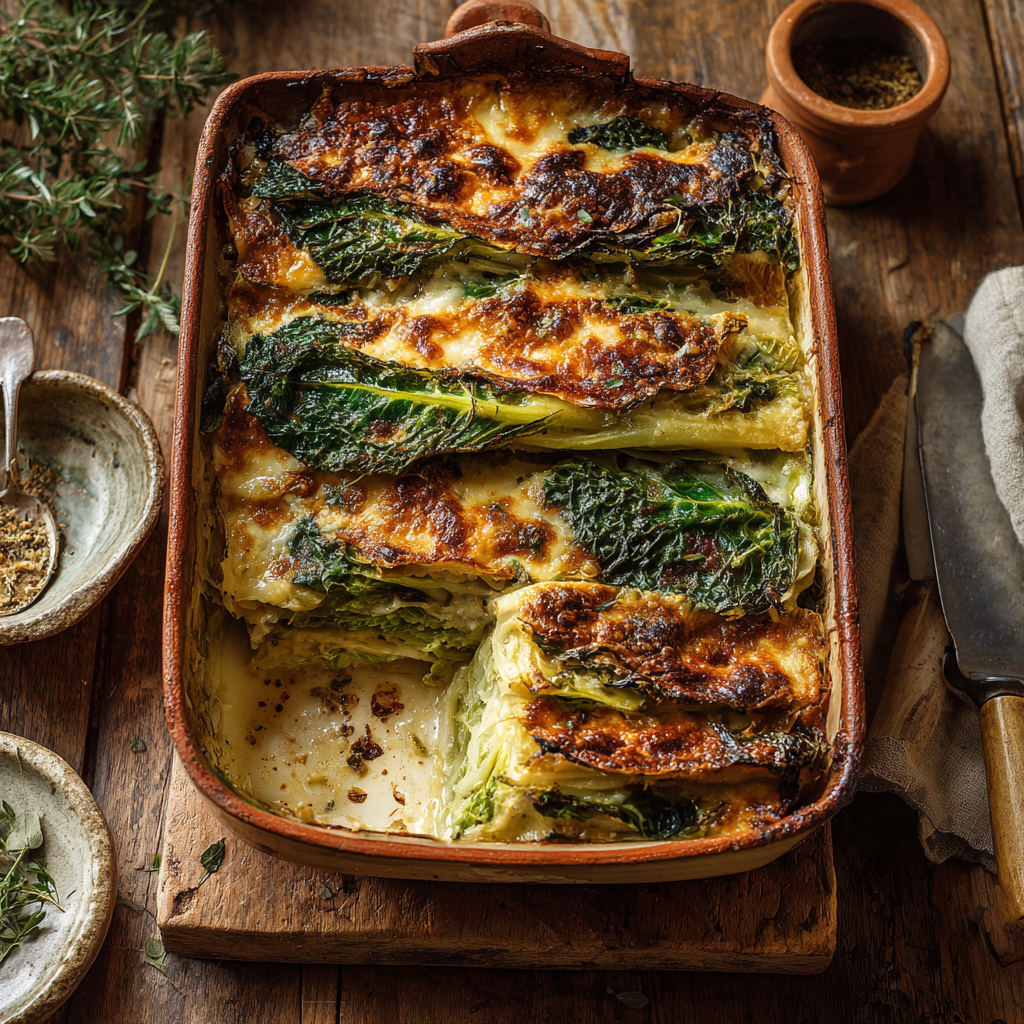
Seupa à la Vapelenentse (Zuppa Valdostana)
Ingredients
Method
- Remove tough outer leaves and the core.
- Blanch the leaves in salted boiling water until bright and flexible.
- Drain well.
- Melt some butter in a pan and sauté the cabbage for 2–3 minutes until lightly sweet and tender, not mushy.
- Slice stale rye bread into ½-inch slices.
- Thinly slice Fontina DOP.
- Butter a 9×13-inch baking dish (or 4 small earthenware dishes).
- Lay bread slices on the bottom.
- Ladle hot stock over the bread—moisten well but don’t soak it.
- Add a layer of sautéed cabbage.
- Add a layer of Fontina slices.
- Repeat the layers a second time.
- After the top bread layer, add a little more stock so the liquid comes close to the top bread but leaves the cheese on top exposed.
- Bake at 180°C / 355°F for about 15 minutes.
- If edges look dry, add a splash of hot stock and bake a few more minutes.
- Broil for 2–5 minutes, watching closely until the cheese blisters and turns deep golden.
- Let it rest for 1–2 minutes so the layers settle.
- Slice and serve hot.
- Finish with a little black pepper, or melted butter on top if you want extra richness.
Notes
- Use real Fontina DOP if possible. It gives that nutty, earthy flavor that makes this dish taste truly Alpine.
- Bread must be stale so it drinks the stock without falling apart. If your bread is fresh, toast it lightly.
- Heat your stock. Pouring hot broth keeps the bake warming evenly.
- Don’t drown the bread. Add just enough stock that some liquid moves when you tilt the pan, but the top should stay exposed so it browns.
- Cabbage texture matters. Blanching removes bitterness; a quick sauté adds sweetness and keeps it from turning watery in the bake.
- Broiling is optional but worth it. Those golden cheese blisters make the whole dish feel cozy and rustic.