.Jump to Recipe
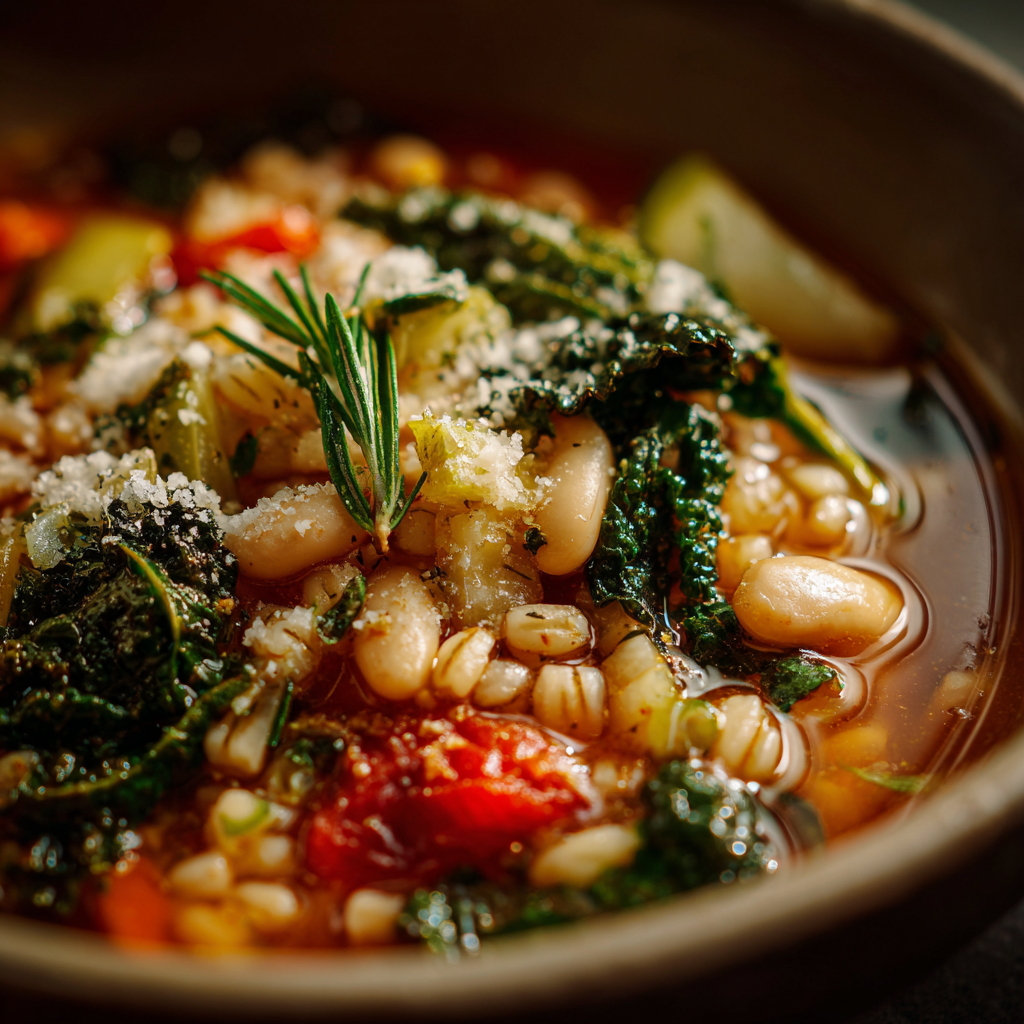
I pull my Dutch oven onto the stove, slice an honest soffritto, and let the kitchen fill with warm onion, carrot, and celery scents that feel like home. The pot soon hums as pearl grains give a gentle chew and the tomato base brightens each spoonful; I always finish a bowl with good olive oil and a scatter of Parmigiano for shine and comfort.
Barley brings fiber, protein, and small but useful micronutrients, and I note that pearl is polished while hulled keeps more of the outer layer. That difference matters for texture and cooking time, so I often cook pearl right in the pot for a weeknight version or pre-cook hulled when I want extra bite.
The method is forgiving: even cuts, a steady simmer, and patient seasoning make the flavor settle. This pot freezes well for up to three months if cooled and sealed, and it almost always tastes better the next day as the broth rounds.
Key Takeaways
- Use a Dutch oven and a sharp chef’s knife to speed prep and keep even cooking.
- Pearl cooks faster; hulled keeps more fiber and a chewier texture.
- Build flavor with soffritto, tomato, parsley, and a finish of Parmigiano and olive oil.
- Adjust thickness by adding broth or simmering longer; texture should be spoonable.
- Cool fully and store airtight to freeze up to about three months.
Why this hearty vegetable barley soup belongs in your winter rotation
When the weather turns gray, I start a pot that fills the house and the day with steady, nourishing smell. This is not fussy cooking; it’s built on a simple soffritto of onion, carrots, and celery sweated in olive oil to lay a deep, savory base.
Barley brings a gentle nuttiness and a pleasant chew that makes each bowl feel filling without cream. Its fiber helps the meal sustain you on cold afternoons, and the grains soak up broth as they rest so leftovers taste fuller the next day.
The method is forgiving and time-friendly. Even cuts and a slow sauté release aromatics that deepen flavor before any liquid goes in. The result is a balanced vegetable soup that travels well in a thermos and feels right for lunch or dinner.
- Comfort from grains and greens, not heaviness.
- Leftovers improve—flavors marry over a day.
- Easy to scale and adapt; a true vegetable barley soup for busy nights.
Italian barley soup with vegetables recipe
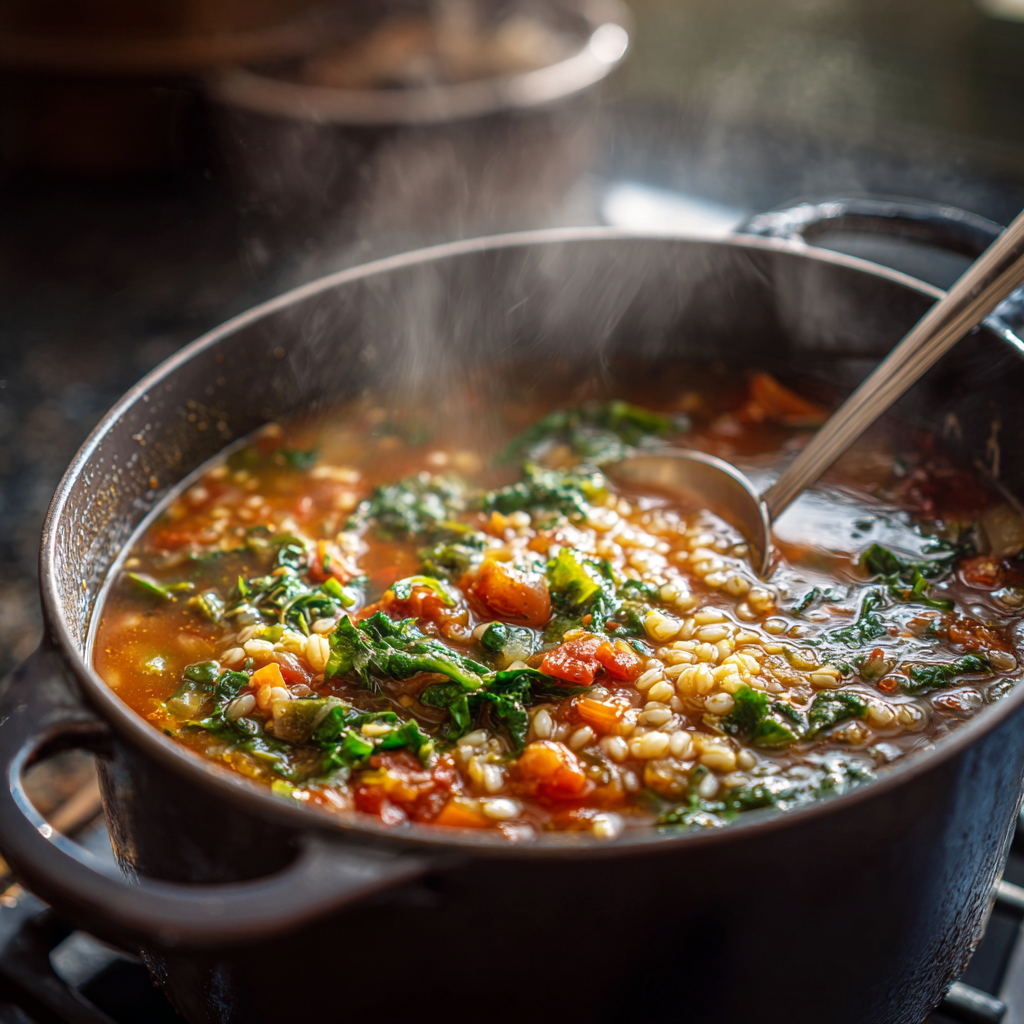
On cold evenings I start by chopping an honest soffritto and warming a splash of olive oil until it smells sweet and cozy. A focused prep keeps the hands busy and the pot ready for a long, gentle simmer.
At-a-glance: prep time, cook time, total time, servings
| Item | Amount | Notes |
|---|---|---|
| Prep time | 20–30 minutes | Chop onion, celery, carrots; measure cups and tablespoons |
| Cook time | 40–50 minutes | Depends on pearl vs. hulled grain and method |
| Total time | 60–80 minutes | Includes brief prep and simmer |
| Servings | About 6 | Portion by cup; makes good leftovers |
What makes it Italian
- Olive oil and a soft soffritto (onion, celery, carrot) build a savory base.
- Garlic and tomato paste join diced tomato for a bright, tomato-kissed broth.
- Parsley and Parmigiano-Reggiano finish each bowl for fresh herb lift and umami.
Plan a short prep, a patient simmer, and a final drizzle of extra-virgin olive. I keep garlic present but balanced, and I recommend measuring cups and tablespoons for steady results.
Ingredients you’ll need for bold flavor and great texture
I start by laying out the core ingredients so each element has a clear job in the pot. This keeps texture balanced and seasoning focused.
Barley and broth
Choose pearl for a tender finish or pot barley (often called hulled) if you want a chewier bite; timing changes accordingly. Use vegetable broth for a meatless version or chicken broth for a classic farmhouse base. Low- or no-salt broth lets you season precisely with teaspoon measures of salt and pepper later.
Vegetable lineup
Build the soffritto: onion, carrots, and celery form the savory backbone. Add potatoes for body; zucchini and cabbage or leeks bring layered sweetness and texture. Aim for even dice so everything cooks at the same pace.
Aromatics, tomato base, and protein
Use cloves garlic, Italian seasoning, and a bay leaf to deepen the broth. Combine diced tomato and tomato paste for color and tang; a splash of tomato or vegetable juice (V‑8) can boost depth. Stir in cannellini or borlotti beans near the end so the beans keep their shape and creaminess. Add greens like spinach or kale last for a fresh lift.
| Ingredient | Role | Texture/timing |
|---|---|---|
| Pearl or pot barley | Grain base | Pearl cooks faster; pot barley stays toothsome |
| Vegetable or chicken broth | Flavor foundation | Low-salt gives control; add in cups to reach desired thickness |
| Beans & greens | Protein and freshness | Beans added late; greens stirred in at finish |
Finish each bowl with fresh parsley, a drizzle of extra-virgin olive oil, and a shower of Parmigiano-Reggiano. For a fuller primer on technique and timing, see my minestrone guide: minestrone guide.
Step-by-step: from sauté to simmer for a cozy pot of soup
I warm a heavy pot and add a splash of oil, then gently sweat the soffritto over medium heat. Let the onion, carrot, and celery soften until they are glossy and sweet—about 5–8 minutes—so the base tastes rounded and calm.
Sweat the soffritto in olive oil over medium heat
Start on medium heat so the vegetables release moisture without browning. Stir every minute or two to keep even cooking and to prevent sticking.
Bloom tomato paste and garlic for deep, savory notes
Push the softened soffritto to one side, add a bit more oil if needed, then stir in tomato paste and minced garlic for about a minute. This blooming step hits the flavor hard and deepens the broth color without burning the cloves.
Add vegetables and bring to a boil, then reduce heat to simmer
Drop in the remaining vegetables, stir to coat, and pour in the broth. Bring to a gentle boil, then immediately lower the heat to maintain a steady simmer so flavors meld slowly.
Barley options: soak, parboil, or cook directly in the pot
Soak grains 30 minutes to shorten time, or parboil in salted water to hold an al dente bite. Cooking them directly in the pot is the easiest path if you have the time.
Stir in beans at the end to keep their texture intact
Add canned or pre-cooked beans in the last few minutes so they warm through without breaking. Then taste and season in layers with salt and pepper to reach a balanced finish.
- Watch the minutes—barley and potatoes should be tender but not mushy.
- If the pot feels thick, loosen with a splash of broth; if thin, simmer uncovered to reduce.
- Off heat, fold in chopped greens and parsley so they wilt in residual warmth.
| Step | Timing | Cooker’s tip |
|---|---|---|
| Sweat soffritto | 5–8 minutes | Medium heat; keep stirring to avoid color |
| Bloom paste & garlic | ~1 minute | Low contact time prevents bitter burnt notes |
| Grain options | Soak 30 min / parboil 10–15 min / cook in pot 40–50 min | Adjust salt in stages and watch minutes for desired bite |
Smart variations and substitutions to match your pantry
I like to nudge the pot toward what I have on hand, keeping texture and timing in mind so each bowl stays true to the original character.
For a gluten-free vegetable barley soup swap, use short-grain brown rice or quinoa. Brown rice needs about 35–45 minutes to soften; quinoa cooks in 12–15 minutes. Watch liquid and add a ladle of broth if the pot tightens before the grain is done.
Farro makes a hearty alternative that pairs beautifully with a tomato-forward broth. Plan on an extra 5–10 minutes versus pearl grain so it keeps a pleasant chew.
- Mix bell peppers, yellow squash, mushrooms, cabbage, or leeks; keep cuts uniform so everything cooks evenly.
- Use cannellini or borlotti beans—or a mix. Canned beans save time; home-cooked beans add depth if you plan ahead.
- If freezing, skip potatoes or cook them separately and add when reheating to avoid mushiness.
- For spice, start with black pepper and add a pinch of cayenne if you want warmth.
| Swap | Timing | Texture tip |
|---|---|---|
| Short-grain brown rice | 35–45 min | Tender but not pasty; add broth as needed |
| Quinoa | 12–15 min | Light, fluffy; needs less simmering time |
| Farro | 45–55 min | Nutty, chewy; give a few extra minutes vs. pearl |
| Cannellini / Borlotti beans | Use canned or cook 1–2 hrs if dry | Add canned near the end; home-cooked can simmer longer |
No matter the swap, I finish each bowl with a drizzle of olive oil, fresh parsley, and a grating of Parmigiano so the final lift stays familiar and bright.
Make-ahead, storage, and freezer notes you can trust
When I plan make-ahead meals, I aim to lock in flavor and keep safety simple for busy nights. Follow a few clear steps and your leftovers will taste bright and stay safe.
Better the next day
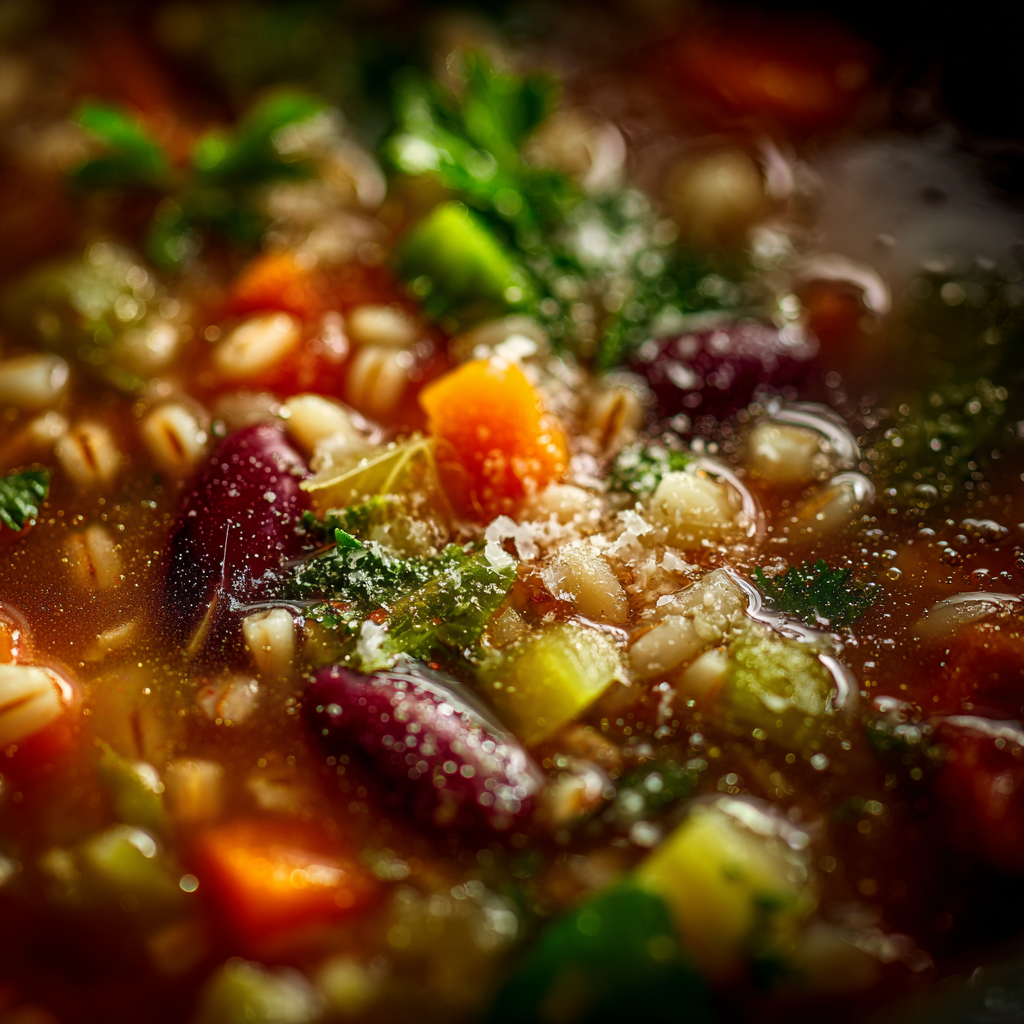
This pot often tastes best after a night in the refrigerator. The grains and vegetables share their flavors and the broth rounds into something richer.
Refrigerator window
Chill quickly, then store in airtight containers in the refrigerator for 2-4 days to keep quality high and bacteria growth low.
Freezer guidance
Cool completely before packing into freezer-safe containers. Freeze portions for up to 2-3 months; label each jar with date and contents.
Reheating tips & texture control
Reheat gently on the stovetop over medium heat, stirring so grains warm evenly. If the pot is thick after chilling, loosen the texture with a few cups of vegetable broth until it feels right.
- Skip potatoes if you plan to freeze; they can soften. Add fresh ones when reheating.
- Taste and adjust salt after reheating—cold storage can mute seasoning.
- If you thin it too much, simmer uncovered for a few minutes to concentrate back to a cozy finish.
| Storage | Duration | Tip |
|---|---|---|
| Refrigerator | 2–4 days | Use airtight containers; cool quickly before sealing |
| Freezer | Up to 2–3 months | Portion, label, and omit fragile potatoes before freezing |
| Reheat | Minutes on stovetop | Medium heat; stir and add broth as needed for best texture |
Serving ideas that make every bowl feel special
I love the moment when bowls are warmed and the table is set; a simple finish makes each serving feel like a small celebration. A bright drizzle, a snowy grating of cheese, and a scatter of parsley lift the aroma and the mood.
Finish like a classic: olive oil, Parmigiano, and parsley
I ladle the soup into warmed bowls, then add a generous drizzle of olive oil and a shower of Parmigiano-Reggiano. A pinch of chopped parsley adds color and freshness. For a touch of brightness, a squeeze of lemon at the table wakes the flavors.
Pairings to round the meal
Crusty bread is a must; it soaks up broth and nudges the grains in each spoonful. Herb biscuits offer buttery contrast, while a golden grilled cheese gives gooey comfort and crisp edges.
- I set out a small cup of extra oil and a microplane so guests can finish their bowls to taste.
- A final grind of black pepper or a pinch of chili adds gentle warmth without masking the core savory notes.
| Side | Why it works | Serving tip |
|---|---|---|
| Crusty bread | Soaks broth and adds texture | Serve sliced; toast cut sides for crunch |
| Herb biscuits | Buttery contrast and herb lift | Warm in oven for 5 minutes before serving |
| Grilled cheese | Rich, melty partner for a cozy meal | Cut into triangles for easy dipping |
| Extra-virgin olive oil | Adds fruitiness and silk on the surface | Offer in a small cup at the table |
Nutrition spotlight: fiber, protein, and cold-weather nourishment
When I think about what to serve on a gray afternoon, I aim for a bowl that comforts and fuels. This version delivers steady energy, warming mouthfeel, and clear nutritional benefits without fuss.
Why the grain shines
The grain brings generous fiber that helps you feel full longer and supports steady blood sugar. Its chewy texture adds body so you don’t need cream to feel satisfied.
Vegetable power and plant protein
A colorful mix of vegetables supplies vitamins A and C plus minerals and phytonutrients. Beans add plant protein and extra fiber, so the pot becomes a complete, nourishing meal.
Sodium-savvy finishing
I use low- or no-salt broth so I can season at the end. That way a careful pinch of salt restores brightness without overdoing sodium after chilling or reheating.
- Barley’s fiber supports steady energy and a hearty texture.
- Vibrant vegetables bring vitamins and color in a tomato-forward broth.
- Beans add protein and more fiber to turn this into a meal.
- Use low-salt broth; taste after reheating—grains absorb seasoning over time.
- Garlic, parsley, and olive oil boost antioxidants and aromatic flavor.
| Nutrient focus | Source | Benefit |
|---|---|---|
| Fiber | Grain and beans | Sustained fullness and gut support |
| Protein | Beans and grains | Plant-based muscle maintenance |
| Vitamins & minerals | Mixed vegetables | Immune and cellular support |
In short, this vegetable barley soup balances grains, legumes, and produce so one bowl feels warming and complete. I like to finish gently and taste as I go for best results.
Tools and timing for stress-free cooking
Gather a sturdy pot, a sharp chef’s knife, a solid cutting board, and a calm rhythm before you begin. Good tools and clear timing make the process easy and enjoyable.
What to use
I reach for a heavy pot or Dutch oven so heat stays steady and the bottom resists scorching during long simmering. A sharp chef’s knife and a sturdy cutting board make quick, safe work of even dice.
Timing cues
Use medium heat to sweat the soffritto for about 5–8 minutes. After you add liquid, bring to a boil, then immediately lower the flame to a gentle simmer for roughly 40–50 minutes.
- Plan a relaxed rhythm: 5–8 minutes for the sauté, then 40–50 minutes for grains and potatoes to soften.
- Keep measuring gear handy—a cup for liquids, tablespoons and teaspoons for seasonings—so you can adjust on the fly.
- Check doneness by tasting a grain; it should be tender with a slight bite. If the pot thickens, add a splash of broth and adjust heat as needed.
| Tool | Why | Quick tip |
|---|---|---|
| Heavy pot | Even heat distribution | Preheat before adding oil |
| Chef’s knife | Speed and safety | Keep it sharp |
| Measuring tools | Consistent flavor | Use a cup, tablespoons, teaspoon |
For a related method on a classic pot meal, see my pasta e fagioli guide for extra tips and timing notes.
Bring it to the table: ladle, garnish, and save or print this recipe
Ladle a steaming portion into warmed bowls and let a final drizzle of olive oil and a snowy grating of Parmigiano finish each serving. Scatter chopped parsley for color and bring the pot to the table so everyone can help themselves to seconds.
If you cooked the grain separately, stir it in just before serving to keep the broth supple and the texture perfect. I love hearing how you adapt this — tell me which vegetable choices you made or how you adjusted the thickness and chew.
Save or print this print recipe so it’s ready when the weather turns chilly. Pin it to your winter board; this is a reliable soup recipe for weeknights, snow days, and casual dinners with friends. Serve with pride and enjoy!
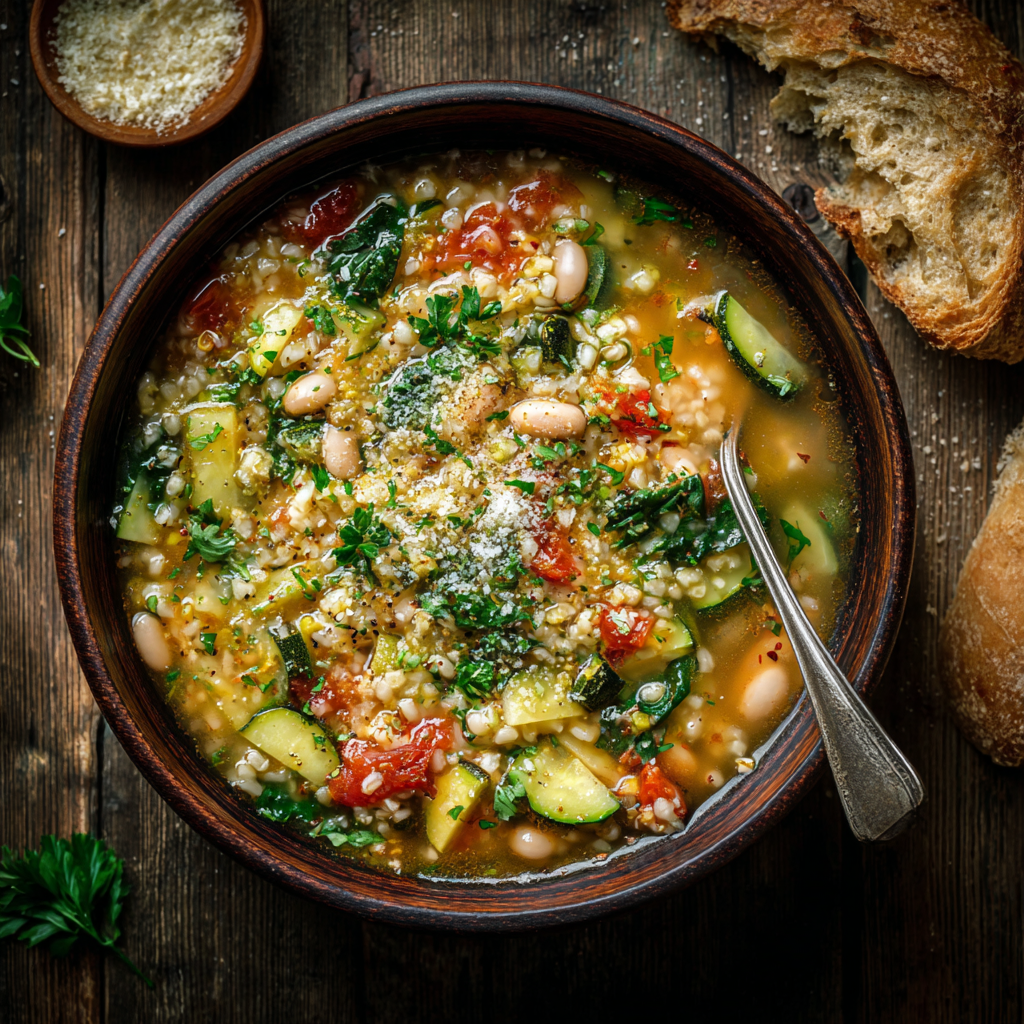
Italian Vegetable Barley Soup
Ingredients
Method
- Warm olive oil in a Dutch oven over medium heat. Add onion, carrots, and celery. Cook until soft, glossy, and sweet-smelling. Don’t let them brown.
- Push the vegetables to one side. Add a little more oil if needed. Stir in the tomato paste and garlic for about a minute until fragrant.
- Stir in potatoes, zucchini, cabbage (or leeks). Pour in the broth and add the diced tomatoes, Italian seasoning, and bay leaf. Bring to a gentle boil.
- Stir in the barley.
- Pearl barley: cooks in the pot, ~40–50 min.
- Pot/hulled barley: may need longer or a short pre-soak.
- Lower heat to a steady simmer and cook until barley and potatoes are tender.
- Add the cannellini or borlotti beans during the last few minutes so they warm through without breaking.
- Turn off the heat. Stir in spinach or kale so it wilts gently. Add parsley.
- Season with salt and pepper. Add broth if it’s too thick, or simmer a few minutes uncovered if too thin.
- Ladle into warm bowls. Drizzle with olive oil and top with Parmigiano. Add a squeeze of lemon if you like brightness.
Notes
- Pearl barley cooks faster; hulled barley gives more chew.
- If planning to freeze, skip potatoes because they can turn mushy.
- This soup tastes even better the next day as the grains soak up flavor.
- Add broth as needed when reheating—barley thickens the soup naturally.
- A drizzle of good olive oil at the end makes a big difference.