
Jump to Recipe
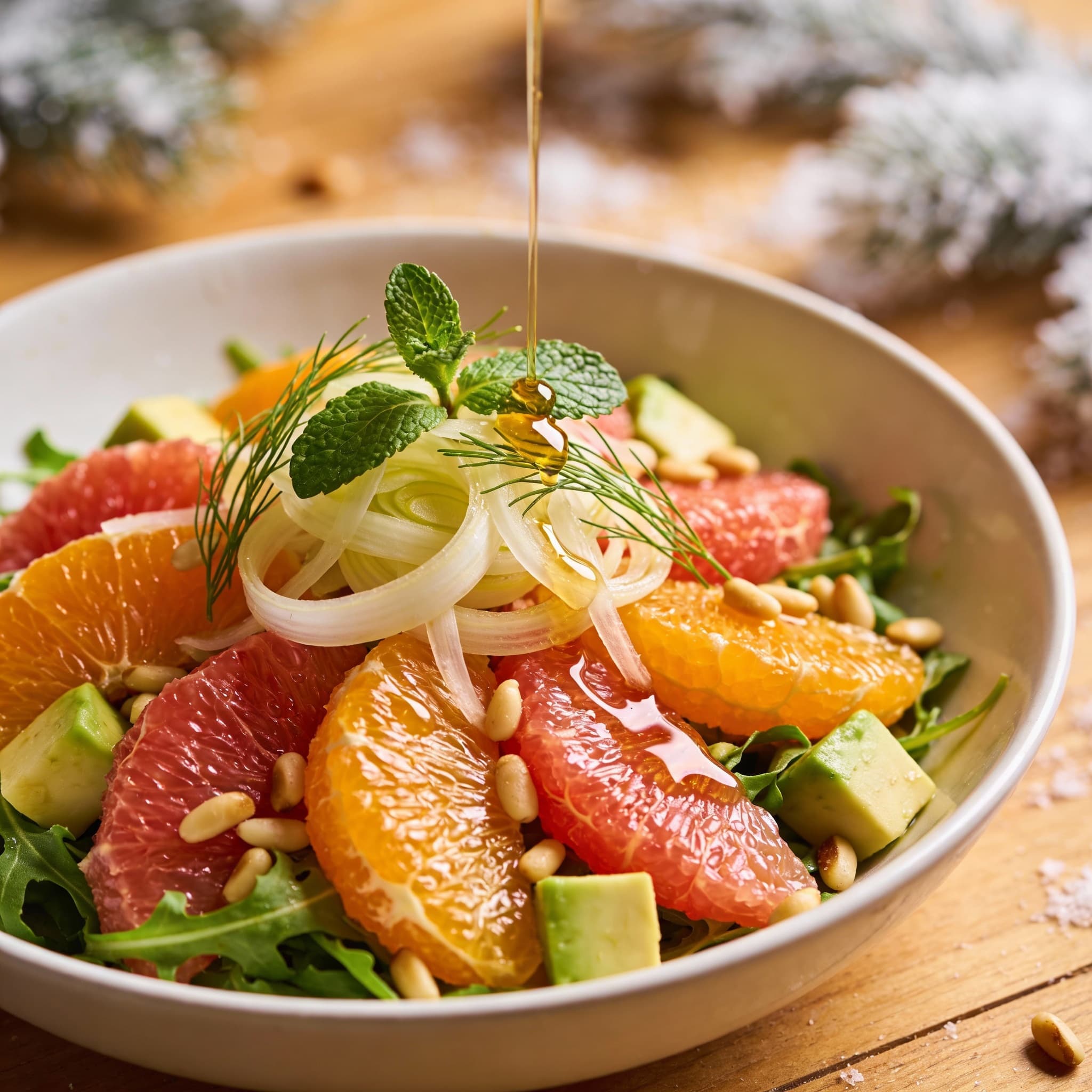
I pull a bowl to the table and slice bright fruit that smells like morning light. The anise of shaved fennel meets salty pecorino, toasted nuts, and a lemon-forward vinaigrette, and the kitchen fills with simple joy.
I built this winter citrus salad with fennel recipe around peak-season oranges and crisp fennel, aiming for balance: sweet-tart fruit, bitter radicchio, creamy avocado, and crunchy pine nuts. I’ll show you how to segment fruit cleanly so the juice stays on the plate, how to slice fennel paper-thin so it remains crisp, and how to whisk a dressing that clings rather than pools.
Assemble in layers and season between them for even seasoning and the best texture. Small touches—toast the nuts, shave pecorino thin, and add mint at the end—lift the whole dish into something both homey and elegant.
Key Takeaways
- Use peak-season fruit and remove pith for bright, clean bites.
- Slice fennel thin and layer ingredients, seasoning each layer.
- Make a lemon-forward vinaigrette that coats, not floods.
- Toast pine nuts and shave pecorino for savory crunch.
- This approach works as a side or a light main; swap proteins or go vegan.
Why this salad shines in winter
I love how sun-soaked oranges and grapefruit arrive at the market like tiny celebrations. In the cold months these fruits concentrate sugar and acid, so a few slices deliver bold flavor and juicy texture that other produce often can’t match.
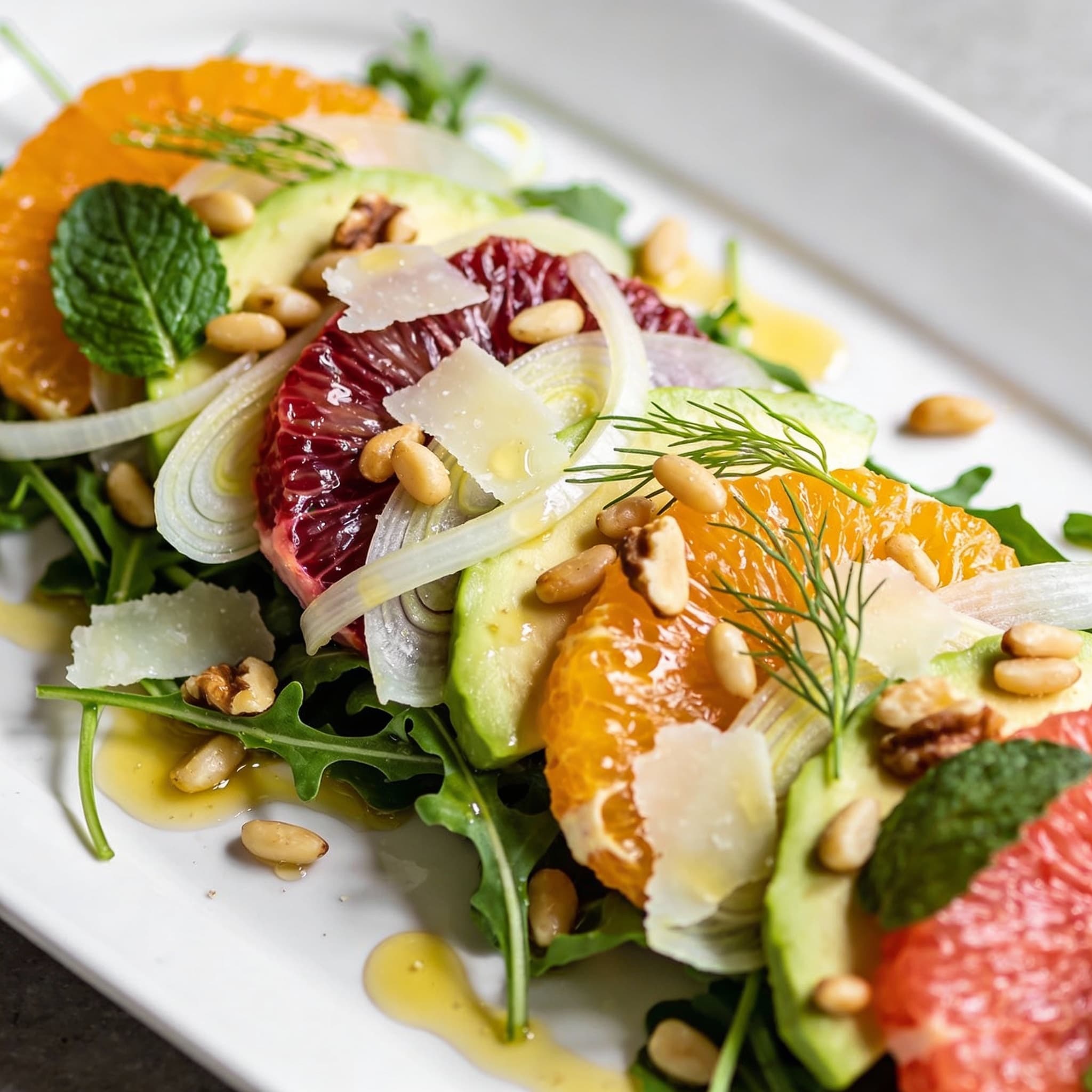
That bright fruit does the heavy lifting. Oranges bring layered aromatics and grapefruit gives a tart lift that cuts through rich mains. The result feels fresh and light on the plate, not heavy or cloying.
Bitter greens and crisp fennel balance sweetness. I layer and season between those layers so each bite reads as a chorus, not a single note. A light hand with dressing lets the produce sing—less oil, more bright juice.
- Peak-season fruit equals vivid color and better value.
- Mixed oranges and grapefruit add eye appeal and complexity.
- Simple technique and quality produce follow cucina povera—great taste from minimal fuss.
| Variety | Color | Flavor |
|---|---|---|
| Navel | Bright orange | Sweet, classic |
| Blood | Deep red | Rich, berry notes |
| Grapefruit | Pale pink | Tart, aromatic |
Choose your produce like a pro
I shop the market by feel and scent, choosing fruit that smells alive and feels heavy in my hand. That quick check tells me more than a glossy peel ever will.
Citrus variety guide
I favor a trio: navel for steady sweetness, cara cara for a rosy hue and low bitterness, and a touch of blood oranges for jammy color and perfume. Mixing navel oranges, cara cara, and a little blood gives both color and balance.
| Type | Color | Flavor note |
|---|---|---|
| Navel | Bright orange | Sweet, classic |
| Cara Cara | Pink-tinged | Subtly sweet, low bitter |
| Blood orange | Deep red | Berry-like, aromatic |
Fennel bulb and fronds
Choose a firm pale bulb with fresh feathery fronds. Trim any bruised outer layers, slice the bulb paper-thin for crunch, and save the fronds to scatter like herb—bright and anise-kissed.
| Part | Use | Texture/aroma |
|---|---|---|
| Bulb | Sliced thin | Crisp, mild anise |
| Fronds | Garnish | Herb-like, fresh |
| Trim | Discard | Wilted or bruised |
Greens and extras that play well
- Arugula for peppery contrast, mint to lift each bite.
- Shaved pecorino and toasted nuts for savory crunch; pine nuts and almonds work well.
- Ripe avocado adds creamy balance—choose fruit that yields slightly to gentle pressure.
Prep like a chef for peak flavor and texture
Start by giving your fruit a clean, confident cut—this tiny ritual sets the tone for every bite. Clear steps save time and keep the plate tidy. I walk you through safe, repeatable technique so each element stays bright and crisp.
How to segment citrus and remove the white pith
Trim both ends of an orange so it stands flat. From top to bottom, slice off the peel and all visible pith so the flesh looks smooth.
Hold the fruit over a bowl and cut along each membrane to free neat segments. Drop them into the bowl and squeeze the leftover membrane to gather every last drop of juice for the dressing.
If a piece crumbles, swap it out—juicy segments cut clean and yield more juice. Remove any thin pith ribbons on segments; that small step brightens the final plate.
How to slice sliced fennel paper-thin
Trim stalks and root, halve the bulb, then lay flat for safety. Use a mandoline for whisper-thin slices or a sharp knife for control; aim for delicate sliced fennel that adds crunch without bulk.
- Save fronds as herbs; stalks make a fragrant stock.
- Prep these elements a few minutes ahead and keep them chilled in a covered bowl until assembly.
For a full guide on the classic pairing, see my insalata di finocchi e arance.
Step-by-step: winter citrus salad with fennel recipe
I make the vinaigrette first so every ingredient gets a light, even coating. In a small bowl, whisk the juice caught from segmenting, a squeeze of lemon, a teaspoon of Dijon (or a touch of honey), and 1/4 cup good olive oil until glossy. Season lightly with salt and pepper.
Whisk a citrus-forward vinaigrette
- Whisk together 2 tablespoons citrus juice, 1 tablespoon lemon juice, 1 teaspoon Dijon, and 1/4 cup olive oil until emulsified.
- Adjust seasoning; set the bowl to the side while you gather ingredients.
- Prepare ingredients: segments, thinly sliced fennel, a handful of arugula, avocado, shaved pecorino, and toasted nuts.
- On a platter, lay a base of greens and add a spoon or two of dressing. Scatter fennel and a few segments for balance.
- Season each layer with a pinch of salt. Repeat layering, then tuck in avocado slices and finish with pecorino and nuts.
- Start with about 1/4 cup of vinaigrette. Taste and tweak — a squeeze more juice brightens, a thread of olive oil softens.
- Serve right away. This takes little time once prep is done; dress just before serving for the best texture.
| Step | Portion | Time |
|---|---|---|
| Make vinaigrette | 1/4 cup | 2 minutes |
| Segment fruit & slice | 2–3 oranges, halved for segments | 5 minutes |
| Assemble layers | Serves 4 | 3–5 minutes |
| Finish & serve | Top per plate | 1 minute |
Smart swaps and delicious add-ins
A few smart swaps turn this bright bowl into a hearty, weeknight main that still feels light. Think modular: pick one protein, one grain, and one crunchy element so the plate stays balanced and each ingredient can sing.
Protein boosts for a satisfying entrée
I reach for roasted chicken or simply seared salmon most nights; both respect the fruit and shaved bulb without overpowering them. Poached shrimp or flaked tuna add briny sweetness, while chickpeas, tempeh, or firm tofu make the dish plant-forward and filling.
Grains and crunch
Add cooked farro or quinoa to turn this into a true piatto unico—their nutty chew soaks up the vinaigrette. For crunch, toast pistachios, almonds, or pine nuts to unlock aroma and texture; they keep each bite lively.
Vegan and dairy-free paths
Skip pecorino and add capers or Castelvetrano olives for a salty lift. Swap honey in the dressing for agave, and tuck extra avocado for creaminess. Keep a handful of arugula to preserve peppery balance when bulking up the bowl.
- Seafood pairing: a touch of grapefruit brightens shrimp and salmon.
- Modular approach: choose one item from protein, grain, and crunch lanes.
- Let the fruit lead—use add-ins to support texture and savor, not to crowd flavors.
| Lane | Good choices | Why |
|---|---|---|
| Protein | Roasted chicken, salmon, chickpeas | Complements citrus notes and adds satiety |
| Grain | Farro, quinoa | Absorbs dressing and adds chew |
| Crunch | Pistachios, almonds, pine nuts | Toasted for aroma and texture contrast |
Make-ahead, storage, and serving tips
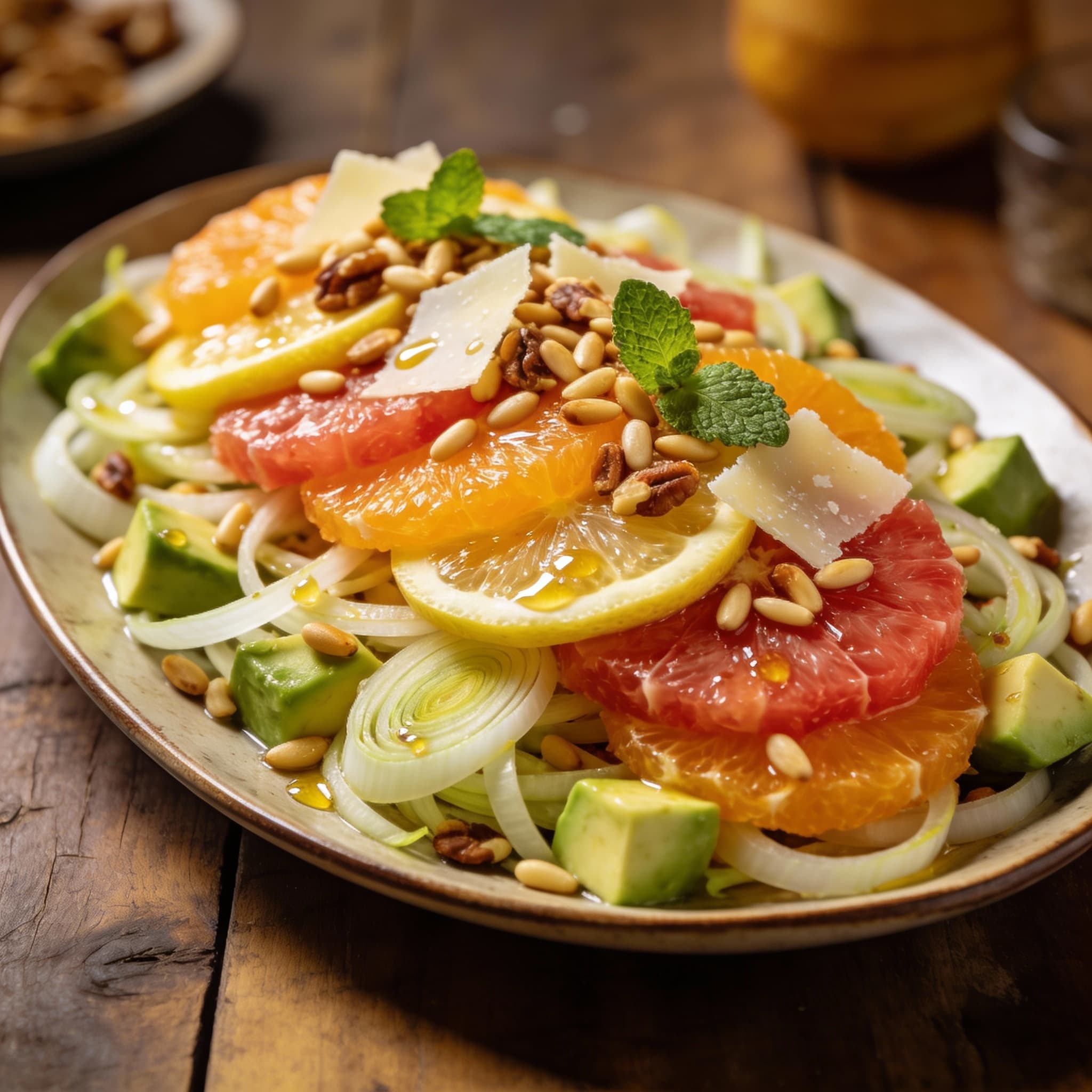
I like to prepare components early so assembly becomes a relaxed, five-minute finish. A short plan buys calm time and lets you enjoy company, not the clock.
Entertaining made easy
Segment fruit and slice fennel up to a day ahead; keep them in separate containers so flavors stay distinct. Whisk dressing in a small jar and chill—bring it to room temperature and shake to re-emulsify just before use.
Storing components and keeping texture
- Keep greens dry: wash, spin, and store in a towel-lined container; moisture dulls crunch.
- Store citrus in a covered bowl with a splash of its own juice to prevent drying and label by time.
- Slice avocado at the last moment; if needed earlier, toss with lemon and press plastic wrap to the surface to slow browning.
- Assemble on a cool platter and dress lightly minutes before guests sit; this preserves structure and sheen.
| Component | Storage | Why |
|---|---|---|
| Segmented fruit | Refrigerate up to 24 hours | Keeps juice fresh and bright |
| Sliced fennel | Refrigerate, separate container | Maintains crisp texture |
| Dressing | Chill in jar, shake before serving | Re-emulsifies quickly |
Serve as a side in shallow bowls for dinner, or mound on a platter family-style. Plan about one cup per person as a side and scale dressing rather than oiling every leaf. A final squeeze of fresh juice and a pinch of salt at the table wakes the whole salad.
Bring it to the table: pairing ideas and final touches
Set the platter down and let the colors do the inviting—this is food that greets the table.
I serve this salad as a side for dinner alongside roasted chicken thighs or grilled salmon; the fruit brightens richer mains and keeps the plate light. At brunch, place it next to a savory quiche or creamy ricotta toast for an instant lift of color and texture.
Just before guests arrive, top each portion with a few mint fronds, a shower of pecorino, and a sprinkle of toasted pistachios. Drizzle a thread of vinaigrette at the table to wake every flavor.
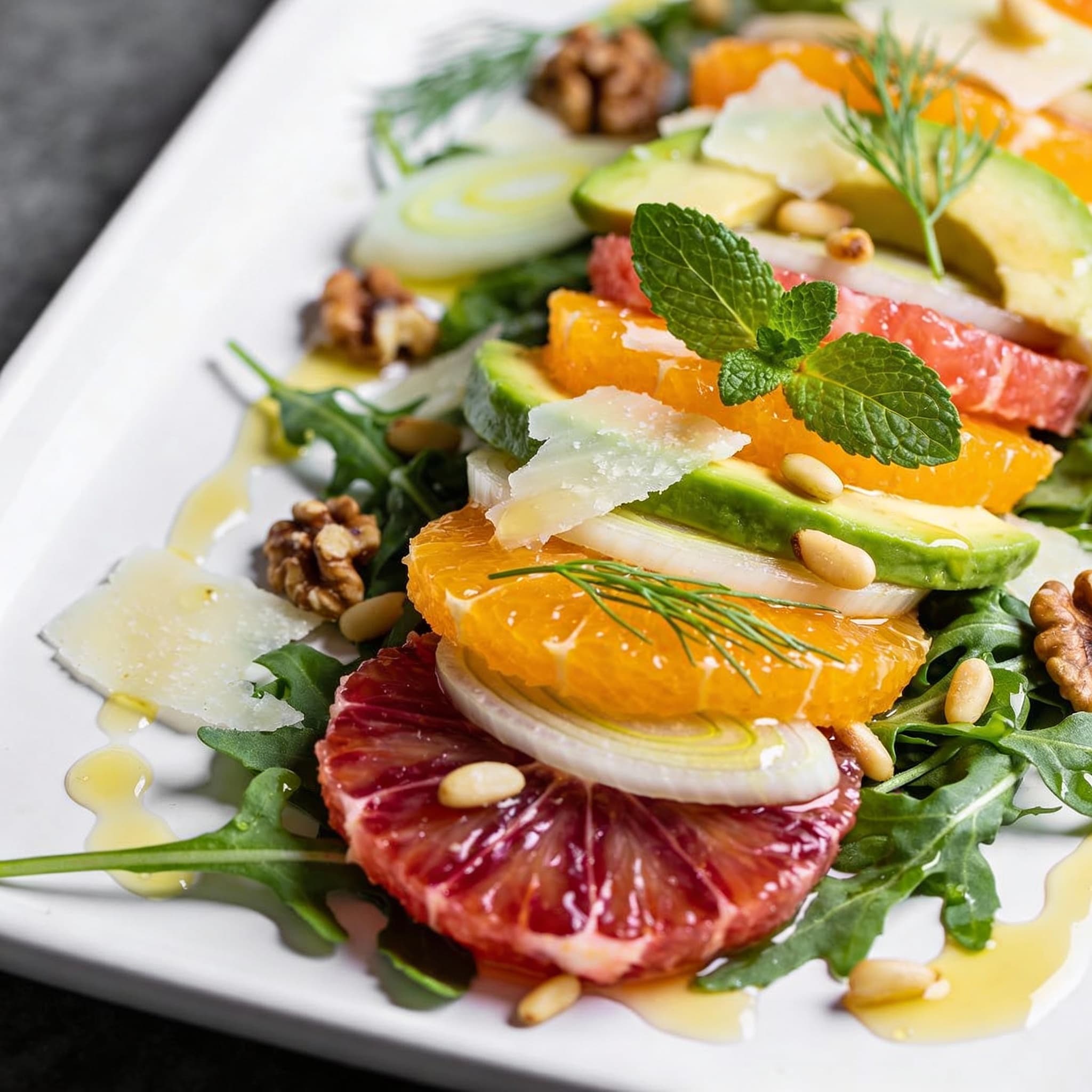
Arrange orange segments in loose circles, tuck slices and fronds between them, and finish with a few pink grapefruit crescents for a chic, slightly bitter note. Buon appetito—now go plate it and share!
Winter Citrus Salad with Fennel
Ingredients
Method
- In a small bowl, whisk together 2 tablespoons of citrus juice, 1 tablespoon of lemon juice, 1 teaspoon of Dijon mustard, and 1/4 cup of olive oil. Season with salt and pepper, then set aside.
- Trim both ends of each orange and the grapefruit (if using). Slice off the peel and all visible pith. Holding the fruit over a bowl, cut along the membranes to release the segments. Squeeze any remaining juice from the membranes and set aside.
- Trim the stalks and root of the fennel bulb. Halve the bulb and lay it flat. Using a sharp knife or mandoline, slice the fennel paper-thin. Save the fronds for garnish.
- On a large platter, layer a base of arugula and drizzle with a spoonful of the vinaigrette. Add a layer of fennel slices and citrus segments. Season with a pinch of salt. Repeat layering, adding avocado slices, shaved pecorino, and toasted pine nuts.
- Drizzle any remaining vinaigrette over the top. Garnish with mint leaves and a few fennel fronds. Serve immediately.
Notes
- Smart Swaps: To make this salad more substantial, you can add proteins like roasted chicken, grilled salmon, or chickpeas for a vegan option.
- Grains: For a heartier meal, consider adding farro or quinoa.
- Storage: Prepare components ahead of time, but assemble and dress the salad just before serving to maintain freshness and texture.