
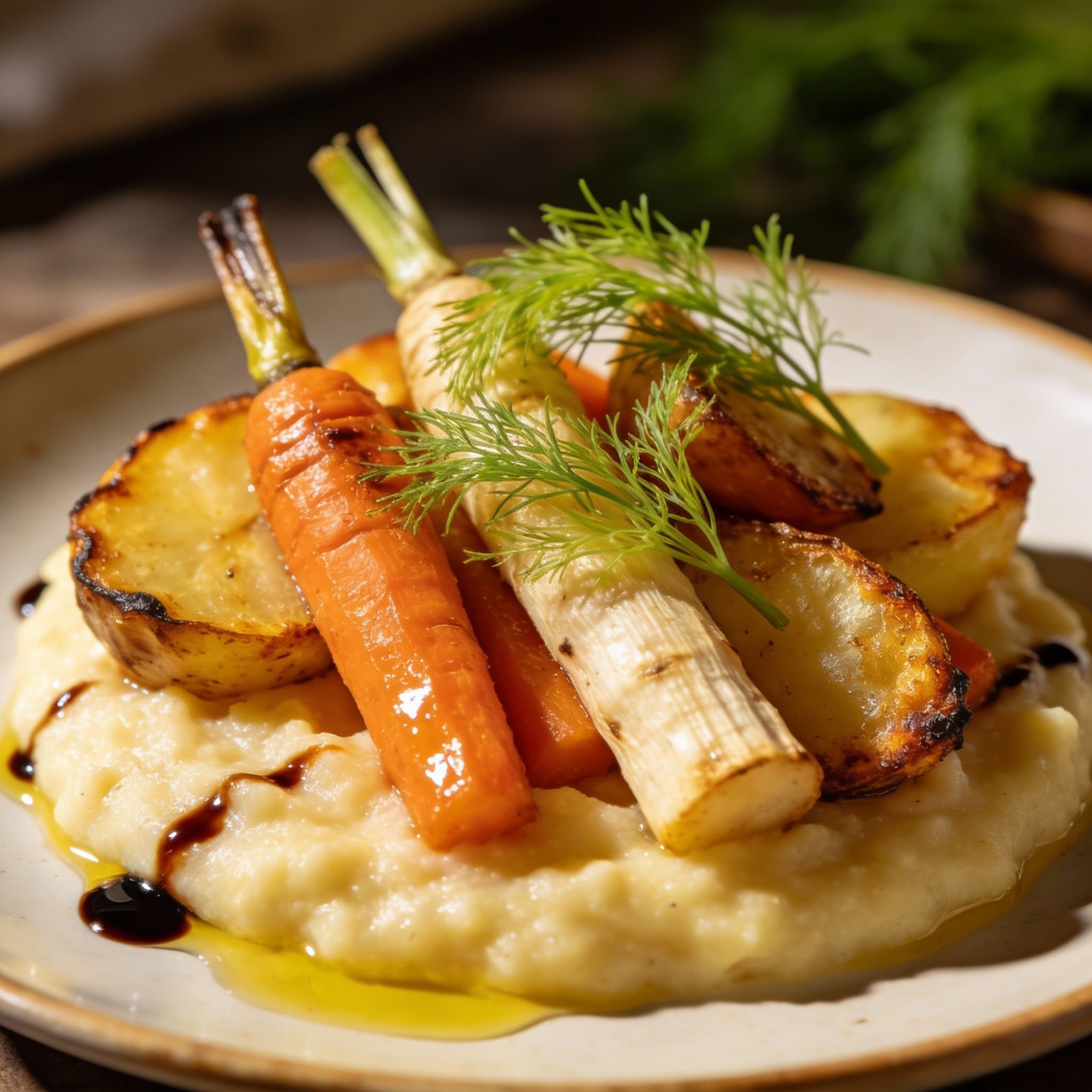
Jump to Recipe
I remember the first time I learned to coax sweet, caramel edges from humble chunks on a hot pan; the house filled with warm, savory air and the kind of comfort that asks for good bread and quiet company. I lean on simple tricks—hot oven, a preheated sheet, and a slick of extra virgin olive oil—to turn ordinary produce into something soulful and bright.
Cut the pieces roughly 1½ inches so centers stay tender while edges color. Halve shallots lengthwise and keep them attached to the chunks for even roasting. Toss everything with salt, pepper, and olive oil, then roast 30–40 minutes at 425°F, stirring once for even browning.
Finish with a splash of balsamic and chopped fennel fronds; serve with crusty bread and softened garlic to spread. The goal is clear: concentrated flavor, simple technique, and a dish that feels like a Sunday at the cucina.
Key Takeaways
- Preheat a baking sheet and set the oven to 425°F for better browning.
- Cut into 1½-inch chunks for tender centers and caramelized edges.
- Toss with extra virgin olive oil, salt, and pepper before roasting 30–40 minutes.
- Stir once halfway, then finish with balsamic and fresh fennel fronds for brightness.
- Serve with crusty bread and softened garlic to enjoy the full flavor.
A cozy Italian-inspired pan of caramelized veggies, big flavor, minimal effort
I rely on three kitchen workhorses— a roomy bowl, a heavy sheet, and a very hot oven—to make magic with minimal fuss. Over years of dinners I learned that good tools let heat do the work while I relax and taste as I go.
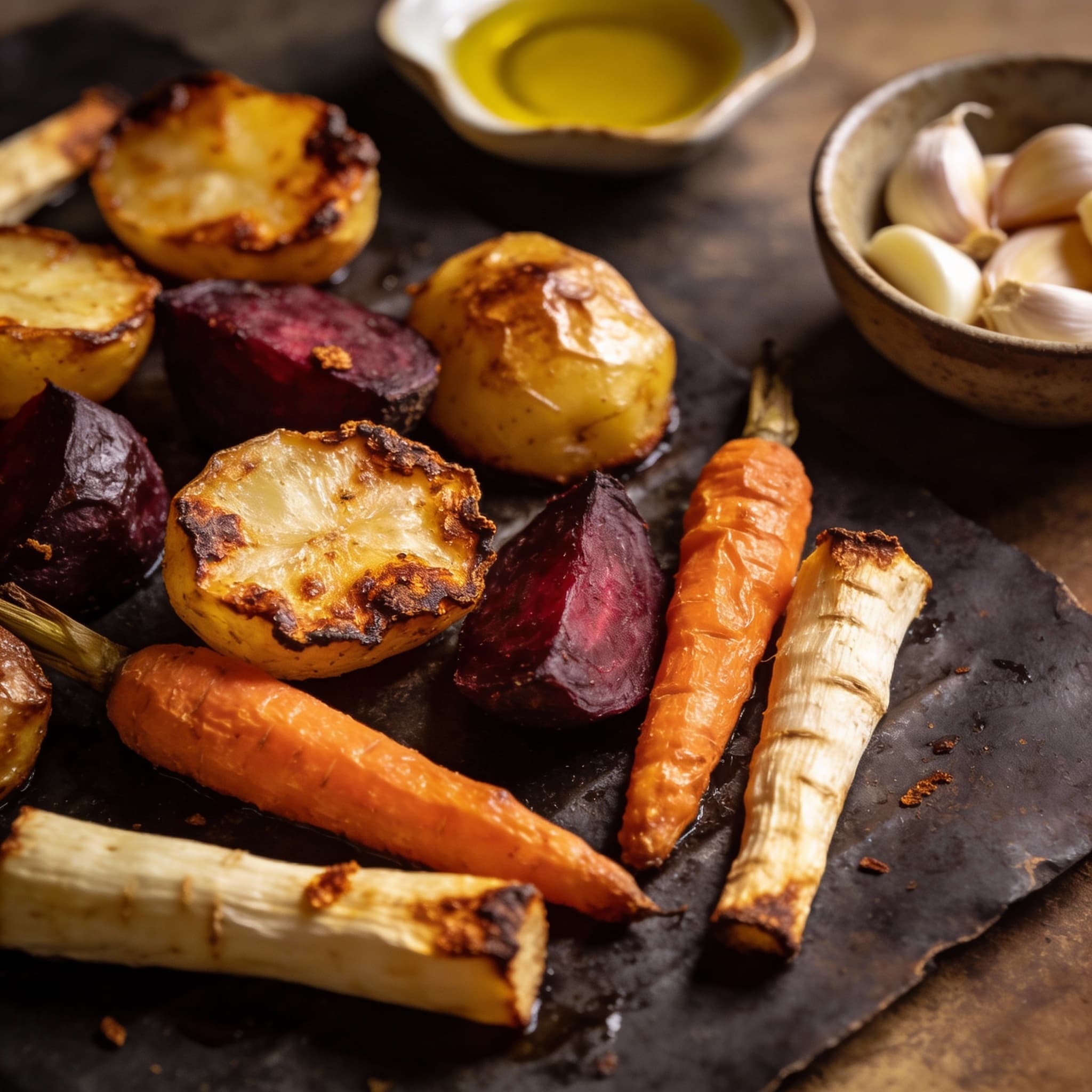
The dark baking sheet matters because it absorbs heat fast. That fast heat creates deeper browning and sweeter flavor on every piece. A large mixing bowl gives you space to coat vegetables evenly so they don’t dry out.
Set the oven high and plan roughly 30–40 minutes. Keep the pan single-layered; crowded pieces steam and won’t get color. If your oven runs uneven, swap or rotate pans about halfway for consistent color and texture.
What I do before the oven
- Dry pieces well so oil clings.
- Cut similar sizes for even cook time.
- Season assertively for bright finish.
| Tool | Why it matters | Effect on final dish |
|---|---|---|
| Dark baking sheet | Absorbs and distributes heat quickly | Deeper browning, sweeter flavor |
| Large mixing bowl | Even coating with oil and seasonings | Uniform color and taste |
| Hot oven (425°F) | Prevents steaming, promotes caramelization | Tender centers, golden edges in ~30–40 minutes |
Recipe at a glance: timing, tools, and texture goals
For a quick, satisfying pan I keep a short checklist: the right bowl, a hot sheet, and an oven that’s already singing. This gives you reliable color, crisp edges, and tender centers with minimal fuss.
What you need
- One large mixing bowl to toss evenly, plus a spare bowl if you like to season in stages.
- One or two dark baking sheet(s) for strong heat transfer; parchment is optional for cleanup.
- Preheat oven to 400–425°F and warm the sheet so pieces sizzle on contact.
Timing and texture
Plan on 30–40 minutes of baking, but start checking at 25 minutes. Tender interiors with bronzed edges are the goal.
- Stir once halfway—only if needed—to expose fresh surfaces without breaking pieces down.
- Leave about a thumb-width between pieces; split onto two sheets if crowded to avoid steaming.
- Use visual cues: items pierce easily, edges are caramelized, shallots collapse and garlic softens.
| Step | Target | Tip |
|---|---|---|
| Preheat | 400–425°F, sheets hot | Preheat oven and sheet for instant browning |
| Bake time | 30–40 minutes | Check at 25 minutes; stir once halfway |
| Spacing | Single layer, thumb-width gaps | Use two sheets if needed to keep color |
Italian herb-forward ingredients that make the pan sing
A well-chosen pantry makes a pan sing long before it hits the oven. I pick firm, heavy-for-size pieces so they hold up and brown evenly.
I build the base with sturdy items: potatoes for creamy heft, carrots and parsnips for sweetness, beets for earthiness, and fennel and shallots for delicate anise and allium perfume.
Whole garlic cloves roast into soft, buttery nuggets. They lose their sharp edge and add a mellow, spreadable sweetness that lifts every bite.
Why extra virgin and how I finish
I use extra virgin olive oil for its fruity, peppery character; it carries rosemary and oregano across the pan. I pair fresh rosemary with dried oregano and a touch of thyme so no one note overwhelms the mix.
Just before serving I splash Aceto Balsamico and scatter reserved fennel fronds for brightness. In summer I’ll add zucchini or bell peppers for color and juiciness while keeping the hearty backbone intact.
- I season assertively at the toss to draw moisture and aid caramelization.
- Buy the freshest produce you can—firm, colorful, and heavy for size.
- For inspiration, try my family recipe for carrots with herbs and technique tips.
| Ingredient | Reason to use | Finish |
|---|---|---|
| Potatoes | Provides creamy texture and heft | Salt, pepper, extra virgin olive oil |
| Garlic (whole cloves) | Becomes buttery and mild when cooked | Smash or serve whole on slices of bread |
| Rosemary & Oregano | Rosemary adds citrus-pine; dried oregano gives savory backbone | Finish with balsamic and fennel fronds |
Step-by-step: from chopping board to golden, tender perfection
Start at the board: small choices there decide whether the pan leaves the oven with glossy, golden edges or a sad, pale finish. I walk you through each move so results are reliable, not accidental.
Preheat and pan setup: why a hot sheet equals better browning
Preheat oven 425°F and slide a baking sheet inside as it warms. That hot surface gives an instant sizzle and helps create a crisp crust on contact.
Cut for even cooking: size pieces by how fast they roast
Cut dense items into 1½-inch chunks so centers stay tender. Make quicker-cooking pieces slightly larger so they finish with the rest.
Halve shallots lengthwise and keep the root attached; they hold together and roast into sweet petals.
Toss, spread, roast: single-layer spacing and when to stir
- Toss everything in a large bowl with oil, salt, pepper and your chosen seasonings until each surface glistens—uneven coating yields uneven color.
- Spread in a single layer on the hot sheet; give each piece breathing room. If the pan is crowded, use a second sheet.
- Roast 30–40 minutes, stirring once at mid-time to show new faces to the heat. Check doneness by piercing the thickest piece—the center should be tender and edges caramelized.
- Finish hot with a drizzle of balsamic and a scatter of chopped fennel fronds for bright contrast to the browned surfaces.
| Step | Why it matters | Quick tip |
|---|---|---|
| Preheat sheet | Creates instant sear and better color | Slide the baking sheet in while oven warms |
| Even cuts | Ensures uniform cooking time | 1½-inch chunks for dense pieces |
| Single layer | Prevents steaming and sogginess | Use two sheets if needed |
Pro tips for irresistibly roasted vegetables every time
I aim for sizzle, color, and a confident finish every time I slide a tray into the oven. These are practical, tested moves that fix soggy pans, pale color, and uneven doneness without fuss.
Season generously and use enough oil for caramelization
Coat pieces well with oil so surfaces can brown. Thin or sparing oil leaves items dry and dull instead of glossy and sweet.
Salt early and evenly. Salt draws a little moisture to the surface and helps real sugars caramelize. Finish with a touch of pepper to lift the flavors.
Don’t crowd the pan: single layer beats steaming
Spread in a single layer with gaps so each piece meets hot air and metal directly. If you hear a steady sizzle, you’re doing it right; if not, spread pieces on a second sheet.
Dry produce thoroughly after washing—excess water delays browning and creates soft, steamed textures instead of crisp edges.
Rotate sheets and aim for edges with color
Use dark, heavy sheets for better heat absorption. If your oven has hot spots, swap or rotate pans halfway through the baking time to even things out.
Aim for colored edges—color equals flavor. Trust visual and tactile cues more than the clock; time is a guide, not a rule.
- Coat generously with oil; avoid parched surfaces.
- Salt early; season the interiors as they cook.
- Single layer, avoid crowding; use two sheets if needed.
- Rotate pans mid-cook to even browning.
| Problem | Cause | Quick fix |
|---|---|---|
| Pale color | Cold sheet or low heat | Preheat a dark sheet, raise oven temp |
| Soggy pieces | Overcrowded pan or wet surface | Space pieces and dry before oiling |
| Uneven doneness | Oven hot spots | Rotate sheets, swap positions mid‑time |
roasted root vegetables italian herbs
Small finishing touches can turn a simple tray into something that sings at the table. I like to offer a few confident swaps so you can tweak flavor without changing technique. These variations keep the cooking rules the same: hot oven, single layer, bold seasoning.
Flavor variations: lemon-parsley, nutty crunch, or cheesy finish
For a bright finish, toss hot vegetables with grated lemon zest and chopped flat-leaf parsley. The scent lifts the pan and makes the dish feel lighter.
Add toasted pine nuts or slivered almonds for a nutty crunch that contrasts with sweet edges. Or, shower grated Parmigiano Reggiano just before serving for salty depth. For a Mediterranean turn, crumble feta instead.
Herb swaps: sage, thyme, or Italian seasoning
Swap fresh rosemary for sage to add cozy, savory notes, or use thyme for gentle floral lifts. A measured pinch of Italian seasoning works when pantry time is short. Stir a spoonful of finely chopped roasted garlic into the pan for a soft, sweet allium boost.
- Finish with a drizzle of good oil infused with a sprig of rosemary for aroma.
- Use these ideas to make a confident side dish or to adapt recipes into a warm grain bowl.
| Finish | Effect | When to use |
|---|---|---|
| Lemon & parsley | Bright, fresh aroma | Spring or light meals |
| Toasted nuts | Crunch and richness | Hearty mains or salads |
| Parmigiano / feta | Salty, savory lift | Comforting dinners |
Smart substitutions and additions by season
When produce is at its peak, a smart swap or two can turn a familiar tray into a seasonally perfect dish.
Beyond roots: zucchini, bell peppers, mushrooms, eggplant
In summer, I fold in zucchini and bell peppers cut a touch larger so they finish with denser pieces without falling apart.
Mushrooms and eggplant add satisfying, meaty texture. Wipe mushrooms clean and salt eggplant lightly if it tastes bitter, then roast until silky.
For fall, try delicata or acorn squash sliced into crescent moons; they caramelize and add fiber and sweetness.
- Add cherry tomatoes for the last 12–15 minutes; they blister and give juicy contrast.
- Keep cuts proportional: quick-cooking zucchini and squash larger, slow-cooking items smaller.
Oil options and salt choices that still taste Italian
If you’re low on extra virgin olive oil, neutral options like avocado or sunflower work for high heat. Finish with a small drizzle of olive at the table for that signature note.
| Choice | Why use it | Tip |
|---|---|---|
| Extra virgin olive | Flavorful finish | Drizzle after baking |
| Avocado / sunflower oil | High smoke point | Use for initial roast |
| Sea, kosher, or fine salt | All work well | Season evenly and taste before serving |
How to serve: from weeknight side dish to rustic centerpiece
This dish moves easily from a humble side to a rustic centerpiece with one simple flourish. I like to build a warm table that asks people to reach in and help themselves. A hot pan, a bowl of bread, and a bottle set the tone.
What to pair with
As a weeknight side, I serve the pan beside crisp chicken cutlets or savory meatballs. The sweet edges of the roasted vegetables balance bold mains and make plates feel complete.
- Mound over creamy polenta and finish with EVOO and Parmigiano for a comforting centerpiece.
- Set out crusty bread and a dish of olive oil; softened garlic spreads like butter.
- Add warm cannellini beans for a fuller plate, or serve at room temp with grissini, olives, and baked ricotta for an aperitivo-style spread.
- Pair with a medium-bodied red—Montepulciano d’Abruzzo or Chianti—to complement the caramelized potatoes and veggies.
| Serving style | Best pairing | Why it works |
|---|---|---|
| Weeknight side | Chicken cutlets, meatballs | Brightens savory mains and speeds dinner |
| Rustic centerpiece | Polenta, Parmigiano | Comforting, shareable, feeds a crowd |
| Aperitivo or room-temp | Grissini, olives, baked ricotta | Light, relaxed nibbling with wine |
| Scaled for company | Two pans and a splash of balsamic | Pan juices become an instant sauce on the platter |
This recipe scales easily and keeps a warm, hosting vibe. I love how simple elements—good olive oil, bread, and a bold bottle—turn a tray of vegetables into a meal people linger over.
Make-ahead, reheating, and leftovers that stay delicious
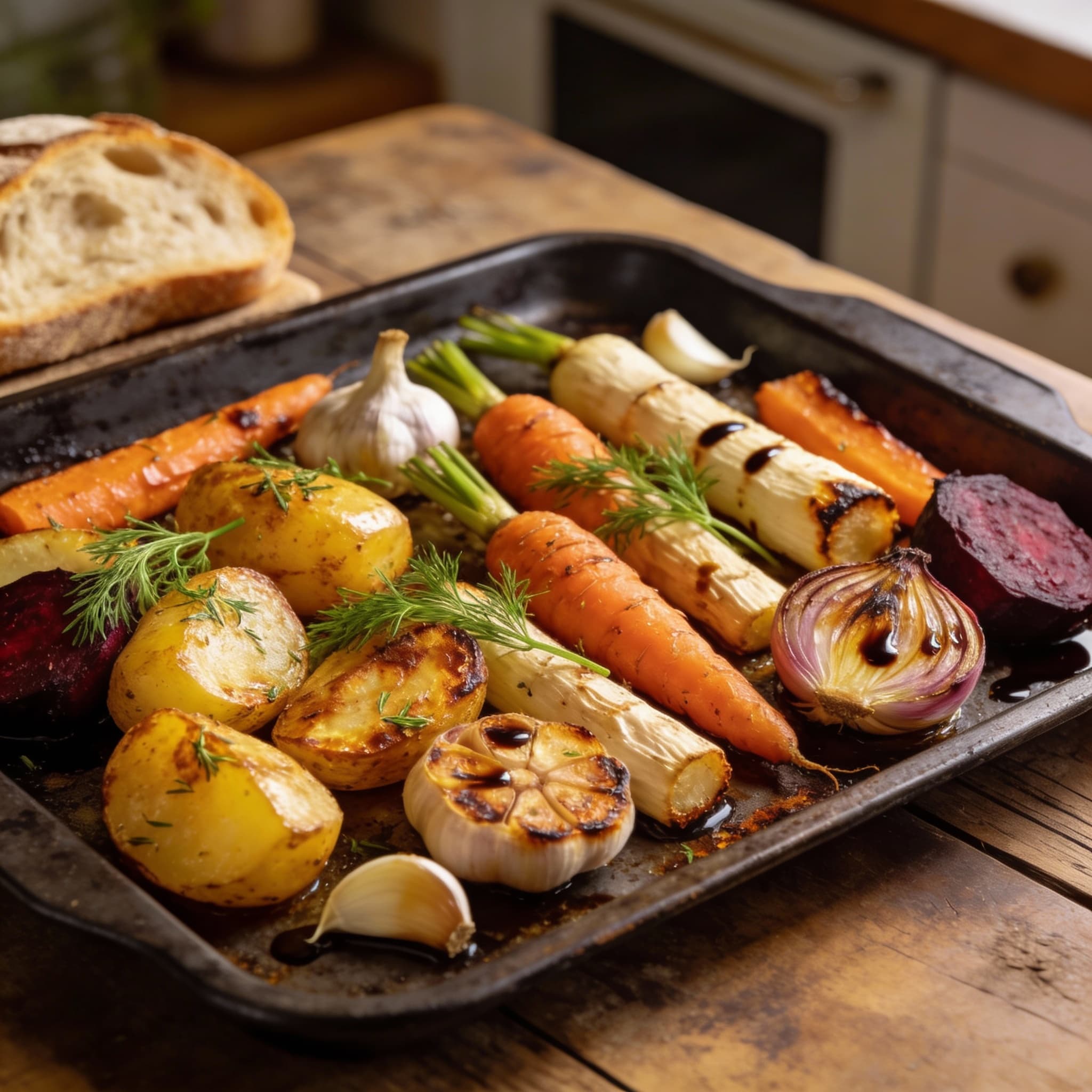
A little care turns good leftovers into great meals. Cool the pan briefly, then transfer pieces to a shallow, sealed container so steam escapes and they chill fast. Stored this way, the vegetables keep 3–4 days in the fridge without losing flavor.
Fridge storage, reheating, and preventing sogginess
Don’t cram hot food into a crowded container; trapped heat causes sogginess. Dry any damp pieces before you pack them to avoid steaming later.
To re-crisp, heat a baking sheet in a 400°F oven and spread pieces single-layer for 8–12 minutes. That short time restores color and snap—avoid the microwave if texture matters.
Turn leftovers into salads, bowls, pasta, or wraps
Next-day ideas keep meals exciting. Toss cold pieces into a bowl with arugula, lemon, EVOO, and chickpeas for extra protein and fiber. Make a warm pasta by sautéing two chopped roasted garlic cloves in oil, add the vegetables and a splash of pasta water.
- Wrap: pesto, mozzarella, spinach—griddle until crisp.
- Frittata: whisk eggs, fold in pieces, bake until set for breakfast-for-dinner.
- If soggy, a minute or two under the broiler on a sturdy pan revives color—watch closely.
| Method | Temp / Time | Result |
|---|---|---|
| Oven reheat | 400°F, 8–12 minutes | Re-crisps edges, restores color |
| Cold salad bowl | No reheat | Bright, quick lunch with added fiber |
| Pan reheat | Medium heat, 4–6 minutes | Fast, tender with a little crisp |
Plan a touch of extra time when serving guests—texture is worth it, and the aroma will bring everyone to the table.
Bring it to the table: your new go-to Italian roasted veggie ritual
Bring the pan to the table and let simple heat, oil, and bright finishing lift every bite.
Quick recap: preheat oven 425 and warm a baking sheet, then toss pieces in a mixing bowl with extra virgin olive, salt, and pepper. Spread in a single layer on the hot sheet and roast until edges brown—check at the minutes mark and rotate the sheet if your oven needs it.
A few whole cloves become silky, and a final drizzle of extra virgin or a splash of balsamic adds shine. Mix potatoes with zucchini, squash, and bell peppers by season so everything reaches perfection at the same time.
This side dish turns into a full meal with polenta, beans, or pasta. It’s simple, joyful, and ready to be your new cooking ritual—semplice e delizioso.
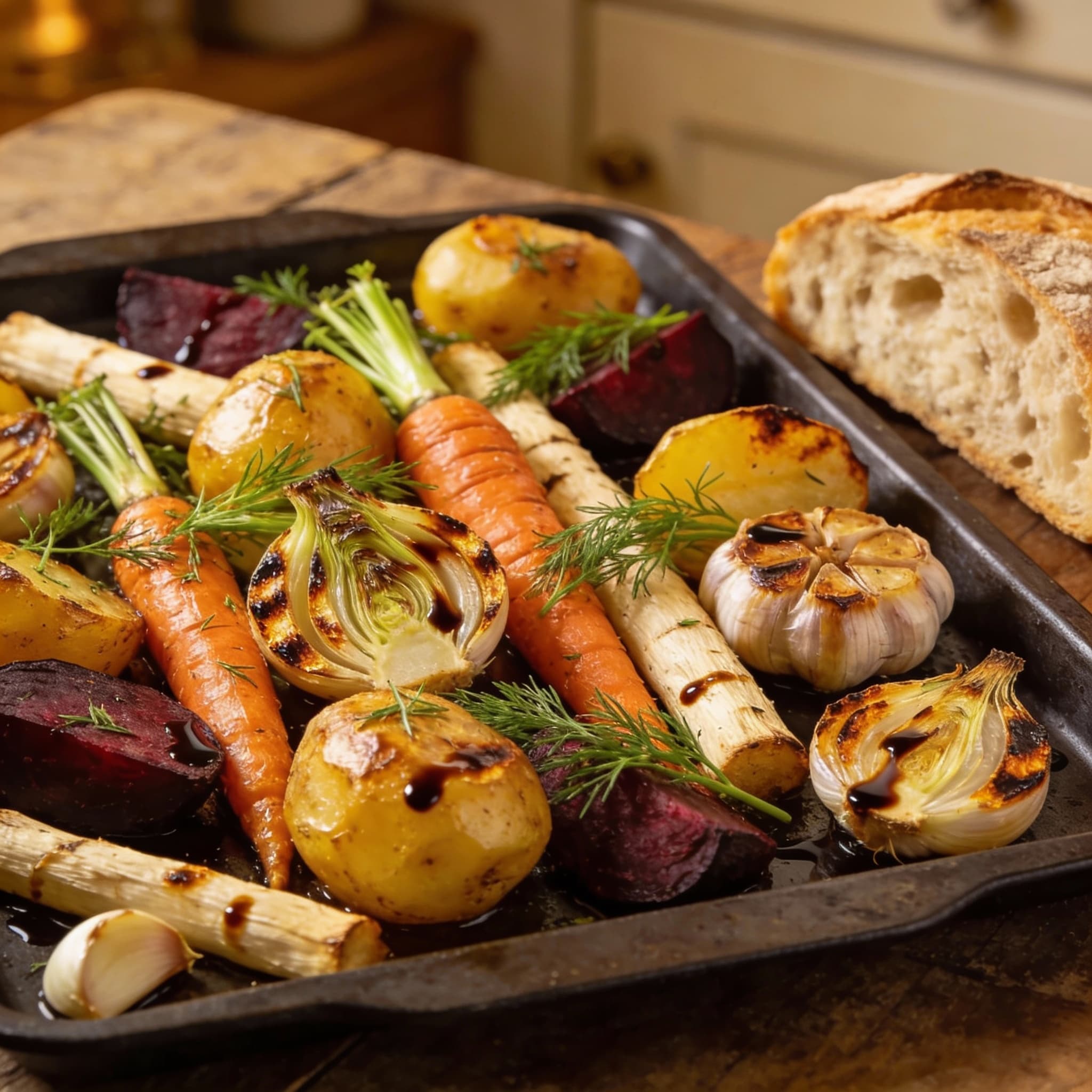
Roasted Italian Herb Vegetables
Ingredients
Method
Notes
- For added brightness, sprinkle lemon zest and parsley on the roasted vegetables before serving.
- Feel free to mix up the vegetables according to the season, adding zucchini or bell peppers in the summer.
- To keep leftovers crispy, reheat in the oven instead of the microwave.
- If your oven has hot spots, rotate or swap the baking sheets halfway through cooking to ensure even browning.