
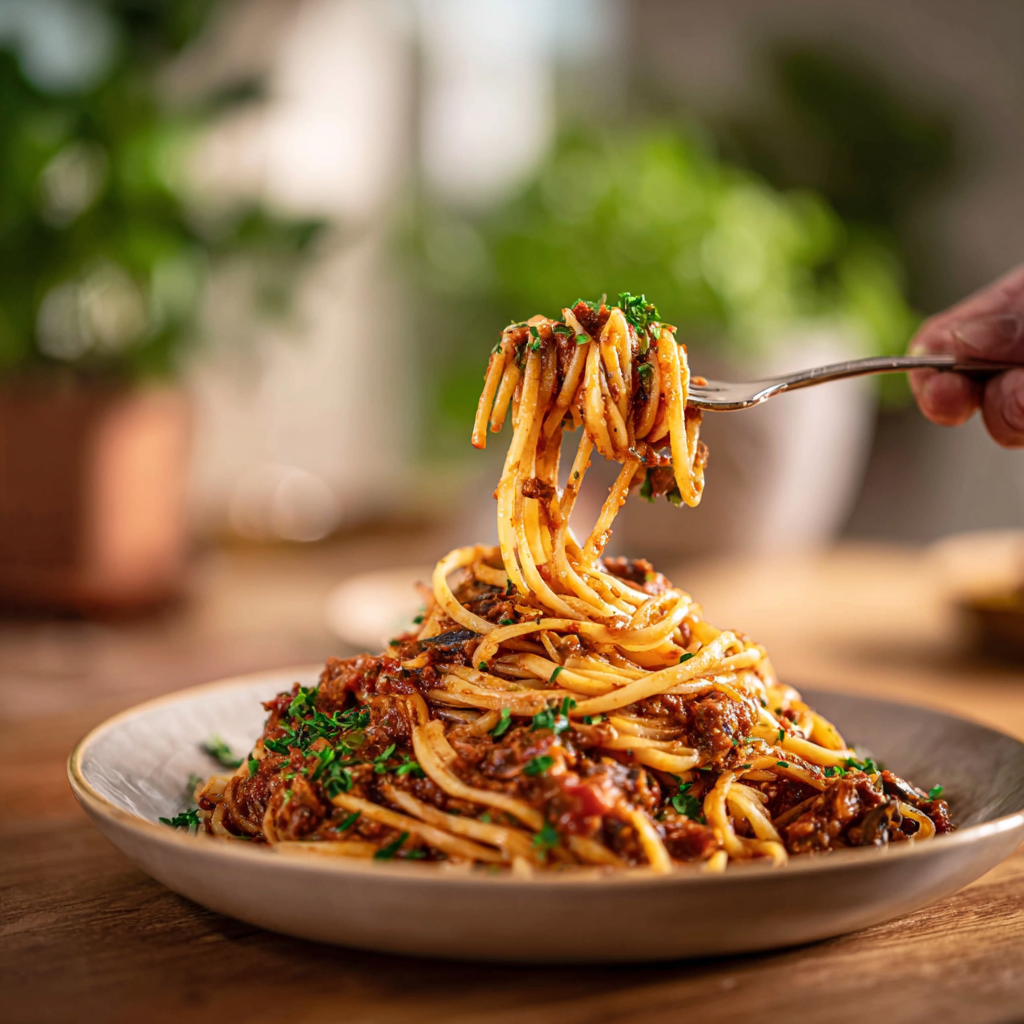
Jump to Recipe
I cook like someone who grew up with a wooden spoon and a watchful Nonna who taught patience. The kitchen smells of garlic and simmering tomatoes, and I keep a glass of wine by the stove while the sauce thickens slowly.
My approach is hands-on: I pulse vegetables just enough so they hold texture, brown tomato paste until it turns brick red, then deglaze the pan for depth. Those simple moves build a meaty, clingy sauce that makes noodles shine without becoming watery.
I use a food processor to mince, a wide sauté pan or Dutch oven for even color, and tongs to toss the hot strands with reserved starchy water. For practical notes, leftovers keep well for five days, reheat with a splash of broth, and freeze up to three months for quick weeknight dinners.
For more variations and a lentil-based version that mirrors these techniques, see my hearty lentil bolognese guide at hearty lentil bolognese.
Key Takeaways
- Pulse vegetables to retain a “mince” for a meaty texture.
- Brown the tomato paste until brick red, then deglaze for depth.
- Reserve pasta water to help the sauce cling to noodles.
- Use a food processor, a large pan, and tongs for best results.
- Store leftovers up to 5 days; freeze up to 3 months.
Rich, cozy, and “meaty” without the meat
The goal here is a rich, slow‑cooked sauce that comforts like a Sunday supper. I coax depth by browning a deliberate mince until it concentrates, then I let the pan sing with tomato and fond.
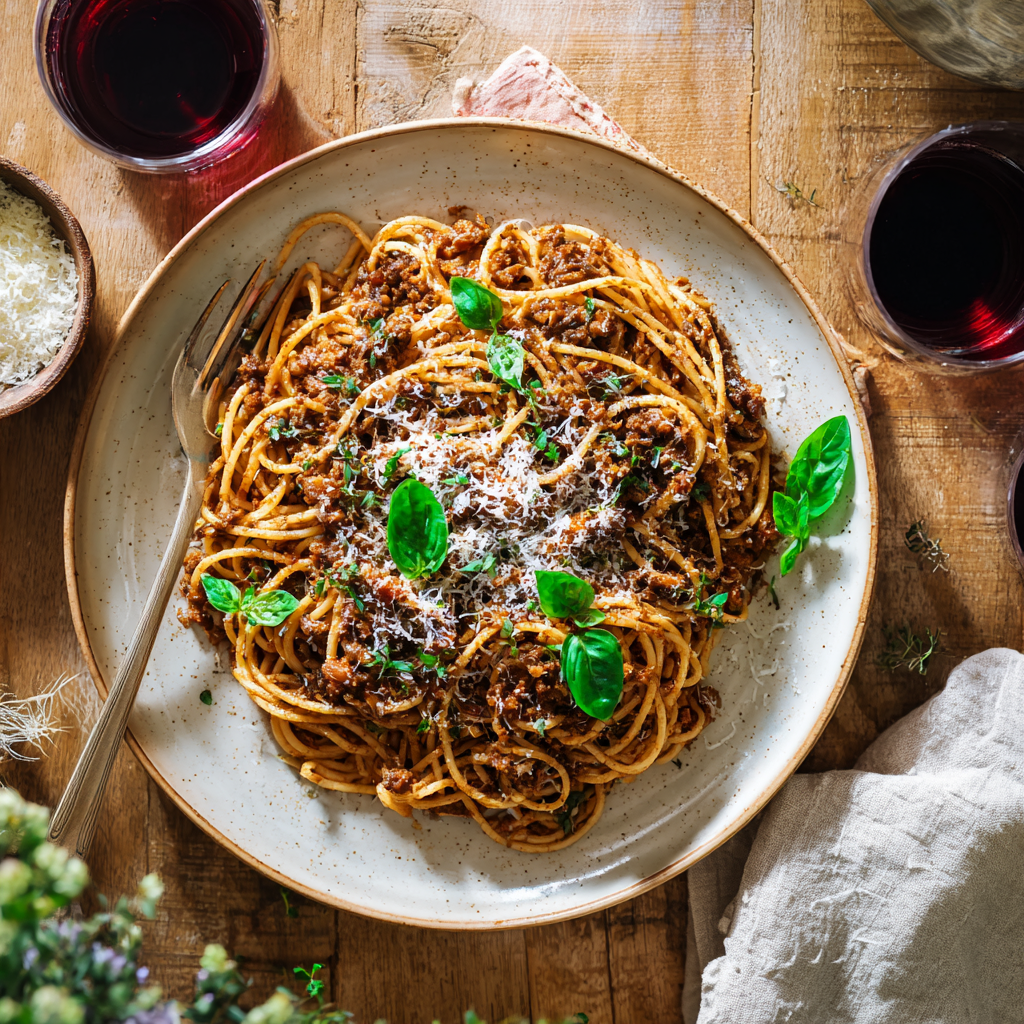
Mushrooms mimic the ground texture and bring deep umami; tamari or soy is my quiet amplifier. A splash while the tomatoes simmer brightens the sauce without steering the taste toward any other cuisine.
Give the pot time—30 minutes builds structure, 60 minutes rewards you with roundness and body. For a silky finish, skip heavy cream: a drizzle of olive oil or a touch of plant milk plus reserved starchy water gives that luscious mouthfeel with far less saturated fat.
- The “meaty” sensation comes from browning and concentrating the mince, not from added fat.
- Slow simmering layers savory and sweet—carrot and onion keep the flavor balanced and never flat.
- Season gently so warmth and aroma let the mushrooms and tomato shine; the pasta will carry every nuance.
Your result is generous, comforting, and supportive of protein needs on a plant‑forward table. With patient technique, you lose nothing of the classic bolognese soul and gain the clarity of great vegetables.
Why this vegan bolognese works
Building deep flavor is about timing: small steps, steady heat, and the right ingredients. I explain each move so you can reproduce it at home and get reliable results every time.
I begin by coaxing umami from the mushrooms and tomato paste. Brown the paste over steady heat until it darkens to a brick red — this removes raw tang and creates a savory backbone for the sauce.
Texture matters. I pulse the vegetables in short bursts so they form a chunky mince. That loose mixture gives mouthfeel and bite; over‑processing turns everything into a heavy paste and dulls the final dish.
Deglazing with a splash of dry wine lifts the fond off the pan and dissolves those caramelized bits into the sauce. A measured splash of liquid keeps the base mobile while the simmer concentrates flavors for 30–60 minutes or more.
- Wipe mushrooms clean, never rinse, to encourage browning rather than steaming.
- Layer flavors: bloom aromatics, brown the paste, deglaze, then simmer slowly.
- Add a touch of tamari to deepen savoriness so tomatoes and mushrooms read almost like meat in texture and tone.
Vegan mushroom bolognese pasta recipe ingredients
I like to build a sauce by starting with a warm pan and a handful of humble ingredients. Below I list what I use and why each item matters to flavor and texture.
Mushrooms, aromatics, and tomatoes: the flavor core
I reach for a mix of cremini and shiitake mushrooms for layered umami: cremini for economy and body, shiitake for an extra savory note. The vegetable backbone is a classic soffritto—onion, carrots, and garlic—finely chopped so they melt into the sauce while keeping gentle texture.
Tomato paste concentrates color and body; add canned crushed or quality San Marzano tomatoes for a balanced, saucy base.
Boosters and fats: tomato paste, olive oil, red wine, tamari or soy
Start in good olive oil to carry aromatics and add fruitiness. Brown a tablespoon of tomato paste until it darkens—this builds depth. A splash of red or white wine deglazes and lifts fond; if you skip alcohol, a rich vegetable broth works well.
A tablespoon or two of tamari (or low‑sodium soy) is my quiet booster—it deepens savoriness so the tomato reads fuller without extra salt.
Optional texture add‑ins: walnuts or almonds for richness
Ground walnuts or almonds add chew and a subtle richness that mimics a coarse mince. They are optional but excellent when you want a heartier mouthfeel.
- Keep a cup of pasta cooking water nearby—its starch makes the sauce glossy and cling to noodles.
- Season gradually with salt and pepper so layers, not surface, get seasoned.
- Set a small bowl for measured add‑ins—paste, tamari, chopped nuts—to keep your flow uninterrupted.
| Ingredient | Role | Suggestion |
|---|---|---|
| Mushrooms | Umami, texture | Mix cremini + shiitake |
| Tomato paste | Color, body | Brown 1–2 tbsp |
| Olive oil / Wine / Broth | Fat, deglaze, depth | Good oil; wine or rich vegetable broth |
Step-by-step: from soffritto to saucy perfection
Start by setting a steady rhythm at the stove—small, deliberate moves win every time. I walk you through prep, browning, deglazing, simmering, and finally tossing so the sauce clings like it should.
Prep and pulse: food processor tips for mushrooms and veggies
Work in batches in your food processor. Pulse in short bursts until the mixture is finely chopped but still has texture. Repeat with onion, carrot, and garlic so everything cooks at the same rate.
Sauté and brown: soffritto plus brick-red tomato paste
Warm a splash of olive oil over medium heat. Sauté the soffritto for 8–10 minutes until soft and lightly browned. Push the veg aside, add tomato paste and garlic to the open spot, and cook until the paste turns brick red and fragrant.
Deglaze and simmer: wine, tomatoes, and low time
Deglaze with 1/2 to 1 cup wine, scraping up fond and letting the alcohol bubble off for a couple of minutes. Stir in tomatoes, a teaspoon of tamari, and optional nuts. Lower the heat and simmer 30 to 60 minutes, adding a splash of water if it tightens too much.
Toss with pasta: salt your water and save the liquid
Boil a large pot of well-salted water and cook noodles until just al dente. Transfer them straight to the sauce with tongs. Add about 1/2 to 1 cup of starchy cooking water and toss over low heat for a few minutes until the sauce emulsifies and clings.
- Taste and adjust with salt and pepper at the end.
- Let cloves of garlic soften fully so they melt into the sauce.
- Serve immediately for the best texture and shine.
| Action | Minutes | Tip |
|---|---|---|
| Sauté soffritto | 8–10 | Lightly brown for sweetness |
| Simmer sauce | 30–60 | Partially covered, low heat |
| Toss with pasta | 2–3 | Add 1/2–1 cup liquid to emulsify |
Pasta pairings, toppings, and serving ideas
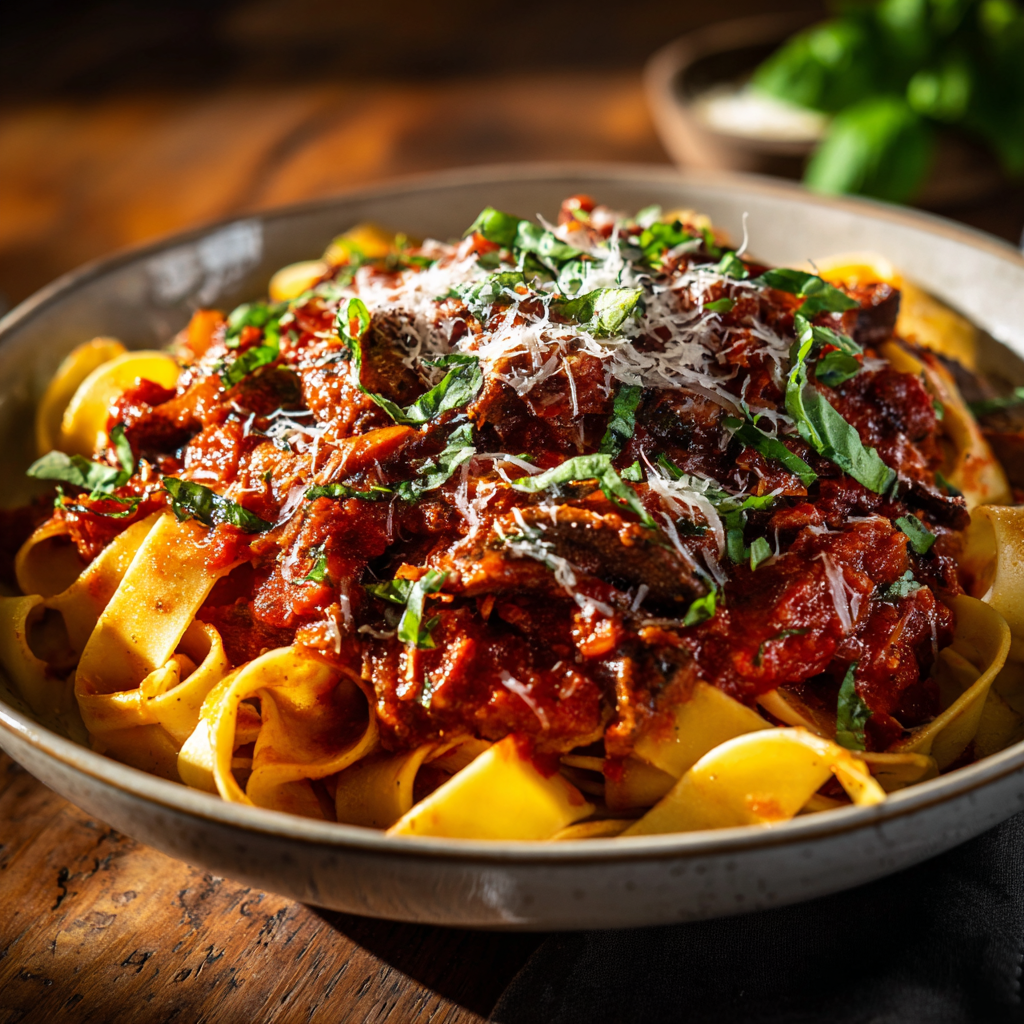
A great bowl begins with the right noodle. Wide tagliatelle or pappardelle catch thick sauce in their folds. Spaghetti keeps things classic and always satisfies.
Warm your bowls so the sauce stays velvety on contact. That tiny step keeps the first forkful as lovely as the last. Finish at the stove with a spoon of reserved cooking water to tune the texture; the sauce should cling, not pool.
Finish strong
Shower fresh basil and a grating of vegan Parmesan or nutritional yeast for aroma and savory sparkle. A light thread of good olive oil adds fruitiness. If the tomatoes taste sharp, a pinch of salt right before plating calms acidity.
- Spoon a ladle of sauce on the plate, twirl noodles into it, then crown with another spoonful to show texture.
- Try the sauce over soft polenta for a cozy change from noodles.
- Serve with a simple green salad and crusty bread to mop the last streaks from the bowl.
| Choice | Why it works | Finish | Serving tip |
|---|---|---|---|
| Tagliatelle / Pappardelle | Wide ribbons hold chunky sauce | Basil + vegan Parmesan | Twirl on a shallow plate |
| Spaghetti | Classic, light coating | Olive oil drizzle | Serve in a deep bowl |
| Soft polenta | Comforting, spoonable base | Extra ladle of sauce | Warm dish before serving |
| Leftovers | Reheat gently with water or stock | Fresh herbs to revive | Keep a splash of cooking water |
Smart swaps, tools, and pro tips
Small, well-chosen swaps and a few steady tools will lift this sauce from good to unforgettable. I rely on a blend of cremini and shiitake for layered umami; if you have dried wild mushrooms, chop them and add a spoon of the soaking liquid for instant depth.
Tamari and low‑sodium soy are interchangeable—use the low‑salt option so you can season as you go. Deglaze with a dry red or a clean white wine; either will loosen the fond and add complexity without drowning the pan.
- I use a food processor to pulse vegetables—short bursts keep texture. The processor makes quick work but don’t overdo it.
- Wipe mushrooms with a towel; never rinse. Excess water stops browning.
- Toast a teaspoon of fennel seed with a pinch of red pepper flakes for 1–2 minutes to bloom aroma.
- A stainless sauté pan or Dutch oven gives steady heat and room to brown; tongs make pasta transfer easy.
- If things begin to catch, lower the heat and add a thread of olive oil rather than water to preserve the sauté.
| Swap | Why | Tip |
|---|---|---|
| Cremini + Shiitake | Layered umami | Add soaking liquid from dried mushrooms |
| Tamari / Soy | Deepens savor | Use low‑sodium and season later |
| Dry red or white wine | Deglazes and lifts fond | Use enough to scrape the pan |
Storing, reheating, and freezing for later
When I tuck away a pot of sauce, I treat storage like a final, loving step in the cook’s work. A little care now saves time and keeps texture true when you reheat later.
Cool the sauce quickly and transfer into shallow, airtight containers. Label each with the date so you can track time at a glance. Refrigerate up to five days; this keeps the food safe and the flavor bright.
Refrigerator guidance
Rewarm gently: microwave in 60–90 second bursts, stirring between minutes, or heat covered in a 300°F oven until steaming. Add a spoon of water or broth to loosen the sauce and restore shine. Taste and finish with a pinch of pepper or salt before serving.
Freezing and thawing
Freeze in freezer‑safe, airtight containers for up to three months. Thaw overnight in the fridge for best texture. Press a layer of parchment on top if you freeze in a larger bowl to limit ice crystals.
- Portion into meal-size containers so you only reheat what you need.
- If combining with noodles, reheat the sauce first, then toss with freshly heated noodles and a splash of reserved starchy water to revive the emulsion.
- Always refrigerate within two hours of cooking and reheat until steaming hot for safety.
| Storage | Maximum time | Best reheating method |
|---|---|---|
| Refrigerator | Up to 5 days | Microwave bursts or covered 300°F oven |
| Freezer | Up to 3 months | Thaw overnight, reheat gently with a splash of liquid |
| On the stove | Reheat in minutes | Low heat, add a spoon of water to refresh emulsion |
Serve, savor, and make it your signature
Finish at the stove: let the sauce and noodles marry for a few minutes so every forkful tastes intentional. Toss with a splash of reserved cooking water and a thread of olive oil to make the sauce glossy and cling to the pasta.
Serve over tagliatelle, pappardelle, spaghetti, or spoon it on warm polenta. Garnish with torn basil and a grating of vegan Parmesan for bright aroma and savory lift.
Taste in the final minutes and tweak with a pinch of salt or a crack of pepper. If you like wine notes, deglaze with a splash of red wine early and simmer at least 30 minutes for real depth. Cool leftovers into cup-sized portions for easy reheating and jot what you changed—soon this will read like your house recipe.
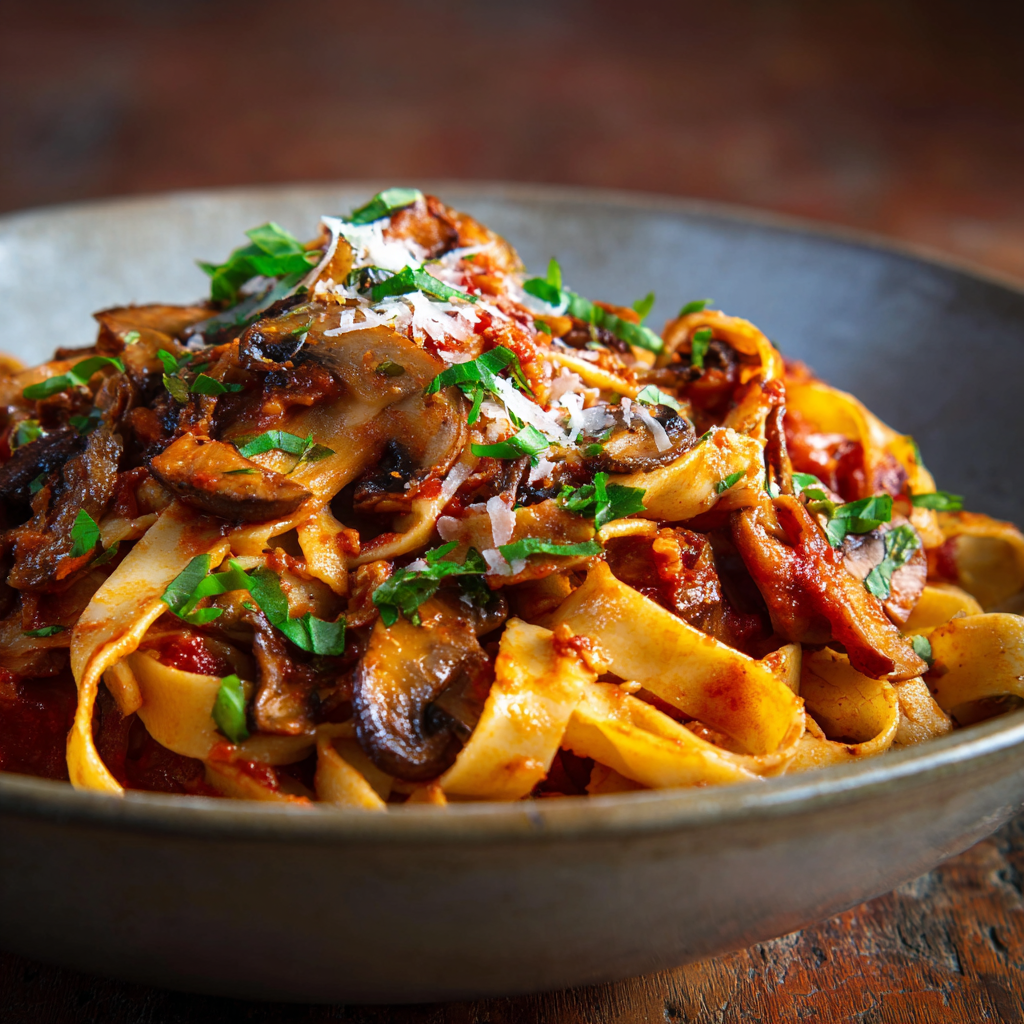
Vegan Mushroom Bolognese Pasta
Ingredients
Method
- Use a food processor to pulse onions, carrots, and garlic until finely chopped, maintaining texture. Repeat with mushrooms, pulsing until you have a chunky mince.
- Heat 1 tablespoon of olive oil over medium heat. Sauté the chopped onions, carrots, and garlic for 8-10 minutes until softened and lightly browned.
- Push the veggies to the side of the pan, add tomato paste to the empty space, and cook until it darkens to a brick-red color. This intensifies the flavor.
- Add the dry red wine (or vegetable broth) and stir to lift the caramelized bits from the pan. Let the wine cook off for a couple of minutes.
- Add the canned tomatoes, tamari (or soy sauce), and optional walnuts or almonds. Reduce the heat and simmer the sauce for 30 to 60 minutes, adding a splash of water if the sauce tightens too much.
- In a separate pot, boil salted water and cook pasta until just al dente. Reserve 1 cup of pasta water before draining.
- Add the cooked pasta directly into the sauce with tongs. Gradually add the reserved pasta water and toss everything over low heat until the sauce emulsifies and clings to the pasta.
- Taste the sauce and adjust seasoning with salt and pepper. Serve immediately, garnishing with fresh basil and vegan Parmesan.
Notes
- To make this dish even heartier, consider adding lentils or other plant-based protein sources.
- If you prefer to avoid wine, use vegetable broth or a splash of balsamic vinegar for acidity and depth.
- This dish stores well: refrigerate leftovers for up to 5 days or freeze for up to 3 months.