Jump to Recipe
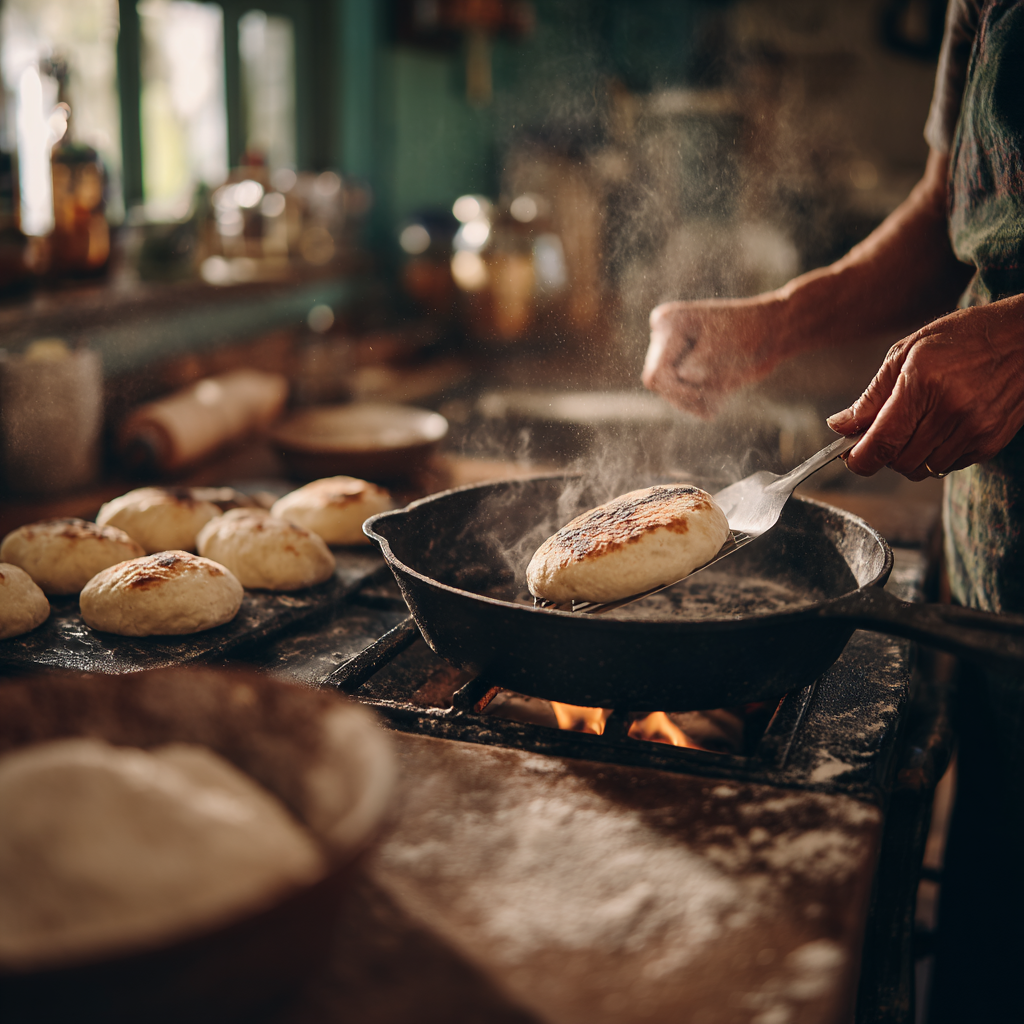
I learned the tigelle bread recipe from Modena while sitting at a kitchen table in the hills, watching smoke curl around clay tiles as a grandmother shaped dough with practiced hands.
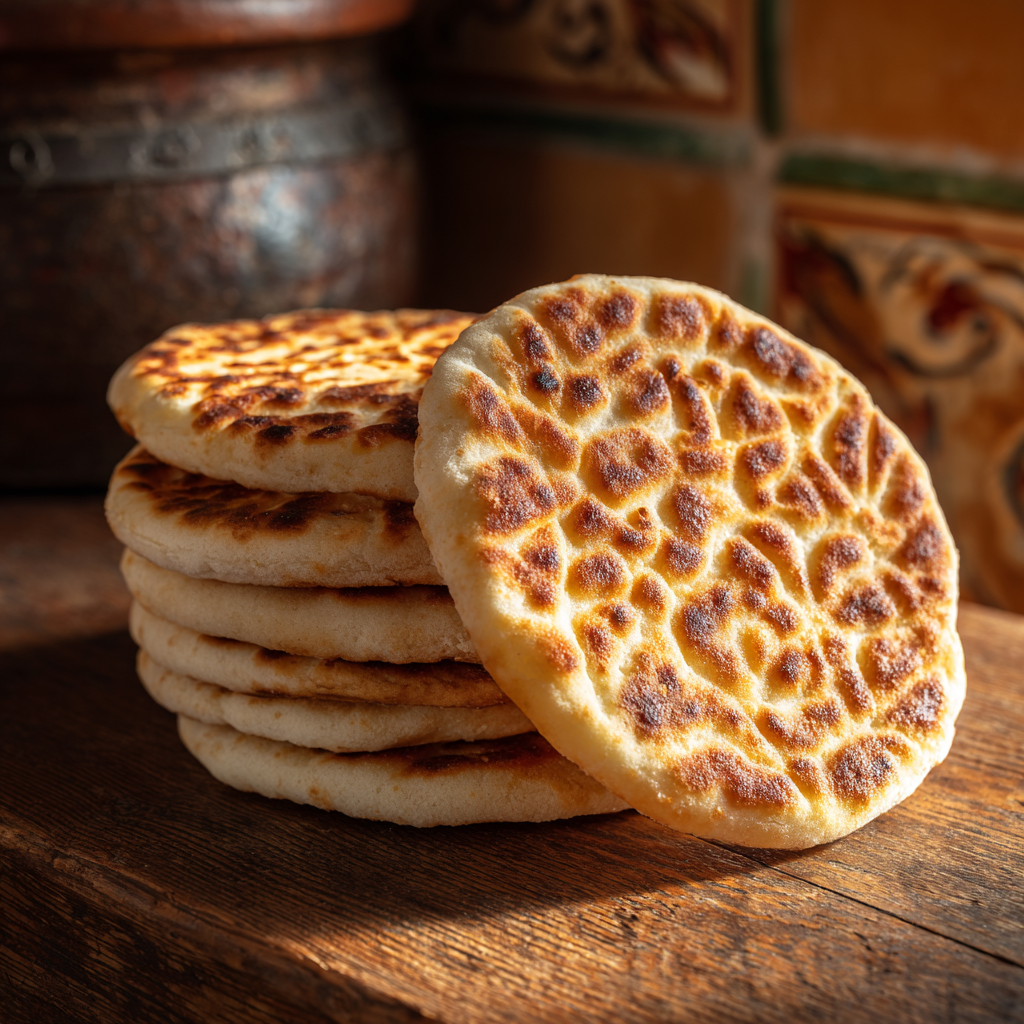
I make them at home the same way, with 00 flour, a splash of milk, a pinch of yeast, and a little fat to keep the crumb tender. The history of this street food is as warm as its crust: tiny rounds cooked between hot tiles, then on a press or a heavy pan until they puff and color in about 15–20 minutes.
My guide blends old-school techniques with American kitchen shortcuts—nonstick pans, an oven at 356°F, or a cast-iron griddle. I’ll show which ingredients matter, how to judge heat and doneness, and a freezer-to-griddle reheating tip that keeps the interior soft and the exterior pleasantly crisp.
Key Takeaways
- Traditional method uses clay tiles; modern cooks can use a nonstick pan or press.
- Essential ingredients: 00/0 flour, milk, water, yeast, salt, and a bit of fat.
- Cook at 356°F (180°C) or on a hot griddle for 15–20 minutes, turning halfway.
- From 500 g flour you can get about 30 mini rounds (30 g) or 15 larger ones (50 g).
- Reheat frozen pieces directly on a hot griddle for 1–2 minutes per side—do not thaw at room temperature.
What makes tigelle special in Modena and Bologna’s food culture
High in the Apennines, families pressed dough between hot clay tiles. This mountain method shaped texture and taste. It also gave the rounds their name through the molds used at the hearth.
From clay molds to street food: the mountain origins
I learned the value of simple tools on those slopes. Clay molds—later cast iron presses—stamped a small, round form and a delicate pattern. Over time the practice moved down to town squares, where these rounds became everyday street food in Modena-Bologna.
Tigelle vs crescentine: why names change between towns
Names change with local pride. In Bologna people call them tigelle, while across the border many say crescentine. In other zones, crescentine can mean fried dough, also known as gnocco fritto or torta fritta.
- Mountain origin: pressed in clay molds by the fire.
- Evolution: clay → cast iron tigelliera → electric presses.
- Cultural note: naming tells you what to expect when you order.
| Name | Typical Form | Common Cooking Method |
|---|---|---|
| tigelle | Small, round discs with stamped pattern | Clay molds or tigelliera press |
| crescentine | Similar flat discs; sometimes fried in other areas | Stovetop pan or frying for gnocco fritto |
| gnocco fritto | Puffed, fried dough pieces | Deep or shallow frying; served warm |
Ingredients that honor tradition, with smart swaps for home cooks
C good dough starts with the right flour and balanced liquids. I favor a blend that gives tenderness and structure while keeping things forgiving for home cooks.
The base dough
I use a mix of fine 00 and type 0 flour for a soft crumb and good chew. Up to 30% semi-integrale (type 1) adds aroma and a light nutty note.
Instant brewer’s yeast mixes into the bowl with the dry ingredients. Milk and water should be lukewarm so the yeast wakes gently.
Fats that shape flavor
Fat is the flavor dial. Lard offers the classic regional character and flake. Olive oil makes the discs fruitier and lighter. Fresh cream yields a richer, plush interior.
Hydration and seasoning
Salt firms the gluten and seasons the crumb; I add it after initial hydration so it doesn’t interfere with yeast action. I judge hydration by feel—the dough should be soft, supple, and spring back when pressed.
- Traditional notes: serve with rosemary, garlic, a pork-based pesto, and cheeses that melt or crumble.
- Yield: from 500 g flour expect about 30 mini (30 g) or 15 classic (50 g) pieces—plan a few minutes to scale and shape.
Tools and techniques: tigelliera, stovetop pan, or oven-baked discs
Choosing whether to use a press, a pan, or the oven shapes the final texture more than any secret ingredient. I try each method and pick what fits my kitchen and the batch size.
Cooking with a press: cast iron or electric
Preheat the tigelliera so both plates reach an even temperature. Cast iron gives deep, even browning; electric models hold steady for predictable results.
Lightly oil the plates or molds if they are not nonstick. Close the press gently so steam can puff the disc without squeezing out the crumb.
Perfectly cooked on a flat pan
Use a large nonstick pan over medium to medium-high heat. I watch for light browning in 2–3 minutes, then flip to avoid burning.
If the pan runs hot, lower the flame and rotate the discs to prevent dark spots. Keep flour dusting minimal to avoid burnt specks on the surface.
Oven method: size, temperature, and turning
Shape discs 6–10 cm wide and arrange with space between them. Bake at a steady 356°F/180°C and turn halfway through the time for even color.
Expect about 15–20 minutes total, watching for a gentle puff and a thin, golden crust. A springy feel signals a tender interior.
- The press gives the classic imprint and fast single-piece cook time.
- The pan is quick and ideal for a few at a time.
- The oven is best for larger batches and hands-off cooking.
| Method | Heat cue | Typical time & result |
|---|---|---|
| tigelliera / press | Even hot plates; steady heat | Quick puff; deep color in 3–5 minutes per piece |
| Flat pan | Medium–medium-high; light browning | 2–4 minutes per side; rotate to avoid dark spots |
| Oven | 356°F / 180°C; even temperature | 15–20 minutes total; turn halfway for uniform lift |
| Result | Crisp outside, tender inside | Ready to split and fill; keeps flatbread character |
Tigelle bread recipe from Modena: step-by-step method and timings
Begin by combining dry flour and yeast in a bowl. Stream in water, then milk until the dough forms and pulls away cleanly. Once cohesive, add your fat and finish with salt so fermentation stays lively.
Mixing and kneading: dough cues for smooth, elastic results
Knead by hand or mixer 5–10 minutes. Look for a satin-smooth surface and a ball that holds its shape. The dough should windowpane lightly when stretched.
Portion, shape, and rest: mini vs classic discs, proofing times
First rise: about 2 hours until doubled. Deflate gently with your hands, then weigh portions—30 g for mini, 50 g for classic. Shape tight balls and let them rest 30 minutes to relax the gluten.
Flatten into discs and rest another 30 minutes. This second rest helps puff and tenderness during cooking.
Cook time and doneness: minutes per side, color, and puff
Preheat your press or pan. In a press cook roughly 3 minutes per side. On a pan allow 3–4 minutes per side. In the oven bake 15–20 minutes at 356°F (180°C), turning halfway.
Doneness cues: a light golden color, slight puff, and a springy feel when squeezed. Tap—sound should be softly hollow.
Scaling the batch: servings, weights, and timing for more people
Double the flour and repeat the same steps. Allow a few extra minutes on the first rise in a cool kitchen. Work in small batches on the pan to keep even heat and consistent times.
- Key tactile cues: clean bowl, smooth ball, soft windowpane, light spring on rest.
- Timings recap: knead 5–10 minutes; rise ~2 hours; rests 30 + 30 minutes; cook times as above.
| Step | Action | Time |
|---|---|---|
| Mix | Combine dry, stream water & milk, add fat & salt | 10–15 minutes (including measuring) |
| Knead & first rise | Knead until elastic; rise until doubled | 5–10 minutes knead; ~2 hours rise |
| Portion & rest | Shape balls, rest 30 min; flatten, rest 30 min | 60 minutes total |
How to serve tigelle: pesto modenese, cheeses, and charcuterie pairings
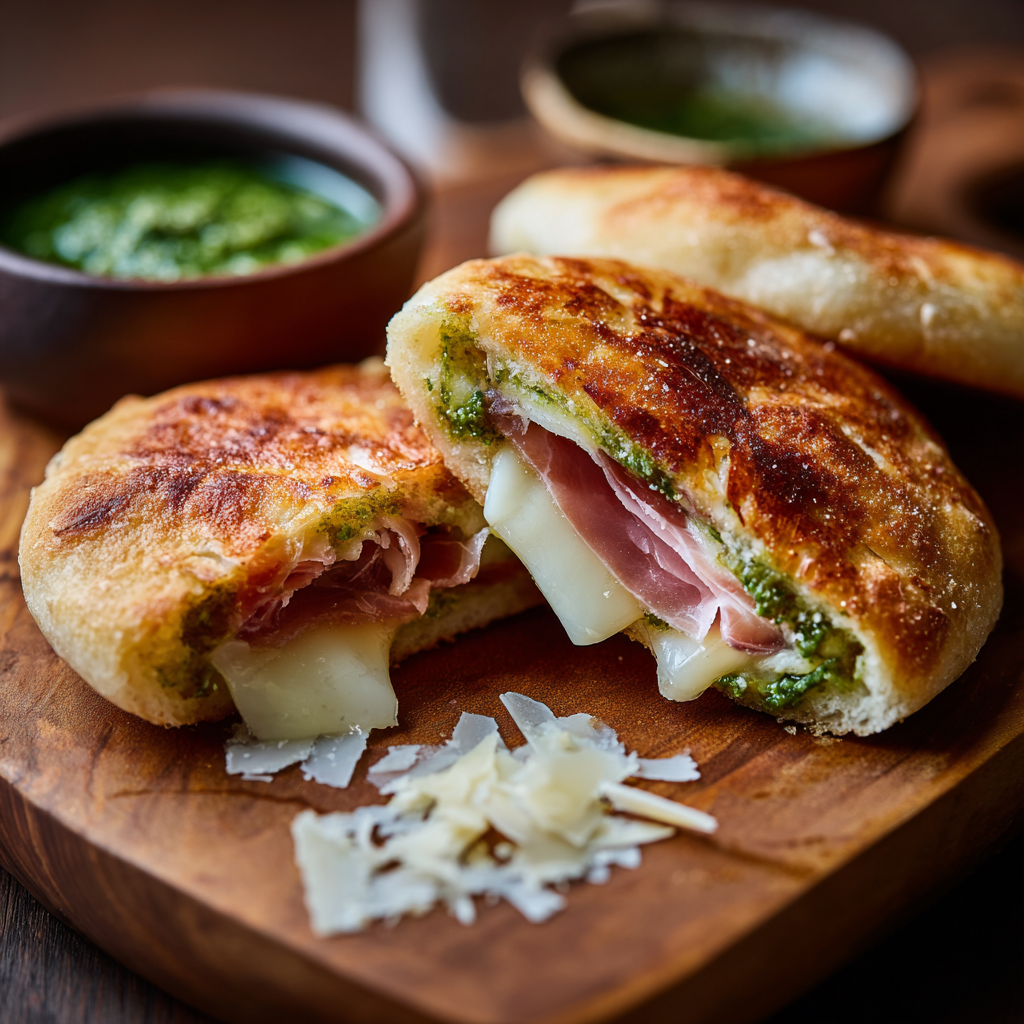
Serve these warm rounds with simple, bold toppings that echo Emilia’s flavors. I like to present small bowls so guests can mix savory and sweet. Keep the rounds hot; warmth helps fillings melt and releases aroma.
Pesto modenese (cunza)
Classic pesto modenese is pure and rustic: lard whisked with finely chopped garlic and rosemary. Spread it hot, then grate Parmigiano Reggiano over the top for a salty, umami finish.
Cheeses and cured meats
Set out Prosciutto di Parma, Mortadella Bologna, and cheeses like Provolone Valpadana or gorgonzola. Let guests layer meat and a shaving of parmigiano reggiano for contrast.
Sweet options
For dessert or a late snack, split and spread with jam, honey, or chocolate spread. Sweet fillings temper the savory and are a beloved street food-style finish.
- My favorite: hot rounds filled with pesto modenese, lard/garlic/rosemary, plus grated parmigiano reggiano.
- Keep them warm in a low oven. Serve with pickles and seasonal fruit for balance.
- Pair with Lambrusco or a crisp Pignoletto to cut through the richness.
| Type | Examples | Why it works |
|---|---|---|
| Savory | Prosciutto, Mortadella | Salty, fatty layers that melt into warm dough |
| Cheese | Provolone, Gorgonzola | Creamy or tangy textures that pair with parmigiano reggiano |
| Sweet | Jam, Honey, Chocolate spread | Contrasts richness and finishes the meal |
Make-ahead, storage, and reheating so they stay tender inside, crisp outside
Storing these warm rounds right after cooling keeps texture and flavor. I wrap them once fully cooled, then decide if I’ll eat them within a day or freeze for later.
Freezing and reheating rule: straight from freezer to hot griddle
Bag cooled pieces airtight and freeze. When you need one, heat a pan or griddle until hot.
- Reheat frozen directly on the hot surface about 1–2 minutes per side. This seals the crust and warms the center.
- Never thaw at room temperature: condensation makes the crumb soggy and limp.
- If you own a press, close it lightly to warm through without crushing the interior.
Short-term storage and next-day warm-up options
I keep them in an airtight bag at room temperature for up to 2 hours days; beyond that I freeze to lock freshness.
For small batches, a toaster brings single pieces back to color quickly. An oven set at moderate temperature revives crusts without drying the crumb—just a few minutes is enough.
| Method | Time | Best use |
|---|---|---|
| Griddle / pan | 1–2 minutes per side | Fast, restores crisp exterior |
| Oven | 3–5 minutes at moderate temperature | Batch reheating; gentle and even |
| Toaster / press | 1–3 minutes; watch closely | Singles or light warming without flattening |
Conclusion
Turn a bowl of dough into a tight ball, and you’ve already done half the work. These recipes ask for simple pantry staples—flour, water, milk, yeast, and a pinch of salt—and a bit of patience.
Whether you use a tigelliera, a hot pan, or the oven, aim for the right temperature and a few minutes per side. The little discs puff, color, and split to hold pesto, lard, or a slice of cheese like Parmigiano Reggiano.
This street and mountain tradition ties crescentine and gnocco fritto into one lively food story. Take your time on the first bake, trust your senses, and share the results at the table.
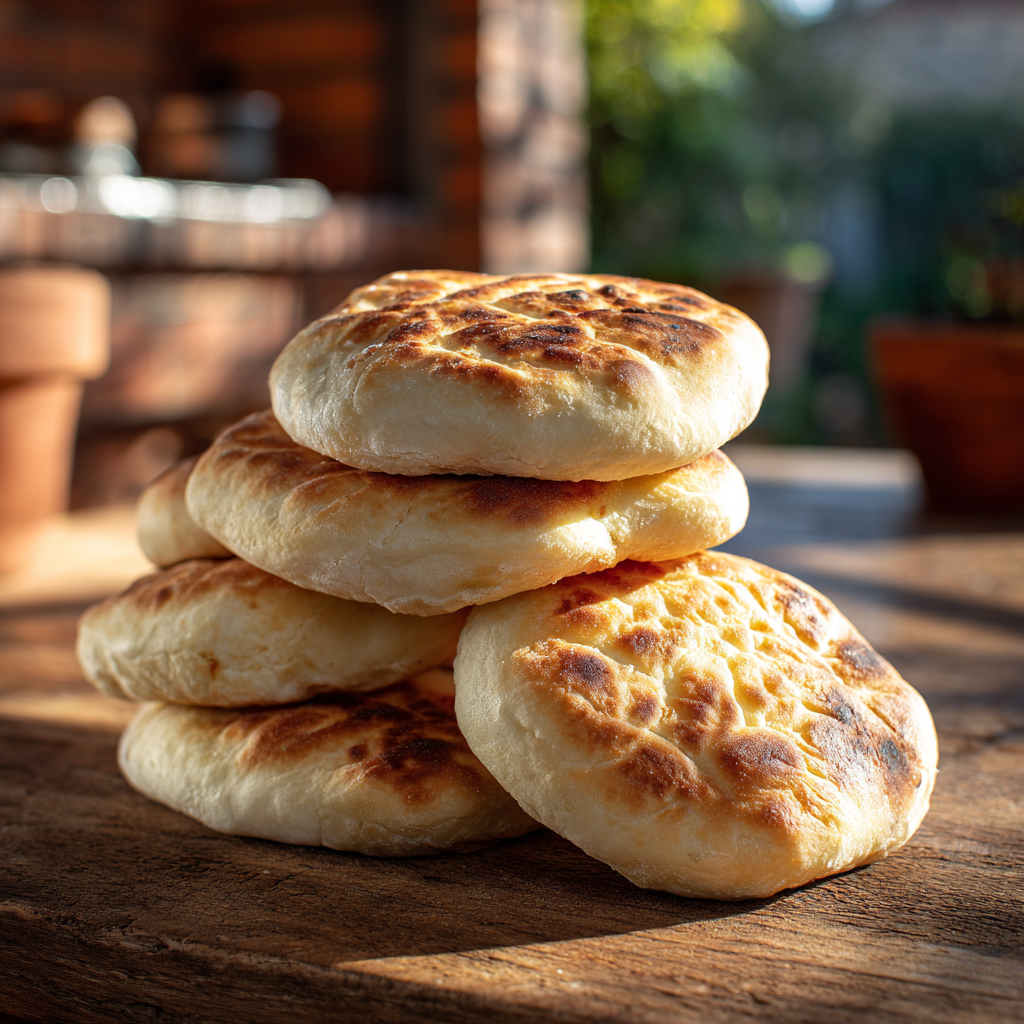
Tigelle Bread (Crescentine Modenesi)
Ingredients
Method
- In a large bowl, combine flour and yeast. Slowly add the lukewarm water and milk while mixing until a soft dough forms. Add the fat (lard, olive oil, or cream), then salt. Knead until smooth and elastic.
- Knead by hand or mixer for 5–10 minutes until the dough is soft and slightly springy. Shape into a ball, cover, and let it rise for about 2 hours or until doubled in size.
- Gently deflate the dough and divide into small balls — 30 g for mini tigelle or 50 g for regular ones. Rest for 30 minutes covered with a towel. Flatten each ball into a 6–10 cm disc and let rest another 30 minutes.
- Choose your method:
- Tigelliera (press): Preheat and lightly oil. Cook 3–4 minutes per side until puffed and golden.
- Pan or griddle: Medium heat, 3–4 minutes per side. Flip when light brown.
- Oven: Bake at 356°F (180°C) for 15–20 minutes, turning halfway for even color.
- Split while warm and fill with pesto modenese, meats, cheeses, or sweet spreads. Serve immediately for the best texture.
Notes
- Lard gives the most authentic flavor, but olive oil is a great vegetarian option.
- The dough should feel soft but not sticky. Adjust with a spoon of flour or milk if needed.
- To store: cool completely, freeze in airtight bags. Reheat straight from frozen on a hot pan for 1–2 minutes per side.
- Never thaw at room temperature—this keeps the crust crisp and the inside soft.
- Serve warm with local wines like Lambrusco or Pignoletto for a true Emilia-Romagna experience.