
Jump to Recipe
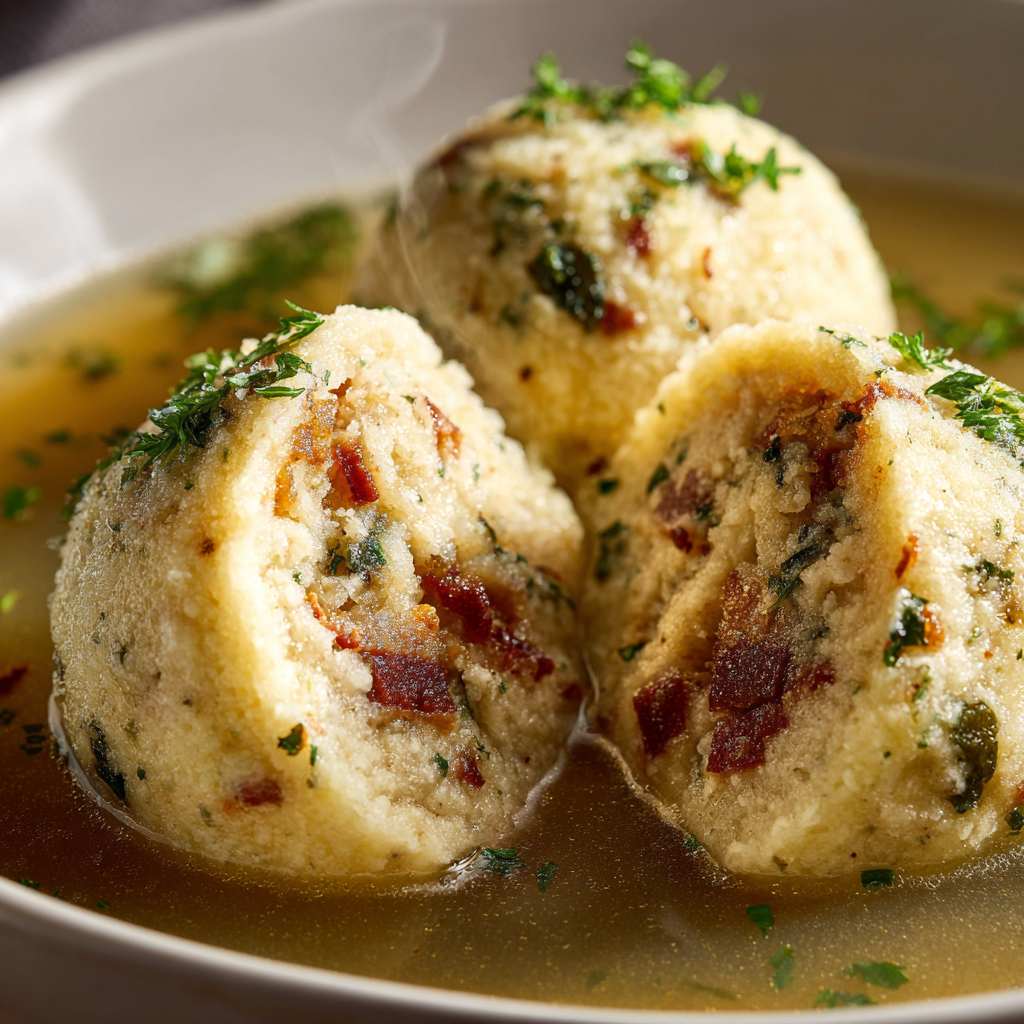
My Nonna taught me how to turn stale bread into warm, tender canederli that float in a fragrant chicken stock and taste like home.
I learned to weigh the pieces and use equal parts by weight of bread and milk, then tweak with more milk or a few dry crumbs until the mix holds without sticking to my hands.
I brown speck and sautéed onions for deep aroma, fold them gently into the mix, and poach the dumplings at a steady simmer so they stay soft and springy.
For broth, I often enrich bones and aromatics in a pressure cooker and leave onion skins on for color; a good broth lifts every bite, whether served in a bowl or finished with browned butter and sage.
Key Takeaways
- Use stale bread for better hydration and to avoid gumminess.
- Start with equal-weight bread and milk, then adjust for texture.
- Sauté onions and speck first to layer savory flavor.
- Poach gently in quality chicken stock; watch for a soft spring when they float.
- Pressure-cooked bones and onion skins boost broth color and depth.
Why this Alpine comfort food belongs at your table
On a cold night, a pot of soft dumplings in clear chicken broth feels like a warm hand on your shoulder. I serve them when I need simple comfort that still tastes thoughtful.
These bread dumplings are adaptable. They use pantry staples and a few fresh herbs. Pork fat and butter carry savory notes through every bite. Parmigiano adds the umami that makes this a memorable dish.
The texture is tender but with a gentle heft. That slight density sets them apart from airy matzo balls. Served in a clean, well-seasoned soup, the aromatics and cheese shine.
- Frugal: turns loaf ends into a soulful meal.
- Seasonal: rich in winter, light with herbs in spring.
- Practical: feeds a crowd and keeps well for lunches.
| Trait | What to expect | Pantry wins |
|---|---|---|
| Flavor | Pork fat, butter, and Parmigiano | Few ingredients, big payoff |
| Texture | Tender with slight density | Hearty, not heavy |
| Use | In soup or with browned butter | Leftovers improve overnight |
From Trentino-Alto Adige to your kitchen: the roots of canederli
From alpine kitchens where food was scarce, cooks fashioned hearty balls of soaked bread, cheese, and cured pork. In Trentino-Alto Adige, against the Dolomites, this approach turned leftovers into a proud regional food that sustained families through long winters.
Where the Dolomites shaped a practical classic
In northern italy, the mountains favored simple, storable ingredients. Stale bread soaked predictably and held shape when mixed with eggs and Parmigiano. Quick poaching in a good broth finished each portion in minutes.
Close cousins and what sets them apart
The connection to Austrian knödel and matzo balls is clear, yet these alpine versions stand apart. They use cheese and cured pork like speck for aroma, avoid leaveners, and bring a denser, savory profile to the bowl.
Frugality turned into flavor
- Speck, prosciutto, or ham add depth without heavy meat portions.
- Stale loaf pieces provide reliable texture and structure for shaping balls.
- Poaching in broth melds the cheese, onion, and pork into a comforting, layered bite.
| Origin | Characteristic | Modern use |
|---|---|---|
| Trentino-Alto Adige / Alto Adige | Stale bread base, Parmigiano, speck | Poached in chicken broth or served with butter and sage |
| Austria (knödel) | Similar form, regional spices | Often served with sauces or as a side to meat |
| Jewish matzo balls | Airier, no cheese or pork | Served in clear chicken broth as a soulful starter |
The pantry and produce: choosing ingredients that make canederli sing
A great loaf, a proper fat, and a few simple aromatics set the whole dish right. Start by planning: what loaf do you have, which pork will add fat, and how much milk the crumb will drink.
The loaf matters most
Use very stale bread or oven-dried cubes. Stale bread hydrates evenly and resists gumminess. I aim for equal parts by weight—crumb to milk—and tweak from there.
Picking your pork
Speck brings smoke; Italian sausage gives spice. Pancetta, bacon, prosciutto, or ham all work as a fat and aroma source. Treat pork as seasoning, not the main event.
Tender backbone and seasonings
Milk softens the crumb; eggs bind; Parmigiano adds savory depth. Sauté onions in butter with a bit of olive oil so they sweeten without burning. Finish with parsley, a grind of pepper, and a whisper of nutmeg.
- Start equal-weight: bread to milk, then adjust.
- Sauté onion, pork, and salt; taste before mixing.
- Day-old loaf or a brief low-oven dry is ideal.
| Ingredient | Role | Substitutions |
|---|---|---|
| Stale bread | Structure, texture | Oven-dried loaf pieces |
| Speck / pork | Fat, aroma | Sausage, pancetta, prosciutto, ham |
| Milk, eggs, Parmigiano | Moisture, binding, umami | Whole milk, one egg, finely grated hard cheese |
Step-by-step: make canederli at home with confidence
A few clear steps make the process calm: soak, sauté, mix, shape, and poach with confidence. I keep directions tight and sensory cues front and center so you know when to adjust.
Soak smart
I combine stale bread with measured milk and stir until every piece looks evenly moistened but not soggy. Let the mix rest a few minutes so the crumb swells and the liquid disperses.
Sauté aromatics
In a skillet I melt butter with a drop of oil, soften onion, then add speck or crumbled sausage. Cook until fragrant and slightly golden—this adds depth without heaviness.
Mix, rest, and test
I fold the sauté into the bowl with eggs, cheese, parsley, and salt, then feel the mixture with my hands. If it crumbles, add milk by tablespoons; if it feels pasty, sprinkle dry crumbs until it holds.
I always shape one test ball, poach it for a few minutes, and taste for texture and salt before finishing the batch.
Shape and poach
With damp hands I roll 1.5–2 inch balls and place them on parchment. Poach in a gentle simmering broth for about 15 minutes until they float and spring back lightly. Avoid overcrowding and keep the water at a steady simmer.
You can shape the day before and refrigerate; poach just before serving for best texture and time management.
| Step | Key cue | Fix if off |
|---|---|---|
| Soak | Evenly moistened crumb | Add milk by tbsp if dry |
| Sauté | Onion soft, meat fragrant | Lower heat, add a splash of oil |
| Mix & test | Mixture holds without sticking | Add dry crumbs if too wet |
| Poach | Float and light springiness (~15 minutes) | Keep simmer steady; avoid boiling |
Broth that makes the dish: simple ways to get restaurant-level flavor
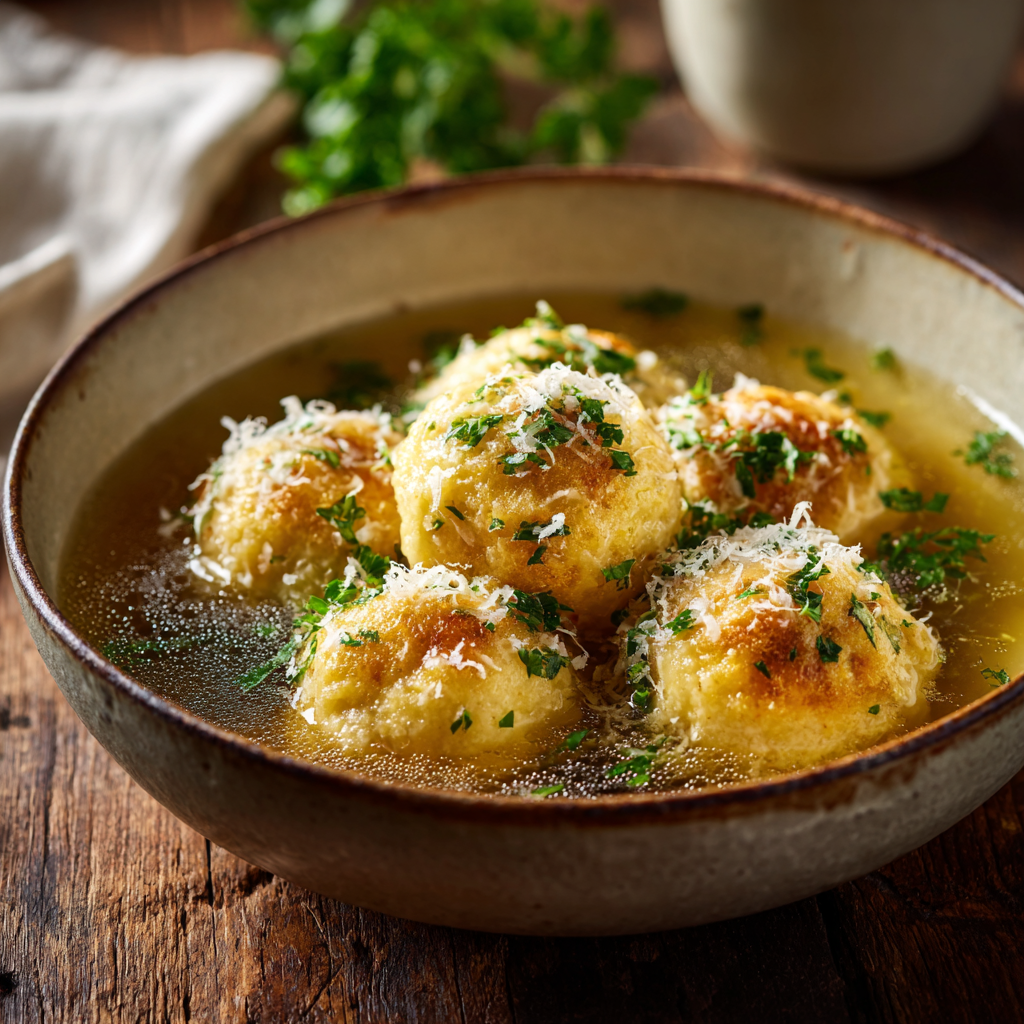
A rich, clear broth is the quiet hero that lifts each soft dumpling into a memorable bowl. I start by choosing a base—chicken for gentle warmth, beef for deep backbone, or vegetable for a lighter, herb-forward stock.
Fast enrichment with pressure cooking
When time is short, I toss bones, carrot, celery, garlic, a halved onion with skins on, and thyme into the pressure cooker. Thirty minutes under pressure turns store stock into something layered and glossy.
If all you have is water, use the same aromatics. It won’t be as rich, but it will still make a clean, flavorful liquid to poach in.
How to use and finish the broth
Season the broth to taste before adding dumplings. Poaching them directly lets the balls and the liquid exchange flavor so the soup builds as it cooks.
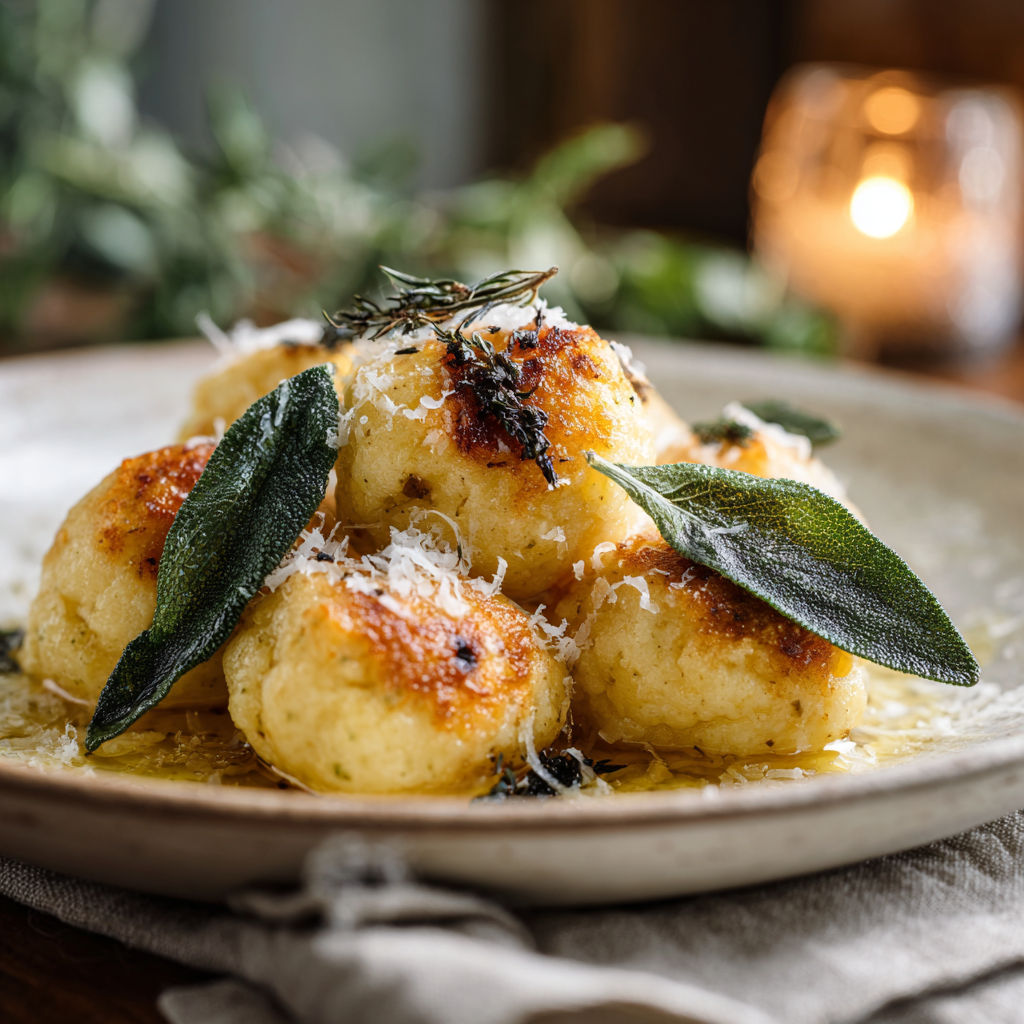
For a finishing touch, melt butter, sizzle sage leaves until they crisp, and spoon the fat over the top. I often serve a small bowl of hot broth and then add a drizzle of sage butter on top—this gives fat and perfume without drowning the soup.
- Chicken: gentle, classic, great with Parmigiano.
- Beef: richer bass notes for a heartier course.
- Vegetable: clean, bright, and herb-friendly.
| Base | Flavor note | When to use |
|---|---|---|
| Chicken | Light, comforting | Weeknight soup or subtle bowls |
| Beef | Deep, savory | Winter course or when serving as a main |
| Vegetable | Fresh, clean | Vegetarian diners or spring menus |
How to serve, customize, and store your bread dumplings
A warm bowl of broth and two tender balls make a weekday supper feel like a celebration. I like that simple set-up for company or a quiet night in.
In a warm bowl with cheese and parsley
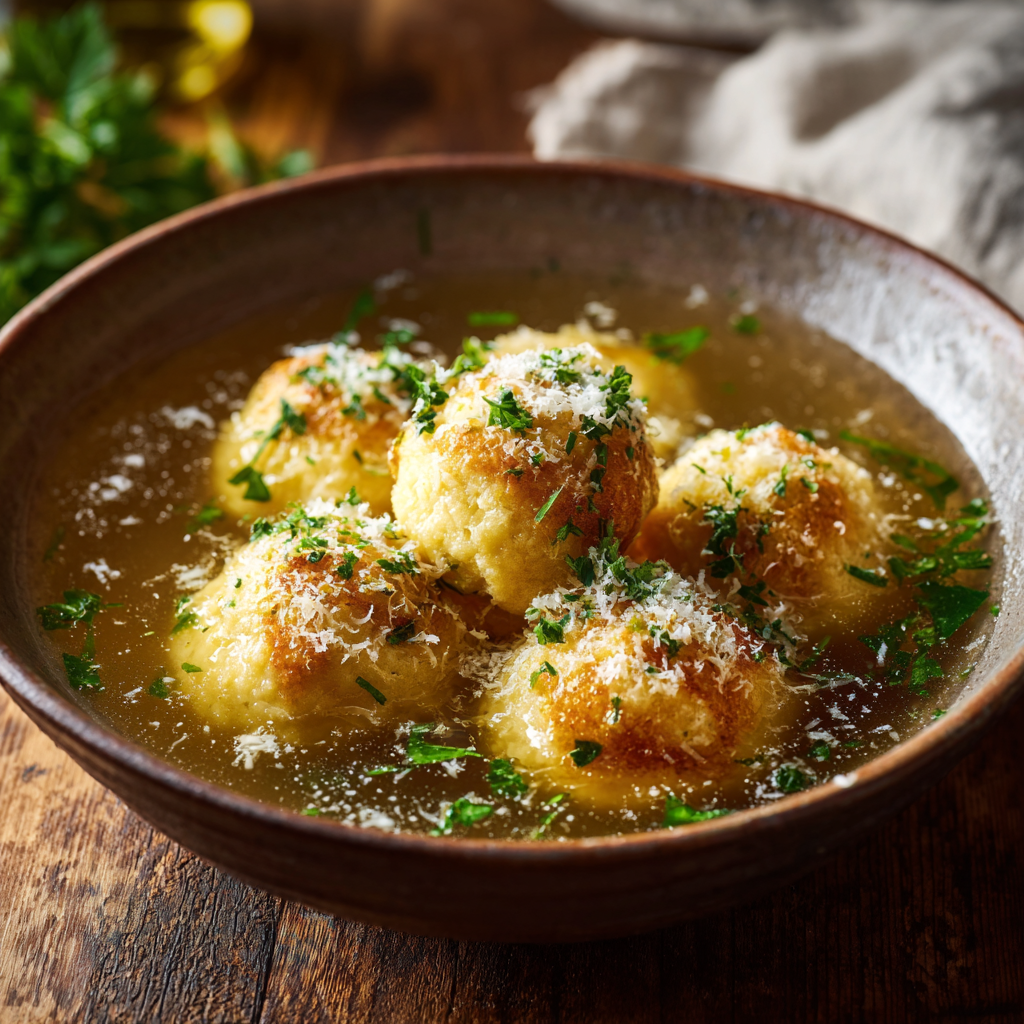
My everyday serve is two dumplings in hot broth, plenty of Parmigiano, and a sprinkle of chopped parsley for color. The cheese melts into the liquid and brightens each bite.
Browned butter and frizzled sage on top
For a richer finish, melt butter until nutty, crisp a few sage leaves, and spoon the fat over the balls. That crunchy herb and warm butter add contrast to the soft centers.
Size, add-ins, and make-ahead tips
Smaller balls, about 1–1.5 inches, cook evenly and fit neatly on a spoon. A tablespoon or two of flour firms the mixture if it feels loose.
Rest the mixture a day to let flavors meld and shaping get easier. Shape and chill on a tray up to a day; drop chilled balls straight into simmering broth to cook.
- Reheat gently in broth; avoid boiling to prevent splitting.
- Swap prosciutto, ham, or bacon for a meat note; parsley and pepper keep it bright.
- Store leftover broth in a cup or airtight container for next-day use.
| Serve | Why | Tip |
|---|---|---|
| Broth with cheese | Light, classic lift | Two balls per bowl for balance |
| Browned butter & sage | Nutty, crisp contrast | Finish just before serving |
| Make-ahead | Better texture, easier shaping | Chill up to one day |
Conclusion
A few honest ingredients and steady hands will turn leftovers into a course guests remember. Use very stale bread for lighter texture, enrich stock fast in a pressure cooker, and poach the balls gently for about 15 minutes until they float.
Keep the soak balanced, cook aromatics low and slow, and shape with damp palms. Serve each portion in a hot bowl of clear broth or finish with browned butter and crisp sage on top for extra richness.
This simple dish honors thrift and taste. Try it tonight and the next time you want comforting food that feels like family.
Canederli (Italian Bread Dumplings in Broth)
Ingredients
Method
- Cube stale bread and place it in a large bowl.
- Pour in warm milk and toss until every piece is moistened but not soggy.
- Let it sit for 10–15 minutes to absorb evenly.
- Heat butter with a little olive oil in a skillet.
- Add the chopped onion and cook until soft and golden.
- Stir in the diced speck or pancetta and cook until fragrant and lightly browned.
- Remove from heat and let cool slightly.
- Add the sautéed onion and pork to the soaked bread.
- Mix in the eggs, Parmigiano, parsley, nutmeg, salt, and pepper.
- Stir gently with your hands or a spoon until well combined.
- If the mixture feels too wet, add a spoon or two of breadcrumbs; if too dry, add a splash of milk.
- Let rest for 10 minutes.
- With damp hands, roll a small test ball about the size of a golf ball.
- Gently poach it in simmering broth for 5 minutes to test consistency.
- Adjust the mixture if needed—add more crumbs if it falls apart, or milk if too dense.
- Shape the remaining mixture into equal-sized balls (1.5–2 inches).
- Bring the chicken broth to a gentle simmer (not a rolling boil).
- Carefully drop the dumplings in and cook for about 12–15 minutes.
- They’re done when they float and spring back lightly when touched.
- Serve 2–3 dumplings per bowl with hot broth.
- Sprinkle with Parmigiano and parsley.
- For a richer version, drizzle browned butter and crispy sage leaves on top.
Notes
- Use very stale bread — fresh bread can turn gummy when soaked.
- Simmer, don’t boil. A gentle simmer keeps dumplings soft and intact.
- Make ahead: You can shape and refrigerate dumplings up to a day before cooking.
- Storage: Cooked dumplings last 3–4 days in the fridge. Reheat gently in broth or with butter.
- Vegetarian version: Replace speck with mushrooms and use vegetable broth.