
Jump to Recipe
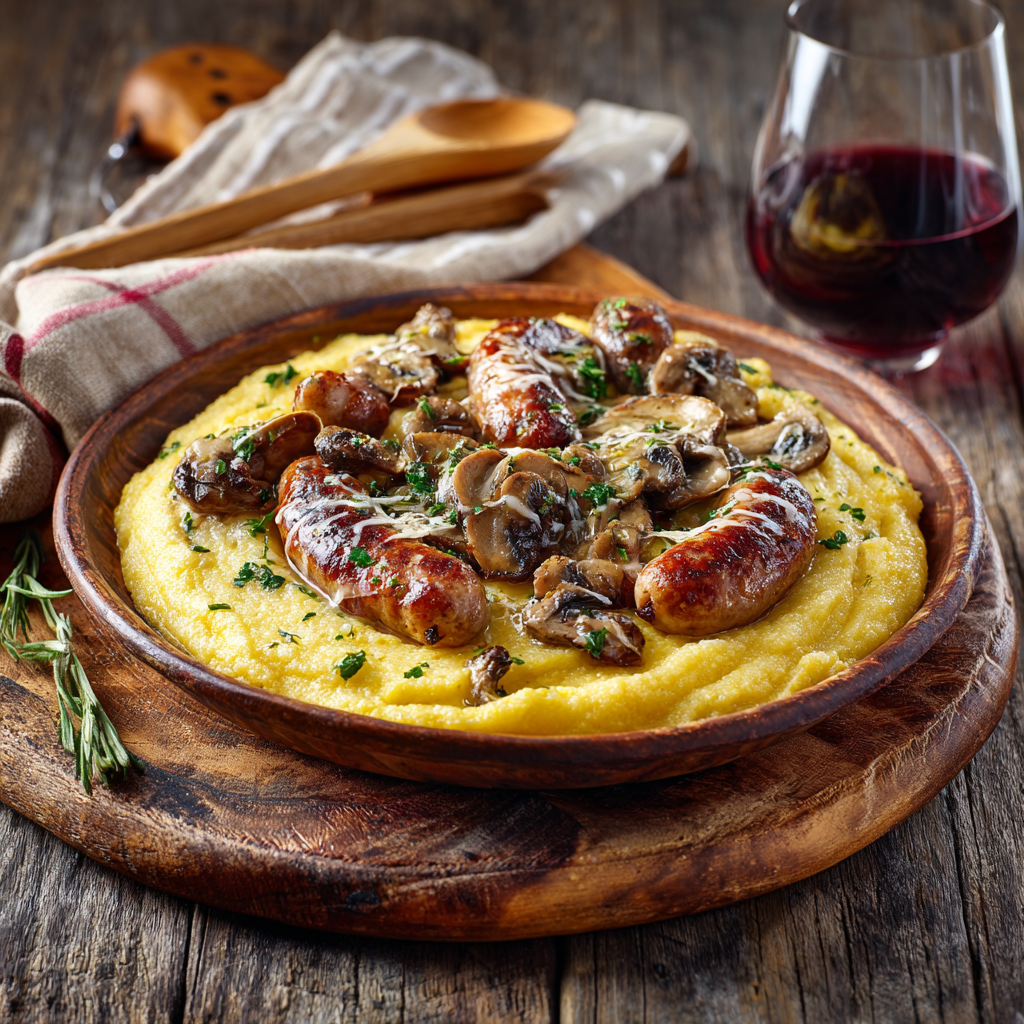
The polenta taragna recipe lombardy I learned at my grandmother’s table still fills the kitchen with warm, nutty steam and the sight of melting cheese. I remember stirring a heavy pot for nearly an hour while the buckwheat lent a deep, earthy color and the butter made the mix silky.
My family method uses a two-thirds buckwheat to one-third cornmeal ratio, a 400 g flour mix to 2 liters (about 8½ cups) of water base for four people, plus 10 g coarse salt. We melt in roughly 300 g local cheese and 125 g unsalted butter toward the end for that stringy, rich finish.
I prefer a heavy-bottomed or copper pot and a long, steady stir—50–60 minutes—to reach a creamy, mound-holding texture. Serve hot with sausages, braised meat, or sautéed mushrooms and enjoy how the dish holds up to leftovers and reheating.
Key Takeaways
- Use a 2:1 buckwheat-to-cornmeal ratio for authentic flavor and color.
- For four servings: 400 g flour mix, 2 L water, 10 g salt, 300 g cheese, 125 g butter.
- Cook 50–60 minutes in a heavy pot with constant stirring for best texture.
- Choose Valtellina Casera DOP or substitutes like Bitto or Fontina.
- Pairs well with sausages, slow-cooked meat, or mushrooms; serve hot.
Why this rustic Valtellina classic belongs on your table
The name of this mountain dish comes from a local verb that means “to stir,” and that motion is the point. I learned to trust steady movement with a stirring wooden spoon to reach the right creaminess.
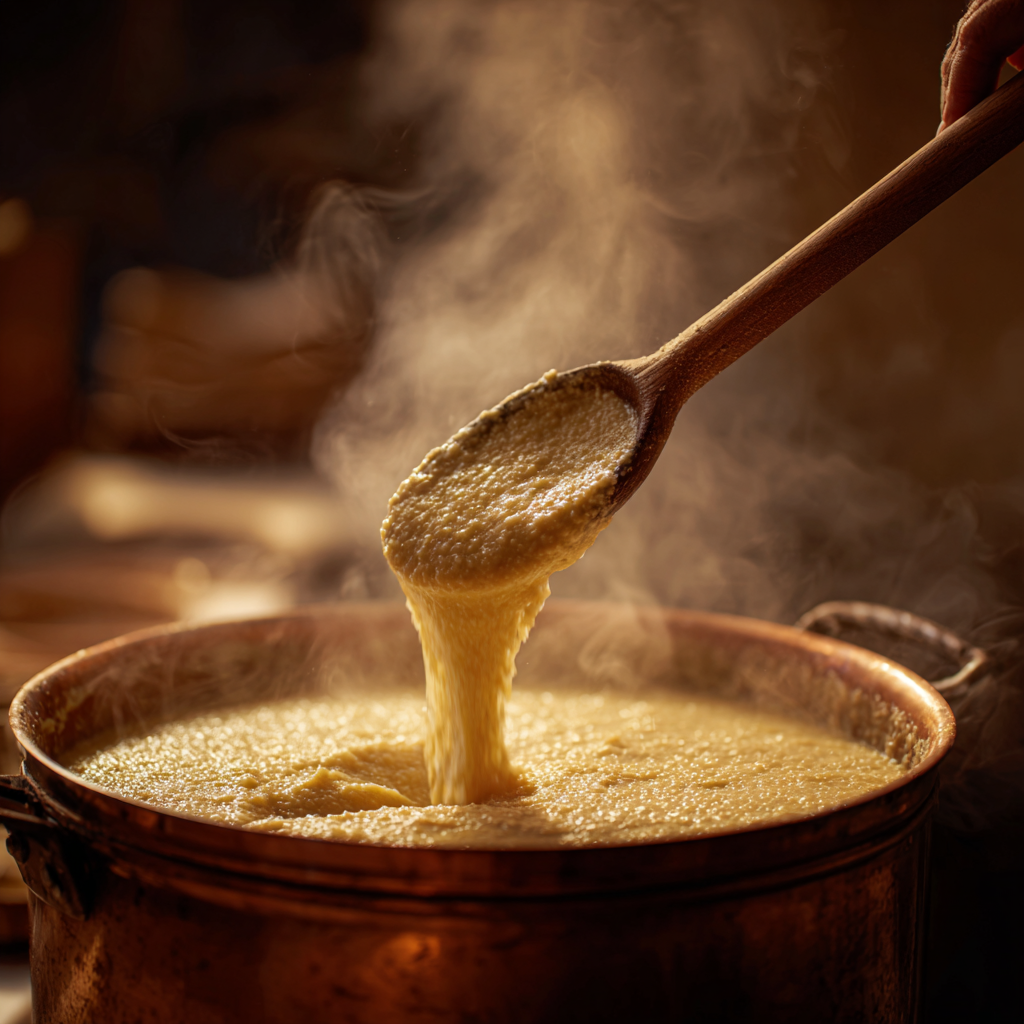
Using a wooden spoon in a thick copper pot keeps the mix from sticking. Steady heat and small, frequent stirs make tiny starch emulsions. Those emulsions stop lumps and give a glossy surface.
What the name means and how motion shapes texture
Taragna points to the tarai, the traditional tool. Constant agitation for about an hour lets the flours absorb the first cups of liquid evenly. Keep salt consistent so the grains hydrate and taste balanced.
How buckwheat colors and flavors the mix
Buckwheat gives a darker hue and a nutty character that balances butter and cheese without feeling heavy. It also makes the dish naturally gluten-free. Small, regular stirs work better than sporadic, hard ones; you’ll feel the mix smooth and free of lumps when it’s close.
- Use steady heat, a comfortable spoon, and patience for best results.
- Think of the hour as necessary cooking, not extra work.
| Tool | Why it helps | Result |
|---|---|---|
| Copper pot | Even heat distribution prevents scorching | Smooth, evenly cooked texture |
| Wooden stirring spoon | Gentle on the mix; good grip for long stirring | Fewer lumps and glossy surface |
| Low steady heat | Slow starch gelatinization without burning | Rich mouthfeel and spoonable finish |
Ingredients, ratios, and the cheeses that make it sing
My method begins with the flour blend. Use two-thirds buckwheat flour to one-third cornmeal. For four people, measure 400 g (about 2 1/2 cups) of the mix and dissolve it into 2 liters (about 8 1/2 cups) of water. That hydration yields a creamy, mound-holding finish rather than something runny.
The traditional flour mix
The 2:1 ratio balances a nutty edge with familiar softness. Weighing the flour is best for consistency; use cups only if you lack a scale. Add the dry mix gradually while you whisk at a gentle boil, then lower to a simmer to avoid lumps.
Choosing the cheese
Use 300 g semi-fat cheese — Casera DOP if you can. Trusted substitutes include Bitto, Fontina, Branzi, or Taleggio. Casera gives mellow stretch; Bitto adds alpine complexity; Fontina melts glossy; Taleggio brings a pronounced aroma. Cut small pieces so the cheese melts evenly in the hot pot.
Butter, salt, and small details
Salt: 10 g coarse salt for the 2 L water, adjusted if you use salty cheeses. Butter: 125 g unsalted (~1 stick) enriches without greasiness. Save a little butter and cheese for the final 10 minutes so flavors stay bright.
- When water reaches a boil, add flour slowly while whisking to create an even base.
- Lower heat to a steady simmer and switch to a wooden spoon for long stirring.
- Cut cheese into small, even pieces to melt quickly and avoid clumps.
| Cheese | Texture | Flavor note |
|---|---|---|
| Casera DOP | Elastic, creamy | Mild, buttery |
| Bitto | Firm, slightly granular | Nutty, alpine |
| Fontina | Silky, gooey | Mild, sweet |
| Taleggio | Soft, very melty | Pungent, tangy |
Tools that prevent sticking and guarantee creaminess
The right cookware makes the difference between a glossy finish and a scorched bottom. I rely on gear that spreads heat evenly and gives me control during that long, steady stir.
Heavy-bottomed or copper pot
Use a heavy-bottomed pot or a copper paiolo to avoid hot spots. The thick bottom keeps the mixture from catching while you lower the heat and stir. A deep, straight-sided vessel also holds steam and limits splatter better than a wide pan.
Whisk versus wooden spoon
Start with a whisk to shear the flour into the water. That step prevents lumps when the mass is still fluid. When it thickens, switch to a long wooden spoon for leverage and torque.
Simple add-ons and comfort tricks
Have a cutting board and knife ready for cheese, plus a ladle for tidy portions. Use a spoon with a slightly flat edge to scrape the curve where sticking begins. A trivet protects counters and a long handle keeps hands away from steam.
- Control heat gently; the right pot lets you lower it without losing consistency.
- If a crust forms, soak the pot warm to loosen residues—no harsh scrubbing.
| Tool | Why it helps | Result |
|---|---|---|
| Copper or heavy pot | Even heat distribution | No scorching, smooth finish |
| Whisk | Integrates flour early | Lump-free base |
| Long wooden spoon | Better leverage and gentle scraping | Glossy texture with less effort |
Step-by-step: my family’s polenta taragna recipe lombardy
Begin at the stove: hot water, a steady hand, and an eye for texture set the tone.
- Bring 2 liters (about 8½ cups) water to a brisk boil in a heavy-bottomed or copper pot. Add 10 g coarse salt, then lower the heat so the surface simmers.
- Slowly whisk in 400 g flour (two-thirds buckwheat, one-third cornmeal). Rain it in while whisking to avoid dry pockets. Stop whisking once the mix thickens into a smooth slurry.
- Switch to a sturdy wooden spoon. Cook 50–60 minutes, stirring every 2–3 minutes. An occasional sticking at the bottom is normal and deepens flavor without burning the mix.
- While the pot cooks, cut 300 g cheese and 125 g unsalted butter into small pieces. About 10 minutes before the end cooking window, add the cheese first, then the butter. Stir until fully melted and glossy.
- Turn off the heat, rest 5 minutes, then serve piping hot. If you warm a pan for sausage or mushrooms, both dishes hit the table together.
| Step | Timing | Key cue | Amount (for 4) |
|---|---|---|---|
| Boil and salt | 0–5 minutes | Rolling boil then reduce | 2 L water, 10 g salt |
| Whisk in flour | 5–10 minutes | Smooth slurry | 400 g flour blend |
| Stir with spoon | 50–60 minutes | Pulls from sides; slow ribbons | Stir every 2–3 minutes |
| Add dairy & rest | Last 10 minutes + 5 rest | Glossy, unified texture | 300 g cheese, 125 g butter |
Pro tips, timing, and troubleshooting for lump-free, silky results
Control of heat and rhythm is the quiet secret to a lump-free finish. Start with a rolling boil, then lower to a gentle simmer. That steady heat lets starch swell slowly and keeps lumps forming to a minimum.
Heat management
After the first boil, keep the flame low. Add the flour slowly while whisking to make a smooth base. Once the mixture thickens, switch to a wooden spoon and stir every 2–3 minutes. Short, regular minutes of stirring beat frantic bursts.
Sticking at the bottom
A thin crust on the bottom is normal and adds toasted flavor. Scrape it gently with the spoon’s flat edge to fold those notes back in. Use a copper or other heavy pot to reduce hot spots and buy you forgiveness if you miss a stir.
Texture checkpoints
Use touch, not just time. Around 50 minutes the mass should no longer taste grainy. It should fall from the spoon in slow, glossy ribbons. Add butter and cheese in the last minutes, then remove heat before the cheese melts away completely.
- If small lumps appear early, whisk vigorously right after adding flour.
- If the mix tightens too fast, splash in hot water and stir to reincorporate.
- Keep dairy additions late to avoid greasiness and preserve scent.
| Issue | Quick fix | Timing cue |
|---|---|---|
| Early lumps | Whisk vigorously while mixture is still loose | Within first 10 minutes after adding flour |
| Too thick too soon | Add a small splash of hot water and stir | Any time after 20 minutes |
| Burning on bottom | Lower heat, scrape gently, use heavy pot | When you smell toast or see dark flecks |
| Overcooked dairy | Add cheese and butter in last 8–10 minutes, then rest | Last 10 minutes of cooking |
How to serve polenta taragna: pairings, portions, and variations
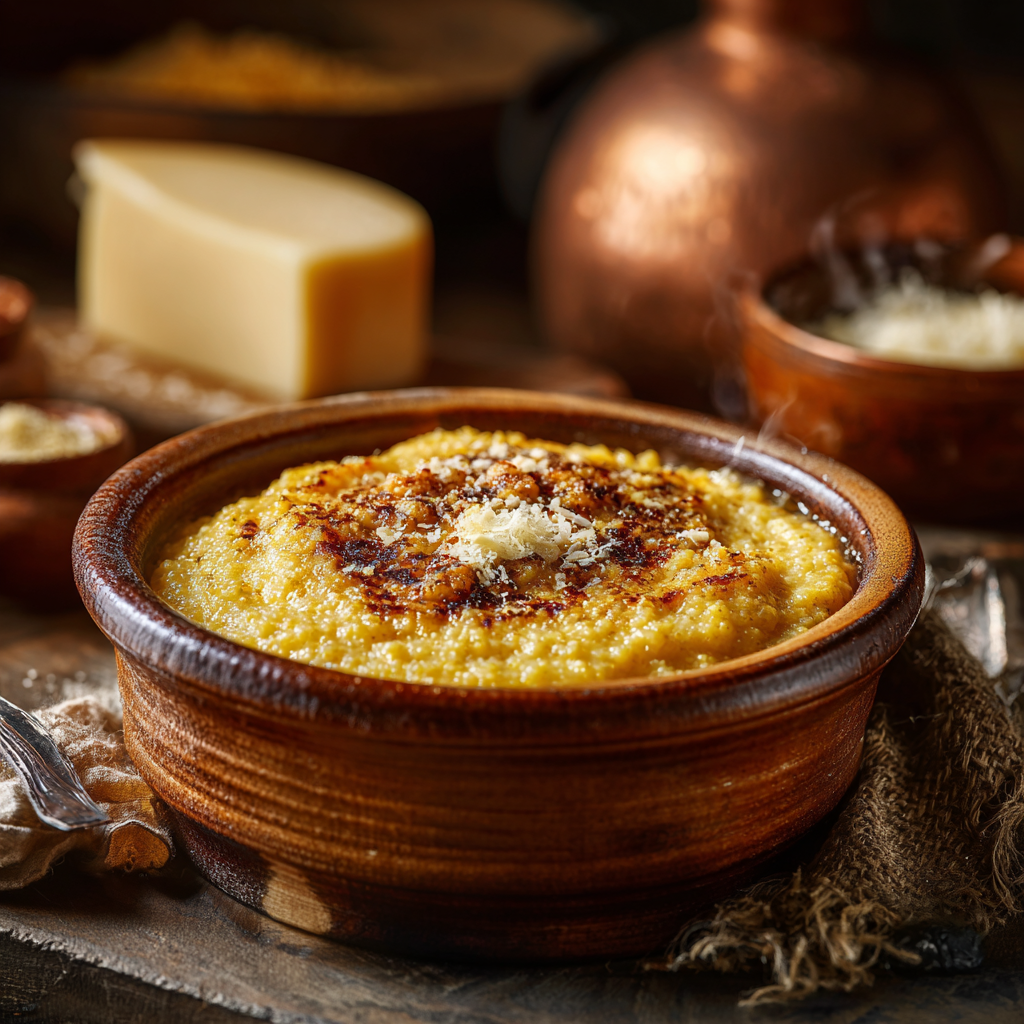
A warm mound on a wooden board changes a meal into a shared moment with friends and family. Serve it piping hot so the cheese strings and butter shine in each scoop.
Main dish or side: portions for 4–6 people
As a main, plan generous cups per person—about 1 to 1 1/2 heaping cups each. For a side, the base amount in this article feeds 4–6 people comfortably alongside meat or vegetables.
Classic pairings: sausages, braised meats, and mushrooms
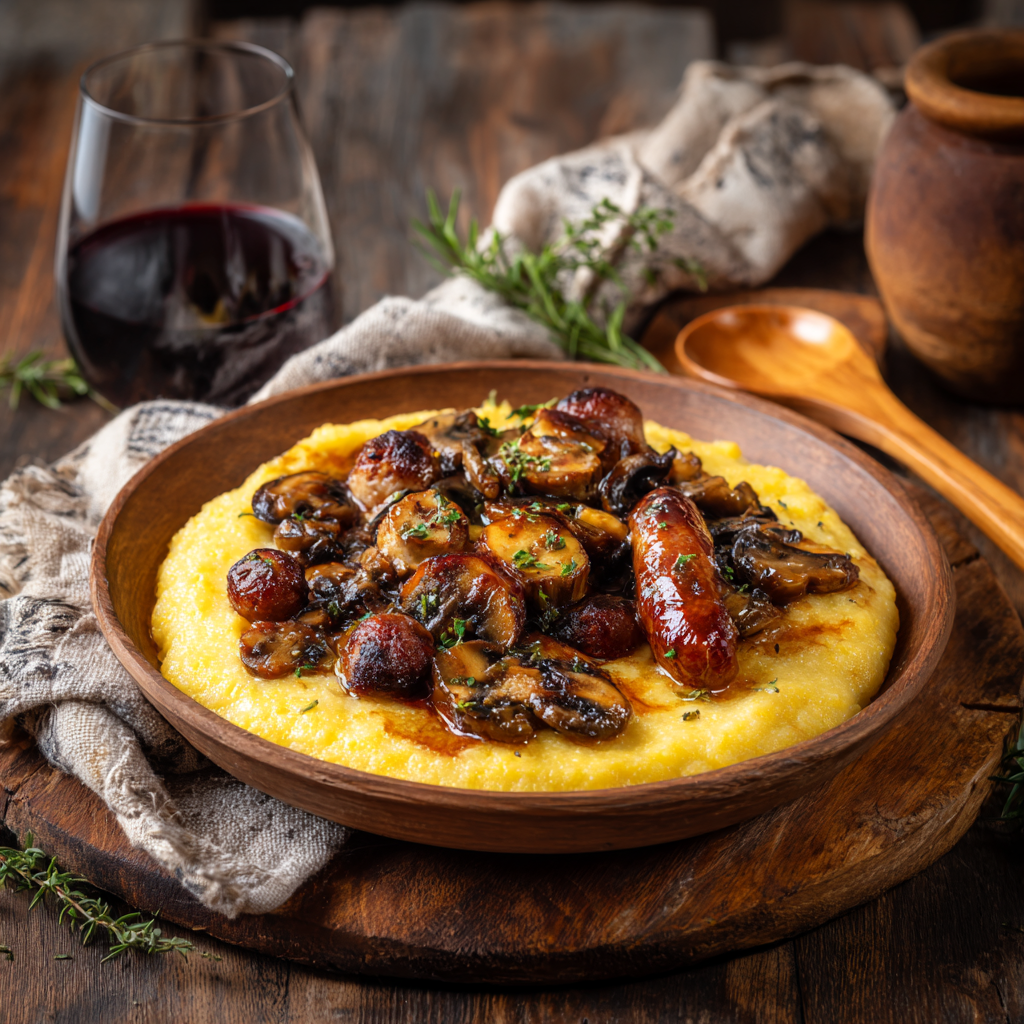
I plate it with pan-browned sausages or slow-braised meat to echo mountain flavors. Mushrooms—porcini or cremini—sautéed in butter pair beautifully with buckwheat flour’s earthiness.
- Add cheese tableside: cut small pieces and stir a few in at the end cooking for pockets of molten richness.
- Serve a knob of butter on top for gloss and flavor just before serving.
Make-ahead, storage, and reheating without losing creaminess
Spread leftovers thin to cool quickly and store in airtight containers. Refrigerate 3–5 days or freeze up to 1 month in portioned slabs for easier thawing.
Reheat gently on the stovetop with a splash of water or milk, stirring to restore creaminess. A final stir-in of butter or a few pieces of cheese revives shine without greasiness.
| Use | Storage | Reheat tip |
|---|---|---|
| Main or side | 3–5 days refrigerated | Stovetop with splash of milk |
| Portioned slabs | Freeze up to 1 month | Thaw overnight, reheat gently |
| Communal board | Serve immediately piping hot | Carve wells for stewed mushrooms or meat |
Conclusion
When the pot finally falls into a glossy ribbon, you know the work has paid off. The heart of this method is steady time at low heat for about 50–60 minutes, slow stirring, and adding cheese and butter near the end.
The final texture should be soft, spoonable, and able to welcome sausages, braised meat, or mushrooms without losing its own voice. Trust your senses more than the clock: watch how the mix falls from the spoon and taste for doneness.
Use a heavy pot and good ingredients, then serve polenta hot and generous. Make this taragna your own by choosing cheeses you love and simple pairings that make the table sing.
Polenta Taragna (Lombardy Buckwheat Polenta)
Ingredients
Method
- Bring 2 liters of water to a boil in a heavy-bottomed or copper pot. Add coarse salt.
- Gradually whisk in 400 g of the flour blend (2:1 buckwheat to cornmeal) while the water simmers. Whisk until smooth and lump-free.
- Lower the heat to a gentle simmer. Switch to a long wooden spoon. Stir steadily every 2–3 minutes for about 50–60 minutes.
- While it cooks, cut 300 g of cheese and 125 g of butter into small pieces.
- About 10 minutes before the end, stir in the cheese first, then the butter. Mix until melted and glossy.
- Turn off the heat, let it rest for 5 minutes, and serve hot. It should be creamy yet firm enough to hold shape on the plate.
- Top with extra butter or serve with sausages, braised meat, or sautéed mushrooms.
Notes
- Use two-thirds buckwheat flour to one-third cornmeal for the classic earthy flavor and darker color.
- Stirring often is the secret—slow and steady gives you the glossy, creamy texture.
- Casera DOP cheese gives authentic flavor, but Fontina or Bitto melt beautifully too.
- A heavy-bottomed or copper pot helps prevent sticking and ensures even heat.
- Leftovers keep well; reheat gently with a splash of water or milk.