
Jump to Recipe
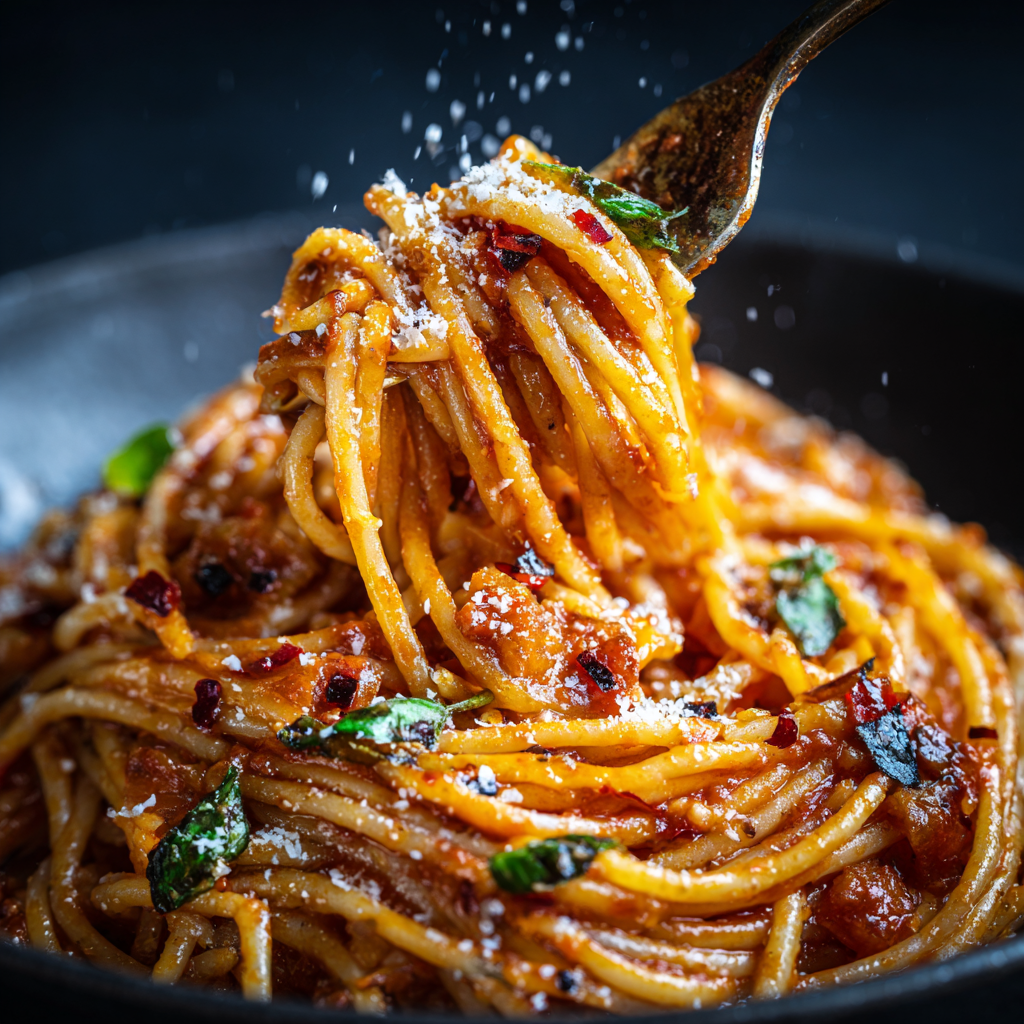
I bring you my calabria spicy eggplant pasta recipe because night after night this is the pasta I crave: tender, slightly smoky eggplant and a tomato sauce that hugs each strand.
I cook this dish with practical, Nonna-approved steps—salting and pressing the eggplant to remove bitterness, browning pieces in olive oil, and simmering a passata plus peeled tomatoes with garlic and basil until bright and thick.
In about 30 minutes you get a weeknight dinner that nods to pasta alla norma: finish with pecorino or ricotta salata, a sprinkle of breadcrumbs for crunch, and a splash of starchy water to make the sauce glossy.
I’ll share tool choices, small swaps for American kitchens, and clear visual cues you can watch in a short video so you know exactly when to move on. This is food that feels like home and travels well to any table.
Key Takeaways
- Salting and pressing eggplant tames bitterness and yields silky texture.
- Brown eggplant in olive oil for flavor, then finish in a simmered tomato sauce.
- Use starchy pasta water to emulsify the sauce and make it cling.
- Finish with basil and a hard cheese like pecorino or parmesan for balance.
- Hands-on tips and simple swaps keep the dish authentic for US kitchens.
Why this Calabrian-style eggplant pasta hits the spot
What makes this dish sing is the contrast between silky sautéed eggplant and a bright tomato sauce. The sweetness of roasted flesh meets tomato acidity so the plate feels rich but never heavy. That balance is at the heart of pasta alla norma and related southern traditions.
We salt and press the slices to pull out bitterness. This lets the vegetable caramelize and offer savory sweetness instead of sponginess. A gentle lift of pepper gives warmth without overpowering the produce.
- Basil and cheese add fragrance and savory balance to round the tomato.
- Respectful treatment of garlic gives depth, not scorch.
- The sauce clings when you emulsify with starchy water—this makes any pasta dish feel restaurant-level.
This pasta eggplant pairing can be a hearty main or a generous side with grilled fish or meat. We rely on time-tested techniques so the results are dependable every weeknight.
| Technique | Result | When to use |
|---|---|---|
| Pan-fry | Caramelized edges, quick browning | When you want bold texture |
| Roast | Even cooking, deeper sweetness | When hands-off convenience matters |
| Salt & press | Less bitterness, better caramelization | Always worth the small extra step |
Quick snapshot: time, yield, and tools you actually need
With a little prep and the right pans, this dinner comes together in about half an hour. Below is a practical checklist to keep you organized so nothing bottlenecks the stove.
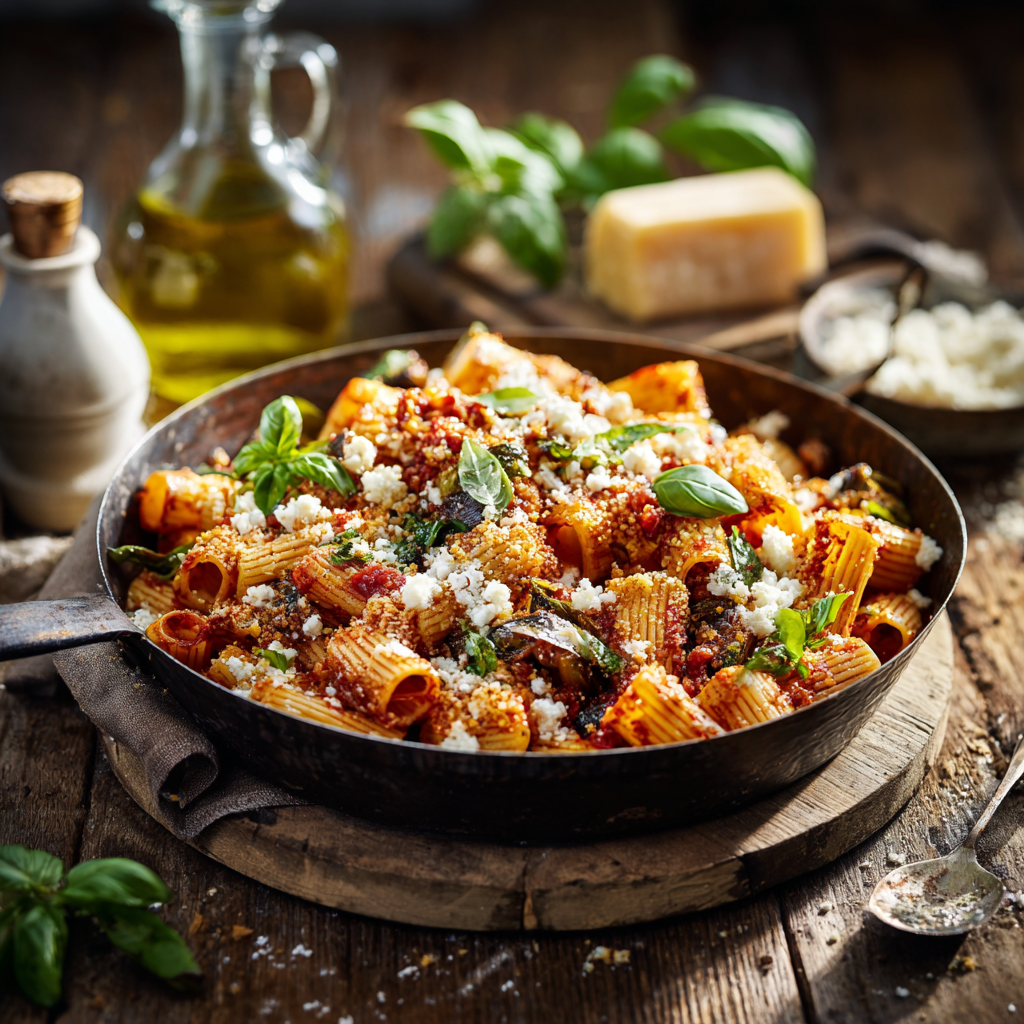
Cook time, servings, and ideal pan size
Time: plan about 30 minutes from first sizzle to serving when you heat efficiently and stagger tasks.
Yield: scales easily — a family bowl or a cozy dinner for two with leftovers works well.
Pan: use a wide skillet or sauté pan so the eggplant browns in a single layer and does not steam.
Essential tools: skillet, pot of salted water, colander
- Pot: choose a large pot so the pasta can roll freely. Crowded pots stick and dull starch release.
- Pot salted water: salt until it tastes like the sea — this seasons from the inside.
- Tools: colander, wooden spoon, chef’s knife, measuring cup for reserved water.
- Other essentials: enough oil for frying, space to salt and press eggplant, and 2–4 cloves of garlic.
| Item | Why it matters | Tip |
|---|---|---|
| 30 minutes | Fast weeknight timing | Start sauce, then brown eggplant while water heats |
| Wide pan | Even browning, better texture | Brown in batches if needed |
| Large pot | Prevents sticking and keeps starch | Reserve a cup of water for finishing the sauce |
Ingredients at a glance (with smart swaps for US kitchens)
I’ll walk you through the pantry items that matter most, plus smart swaps for U.S. grocery aisles. These choices keep the dish honest while making shopping simple.
Eggplant, tomatoes, and olive oil: the non-negotiables
Choose firm, glossy eggplant with tight skin and few seeds for better texture. Salt and press slices if they feel spongy—this prevents bitterness and helps caramelize when you add eggplant to the pan.
Use quality passata plus a can of peeled tomatoes crushed by hand for body and freshness. Extra-virgin olive oil gives flavor; a neutral oil can help for frying if you need more heat tolerance.
Cheese choices: ricotta salata vs. parmesan or pecorino
Ricotta salata is traditional for pasta alla norma, but grated parmesan or pecorino romano are excellent U.S. substitutes. They bring the salty, tangy finish without hunting specialty stores.
Spice and aromatics: garlic, basil, and red pepper flakes
Keep garlic gentle in the pan and add fresh basil near the end for a bright finish. Start with a small pinch of red pepper flakes and adjust to taste—pepper flakes or a regional peperoncino both work.
Pasta shapes: rigatoni, spaghetti, or fileja
Rigatoni traps chunks of sauce and vegetable. Spaghetti gives a classic feel. Fileja connects you to regional tradition, but any of these shapes make a lovely plate.
| Ingredient | Purpose | U.S. swap | Tip |
|---|---|---|---|
| Eggplant | Texture, caramelized flavor | Smaller globe or Italian varieties | Salt, press, and dry before frying |
| Passata + canned tomatoes | Base body and fresh tomato taste | Quality passata + San Marzano-style canned tomatoes | Crush tomatoes by hand for texture |
| Ricotta salata / Cheese | Salty, crumbly finishing note | Parmesan or pecorino romano | Grate fresh and finish just before serving |
| Olive oil, garlic, basil, red pepper flakes | Flavor backbone and heat | EVOO for finishing; neutral oil for frying if needed | Add basil last; start with light pepper flakes |
calabria spicy eggplant pasta recipe: step-by-step method
Follow this practical method and you’ll get caramelized vegetable pieces and a glossy sauce every time. Read each short step, set a kitchen timer, and work in stages so nothing crowds the pan.
Prep the eggplant like a Nonna: salt, press, and dry
Slice and salt generously, then press under a plate with a small weight for 15–20 minutes. Blot dry so the pieces brown instead of steaming when they hit hot oil.
Build the sauce: onion-garlic soffritto, passata, and peeled tomatoes
Warm extra-virgin olive oil over medium heat, soften chopped onion, then add garlic cloves until fragrant. Stir in passata and crushed peeled tomatoes, season with salt and a touch of pepper, and simmer low to round the acidity.
Pan-fry for caramelized edges
Heat a wide pan, add oil, and fry the vegetable in batches over steady heat. Aim for deep brown edges and tender centers; season lightly as you go.
Marry pasta and sauce: starchy water, toss, and finish
Boil the pasta in a pot of pot salted water until just shy of al dente and reserve a cup of starchy water. Add the browned vegetable to the tomato sauce, then return pasta to the pan. Toss with a splash of reserved water until the pasta sauce clings and looks glossy.
- Finish with fresh basil off the heat and a dusting of cheese or breadcrumbs.
- Add a pinch of red pepper flakes or red pepper to taste for warmth that complements, not overwhelms.
| Step | Timing | Tip |
|---|---|---|
| Salt & press | 15–20 minutes | Pat very dry before frying |
| Soffritto & simmer | 10–12 minutes | Low simmer to tame acidity |
| Fry & marry | 5–7 minutes | Work in batches; reserve water |
Pro tips for silky sauce and tender eggplant
A few precise moves at the stove turn a heavy pan of tomatoes and fried eggplant into a silky, harmonious sauce.
Balancing richness with acidity
Taste the sauce as it simmers. If it feels too rich, cook a few more minutes, then add a splash of reserved water to lift sharp edges while keeping body.
Tomatoes bring the acidity that brightens the eggplant and cheese. Simmer gently so sweet notes emerge without a raw or tinny taste.
Harnessing pasta water for perfect cling
Reserve a cup of cooking water. Add it in small splashes while tossing so the pasta sauce emulsifies and becomes glossy without cream.
Work minute by minute: when the sauce coats a spoon and the eggplant yields to gentle pressure, stop. If the sauce tightens, add more water and a tablespoon of olive oil to restore sheen.
- Manage heat: brown eggplant over steady heat so the inside softens before the exterior hardens.
- Use oil sparingly at first; add small amounts if the pan looks dry to prevent scorching.
- Salt pepper at each stage—eggplant, sauce, and final toss—so flavors build rather than overload.
- Keep garlic fragrant, not browned; lower the heat if it colors too fast.
- Toss off the heat with basil and cheese to preserve aroma and maintain the emulsion.
Choosing your cheese and basil like a local
Choosing the right cheese and herbs makes the whole plate sing without stealing the show. I recommend a clear plan: pick one primary finishing cheese and a smaller contrast for texture.
When to splurge on ricotta salata—and when parmesan or pecorino shine
Ricotta salata brings a firm, salty, tangy profile that stands up to tomato and eggplant. Use it when you want the authentic snap of a classic Sicilian finish.
If ricotta salata is hard to find, grated parmesan or pecorino romano work well. Parmesan gives a gentle nuttiness; pecorino adds sharper bite. Add cheese off the heat so it melts into the sauce without becoming grainy.
Fresh basil timing for aroma without bitterness
Tear basil by hand and add it at the very end. Cutting bruises leaves and early heat turns flavor flat. Keep a few leaves whole for garnish to signal freshness as you serve the dish.
- Fine grate to melt; coarse grate for finishing contrast.
- Use restraint: enough to season, not mask.
- Parmesan for subtlety; pecorino for boldness; ricotta salata for classic texture.
| Cheese | Texture | Flavor | Best use |
|---|---|---|---|
| Ricotta salata | Firm, crumbly | Salty, tangy | Finish for authentic snap |
| Parmesan | Fine, buttery when grated | Nutty, mild | Toss into sauce for gentle depth |
| Pecorino Romano | Hard, granular | Sharp, savory | Use when you want a bolder hit |
Dial the heat: from gentle warmth to Calabrian kick
Dialing heat is less about fear and more about listening—taste as you go and trust your palate. A measured approach keeps the tomato and basil bright while giving the dish personality.
Start very small: a pinch of red pepper flakes will give a gentle lift. If you prefer more bite, move up to a half teaspoon for family meals. For a bold finish, a full teaspoon brings noticeable heat in minutes.
Red pepper flakes vs. Calabrian peperoncino
Red pepper flakes are straightforward and easy to dose. To add depth, briefly bloom pepper flakes or Calabrian peperoncino in a little oil off the heat, then stir into the sauce. This releases flavor without burning the garlic.
- Start small; you can always add more heat but you can’t take it away.
- Blooming in oil gives smoky, fruity notes that pair beautifully with eggplant and cheese.
- Let the sauce simmer a minute after adding spice—flavors open and meld.
- Serve chili oil at the table for guests who want extra kick.
Remember: heat should lift the pasta and sauce, not overpower them. Balance—along with a final dusting of cheese—keeps the bite friendly and delicious.
Make it your way: regional twists and hearty add-ins
Make this your own by choosing one clear accent—fried eggplant and ricotta for Sicily, or a spoon of nduja for smoky heat. I encourage small changes that respect timing and texture so the core sauce and shine stay intact.
Sicilian-leaning pasta alla Norma notes
Lean into pasta alla Norma by frying eggplant until deeply golden and finishing with crumbled ricotta salata. That contrast of crisp edges and tangy cheese is the heart of the alla norma tradition.
Calabrian nduja option for smoky heat
For a bold southern nudge, melt a spoon of nduja into the simmering sauce. It blends with tomatoes and olive oil and plays nicely with garlic without overwhelming the dish.
Optional protein: Italian sausage, thoughtfully
If you add italian sausage, brown it in a pan first and drain excess fat. Fold the sausage into the sauce late so it seasons without turning the plate greasy.
- Rigatoni’s ridges hug chunks of eggplant and sausage for a satisfying bite.
- Add eggplant before rich add-ins like nduja so it sears instead of steaming and losing caramelization.
- Keep garlic fragrant and oil balanced; adjust salt carefully as sausage and nduja add seasoning.
- Finish with a modest sprinkle of ricotta or ricotta salata to tie variations back to classic pasta alla roots.
| Variation | Key move | When to use |
|---|---|---|
| Sicilian alla norma | Deep-fry eggplant, finish with ricotta salata | When you want classic texture and tang |
| Nduja boost | Melt nduja into sauce early, taste for heat | For smoky, peppery depth |
| Sausage add | Brown, drain, fold into sauce late | When you want extra richness and protein |
Shop and season: picking the right eggplant and tomatoes
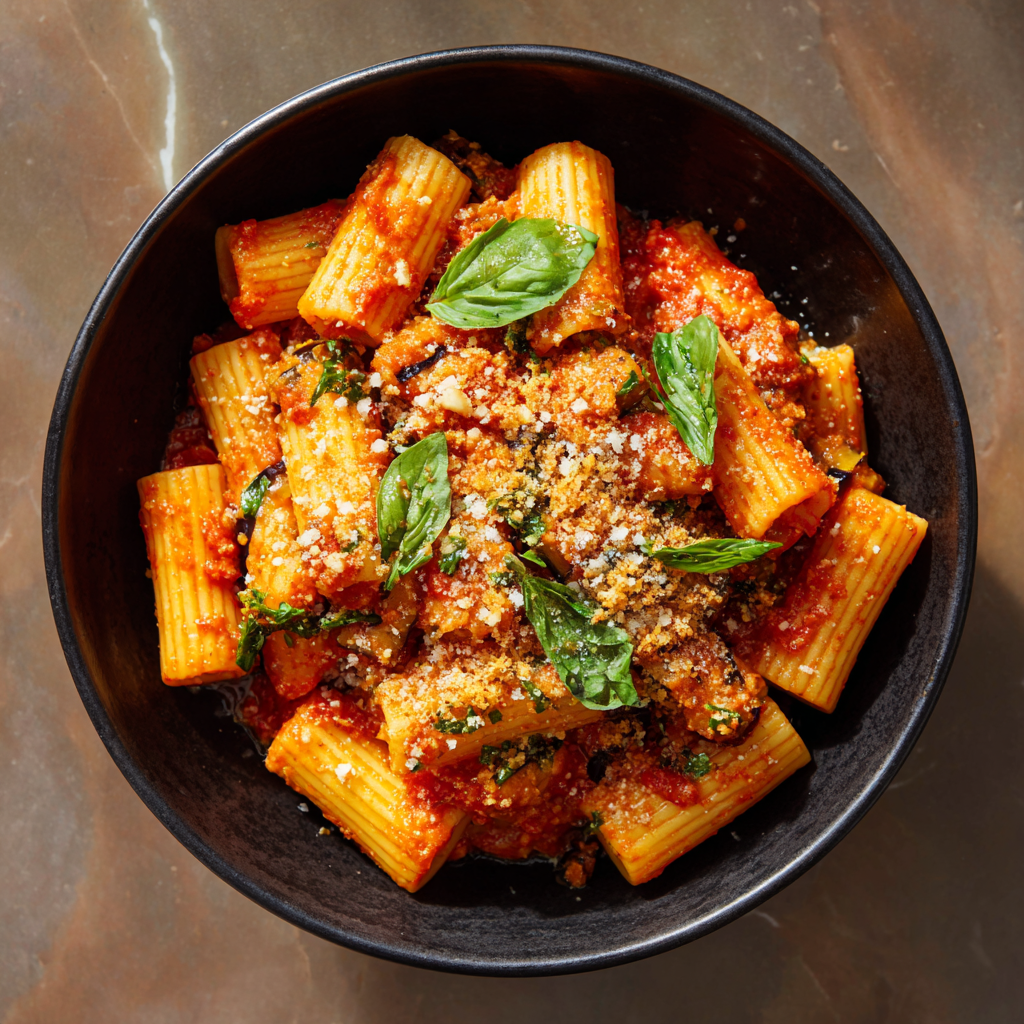
I shop with my hands as much as my eyes. I weigh produce in my palm and check the cap for bright green. Those little tests tell me whether a vegetable will caramelize or sit soggy in the pan.
What to look for in eggplant varieties
Look for an italian eggplant that feels heavy for its size and has taut, shiny skin. Prosperosa and Rosa Bianca are my favorites—dense flesh, fewer seeds, and a sweet finish when cooked.
Avoid soft spots or dull skin; they often mean age and more bitterness. When in doubt, buy smaller globes. They cook evenly and stay tender.
Passata vs. canned tomatoes: texture and flavor
Choose passata that tastes like summer in a bottle and pair it with a can of peeled tomatoes you can crush by hand. That balance makes a tomato sauce both smooth and textured, perfect for holding to ridged shapes.
- Season in layers: a pinch of salt early draws sweetness from tomato and helps eggplant keep flavor.
- Finish with a drizzle of olive oil to lift aroma and give the sauce a glossy sheen.
- If shelf choices are tight, buy the best-tasting tomato product you find; a strong base forgives much.
| Choice | Sign | Why it matters |
|---|---|---|
| Prosperosa | Dense flesh | Fewer seeds; silky when cooked |
| Rosa Bianca | Light skin, heavy feel | Sweet interior, consistent texture |
| Passata + peeled tomatoes | Balanced body | Smooth base with hand-crushed texture |
For more on hands-on steps and family tips, see my short guide on family technique and timing.
Serve like you’re in Calabria
Serve each plate like a warm invitation—generous, fragrant, and a little theatrical. A careful finish makes the meal feel hosted and celebratory, not rushed.
Extra sauce on top, a dusting of cheese and breadcrumbs
Spoon extra sauce over each bowl so the plate looks abundant and tastes restaurant-worthy. Ladle just enough to coat and shine the noodles or rigatoni without drowning them.
Finish with a light shower of grated pecorino or parmesan and toasted breadcrumbs for crunch. That contrast lifts the texture and keeps every bite interesting.
Tear a few basil leaves and scatter them at the table so the aroma greets guests as plates land. A drizzle of good olive oil adds sheen and a peppery edge; season at the table with salt pepper to taste.
Simple sides and wine pairings
Keep sides simple: a lightly dressed arugula side, grilled zucchini, or warm crusty bread support the main without stealing the spotlight. These small dishes echo the flavors and let the sauce remain hero.
For wine, pour a Southern Italian red to match the tomato and clean the palate, or serve a chilled rosato for brightness. Rigatoni holds spooned sauce well; if you used long noodles, twirl and crown with a spoonful of sauce and eggplant for a neat presentation.
| Side | Why it works | Serving cue |
|---|---|---|
| Arugula salad | Peppery contrast, lightness | Serve lightly dressed, cold |
| Grilled zucchini | Smoky vegetable note | Warm, sliced lengthwise |
| Crusty bread | Soak up leftover sauce | Serve warm in a basket |
Leftovers, storage, and quick reheat that keeps pasta al dente
I save leftovers with care so the next meal tastes nearly as good as fresh. Cool the food quickly and transfer to a shallow container, then chill. The faster it cools, the better the texture will hold.
To reheat, warm a wide pan over medium-low heat and add a splash of water. Toss gently until the pasta sauce loosens and looks glossy again. That starchy water helps restore the emulsion and brings the sauce back to life.
If the sauce tightened in the fridge, add a thin thread of oil to restore mouthfeel. Keep reheating brief—just a few minutes—so noodles stay al dente and the vegetable pieces don’t get mushy.
- Season after warming: a quick pinch of salt pepper brightens flavors that mute when cold.
- If dry, stir in a spoon of tomato base or a bit of stock rather than drowning the dish.
- For office lunches, microwave in short 30-second bursts, stirring between intervals to mimic tossing in a pan.
Leftovers keep well for up to 3 days in the fridge; freeze if you need longer, knowing the texture will soften when thawed. Finish with torn basil before serving to revive the aroma and freshness.
| Action | Why | Quick tip |
|---|---|---|
| Cool quickly in shallow container | Prevents bacteria, preserves texture | Refrigerate within 2 hours |
| Reheat in pan with water | Restores emulsion and gloss | Medium-low heat, toss 2–4 minutes |
| Add oil if tight | Restores mouthfeel | Use a teaspoon of olive oil |
| Microwave for office | Fast, convenient | Short bursts, stir between intervals |
A final bite of Southern Italian comfort worth sharing
A warm plate with bright sauce and tender vegetable pieces is comfort I return to again and again. This dish is fast enough for weeknights and special enough for guests.
Keep the method—salt, brown, simmer, and finish with starchy water—and you can improvise forever. If you want to make pasta your way, start with this core, then test heat levels, cheeses, and shapes as you grow confident.
Share what you cook and save notes on jars and brands that worked. These recipes live on when they travel from one kitchen to another, and a good eggplant pasta recipe somehow feels like both shelter and celebration.
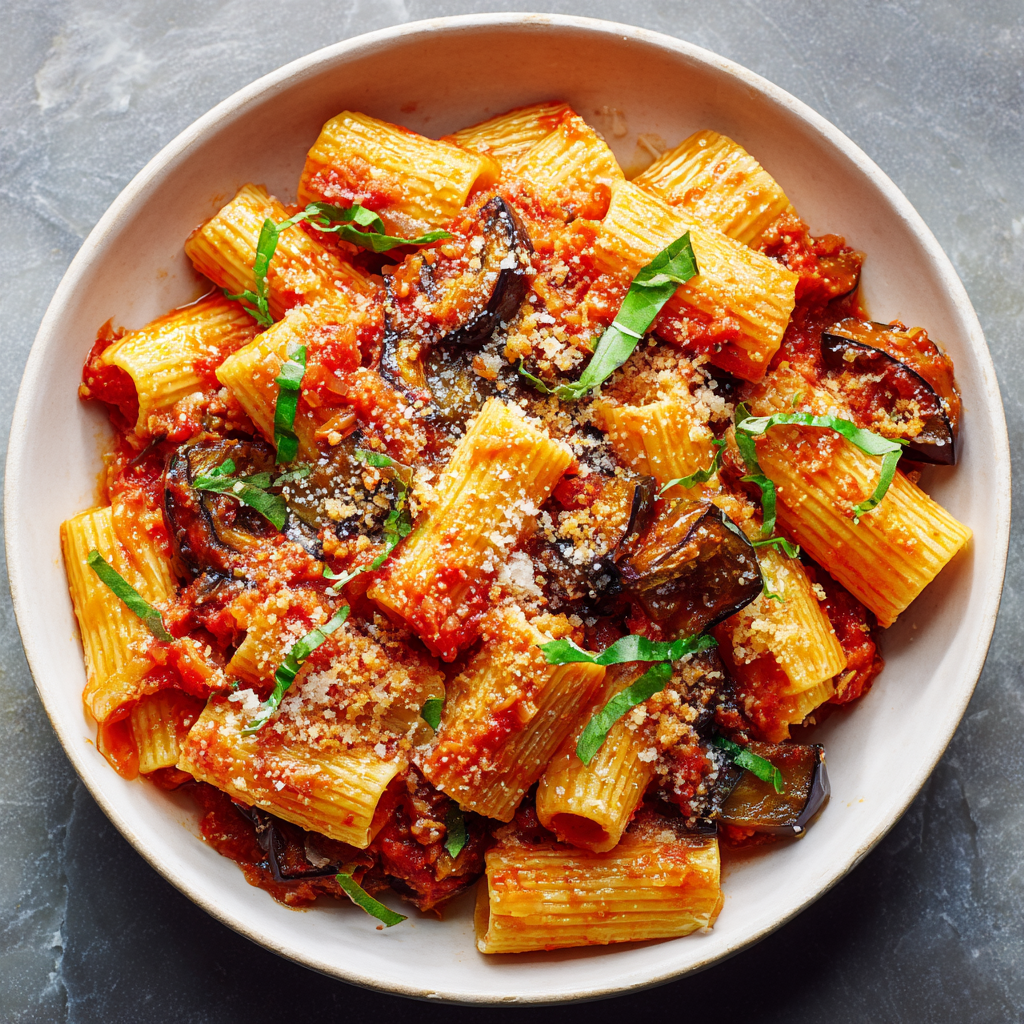
Calabrian Spicy Eggplant Pasta
Ingredients
Method
- Slice or cube the eggplant.
- Salt generously and press under a plate for 15–20 minutes.
- Pat very dry so it browns instead of steaming.
- Warm extra-virgin olive oil over medium heat.
- Add chopped onion and cook until soft.
- Add whole garlic cloves and let them turn fragrant (not brown).
- Stir in passata and crushed peeled tomatoes.
- Add salt and a small pinch of pepper or red pepper flakes.
- Simmer on low 10–12 minutes until the acidity rounds out.
- Heat a wide pan with oil.
- Fry the eggplant in batches so it caramelizes, not steams.
- Aim for deep golden edges and tender centers.
- Lightly season as you go.
- Boil water and salt it until it “tastes like the sea.”
- Cook your pasta until just shy of al dente.
- Reserve 1 cup of the starchy pasta water.
- Add browned eggplant into the simmering tomato sauce.
- Add cooked pasta to the sauce.
- Splash in some pasta water and toss until the sauce turns glossy and clings.
- Add more water as needed to keep the sauce silky.
- Take the pan off the heat.
- Add torn fresh basil.
- Toss in cheese or sprinkle it on top.
- Add breadcrumbs if you like crunch.
- Adjust heat with more red pepper flakes or peperoncino if you want.
Notes
- Drying the eggplant well after salting makes a huge difference in browning.
- If the sauce feels too sharp, simmer it a few more minutes or splash in pasta water to soften the acidity.
- Add basil at the end only—heat can dull its flavor.
- If you use ricotta salata, keep it as a finishing cheese for the classic “alla Norma” feel.
- Don’t be afraid of the pasta water. It’s the secret to the glossy, restaurant-style texture.