Jump to Recipe
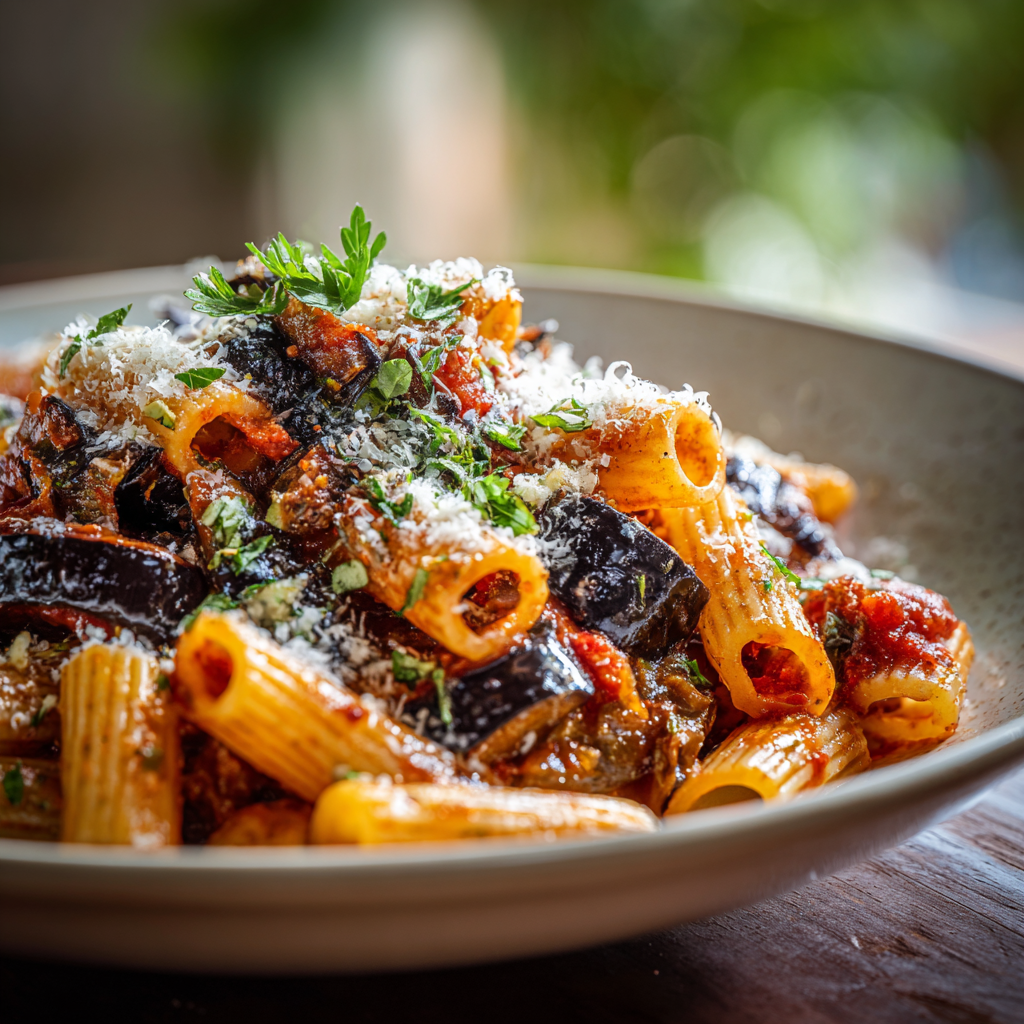
I grew up watching my nonna assemble this simple classic in a tiny Sicilian kitchen, and the first bite still smells like Sunday. Her hands moved with calm instinct, frying meaty eggplant in plenty of good olive until it turned golden and sweet.
I blend that tradition with a weeknight pace so the pasta alla norma spirit stays true while the method stays easy. You’ll learn how tomatoes, basil, and salty ricotta balance richness, and why patience with the vegetables makes all the flavor come together.
I write from a cook’s point of view: clear steps, honest ingredients, and small fixes for common pitfalls like watery sauce or a greasy finish. This is a warm, hands-on guide to cook the dish at home with confidence, whether you’re new to Italian food or sharpening familiar skills.
Key Takeaways
- Nonna’s approach highlights patience with eggplant for deep, sweet flavor.
- Use extra-virgin olive and proper salting to avoid a greasy finish.
- Basil and bright tomatoes keep the sauce lively, not heavy.
- Toss pasta at the right moment for perfect texture and cohesion.
- Small, practical fixes prevent watery sauce and bland cheese.
Why this Sicilian-inspired pasta con melanzane e ricotta recipe works
My earliest cooking lessons were about coaxing deep flavor from a few honest ingredients, taught at a sunlit table in Sicily. That approach is the backbone of this pasta alla norma-style dish.
Slowly caramelizing eggplant in extra-virgin olive creates a meaty texture and rich backbone. Each brown-edged piece carries savory depth so the tomato sauce does not have to do all the work.
A simple tomato base—garlic, a touch of oregano, and crushed whole tomatoes—stays bright and clings to ridged shapes. That balance keeps the sauce fresh rather than heavy.
Why ricotta salata matters
Aged ricotta salata brings sharp, salty notes closer to pecorino or sheep’s milk feta. A light shower finishes the plate, lifting flavors without weighing them down.
- Caramelized eggplant for depth.
- Minimal tomato sauce for lift and acidity.
- Aged salata for a salty, savory finish.
Choosing the right shape helps the pasta eggplant pairing feel cohesive. For more on the baked version and variations, see this take on the classic dish.
pasta con melanzane e ricotta recipe: ingredients and step-by-step method
Start by gathering thoughtful ingredients: small dense eggplant, a wedge of ricotta salata, peeled tomatoes or ripe fresh fruit, fresh basil, ridged tubular pasta, and good extra-virgin olive oil. Keep garlic, oregano, and a pinch of pepper close at hand.
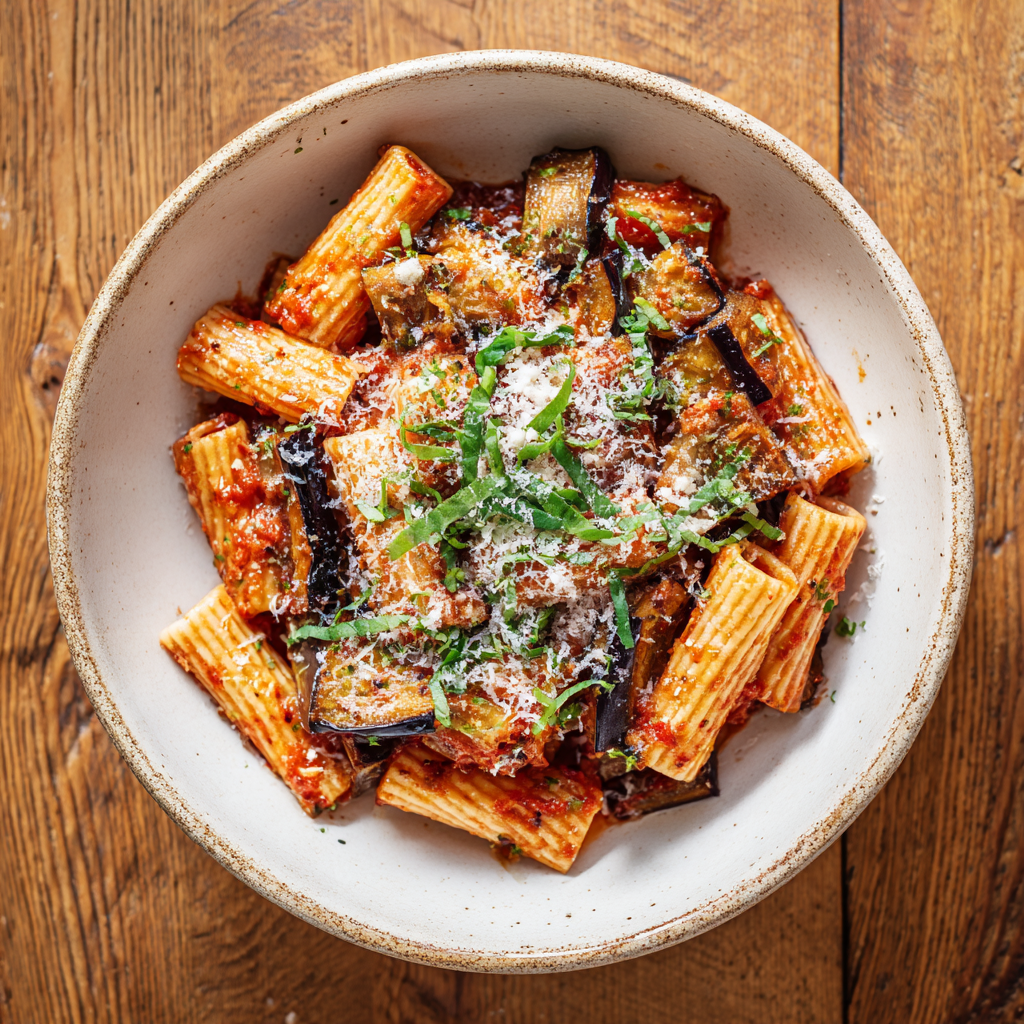
Ingredients you’ll need
Measure simply: two tablespoons of oil to bloom aromatics, a few tablespoons for frying eggplants, and a ladle of starchy water saved from the pot. Salt lightly during cooking; the salata will add finish saltiness.
Master the eggplant
Choose small eggplants that feel heavy. Slice evenly, then cook low and slow in olive oil until deep brown and silky. Let them rest on paper briefly to shed excess fat.
Build the tomato sauce
Heat oil, bloom garlic and oregano, then fry a spoonful of paste to unlock flavor. Add hand-crushed peeled tomatoes and simmer just long enough to thicken into a clingy sauce.
Cook, combine, and finish
Boil ridged pasta in a large pot to just shy of al dente and reserve water. Fold eggplant into the sauce, toss with pasta, and loosen with water in tablespoons until glossy. Off the heat, grate salata over the top, tear basil leaves, and drizzle olive for sheen.
- Tip: keep heat moderate when browning to avoid bitter char.
- If sauce tightens, add a splash of water; if thin, simmer one more minute.
| Ingredient | Choice | Why it matters | Quick note |
|---|---|---|---|
| Eggplant | Small, dense | Less water, better browning | Slice evenly |
| Peeled tomatoes | Quality canned or ripe fresh | Bright acidity, body | Crush by hand |
| Ricotta salata | Wedge, aged | Salty finish, melts slightly | Grate fine |
| Olive oil | Extra-virgin | Flavor and sheen | Use sparingly for frying |
For a related eggplant-focused side or baked variation, see my take on Sicilian caponata with eggplant here.
Pro tips, smart swaps, and serving ideas
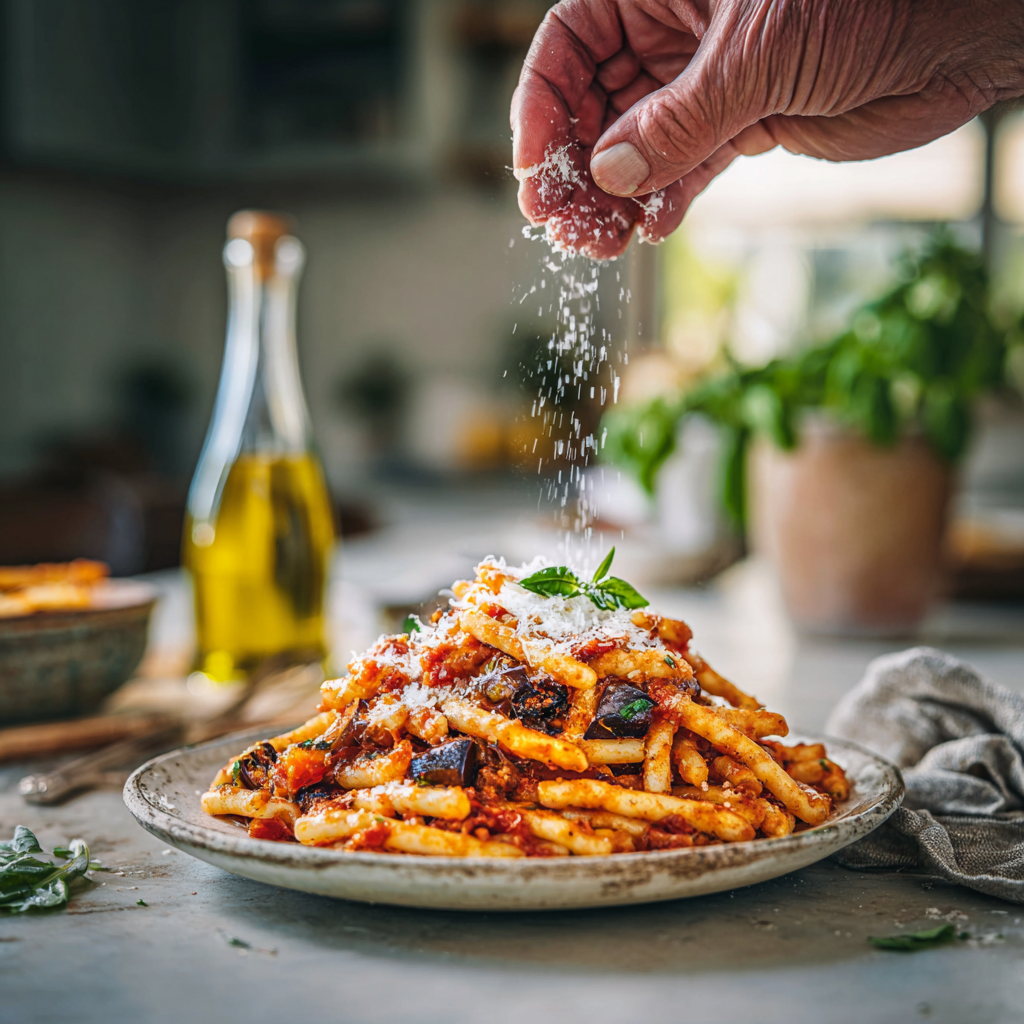
When I teach this to friends, I start with shape and timing—those two things matter most. A ridged shape captures sauce and eggplant pieces, so pull it one to two minutes early and finish in the pan with a splash of starchy water.
Choosing shape and timing
Use a ridged tube or short twisting shape so tomato clings. Cooking the dried noodles just shy of al dente gives time for the sauce to bind and for starch to make a glossy finish.
Eggplant mastery
Cook slices low and steady in measured olive oil. Spread pieces in a single layer, leave space, and wait for deep caramel color. Season lightly as you go; it keeps fat from tasting heavy.
Ricotta salata alternatives
If ricotta salata is scarce, shave caciocavallo or mix equal parts Pecorino Romano and sheep’s milk feta for a salty, tangy finish.
| Substitute | Flavor | Use |
|---|---|---|
| Pecorino + sheep feta | Salty, tangy | Grate or crumble at finish |
| Caciocavallo | Buttery, savory | Shave thinly over hot dish |
| Salted ricotta | Mild, flaky | Dust sparingly |
From stovetop to table
I portion 3–4 ounces dried per serving before cooking. Toss over gentle heat, add water by tablespoons until the sauce coats, and finish with torn basil leaves and a thread of olive.
Wine and make-ahead notes
A volcanic Falanghina, like Galluccio Bianco, brings stone-fruit lift and saline length; serve cool at 10–12°C. Make sauce and eggplants a day ahead, chill, then rewarm gently in a pot with a splash of water and finish with fresh basil just before serving.
Conclusion
This dish keeps its power in small decisions: slow-cooked eggplant, a bright tomato base, and a final grate that wakes every forkful.
Keep the technique tight and let the sauce breathe. A splash of starchy water and a drizzle of good olive will make the strands glossy and the flavors sing.
Think of it as pasta alla tradition with an alla norma soul you can repeat any night. Trust the steps, taste as you go, and finish with ricotta salata to season each bite.
This is my family’s way of cooking with care. I hope you make it your own and share it at your table.
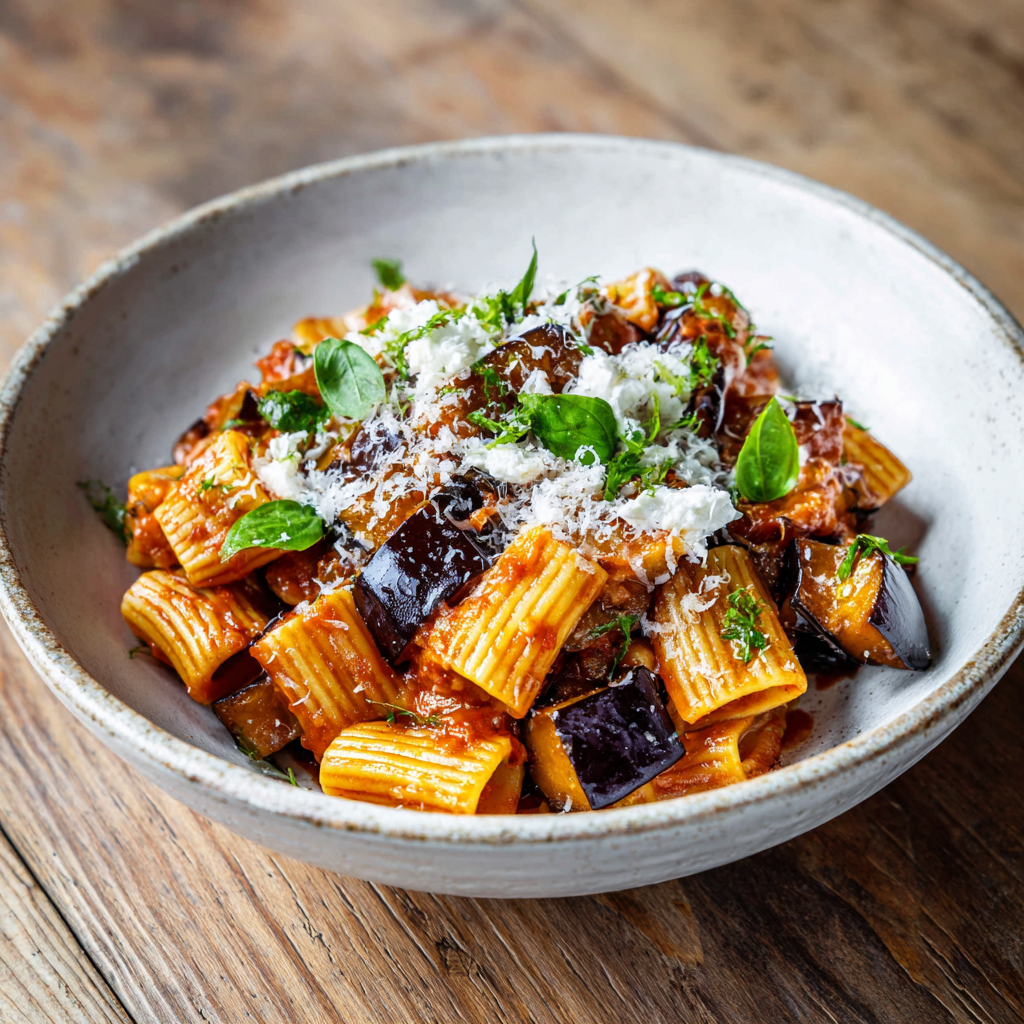
Pasta con Melanzane e Ricotta (Sicilian Pasta with Eggplant and Ricotta Salata)
Ingredients
Method
- Slice the eggplants evenly. Sprinkle lightly with salt and rest for 10–15 minutes to draw out moisture. Pat dry. Heat 2–3 tbsp olive oil in a large skillet over medium heat. Cook eggplant slices in batches until golden brown and soft inside. Set on paper towels to drain excess oil.
- In the same pan, add a little olive oil if needed. Sauté garlic and oregano until fragrant (about 30 seconds). Stir in the tomato paste (if using) and the crushed tomatoes. Season with salt and simmer on low for 10–15 minutes until thickened but still bright.
- In a large pot of salted water, cook pasta just shy of al dente. Reserve about ½ cup of the starchy water before draining.
- Add the fried eggplant to the tomato sauce. Stir gently and let it simmer together for a couple of minutes. Add the drained pasta directly to the pan and toss. Add splashes of pasta water until the sauce coats each piece and looks glossy.
- Remove from heat. Toss with torn basil leaves and grated ricotta salata. Drizzle a little extra olive oil on top for sheen. Serve warm.
Notes
- Choose small, firm eggplants for the sweetest flavor and best texture.
- Don’t rush the browning — slow caramelization gives the dish its rich taste.
- If your sauce looks too thick, add pasta water a tablespoon at a time to loosen it.
- Ricotta salata adds a salty finish — don’t oversalt during cooking.
- Great with a chilled glass of Falanghina or a crisp Vermentino.
- Leftovers keep well for 1–2 days; reheat gently with a splash of water.