
Jump to Recipe
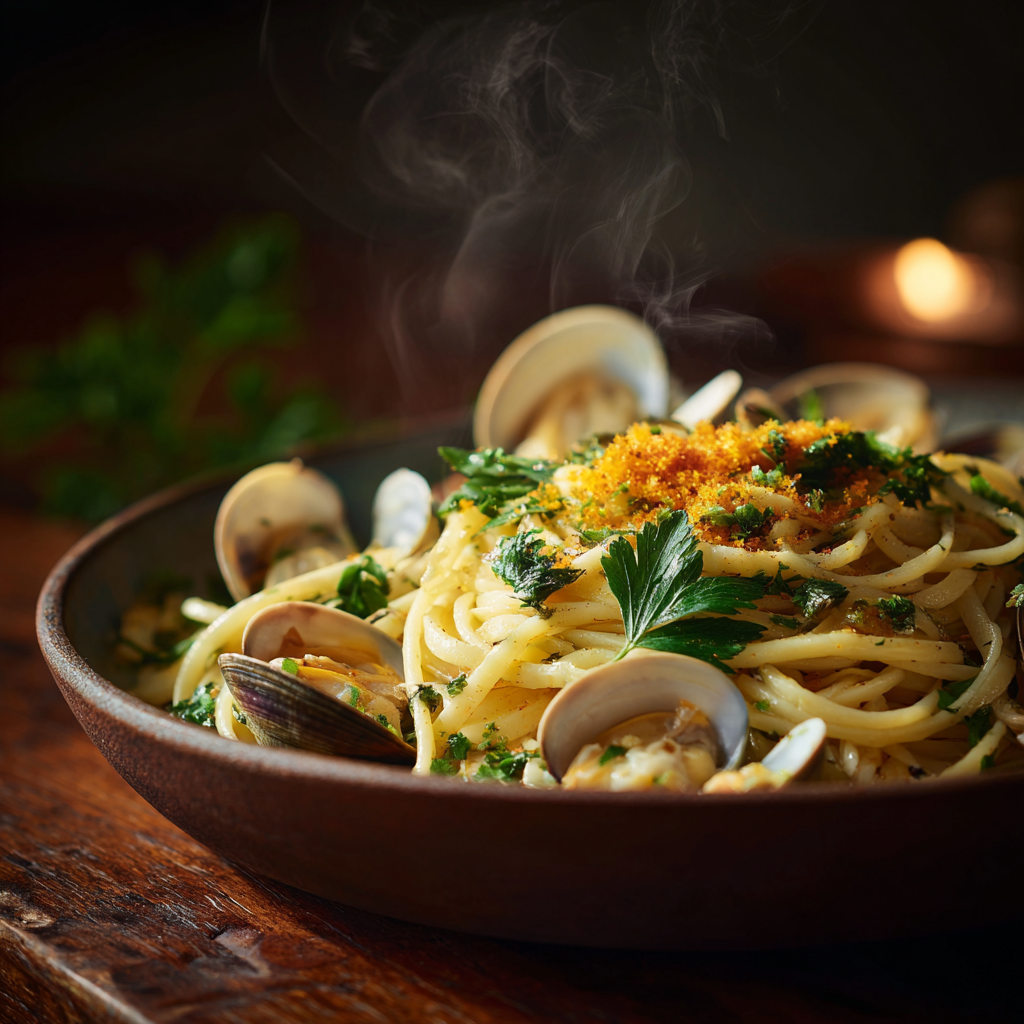
I grew up near the sea, where evenings meant steam, salt, and the quiet ritual of a simple pan. I still tie on an apron for this kind of cooking—hands dusted in flour or citrus, a glass of wine close by, listening for the clams to sigh open. The best meals come from small, careful moves: good olive oil warmed low, a crack of pepper, and a final grate of bottarga that sings like the shoreline.
I’ll show how to pick tiny, very fresh clams and scrub them well so the brine stays clean. We coax their juices with garlic, chili, and wine, then fold in al dente pasta and a spoon of starchy water so the sauce clings. A touch of butter with olive oil gives a glossy finish that lifts this seafood-forward dish without hiding its brightness.
Key Takeaways
- Choose the smallest, freshest clams and discard any that don’t open.
- Use a little bottarga to add briny depth—grate at the table if you like.
- Warm garlic gently in olive oil; add chili and wine to capture clam juices.
- Toss pasta al dente with reserved cooking water for a silky sauce.
- A bit of butter creates gloss and richness without weighing the plate down.
Why this Sardinian-inspired pasta hits that perfect seafood sweet spot
This dish captures Sardinia’s coastline: bright, salty, and focused on pure seafood taste. I keep elements few so each note sings.
What makes bottarga special: salted fish roe with briny, savory depth
Bottarga is pressed, salted, dried fish roe—often from grey mullet or tuna. A fine grate releases its aroma over hot pasta and deepens savoriness without masking the shellfish. I let guests add more at the table so the balance stays personal.
Choosing your clams and knowing when to discard unopened ones
Pick small, lively clams with tightly closed shells. Scrub and purge them to remove grit so the broth tastes clean. Steam in wine, garlic, and parsley; most open in 6–7 minutes. Any that remain shut get tossed for safety.
Olive oil meets a touch of butter for a silky, restaurant-quality finish
A drizzle of olive oil with a modest knob of butter makes a stable emulsion. The butter rounds the edges while the oil keeps the sauce bright. That combo gives a silky mouthfeel without weight.
- Use a light dusting of cured roe; taste, then add more sparingly.
- A pinch of pepper or peperoncino lifts aromatics without overpowering.
| Item | Characteristic | Tip |
|---|---|---|
| Di muggine (mullet) bottarga | Clean, oceanic depth | Classic Sardinian choice; grate lightly |
| Di tonno (tuna) bottarga | Richer, slightly more robust | Good for stronger-flavored dishes |
| Small hard-shell clams | Sweet, fast-cooking | Steam 6–7 minutes; discard unopened |
For a deeper dive on origins and technique, see my Sardinian bottarga primer: Sardinian bottarga primer.
Spaghetti with clams and bottarga recipe: ingredients, tools, and smart prep
Before you heat a pan, I like to line up every ingredient so the whole cook flows. That small ritual keeps timing tight and flavors bright.
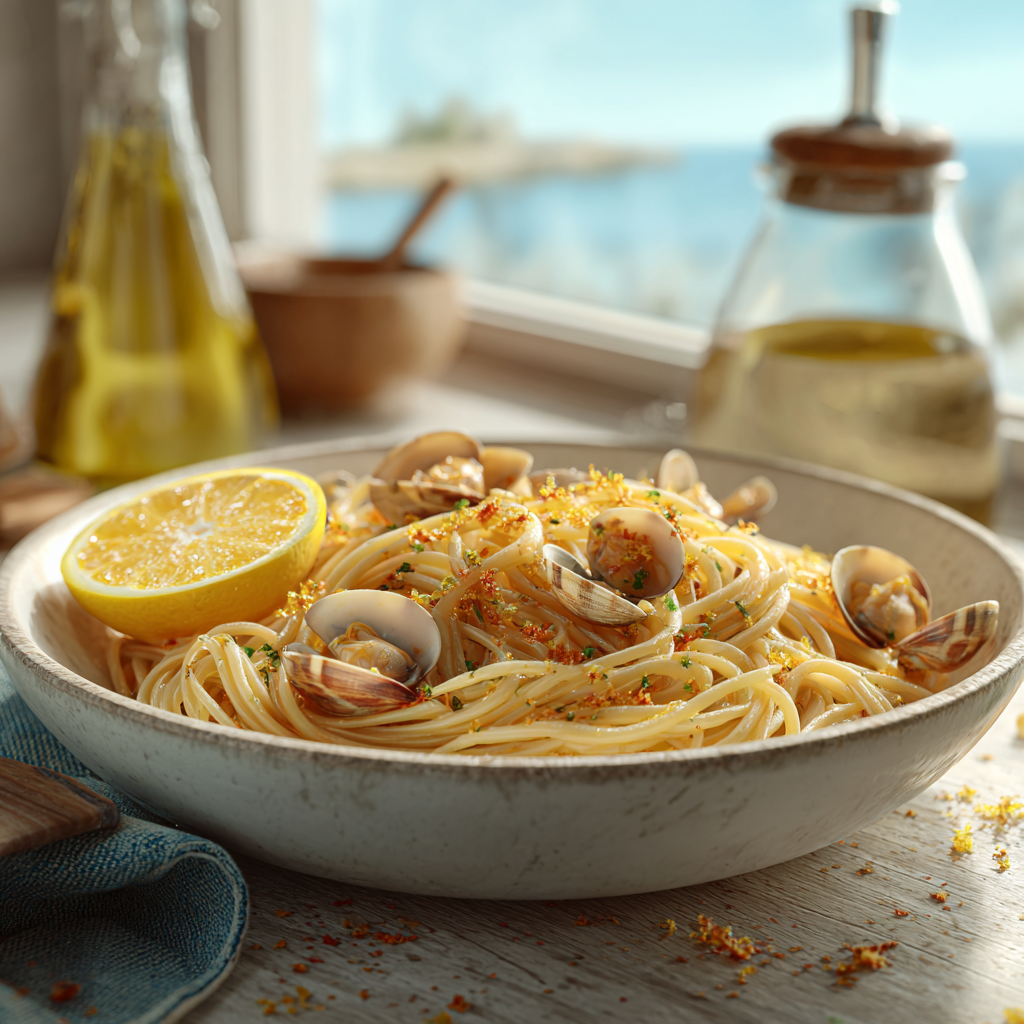
The core lineup
My shopping list is tight: dried spaghetti (about 100 g per person), very fresh small clams, three garlic cloves, a good olive oil, 1 cup dry white wine, a small handful of fresh parsley, and bottarga for finishing—about 1/2 teaspoon per bowl. Have one cup of pasta water reserved by the stove.
Before you start
Set a large pot of water to boil and add kosher salt—roughly 1 tablespoon per 4 quarts. Use a wide pan to give the shellfish space to steam and release juices. Measure 1 cup wine, two tablespoons olive oil, and one tablespoon butter before you begin.
- Scrub clams under cold water; discard cracked shells. Soak briefly if sandy and rinse until clear.
- Slice or smash the garlic cloves so they perfume the oil without burning.
- Chop fresh parsley finely; keep a small cup of reserved cooking water nearby to loosen the sauce.
| Item | Amount | Equipment | Tip |
|---|---|---|---|
| Spaghetti | 100 g per person | Large pot (boiling water) | Salt water heavily; cook al dente |
| Small clams | About 1 lb for 2–3 servings | Wide pan with lid | Steam 6–7 minutes; discard unopened |
| Liquid & fats | 1 cup wine; 2 tbsp olive oil; 1 tbsp butter | Measuring cup & spoons | Measure ahead to keep stove rhythm |
| Finishers | 1/2 tsp bottarga per serving; lemon wedge | Microplane, small bowl | Grate just before serving for aroma |
Cook it like a local: step-by-step method with pro tips
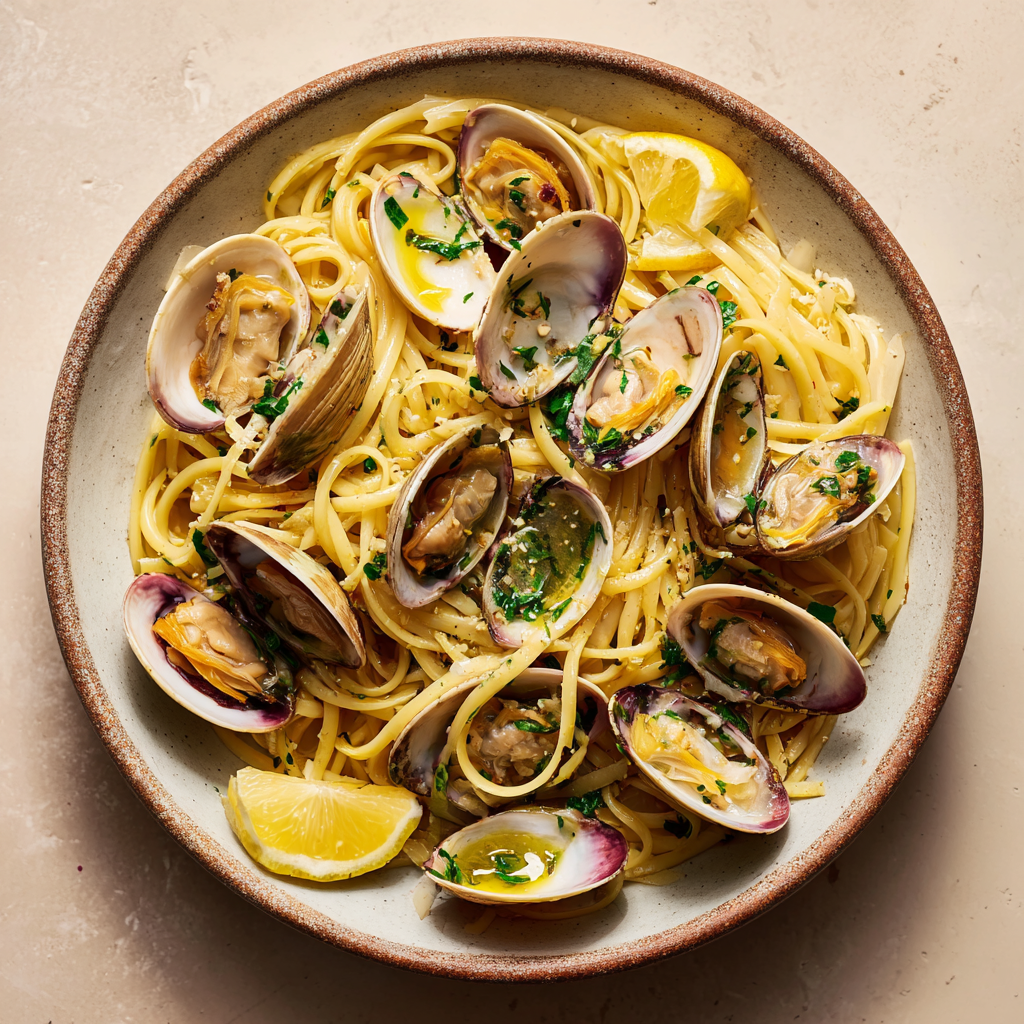
Begin by bringing a large pot of well-salted water to a vigorous water boil. Add the pasta and cook until just shy of al dente so it can finish in the sauce.
Build the aromatic base
While the pasta cooks, warm olive oil in a wide pan over medium heat. Add smashed garlic and a pinch of red pepper flakes; keep the heat low enough that the garlic perfumes the oil without browning.
Deglaze, steam, and finish the shellfish
Raise the heat and pour in white wine to deglaze, scraping up any fond. Add the shellfish and chopped parsley, cover the pan, and give it a shake once or twice. Steam for about 6-7 minutes, checking at the 5-minute mark. Discard any that remain closed for safety.
Toss, emulsify, and plate
Drain pasta when it’s a shade under done, reserving at least a cup of pasta water. Move the pasta straight into the pan, add a knob of butter, and toss over heat. Splash pasta water to loosen and create a glossy sauce.
| Step | Timing | Why it matters |
|---|---|---|
| Boil pasta | To al dente, finish in pan | Prevents overcooking; pasta absorbs sauce |
| Steam shellfish | 6–7 minutes | Releases sweet juices; check at 5 minutes |
| Finish & plate | Immediate service | Grated bottarga and lemon keep flavors bright |
Off the heat, remove some shell meat for easy twirling, then grate the final touch of grated bottarga and squeeze a little lemon. For a regional variation I love, try the Liguria-style family version here: Liguria-style family version.
Serve confidently and make it your own
Serve the bowls warm and let guests season at the table. I set a small cup of grated bottarga so everyone can start at about 1/2 teaspoon and add more to taste. A light drizzle of olive oil and a quick squeeze of lemon juice brightens the dish without masking the fish roe.
If you need a swap, a couple of splashes of good chicken stock stand in for wine. Use gluten-free pasta if needed, just watch the cooking time and save a cup of cooking water to finish the sauce.
I remove some shell meat for easy eating and leave a few in-shell for charm. Offer parsley, pepper, and a lemon wedge on the side. Keep salt modest—the cured roe adds its own saltiness.
Make this one yours. Over a few cooks you’ll find the perfect balance of lemon, garlic cloves, olive oil, and grated bottarga that fits your table and time.
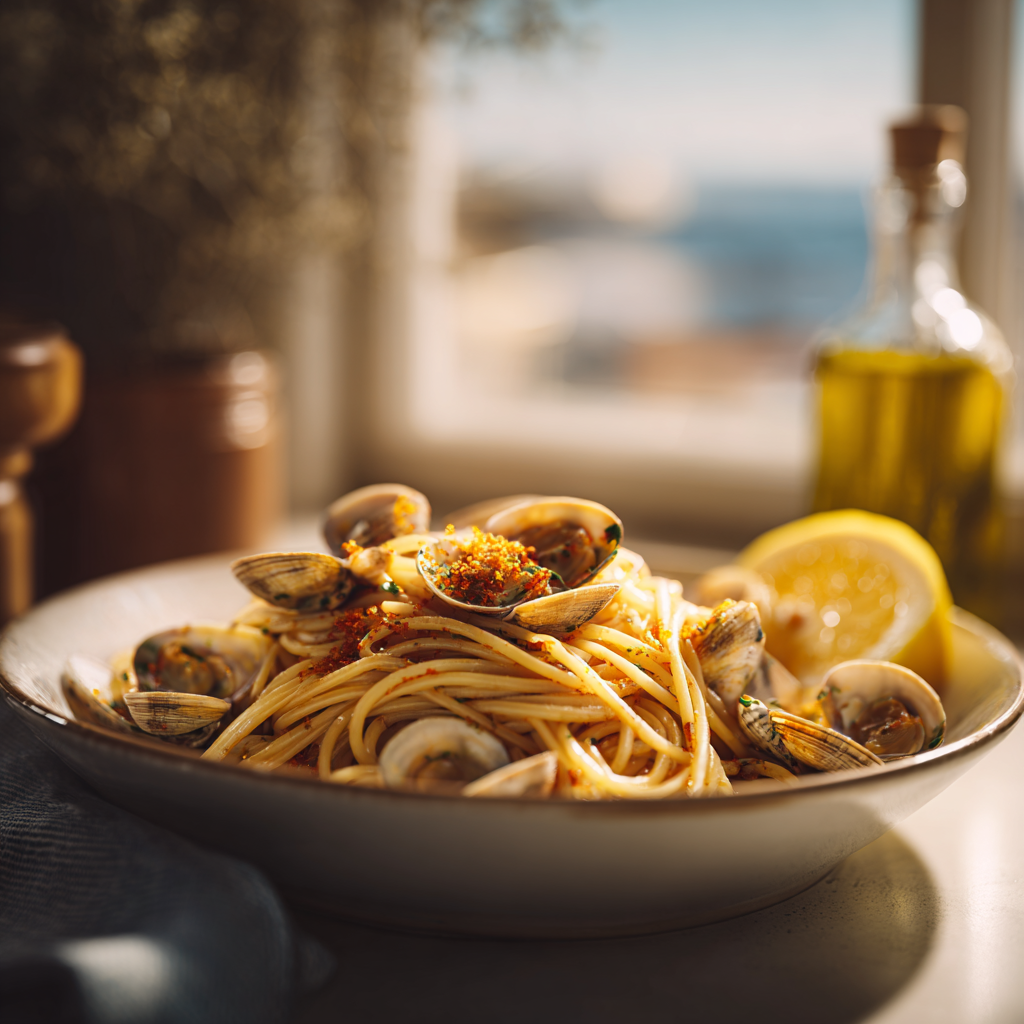
Spaghetti with Clams and Bottarga
Ingredients
Method
Notes
- Choose the smallest clams available for sweeter taste and faster cooking.
- Bottarga adds salt. Taste before adding extra salt.
- Butter and olive oil together give shine without heaviness.
- Serve right away. This pasta tastes best fresh off the stove.