
Jump to Recipe
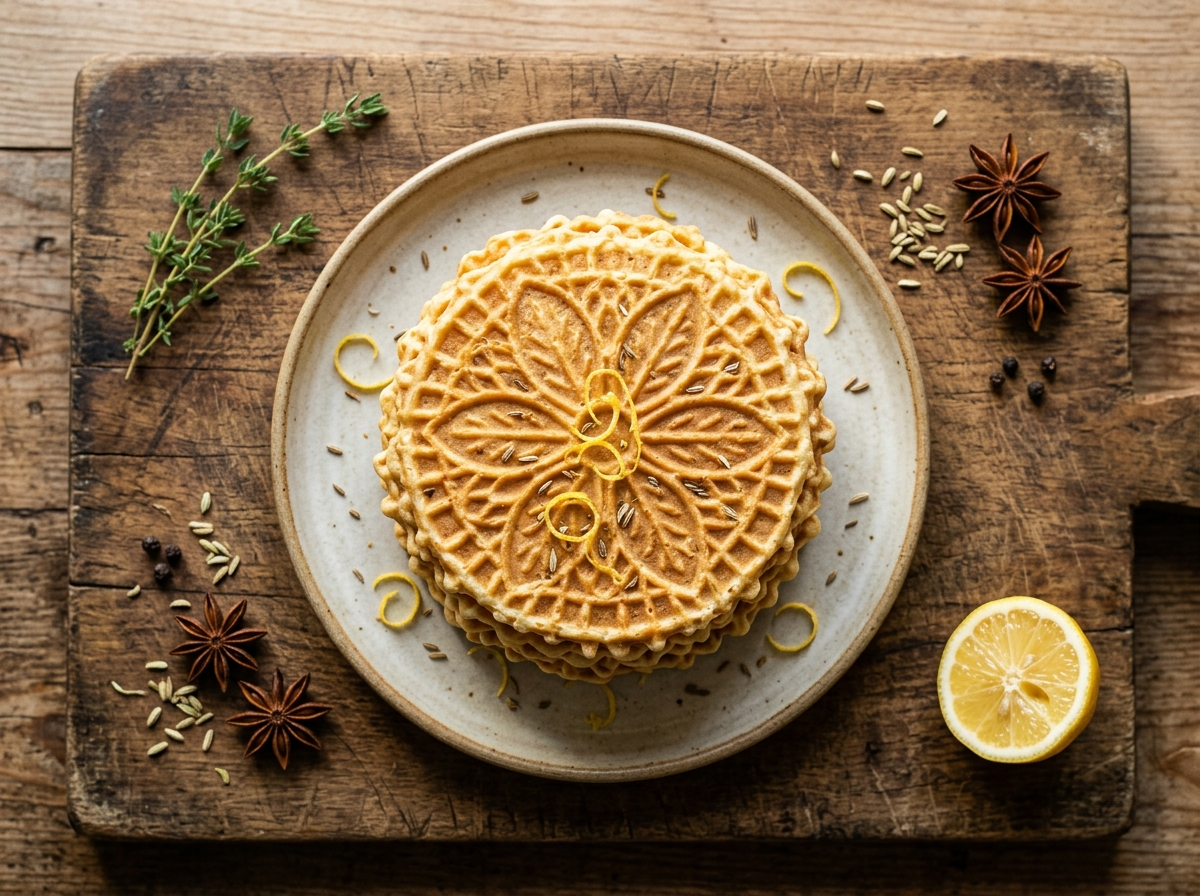
Pizzelle abruzzesi are the thin, stamped waffle cookies you find in Abruzzo bakeries around Christmas and Easter, pressed one at a time on a hot iron until the edges turn lacy and gold.
The batter is simple: eggs, sugar, melted butter, flour, and a good dose of anise, either as seed, extract, or a splash of anisette liqueur. Lemon zest cuts through the sugar and keeps the cookie from tasting one-note.
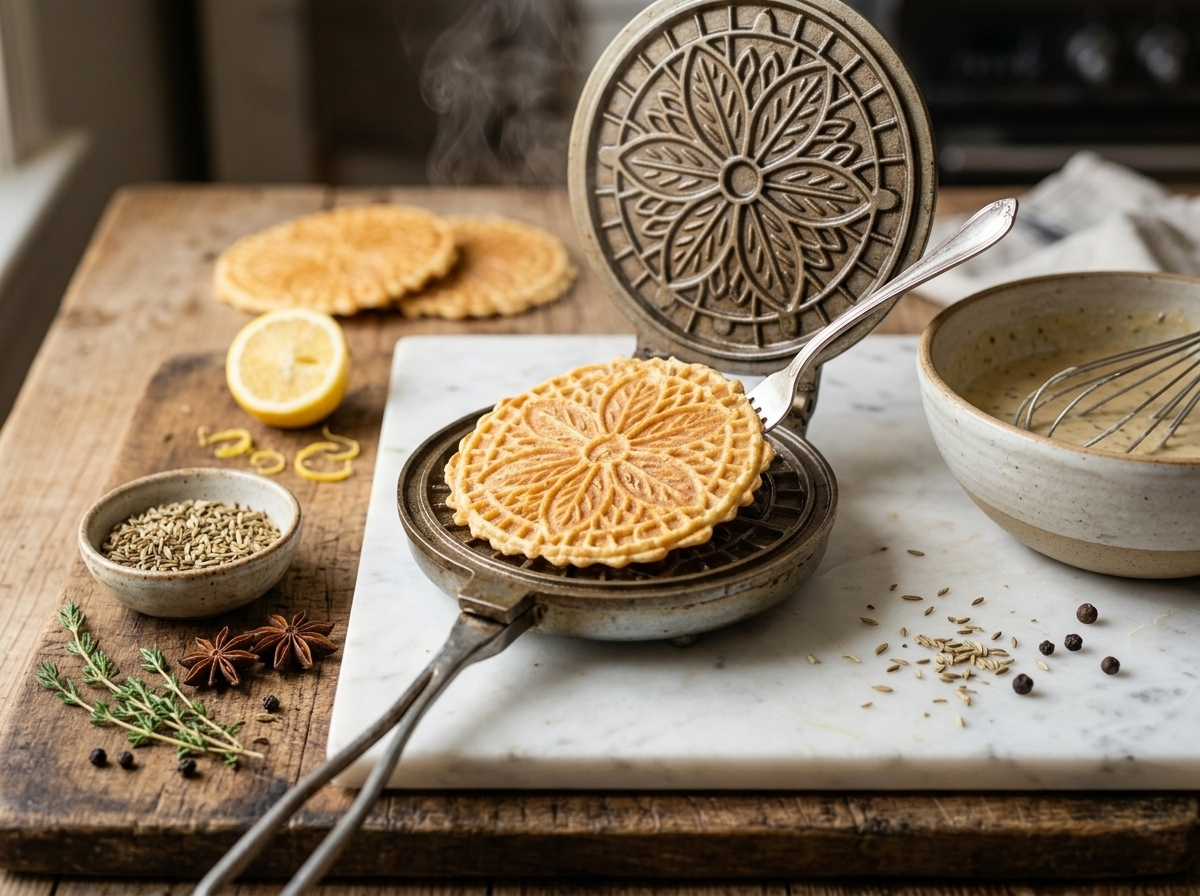
I use a stovetop pizzelle iron here, though an electric one works the same way. The one thing that trips people up is opening the iron too early. If the cookie sticks and tears instead of lifting clean, it needs another 10 to 15 seconds.
Once stacked in a tin, these keep their crunch for weeks, which makes pizzelle abruzzesi one of the easier holiday cookies to get ahead on.
Why You’ll Love This Recipe
- Ready in under a minute per cookie once the iron is hot
- Keeps crisp for weeks stored in a sealed tin
- Only six pantry staples, no chilling or resting needed
- Anise and lemon add depth beyond plain sugar
Ingredient Notes
- Eggs: Use room temp eggs, they whip up faster and paler with the sugar.
- Butter: Melt it and let it cool before adding, or swap in a neutral oil for a lighter, less rich cookie.
- Anise: Seeds give texture and a stronger bite, extract or anisette liqueur (Mistrà or Sambuca) gives a rounder, smoother flavor.
- Lemon zest: Use fresh zest from the peel, not bottled juice, it’s what balances the anise.
- Flour: Spoon and level all-purpose flour rather than scooping straight from the bag, extra flour makes tough, thick pizzelle.
Crisp Pizzelle Abruzzesi with Anise and Lemon Zest
Ingredients
Method
- Whisk eggs and sugar in a large bowl for 2 minutes until pale and slightly thickened.
- Whisk in melted butter, anise seeds (or extract or liqueur), and lemon zest until combined.
- Sift flour, baking powder, and salt over the bowl, then fold in until you have a smooth, thick batter that falls off the spoon in ribbons.
- Heat the pizzelle iron until the indicator light shows ready, about 5 minutes, then let it heat 2 more minutes past that.
- Drop 1 rounded tablespoon of batter onto the center of each mold, close the iron, and press the handles together.
- Cook for 30 to 45 seconds until the cookie is golden and lifts cleanly off the plates with a fork.
- Transfer to a wire rack and let cool flat, they crisp fully within a minute or two as they cool.
- Repeat with remaining batter, stacking cooled pizzelle abruzzesi loosely so they don't trap steam.
Notes
- Batter thickens as it sits, thin with a teaspoon of milk if it stops falling off the spoon.
- The first cookie off a cold iron is often a test piece, don't judge doneness by it.
- Anisette liqueur gives a rounder anise flavor than dried seeds alone.
- The iron's indicator light usually undersells readiness, give it 2 extra minutes before the first cookie.
Tips for Success
- Grease the iron only for the first cookie or two if it’s nonstick, extra oil makes edges greasy and pale.
- Use a slightly rounded tablespoon of batter per mold, more spreads into the hinge and tears the cookie apart.
- Cool pizzelle flat on a rack, not stacked, or trapped steam turns crisp cookies soft within an hour.
- Swap the anisette liqueur for dark rum or anise extract if you don’t keep it in the pantry.
- Reheat soft pizzelle for 3 minutes in a 300 F / 150 C oven to bring back the crunch.
Variations
- Swap anise for 1 tsp vanilla extract plus orange zest for a milder, citrus-forward cookie kids tend to prefer.
- Dip cooled pizzelle halfway in melted dark chocolate and let set on parchment for a holiday gift-tin version.
- Roll the warm cookie around a wooden dowel right off the iron to shape crisp cannoli-style shells instead of flat rounds.
Storage and Reheating
Store cooled pizzelle abruzzesi in an airtight tin at room temperature. They stay crisp for 2 to 3 weeks as long as humidity stays low.
Layer parchment between stacks and skip any container that’s held moisture before, even a little dampness softens them fast.
Freeze in a rigid container for up to 2 months. Thaw uncovered at room temperature for an hour, then refresh in a 300 F / 150 C oven for 3 to 4 minutes if they’ve gone soft.
Serving Suggestions
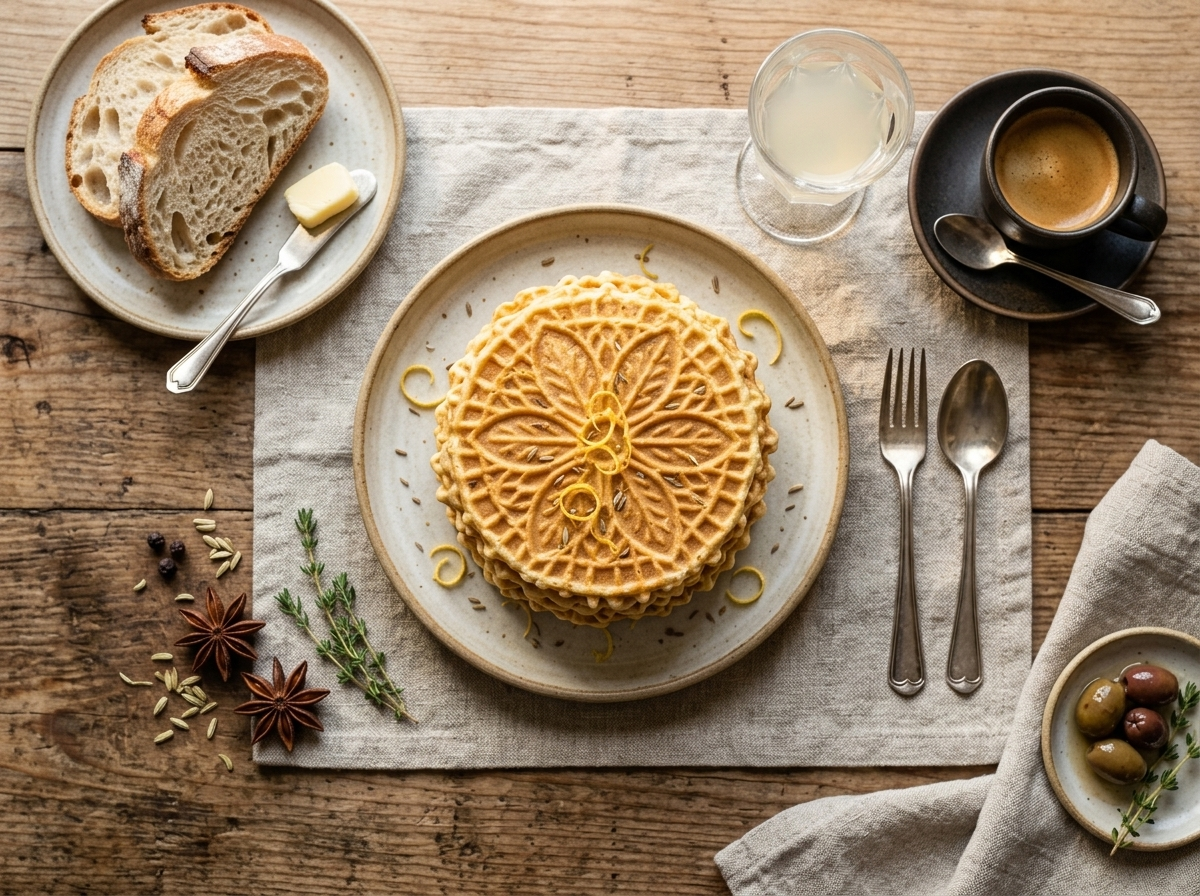
Pizzelle abruzzesi pair well with espresso or a small glass of anisette after a meal, the anise in both echoes each other.
Stack them in a gift tin alongside taralli for Christmas, or set a few next to a lemon semifreddo for an Easter dessert plate.
Crumble broken pieces over vanilla gelato for crunch, or sandwich two together with a thin layer of Nutella for kids.
FAQ
Why are my pizzelle abruzzesi soft instead of crisp?
Soft pizzelle usually means they cooled while stacked or in a humid spot, trapping steam that softens the crumb. Cool each cookie flat on a wire rack with space around it before storing. If they’re already soft, a 3-minute pass in a 300 F / 150 C oven brings the crunch back.
Can I use anise extract instead of anise seeds in pizzelle abruzzesi?
Yes, use 1 tablespoon of anise extract in place of 2 tablespoons of anise seeds. Extract gives a smoother, more even flavor without the little seed texture. Anisette liqueur works too, use 2 tablespoons and it adds a slightly rounder, boozy note.
How long do pizzelle abruzzesi stay crisp in a tin?
They stay crisp for 2 to 3 weeks in a sealed tin at room temperature, as long as the tin is dry inside. Any lingering moisture or a humid kitchen shortens that window. For longer storage, freeze them in a rigid container for up to 2 months.
What goes well with pizzelle abruzzesi besides coffee?
A small glass of anisette or Sambuca echoes the anise in the cookie itself, which is the classic Abruzzese pairing. They also work crumbled over gelato, sandwiched with Nutella, or plated alongside a lemon semifreddo for something more like dessert.
Are pizzelle abruzzesi gluten free?
No, the standard recipe uses all-purpose flour, so they contain gluten. You can try a 1:1 gluten-free flour blend, though the batter may spread differently on the iron and the cookie can turn out slightly more brittle at the edges.
What’s the difference between pizzelle abruzzesi and regular pizzelle?
Pizzelle abruzzesi lean harder on anise and lemon zest, where pizzelle from other regions often use vanilla or just anise alone with less citrus. The Abruzzo version also tends to be pressed thinner, so the edges turn lacier and more brittle than the thicker, softer versions found elsewhere.