Jump to Recipe
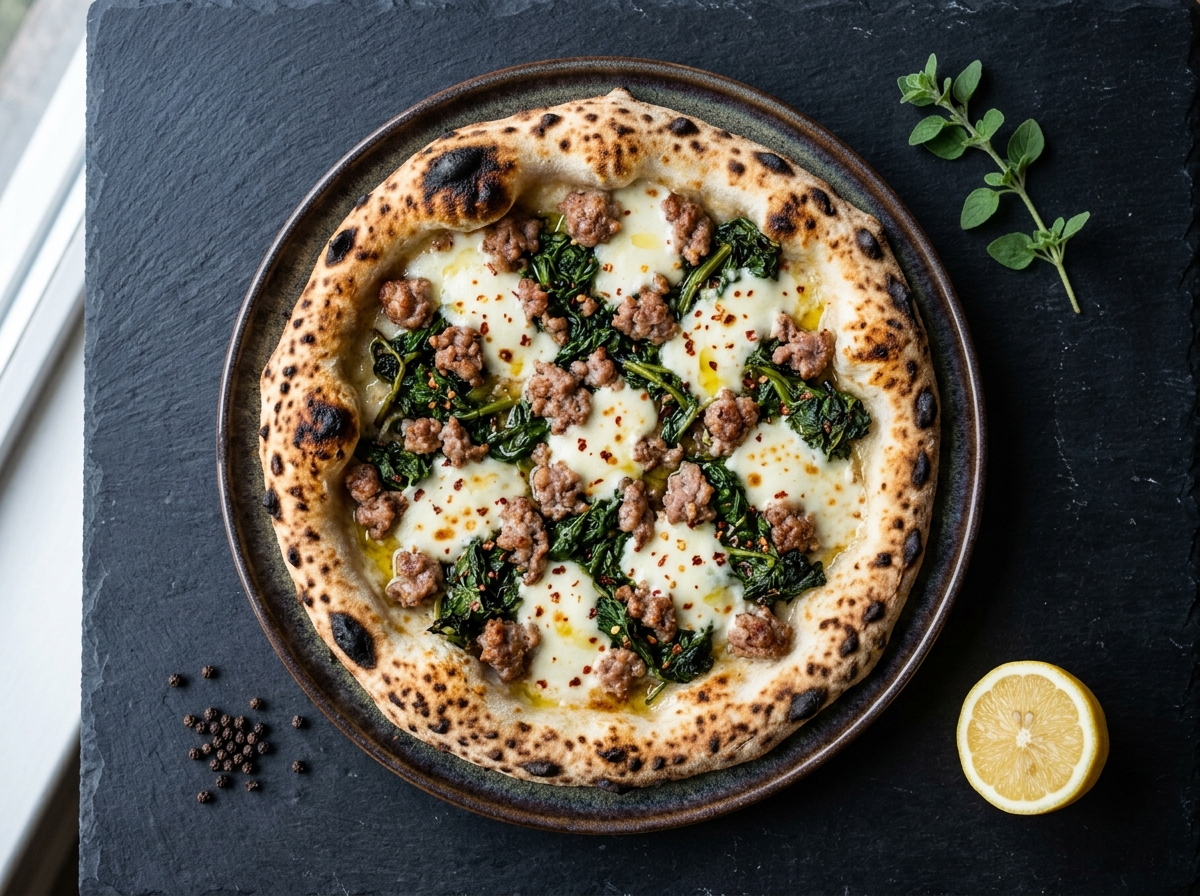
Pizza salsiccia e friarielli is one of the great Neapolitan pizzas, and it earns that status through contrast. The bitterness of the broccoli rabe cuts the fat from the sausage, and neither ingredient overwhelms the other.
Friarielli is the Neapolitan name for broccoli rabe, a leafy bitter green that gets wilted in garlic and chili before it hits the pizza. It’s not optional here. Its sharpness is the whole point.
The sausage should be a fresh Italian-style pork sausage with some fennel in it. You crumble it raw directly onto the pizza so it cooks in the oven and stays juicy. Pre-cooking it would dry it out.
This recipe uses a high-hydration dough baked as hot as your oven goes. If you have a pizza steel or stone, use it. The result is a chewy, slightly charred base that holds up under the toppings without going soggy.
Why You’ll Love This Recipe
- Bitter greens and fennel sausage create a genuinely balanced topping.
- Raw sausage crumbled on top stays juicy during baking.
- Dough can be made a day ahead for deeper flavor.
- Bakes in under 10 minutes at high heat for a weeknight win.
Ingredient Notes
- Friarielli (broccoli rabe): Fresh broccoli rabe is the standard. If you can’t find it, use broccolini or regular broccoli rabe from a well-stocked grocery store. Avoid substituting with regular broccoli – you’ll lose the bitterness that defines the dish.
- Italian pork sausage: Use fresh sausage with fennel, not smoked or pre-cooked. Squeeze it out of the casing and crumble it directly onto the pizza raw. Luganega or any mild Italian-style fresh sausage works.
- Fior di latte: This is cow’s milk mozzarella, less watery than buffalo mozzarella and ideal for pizza. If you use buffalo mozzarella, drain it well on paper towels for 30 minutes before using or it will make the base soggy.
- Pizza dough: A high-hydration dough (65-70% water) gives the best open crumb. You can use store-bought pizza dough as a shortcut – let it come to room temperature for at least 1 hour before stretching.
- Garlic and chili: These go into the pan when you sauté the friarielli. Don’t skip the chili – a small amount of heat is traditional and balances the bitterness of the greens.
- Extra-virgin olive oil: Used for cooking the friarielli and finishing the pizza. A grassy, peppery Southern Italian oil works best here.
Pizza Salsiccia e Friarielli: Neapolitan Sausage and Broccoli Rabe Pizza
Ingredients
Method
- Combine the flour, yeast, and salt in a large mixing bowl. Add the lukewarm water and olive oil, then mix until a shaggy dough forms.
- Turn the dough out onto a lightly floured surface and knead for 8-10 minutes until smooth and slightly tacky. It should spring back when you press a finger into it.
- Divide into 2 equal balls (about 420 g each). Place each in a lightly oiled bowl, cover with a damp cloth, and rest at room temperature for 1 hour until puffed. For deeper flavor, refrigerate overnight and bring to room temperature 1 hour before use.
- Bring a large pot of salted water to a boil. Add the broccoli rabe and blanch for 2 minutes, then drain and squeeze out excess water firmly with your hands.
- Heat 3 tbsp olive oil in a 12-inch nonstick skillet over medium heat. Add the garlic and chili flakes and cook for 1 minute until the garlic is pale gold and fragrant.
- Add the blanched broccoli rabe, season with a pinch of salt, and sauté for 4-5 minutes until wilted and coated in the oil. Set aside to cool slightly.
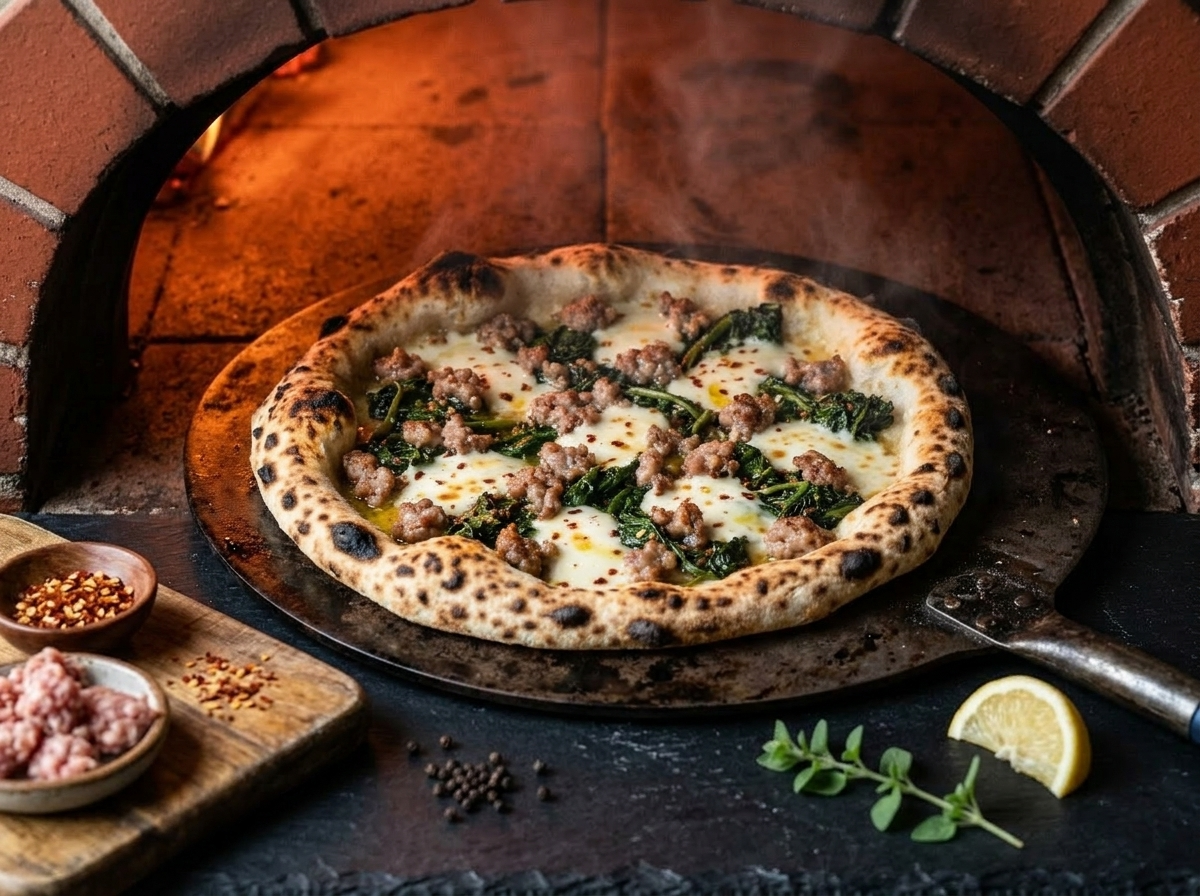
- Place your pizza steel or baking stone on the top rack of the oven. Heat the oven to its maximum temperature, at least 250 C / 480 F, for 45 minutes minimum.
- Dust a pizza peel or rimless baking sheet generously with semolina flour. Stretch one dough ball by hand into a rough 28-30 cm round, working from the center outward and leaving a slightly thicker edge.
- Distribute half the friarielli evenly over the dough, leaving a 1.5 cm border. Scatter half the crumbled raw sausage across the top in small, irregular pieces.
- Tear half the fior di latte into 6-8 pieces and distribute evenly. Drizzle with 1 tbsp olive oil.
- Slide the pizza onto the hot steel or stone and bake for 6-8 minutes until the cornicione is puffed and charred in spots and the sausage is cooked through. Repeat with the second dough ball and remaining toppings.
- Remove from the oven, rest for 1 minute, then cut into slices and serve immediately.
Notes
Tips for Success
- Blanch the broccoli rabe for 2 minutes before sautéing to reduce bitterness without losing structure.
- Stretch the dough by hand on a lightly floured surface – rolling pins deflate the air bubbles you want.
- Preheat your oven with a pizza steel or stone inside for at least 45 minutes at maximum temperature.
- Crumble sausage into small, irregular pieces so some edges crisp up while the centers stay juicy.
- Tear the fior di latte by hand and distribute it loosely – large chunks melt more evenly than thin slices.
Variations
- Add smoked provola instead of fior di latte for a deeper, slightly smoky flavor profile.
- Use nduja in place of half the sausage for a spicier, more spreadable Calabrian version.
- Make it white: skip any tomato base and drizzle with olive oil only before adding toppings.
Storage and Reheating
Leftover pizza keeps in the fridge for up to 2 days, wrapped in foil or in an airtight container. The crust softens overnight but reheats well.
To reheat, place slices in a dry nonstick skillet over medium heat for 3-4 minutes with a lid on. This crisps the base and melts the cheese without drying the toppings. Avoid the microwave – it makes the crust rubbery.
Friarielli on its own freezes well in a sealed container for up to 1 month. Freeze it before putting it on the pizza, not after.
Serving Suggestions
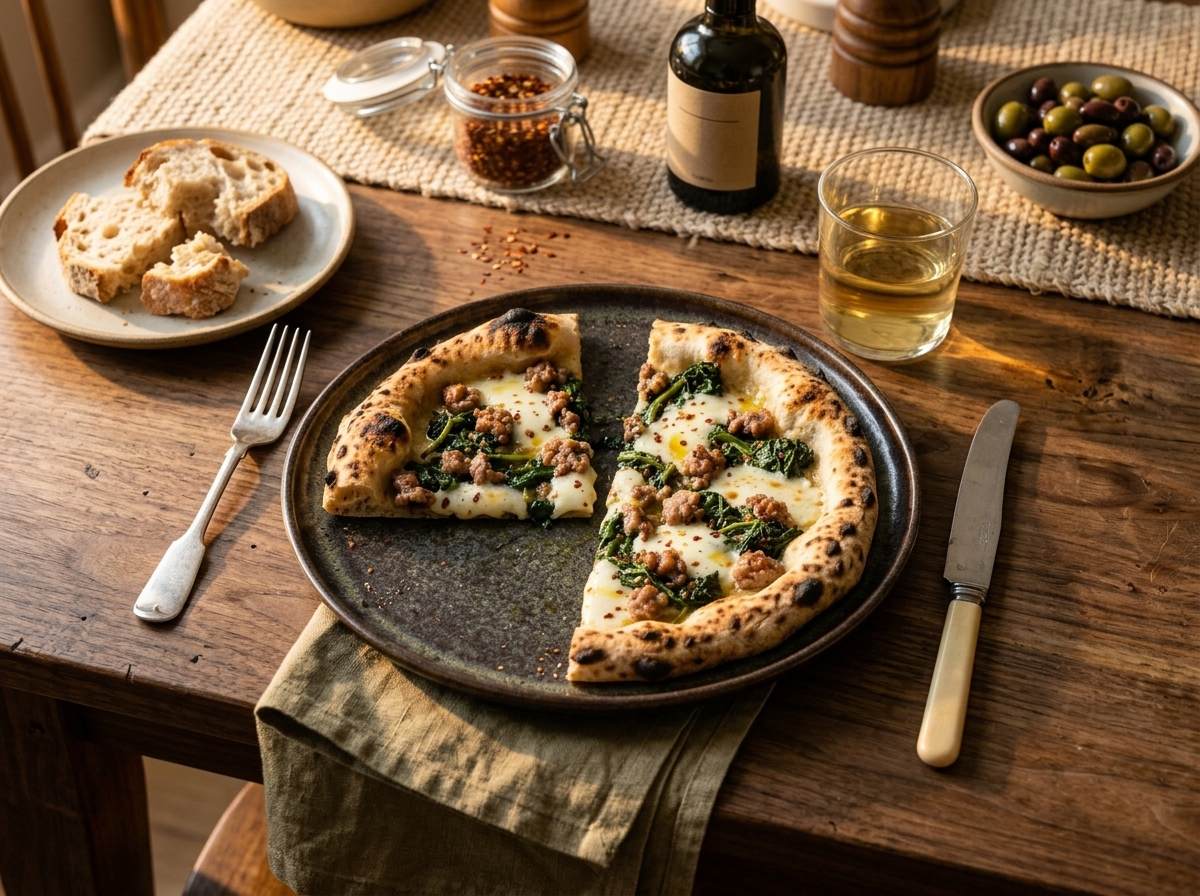
Serve the pizza straight from the oven, cut into 6 slices. A light drizzle of good olive oil and a pinch of dried chili flakes are the only finishes it needs.
This pizza pairs naturally with a chilled glass of Falanghina or Coda di Volpe, both Campanian whites with enough acidity to cut through the sausage fat, and our Italian wine pairing practical guide covers how acidity works across different dishes. A cold Peroni works just as well if you prefer beer.
If you’re making a larger spread, start with bruschetta or a simple Sicilian salad with fennel dressed with lemon. Keep the rest of the meal light – this pizza is filling on its own.
FAQ
Why is my friarielli turning yellow on the pizza?
Yellow friarielli means it was overcooked in the oven. Sauté the broccoli rabe until just wilted before topping the pizza, then it only needs 6-8 minutes in the oven to finish. Adding it raw is the other common mistake – it won’t cook through in time.
Can I use frozen broccoli rabe instead of fresh for this pizza?
Frozen broccoli rabe works fine – defrost it completely and squeeze out as much water as possible before sautéing. Excess moisture will make the pizza base soggy. Fresh gives a cleaner texture, but frozen is a practical year-round substitute.
Can I prep the friarielli topping the night before?
Yes, and it actually improves. Cook the friarielli with garlic, chili, and olive oil, then refrigerate it in a sealed container for up to 24 hours. Bring it to room temperature before spreading it on the dough so it doesn’t drop the oven temperature.
What is the difference between friarielli and cime di rapa?
In Naples, friarielli refers to broccoli rabe – the leafy, slightly bitter green used on this pizza. Cime di rapa is the same plant and the name used across most of southern Italy, especially Puglia. Outside Campania, you’ll find the same ingredient labeled as cime di rapa or rapini.
Is pizza salsiccia e friarielli gluten-free?
Not in its standard form, since the base is made with wheat flour. You can use a gluten-free pizza dough blend, though the texture and charring will differ. Make sure the sausage you buy is also certified gluten-free, as some brands use fillers.
What cheese works best if I can’t find fior di latte?
Low-moisture mozzarella is the closest substitute – it melts cleanly and doesn’t release excess water. Fresh buffalo mozzarella can work if you drain it well, but avoid pre-shredded mozzarella blends, which contain anti-caking agents that affect melt and flavor — the same principle applies in classic Neapolitan fried mozzarella where cheese quality determines the result.