
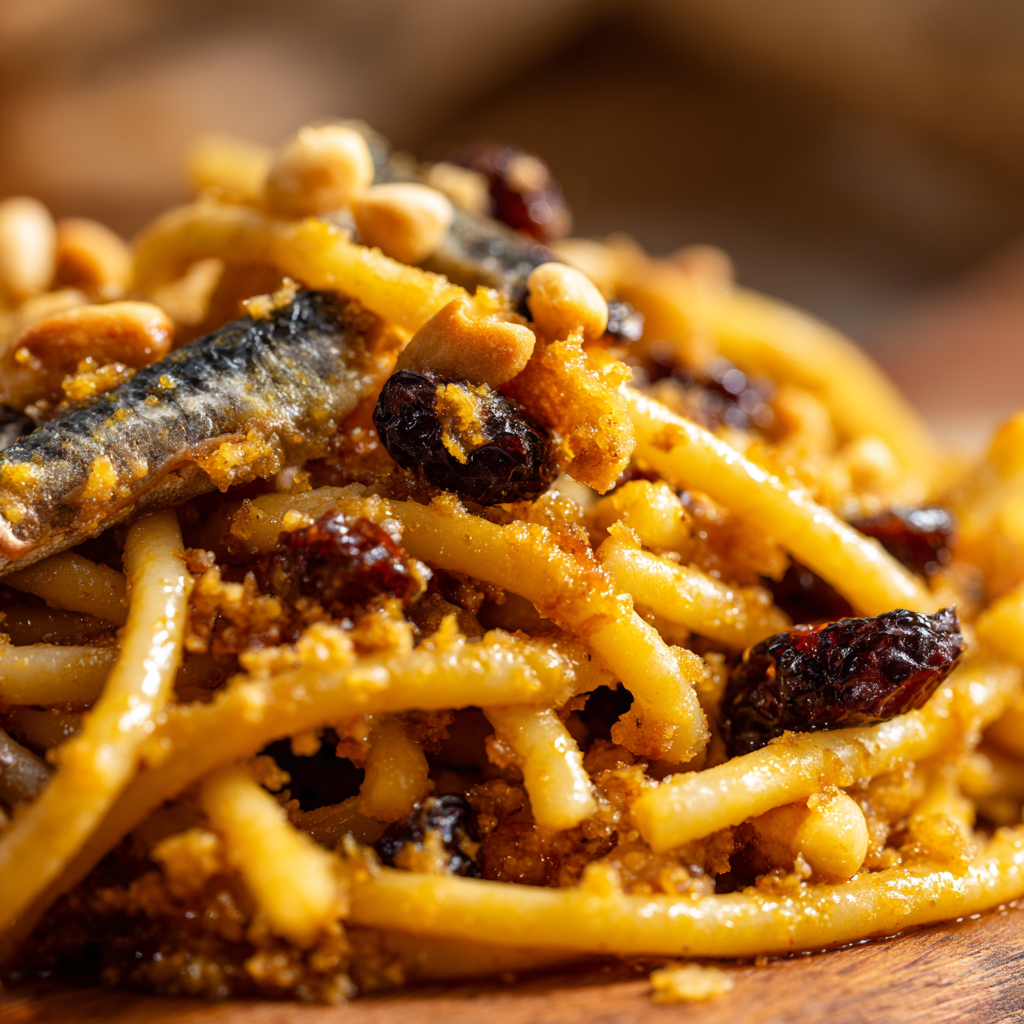
Jump to Recipe
I grew up eating pasta con le sarde sicilian recipe that tasted like salt air and sun-warmed kitchens, and I still chase that balance of sweet raisins, anise-bright fennel, and briny sardines today.
This dish is simple at heart: sautéed onions, wild or cultivated fennel, garlic, a splash of white wine, anchovies melted into the pan, and olive oil that brings everything together. Toasted pine nuts and seasoned breadcrumbs add crunch where cheese might go.
I’ll show you how I pick ingredients so fresh sardines stay silky and anchovy fillets dissolve cleanly into the base. You’ll learn timing cues—when to add saffron, how long to wilt fennel, and how breadcrumbs finish the plate—so the flavor lands every time.
Key Takeaways
- The dish balances sweet, savory, and briny notes through fennel, raisins, and sardines.
- Use good olive oil and quality anchovy fillets for a glossy, layered sauce.
- Fresh sardines cook quickly; canned are a convenient fallback.
- Toasted pine nuts and seasoned breadcrumbs provide traditional texture.
- This approach teaches technique you can apply to other pasta dishes.
A dish that tastes like Sicily, made approachable for your kitchen
This dish brings Sicily’s market energy into your kitchen with calm, clear steps you can follow tonight.
Start by softening diced onion and diced fennel bulb in olive oil over medium heat until they turn tender and sweet. Add anchovy fillets and let them melt into the base so the savory backbone forms without any fishy bite.
Warm a splash of white wine, stir in raisins and a pinch of saffron, and let them steep for a few minutes. Fold that fragrant mixture into the pan to add gentle sweetness and color.
Boil your pasta in a large pot of rolling, well‑salted water. Before you drain, reserve a cup of pasta water to emulsify the sauce back in the pan so it clings to each strand.
- Sweat onion and fennel over medium heat; seek tenderness, not browning.
- Watch texture and minutes; fennel should give, not collapse.
- Whisk a splash of pasta water into the sauce to create a silky mixture.
- Finish with a generous drizzle of olive oil and a shower of toasted breadcrumbs for crunch.
The result is a layered, fragrant plate that feels restaurant‑caliber but lives at home. Garnish with fennel fronds and a few toasted pine nuts if you like.
How pasta con le sarde became a Sicilian icon
The flavor story here begins in Palermo, where coastal trade brought saffron and raisins into kitchens that already knew fish and wild fennel. I like to say the plate reads like a market map: spices and dried fruit beside anchovy fillets and fresh sardines.
Arabic influence added warmth and sweetness. Local cooks paired those notes with fennel bulb, fronds, and seed to echo wild anise. Breadcrumbs replaced cheese, soaking up oil and giving the dish its crunchy finish.
Palermo roots and the Italian–Arabic flavor bridge
Anchovies melt into oil to build a savory base. Pine nuts and raisins lend soft sweetness. Saffron adds color and depth with very little heat.
Sweet, savory, and anise notes: what makes it uniquely regional
Wild fennel once foraged near roadsides gave a fierce anise edge. At home, I layer bulb and fronds so the flavor comes through without overpowering the fish.
- Bucatini or thin spaghetti give the sauce and breadcrumbs something to cling to.
- Smell the pan as fennel softens — that minute tells you the mixture is ready for wine or saffron.
| Ingredient | Role | Practical tip |
|---|---|---|
| Fennel (bulb/fronds) | Anise aroma | Sauté gently until tender, 4–6 minutes |
| Anchovy fillets | Umami base | Melt in oil over low heat |
| Sardines | Rich, oily protein | Cook briefly so pieces stay silky |
| Breadcrumbs & pine nuts | Texture and sweetness | Toast in oil; add at the finish |
Ingredients that build authentic flavor (and what to buy)
The right ingredients make the difference. I choose items that layer aroma and texture, so each bite feels balanced.
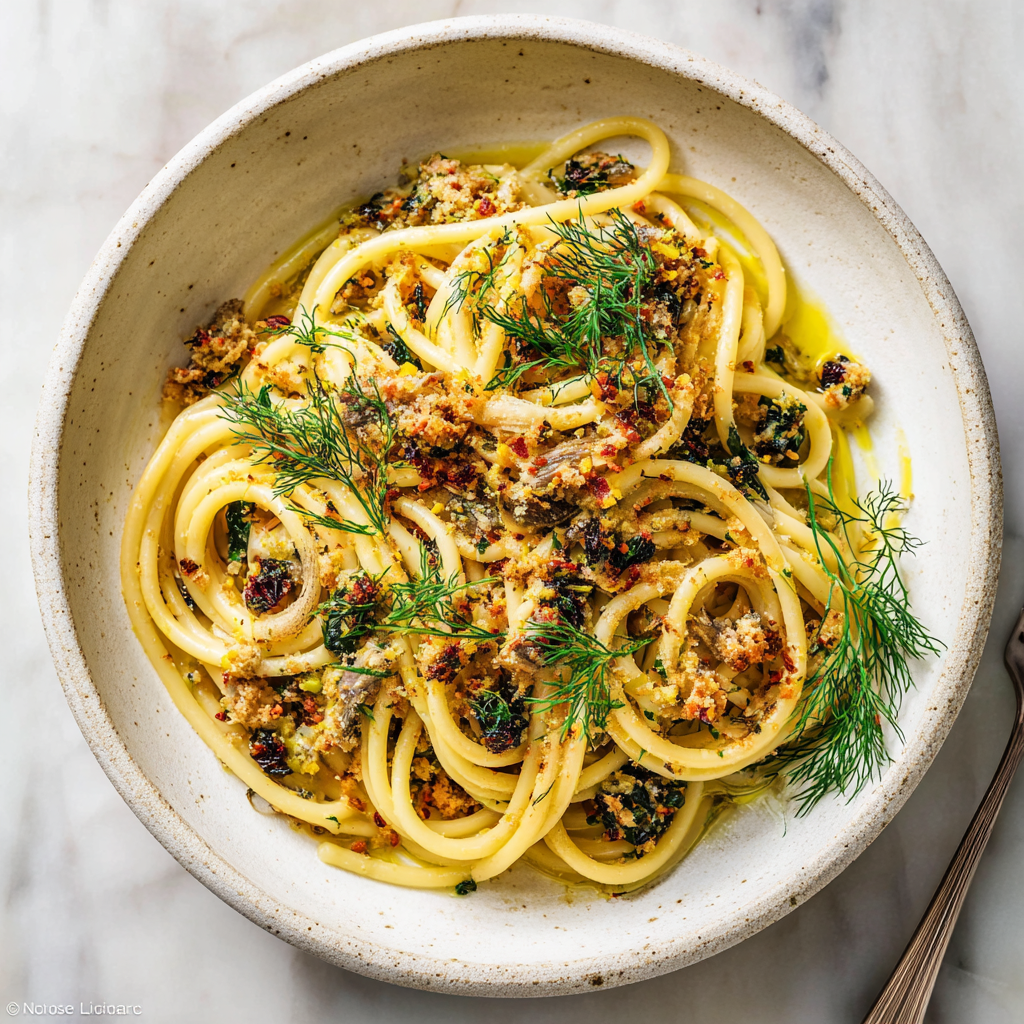
I buy a heavy fennel bulb for sweetness and keep bright fennel fronds to finish the plate. If wild fennel is unavailable, a pinch of fennel seed lifts the aroma without stealing the dish.
Fish and anchovies: fresh vs. canned
Fresh sardines should smell clean, like the sea, not fishy. Canned sardines work in a pinch; add them at the end and warm gently to keep them tender. Seek oil-packed anchovy fillets that look smooth—those melt into the pan and give clean salinity.
Sweet, spice, and liquid
I warm white wine, stir in saffron, and steep raisins so they plump and carry spice into the mixture. This softens dried fruit and spreads flavor without dry pockets.
Oils, nuts, shapes, and pantry basics
- Use good extra-virgin olive oil for mouthfeel and finish; a splash from a tin deepens the base oil.
- Toast pine nuts briefly until golden; remove immediately to avoid bitterness.
- Bucatini holds sauce best; spaghetti is a close second. I avoid short shapes that scatter the components.
- Season with salt and a crack of pepper, tasting in measured minutes as anchovies and fish add salinity.
| Ingredient | Why it matters | What to look for |
|---|---|---|
| Fennel bulb | Sweet, anise backbone | Heavy, crisp, pale green stalks |
| Anchovy fillets | Umami base | Oil-packed, smooth appearance |
| Fresh or canned sardines | Oily protein and texture | Fresh: clean aroma. Canned: gentle warming |
| Raisins & saffron | Sweetness and color | Steep in warm wine for a few minutes |
pasta con le sarde sicilian recipe: step-by-step you can trust
Follow these clear steps and you’ll build the sauce in a single pan, with timing cues that keep the fish tender and the flavors bright.
I start by toasting breadcrumbs in a pan with a little olive oil and crushed fennel seed until golden. Season with salt and pepper and set half aside for the table; the toasted breadcrumbs should crunch on their own.
Next, sweat diced onion and fennel bulb over medium heat until translucent and soft, about several minutes. Add anchovies and let them melt into the oil to form the savory base.
Warm a small cup of white wine with saffron, tumble in raisins to plump, and pour the liquid into the pan to lift any bits stuck to the bottom.
Fold in pine nuts and gently add sardines, cooking just a minute or two so pieces remain silky. Meanwhile, bring a large pot to a rolling water boil, salt generously, and add bucatini.
Reserve at least one cup of pasta water before you drain. Add the drained pasta directly to the pan and toss, adding pasta water little by little until the sauce emulsifies into a glossy mixture.
Finish with a drizzle of olive oil, minced fennel fronds, cracked pepper, and a shower of toasted breadcrumbs.
| Step | Cue | Timing |
|---|---|---|
| Toast breadcrumbs | Golden, fragrant | 2–3 minutes |
| Sweat onion & fennel | Translucent, sweet | 4–6 minutes |
| Plump raisins & deglaze | Wine steams, saffron blooms | 1–2 minutes |
| Add fish & finish | Sardines barely set; glossy sauce | 1–2 minutes |
Pro tips, timing, and common mistakes to avoid
Think of this as a coaching session: time the heat, protect the fish, and taste often. Small moves at the stove keep the dish bright and balanced.
Protect the fish
I barely stir the sardines once they hit the pan. Overworking turns them into paste and muddies flavor. Fresh sardines hold their shape when cooked just until set; canned versions dry if left too long.
Build a glossy finish
Use a cup of reserved pasta water in small splashes to emulsify oil into a smooth sauce. Finish with a thread of olive oil for shine and aroma. If the pan looks dry, loosen with pasta water rather than more oil.
Toast and season breadcrumbs
Season breadcrumbs with fennel seed, salt, and pepper before toasting. They stand in for cheese, so taste them alone. Scatter fronds at the end for a fresh lift.
| Mistake | Why it happens | Quick fix |
|---|---|---|
| Overstirring sardines | High heat or too much tossing | Cook 1–2 minutes; stir minimally |
| Greasy plate | Oil not emulsified | Add a spoonful of pasta water and toss |
| Bitter breadcrumbs | Over‑toasting | Toast until golden, remove immediately |
| Scorched fennel or onion | Too much heat | Use medium heat and sweat for several minutes |
Smart swaps and dietary tweaks without losing the soul
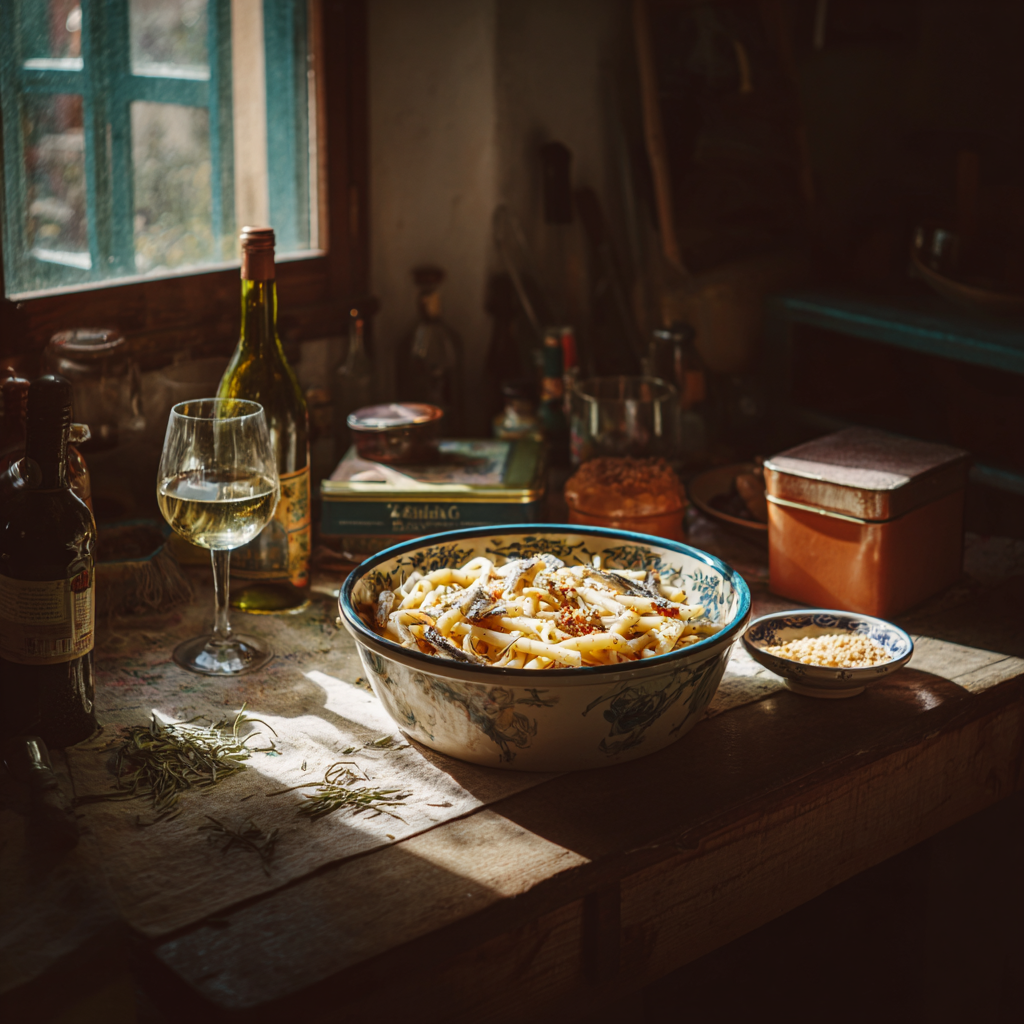
Small, thoughtful swaps keep the heart of this dish while making it work for different diets and pantries. Below are adjustments I use when time, taste, or supply demand a change.
Canned vs. fresh: timing and texture
With canned sardines, fold them in at the very end and warm for only a couple minutes to avoid drying. Canned sardines bring extra richness from their oil, so keep olive oil modest.
Fresh sardines or fillets, by contrast, go in earlier and cook until just opaque. That short window—one to two minutes—keeps pieces silky and intact.
Plant-based path
Skip the fish and anchovies. Smash a can of chickpeas, stir in 1/4 cup capers for briny depth, and treat them like the final protein. The capers mimic the savory edge without meat.
Pasta shapes and crunch
- Bucatini gives body; spaghetti is a fine stand-in.
- Replace up to half the pasta with zucchini noodles for a lighter plate.
- Pine nuts are classic; if pricey, toast a cup pine or swap in chopped walnuts for crunch.
- Finish with toasted breadcrumbs and a modest drizzle of olive oil, taste in stages, and adjust salt before serving.
For the full method and my timing cues, see the complete guide: full method and notes.
Serve it like a local: garnishes, sides, and storing leftovers
Finish each bowl with bright fennel fronds and a crunchy snowfall of toasted breadcrumbs. I mince fronds fine so their anise lift blends with olive oil and warm crumbs.
A final ribbon of olive oil and a crack of pepper is all the seasoning you need. If the plate tightens after sitting, loosen it with a splash of reserved pasta water and toss for gloss and silk.
Fennel fronds, toasted breadcrumbs, and a peppery finish
I crown each serving with fronds and breadcrumbs so every bite has brightness and texture. Scatter a cup pine or a small handful of nuts at the table for extra crunch.
What to pour and plate alongside without crowding the flavors
- Serve bucatini straight from the water boil; add pasta directly to the sauce for best adhesion.
- Keep sides simple: fennel‑orange salad or roasted vegetables let the main flavors shine.
- Pair with a crisp, dry white—its acidity cuts through oil and flatters the anise notes.
| Action | Why | Tip |
|---|---|---|
| Store leftovers | Preserves texture | Save a cup to two of cooking water to revive when reheating |
| Reheat | Restores gloss | Toss over medium heat with a splash of water or pasta water |
| Finish at table | Keeps crunch | Add breadcrumbs and fronds just before serving |
Conclusion
A short, careful set of steps gives you a plate that reads rustic and refined at once.
This recipe is my family’s way to bring Palermo to the table. It leans on layered fennel, saffron‑kissed raisins, and anchovies that melt into the base.
Use a large pot and well‑salted water so the pasta cooks perfectly. Reserve some water to turn oil into a silky mixture that coats each strand.
Cook sardines only for minutes. Finish with olive oil, fennel fronds, and toasted breadcrumbs for the classic texture contrast.
Quality ingredients matter — a good bulb, clean sardines, and trusted tins. Bookmark this post and return when you want seafood that feels both homey and elevated.
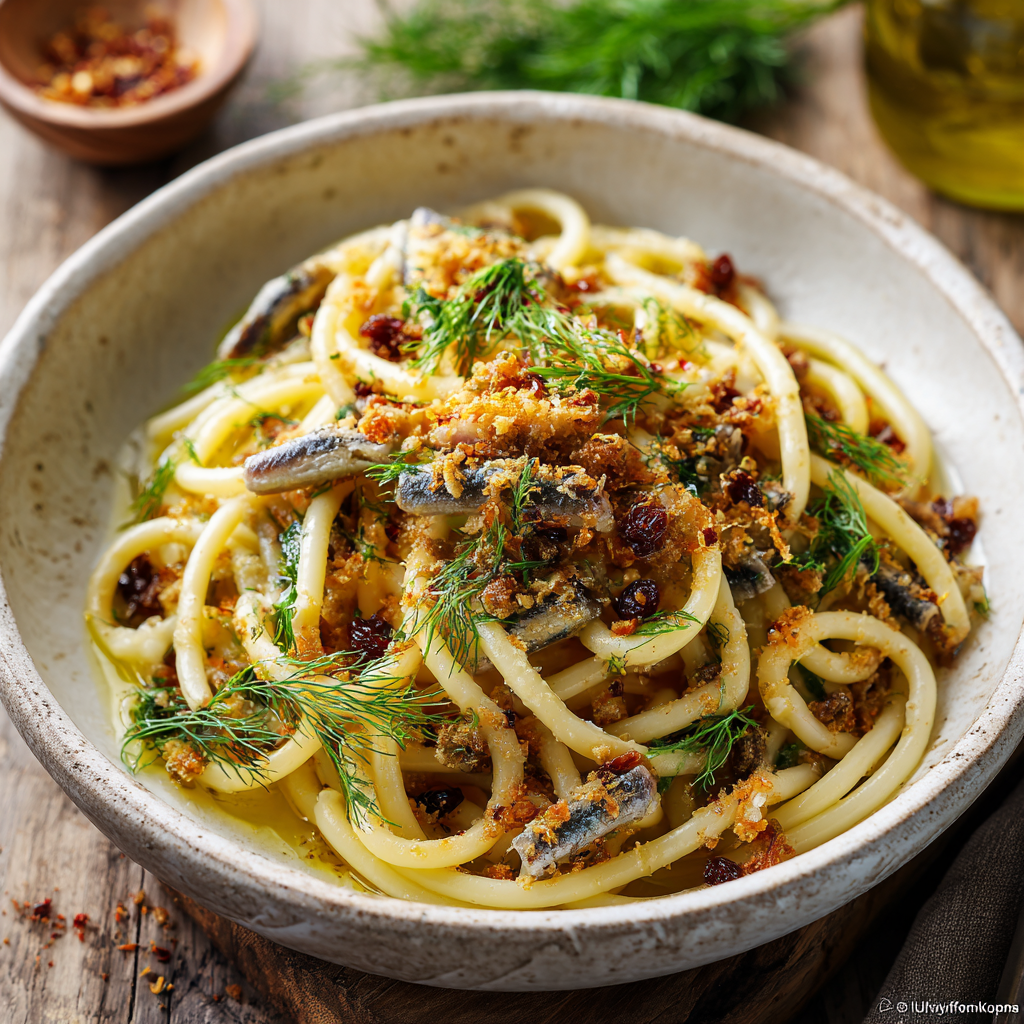
Pasta con le Sarde (Sicilian Sardine Pasta)
Ingredients
Method
- Heat a small skillet with 1 tbsp olive oil. Add breadcrumbs and a pinch of fennel seed. Toast over medium heat for 2–3 minutes until golden and fragrant. Remove and set aside.
- In a large pan, heat 2 tbsp olive oil. Add diced onion and fennel bulb. Cook over medium heat for 4–6 minutes until tender and translucent—don’t brown them.
- Add anchovy fillets to the pan. Stir gently until they dissolve into the oil, creating a savory base.
- Warm white wine in a small cup, add saffron threads and raisins, and let them steep for a few minutes. Pour this mixture into the pan to deglaze and lift any flavor from the bottom.
- Gently fold in fresh sardine fillets (or canned if using). Cook for 1–2 minutes—just until they turn opaque and silky. Avoid over-stirring to keep their shape.
- Boil bucatini in well-salted water until al dente. Reserve 1 cup of pasta water before draining.
- Add drained pasta to the pan with the sardine mixture. Toss lightly while adding reserved pasta water little by little until the sauce becomes glossy and coats the strands evenly.
- Drizzle with olive oil, season with salt and pepper, and top generously with toasted breadcrumbs, pine nuts, and minced fennel fronds. Serve immediately.
Notes
- Fresh vs. Canned Sardines: Use fresh if possible; canned work well when added at the end and warmed briefly.
- Breadcrumbs Matter: Toast them golden—not dark—for the best nutty crunch.
- Saffron Boost: Blooming saffron in warm wine gives the dish its golden hue and aroma.
- No Cheese Needed: Breadcrumbs replace grated cheese in true Sicilian fashion.
- Leftovers: Store in an airtight container for up to 2 days. Reheat with a splash of pasta water or olive oil to bring back the gloss.