
Jump to Recipe
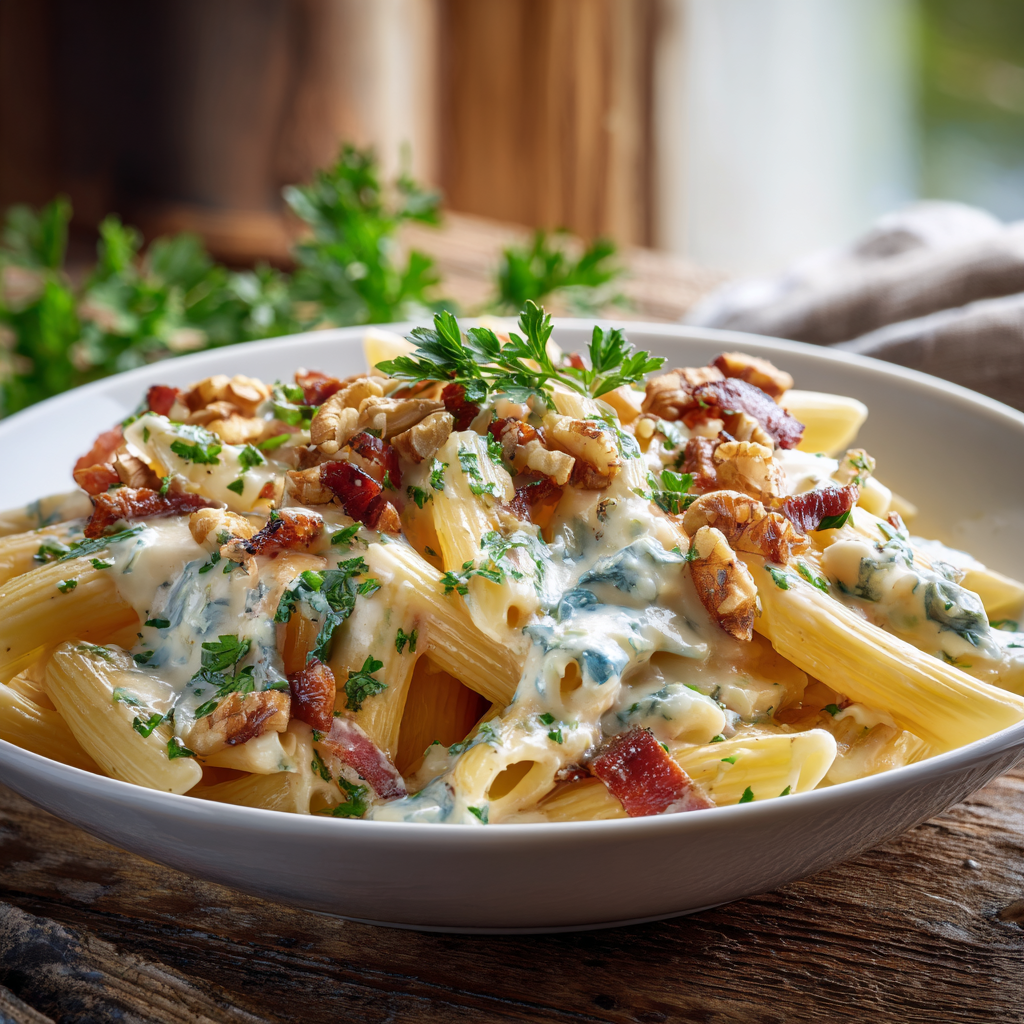
I keep a pot of water on for pasta and warm memories—this is how evenings at my table start. The cheese melts into a glossy, tangy cream that hugs each tube, while toasted nuts and crisp pancetta add a bright, rustic contrast.
Cooking feels like a conversation: timing the boil, tasting for salt, and watching the texture change. Little cues—how the spoon drags through the pan, the aroma of garlic and butter—tell you when to finish and toss everything together so the emulsion stays smooth.
Key Takeaways
- Start boiling in a large pot first to save time and preserve heat control.
- Cook pasta until just shy of done, then finish in the pan to marry sauce and starch.
- Warm the cheese gently so it melts into a glossy emulsion without splitting.
- Reserve a little starchy water to adjust texture and help the sauce coat the pasta.
- Add crunchy elements like toasted walnuts or crisp pancetta for balance.
- Taste and season at the end to protect the delicate flavor of the cheese.
Why this gorgonzola pasta hits the weeknight sweet spot
When time is short, I turn to a quick, high-impact pasta that tastes like hours in the kitchen but cooks in minutes. This method uses heat and timing rather than complex technique, so you get a glossy, balanced dish without fuss.
Rich, ready in minutes, and unapologetically smooth
The approach is efficient: build the base while water reaches a boil, then finish the pasta in the pan so every tube is coated. Melting the blue cheese gently into warm cream or milk over low flame creates a stable emulsion that clings to pasta instead of pooling.
- One-pot rhythm: sauté aromatics, bring water to boil, cook pasta, then fold the melted cheese and a splash of reserved water into the pan.
- No roux needed: the cheese melts evenly; a little starchy water tightens the emulsion and keeps the texture silky.
- Flavor balance: tangy cheese and a touch of olive oil cut richness so the dish feels bright and layered, not heavy.
- Low cleanup and fast turnaround—perfect for busy weeknights without sacrificing restaurant quality.
Ingredient intel: choosing the best cheese, pasta, and add‑ins
Good ingredients make a simple pasta dish sing. I’ll walk you through buying, pairing, and how each element behaves so your finish is reliable every time.
Gorgonzola dolce vs piccante: flavor, texture, and melting
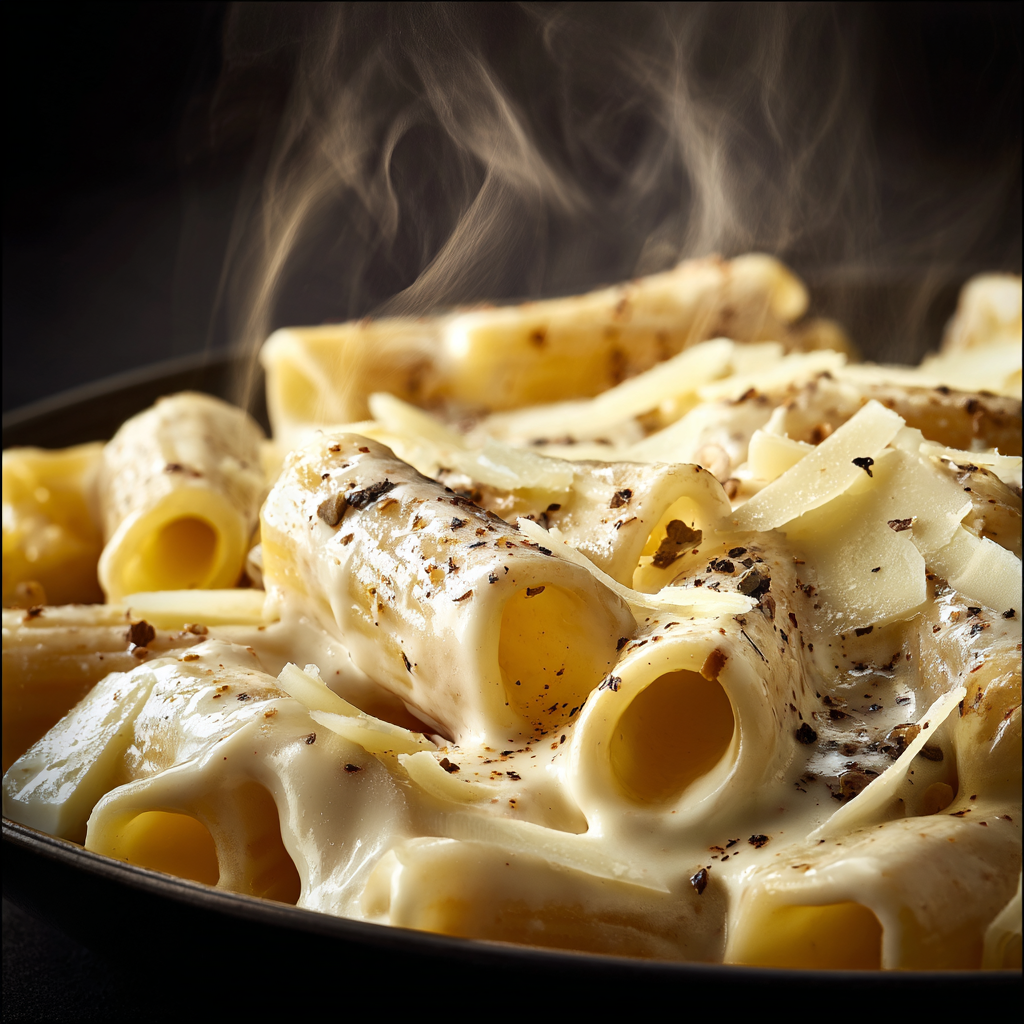
Gorgonzola cheese comes in two main moods. Gorgonzola dolce is softer, gently sweet, and melts into a silky ribbon; it’s my pick when I want an ultra‑smooth finish.
Gorgonzola piccante is older, firmer, and sharper. It crumbles more and needs a touch more cream to stay supple, but it gives a bold, peppery note that cuts through richness.
Tube shapes that hold the sauce
Tubes and ridged shapes trap the mix inside and around every bite. I favor penne rigate because the hollow and ridges carry flavor; other solid choices are rigatoni or orecchiette for texture contrast.
Building body without breaking
Use fresh cream and a drizzle of good olive oil to round the cheese’s edge. Stir in a spoonful of reserved pasta water to emulsify the sauce—it tightens the texture without flour or starch pastes.
Smart add‑ins to lift and balance
- Crisp pancetta folded in at the end keeps crunch against the soft base.
- Toasted walnuts add warmth; taggiasca olives bring a briny spark.
- Cooked chicken or fresh herbs like parsley or thyme add body and freshness.
Step‑by‑step: make the gorgonzola cream sauce while the pasta cooks
Bring a large pot of water to a rolling boil. It should taste faintly of the sea so the pasta is seasoned from the inside out.
Boil a large pot of salted water and cook penne al dente
Drop the pasta and cook pasta until just al dente—usually a couple of minutes shy of the package time. This lets it finish in the pan without losing bite.
Sauté aromatics and melt gorgonzola gently over medium heat
Meanwhile, warm a skillet and crisp pancetta in olive oil. Remove the pork, soften shallots 2–3 minutes on medium heat, then add garlic until fragrant.
Lower the flame and add the gorgonzola; stir as it melts so the cheese softens without separating.
Stir in heavy cream and loosen with reserved pasta water
Pour in heavy cream and simmer 4–5 minutes until the sauce looks cohesive and slightly thickened. Reserve about 1/2 cup pasta water—the starch is your glue.
Toss to coat, then finish with parsley, pepper, and a bit of parmesan
- Add a splash of pasta water to the pan, then add pasta directly from the pot so some starchy water comes along.
- Toss for 1–2 minutes to marry the pasta and sauce; the mixture should cling and shine.
- Finish with grated Parmesan, plenty of cracked pepper, chopped parsley, toasted walnuts and the crisp pancetta.
- Taste before you salt—the cheese is seasoned. Drain pasta only if you must, and keep reserved water handy.
| Action | Timing | Visual cue |
|---|---|---|
| Soften shallots | 2–3 minutes | Translucent, not brown |
| Simmer cream and cheese | 4–5 minutes | Lightly thickened, glossy |
| Toss pasta in pan | 1–2 minutes | Sauce clings to each piece |
Pro tips for a silky, stable creamy gorgonzola sauce
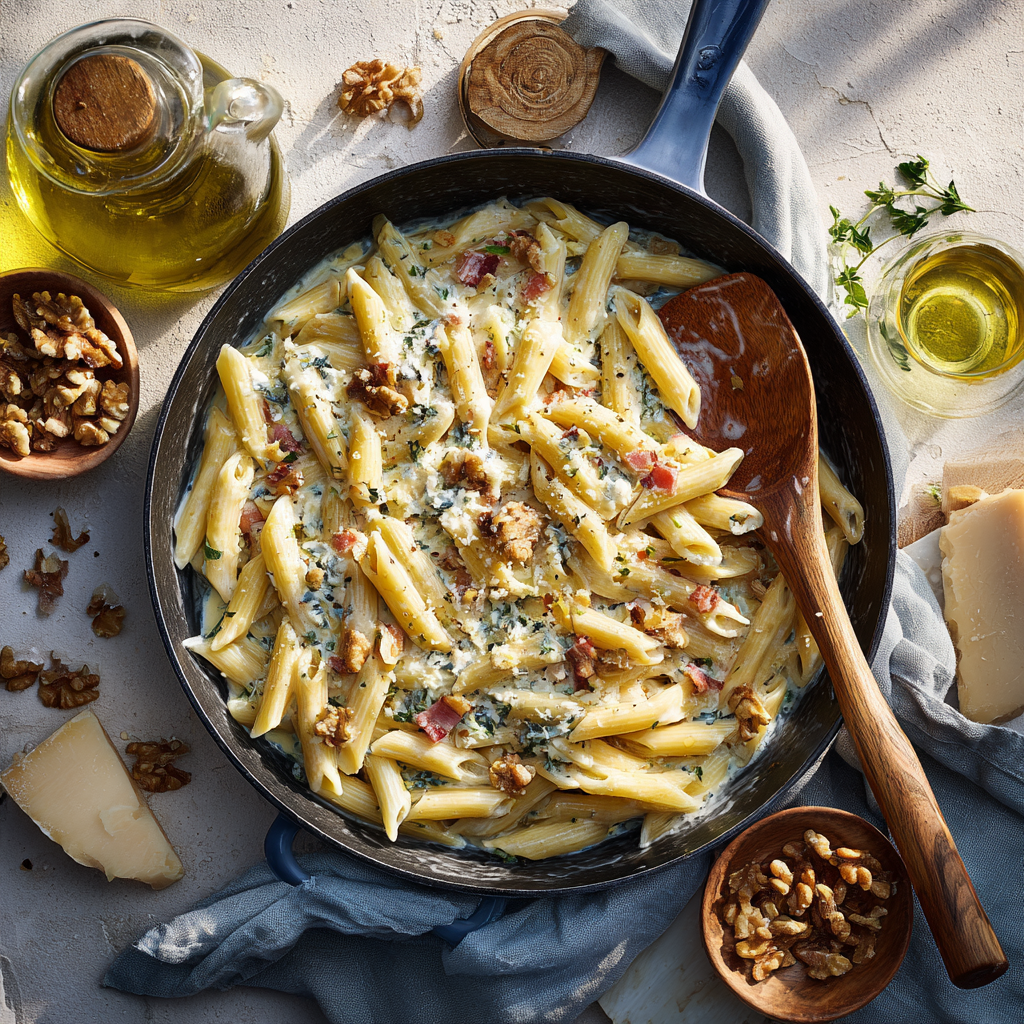
To get a glossy finish every time, pay attention to how the cheese melts and how you control the pan. Start small and build confidence: these are chef‑level tricks I use at home.
Use a block of gorgonzola cheese. Blocks hold more moisture than pre‑crumbled packs, so they melt into a smoother texture and avoid grainy bits. Cut it into even pieces so it softens uniformly.
Mind the heat. Keep the pan on medium heat or lower once dairy enters. Boiling dairy makes the emulsion split; a quiet simmer coaxes a shiny finish. Deglaze any fond first to add flavor without extra salt.
Order matters: let the cheese soften before adding cream. This balances fat and moisture naturally. If the pasta sauce tightens, whisk in a spoonful of warm pasta water off the heat to relax it without thinning flavor.
- Season last — blue cheese and pancetta already add salt.
- Stir gently in small circles to keep the emulsion intact.
- Avoid too many add‑ins; every extra fat or moisture tests the sauce’s structure.
- Finish the toss over low heat so the pasta releases starch and the glaze becomes restaurant‑level shiny.
| Tip | Why it helps | Quick cue |
|---|---|---|
| Block cheese | Smoother melt; less grainy texture | Even, glossy ribbons |
| Medium heat | Prevents splitting; preserves emulsion | No rolling boil, gentle steam |
| Pasta water | Tightens or relaxes the sauce without diluting | Use warm, starchy spoonfuls |
| Season last | Prevents over‑salting | Taste before a final pinch of salt |
penne with creamy gorgonzola sauce recipe variations you’ll love
Small tweaks turn the same pan into distinct dinners that still feel rooted in Italy. Below are faithful riffs that keep technique simple and results reliable.
Pasta alla cenere: olive and herb fold
Melt the cheese into warm cream, then fold in finely chopped black olive and a sprig of thyme or marjoram. Finish with a spoon of pasta water so the mixture becomes silky and clings to each piece.
Crisp pancetta and toasted walnuts
Crisp the pork until brittle, toast walnuts, then add them at the end. The contrast gives bright texture against the soft base and keeps each bite interesting.
Chicken and a splash of white wine
Sear seasoned chicken until golden, deglaze the pan with white wine, add a little broth and warm cream, then melt the cheese in. Toss the pasta, grate Parmigiano, and scatter parsley for a hearty, weeknight meal.
Vegetarian and gluten‑free swaps
Use a vegetarian blue and a vegetarian hard cheese to keep the profile authentic without rennet. For gluten‑free, pick a quality GF penne and cook slightly under al dente; pasta water helps the glaze stick.
- Pasta alla cenere: minimal, olive-forward, herb note.
- Crunch version: pancetta + walnuts added at finish.
- Chicken version: brown meat, deglaze, build the sauce, toss.
- Veg/GF swaps: alternative cheeses and GF pasta, same technique.
| Variation | Key add-ins | Technique note | Best for |
|---|---|---|---|
| Pasta alla cenere | Black olive, thyme | Fold into melted cheese; use pasta water | Minimalists, olive lovers |
| Crunchy finish | Pancetta, toasted walnuts | Add at end to preserve texture | Textural contrast seekers |
| Chicken & wine | Chicken, white wine, broth | Deglaze after browning; finish sauce | Hearty weeknight dinners |
| Veg / GF | Vegetarian blue, GF pasta | Swap cheeses; rely on pasta water | Dietary needs, lighter options |
What to serve with gorgonzola cream sauce pasta
A rich bowl needs bright company—choose sides that refresh the palate and brighten every bite. I keep things simple and focused on contrast: acidity, texture, and a touch of heat to lift every forkful.
Bright sides and breads that balance richness
I love a simple green salad dressed in a lemon vinaigrette. Add thinly shaved fennel and a handful of parsley for crunch and a clean, herbal note that cuts through the cheese.
- Roast or grill vegetables—asparagus, peppers, and mushrooms—so their smoky char offsets the dish’s richness.
- Warm focaccia or garlic bread is perfect for mopping the pan and gives a pleasant chew and salt to pair with the pasta.
- A few grinds of pepper on each plate wakes up flavor without adding weight.
- For bitterness, try Italian‑style mixed greens with radicchio; they brighten and balance every mouthful.
- Keep portions modest; the pasta is filling, so sides should refresh rather than compete.
- Place a small bowl of chopped herbs at the table so guests can add parsley to taste.
| Types of side | Why it works | Serving note |
|---|---|---|
| Crisp salad | Acid and crunch cut richness | Serve chilled, dress just before plating |
| Grilled vegetables | Smoky contrast complements the cheese | Serve warm alongside the pan of pasta |
| Focaccia or garlic bread | Texture and salt to mop sauce | Offer sliced, warm from the oven |
For more ideas and the full method I use at home, see my detailed full method.
Make‑ahead, storage, and reheating without losing the creamy texture
Leftovers can taste near‑fresh when you treat them gently and store them right. Cool the pan quickly, then transfer the pasta to a shallow airtight container and refrigerate. I keep leftovers up to 4 days; that window protects flavor and texture.
To reheat, I use a skillet over medium‑low heat. Add about 1/4 cup of water, milk, or stock and cover the pan so steam helps the emulsion relax. Stir now and then; if the mix tightens, add another spoonful until the glaze looks glossy again.
- Microwave: 50% power in one‑minute bursts, stirring between each, to avoid overheating.
- Plan ahead: cook the pasta a minute underdone and save extra pasta water to make revival easier.
- Drain pasta well before storing — standing water dulls flavor and makes the leftover watery.
- Freezing is optional: it can last about 3 months, but expect some texture change. Thaw fully in the fridge and re‑emulsify on the stove with a splash of liquid.
| Storage step | Timing / temp | Quick note |
|---|---|---|
| Refrigerate | Up to 4 days; 40°F or below | Use shallow container to cool quickly |
| Reheat on stove | Medium‑low heat; add ~1/4 cup liquid | Cover briefly to use steam; stir to re‑emulsify |
| Microwave | 50% power; 1‑minute bursts | Stir between intervals to avoid breaking the emulsion |
| Freeze | Up to 3 months (optional) | Thaw in fridge; expect texture change; re‑emulsify with liquid |
Smart substitutions and nutrition‑minded tweaks
If you want to trim richness without losing silk, small swaps make a big difference at the stove. I’ll show practical changes to fat and salt, and fair trade-offs so the dish still feels comforting.
Dialing fat and salt, and when to use half‑and‑half
Swap part of the heavy cream for half‑and‑half to lower fat while keeping a smooth mouthfeel. The finish will be lighter, not thin, if you lean on warm pasta water to bind the emulsion.
Keep salt modest. Cheese and pancetta carry a lot of sodium, so I taste at the end and add only a small pinch if needed. If the mix tastes sharp, stir in a spoon of pasta water and a knob of unsalted butter to soften edges.
If you prefer smaller portions, serve the pasta alongside a crisp salad and a squeeze of lemon to refresh the palate without changing the core ingredients.
Blue cheese alternatives and vegetarian cheeses
For a milder finish choose gorgonzola dolce; for bolder character try gorgonzola piccante but expect a sturdier texture. Vegetarian options exist: certain Stilton‑style or Danish blue alternatives and dolcelatte mimic the flavor while avoiding animal rennet.
For lactose concerns, aged cheeses can be gentler, though labels vary—always read them. Vegetables like spinach, mushrooms, or roasted peppers stretch the dish so it feels lighter, turning this pasta recipe into a more balanced plate.
- Trim fat: half‑and‑half + pasta water = silkier, lighter sauce.
- Salt sparingly: cheese adds plenty; season last.
- Veg-forward: add spinach or roasted peppers to reduce richness by volume.
| Choice | Why use it | Best for |
|---|---|---|
| Half‑and‑half | Lower fat, still smooth | Everyday lighter meals |
| Gorgonzola dolce | Milder, creamier melt | Beginners, gentle flavor |
| Gorgonzola piccante | Sharper, firmer crumble | Bold palates, stronger cheese lovers |
| Vegetarian blue / dolcelatte | Rennet‑free options | Vegetarians seeking similar flavor |
Bring it to the table: a cozy Italian classic, perfected
A simple toss in the pan and a small cup of pasta water turns the gorgonzola cream into a glossy glaze that clings to every tube. Penne rigate captures the mixture inside, so each bite feels balanced and full of flavor.
If you made the chicken version, a splash of white wine and a sprig of sage in the skillet adds depth while keeping dinner weeknight‑quick. Finish with grated Parmigiano, chopped parsley, and a twist of pepper for brightness.
I invite you to try this at home—few techniques change a dish so much in minutes. Keep the method, tweak the add‑ins, and enjoy a warm, satisfying plate that brings people together.
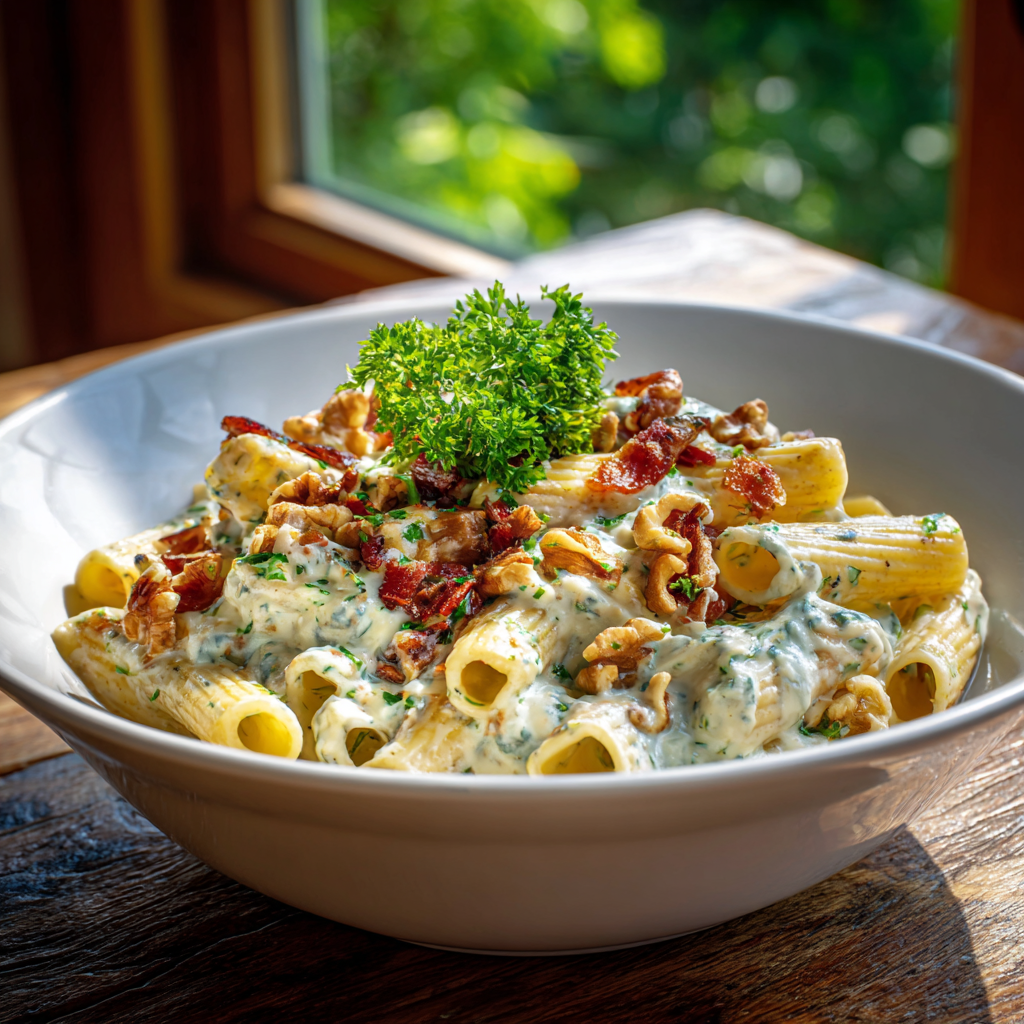
Penne with Creamy Gorgonzola Sauce, Pancetta, and Walnuts
Ingredients
Method
Notes
- Use block gorgonzola for a smoother melt.
- Keep heat low once cheese and cream enter the pan.
- Finish cooking pasta in the sauce so starch binds everything.
- Add pasta water little by little for control.
- Season at the end since cheese and pancetta add salt.