
Jump to Recipe
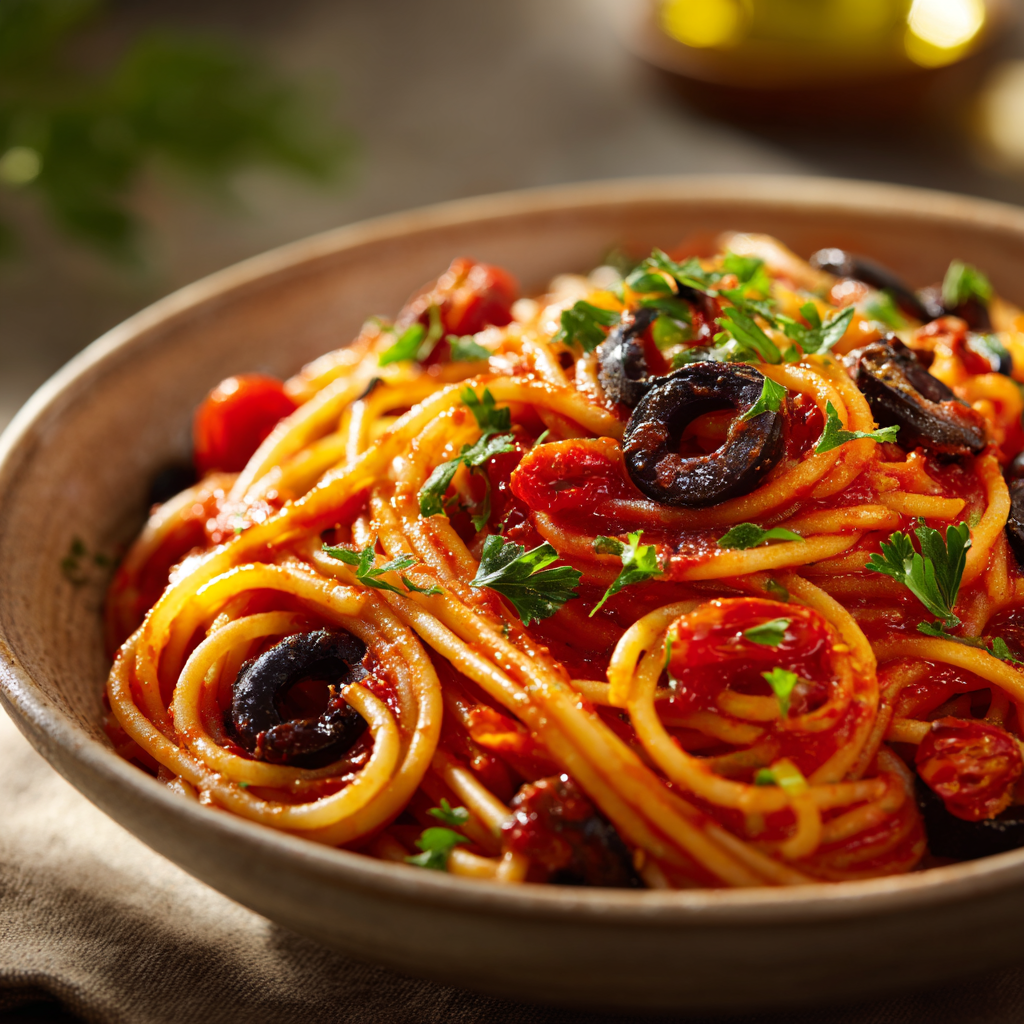
I light a pan, crush a clove of garlic, and let the scent draw people into the kitchen — it smells like home before a word is said. Canned tomatoes, briny olives, anchovies that melt into the sauce, and a few capers make a meal that feels generous from pantry staples.
I make this when time is short: bloom the aromatics, add tomatoes, and simmer until the flavors sing. A splash of starchy pasta water binds everything so the sauce clings, and I serve it straight from the pan in warmed bowls.
Trust good ingredients — San Marzano tomatoes, deli or oil‑cured olives — and you’ll see why anchovies are my secret for deep, savory flavor without fishiness. For weeknight minutes, plan about 20 minutes from pan to plate.
Key Takeaways
- Use quality tomatoes and a pinch of sugar only if the can tastes sharp.
- Bloom garlic and anchovies first to build the sauce’s base.
- Choose oil‑cured or deli olives for richer, more aromatic bites.
- Finish the pasta in the pan with pasta water for a glossy cling.
- Simple pantry items deliver big Neapolitan flavor in about 20 minutes.
Why this bold, briny pasta wins on busy nights
When time is tight, I reach for a sauce that sings from a few pantry jars. With canned tomatoes, garlic, olives, capers, and anchovies on hand, you can cook the sauce while the main is boiling so both finish together in under 30 minutes.
I start the sauce first, then set a pot of salted water to boil. Blooming garlic and anchovies in olive oil unlocks big flavor fast, so a long simmer isn’t needed. Anchovies melt into the pan and add deep umami in minutes without tasting fishy.
Small upgrades—deli or oil‑cured olives and good tomatoes—lift a simple meal. If a can leans tart, one pinch of sugar tames acidity and keeps the sauce bright, not sweet. Tossing the cooked main into the skillet to finish saves time and creates a glossy, clingy finish in about one minute.
Quick time-savers
- Start sauce first, boil main next—about 25 minutes total.
- Short ingredient list means shopping is minimal.
- Finish in the pan to emulsify with reserved cooking water.
| Pantry Item | Why it matters | Time impact |
|---|---|---|
| Canned tomatoes | Base flavor—choose quality for brightness | Instant, no chopping |
| Anchovies | Provide umami when dissolved in oil | 1–2 minutes to melt |
| Olives & capers | Briny contrast and texture | Add at finish, no extra cook time |
Ingredients that make puttanesca sing
I keep a small shelf of jars and tins so dinner feels effortless even on the busiest nights. The right ingredients turn a handful of store staples into something bright, savory, and memorable.
Core pantry staples
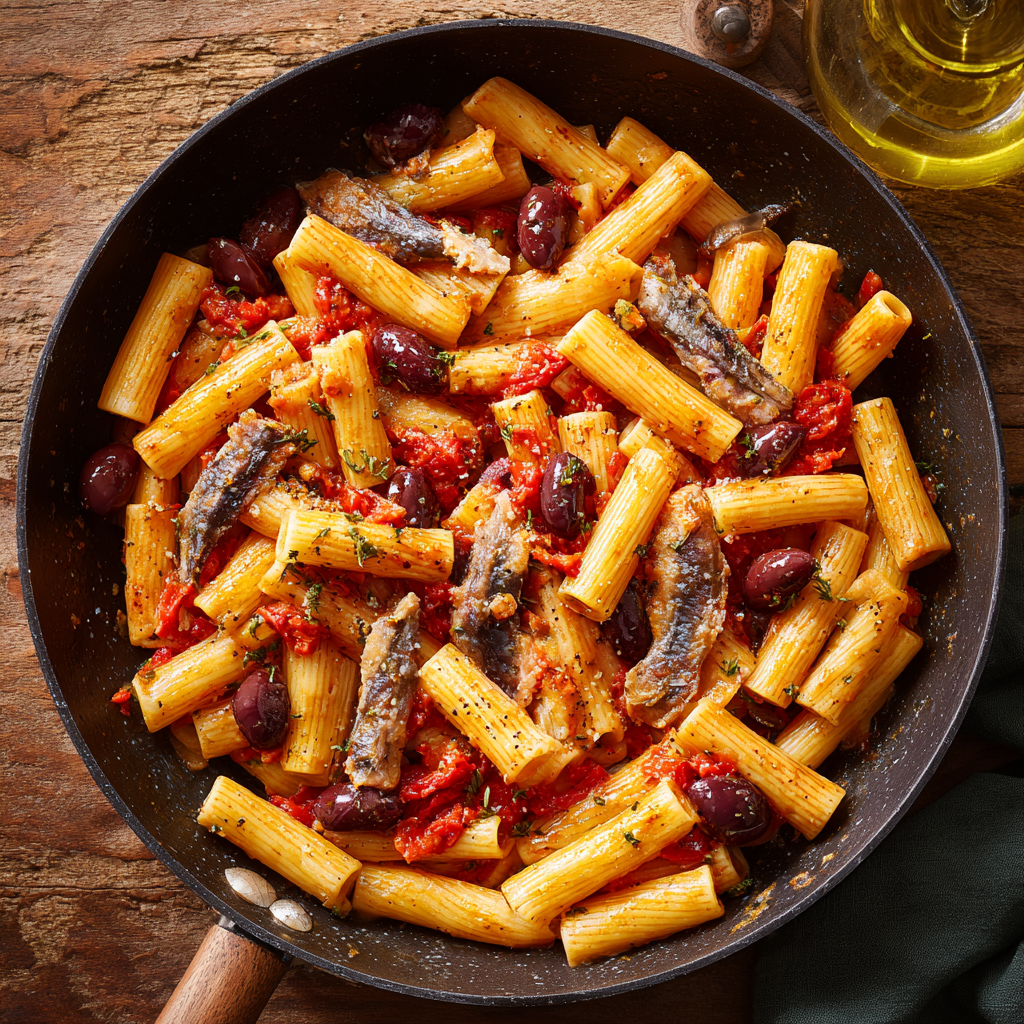
Tomatoes, garlic, olives, capers, and anchovies are the five I never run out of. Garlic and anchovies melt into warm oil, building a savory base; capers add pops of saline brightness. These ingredients season as they cook, so taste before adding salt.
Olive oil and olives
Extra‑virgin olive oil lends fruitiness and sheen. I use it for cooking and finish with a light drizzle for aroma. Choose deli or oil‑cured olives over cheap bottled black olives—their winey, meaty flavor blossoms when sliced and warmed in the pan.
Tomatoes, heat and herbs
San Marzano or quality canned tomatoes are ideal. Hand‑crushed whole tomatoes give texture; crushed tomatoes save time. If the tomato tastes sharp, a tiny pinch of sugar calms acidity.
- Red pepper flakes—sparingly—to give a background hum.
- Oregano stands up to tomato; fresh parsley and basil lift the finish.
| Ingredient | Why it matters | Tip |
|---|---|---|
| Tomatoes | Sweet acidity, sauce body | San Marzano or good canned, hand‑crush for texture |
| Olives | Briny contrast, texture | Use deli or oil‑cured, pit and slice |
| Anchovies | Deep umami and seasoning | Fillets preferred; paste works in a pinch |
pasta alla puttanesca easy recipe: step-by-step
I heat olive oil until it shimmers, then add garlic so its edges just turn golden and fragrant. This is the moment that sets the whole cooking process in motion and gives the sauce a warm, toasty base.
Start the sauce: bloom garlic, anchovy fillets, capers, olives, and red pepper flakes
Lower the heat and stir in finely chopped anchovy fillets, capers, sliced olives, and a pinch of red pepper flakes. Cook about 60 seconds so the anchovy melts and the pepper flakes bloom. You should smell a savory, slightly briny lift and see the oil take on a rosy tint.
Build flavor with tomatoes and a gentle simmer
Add hand‑crushed tomatoes and swirl a little water from the empty can into the pan. Season with oregano, freshly ground pepper, and only a small pinch of salt. Keep the pan at medium heat and let the sauce simmer gently for 10–20 minutes, stirring now and then.
Cook pasta, save pasta water, then toss to emulsify
Boil the main in a large pot of well‑salted water until just shy of al dente. Scoop out about a cup of pot water before you drain. Transfer the noodles into the skillet, add roughly 1/4 cup pasta water, and toss over low heat.
- Toss until the sauce clings and looks glossy—this is the emulsification you want.
- If it tightens, add splash by splash of reserved water and toss again.
- Taste for balance: there should be no raw garlic bite and a rounded savory finish.
For background and tradition with anchovy work, see this short note on anchovy and breadcrumb tradition.
Pro tips from the stovetop
On a lively stovetop, small moves change a simple sauce into something savory and soulful. I share quick habits that reward every minute you spend by the pan.
Anchovies melt into savory depth
Mince anchovies finely and add them to warm olive oil with garlic. In about 60 seconds they dissolve, leaving umami without a fishy note.
If you’re cautious, start with one fillet and taste. The anchovy will season the sauce as it melts, so you rarely need extra salt.
Use starchy pasta water to bind
Reserve pot water before you drain. That starchy liquid is magic—add it little by little and watch the sauce go glossy and cling to noodles.
Toss for 45–60 seconds so the emulsion sets. If the pan tightens, a splash of pot water brings everything back to life.
Pan size, heat control and when to add water
- Choose a medium skillet for two portions; it concentrates flavor but stops the sauce from drying too fast.
- Keep heat moderate: too high scorches, too low mutes flavors. Adjust in short bursts during cooking.
- If you scale up, use a larger pan or a shallow pot and add a quick splash of water if the sauce reduces too far.
| Tool | Why it matters | Timing |
|---|---|---|
| Medium skillet | Concentrates flavor without over‑evaporation | Two to three minutes active tossing |
| Starchy pot water | Binds oil and tomato into a glossy finish | Add gradually, 15–60 seconds to emulsify |
| Moderate heat | Protects garlic and builds balanced flavor | Adjust continuously during cooking |
Smart swaps and dietary tweaks
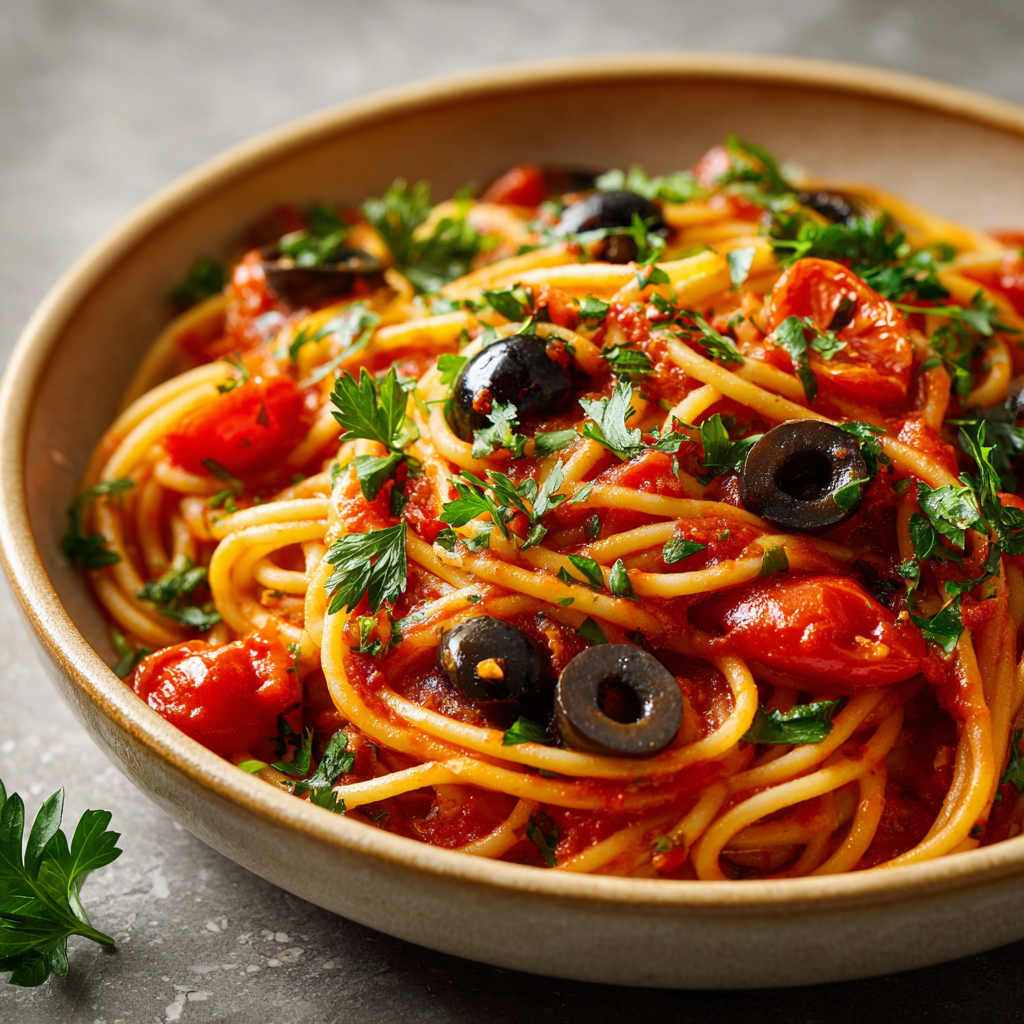
A few careful substitutions let you respect tradition while making the sauce suit your pantry or diet. These options keep the dish bold and balanced, whether you must avoid fish, need gluten-free dinners, or simply want a different olive.
Anchovy options and umami boosters
If fillets aren’t on hand, use anchovy paste at 1/4 teaspoon per fillet. It dissolves into olive oil and gives the same deep savor.
For those avoiding fish, a single small splash (start with 1/4 teaspoon) of fish sauce can mimic that umami lift. Taste as you go—these are potent.
Going meatless, swaps and finishing notes
- To go fully meatless, lean on olives and capers and bloom garlic gently to deepen flavor without anchovies.
- Kalamata make a fine substitute for oil‑cured olives; slice so their brine spreads through the sauce.
- Choose trusted canned tomatoes—San Marzano style balances sweetness and acidity.
- Finish with fresh parsley or basil, or a drizzle of olive oil if herbs are scarce.
- Keep salt light: olives, capers, and any umami booster add plenty of salinity.
- For more heat, add pepper in small increments and taste before serving.
| Swap | Use | Effect |
|---|---|---|
| Anchovy fillet | 1/4 tsp anchovy paste | Same umami, easy to dissolve |
| No fish | 1/4 tsp fish sauce | Umami mimic—start small |
| Olives | Kalamata, sliced | Briny, meaty texture |
Choose your pasta shape and finish strong
The shape you pick changes how each bite carries olive and tomato flavors. I often reach for spaghetti or vermicelli for a classic finish. Spaghetti catches the briny bits along its thin strands, making every forkful lively.
If you want more chew, try bucatini or linguine. Bucatini channels sauce through its tube; linguine gives a silkier mouthfeel. Short shapes like penne or rigatoni work too—caps and ridges trap capers and chopped olives for pocketed flavor.
- Cook the noodles just shy of al dente so they finish while you toss with the sauce.
- Add a ladle of starchy water and keep tossing over gentle heat until glossy.
- Finish with a thread of olive oil, torn basil or a shower of parsley, and serve immediately.
| Shape | Why it works | Finish tip |
|---|---|---|
| Spaghetti / spaghetti alla | Thin strands grab briny bits and tomato ribbons | Toss with 1/4 cup starchy water for one minute |
| Bucatini / linguine | Chewy tube or flat ribbon for a meatier bite | Add extra ladle of water if it tightens |
| Penne / rigatoni | Pockets catch olives and capers for textured bites | Short toss, then finish with oil and fresh herbs |
Taste as you go. Aim for a balance of salty, savory, and bright, and serve while the emulsion is at its peak. In ten minutes or so the dish will hold its shine and charm.
Serving ideas that fit weeknights and company
A steaming bowl straight from the pan makes even a rushed dinner feel like a small celebration. Keep the finish simple so flavors shine and the table comes together in minutes.
Garnishes and quick sides
I finish with chopped parsley or torn basil for bright color and lift over the savory tomato sauce. If herbs are scarce, a light dusting of parmesan is acceptable, though not traditional.
A fast arugula salad with shaved parmesan, lemon, and a drizzle of olive oil balances the briny depth with peppery crunch. Warm, garlicky bread or focaccia is perfect for swiping the pan and makes the meal feel generous.
- Finish each bowl with a small splash of oil at the table to boost aroma and sheen.
- Keep black pepper and chili flakes nearby—let guests season to taste.
- Sides come together in the last minutes while you toss the noodles, so everything stays relaxed and coordinated.
| Side | Why it works | Serving tip |
|---|---|---|
| Arugula salad | Peppery contrast to rich sauce | Serve tossed with lemon and a cup of shaved parmesan |
| Garlicky bread | Textural counterpoint and sauce sopping | Warm and brush with extra oil before serving |
| Olives & nuts | Small bites to start, pair well with wine | Place on a small plate for guests to nibble |
Leftovers, reheating, and a few final notes
Meta: Storage and reheating tips to keep flavors bright and texture lively.
A leftover bowl often needs just a few smart moves to feel freshly cooked again. This dish is best hot and fresh; the emulsion is most velvety in the first few minutes.
Store leftovers in an airtight container and enjoy within 2 days. To reheat, warm a skillet, transfer the noodles and sauce, and add a tablespoon or two of water. Toss gently until the sauce loosens and shines.
If the pasta looks tight, add a small splash of water or a splash of pot water from a fresh boil. When you cook new noodles to match chilled pasta sauce, use a large pot and reserve a cup of starchy pot water to rebuild the emulsion on the spot.
Taste before you add salt; briny ingredients deepen over time. Warm bowls help keep everything in its best, comforting state.
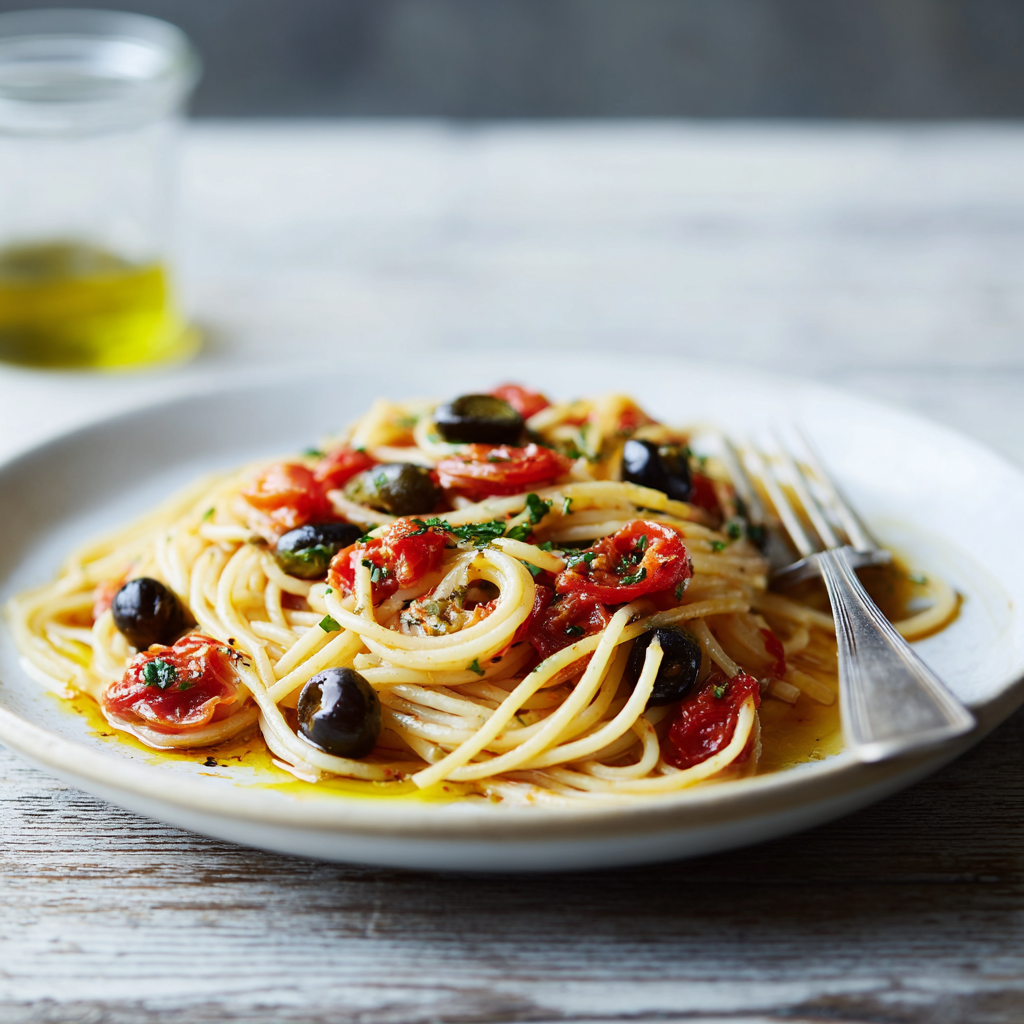
Pasta alla Puttanesca
Ingredients
Method
- Heat olive oil in a wide skillet over medium heat. Add garlic and cook until fragrant and lightly golden.
- Add chopped anchovies, capers, olives, and red pepper flakes. Stir for about one minute until the anchovies melt into the oil.
- Pour in the canned tomatoes. Crush whole tomatoes by hand if using. Swirl a little water in the empty can and add it to the pan. Season with oregano and black pepper. Add only a small pinch of salt.
- Lower the heat and let the sauce simmer for 10 to 20 minutes. Stir now and then. Taste and adjust balance.
- Boil pasta in well-salted water until just shy of al dente. Reserve about one cup of pasta water before draining.
- Add the drained pasta to the sauce. Pour in about one quarter cup of reserved pasta water. Toss over low heat for about one minute until the sauce turns glossy and coats the pasta.
- Add more pasta water if the sauce looks tight. Finish with fresh herbs and a small drizzle of olive oil. Serve hot.
Notes
• Use good canned tomatoes. They shape the final flavor.
• Always save pasta water. It helps the sauce cling and stay glossy.
• Serve right away. The sauce looks and tastes best when fresh.