
Jump to Recipe
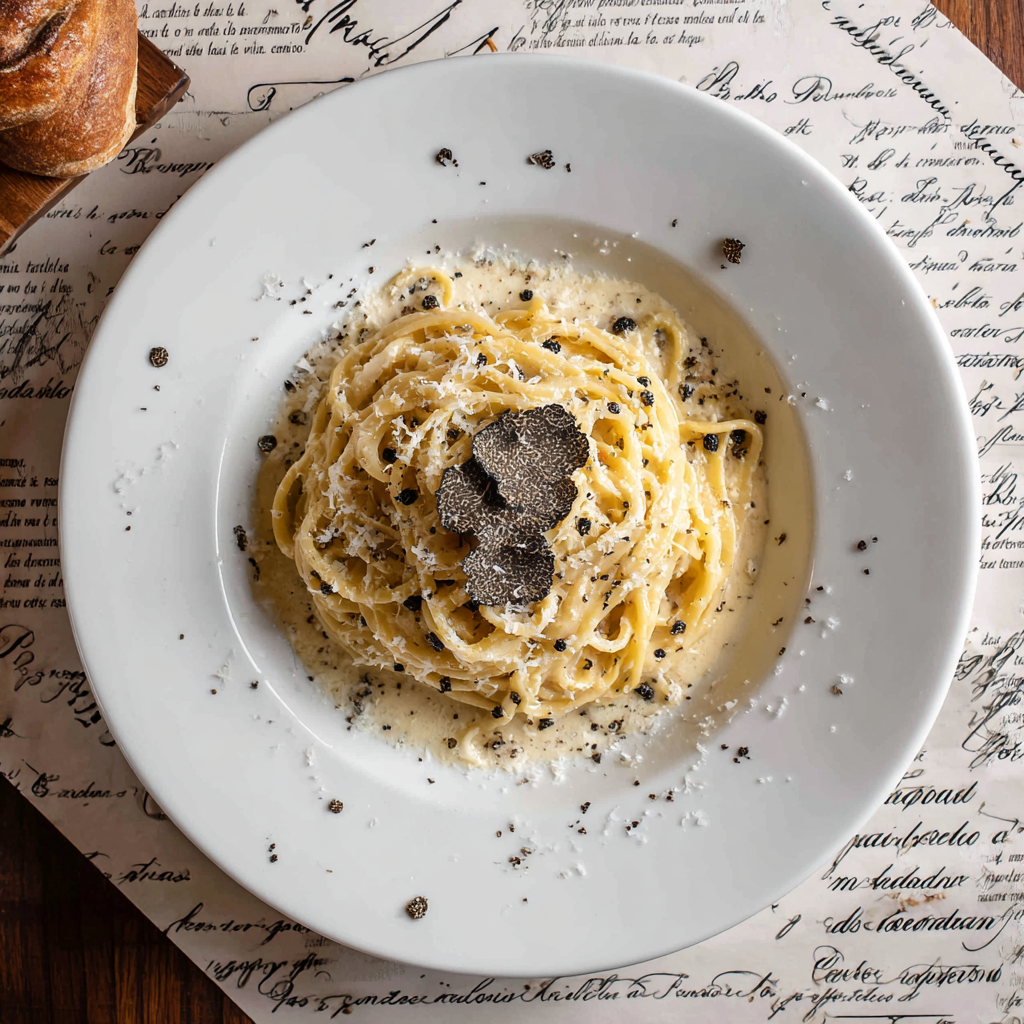
There’s a moment, just before you sit down to eat, when the steam rising from a bowl carries the entire story of a place. It’s a simple, profound joy that turns a weeknight into something special.
This particular dish embodies a beautiful contradiction in Italian cooking: everyday simplicity meets incredible luxury. The star, the black truffle, is one of the world’s most precious ingredients. A single kilo can cost around 2,000 euros.
Yet, in regions like Piedmont, where these truffles grow wild, this meal is a comforting staple. You’ll find it on menus in Alba as regular fare, not just for special occasions. I appreciate this practical approach.
It’s honest to say the taste of truffles is polarizing. Their intense, earthy flavor captivates some immediately. Others find it overwhelming. Understanding this helps you know if this is the right recipe for your table.
Authenticity here comes from restraint. The goal is to let the flavor of the truffle shine. We achieve this with few, high-quality ingredients and traditional pasta shapes that hold the sauce perfectly.
This guide takes a practical, home-kitchen approach. You can use a fresh truffle or a quality truffle paste stored in your fridge. Both paths lead to a magnificent result. The method is straightforward and comes together quickly, proving gourmet food doesn’t need to be complicated.
This is a preparation rooted in tradition, not trends. The instructions are clear and reliable, much like the method for a classic risotto al tartufo. You can trust the process.
Key Takeaways
- This dish combines simple, traditional preparation with the luxurious flavor of black truffles.
- Fresh truffles are costly, but quality truffle paste offers an accessible and effective alternative.
- The taste of truffles is distinctive and earthy, often creating a strong love-it-or-hate-it reaction.
- Authenticity relies on using few ingredients to highlight the truffle’s unique character.
- The recipe is surprisingly quick to prepare, making restaurant-quality results achievable at home.
- Choosing the right pasta shape is crucial for the sauce to cling properly.
Celebrating the Allure of Italian Truffles
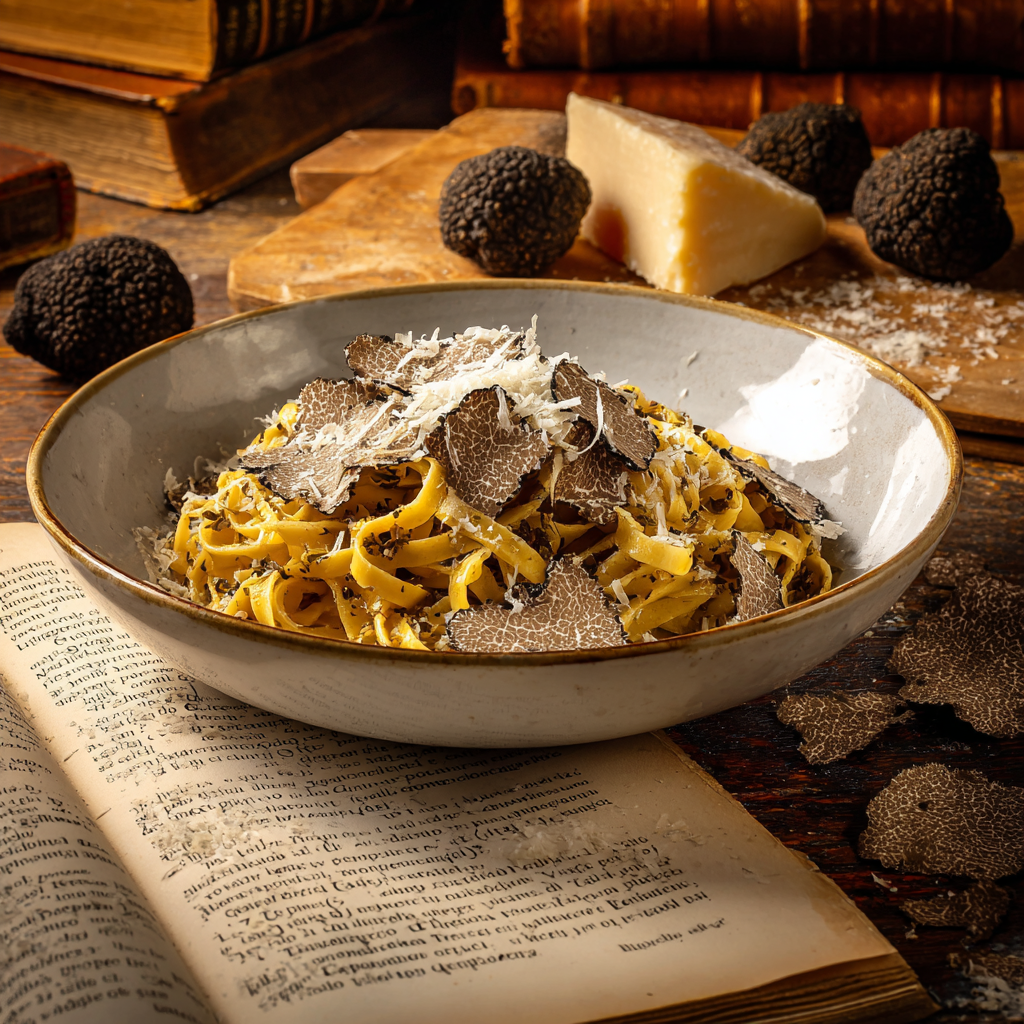
In the quiet forests of Piedmont, a unique partnership between trees and fungi creates one of Italy’s most prized ingredients. This relationship shapes everything about how we source, prepare, and enjoy these remarkable finds.
The Unique Flavor of Black Truffles
Black truffles develop their complex character through a special relationship with tree roots. They grow completely underground, absorbing minerals from the soil that create their earthy taste.
The specific ground conditions in regions like Barolo and Barbaresco contribute distinct flavors. This makes terroir as important for truffles as it is for wine. The result is a rich, musky flavor that holds up well to cooking heat.
White truffles offer more delicate, garlicky notes but command higher prices. They appear only in fall and winter. Black varieties provide a robust alternative available year-round.
A Journey from Alba to Your Kitchen
From Alba’s famous markets to home kitchens worldwide, truffles now travel further than ever. Quality preservation methods make this possible without losing essential character.
When selecting fresh truffles, look for firm texture and strong aroma. Avoid soft spots. A soft brush and damp cloth gently clean soil particles without water damage.
For everyday cooking, quality truffle paste offers practical convenience. It captures the essential taste while being more accessible than fresh specimens.
Trained dogs still hunt these treasures in Piedmont, maintaining centuries-old traditions. This cultural heritage explains why truffles carry such prestige in Italian cooking.
Step-by-Step Guide: pasta al tartufo nero recipe
Successful execution depends on understanding how heat interacts with fats and starches to create a cohesive, flavorful coating. The process moves quickly once you begin, so having everything prepared beforehand makes the experience smooth and enjoyable.
Selecting Fresh and Quality Ingredients
Fresh egg noodles like tagliatelle work beautifully here. Their textured surface grabs the sauce effectively. For the fat base, choose between rich butter or extra virgin olive oil depending on your preference.
If using fresh truffle, ensure it’s firm with a potent aroma. Quality truffle paste offers excellent convenience without sacrificing character. Freshly grated Parmigiano Reggiano melts smoothly into the sauce.
Creating the Perfect Black Truffle Sauce
Begin by melting butter over medium-low heat. This gentle approach prevents burning while allowing flavors to develop. If using garlic, add it briefly to infuse the fat without browning.
Add your truffle component and let it warm through. The heat releases its aromatic oils. For cream-based versions, pour it in and let it reduce slightly until it coats the back of a spoon.
Nailing the Cooking Process: Timing, Temperature, and Technique
Cook your noodles in well-salted water until just al dente. Reserve about ¼ cup of the starchy cooking water before draining. This liquid is essential for sauce consistency.
Transfer the hot noodles directly from the pot to the pan. The residual heat helps everything come together. Add the reserved water gradually while tossing continuously. The starch emulsifies with the fat, creating a silky coating that clings to each strand.
Italian Kitchen Insights: Variations & Expert Tips
The beauty of Italian cooking lies in its adaptability. A dish can maintain its soul while welcoming thoughtful variations that suit your kitchen and taste.
Substitutions and Enhancements for the Traditional Dish
Truffle paste offers excellent convenience for regular preparation. Store it properly by transferring from glass to plastic and freezing for extended periods.
One teaspoon flavors a meal for two people beautifully. For meat additions, both prosciutto and guanciale work well. Guanciale takes about five minutes to render but provides deeper flavor.
Fresh pecorino makes a wonderful topping variation. It adds a sharp, salty contrast to the earthy truffle notes.
Incorporating Authentic Italian Cooking Techniques
Follow the Italian principle “what grows together, goes together.” A Nebbiolo wine from Piedmont creates the perfect pairing.
While tagliatelle works beautifully, cavatelli offers another traditional shape option. Choose what feels right for your table.
This preparation becomes a favorite quickly. Some cooks make it multiple times monthly due to popular demand.
Final Reflections on Your Culinary Truffle Journey
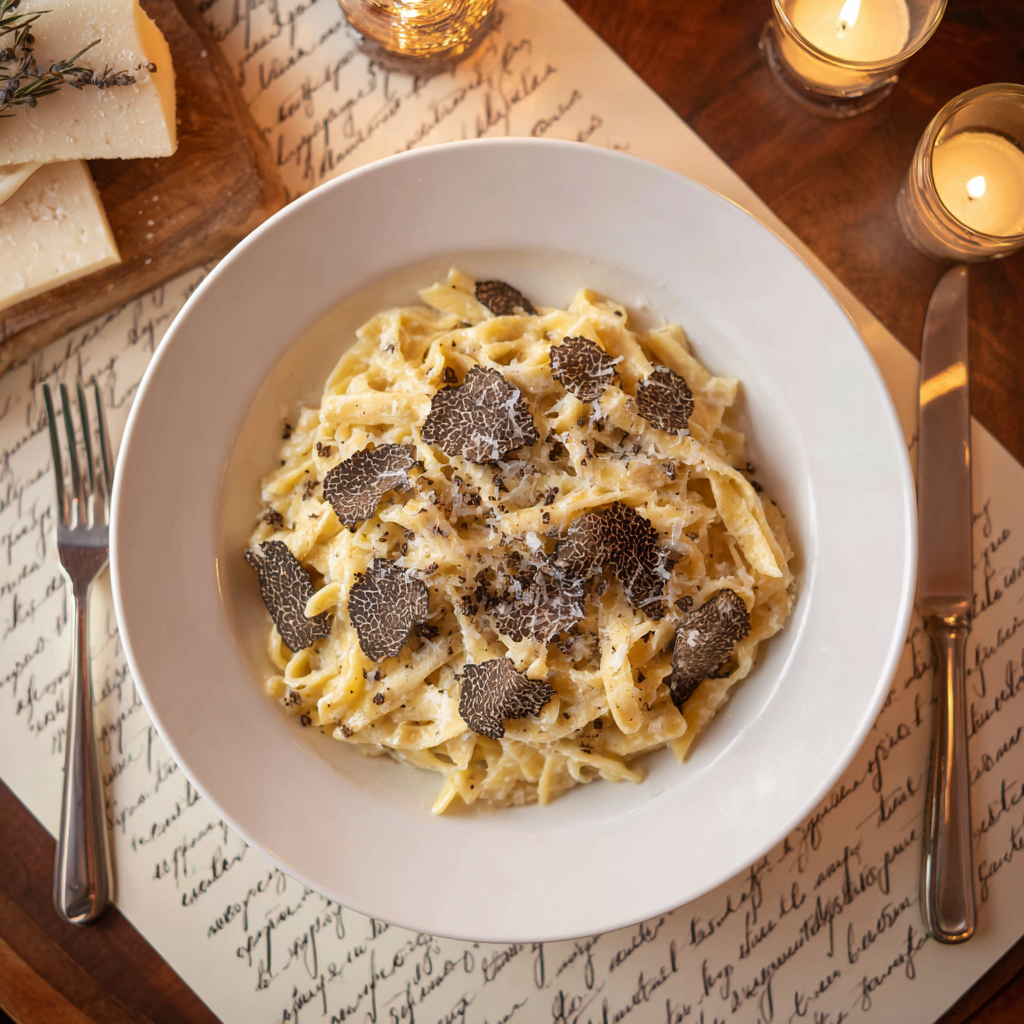
The final, satisfying taste of this dish is a direct result of your patience and the quality of your ingredients. Working with truffle, in any form, is a small luxury that elevates a simple meal into something memorable. Its success hinges on restraint.
Allow the truffle’s unique earthiness to lead. Resist adding too many other flavors. This approach is the heart of authentic Italian cooking.
Getting the sauce consistency perfect might take a try or two. That is completely normal. The technique of emulsifying starchy water with fat becomes intuitive with practice.
Remember, this tradition is about understanding, not rigid rules. Feel confident adapting based on what you have. Try different shapes or truffle products to find your favorite version.
This preparation connects your kitchen to the hills of Piedmont. It is a taste of that specific place. Serve it without fuss, with good company. That is how it has always been enjoyed.
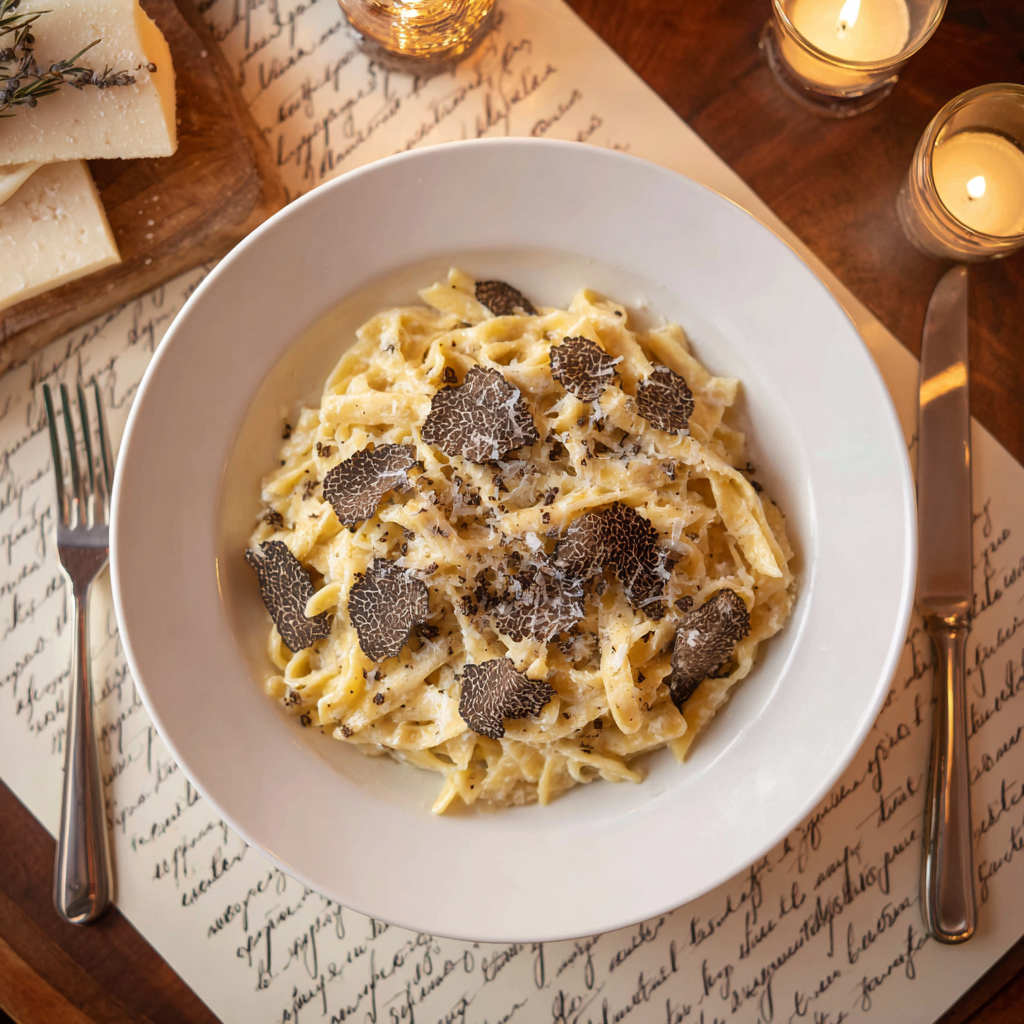
Pasta al Tartufo Nero (Black Truffle Pasta)
Ingredients
Method
- Cook the egg noodles in well-salted boiling water until al dente. Save about ¼ cup of the starchy pasta cooking water, then drain the noodles.
- In a large pan, melt the butter over medium-low heat. Optionally, add a garlic clove and cook it for a minute, just enough to release its aroma without browning. If you're using truffle paste, add it now and let it warm through.
- Add the cooked pasta to the pan with the truffle sauce. Gradually add the reserved pasta water while tossing the noodles to create a creamy, silky sauce.
- Grate Parmigiano Reggiano on top if desired, and season with freshly ground black pepper. Toss everything together and serve immediately.
Notes
- If using truffle paste, adjust the quantity based on its strength.
- If fresh black truffles are not available, truffle oil can be used as a finishing touch, but it will not give the same depth of flavor.
- This dish pairs well with a glass of Nebbiolo wine from Piedmont.