
Jump to Recipe
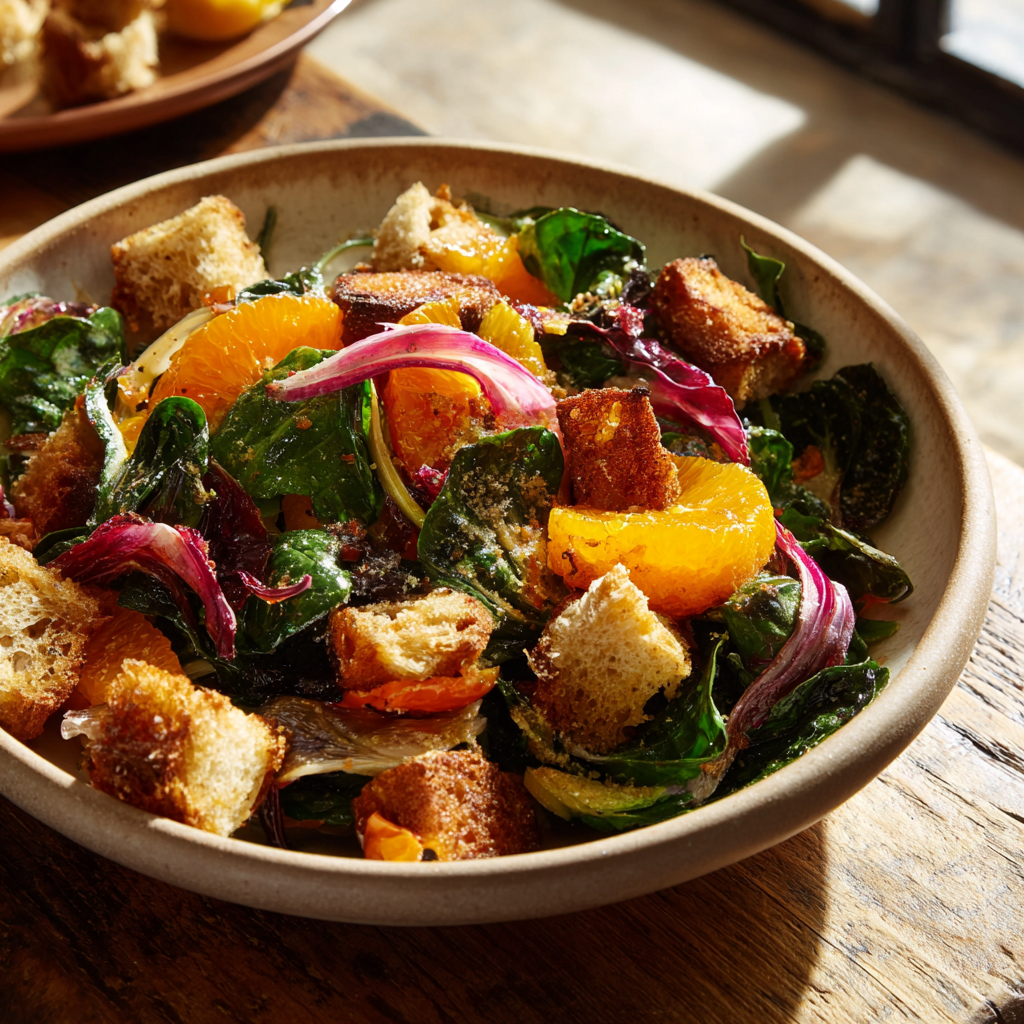
There’s a quiet satisfaction in transforming humble, day-old bread into something truly special. It’s a feeling deeply rooted in the heart of Italian home cooking, where nothing goes to waste and every season offers its own gifts.
You might know the classic version, a celebration of summer with juicy tomatoes and fragrant basil. This colder-weather take honors that same spirit of resourcefulness. We swap those sun-ripened gems for the hearty, robust flavors of the chillier months.
Here, the bread isn’t just a topping. It forms the very foundation of the dish, absorbing vibrant dressings and providing a satisfying chew. This approach solves the common challenge of repetitive cold-weather meals. It brings welcome texture and visual appeal to the table.
True Italian cooking adapts. This version demonstrates that principle beautifully, using accessible seasonal produce. It results in a dish that is both substantial and bright, perfect as a main or a standout side.
This guide will walk you through the heritage, the best ingredients to choose, and practical preparation techniques from my own kitchen. We’ll focus on creating toasted croutons that stand up to roasted roots and bold vinaigrettes, respecting tradition while working seamlessly in a modern home.
Key Takeaways
- This dish is a seasonal adaptation of a classic Italian bread salad.
- The bread is a central ingredient, providing substance and texture.
- It uses hearty, cold-weather vegetables instead of summer produce.
- The result is a vibrant and satisfying meal for colder months.
- Toasted bread is key for texture with roasted vegetables and dressings.
- The recipe respects tradition while using accessible ingredients.
- It is designed to be a practical solution for home cooks.
Discovering the Seasonal Charm and Italian Traditions
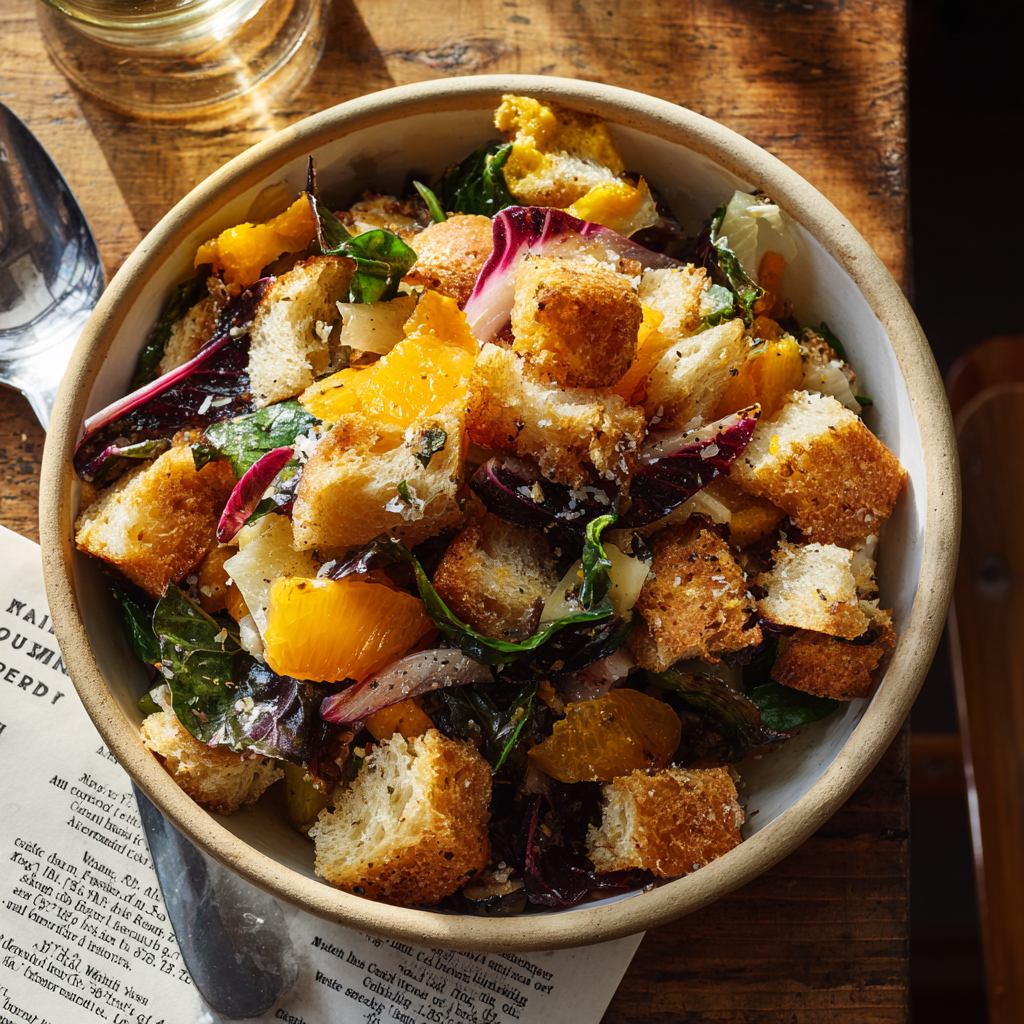
Originating from a tradition of making the most of available ingredients, this preparation has always been about seasonal adaptation. The approach reflects a deep respect for what each time of year offers.
The Heritage of a Timeless Bread Salad
This dish began as a practical solution in rural kitchens. Cooks used stale bread alongside ripe tomatoes, onions, and fresh basil. The summer version relies on tomato juices to soften the bread.
Italian cooking has always adapted to the harvest. The colder-weather version maintains the same resourceful spirit. It simply swaps seasonal produce while keeping the bread-centered structure.
Embracing Winter Vegetables and Bold Flavors
Instead of summer ingredients, this version features hearty alternatives. Radicchio adds bitterness and color. Fennel provides freshness and crunch. Roasted beets contribute earthiness, while citrus brings brightness.
The bread is toasted to maintain texture against these heartier components. This creates a satisfying contrast in every bite.
| Radicchio Variety | Appearance | Flavor Profile | Availability |
|---|---|---|---|
| Chioggia | Round, compact head | Pronounced bitterness | Widely available |
| Treviso | Elongated with white veins | Balanced bitter-sweet | Seasonal |
| Castelfranco | Creamy leaves with red speckles | Milder, sweeter taste | Limited availability |
| Rosa di Gorizia | Open, rose-like shape | Complex, nuanced flavor | Rare, few weeks yearly |
Radicchio’s natural bitterness balances beautifully with sweet roasted vegetables. This creates the complex flavor that defines the dish. These winter vegetables also offer nutritional benefits.
Radicchio is rich in iron and antioxidants. Beets provide earthy notes. Fennel offers digestive properties. The result is both flavorful and nourishing.
Successful preparation respects the tradition. Use substantial bread portions. Choose bold vegetables that stand up to hearty textures. The dressing should tie everything together without overwhelming individual flavors.
Panzanella Winter Italian Salad Recipe: A Step-by-Step Guide
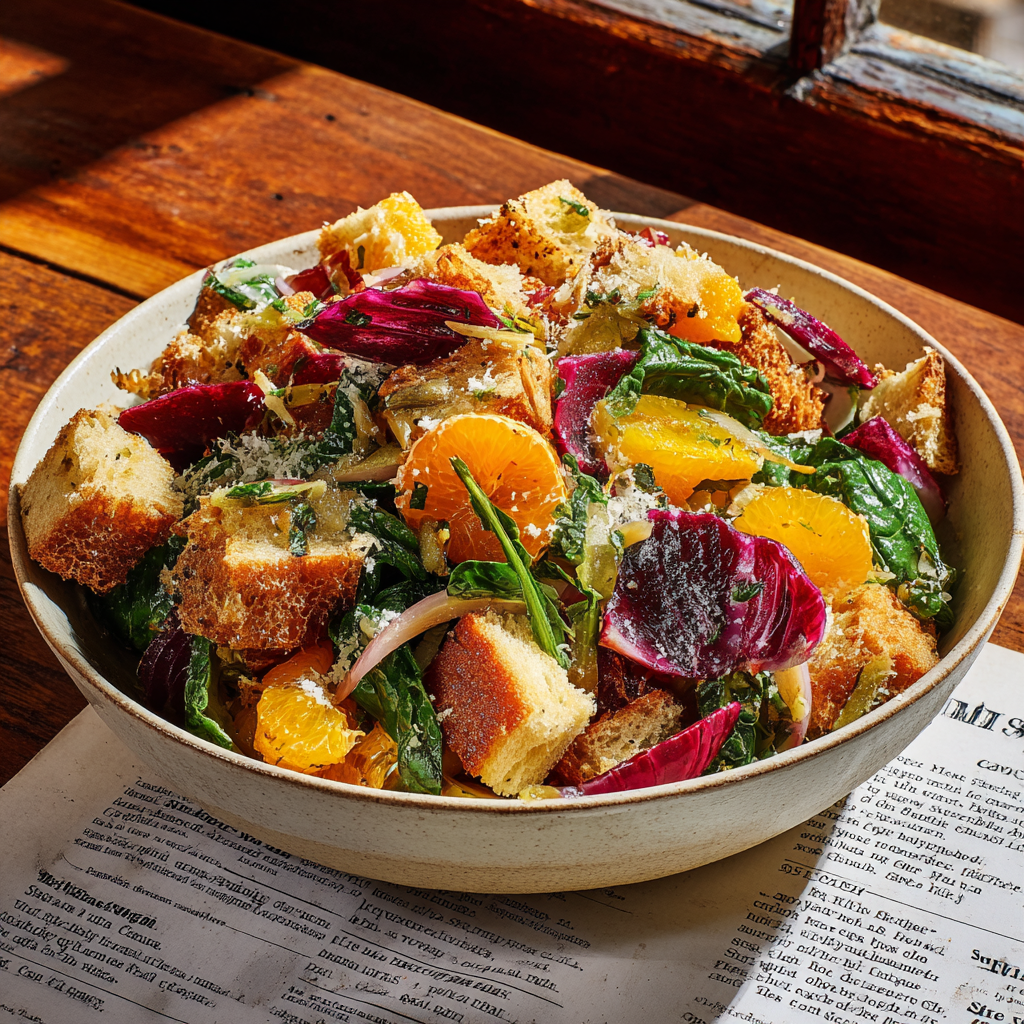
Good results start with selecting the right foundation, which in this case is the bread. A sturdy, day-old loaf like sourdough or ciabatta works best. Avoid store-bought croutons; they lack the substance needed to become a primary ingredient.
Selecting Fresh Ingredients and Artisan Bread
You will need about four cups of one-inch bread cubes. This quantity ensures the dish is substantial. Pair it with high-quality extra-virgin olive oil for both the croutons and the dressing.
Mixing a Zesty Vinaigrette and Crafting Homemade Croutons
Preheat your oven to 350°F. Toss the bread cubes with three tablespoons of olive oil, a quarter cup of grated Parmesan, two tablespoons of fresh herbs, and pepper. Spread them on a baking sheet and bake for 15 minutes.
For the dressing, whisk three tablespoons of white wine vinegar with orange juice, honey, zest, ginger, salt, and pepper. Slowly drizzle in a quarter cup of olive oil while whisking to create an emulsion.
Layering Vegetables for a Perfect Texture
Prepare your vegetables while the croutons bake. Tear radicchio, thinly slice fennel and golden beets. You can use the beets raw for crunch or roast them for a deeper, sweeter flavor.
| Preparation Method | Texture | Flavor Profile | Total Time |
|---|---|---|---|
| Raw, Thinly Sliced | Crisp, crunchy | Bright, earthy | ~30 minutes |
| Roasted (300°F for 45 min) | Tender, soft | Sweet, concentrated | ~1 hour |
Combine the warm croutons, radicchio, beets, and fennel in a large bowl. Drizzle with the vinaigrette and toss. Let it sit for ten minutes so the bread absorbs the flavors. This resting period is crucial for texture.
Finally, gently fold in tender greens and citrus segments. This method ensures a perfect balance in every bite. It’s a satisfying approach, similar in heartiness to a great Italian grinder pasta salad, but with its own unique character.
Expert Techniques for Achieving Authentic Flavor and Texture
Achieving the perfect contrast between crunchy and tender elements elevates this preparation. The right techniques ensure each component shines while working together harmoniously.
Tips for Proper Roasting and Vegetable Prep
Roasting beets wrapped in foil at 300°F develops deep sweetness. This baking method takes about 45 minutes to an hour, depending on size. Test doneness by piercing with a toothpick—it should slide through easily.
For quicker preparation, try raw golden beets sliced paper-thin. They offer a milder taste without oven time. The goal is textural variety: crunchy bread against tender roasted vegetables.
Use a baking sheet for even roasting. Proper vegetable prep creates the foundation for great flavor.
Balancing Tang, Sweetness, and Bitterness in Every Bite
The dressing combines vinegar’s tang with honey’s sweetness. Fresh ginger and orange zest add aromatic complexity. Quality olive oil carries all these flavors smoothly.
Season with salt and pepper in layers. Add some to the dressing, then adjust after the dish rests. This resting time—about 10 minutes—lets bread absorb flavors without becoming soggy.
Radicchio’s bitterness mellows when balanced with sweet components. The final combination should have complexity without dominance. Add tender greens just before serving to preserve their delicate texture.
Closing Thoughts and Pro Tips for Your Winter Italian Salad Experience
The real beauty of this preparation lies in its flexibility for everyday cooking. You can prepare the vinaigrette up to two days ahead, storing it at room temperature. Chop your vegetables several hours before serving, but wait to combine everything until the last minutes.
This dish works wonderfully as a main course or substantial side. Consider adding white beans for vegetarian completeness, or serve it alongside simply grilled chicken. The bread salad truly shines when eaten fresh the same day.
Don’t hesitate to make substitutions based on what’s available. Sturdy kale can replace radicchio, while red beets work if golden aren’t on hand. The technique becomes a template you can adapt throughout the colder months.
Seek out quality artisan loaves from local bakeries—the difference in texture and flavor justifies the effort. Trust that good olive oil, seasonal vegetables, and proper bread portions create something special with minimal active time.
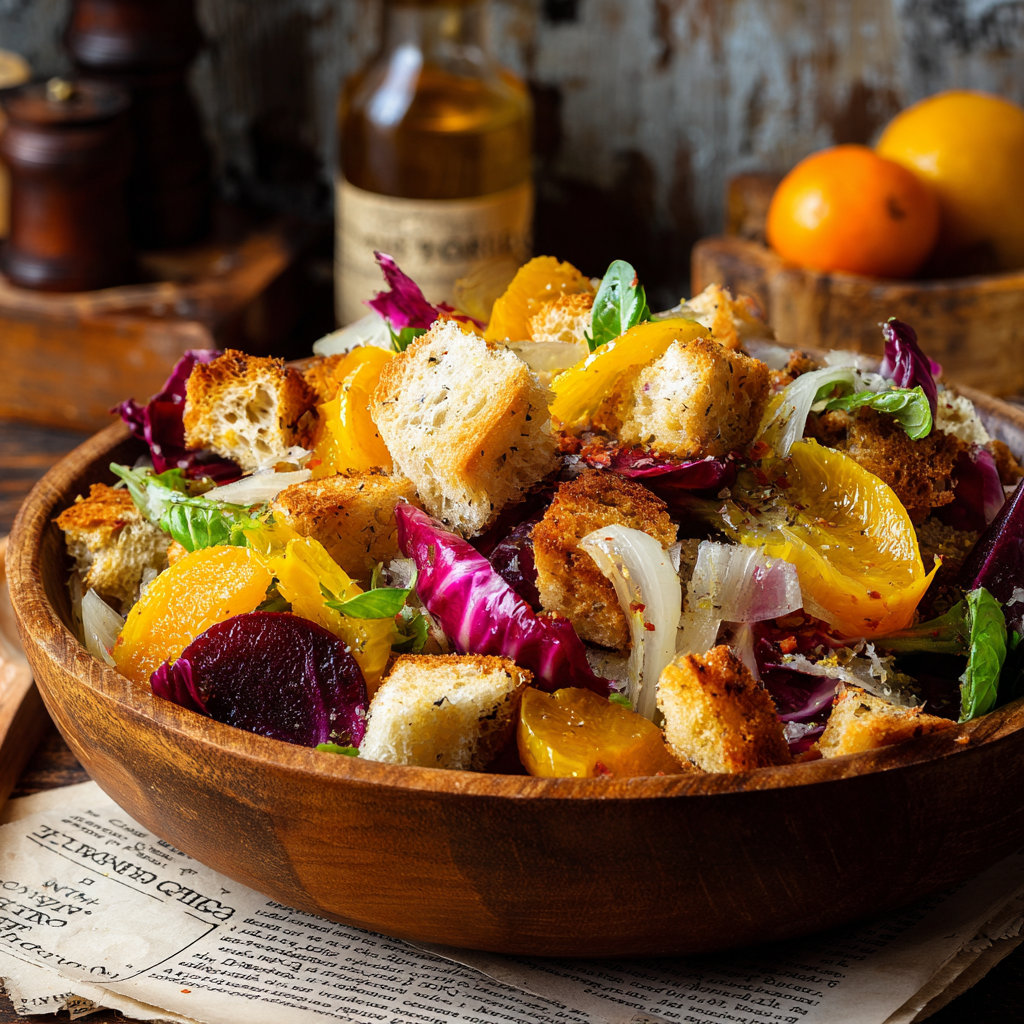
Winter Panzanella (Italian Bread Salad with Roasted Vegetables)
Ingredients
Method
- Preheat the oven to 350°F (175°C).
- Toss the day-old bread cubes with 3 tbsp olive oil, grated Parmesan, fresh herbs, salt, and pepper.
- Spread the bread cubes on a baking sheet and bake for 15 minutes or until crispy and golden.
- In a bowl, whisk together white wine vinegar, orange juice, honey, orange zest, grated ginger, salt, and pepper.
- Slowly drizzle in ¼ cup olive oil while whisking to create an emulsion.
- Tear radicchio into bite-sized pieces.
- Thinly slice fennel and golden beets (if using raw beets, slice them paper-thin for crunch).
- Roast the beets (if desired) at 300°F (150°C) for 45 minutes to 1 hour, wrapped in foil.
- In a large bowl, combine the warm croutons, radicchio, fennel, and beets.
- Drizzle the vinaigrette over the salad and toss to coat.
- Let the salad sit for 10 minutes so the bread can soak up the dressing.
- Gently fold in the tender greens and citrus segments just before serving.
Notes
- For quicker preparation, use raw golden beets instead of roasted ones.
- You can substitute radicchio with sturdy kale or other bitter greens.
- This salad can be served as a light main course or a side dish alongside grilled meats.