Jump to Recipe
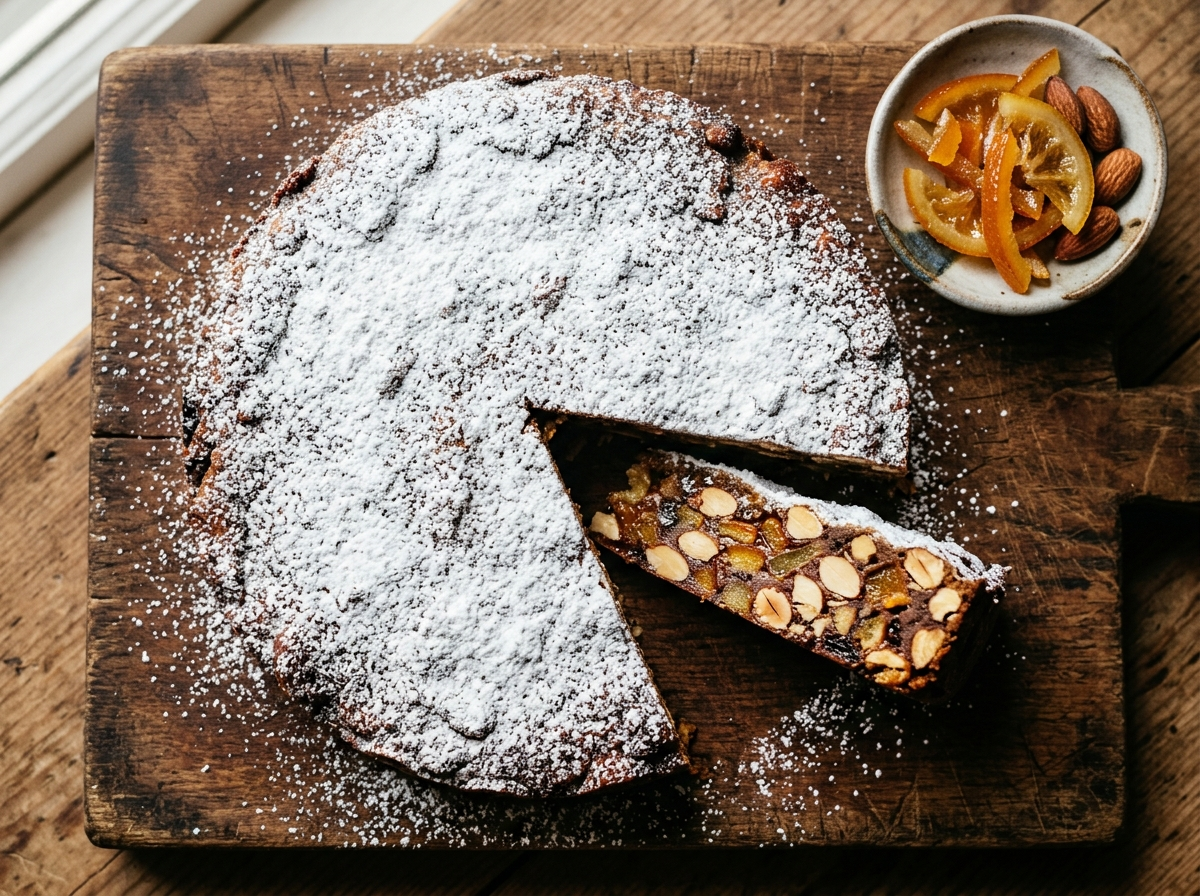
Panforte di Siena is a dense, chewy Tuscan candy-cake made from honey, toasted nuts and candied fruit, bound with a little flour and warm spice, baked at 150C/300F until the top turns matte, then dusted heavily with powdered sugar.
I started making it after tasting a slice from a bakery in Siena, alongside a wedge of torta della nonna, wrapped in a disc of wafer paper. My first batch at home turned into something closer to nut brittle because I let the honey syrup run past 116C/240F. Now I pull it at soft-ball stage every time, and the center stays chewy instead of glassy.
This isn’t a cake you bake and slice warm. It needs a full hour to firm up in the pan, and the flavor actually improves after a day or two wrapped tight, once the spices settle into the honey.
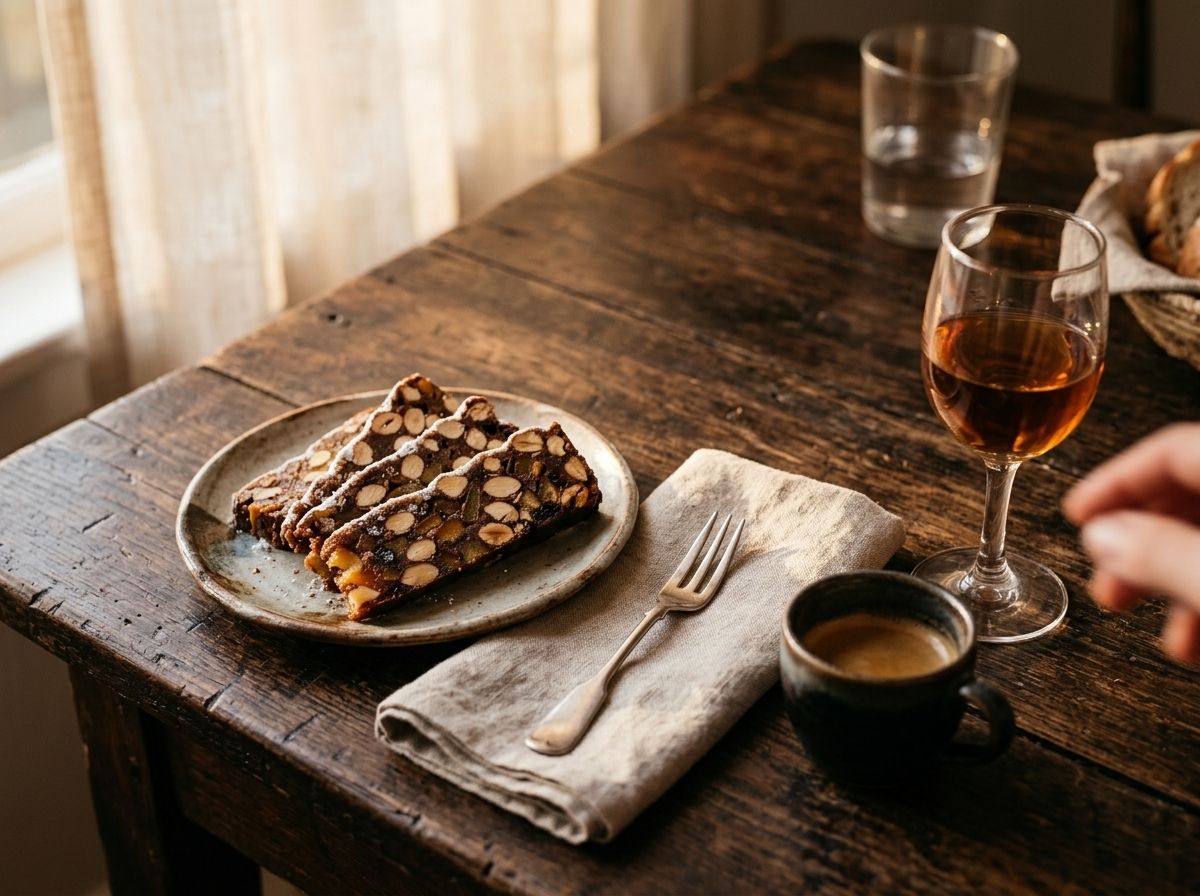
Cut it thin. A little goes a long way next to a small cup of espresso or a glass of vin santo.
Why You’ll Love This Recipe
- Keeps for weeks, so it’s ready before the holidays get busy
- Only one bowl and one saucepan, no mixer needed
- Slices thin for gifting or a small after-dinner bite
- Gets better after a day or two of resting
Ingredient Notes
- Almonds: Use whole blanched almonds, skin-on works too if you don’t mind flecks. Walnuts can sub in for part of the amount.
- Candied citron: Hard to find outside Italian markets. Use more candied orange peel instead if you can’t source it.
- Honey: Pick a mild honey like acacia or wildflower. Strong honeys like chestnut can taste bitter once concentrated.
- Rice paper (ostia): The traditional edible wafer paper that lines Italian panforte. Parchment paper works fine if you skip tradition.
- Cocoa powder: Natural unsweetened cocoa darkens the crumb and rounds out the spice. Leave it out for a paler panforte bianco.
Classic Panforte di Siena: Honey, Nuts, and Warm Spice
Ingredients
Method
- Heat the oven to 150C / 300F. Line a 20 cm springform pan with rice paper, or grease it and line with parchment.
- Roughly chop the almonds and hazelnuts if whole. Dice the candied orange peel and citron into small, even pieces.
- In a large bowl, whisk together the flour, cocoa powder, cinnamon, cloves, coriander, white pepper and salt.
- Add the nuts and candied fruit to the bowl and toss until everything is evenly coated in the flour mixture.
- Combine the honey and sugar in a saucepan over medium heat. Stir until the sugar dissolves, then stop stirring.
- Clip on a candy thermometer and simmer until the syrup reads 116C / 240F, the soft-ball stage. This takes about 6 to 8 minutes, watch it closely near the end since it can scorch fast.
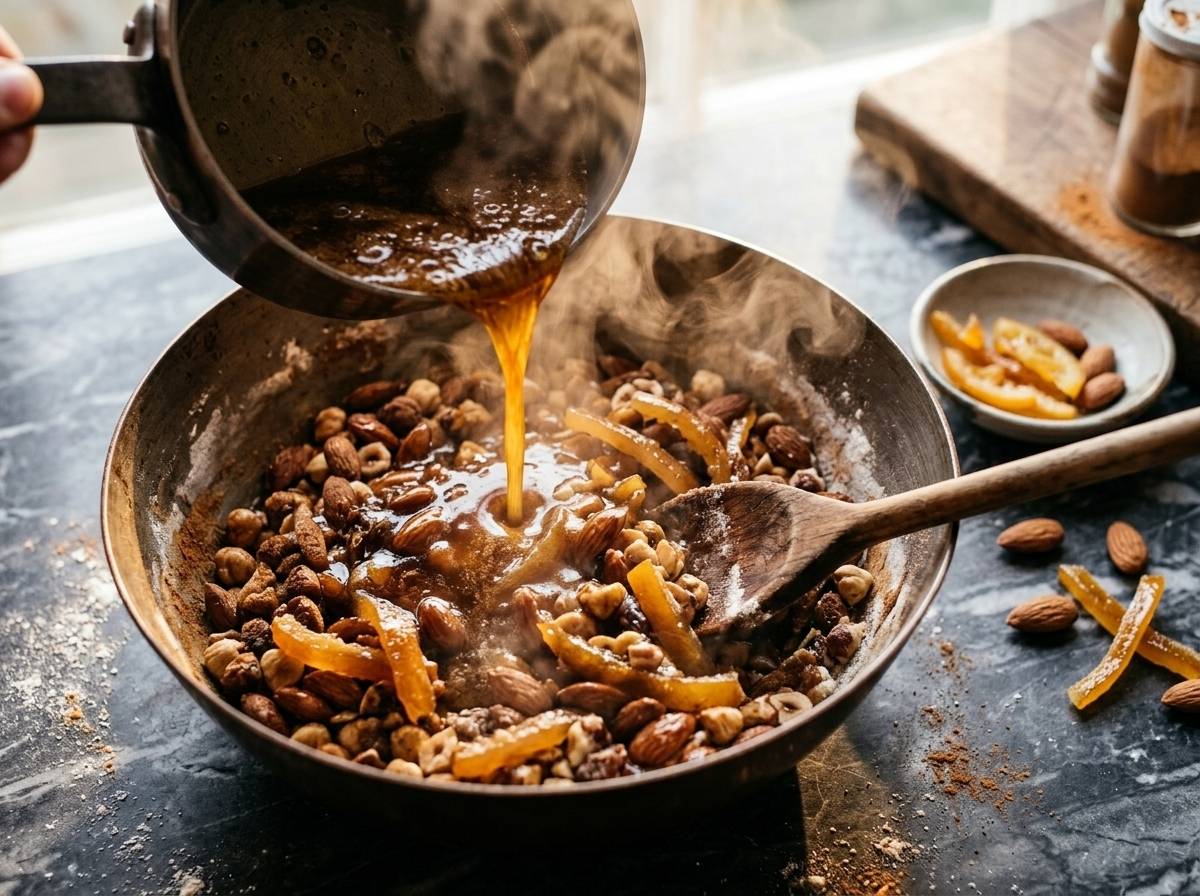
- Pour the hot syrup over the nut and flour mixture immediately. Stir fast with a sturdy spoon, the mixture stiffens within a minute.
- Scrape the dough into the lined pan. Press it flat and even with a spatula dipped in cold water.
- Bake for 35 to 40 minutes, until the surface looks dry and matte. The center will still feel soft, it firms up as it cools.
- Cool completely in the pan on a wire rack, at least 1 hour, before unmolding.
- Dust the top generously with powdered sugar and slice thin with a warmed knife to serve.
Notes
- Line the pan with rice paper if you can find it, it keeps the base from sticking without added fat.
- Chop candied fruit small and even so every slice holds together.
- Don't skip the candy thermometer, judging soft-ball stage by eye is unreliable.
- Rest the finished panforte a day before slicing for the spices to settle in.
Tips for Success
- Pull the honey syrup off the heat at exactly 116C/240F, soft-ball stage, or the bars set brittle.
- Work fast once the syrup is poured in, the mixture starts to seize within a minute.
- Press the dough flat with a spatula dipped in cold water so it doesn’t stick and tear.
- Cool the panforte completely in the pan, at least an hour, before you try to slice it.
- Warm your knife under hot water before cutting for clean, thin slices through the dense filling.
Variations
- Swap half the almonds for walnuts and add orange zest for a brighter, less sweet version.
- Skip the cocoa powder for panforte bianco, a paler version dusted heavier with powdered sugar.
- Add ground fennel seed and extra black pepper for something closer to old-fashioned panpepato.
Storage and Reheating
Panforte di Siena keeps at room temperature for 3 to 4 weeks, wrapped tight in wax paper and then foil or an airtight tin. The honey and sugar act as a natural preservative, so it won’t dry out the way a regular cake does.
For longer storage, freeze whole or sliced, wrapped in plastic and foil, for up to 3 months. Thaw at room temperature for an hour before unwrapping so condensation doesn’t soften the surface.
There’s no reheating step here. Panforte is served at room temperature, straight from the wrapper.
Serving Suggestions
Slice panforte di Siena thin, about 5mm, and serve alongside espresso or a small glass of vin santo after a meal. It’s rich enough that most people only want a sliver.
It also works on a cheese board next to something sharp like pecorino, or wrapped in cellophane and ribbon as a holiday gift.
A few slices with fresh ricotta and a drizzle of honey make an easy end-of-meal plate when you don’t want to bake anything else.
FAQ
Why is my panforte di Siena too hard to cut?
It’s almost always the honey syrup going past soft-ball stage, 116C/240F. Once the syrup climbs higher, it hardens like brittle as it cools instead of staying chewy. Use a candy thermometer and pull it the moment it hits temperature, then work fast folding in the nuts and flour.
Can I use dried figs instead of candied citron?
You can, though the texture and sweetness shift a bit. Chop dried figs small and use them in place of citron, but expect a less citrusy, more jammy result. Candied orange peel alone is a closer substitute if citron is what you’re missing.
How long does panforte di Siena keep at room temperature?
It stays good for 3 to 4 weeks wrapped tightly in wax paper and foil or kept in an airtight tin. The high honey and sugar content preserves it well, which is why it’s a traditional make-ahead holiday sweet like homemade panettone in the first place.
What goes well with panforte di Siena?
Espresso and a small glass of vin santo are the classic pairing after a meal. It also sits nicely on a cheese board next to pecorino or alongside fresh ricotta with a drizzle of honey for a simple dessert plate.
Is panforte di Siena gluten free?
Not as written here, since it uses a small amount of all-purpose flour to bind the nuts and fruit. You can swap in a 1:1 gluten-free flour blend with decent results, since the flour is a minor component next to the nuts and honey.
What’s the difference between panforte and panpepato?
Panpepato is an older, spicier cousin of panforte, with more black pepper and often no powdered sugar coating. Panforte di Siena is milder and sweeter, dusted heavy with powdered sugar, and closer to what most bakeries sell today around Christmas.