
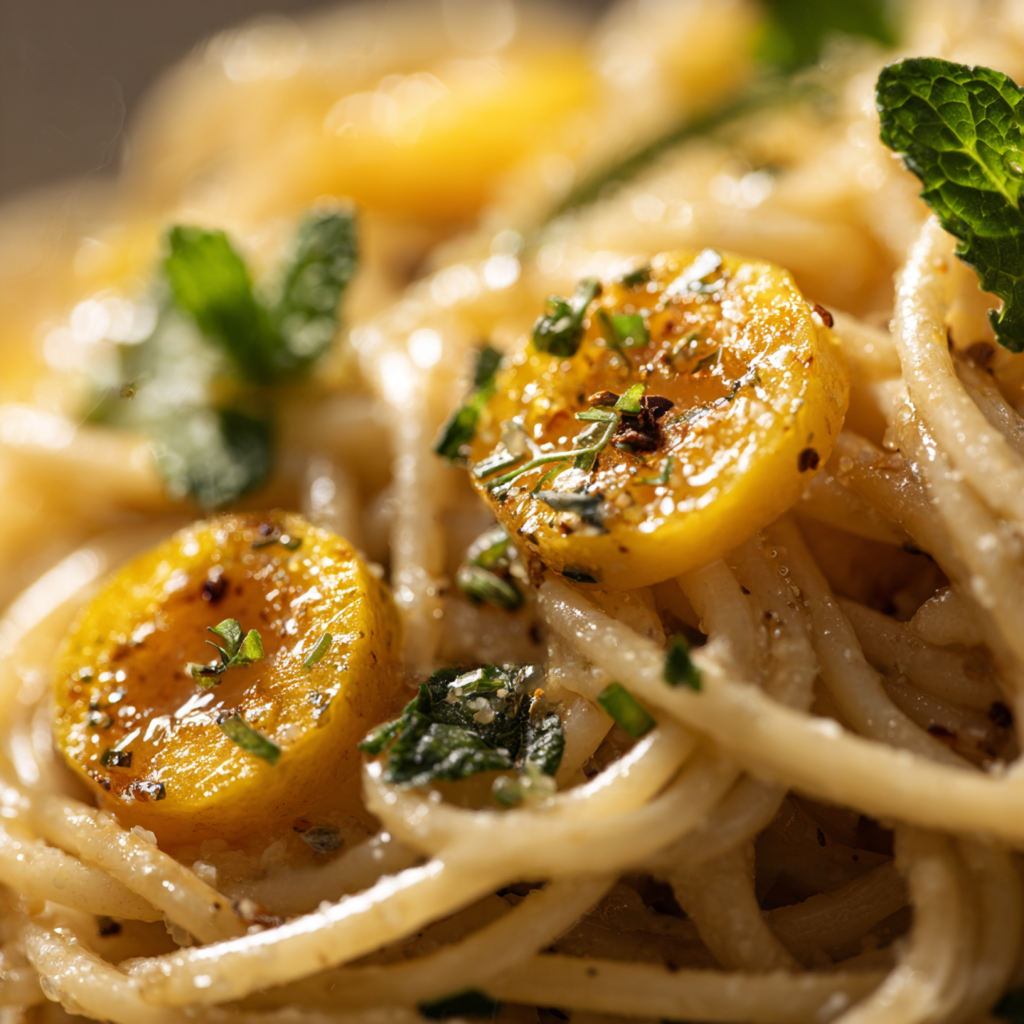
Jump to Recipe
I love how a single pan can taste like the Amalfi Coast: bright lemon, golden zucchini, cool mint, and a glossy sauce built from olive oil and starchy pasta water.
This dish began as a weeknight attempt to mix Pasta al Limone and Spaghetti alla Nerano. I brown thin rounds in a wide 14-inch skillet so they caramelize, not steam. A splash of white wine vinegar wakes the vegetables, and a handful of parmigiano reggiano makes the sauce cling like it does in small trattorie.
Finish the noodles in the pan so they sip up the sauce; that step turns simple ingredients into something elegant. The meal works hot, at room temperature, or chilled, and it welcomes add-ins—blistered tomatoes, pine nuts, shrimp, tuna, or spinach—if you want to make it your own. I’ll share the timing, tools, and cues I trust so your first plate comes out balanced and full of summer flavor.
Key Takeaways
- Brown the squash in a wide skillet for real caramelization.
- Finish the noodles in the pan with starchy water for a silky sauce.
- Lemon and parmigiano keep the flavor bright and balanced.
- A splash of vinegar adds welcome brightness to the vegetables.
- Serve warm or room temp; the dish holds up well for gatherings.
Why this summer pasta works: bright lemon, tender zucchini, and cooling mint
Summer plates sing when bright citrus meets golden vegetables and a cool herbal finish. Lemon zest perfumes the sauce while lemon juice sharpens the whole bowl, cutting through richness from olive oil and grated cheese.
We brown the squash so natural sugars deepen and edges caramelize. That step takes only a few minutes but adds savory depth that prevents the dish from feeling flat or overly acidic.
Mint cools the finish. Used sparingly, it frames the lemon instead of fighting it. A pinch of red pepper gives a gentle hum for complexity; salt and pepper steer the balance.
- Olive oil carries aromatics and helps starchy water emulsify into a glossy sauce.
- No cream keeps the plate light so you taste the produce and the grain.
- Timing is quick: capture zucchini at golden-tender, then add lemon at the end.
| Element | Role | Quick Tip |
|---|---|---|
| Lemon | Brightens and balances fats | Add zest early, juice at finish |
| Zucchini | Sweetness and texture | Brown in a wide pan, don’t crowd |
| Mint | Cooling herbal lift | Tear leaves and add last |
| Olive oil & salt | Backbone and seasoning | Use good oil; taste and adjust |
Ingredients you’ll need for a silky, restaurant-quality finish
A few thoughtful ingredients are all you need to make a glossy, bright finish that feels professional. I keep a short pantry list and a couple of fresh items on hand. That way the dish comes together fast and sings on the plate.
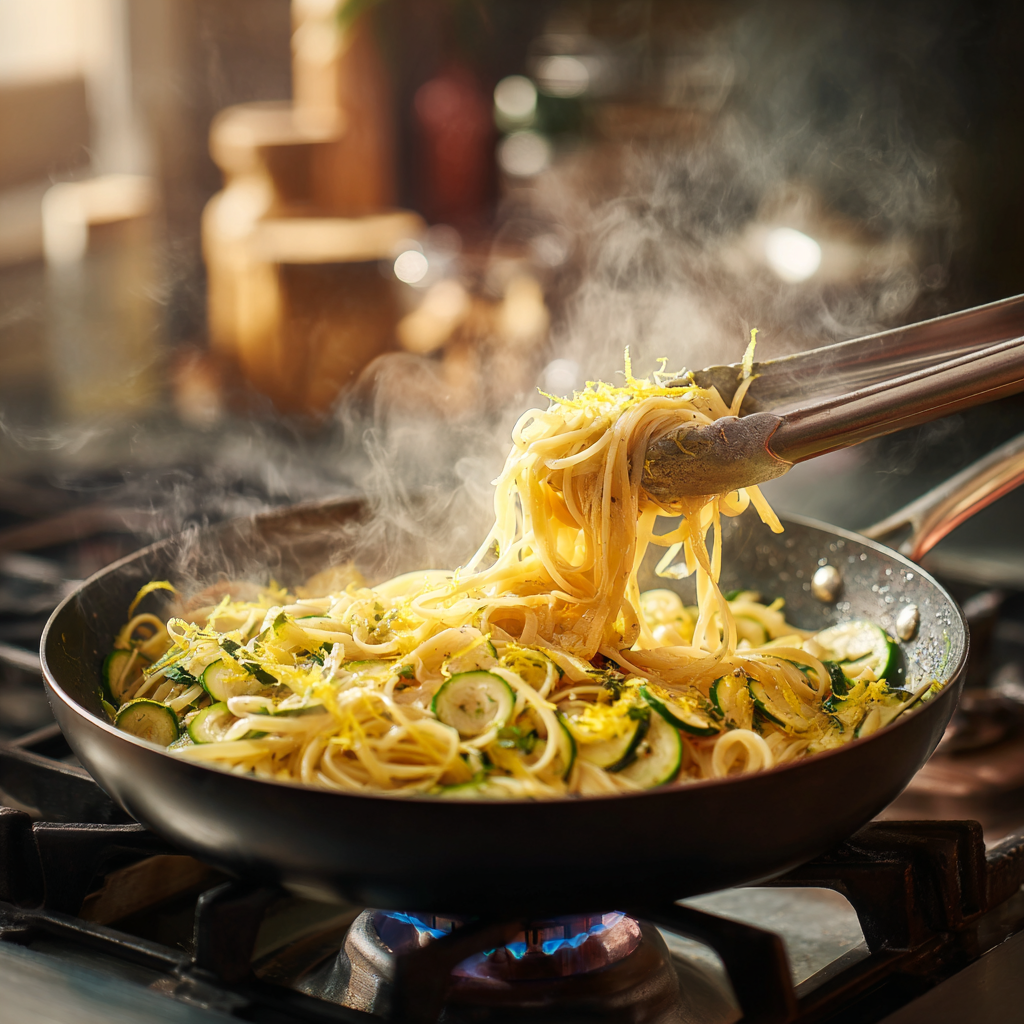
Pasta, zucchini, and mint: the core trio
Choose long strands like spaghetti, linguine, or fettuccine for a classic toss. Shapes with nooks such as orecchiette work if you want more sauce to cling. Pick medium squash with firm skin and few seeds; cut pieces evenly so they brown at the same time.
Use fresh mint leaves torn at the end for aroma. Keep an extra small handful to finish the bowl.
Olive oil, garlic, lemon zest and juice, and pasta water for the sauce
Good extra-virgin olive oil carries flavor and helps emulsify when you add starchy water. Gently cook garlic until fragrant, not browned. Zest early for perfume and add lemon juice at the end, tasting as you go. Reserve at least one cup of pasta water—the starch is what makes the sauce silky.
Optional add-ins: cheese, flakes, pine nuts, basil
- Cheese: freshly grated parmigiano reggiano or crumbled feta for tang.
- Flakes: a pinch of red pepper flakes for warmth.
- Pine nuts or blistered cherry tomatoes for texture and color.
- Basil or parsley if you prefer a softer herbal note over mint.
| Item | Why it matters | Quick note |
|---|---|---|
| Olive oil | Flavor and emulsion | Use extra-virgin for finishing |
| Pasta water (1 cup) | Silky, glossy sauce | Reserve before draining |
| Lemon | Bright acid and aroma | Zest early, add juice last |
pasta with zucchini and mint recipe: step-by-step method
Begin at the stove: get a rolling water boil and season it well—this is your first line of flavor. Salt until the water tastes like the sea, then add the long strands and cook to one minute shy of the package time. Reserve one to two cups of pasta water before you drain; this starch will build the sauce.
Brown the squash for golden edges
Heat a wide 14-inch pan over medium-high heat until hot. Add olive oil and wait until it shimmers—this even heat gives true color.
Lay slices in a single layer and leave them undisturbed for a couple minutes. Flip and cook until tender. Salt only after browning to avoid steaming.
Build a glossy sauce
Lower the heat to medium. Add garlic and cook 30–60 seconds until fragrant, then stir in lemon zest and a squeeze of lemon to bloom the citrus.
Whisk in about 1/2 cup pasta water and a small handful of cheese. The emulsion should look glossy, not greasy.
Toss, finish, and serve
Add the cooked pasta and browned squash to the pan. Toss, loosening with more reserved water a splash at a time until the sauce clings.
Fold in torn leaves, a bit more cheese, and season with salt, pepper, and a pinch of pepper flakes or red pepper flakes. Serve immediately; the first few minutes are when the sauce is silkiest.
- Bring pot to a salted water boil; cook per package minus 1 minute.
- Reserve 1–2 cup pasta water before draining.
- Brown squash in single layer in a 14-inch skillet; salt at the end.
- Build sauce: olive oil, garlic (30–60 seconds), lemon, then whisk in pasta water and cheese.
- Toss cooked pasta in the pan, fold in herbs, and season to taste.
| Step | Key Cue | Timing |
|---|---|---|
| Salted water boil | Water tastes like the sea | Bring to rolling boil (5–10 minutes) |
| Brown in pan | Deep golden edges; no crowding | 2–4 minutes per side |
| Garlic & lemon | Garlic fragrant, lemon blooms | 30–60 seconds for garlic; add lemon immediately |
| Emulsify sauce | Glossy, clingy coating | Start with 1/2 cup pasta water; adjust as needed |
Tools and timing: the 14-inch skillet advantage and smart pasta cooking
Choose the right tool and most of the work becomes simple. A 14-inch pan gives enough surface so slices brown instead of steaming. It also doubles as a roomy vessel for tossing noodles and sauce.
Why a large, wide pan helps zucchini brown and sauce cling
Preheat the pan for 1–2 minutes before adding oil so it shimmers and the squash sears on contact. Don’t crowd the pieces; cook in batches if needed. Start on high heat to get color, then drop to medium to build the emulsion.
Salted water that tastes like the sea and package cues for perfect doneness
Use a heavy pot so the water boil stays steady after you add the strands. Salt until it tastes like seawater. Trust the package timing, then pull the noodles one minute early and finish them in the pan. Keep a ladle handy and add reserved water a splash at a time until the sauce turns glossy.
- Pan: room to brown and toss.
- Pot: steady boil preserves timing.
- Minutes matter: preheat, then watch color and texture.
| Tool | Why it helps | Quick tip |
|---|---|---|
| 14-inch pan | Browns slices; space to toss | Preheat 1–2 minutes |
| Heavy pot | Keeps a hard boil | Salt the water early |
| Ladle | Controls sauce texture | Add hot water a splash at a time |
These small choices save time and protect texture. They turn ordinary summer recipes into plates that feel like a small celebration.
Easy variations and swaps to fit your kitchen and cravings
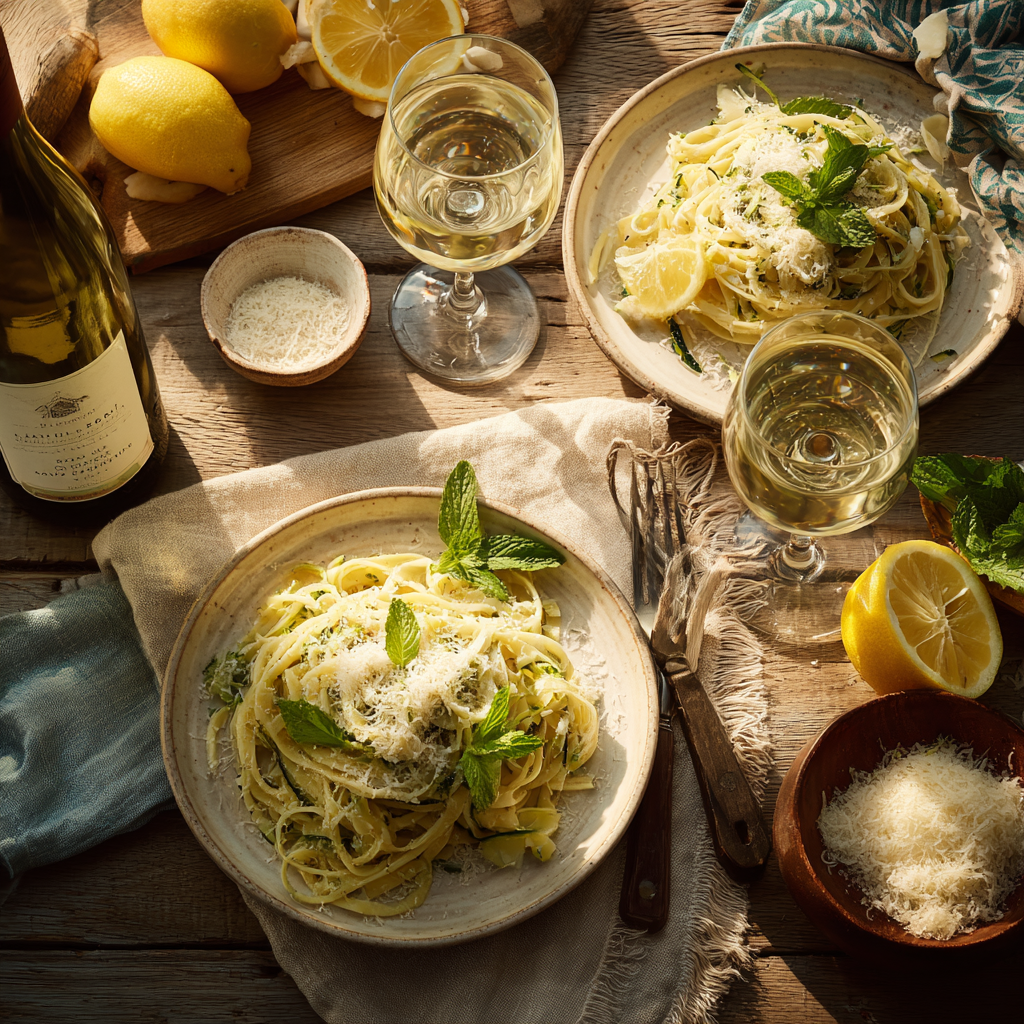
A few quick changes let this dish bend to dietary needs without losing its bright soul. These swaps keep the same technique, so you still get golden squash, glossy sauce, and that fresh finish.
Vegan, gluten-free, or zoodles: simple ways to adapt
Go vegan by skipping parmigiano and finishing with good vegan feta or extra toasted pine nuts for richness. Choose a gluten-free strand you already like, or use spiralized squash for a lighter bowl.
If you use zoodles, toss a small handful of real noodles into the pan. That helps the sauce cling and keeps the mouthfeel satisfying.
Protein upgrades to make it a fuller dinner
Add grilled shrimp, shredded chicken, or a quality canned tuna for coastal notes that won’t overpower lemon or mint. Cook proteins simply and fold them in at the end so the herbs and acid stay bright.
Flavor boosters that lift every bite
- Blister cherry tomatoes in the pan after the squash for sweet acidity.
- Toast pine nuts for buttery crunch; sprinkle just before serving.
- Use basil alongside mint for a softer, layered herb aroma.
- Grate squash on a box grater and sauté until jammy to make a silkier sauce.
- Keep lemon in balance when adding salty cheese; taste as you go.
- Add a small pinch of red pepper flakes for warmth, and finish with a thread of olive oil for shine.
| Swap | Why it works | Tip |
|---|---|---|
| Vegan cheese | Maintains creaminess without dairy | Use bold vegan feta or extra nuts |
| Gluten-free noodles or zoodles | Fits dietary needs; lightens the bowl | Add some real noodles to help the sauce cling |
| Shrimp / Chicken / Tuna | Boosts protein while keeping the coastal feel | Finish proteins in the pan with a squeeze of lemon |
Make-ahead and leftovers that taste even better the next day
Do the fiddly work ahead and the final minutes feel effortless. I often fry the squash a day before so the evening comes together in bare minutes. That small step protects texture while preserving summer brightness.
Batch-fry, chill, then revive
Fry slices in batches until golden, drain on paper towels, cool, then store in a shallow container for up to 24 hours. If you like extra lift, toss cooled pieces with a tiny splash of white wine vinegar before chilling.
Reheating tricks to keep the gloss
- Rewarm the cooled pieces gently in a pan with a spoon of olive oil so edges regain a little bite.
- Cook fresh strands. Use reserved pasta water to loosen and re-emulsify the sauce as you toss cooked pasta together.
- Keep a jar of saved pasta water. A splash brings the sauce back to glossy life in minutes.
- Serve cold for a true summer salad; add torn mint and fresh pepper right before serving.
| Make-ahead | How long | Reheat tip |
|---|---|---|
| Fried squash | Up to 24 hours | Warm in pan, splash oil |
| Leftovers | 3–4 days | Stir in saved water, low heat |
| Cheese | Store separately | Add when warming |
How to plate and serve this zucchini pasta like you’re on the Amalfi Coast
Serve this bowl like a sunlit terrace: simple, bright, and a little celebratory. Finish the noodles in the pan until the sauce turns glossy, then move quickly to plate so the coating stays silky.
Finish with torn mint, extra cheese, and a glossy sauce
Toss the pasta off the heat with a final splash of hot pasta water until the sauce looks loose and shiny. Tear mint leaves by hand and scatter them over the top so the aroma greets every forkful.
Snow a light dusting of cheese—parmigiano or crumbled feta—so it melts gently into the surface. A whisper of good olive oil adds shine and carries the lemon zest forward. Keep a small cup of hot pasta water nearby to restore silkiness if the dish sits.
Pairings: crisp white wine, simple greens, and a citrusy garnish
Pair this dish with a crisp white—Falanghina, Vermentino, or Sauvignon Blanc—to echo the lemon and lift the plate. Serve a simply dressed green salad on the side and warm the platter if you’re serving family-style.
- Zest a little lemon over each serving for perfume without extra acidity.
- Garnish with basil when you want a softer herbal note alongside mint.
- Save lemon rinds and stems to scent a pitcher of water for the table.
| Plating cue | Why it matters | Quick tip |
|---|---|---|
| Glossy coating | Holds flavor on each strand | Finish in the pan, toss off heat |
| Fresh herbs | Top-note aroma | Tear, don’t chop, to avoid bruising |
| Cheese finish | Melts into sauce for richness | Grate fresh, add at the last moment |
| Wine pairing | Brightens the meal | Choose a crisp white to match citrus |
Pro tips to nail texture, seasoning, and that glossy sauce every time
Nailing texture and seasoning is less mystery and more small, deliberate moves at the stove. I want to give you clear, repeatable cues so every bite feels balanced and lively.
Start by getting the pan very hot before you add oil. High initial heat drives moisture off fast and gives true color to each slice. Lay squash pieces in a single layer and resist stirring for a couple of minutes; that undisturbed contact builds a golden crust, not steam.
- Salt only at the end of browning to avoid drawing out moisture that causes steaming.
- Keep a generous reserve of pasta water and add it in small amounts while tossing until the sauce becomes glossy and clingy.
- If the sauce looks greasy, add more water and agitate; if thin, cook 30–60 seconds to concentrate.
- Transfer noodles straight from the pot with tongs to carry starchy liquid into the pan; it saves time and boosts emulsion.
- Taste for salt pepper balance after cheese and lemon are in; those ingredients shift the perceived seasoning.
- Add garlic gently and briefly; avoid browning it or the lemon zest will lose brightness.
- A pinch of red pepper flakes wakes richness without stealing focus from the herbs.
| Problem | Quick fix | Why it works |
|---|---|---|
| Pale squash | Raise heat and sear longer | More color means deeper flavor |
| Greasy sauce | Add hot pasta water, whisk | Starch emulsifies oil into a glossy coat |
| Tight noodles | Reserve more hot water, toss | Water relaxes gluten and completes cooking |
Bring it to the table tonight: simple, fresh, and weeknight-easy
Tonight, make a bright, lemon-forward skillet meal that comes together in twenty minutes. Set a pot of salted water to a rolling boil while you slice the squash and gather lemon, garlic, cheese, and a few torn leaves for finish.
Brown the slices in a hot pan without salting so they caramelize in a few minutes. Cook the noodles one minute shy of done, move them straight to the pan, and toss with a splash of reserved pasta water to build a glossy sauce.
Add zest, a squeeze of lemon juice, a little grated cheese, and a torn leaf or two for lift. Season with salt pepper and a whisper of pepper flakes or red pepper for gentle heat.
Keep an extra cup of hot pasta water nearby; a spoon or two brings the sauce back if it thickens while plating. This zucchini pasta is a fresh, weeknight dinner that teaches the basic pasta cooking rhythm—boil, brown, emulsify, toss—and gets you to the table faster than takeout. Finish with a thread of olive oil and serve immediately.
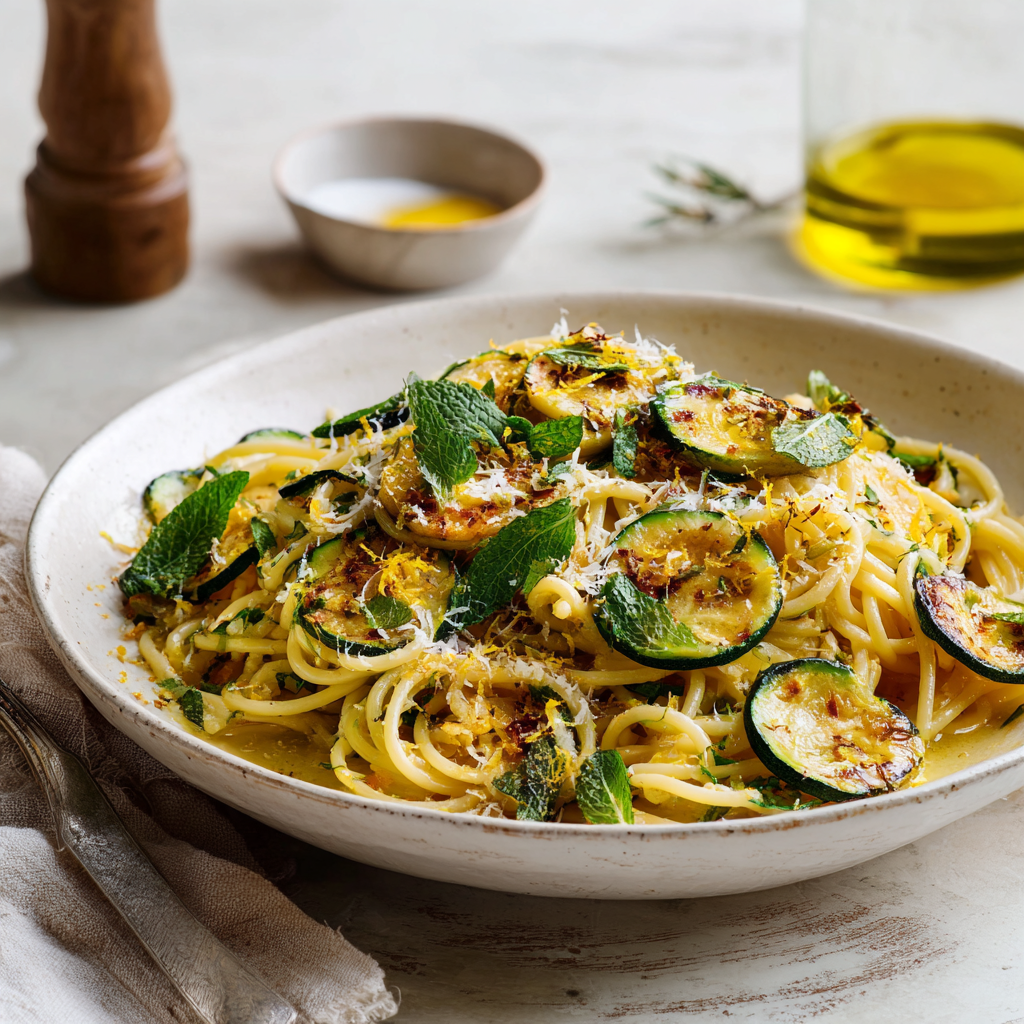
Lemon Zucchini Pasta with Mint
Ingredients
Method
- Bring a large pot of salted water to a rolling boil (it should taste like the sea). Cook the pasta 1 minute less than package instructions. Reserve 1–2 cups of pasta water before draining.
- Heat a 14-inch skillet over medium-high. Add olive oil until it shimmers.
- Lay zucchini slices in a single layer and cook undisturbed for 2–3 minutes per side until golden brown. Salt only after browning so they caramelize, not steam. Remove and set aside.
- Lower heat to medium. In the same pan, add garlic and cook for 30–60 seconds until fragrant.
- Stir in lemon zest and a splash of lemon juice (and vinegar if using).
- Add about ½ cup pasta water and a small handful of cheese. Whisk until glossy.
- Add cooked pasta and browned zucchini to the pan. Toss, adding pasta water a splash at a time until the sauce looks silky and clings to the noodles.
- Remove from heat. Add torn mint leaves, the rest of the cheese, salt, pepper, and red pepper flakes (if using).
- Finish with a drizzle of olive oil and a squeeze of lemon juice. Toss once more and serve immediately.
Notes
- Use a wide pan (14-inch) to brown zucchini evenly — crowding causes steaming.
- Don’t skip the reserved pasta water; it’s the secret to a glossy, restaurant-style sauce.
- Add lemon juice at the end — it keeps the flavor bright without turning sour.
- For a vegan version, skip cheese and use vegan feta or toasted pine nuts for richness.
- Serve warm, room temperature, or cold — it’s delicious either way.
- Store leftovers in the fridge up to 3–4 days; reheat gently with a splash of water or olive oil.