
Jump to Recipe
Tortelli di zucca mantovani are Mantua’s version of pumpkin ravioli, a sweet and savory filling of roasted pumpkin, crushed amaretti, and mostarda tucked into thin egg pasta, then dressed with nothing more than melted butter and sage.
The filling is what sets this dish apart from other stuffed pastas like tortelli di patate mugellani. Pumpkin alone would taste flat, so Mantuan cooks add crumbled amaretti cookies for a bitter-almond backbone and mostarda di frutta, candied fruit in a mustard syrup, for an edge that cuts through the sweetness.
I roast the pumpkin instead of boiling it. Boiled pumpkin holds water and gives you a wet filling that won’t hold its shape inside the pasta – roasting concentrates the flesh and dries it out enough to work with.
This is a holiday dish in Lombardy, traditionally served on Christmas Eve, but there’s no real reason to save it for one night a year. The dough and filling both hold in the fridge, so you can split the work over two days if the shaping feels like a lot in one sitting.
Why You’ll Love This Recipe
- Sweet and savory filling built on roasted pumpkin, not the watery kind
- Dough and filling can be made a day ahead to split the work
- Freezes uncooked, so you can cook straight from the freezer later
- Classic Mantuan holiday primo that also works as a weekend project
Ingredient Notes
- Pumpkin: Use a dense variety like delica or butternut squash. Watery pumpkins like jack-o-lantern types give a runny filling that won’t hold its shape.
- Amaretti cookies: These crisp almond macaroons add a bitter-almond note that keeps the filling from tasting one-note sweet. Crush them fine with a rolling pin or in a food processor.
- Mostarda di frutta: Candied fruit preserved in a mustard-spiked syrup, found in Italian delis or online. If you can’t find it, use finely chopped candied orange peel with a pinch of dry mustard powder.
- Parmigiano Reggiano: Use the real thing here, grated fine. It ties the sweet filling back to savory and also finishes the plate.
- Nutmeg: Freshly grated makes a real difference over pre-ground. Use a light hand, it should be a background note, not the headline.
- 00 flour: Fine-milled 00 flour gives the smoothest, most elastic dough. All-purpose flour works too, the dough will just feel slightly less silky.
- Butter and sage: Unsalted butter browned lightly with whole sage leaves is the traditional dressing. Do not skip letting the butter foam, that’s where the nutty flavor comes from.
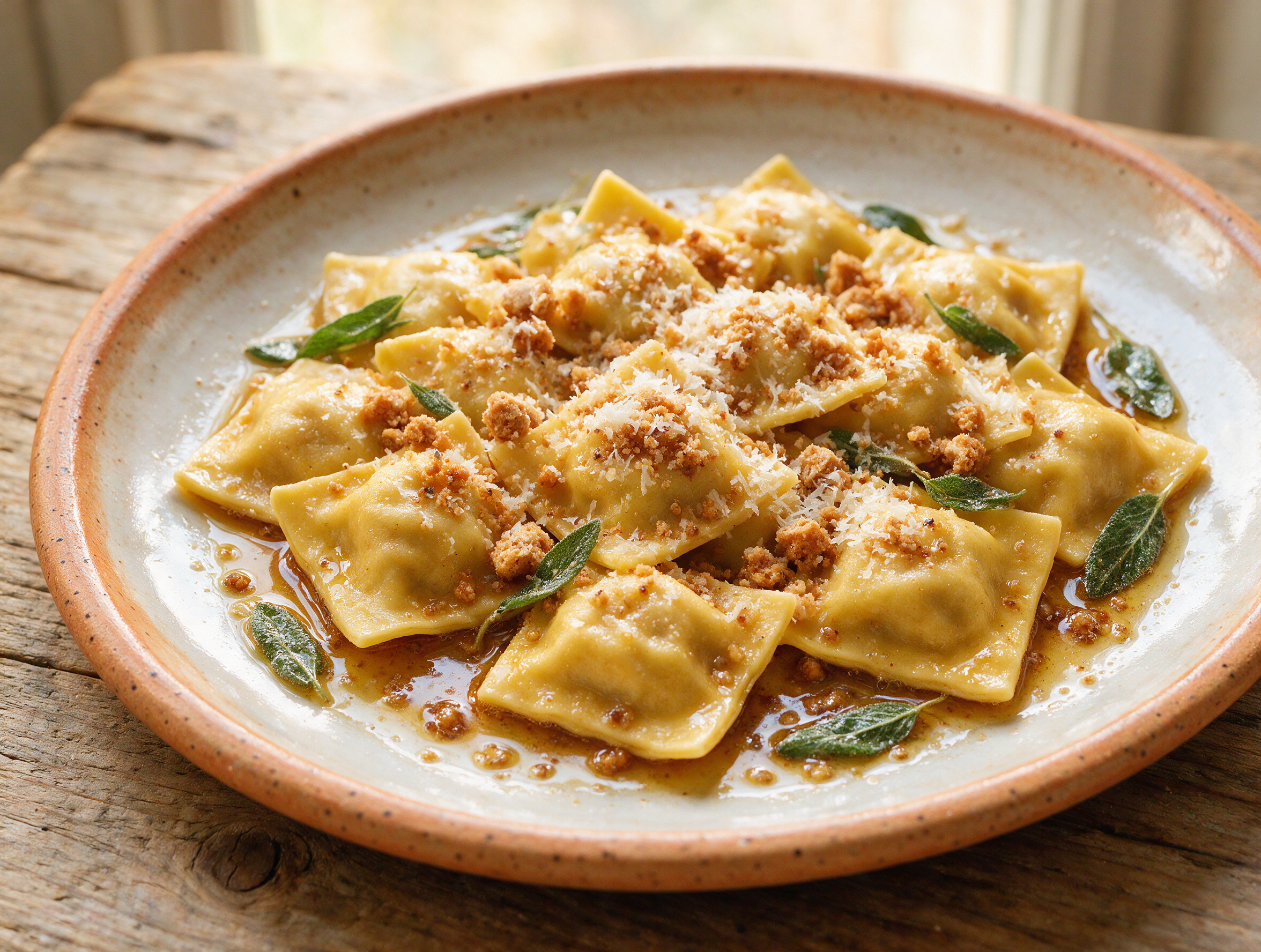
Mantuan Tortelli di Zucca with Amaretti Sage Butter
Ingredients
Method
- Heat the oven to 200 C / 400 F. Halve the pumpkin, scoop out the seeds, and place cut side down on a lined sheet pan.
- Roast for 35 to 40 minutes until a fork slides in with no resistance. Let cool slightly, then scoop the flesh into a bowl.
- Mash the flesh smooth or push it through a food mill. If it looks watery, drain it in a fine-mesh sieve for 20 minutes.
- Mix the pumpkin with the crushed amaretti, chopped mostarda, Parmigiano, and nutmeg. Season with salt, then taste, the filling should hold its shape on a spoon and taste more savory than sweet.
- Mound the flour on a work surface, make a well, and crack in the eggs with a pinch of salt. Whisk with a fork, gradually pulling in flour from the edges.
- Knead the dough for 8 to 10 minutes until smooth and elastic. Wrap in plastic and rest at room temperature for 30 minutes.
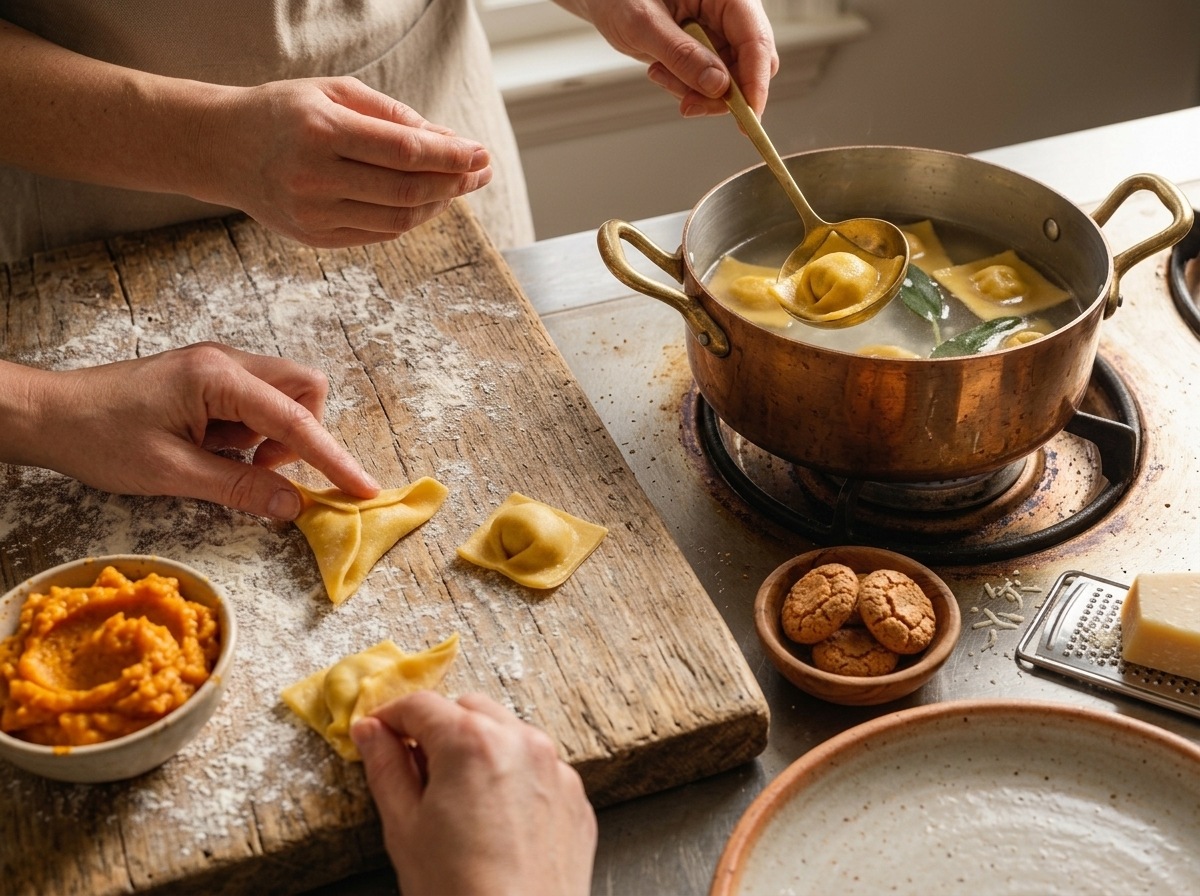
- Roll the dough through a pasta machine to the second-thinnest setting, or by hand to about 1 mm thick. Cut into 6 cm squares, keeping unshaped sheets under a damp towel.
- Place a scant teaspoon of filling in the center of each square. Fold into a triangle, press the edges to seal, then bring the two long corners together and pinch to form the classic tortelli shape.
- Bring a large pot of salted water to a boil. Cook the tortelli in batches of 12 to 15 for 3 to 4 minutes, until they float and the pasta is tender.
- While the pasta cooks, melt the butter in a 10-inch skillet with the sage leaves over medium heat until it foams and turns light golden.
- Lift the tortelli out with a slotted spoon and add them to the skillet. Toss gently to coat in the sage butter, adding a splash of pasta water if it looks thick.
- Plate immediately, topped with the extra Parmigiano and a scatter of crushed amaretti.
Notes
- Drain roasted pumpkin well before mixing the filling, wet filling leaks during boiling
- Rest the pasta dough a full 30 minutes, it rolls out far easier
- Cover unshaped dough sheets with a damp towel at all times
- Boil tortelli in batches so the water stays at a full boil
Tips for Success
- Drain the roasted pumpkin in a sieve for 20 minutes if it looks watery, or the filling will leak while boiling.
- Taste the raw filling before sealing any tortelli and adjust salt, it needs more than you’d expect against the sweetness.
- Keep unshaped pasta sheets covered with a damp towel so they don’t dry out and crack while you work.
- Boil tortelli in batches of 12 to 15 so the water stays at a steady boil and the pasta doesn’t stick together.
- Save 2 tbsp of the pasta water to loosen the sage butter if it looks too thick when tossing.
Variations
- Swap half the pumpkin for roasted sweet potato for a slightly different sweetness and a deeper color.
- Add a spoonful of finely chopped candied citron to the filling for extra brightness, a common Cremona-style addition.
- Serve with a drizzle of aged balsamic instead of extra Parmigiano for a sharper, more acidic finish.
Storage and Reheating
Uncooked tortelli keep in the fridge for up to 24 hours, arranged in a single layer on a floured tray and covered loosely with plastic. For longer storage, freeze them uncooked on a tray until solid, then transfer to a bag. They’ll keep frozen for up to 2 months and cook straight from frozen, just add 1 to 2 minutes to the boiling time.
Cooked tortelli already tossed in sage butter reheat best in a skillet over low heat with a splash of water or extra butter, stirring gently for 2 to 3 minutes until warmed through. Avoid the microwave if you can, it turns the edges rubbery. I don’t recommend freezing already-cooked tortelli, the filling gets grainy once thawed.
Serving Suggestions
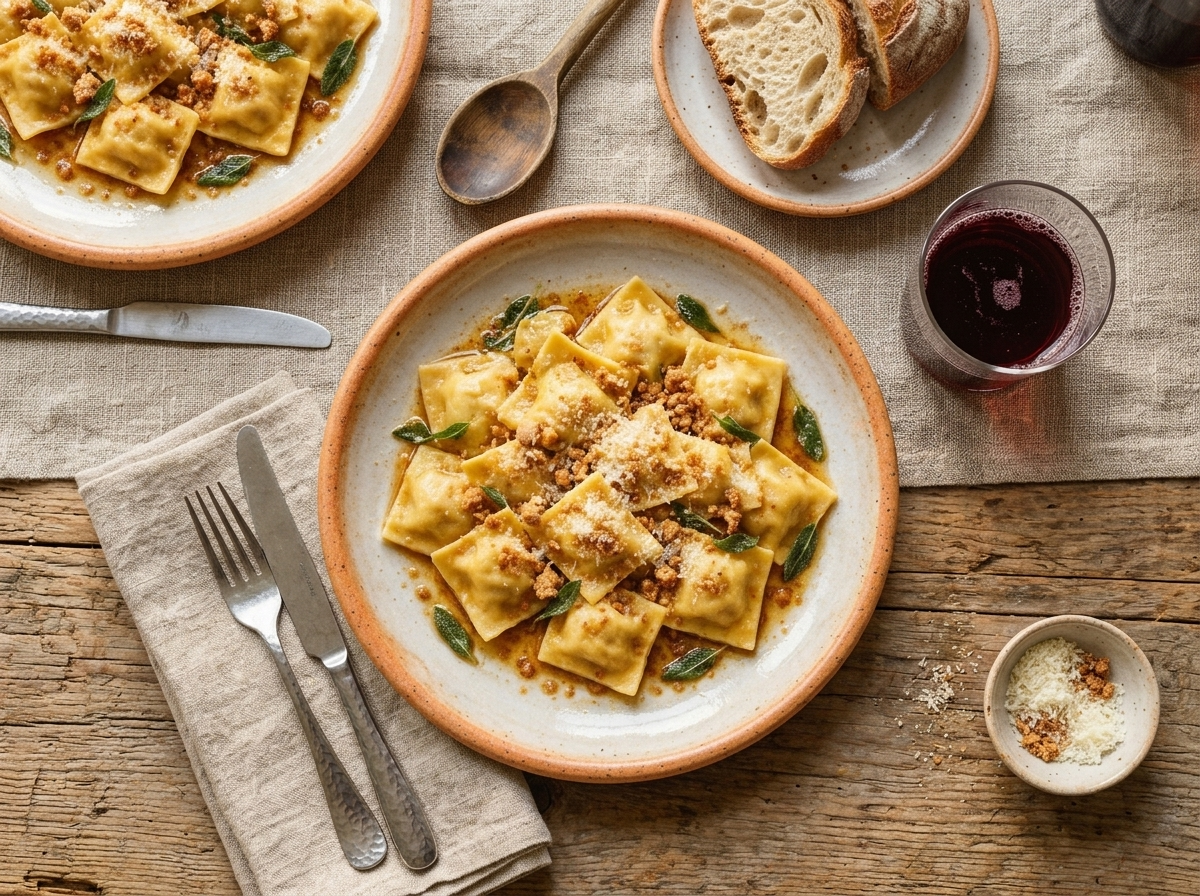
Tortelli di zucca mantovani work as a primo on their own, no side dish needed since the butter and Parmigiano already carry the plate. A crisp green salad with a sharp vinaigrette afterward cuts nicely through the richness.
For the classic pairing, pour a chilled Lambrusco, its light fizz and acidity cut through the sweet-savory filling well. If you’re serving this as a Christmas Eve starter, keep the following course light, a crispy galletto al mattone with a simple vegetable is enough.
FAQ
How do I know when tortelli di zucca are done boiling?
They’re done when they float to the surface and the pasta at the edges is tender to bite, usually 3 to 4 minutes in gently boiling salted water. Pull one out and taste it if you’re unsure, the dough should have no raw flour taste left.
Can I use butternut squash instead of pumpkin for tortelli di zucca?
Yes, butternut squash is actually a common substitute since it’s less watery than many pumpkin varieties sold outside Italy. Roast it the same way, cut side down at 200 C / 400 F for 35 to 40 minutes, then drain if the flesh still looks wet.
Can I freeze tortelli di zucca mantovani before cooking?
Yes, freeze them uncooked on a floured tray until solid, then bag them up. They keep for up to 2 months and go straight into boiling water from frozen, just add 1 to 2 minutes to the cook time listed above.
What wine goes with tortelli di zucca mantovani?
A chilled Lambrusco is the traditional pour, its light bubbles and acidity balance the sweet pumpkin and mostarda filling well. A dry sparkling white also works if you don’t have Lambrusco on hand.
Is tortelli di zucca mantovani vegetarian?
Yes, this recipe is vegetarian since it’s built on pumpkin, eggs, cheese, and pasta with no meat or fish anywhere in the filling or sauce. It is not vegan or dairy-free, since it relies on Parmigiano and butter.
What’s the difference between tortelli di zucca and cappellacci di zucca?
Tortelli di zucca mantovani are folded into a rounded, pinched shape and are distinct for the amaretti and mostarda in the filling. Cappellacci di zucca, from nearby Ferrara, use a similar pumpkin filling but skip the amaretti and are shaped like little hats, closer to tortellini.