
Jump to Recipe
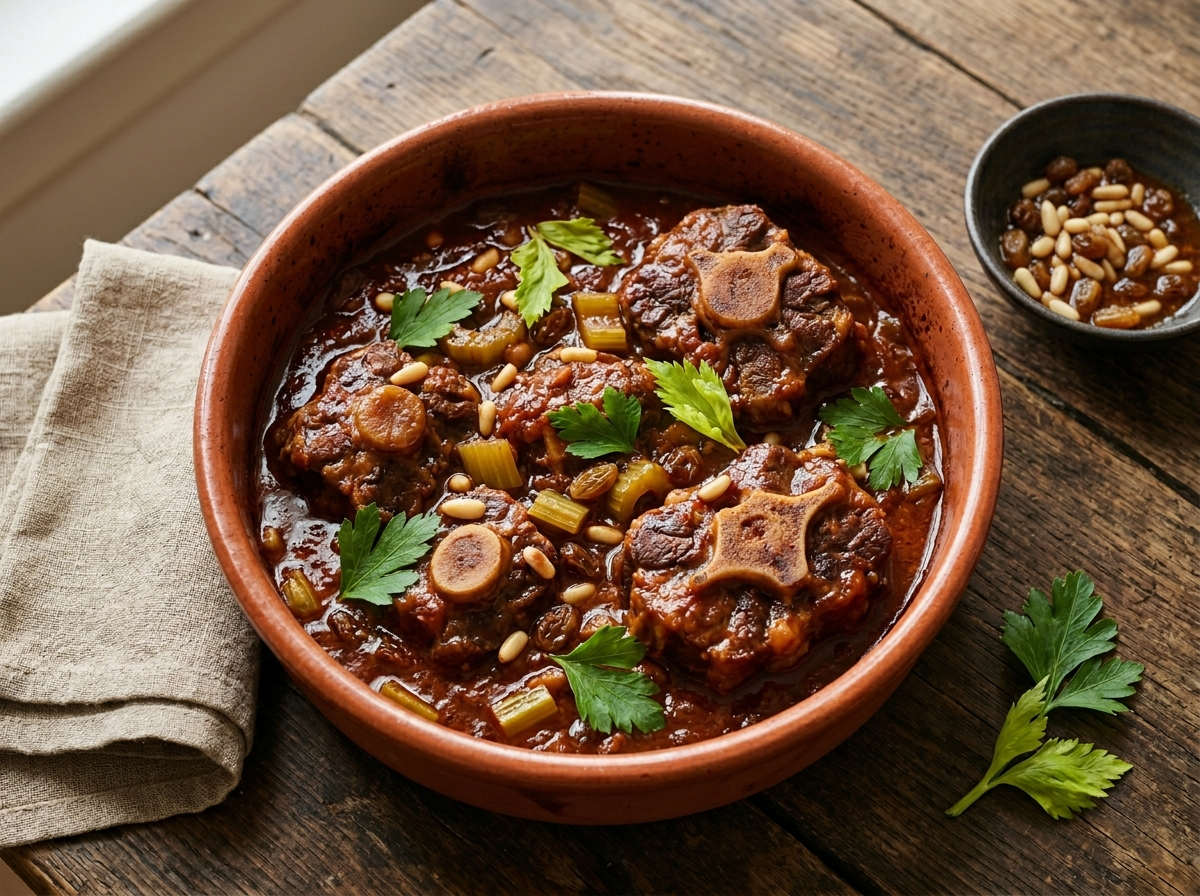
Coda alla vaccinara comes from the Testaccio neighborhood of Rome, where the slaughterhouse workers – the vaccinari – were paid partly in offal and secondary cuts. Oxtail was one of those cuts, and they made it extraordinary.
The braise runs long, two and a half to three hours, but almost none of that time demands your attention. You build a soffritto, brown the oxtail, pour in tomatoes, and let the oven do the work.
What makes this dish distinctive is the agrodolce finish: dark chocolate or unsweetened cocoa, pine nuts, raisins, and a stalk or two of celery added near the end. It sounds unusual. It tastes exactly right.
This is Roman cucina povera at its most practical – a tough cut, a long cook, a handful of pantry ingredients, and a result that tastes far more considered than the effort justifies, in the same spirit as Roman trattoria cooking at its honest best.
Why You’ll Love This Recipe
- Collagen-rich oxtail makes the sauce self-thickening and silky
- Hands-off oven braise frees you for three hours
- Cocoa and pine nuts give a bittersweet depth no other stew has
- Tastes better the next day – built for making ahead
Ingredient Notes
- Oxtail: Ask the butcher to cut the tail into 4-5 cm sections. Thicker pieces from the meatier upper end give more collagen per serving. Bone-in beef short ribs work as a substitute but won’t give the same gelatinous sauce.
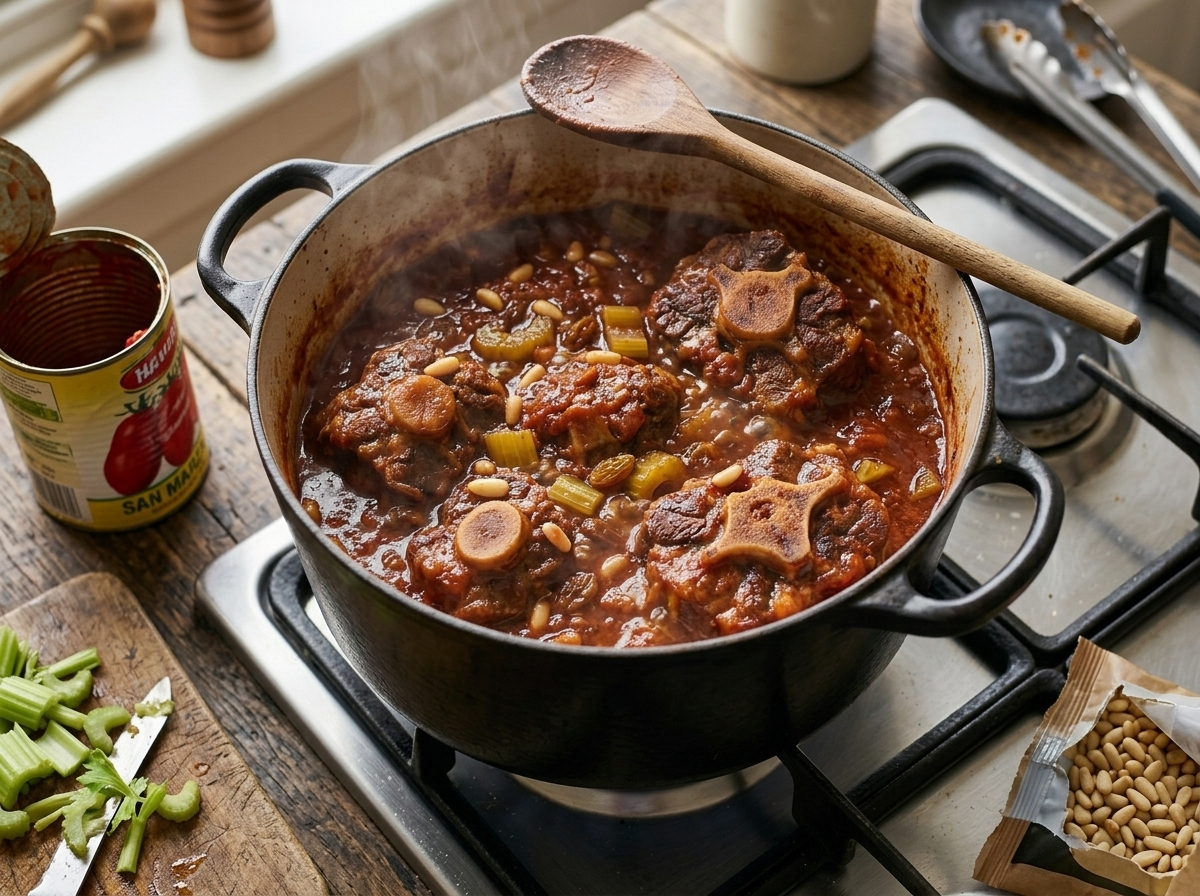
- Celery: You’ll use celery twice: once in the soffritto at the start, and again as a primary vegetable added in the last 30 minutes so it retains some texture. Don’t skip the second addition – it’s structural to the dish.
- Canned whole tomatoes: San Marzano or any good Italian plum tomatoes work well. Crush them by hand before adding. Passata can substitute but gives a flatter, less textured sauce.
- Unsweetened cocoa powder: Just 1 teaspoon is enough to add bittersweet depth without making the sauce taste like dessert. Dark chocolate (70% or above), finely grated, works equally well at 10 g.
- Pine nuts: Lightly toast them in a dry pan before adding so they contribute nutty flavor rather than just texture. Blanched almonds are an acceptable substitute.
- Raisins: Soak in warm water for 10 minutes before adding so they plump and distribute sweetness evenly. Sultanas work just as well.
- Dry white wine: Used to deglaze after browning the oxtail. A clean Trebbiano or Pinot Grigio is fine. Dry vermouth also works.
- Guanciale or pancetta: A small amount sautéed with the soffritto adds pork fat depth. Pancetta is an easier substitute; guanciale is more traditional.
Coda alla Vaccinara - Roman Oxtail Braised in Tomato and Spice
Ingredients
Method
- Pat the oxtail sections dry with paper towels. Season all sides with salt and cracked black pepper.
- Heat the olive oil in a large Dutch oven over high heat. Add the oxtail in batches without crowding and sear for 3-4 minutes per side until deeply browned. Transfer to a plate and set aside.
- Reduce heat to medium. Add the guanciale to the same pot and cook for 2-3 minutes until the fat begins to render.
- Add the chopped onion, 2 finely chopped celery stalks, and carrot to the pot. Cook over medium heat for 8-10 minutes, stirring occasionally, until the vegetables are soft and pale golden.
- Add the sliced garlic and cook for 1 minute until fragrant.
- Stir in the tomato paste and cook for 2 minutes until it darkens slightly.
- Pour in the white wine and scrape up any browned bits from the bottom of the pot. Simmer for 2-3 minutes until the wine reduces by half.
- Add the crushed tomatoes, beef stock, bay leaves, and whole cloves. Stir to combine.
- Return the browned oxtail pieces to the pot, pressing them down so they are mostly submerged in the liquid.
- Bring to a gentle simmer, then cover the pot and transfer to an oven preheated to 160 C / 320 F.
- Braise covered for 2 hours. After the first 90 minutes, skim any excess fat from the surface with a ladle.
- Check the liquid level - if it looks very thick or dry, add a splash of water or stock.
- After 2 hours, add the reserved celery pieces, drained raisins, and toasted pine nuts to the pot.
- Stir in the cocoa powder (or grated dark chocolate). Taste and adjust salt.
- Return the pot to the oven, uncovered, for a further 30 minutes until the sauce has reduced slightly and the celery is tender but not mushy.
- Remove the pot from the oven. Discard the bay leaves and whole cloves.
- Let the dish rest uncovered for 20 minutes before serving. The sauce will tighten as it cools slightly.
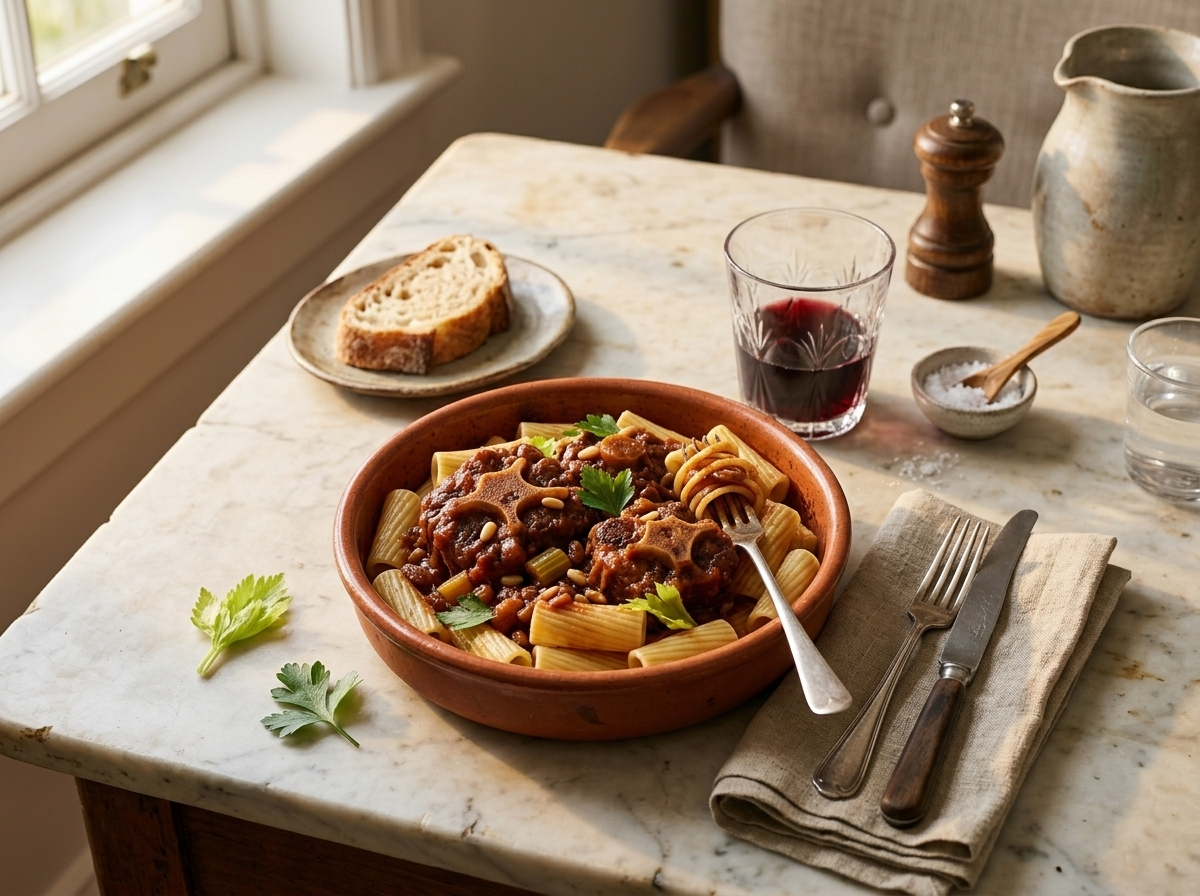
- Serve over rigatoni or polenta, spooning the sauce generously over the top.
Notes
Tips for Success
- Pat the oxtail sections completely dry before browning or they’ll steam instead of sear.
- Brown the oxtail in batches over high heat – crowding drops the pan temperature and costs you color.
- Add the second batch of celery in the final 30 minutes so it stays slightly firm, not mushy.
- Skim visible fat from the braising liquid after the first 90 minutes using a ladle or paper towel.
- Rest the finished dish for at least 20 minutes off heat before serving so the sauce tightens around the meat.
Variations
- Add 2 tbsp of bitter dark cocoa and omit raisins for a less sweet, more Roman-bitter profile.
- Stir in 30 g of 70% dark chocolate instead of cocoa powder for a glossier, richer finish.
- Use bone-in beef short ribs if oxtail is unavailable – reduce cook time to around 2 hours.
Storage and Reheating
Store cooled leftovers in an airtight container in the refrigerator for up to 4 days. The fat will solidify on top overnight – spoon it off before reheating if you want a leaner sauce, or stir it back in for richness.
Reheat gently in a covered pot over low heat with a splash of water or stock to loosen the sauce. Avoid boiling or the meat will tighten.
Coda alla vaccinara freezes well for up to 3 months. Freeze in portion-sized containers. Thaw overnight in the refrigerator and reheat as above.
Serving Suggestions
In Rome this is served over rigatoni as a first course, with the sauce tossed through the pasta and the oxtail pieces brought out separately as the main, much like the two-course logic behind slow-cooked meat and pasta in the southern Italian tradition. That two-course approach works beautifully for a dinner party.
For a simpler weeknight format, serve the oxtail and sauce together over creamy polenta or next to a thick slice of grilled bread to catch the braising liquid.
A crisp green salad dressed with lemon and olive oil cuts through the richness well. A glass of Cesanese del Piglio or any medium-bodied Lazio red is the natural pairing.
FAQ
Why is my coda alla vaccinara sauce thin and not sticking to the meat?
The sauce needs the full cook time to reduce and the collagen from the oxtail to dissolve into it. If it’s still thin after 2.5 hours, remove the lid and simmer uncovered for 15-20 minutes to concentrate it.
Can I use beef cheeks instead of oxtail for vaccinara?
Yes, beef cheeks are a good swap – they have similar collagen content and braise at roughly the same rate. Cut them into large chunks and add about 30 minutes less cook time since they don’t have bone to slow heat penetration.
Can I make coda alla vaccinara the day before serving?
It’s actually better made a day ahead. The sauce thickens overnight and the agrodolce flavors from the cocoa, raisins, and pine nuts deepen considerably. Reheat slowly with the lid on.
What pasta shape works best with the leftover vaccinara sauce?
Rigatoni is traditional in Rome because the ridges and tubes hold the chunky tomato sauce well. Tonnarelli or thick pappardelle are also good choices.
Is coda alla vaccinara gluten-free?
The braise itself contains no wheat – oxtail, vegetables, tomatoes, wine, and pantry spices are all naturally gluten-free. Check that your cocoa powder is certified gluten-free if you’re cooking for someone with celiac disease.
What’s the difference between coda alla vaccinara and a plain oxtail stew?
The defining difference is the agrodolce finish: unsweetened cocoa, pine nuts, raisins, and a second addition of celery added near the end. A plain oxtail stew stops at tomatoes and aromatics – vaccinara adds that bittersweet contrast layer.