
Jump to Recipe
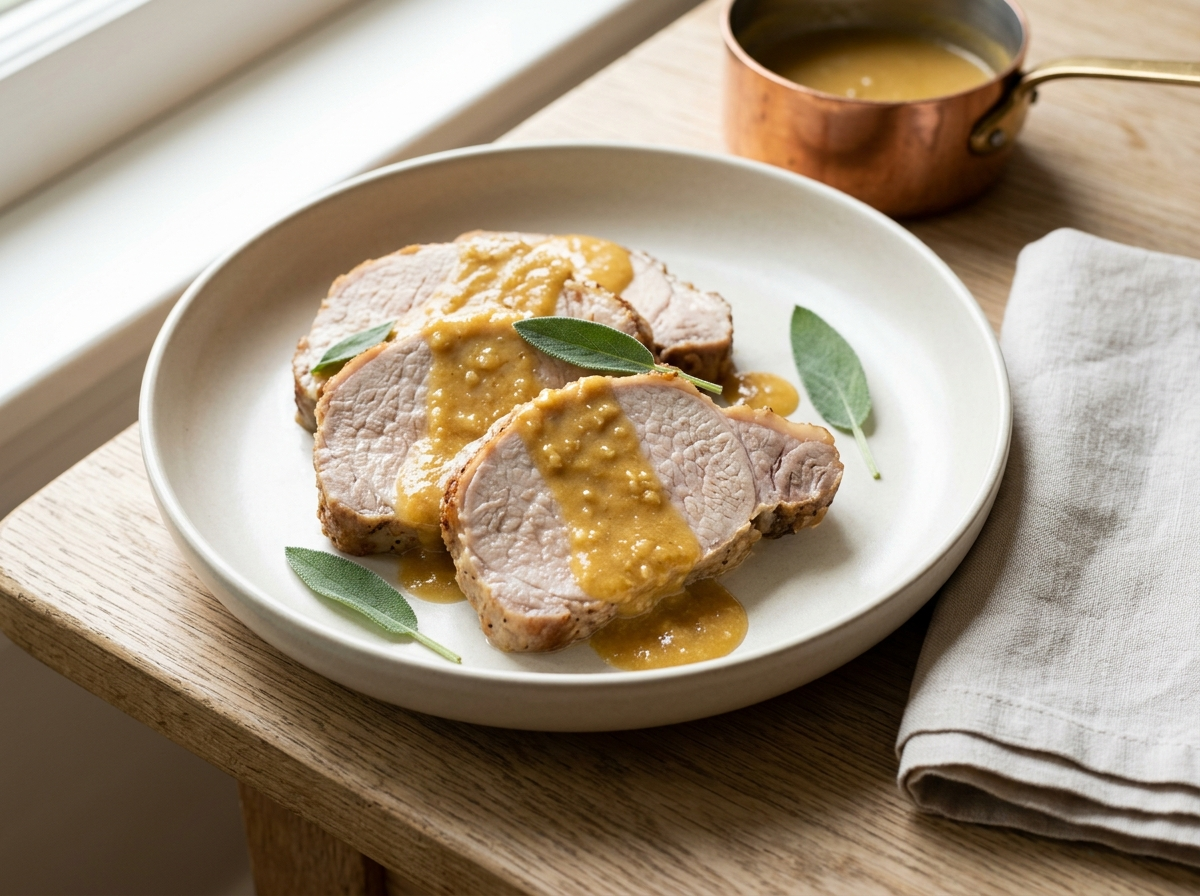
Maiale al latte is a pork braise from Northern Italy, particularly associated with Emilia-Romagna and the Veneto. The technique sounds counterintuitive, but it produces pork that is genuinely moist without the heaviness of a wine-based braise.
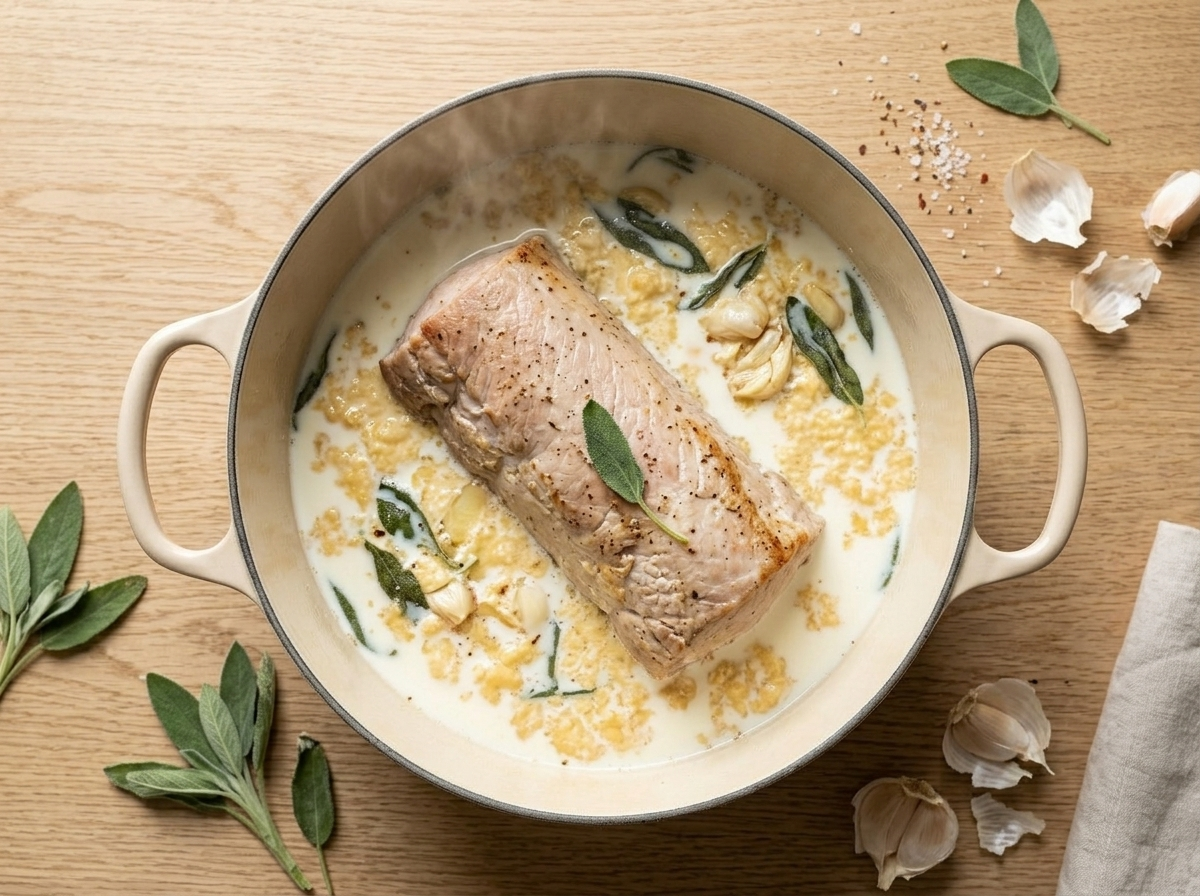
The milk slowly reduces around the meat, and somewhere in the final 30 minutes it breaks and curdles into small golden clusters. That is not a mistake. Those curds are the sauce, and they taste of toasted milk fat and pork drippings.
You need a good piece of pork loin or shoulder, whole milk, garlic, sage, and a bit of patience. The active work is under 20 minutes. The rest happens in the pot on its own.
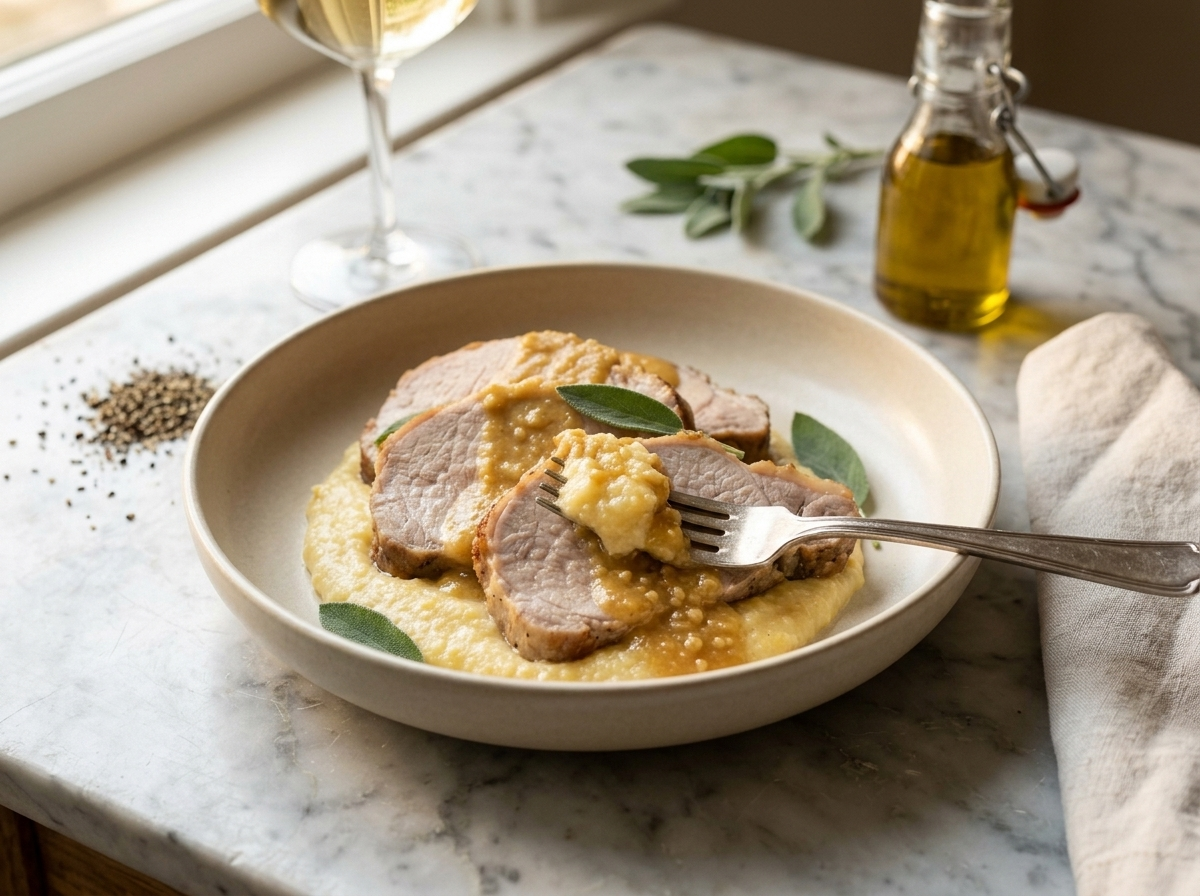
Serve it sliced with a spoonful of the pan sauce spooned over, alongside polenta or roasted potatoes.
Why You’ll Love This Recipe
- Pork stays moist even when sliced the next day
- Pan sauce forms naturally, no thickener needed
- Only six core ingredients, all pantry staples
- Leftovers slice cleanly and reheat without drying out
Ingredient Notes
- Pork loin (boneless): A center-cut boneless loin roast around 1 to 1.2 kg works best. Pork shoulder also works and stays even juicier, but it needs an extra 30 to 40 minutes of cooking time.
- Whole milk: Full-fat whole milk is non-negotiable here. Lower-fat milks do not produce enough fat to form the characteristic golden curds, and the sauce turns watery.
- Fresh sage: Six to eight fresh sage leaves give the braise its herbal backbone. Dried sage is much more aggressive; if substituting, use half a teaspoon and add it only in the last 20 minutes.
- Garlic: Use whole unpeeled cloves, crushed lightly. They mellow completely during the long braise and dissolve into the sauce without any sharp edge.
- Lemon zest: A strip or two of lemon zest added with the milk brightens the final sauce. It is traditional in some Emilian versions and keeps the rich milk sauce from feeling heavy.
- Butter and olive oil: Use both for the initial sear. Butter helps the browning; olive oil raises the smoke point. Either alone works in a pinch, but the combination gives better color.
Maiale al Latte: Italian Pork Braised in Milk
Ingredients
Method
- Pat the pork loin completely dry with paper towels. Season all over with 1.5 tsp fine sea salt and 0.5 tsp black pepper, pressing the seasoning into the surface.
- Heat the butter and olive oil in a 5-quart Dutch oven over medium-high heat until the butter foam subsides. Add the pork and sear on all four long sides until deep golden brown, about 3 to 4 minutes per side. Transfer the pork to a plate.
- Reduce the heat to medium. Add the crushed garlic cloves and sage leaves to the pot and cook for 1 minute until fragrant, stirring once.
- Pour in the milk and add the lemon zest strip. Stir gently and scrape up any browned bits from the base of the pot.
- Return the pork to the pot. The milk should come at least halfway up the sides of the loin. Bring to a gentle simmer, then reduce the heat to low. Set the lid on at a slight angle so a little steam can escape.
- Braise for 70 to 80 minutes, turning the pork once at the halfway point. Do not stir the milk. As the liquid reduces, the milk will begin to curdle and form small golden-brown clusters. This is correct.
- Check doneness with an instant-read thermometer. The pork is ready at 65 to 68 C (150 to 155 F) at the thickest point. If the curds are still pale, remove the pork and cook the sauce over medium heat for 5 more minutes until they turn nutty amber.
- Transfer the pork to a cutting board and rest for 10 minutes. Remove and discard the lemon zest strip. Taste the pan sauce and adjust salt.
- Slice the pork into 1.5 cm rounds. Return the slices to the pan sauce for 2 minutes to warm through, then plate with the golden milk curds spooned generously over the top.
Notes
Tips for Success
- Pat the pork completely dry before searing so it browns rather than steams in the pan.
- Use a pot that fits the loin snugly so the milk comes at least halfway up the sides of the meat.
- Keep the heat at a bare simmer throughout. A rolling boil toughens the pork and evaporates the milk too fast.
- Do not stir the milk while it reduces. Let the curds form undisturbed in the final 20 minutes.
- Rest the pork on a board for 10 minutes before slicing, then return the slices to the pan sauce to warm through.
Variations
- Add a cinnamon stick and two cloves with the milk for a sweeter, more aromatic Northern Italian version.
- Swap sage for fresh rosemary and add a strip of orange zest instead of lemon for a Venetian-style braise.
- Use pork shoulder instead of loin and braise for 2.5 hours low and slow for a fork-tender pulled texture.
Storage and Reheating
Refrigerate leftovers in an airtight container with the pan sauce spooned over the sliced pork. It keeps well for up to 3 days. The sauce firms into a soft gel in the fridge, which is normal.
To reheat, place the slices with the sauce in a wide skillet over low heat with a splash of whole milk or water. Cover and warm gently for 5 to 8 minutes. Do not use high heat or the meat dries out quickly.
For freezing, slice the pork and freeze it in the sauce in portions. Defrost overnight in the fridge and reheat as above. Quality is good for up to 2 months.
Serving Suggestions
In Emilia-Romagna the classic pairing is soft polenta, which absorbs the milk-curd sauce cleanly, much like the rich sauces found across savory Emilian cooking. Creamy mashed potato is a close second and works just as well on a weeknight.
A simple side of roasted fennel or braised cavolo nero keeps the plate from feeling heavy. If you want something green, a few handfuls of sauteed spinach with garlic take under 5 minutes and cut through the richness.
For a more complete table, serve thin slices of the pork as a secondo after a light Bolognese pasta dish like tagliatelle in brodo. Pour a glass of Soave or a light Bardolino alongside.
FAQ
Why did the milk curdle in my maiale al latte?
The curdling is intentional and is the whole point of the dish. The milk proteins break down from the heat and pork acids, forming small golden clusters that become the sauce. If the curds look pale and watery, keep cooking on low heat until they turn a nutty amber color.
Can I use pork tenderloin instead of loin for this milk braise?
You can, but tenderloin cooks much faster and has almost no fat to keep it moist during a long braise. Reduce the total braising time to about 25 minutes and check the internal temperature early so it does not dry out.
How do I know when the maiale al latte is done?
The pork is done when an instant-read thermometer reads 65 to 68 C (150 to 155 F) at the center, and a skewer slides through with no resistance. The milk in the pan should be reduced to a small amount of golden, clumped curds rather than a pool of liquid.
Can I make maiale al latte the day before serving?
Yes, and it actually slices more cleanly the next day. Cook the pork fully, let it cool in the sauce, then refrigerate overnight. Slice it cold and reheat gently in the sauce with a splash of milk before serving.
Is maiale al latte gluten-free?
The recipe as written contains no flour or gluten-containing ingredients. Just confirm your butter and any stock you use are certified gluten-free if you are cooking for someone with celiac disease.
What is the difference between maiale al latte and a regular pork roast?
A standard pork roast relies on dry oven heat or a wine-based liquid, while maiale al latte uses whole milk as the braising liquid from start to finish. The milk keeps the meat exceptionally moist and creates a completely different sauce texture: soft, golden curds rather than a clear pan jus.