
Jump to Recipe
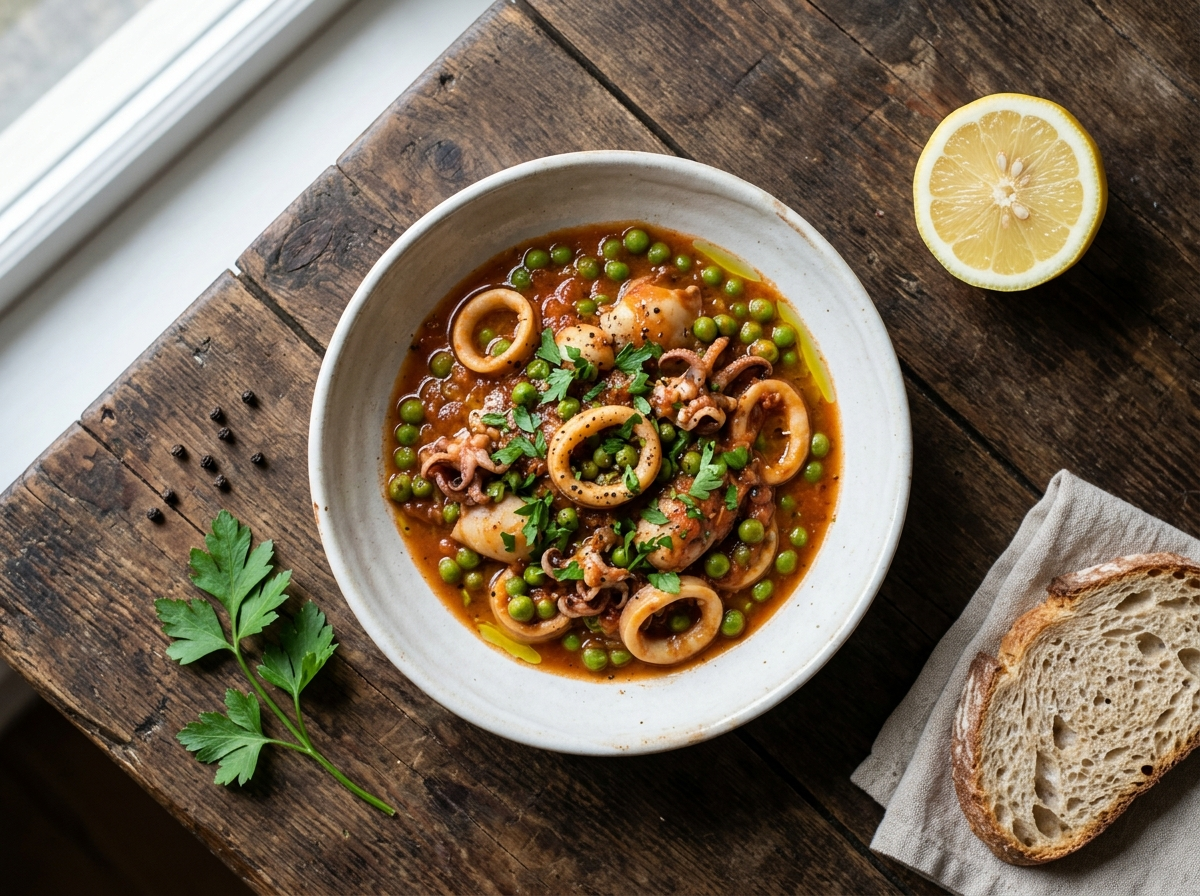
Seppie coi piselli is a Roman dish of cuttlefish braised with peas in a light tomato and white wine sauce until the cuttlefish turns fork-tender and the peas stay sweet and bright.
The dish comes together in one wide pan and needs patience more than skill. Cuttlefish seared hard and fast turns rubbery, so I cook it low and slow, about 35 to 40 minutes, until a knife slides through without resistance.
Peas go in near the end so they keep their color and don’t turn mushy. A short simmer in tomato and wine gives the sauce its light body without weighing it down.
Serve it with crusty bread to mop up the sauce, or spoon it over rice for a fuller plate.
Why You’ll Love This Recipe
- One-pan dinner with minimal cleanup
- Cuttlefish turns fork-tender, never chewy
- Light tomato-wine sauce, not heavy
- Ready in about an hour start to finish
Ingredient Notes
- Cuttlefish: Fresh or frozen (thawed) both work fine. Ask your fishmonger to clean it, or buy pre-cleaned tubes and tentacles to save time.
- Peas: Fresh in season is nice, but frozen peas work year-round and go straight into the pan without thawing.
- White wine: Use a dry white like Pinot Grigio or Vermentino. A dry vermouth works in a pinch if that’s what you have open.
- Tomato passata: Gives the sauce a light color and body. Canned crushed tomatoes work too, just drain off a bit of the juice first.
- Garlic: Two cloves keep the sauce mellow. Smash them for a milder flavor or mince for more punch.
- Parsley: Fresh flat-leaf added at the end keeps its color and brightness. Dried parsley won’t do much here.
Seppie coi Piselli: Italian Cuttlefish with Peas
Ingredients
Method
- Pat the cuttlefish strips dry with paper towels. Moisture left on the surface stops it from browning.
- Heat olive oil in a wide braising pan over medium heat. Add onion and garlic, cook 4 to 5 minutes until soft and translucent.
- Raise heat to medium-high, add cuttlefish, cook 3 to 4 minutes, stirring, until it releases liquid and turns opaque.
- Pour in white wine, let it bubble and reduce by half, about 2 minutes.
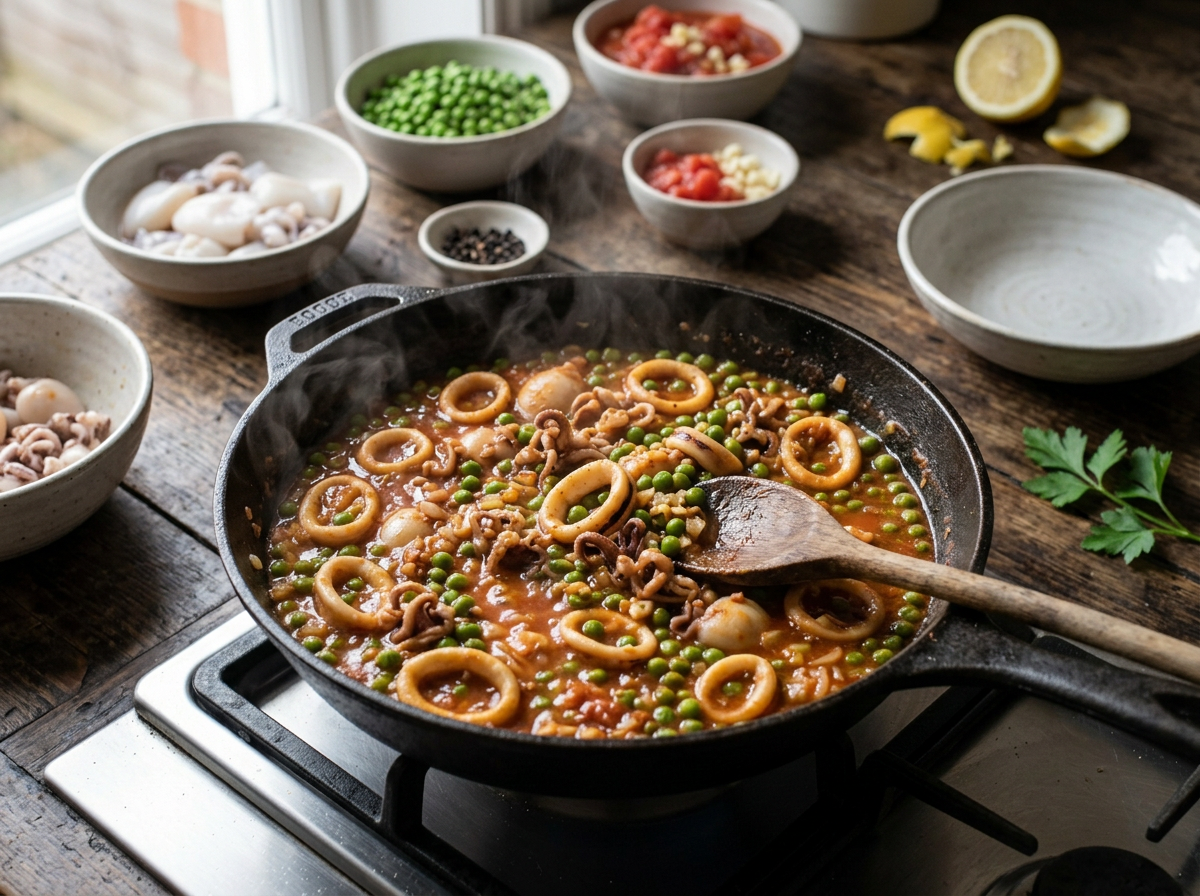
- Stir in tomato passata, salt, pepper, and chili flakes if using. Lower heat, cover partially, and simmer 35 to 40 minutes, stirring occasionally, until cuttlefish is fork-tender. Add a splash of water if the sauce reduces too fast.
- Add peas, cover, and simmer 8 to 10 minutes until peas are tender and bright green.
- Stir in parsley, taste, and adjust salt. Serve hot.
Notes
- Buy cuttlefish already cleaned to cut prep time in half.
- Don't skip the searing step, it builds flavor before braising.
- Check tenderness with a fork at 30 minutes, size varies by cuttlefish.
- Add peas late, they only need a short simmer to stay bright.
Tips for Success
- Pat cuttlefish completely dry before searing so it browns instead of steaming in the pan.
- Cut cuttlefish into even 2 cm strips so pieces cook at the same rate and stay tender together.
- Simmer covered on low heat for 35 to 40 minutes, checking with a fork rather than a timer.
- Add frozen peas straight from the bag during the last 8 to 10 minutes to keep their color.
- Stir in a splash of hot water if the sauce reduces too fast before the cuttlefish turns tender.
Variations
- Swap peas for artichoke hearts in early spring for a more traditional Roman vignarola-style twist.
- Add a pinch of chili flake with the garlic for a subtle heat that cuts through the sauce.
- Skip the tomato entirely for a paler in bianco version, finishing with lemon zest instead.
Storage and Reheating
Seppie coi piselli keeps well in the fridge for up to 3 days in an airtight container.
Reheat gently in a covered skillet over low heat with a splash of water or stock, stirring occasionally, until warmed through, about 5 to 7 minutes. Avoid the microwave on high, it toughens the cuttlefish.
Freezing works for up to 2 months. Thaw overnight in the fridge before reheating on the stove.
Serving Suggestions
Seppie coi piselli works well spooned over soft polenta or plain white rice to soak up the sauce.
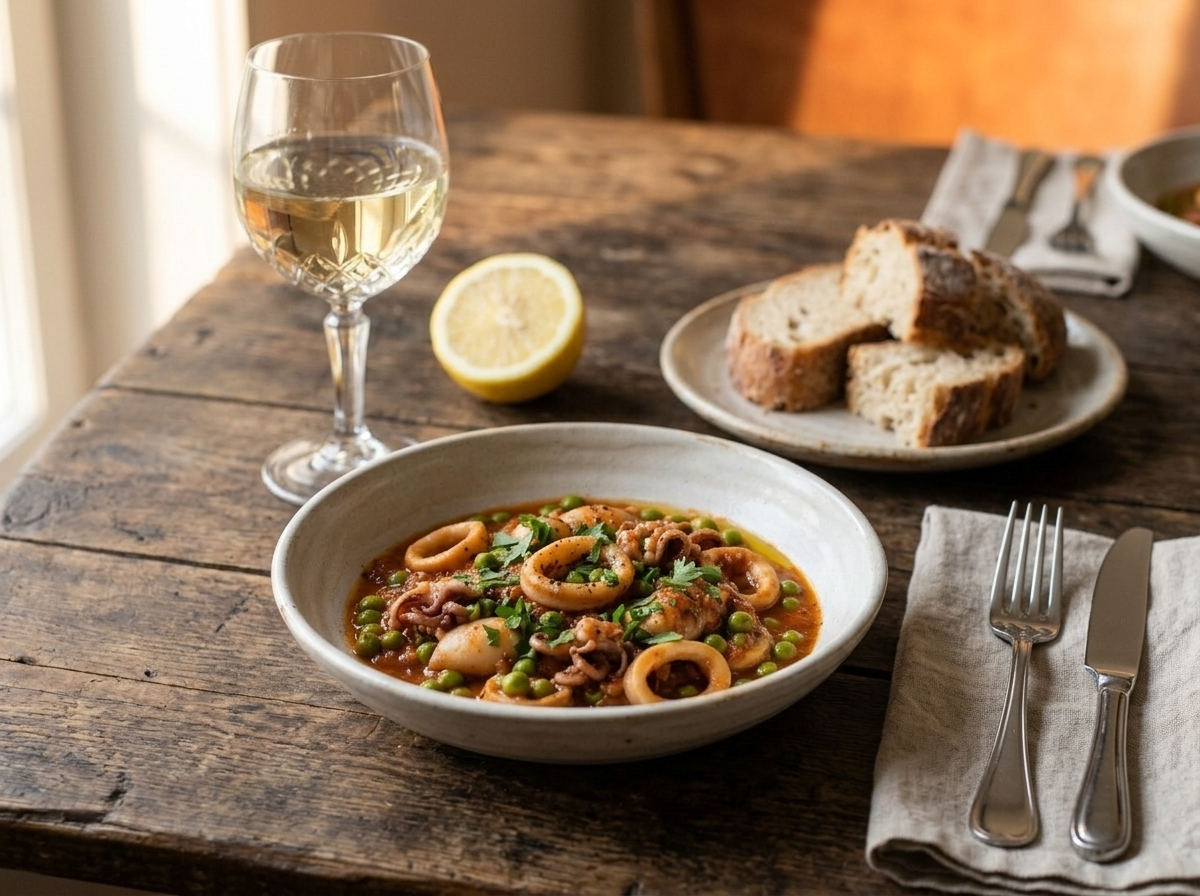
Crusty bread on the side is the simplest option, good for wiping the pan clean.
For a full Roman-style meal, start with a light salad and pour a glass of the same dry white wine used in the sauce.
FAQ
Why is my seppie coi piselli rubbery instead of tender?
Rubbery cuttlefish usually means it was cooked too fast at high heat, or the braise was cut short. Cuttlefish needs a proper low simmer, about 35 to 40 minutes, to break down and turn fork-tender. If it’s still tough at that point, keep it on low heat longer rather than raising the temperature.
Can I use squid instead of cuttlefish in seppie coi piselli?
Yes, squid works as a substitute, though it cooks faster and has a slightly milder taste. Cut the braising time down to 20 to 25 minutes since squid turns tender, and then tough again, much quicker than cuttlefish. Add the peas in the last 8 minutes just like the original recipe.
Can I make seppie coi piselli a day ahead?
Yes, it actually tastes better the next day once the sauce has had time to settle into the cuttlefish. Store it in an airtight container in the fridge for up to 3 days and reheat gently in a covered pan with a splash of water. Skip the microwave, it toughens the seafood.
What do you serve with seppie coi piselli?
Crusty bread is the classic choice, good for soaking up the tomato and wine sauce. Soft polenta or plain white rice also work well if you want a fuller plate. A simple green salad and a glass of the same dry white wine used in the sauce round out the meal.
Is seppie coi piselli gluten free?
Yes, seppie coi piselli is naturally gluten free since it’s made with cuttlefish, peas, tomato, wine, and olive oil, with no flour or breading involved. Just check the label on your tomato passata, some brands add thickeners. Serve it with gluten-free bread or rice to keep the whole meal safe.
What’s the difference between seppie coi piselli and vignarola?
Vignarola is a Roman spring vegetable stew built from artichokes, fava beans, and peas, with no seafood at all. Seppie coi piselli takes just the pea and braising technique and turns it into a seafood main by adding cuttlefish and a light tomato-wine sauce. They share a base idea but serve different roles on the table.