
Jump to Recipe
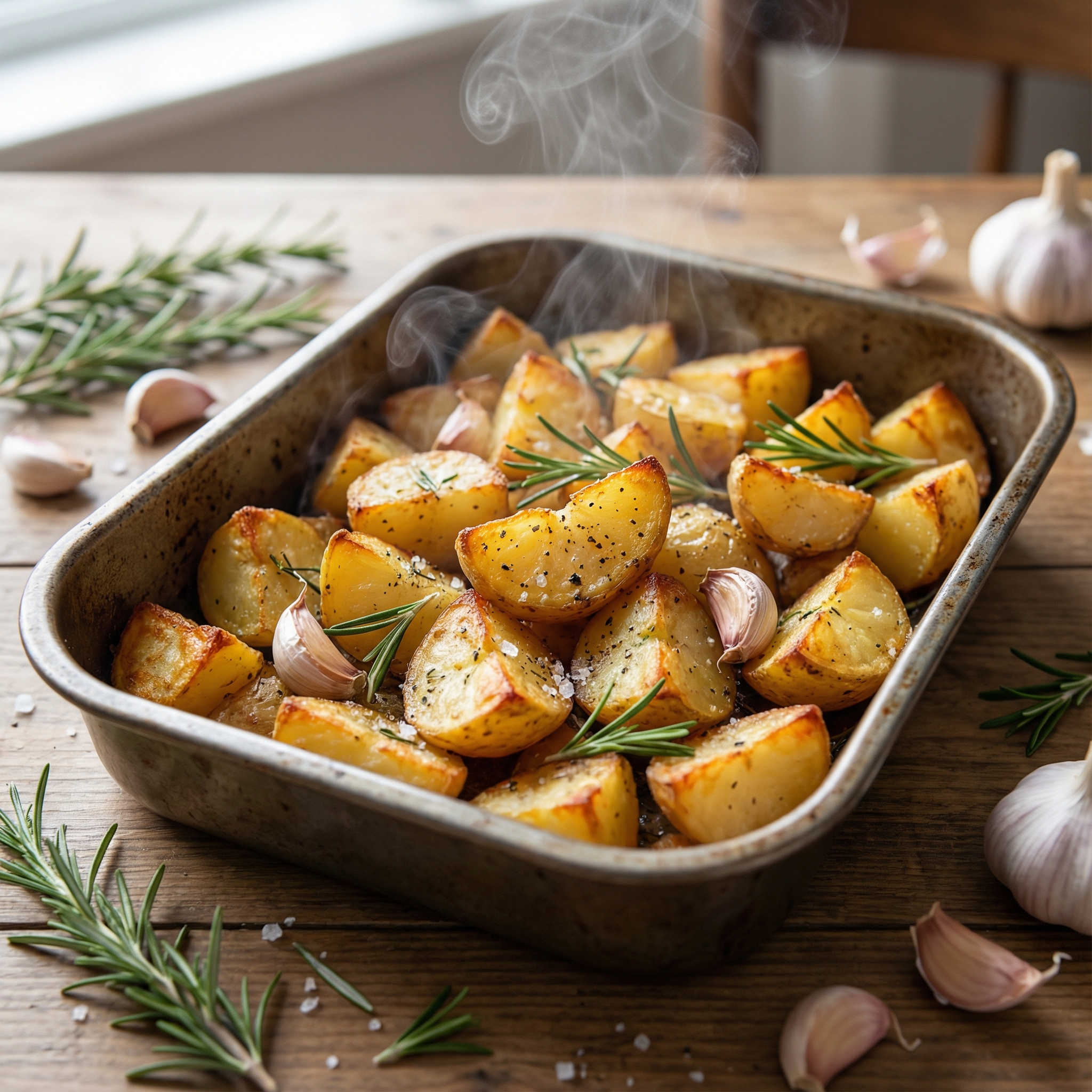
I learned to coax a crisp skin and a tender heart from humble ingredients and an old pan. Steam from a quick parboil, the smell of garlic slowed in olive oil, and the sizzle when those pieces hit a hot metal pan — that is the kind of memory I cook toward.
I favor russets or Maris Piper for the shatteringly crisp finish, and I temper herbs and garlic in oil for five to ten minutes so nothing blackens in the oven. A flip at about thirty minutes and a final burst under the aromatics brings every piece to an even bronze.
Key Takeaways
- Parboil until just tender, then drain and rough the edges to build crunch.
- Infuse garlic and rosemary in olive oil for 5–10 minutes; strain into a hot pan before roasting.
- Use a large metal pan and avoid crowding to promote even browning.
- Flip after ~30 minutes; finish 10–20 more minutes until audibly crisp.
- Store leftovers airtight and reheat on a baking sheet to revive the crust.
Why these rosemary potatoes belong in your regular dinner rotation
A hot pan and a brief parboil are the secret to a crisp edge and pillowy interior every time. Roast at 425°F (220°C) and the pieces turn golden in about 40–50 minutes, depending on size and oven performance.
I favor a metal pan for browning; it makes caramelization happen faster than glass or ceramic. Parboiling first gives a fluffy center, and roughing the surfaces builds extra crunch during roasting.
Infusing oil with garlic and rosemary keeps aromatic notes bright and prevents bitter, burnt bits. I add fresh herbs near the end so the green, piney perfume stays lively.
- This is a forgiving method, so even a novice can get restaurant-level crispness.
- Hands-off cooking time frees you to prep a salad or sear a chicken or other protein.
- Leftovers reheat on a sheet pan to revive the crust and make great next-day breakfast fare.
In short, the technique prioritizes texture and flavor in a simple, repeatable way. That combination is why this dish slides into weeknight rotation so easily.
Ingredients that make the magic happen (and smart swaps)
A few smart ingredient choices turn ordinary tubers into something crackly, fragrant, and tender. I pick varieties and fats that play to texture first, then layer aroma and seasoning.
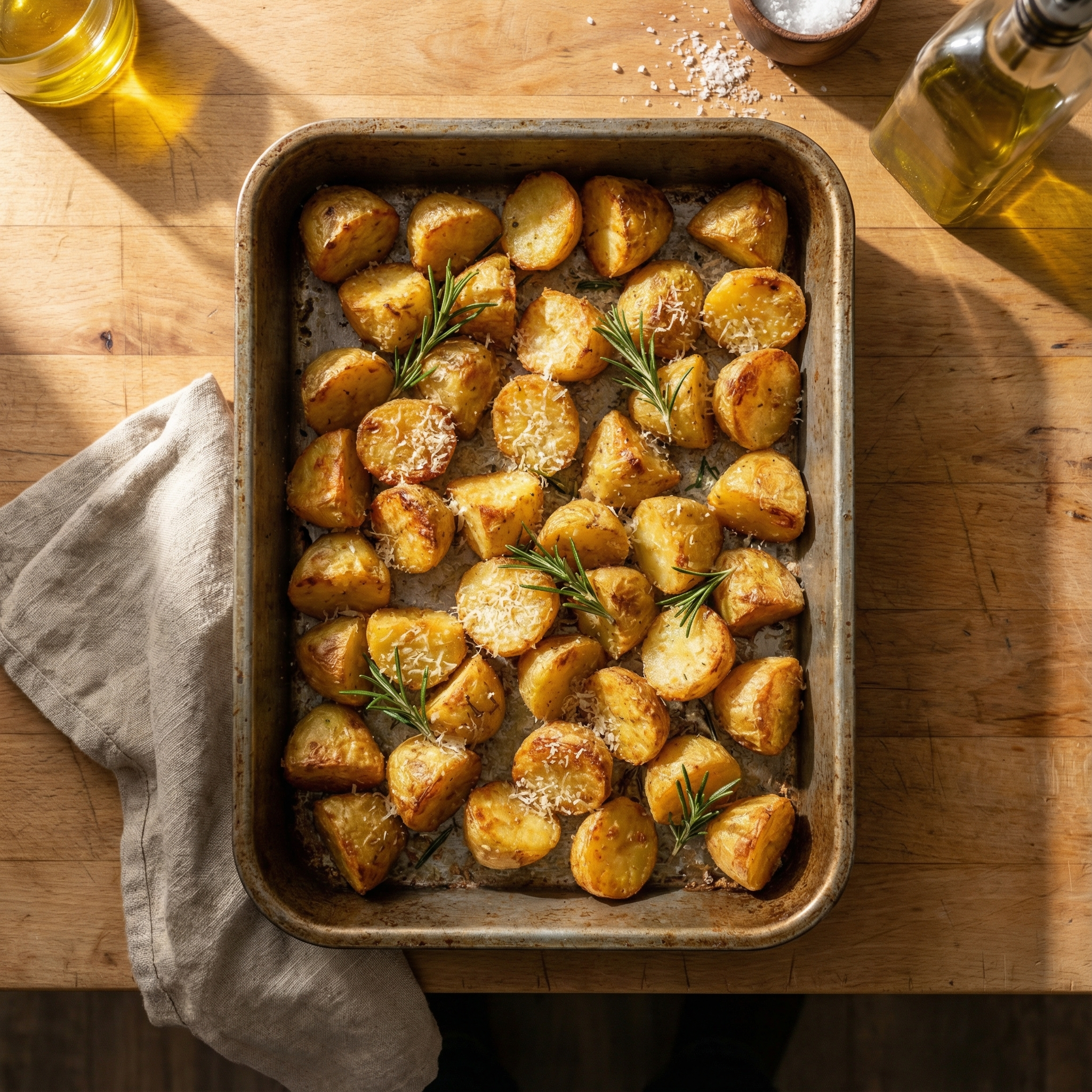
For maximum crunch I reach for russet or Maris Piper; their high starch and fluffy crumb brown up beautifully. Yukon gold gives a softer, buttery bite if you prefer less crunch.
Use regular or light olive oil for 425°F oven work—the flavor stays clean and it carries aromatics well. For a richer finish, rendered duck fat adds savory depth and extra brown color.
Infuse oil gently: bruise whole garlic cloves and warm them with fresh rosemary leaves for 5–10 minutes, then strain. This keeps garlic sweet and prevents bitter, burnt bits.
- Salt a teaspoon in the parboil and finish with a sprinkle out of the oven.
- Add paprika or onion powder for warmth, and toss in Parmesan in the last tablespoons of cooking for a savory crust.
| Variety | Texture | Best Use |
|---|---|---|
| Russet / Maris Piper | High starch, fluffy interior | Maximum crunch and deep browning |
| Yukon Gold | Medium starch, buttery | Softer crust, tender bite |
| Sebago | Starchy and reliable | Classic roast texture |
Italian roasted potatoes with rosemary recipe: step-by-step
A little technique—parboil, rough the edges, and hit a hot pan—gives you consistent, crackly results.
Parboil, drain, and rough up the edges for maximum crunch
Preheat oven to 425°F/220°C and peel then cut into roughly 2-inch pieces. Bring a large pot of salted water to a boil, add the cuts, and simmer until a skewer meets faint resistance—about 6–8 minutes.
Drain thoroughly, let steam-dry, then give them a shake in a colander to scuff the surfaces. Those tiny ridges are where the crust forms during baking.
Temper garlic and rosemary in olive oil, then preheat the baking pan
Gently warm olive oil with crushed, unpeeled garlic cloves and fresh rosemary leaves over medium-low for 5–10 minutes until fragrant but not browned. Strain the oil into a large metal baking pan and slide the pan into the hot oven to heat the fat and metal together.
Roast at 425°F, flip halfway, finish with herbs until golden with crisp edges
Carefully add the potato pieces to the sizzling oil, toss to coat, and sprinkle a teaspoon of salt. Roast on the center rack about 30 minutes, then flip with a wide spatula.
Add the reserved cloves and leaves, then continue baking 10–20 minutes more until the edges are deep gold and audibly crisp. Prefer a richer finish? Swap some oil for duck fat for extra glassy crunch and savory depth.
Pro tips from the test kitchen for shatteringly crispy edges
I trust quick science in the kitchen: dry surfaces, hot fat, and a roomy pan create the crackle I want. Start by steaming the parboiled pieces until they stop steaming, then give them a shake to rough the cut surfaces. The more textured and drier the exterior, the better the crust forms during baking.
Preheat a heavy metal pan in the oven with the oil inside until it shimmers. That instant sizzle sears the exterior instead of letting the fat soak through. Avoid glass or ceramic for this step; metal conducts faster and yields deeper browning in fewer minutes.
Space matters — leave breathing room between pieces so moisture escapes. Crowding traps steam and yields pale, soft results. For extra crunch, move the pan to a higher rack for the final minutes to blast the edges without over-drying centers.
Infuse oil gently with garlic and rosemary, strain, and use that oil to preheat the pan. Add the softened cloves in the last ten minutes so they toast, not burn. Season in layers: salt the boiling water and finish with a light sprinkle right out of the oven.
- Start dry, finish drier: steam-dry and rough the surfaces.
- Heat is leverage: hot pan + oil = instant sear.
- Choose metal over glass for superior edge browning.
- Infuse, strain, and add aromatics late to avoid bitterness.
| Pan Type | Color & Crisp | Best Practice |
|---|---|---|
| Heavy steel or cast iron | Deep, even browning; fast edge crisp | Preheat in oven with oil; add pieces to sizzling fat |
| Aluminum sheet pan | Good browning; lighter weight | Use thin layer of oil; avoid crowding |
| Glass / ceramic | Softer, slower color; risk of steaming | Raise oven temperature and allow extra minutes, but expect less crisp |
| Nonstick | Moderate color; less fond | Use higher heat carefully; do not overfill pan |
For the full patate al forno method and timing notes, see my detailed guide: full patate al forno method.
Make it your way: flavor variations, pairings, and nutrition notes
With a few easy changes, the same roasting steps yield very different results. Try finishing the hot tray with a dusting of smoked paprika and cracked black pepper, then melt grated Parmesan in the last minutes for a savory crust.
Swap herbs to shift the mood: thyme adds softness, sage brings woodsy warmth, and a pinch of oregano gives classic character. Keep rosemary as an anchor but let other leaves play lead if you like.
If you love garlic, a small sprinkle of garlic powder on parboiled, dried potato pieces deepens flavor while the infused cloves keep the oil fragrant. Brighten with lemon zest and a teaspoon of extra-virgin oil at the end.
Serve these sides beside baked chicken thighs, slow-simmered braciole, or a peppery arugula salad topped with shaved pecorino. For brunch fold warm pieces into a frittata or crown them with poached eggs.
| Variation | Effect | Best Pairing |
|---|---|---|
| Paprika + Parmesan | Bold, savory crust | Baked chicken thighs |
| Thyme or Sage | Herbal warmth, softer finish | Braciole or roasted meats |
| Garlic powder + infused oil | Deeper garlic note, balanced scent | Salads or eggs for brunch |
| Lemon zest + parsley | Bright, fresh finish | Light salads and fish |
Nutrition note: pair these potato sides with lean protein and greens to balance calories. They provide potassium and a little vitamin C. If you batch-cook, reheat briefly on a sheet pan and brush a touch of oil to revive the crust.
Leftovers, storage, and the best way to reheat without losing crunch
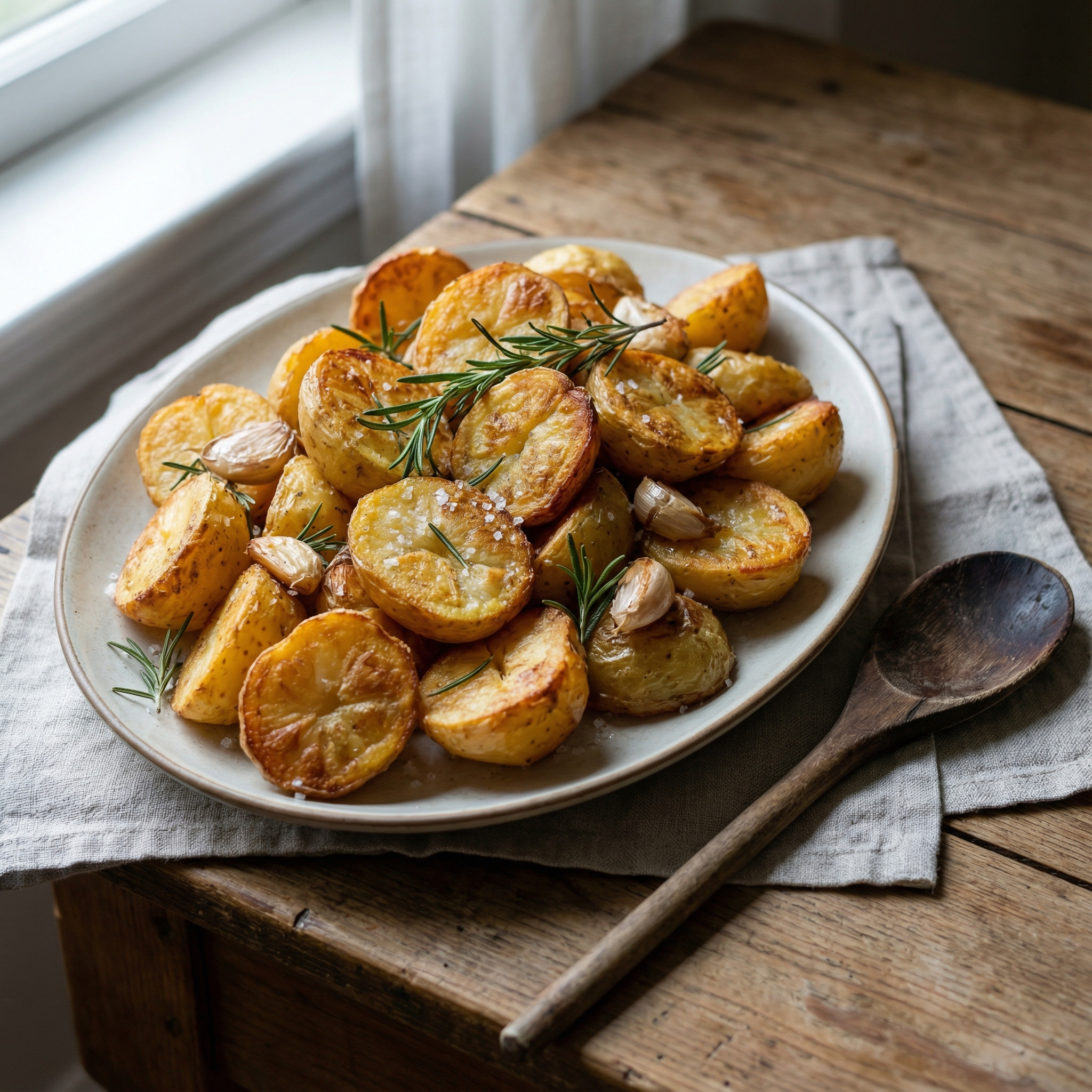
A little care in storage keeps the crust you worked for intact overnight. I store cooled roasted potatoes in a shallow, airtight container so steam cannot dull the edge.
Fridge time and basic handling
Cool completely before refrigerating. That stops exterior starches from absorbing excess moisture.
Keep portions in a single layer or shallow stacks. Thick piles trap steam and soften the crust.
Re-crisping: sheet-pan method
Preheat the oven and heat a baking sheet until just warm. Spread the pieces out, brush lightly with oil, and warm until edges sizzle—about a few minutes longer than it takes to heat through.
Avoid the microwave; it makes the crust soft and limp.
- For breakfast, cube leftovers and fry in a hot skillet until the garlic scent returns and surfaces caramelize; top with eggs for a hearty side.
- If you plan ahead, under-roast by a few minutes and finish right before serving for peak texture.
- Season after reheating; salt early draws moisture and dulls crispness.
- Follow your household food safety policy and discard leftovers past safe fridge time—this is a simple disclosure for safe eating.
| Method | Texture | Best use |
|---|---|---|
| Sheet pan (oven) | Restored crisp | Large batches, about 5–10 minutes |
| Skillet | Extra caramelization | Breakfast hash or small portions |
| Microwave | Soft, steamed | Quick heat only; not for crisp |
For nutrition information: kcal and vitamin values vary by oil and additions, so use product labels as your guide.
Ready to roast: bring the pan out hot and watch those edges turn gold
Bring the pan straight from the oven and listen for the confident sizzle as you add the potato pieces to the strained, scented oil.
I preheat oven to 425°F/220°C, slide the hot metal sheet out, and let that instant sear begin the roasting. Roast about 30 minutes, flip, then scatter garlic and fresh rosemary leaves and bake another 10–20 minutes until the pieces turn gold and the edges feel crisp.
Toss quickly, season with a pinch of salt and pepper, and watch the cues more than the time. A little extra fat, like duck fat, yields a glossier finish. Finish off with a drizzle of good olive oil and a sprinkle of chopped rosemary before serving. Serve immediately while steam still whispers—buon appetito!
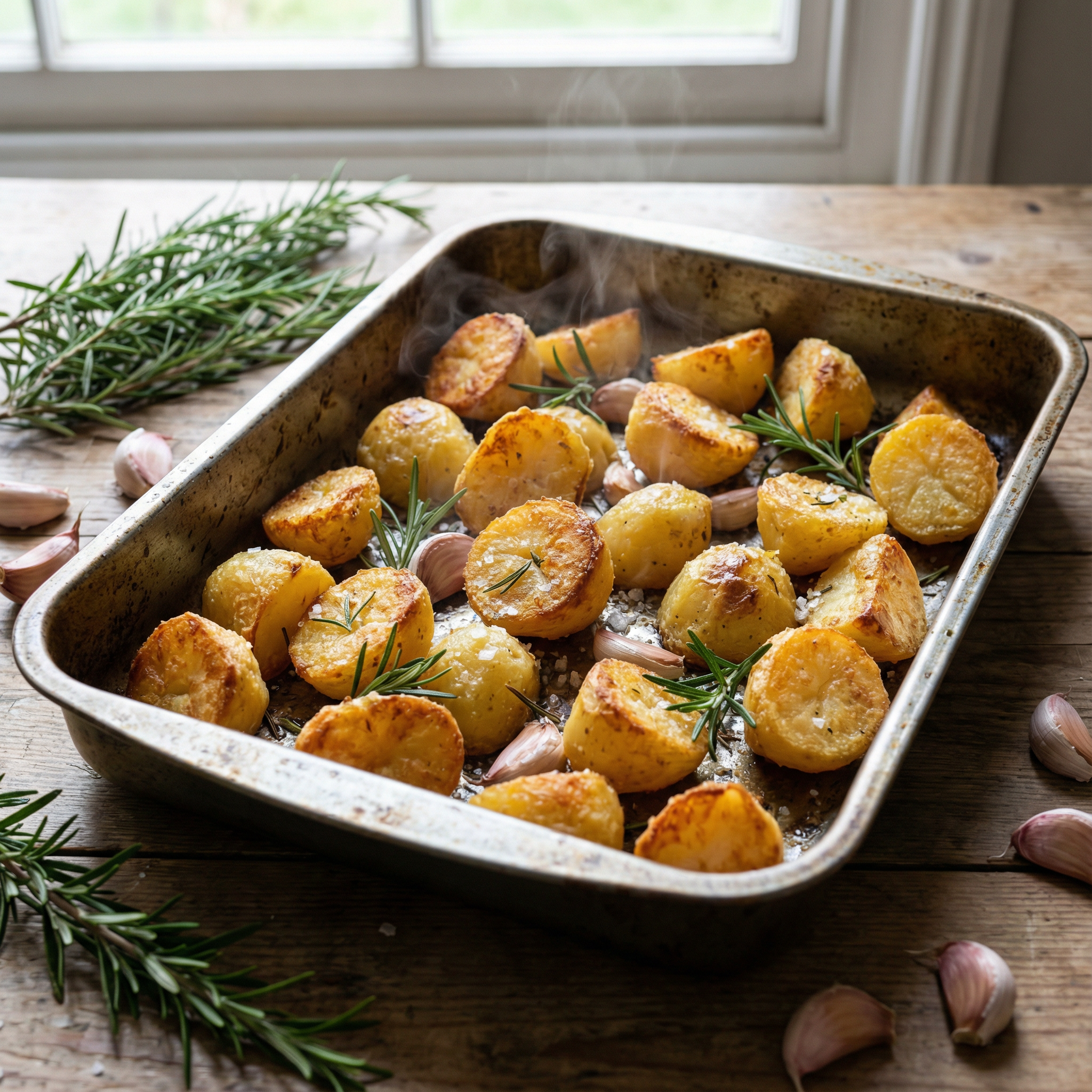
Italian Roasted Potatoes with Rosemary
Ingredients
Method
- Preheat the oven to 425°F (220°C).
- Peel and cut the potatoes into roughly 2-inch pieces.
- Bring a large pot of salted water to a boil, add the potatoes, and simmer for 6-8 minutes until just tender.
- Drain the potatoes thoroughly, let them steam-dry for a few minutes, then shake them in a colander to rough up the edges.
- Gently heat olive oil (or duck fat) in a pan over medium-low heat.
- Add crushed garlic cloves and fresh rosemary sprigs. Let the oil infuse for 5-10 minutes, making sure the garlic doesn’t brown.
- Strain the infused oil into a large metal baking pan and heat the pan in the preheated oven for a few minutes until hot.
- Carefully add the parboiled potatoes to the hot pan and toss them to coat in the oil.
- Sprinkle with a teaspoon of salt.
- Roast for 30 minutes, then flip the potatoes with a spatula.
- Add the reserved garlic cloves and rosemary sprigs to the pan, then continue roasting for another 10-20 minutes until the potatoes are deep gold and crispy on the edges.
- Optional: Sprinkle Parmesan cheese on the potatoes for a savory crust in the final minutes of roasting.
- Once the potatoes are crisp and golden, remove them from the oven.
- Serve immediately, finishing with a pinch of salt and pepper.
Notes
- You can use Yukon Gold potatoes for a softer, buttery texture if you prefer less crunch.
- For a richer flavor, try substituting olive oil with rendered duck fat.
- These potatoes make a great side dish for roasted meats, chicken, or as part of a hearty brunch.