
Jump to Recipe
I keep a slow, practical rhythm when I pull a platter together: a warm loaf under one arm, a small jar of honey in the other, and a habit of tasting as I arrange. The room fills with the soft salt of cured meats, the bright snap of fresh fruit, and the comfort that comes when people start to gather.
My rule of three—three cheeses, three salumi, three extras—keeps the spread balanced and easy to enjoy between sips and conversation. I favor simple bowls to anchor the plate, tuck crackers and pickles into corners, and let each ingredient sing at its best temperature.
Key Takeaways
- Follow a “rule of three” to keep the platter balanced and approachable.
- Choose ingredients by season and region to add authentic flavor.
- Use small bowls to hold briny or runny items and keep the board tidy.
- Prep some items minutes ahead so you can greet guests easily.
- Match wines to regional salumi and aged wedges for the best pairings.
What makes an Italian holiday cheese board unforgettable
I arrange small plates the way a storyteller paces a tale—each bite a tease that leads to the next course. Antipasto means “before the meal,” so these appetizers should wake the appetite, not fill it.
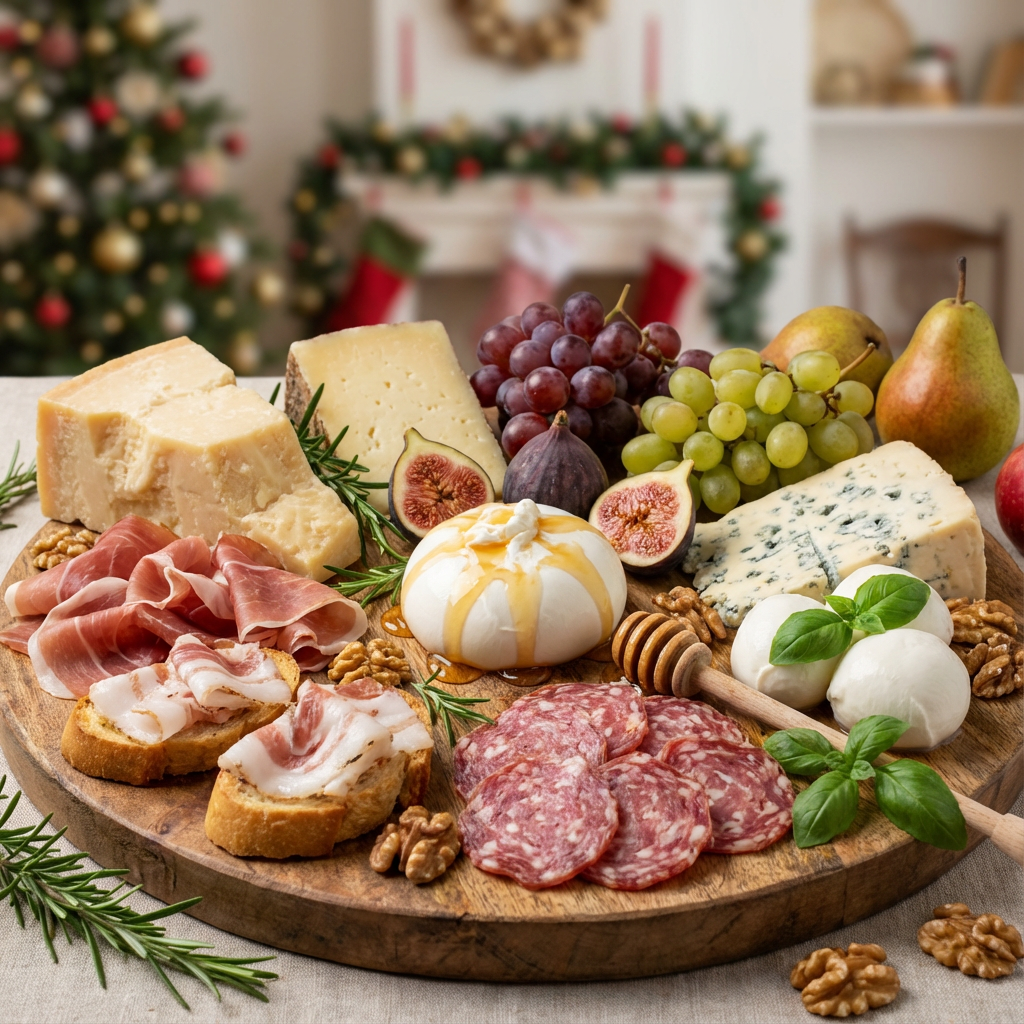
Antipasti spirit: light bites that spark the appetite
I favor small, vivid tastes: paper-thin prosciutto, a wedge of Parmigiano, a smear of fresh ricotta, and a few briny olives. Seasonal fruits and crisp bread sit nearby to reset the palate between richer items.
Quality over quantity: the “rule of three” for balance
The rule of three keeps things simple and elegant—three cheeses, three cured meats, and three accents like nuts, pickles, or a sweet-spicy condiment. Texture contrasts matter: crumbly aged cheese beside a soft blue cheese; silky ham beside salami.
- I pair regional cheeses with fitting wines—Parmigiano Reggiano with Chianti Classico, Prosciutto di Parma with Lambrusco di Sorbara.
- Seasonal extras (radicchio, fennel, honeyed persimmons) lend freshness and color.
Want a deeper recipe or a classic regional spread? See my take on a festive rice timbale here.
Italian cheese board ideas for holidays: choose cheeses with character
I start every selection by picking a firm, flavorful wedge that will hold the rest of the spread together. That cornerstone creates contrast and gives guests a place to begin.
Hard and aged: Parmigiano Reggiano and Pecorino Toscano
Parmigiano Reggiano offers sharp, nutty depth and crunchy tyrosine crystals. I break rustic chunks rather than neat slices so guests taste its granular texture. Pecorino Toscano is versatile: young wedges are buttery and mild, aged pieces show dried-fruit intensity.
Creamy and fresh: mozzarella balls, burrata, and ciliegine
Fresh mozzarella and ciliegine are bright and milky. Burrata from Puglia shines at room temperature with a drizzle of olive oil and ripe tomatoes. A spoon of fig jam or a few grapes brings sweet balance to these soft ingredients.
Funky and blue: Gorgonzola dolce vs. naturale
Gorgonzola dolce is spoonable and mild; naturale is firmer and more pungent. I place a small knife by the blue so guests choose how bold they want to go.
- Label each cheese and note milk type and region.
- Add clusters of figs and a drizzle of honey to guide pairings.
- Serve slices, chunks, and small rounds to highlight texture.
| Cheese | Milk | Texture & Serving Tip |
|---|---|---|
| Parmigiano Reggiano | Cow (Reggiana) | Crystalline, break into chunks; pair with honey or grapes |
| Pecorino Toscano | Sheep | Young = buttery; aged = nutty/dried-fruit; offer both ages |
| Burrata / Ciliegine | Cow | Silky; room temp, olive oil, tomatoes, or fig jam |
| Gorgonzola (dolce / naturale) | Cow | From spoonable sweet to assertive blue; place separate |
Cured meats and smart swaps that keep everyone nibbling
My approach to cured meats is simple: texture, aroma, and a touch of drama on the plate. I pick a few distinct types so guests can move from mild to bold without getting lost.
I slice prosciutto paper-thin so it dissolves on the tongue. Prosciutto di Parma is dry-cured up to 18 months, giving sweet, nutty notes. Prosciutto Toscano is rubbed with pepper, garlic, rosemary, and juniper for a rustic, peppery edge.
Silky lardo and how to serve it
Lardo from Colonnata is aged back fat scented with herbs. I shave translucent ribbons over warm crostini so the fat melts and the aromatics bloom.
Mixing salami, soppressata, finocchiona, and coppa
I pair Soppressata Calabrese—spicy, with dried chiles—and fennel-scented Finocchiona to contrast heat and perfume. Add a spreadable sbriciolona and an aged salami to vary texture. Coppa di Testa’s mosaic slices pair beautifully with roasted peppers and briny olives.
Inclusive swaps that feel true to the table
For vegetarian guests, I offer marinated cannellini beans with lemon zest and a bright olive tapenade. Modern plant-based “prosciutto” can be thinly sliced and folded so vegans enjoy the same ritual. A small pile of neutral crackers beside the meats helps guests reset before returning to a silky mozzarella or an aged wedge.
- Fold prosciutto loosely; alternate neat stacks and ruffles to create flow.
- Label origin and spice level so guests choose confidently.
| Item | Profile | Serving Tip |
|---|---|---|
| Prosciutto di Parma | Sweet, nutty; dry-cured up to 18 months | Paper-thin slices, folded loosely; pairs with fruit |
| Prosciutto Toscano | Peppery, herb-forward with garlic and juniper | Slice thin; serve near robust crackers and pecorino |
| Lardo di Colonnata | Silky aged back fat, aromatic with rosemary | Shave over warm crostini for melt-in-mouth bites |
| Soppressata / Finocchiona / Coppa | Spicy, fennel-scented, and mosaic-style textures | Mix spreadable and firm slices; place with olives and peppers |
| Vegetarian swaps | Marinated beans, olive tapenade, plant-based “prosciutto” | Serve in small bowls; label clearly; offer crackers |
The extras that make the board sing
The extras are my finishing notes: a briny olive here, a sweet jam there, a crunch to balance it all. Thoughtful accents invite tasting and keep guests curious.
Olives and bright briny accents
I mix profiles—fruity Taggiasche, buttery Castelvetrano, and tangy caperberries—so each bite refreshes the palate. A small bowl of mixed olives sits near the salami and softer wedges.
Seasonal produce and fruits
Juicy figs and clusters of grapes sit beside pears and bitter radicchio to add color and contrast. Cherry tomatoes and roasted peppers bring a fresh-sweet snap that pairs well with aged wedges.
Bread, crostini, and crackers
Prep quick crostini under the broiler and rub warm slices with garlic. Offer taralli for crunch and a stack of sturdy bread so guests can build tidy bites. Place crackers near soft rounds and fruit.
Sweet-heat and savory spreads
Drizzle local honey over sharp wedges. Add a spoon of fig jam or a jar of Mostarda for spicy-sweet contrast. A final bowl of toasted nuts—almonds or hazelnuts—and a spoonful of pesto complete the plate.
- Cluster fruits close to bold wedges to guide pairings.
- Use small portions and replenish so everything stays bright.
Regional spins to match your menu and the season
I love matching regional flavors to the season, so each platter feels like a short trip. Choose one region as your theme, then add a single contrasting accent to keep the mix lively.
Northern notes
Lean into alpine, dairy-forward plates: Asiago, Fontina, Taleggio, and lean bresaola. Add small polenta bites and a bowl of cannellini beans to echo the region’s comfort food roots.
Serve crisp grapes and sturdy bread to cut richness. A thin slice of prosciutto provides a delicate, salty accent without overwhelming the platter.
Central comforts
Central style is crostini country. Spoon olive tapenade over warm toasts and place a soft burrata beside a mild salami. Tomatoes and a whisper of basil add garden-fresh lift.
Southern flair
The south favors brightness: milky mozzarella, briny anchovies, roasted peppers, and marinated artichokes. These elements pair beautifully with citrusy whites and fresh fruit in summer.
In winter, swap tomatoes for roasted squash or fennel and pears to keep the mood seasonal.
- Pick one region, then add one unexpected accent to unify the spread.
- Label cheeses and meats so guests navigate the board with confidence.
| Region | Staples | Key accents | Serving tip |
|---|---|---|---|
| North | Asiago, Fontina, Taleggio, bresaola | Polenta bites, grapes, prosciutto | Room-temp cheeses, polenta warm, bread to cut richness |
| Central | Burrata, mild salami, crostini | Olive tapenade, tomatoes, basil | Spoon tapenade on toasted bread; keep burrata chilled until serving |
| South | Mozzarella, anchovies, roasted peppers | Artichokes, citrus, summer fruit | Serve mozzarella at room temp; place anchovies in a small bowl |
| Seasonal swap | Winter: radicchio, fennel; Summer: ripe tomatoes, basil | Pears or roasted squash in winter; fresh fruit in summer | Adjust one major item per season to keep plates cohesive |
How to assemble and style your Italian charcuterie board
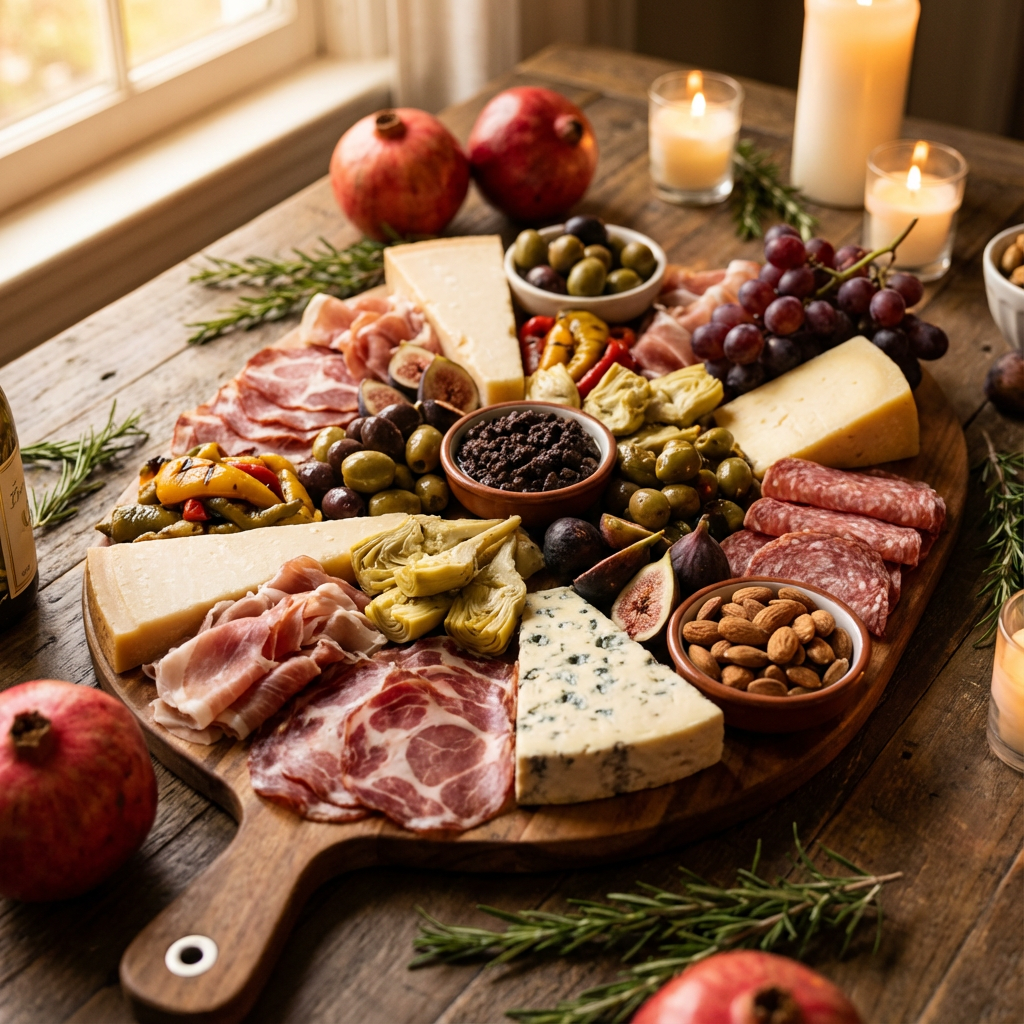
I begin by anchoring the scene with small bowls — olives, tapenade, and nuts — so everything else finds its place. This gives you tidy zones and protects soft items from soaking other parts of the spread.
Anchor with bowls, layer cheeses, then tuck in meats and produce
Place bowls first, then set three cheeses in a loose triangle to balance reach. Add crostini and crackers at the edges so guests can build bites without crowding the center.
Next, tuck folded prosciutto and fanned slices of salami into gaps. Slide in grape clusters, cherry tomatoes, and a few basil leaves for pops of color.
Shape, color, and flow: fanned slices, folded prosciutto, and grape clusters
Create movement by alternating textures: firm wedges, silky mozzarella in a shallow dish, and thin, folded rosettes. The eye follows curves, and hands do, too.
Serving size, timing, and make-ahead tips for stress-free hosting
Plan about 3 ounces of cheese and 2 ounces of meat per guest. Cut hard wedges earlier in the day and wash fruit ahead. Slice meats just before serving and broil crostini for a few minutes as guests arrive to add warm aroma.
- Keep small tongs or picks near delicate items to preserve the layout.
- Finish with a drizzle of extra-virgin olive oil and a pinch of red pepper flakes for shine and zip.
Want a tasty companion to your platter? Try this easy stromboli recipe to serve alongside the spread.
Raise a glass and serve with confidence
Serve with intent: a well-paced platter keeps conversation bright and appetites happy. Match the energy of the board with the glass—Chianti Classico flatters nutty Parmigiano-Reggiano, Lambrusco di Sorbara makes Prosciutto di Parma sparkle, and Moscato d’Asti tames a bold Gorgonzola.
Keep pours small and bottles varied: a crisp Pinot Grigio, lively Prosecco, or pale rosé resets the palate between salami and soft rounds. Cluster grapes, figs, and a touch of honey near stronger cheeses, and place fig jam and olives beside peppers and savory meats for easy pairing cues.
Offer chilled mineral water with lemon as a non-alcoholic palate cleanser. A short menu card with your cheeses, cured meats, and suggested sips will guide guests. When the platter winds down, top up bread and one star item—finish strong, stay relaxed, and enjoy the meal.
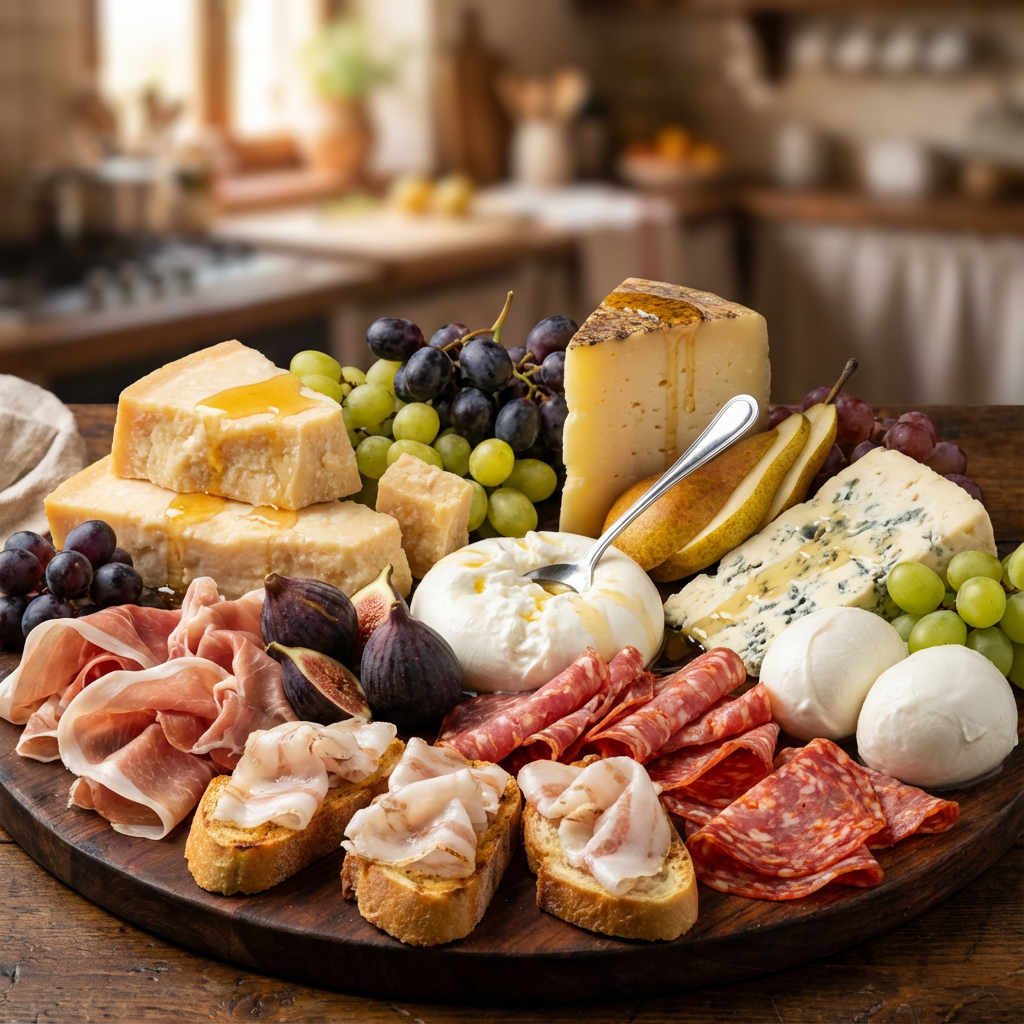
Italian Holiday Charcuterie Board
Ingredients
Method
- Start with hard cheeses like Parmigiano Reggiano and Pecorino Toscano, breaking them into chunks.
- Add fresh cheeses like Burrata and Mozzarella Balls, ensuring they’re at room temperature for flavor.
- Place a wedge of Gorgonzola for contrast (ensure you include a knife for guests to choose the texture).
- Arrange thin slices of Prosciutto di Parma and Prosciutto Toscano for a salty-sweet balance.
- Add ribbons of Lardo di Colonnata over warm crostini.
- Include a variety of salami and soppressata—Soppressata Calabrese for a spicy kick, and Finocchiona for a fennel-scented contrast.
- Include Coppa di Testa slices as a textural addition.
- Cluster figs, grapes, and pears around the cheeses and meats to add sweetness and color.
- Add a few cherry tomatoes for freshness.
- Place crostini and crackers for a crunchy bite.
- Drizzle honey over the cheeses for a sweet contrast and texture.
- Add seasonal touches like roasted peppers, marinated artichokes, or radicchio for bitterness.
- Sprinkle some fresh basil leaves for an aromatic finish.
Notes
- Cheese Tip: Allow cheeses to come to room temperature for the best flavor.
- Meat Tip: Prosciutto and Lardo are best served paper-thin to allow for a melt-in-the-mouth experience.
- Vegetarian Option: Include marinated beans, olive tapenade, or plant-based deli slices as a substitute for cured meats.
- Make-Ahead Tip: Most of this board can be prepped ahead of time, including cutting cheeses and arranging fruits, but assemble everything just before serving to maintain freshness.