
Jump to Recipe
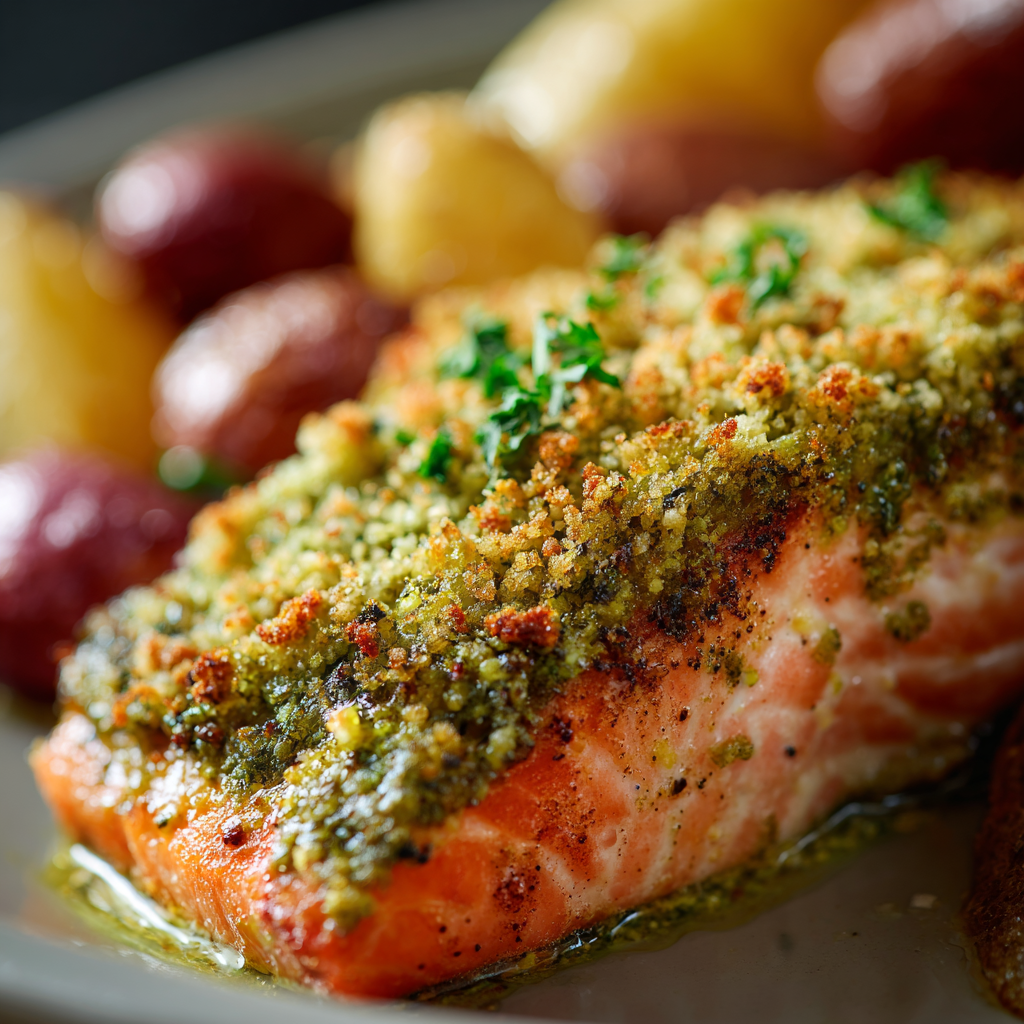
I learned this italian baked salmon pesto recipe at my mother’s elbow, and the first bite still smells like summer basil and warm olive oil.
We use skinless fillets for a gentle bake at 300°F for 15–20 minutes so the flesh stays tender and reaches about 135°F for medium doneness.
Pesto—whether a jar of Giovanni Rana or a quick homemade blitz—brings herb brightness and a silky finish that lifts the buttery fish without fuss.
For weeknight ease, I roast the fillets on a single baking sheet and pair them with fluffy rice and blanched asparagus; the plate is simple, elegant, and fast to pull together.
Key Takeaways
- Low-heat baking at 300°F for 15–20 minutes yields tender, juicy fish.
- Aim for 135°F internal temp for medium doneness.
- Skinless fillets avoid soggy skin during a gentle bake.
- Quality store pesto like Giovanni Rana works well when fresh basil is scarce.
- Serve with rice and blanched asparagus for an easy, balanced dinner.
Why this pesto salmon belongs in your weeknight (and weekend) rotation
A tray, four ingredients, and 25 minutes—this dish proves great dinners don’t need fuss. We rely on clean seafood, fresh basil, good olive oil, and salt to do the heavy lifting. That simplicity is what keeps it true to tradition and easy to repeat any night of the week.
What makes it authentically Italian yet effortless
Authenticity here is about quality and restraint. Use bright basil notes, decent oil, and fish with a clear ocean flavor. Season with intention and avoid overhandling; the oven will finish the work.
Flavor-first, minimal dishes, and results you can trust
This is flexible for two or ten. Dollop pesto before baking and spread a thin layer after to protect color when using higher heat. You get repeatable texture whether you slow-roast for silk or go hot for a flakier crust.
- Fast prep, dependable doneness, and easy scaling.
- Light but filling protein for a family dinner or guests.
- Minimal cleanup—one sheet, simple sides, great results.
| Method | Time & Temp | Outcome & Tip |
|---|---|---|
| Low and slow | 300°F, 15–20 min | Silky texture; apply pesto before baking for infusion. |
| Hot and fast | 400°F, 8–12 min | Flaky finish; dollop before, spread after to keep green bright. |
| Scaling | 2–10 servings | Same cook method; adjust time for thickness, rest 5 minutes. |
Simple ingredients, big flavor: what you’ll need
Choose a few quality items and the oven will do the rest — that’s the idea behind this simple dish. I favor wild-caught for cleaner flavor and better texture, but good frozen fillets work well after a gentle thaw and a careful pat dry.
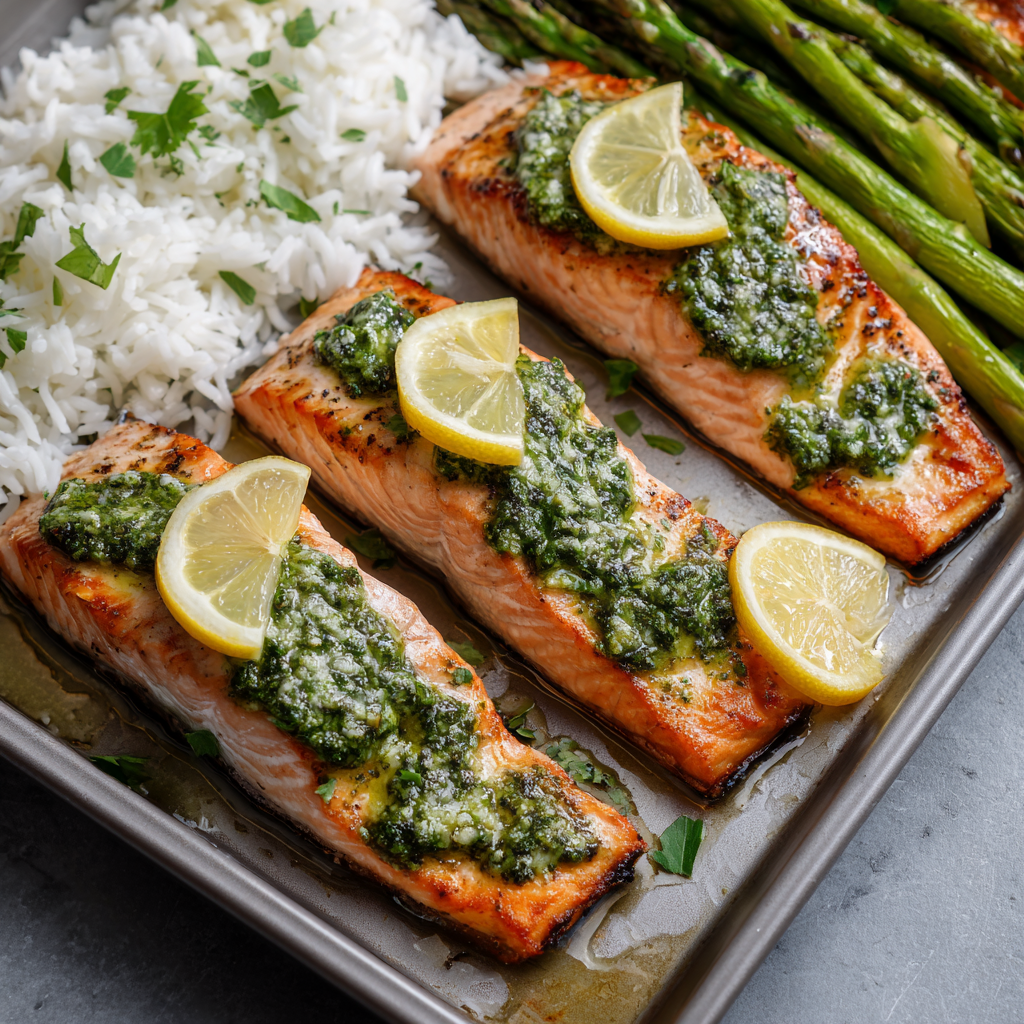
Salmon fillets: wild-caught vs. farmed, fresh vs. frozen, skin-on vs. skinless
Wild-caught earns my vote: king for richness, sockeye for bold color and antioxidants, coho for milder notes, and pink when you want tender value. If using frozen fillets, thaw in the fridge overnight and dry the surface so seasonings and pesto adhere.
For low-heat cooking choose skinless to avoid a soft skin. If you prefer a high-heat finish, skin-on crisps and usually lifts off cleanly after cooking.
Pesto choices: homemade basil pesto, quality store-bought, and how each affects flavor and color
Homemade pesto stays bright and green and I’ll make a batch ahead to refrigerate up to one week or freeze in cubes for six months. A reliable jar like Giovanni Rana is great when basil is out of season; note some jars darken slightly under intense heat.
Olive oil, salt, pepper, lemon — the small touches that make it sing
A light drizzle of olive oil, a pinch of salt, and a breath of pepper lift the fish without stealing the show. Keep a lemon nearby — a quick squeeze at the end brightens every bite.
Optional parmesan-breadcrumb crust for a golden finish
- Mix fresh breadcrumbs with finely grated Parmigiano Reggiano for texture and savory depth.
- Measure sensibly: about 1–2 tablespoons of pesto per portion, and roughly 1 cup for a large side when serving a crowd.
Step-by-step: from sheet pan to table in minutes
Start by lining a sheet and preheating the oven so the dinner comes together without last-minute fuss. Choose 300°F for a silky finish or 400°F when you want a faster, flakier result.
Prep like a pro
Line a baking sheet with foil or parchment and lightly film the pan with oil so the fish releases cleanly. Portion fillets evenly and pat them dry — this helps browning and pesto adhesion.
Apply the sauce the right way
For low-heat baking, spread about 1 tablespoon on each piece before it goes in. For high-heat cooking, dollop the sauce before baking and spread it after to keep the green bright.
Doneness cues and rest
- Place salmon on the center rack with space around each piece so heat circulates.
- Check early: 300°F—15–20 minutes to ~135°F; 400°F—thicker pieces ~20 minutes, thinner pieces ~5 minutes less.
- Look for moist flakes that separate with a fork and an internal temp of 130–135°F for medium.
- Rest 3–5 minutes off the heat; carryover will finish cooking and keep juices locked in.
| Method | Temp | Minutes |
|---|---|---|
| Low and slow | 300°F | 15–20 |
| Hot and fast | 400°F | 5–20 (by thickness) |
| Thin ends | Any | Fold or trim; bake ~5 minutes less |
Oven temperature and timing made clear
A quick change in temperature turns the same fillets from silky and plush to firm and flaky. Choose with confidence: your choice sets texture and the rhythm of dinner.
Gentle and silky at 300°F
Set the oven to 300°F for a plush, almost confit-like finish. Expect 15–20 minutes for medium doneness and an internal temperature near 135°F.
Skinless pieces work best here; skin tends to soften. Pre-spread sauce when using this lower setting—it infuses without darkening.
Fast and flaky at 400°F
Choose 400°F when time is short and you want distinct flakes and light crisping. Thicker center cuts may need up to 20 minutes, while thin tails finish in 12–15 minutes.
Spread the sauce after baking at high heat to keep color bright. Fold or trim thin ends so they don’t overcook.
- Track minutes by thickness, not just the clock.
- Use a thermometer plus the flake test to confirm doneness.
- If unsure, pull a minute early—carryover will finish the job.
| Approach | Temp | Timing & cue |
|---|---|---|
| Gentle | 300°F | 15–20 minutes; pull at ~135°F for moist, silky fish |
| Fast | 400°F | 12–20 minutes by thickness; spread sauce after for bright green |
| Thin ends | Any | Trim or fold; subtract ~5 minutes to avoid dryness |
italian baked salmon pesto recipe
A short list and clear timing make this dish easy to pull off any night. Gather the ingredients, preheat the oven, and you’ll be confident at the sheet in under 30 minutes.
At a glance: ingredients, prep time, cook time, yield
Make 4 fillets (4–6 oz each). You’ll need about 1 tablespoon olive oil, 1/2 teaspoon salt, pepper to taste, and 4 tablespoons basil pesto (roughly 1 cup for a crowd).
- Prep: 5–10 minutes.
- Bake: 15–20 minutes at 300°F to ~135°F (or 12–20 minutes at 400°F by thickness).
- Rest: 3–5 minutes. Yield: serves 4.
Quick method recap
Preheat oven and line a baking sheet with foil or parchment. Lightly oil the sheet and drizzle a little olive oil on the fish.
Season with half the salt before placing on the sheet, then add the remaining salt. For 300°F spread 1 tablespoon basil pesto on each fillet before baking. For 400°F dollop before baking and spread after to keep green bright.
| Step | 300°F | 400°F |
|---|---|---|
| Apply pesto | Spread before baking | Dollop before, spread after |
| Timing (minutes) | 15–20 to ~135°F | 12–20 by thickness |
| Finish | Rest 3–5 minutes | Trim thin ends, rest 3–5 minutes |
Pro tips from our kitchen to yours
A few practical tricks from our kitchen will help you get perfect texture and bright flavor every time. These are small habits that change results without extra fuss.
Choosing the right cut
Pick your cut to match the meal. King brings plush fat and a velvet texture. Sockeye offers bold flavor and deep color.
Coho feels balanced and versatile. Pink is tender and budget-friendly for weeknights.
Skin on or skinless
Decide by temperature. At low heat the skin gets soft, so go skinless to avoid sogginess. At higher heat it crisps and will lift off cleanly with a spatula.
Breadcrumb–Parmesan topping
- Use fresh breadcrumbs mixed with finely grated Parmigiano Reggiano for a light crust.
- Add the crumb at higher heat so moisture escapes and the topping stays crisp.
- Season sparingly—the cheese already has salt and a little pepper is enough.
Pat fillets dry and season evenly so the herb sauce clings instead of sliding. Pull the pan a touch early: carryover cooking will raise the internal temp and keep the fish juicy.
| Cut | Fat | Best pairing |
|---|---|---|
| King | High | Lemony greens |
| Sockeye | Medium | Simple grains |
| Pink/Coho | Low–medium | Generous sauce or extra oil |
What to serve with pesto salmon
A few simple sides can turn a weeknight fillet into a full, memorable meal. Pick two elements: a grain or starch and at least one bright vegetable. Keep portions balanced so the herby sauce stays the star.
Grains and starches
Spoon the pan juices over fluffy rice or fold warm grains into a basic vegetable risotto. Toss hot orzo with a spoonful of sauce for a cohesive plate.
Vegetables that complement basil
Steamed or blanched asparagus and green beans dressed with a little olive and sea salt shine beside the fish. Tender zucchini ribbons add soft texture and color.
Pasta night twist
For a cozy dinner, serve the fillet over farfalle. Add a squeeze of lemon and a splash of pasta cooking water to marry the flavors.
- Roasted or boiled redskin potatoes tossed with butter, pesto, and lemon make a rustic side.
- Roast cherry tomatoes alongside the fish for 10–12 minutes at high heat; they burst and become a light sauce for orzo or couscous.
- A crisp green salad with a bright vinaigrette refreshes the palate between bites.
- Warm crusty bread, drizzled with good olive oil, is perfect for catching juices.
| Side type | Prep time | Pairing note |
|---|---|---|
| Grains (rice, orzo, risotto) | 10–30 minutes | Spoon juices over rice; toss orzo with a spoonful of sauce |
| Vegetables (asparagus, green beans, zucchini) | 5–12 minutes | Blanch or steam; dress simply with olive and lemon |
| Potatoes & tomatoes | 15–25 minutes | Potatoes: toss with pesto and butter. Roast tomatoes to make a quick sauce |
| Light sides (salad, bread) | 5–10 minutes | Vinaigrette cuts richness; bread captures every drop |
Keep it flexible: aim for about a cup of grains per person and a generous helping of vegetables. Small choices—pickled shallots or a lemony fennel salad—add bright contrast when you want it.
Make-ahead, storage, and reheating without losing quality
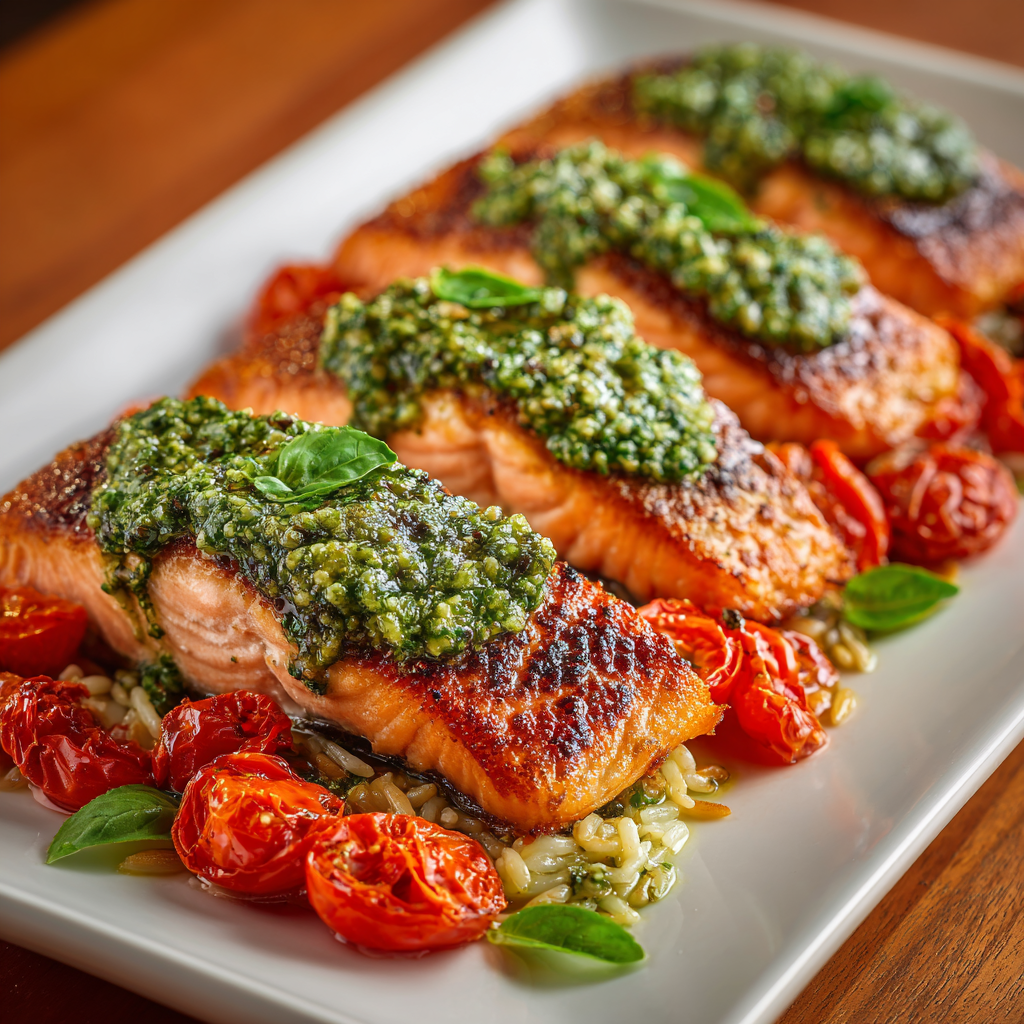
With a little planning we keep tonight’s pan tasting fresh for the next few days. Store cooked pieces in a shallow, airtight container and use within 3 days for best texture and aroma.
Refrigerate and reheat gently
Reheat in a 350°F oven on a lined baking sheet for 8–10 minutes until just warm. This protects delicate flakes and avoids drying the fish.
For speed, microwave in 30-second bursts at medium power, checking often so moisture stays locked in.
Freezing and thawing
Freeze baked pesto salmon in a single layer in a zip bag so pieces don’t stick. Lay the pan flat in the freezer, then stack once solid.
Thaw overnight in the fridge for the best texture, then reheat gently to preserve the flesh.
Batching pesto and brightening tips
Keep homemade pesto up to one week refrigerated, or freeze in ice cube trays for up to six months. Stir in a squeeze of lemon or a drizzle of olive oil when using thawed cubes to revive brightness.
| Action | Storage | Reheat |
|---|---|---|
| Cooked fish | 3 days, airtight | 350°F oven 8–10 min or microwave |
| Frozen portions | Single layer in freezer bag | Thaw overnight, reheat gently |
| Homemade pesto | Up to 7 days refrigerated; 6 months frozen | Stir with lemon/olive before use |
Label containers with date and temperature notes so future you knows exact time and method. If you want more ideas for make-ahead seafood dishes, see our take on how to make pesce all’acqua pazza.
Bring this family favorite to your table tonight
Pick your path: bake hot at 400°F for 12–20 minutes and spread basil pesto after baking for bright color. Or choose a gentle 300°F for 15–20 minutes to about 135°F for a plush, buttery finish. We prefer skinless fillets for the low-heat method to avoid soft skin.
Keep a cup of sauce tucked in the fridge or freezer. Use a couple of tablespoons per portion. Finish each plate with a squeeze of lemon, a thread of olive, and a quiet minute of rest so juices settle back into the fish.
Try the parmesan-breadcrumb topping at higher heat for crunch. Trust the cues, choose the time that fits your night, and serve with warmth—this baked pesto salmon has been our family’s welcome for years.
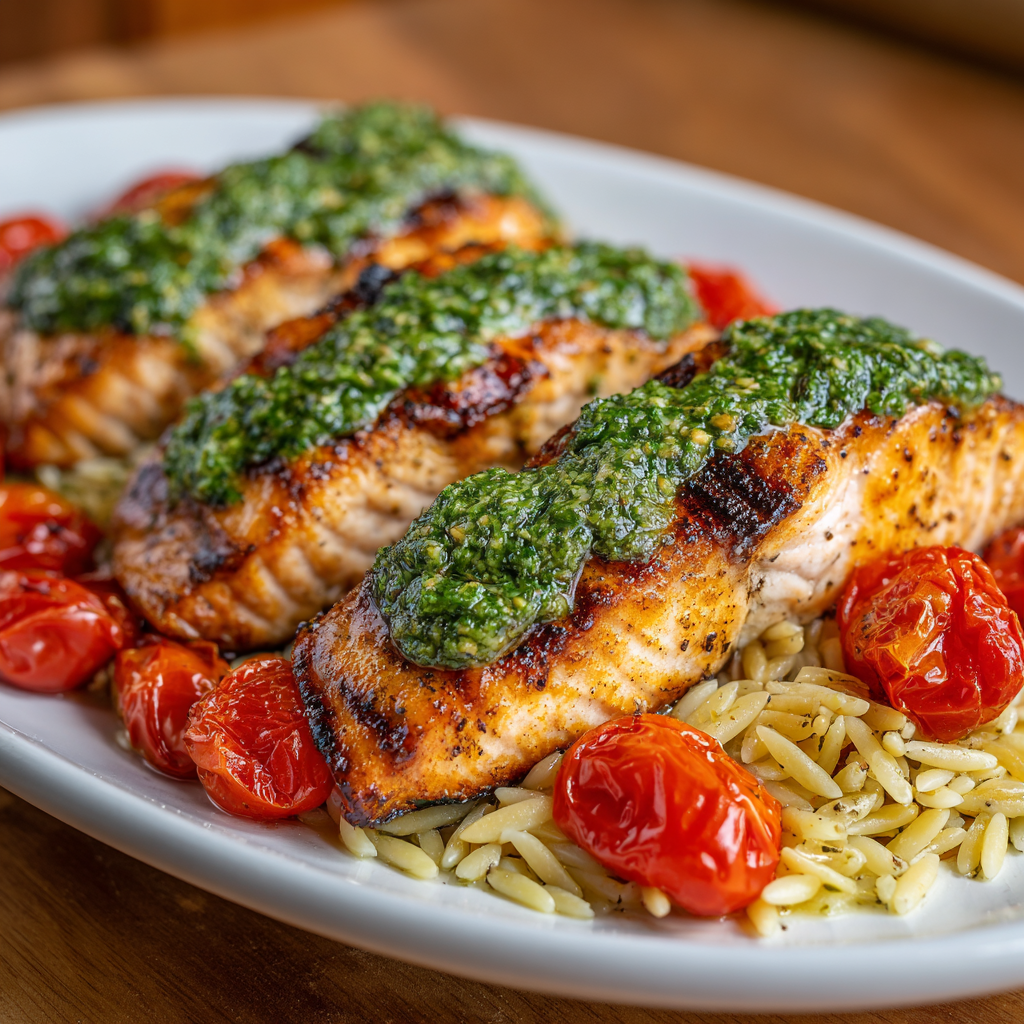
Italian Baked Salmon with Basil Pesto
Ingredients
Method
- Line a baking sheet with foil or parchment. Lightly oil the surface so the salmon releases cleanly.
- Pat the fillets dry. Drizzle a little olive oil over each piece. Season with half the salt, place them on the sheet, then season with the rest.
- Low and slow (silky texture)
- Heat oven to 300°F.
- Spread 1 tablespoon pesto over each fillet before baking.
- Bake 15–20 minutes, until the internal temp is around 135°F and the flakes separate gently.
- Hot and fast (flakier texture)
- Heat oven to 400°F.
- Dollop pesto on top before baking but spread it fully after cooking to keep it bright green.
- Bake 12–20 minutes depending on thickness (thin tail pieces cook faster).
- Mix breadcrumbs, Parmesan, and a drizzle of oil. Press lightly onto the pesto. Use the 400°F method so it browns. If needed, broil 1–2 minutes at the end.
- Let the fillets rest 3–5 minutes so juices settle.
- Add a squeeze of lemon and a thin thread of olive oil before serving.
Notes
- Wild-caught salmon gives the cleanest flavor, but good frozen fillets work well after thawing and patting dry.
- If the fillets have very thin ends, fold or trim them so they don’t overcook.
- For the brightest green pesto, always add a small fresh spoonful after baking—especially when cooking at 400°F.
- Internal doneness sweet spot: 130–135°F for moist, medium salmon.
- Leftovers reheat best in a 350°F oven for 8–10 minutes.